


Websites & mobile apps for digital storytelling, such as Toontastic, VoiceThread, StoryKit, Xtranormal, Puppet Pals, Pixton, Storybird, Comic Master, etc.
Via Susan Grigsby @sksgrigsby, Joyce Valenza, Sheila Fredericks

 Your new post is loading...
 Scoop.it! Websites & mobile apps for digital storytelling, such as Toontastic, VoiceThread, StoryKit, Xtranormal, Puppet Pals, Pixton, Storybird, Comic Master, etc. Via Susan Grigsby @sksgrigsby, Joyce Valenza, Sheila Fredericks 
Scoop.it!

Writing sounds easy, but it is not. Hope is required for writing, for it is an act of faith. Famous writers struggled, and so do we. We need hope to write. Via Sharilee Swaity, Charles Fischer

Pamela D Lloyd's curator insight,
December 24, 2013 3:19 PM
An interesting and useful examination of the importance of hope for all writers. 
KindredReaders's curator insight,
December 28, 2013 1:13 PM
For those days when the words just won't come. 
Kali Cordes's curator insight,
February 20, 2014 5:17 PM
This article describes the necessity of hope when a writer of any level sits down to write out their thoughts. The article mentions several famous authors' descriptions of what it takes to be a writer, and how even they required some inspiration to keep at it. I loved this article because it describes my exact dilemma that I wrote about in my first semester portfolio. Inspiration is a hard thing to find within yourself, but it is also the most important part of writing. The hope described in the article is really the key to finding that inspiration.
Scoop.it!

The Digital Rocking Chair's curator insight,
August 13, 2013 2:28 AM
David McLaughlin: "Following on from last week’s post where we discussed some of the issues around using intellectual property and other associated rights in Transmedia projects, this week we’ll be looking at some of the issues that arise in Transmedia projects when it comes to collaborating with others and licensing talent" ...
Scoop.it!

Excerpted from review article by The Next Web:
Via Giuseppe Mauriello
Scoop.it!

Julie Johnson writes: "It breaks my heart at the beginning of the school year when I hear students say, “I am not good at math.” or “I am a bad reader.” Just as bad is watching students sit in front of a blank sheet of paper, eyes brimming with fear (or sometime tears) telling me that they don’t have anything to write about and they are defeated before they even start. I know that I have my work cut out for me, but it’s a challenge I relish. I know that what I say and how I say it makes all the difference in the world. I know that my first goal with these students is to help them see that yes, those things might be hard right now, but we are going to work together and we are going to learn strategies that will help us tackle problems and make progress. My goal is for my students to see themselves as people who are ever changing, can reflect and learn from their mistakes, and can move forward no matter what."
Via Shary Lyssy Marshall
Scoop.it!

"Some really inspirational quotes have power to introduce major change in our life. Quotes from famous people can significantly change our mind about a particular thing. However it depends on you that which types of quotes you like the most to get inspiration. But whatever you like, it’s acknowledged that without creativity life seems boring. So today we comes with a collection of some really inspiring and most admired quotes on creativity that will surely help you to get inspired. Enjoy!"
Jim Lerman's insight:
I love great quotations.
Scoop.it!

"Here are the main apps I suggest for storytelling. Some of them are actual bookmaking apps, some are apps for creating stories in various ways and others are apps I would use to help kids plan out a story. I have listed them in the order of importance for my classroom. I think the first 10 on the list are a must have for all elementary classrooms." Via John Evans, Rob Furman

Viljenka Savli (http://www2.arnes.si/~sopvsavl/)'s curator insight,
August 6, 2013 2:08 AM
A useful overview of apps that can be useful for storytelling production... 
Carsten Storgaard's curator insight,
August 7, 2013 2:46 AM
Including Aurasma ... my new favourite :-)
Scoop.it!

by Shane Snow
"Every few minutes, a new buzzword rips through the business world, skids, gets a few quick books written on it, and ends up in a pile of tired terms next to "synergy." Today, one of the biggest corporate buzzwords is "storytelling." Marketers are obsessed with storytelling, and conference panels on the subject lately have fewer empty seats than a Bieber concert.
"Funny thing is, storytelling has been the buzzword off and on since advertising became a thing. It's always coming out of the buzzword pile because, at the end of the day, it's a timeless skill. Stories have been an essential driver of change throughout human history. For good and for ill.
"And now more than ever, businesses, workers, and leaders have opportunities to stand out, spread messages, and make change through storytelling.
"Good stories surprise us. They have compelling characters. They make us think, make us feel. They stick in our minds and help us remember ideas and concepts in a way that numbers and text on a slide with a bar graph don't."

Jim Lerman's curator insight,
August 2, 2013 9:35 AM
#1 skill not just in business, but just about every form of communication.
Scoop.it!

Jim Lerman's insight:
Fascinating example of a very rich way to publish material. Great idea for student work as an alternative to powerpoints and prezis.

Kathleen McClaskey's curator insight,
July 31, 2013 10:24 AM
From the author of "Fires in the Mind", Kathleen Cushman presents "The Motivation Equation" in an ebook format that illustrates the eight conditions related to motivation. This ebook is packed with ideas on how to bring motivation to daily practice.
Set your learners minds on fire this year!
Jim Lerman's curator insight,
July 31, 2013 3:26 PM
A wonderful ebook. A FREE ebook. A very cleverly designed ebook. A great ebook.
Many insights on motivation and learning, compellingly presented in a media-enriched format. Definitely worth spending time on this one!
Scoop.it!

by Emily Short
"We’re now launching a closed beta for the Versu SDK tools. An open beta will follow in a few months, and other content creation tools in time, but for right now, we’re looking for code-savvy people who are interested in writing for Versu and are willing to give feedback on the language and library, nitpick the documentation, request features, help us get the toolset into shape for a broader audience, and also perhaps start developing content that they’d like to publish.
"People testing out the beta SDK get the development kit, documentation, several annotated example story files to learn from, assorted characters to mix and match with those story files, and access to brand-new library features that haven’t been seen in released content at all. They will also get technical support in working on their projects and access to a user forum. Allowing user-generated content is one of Versu’s core purposes, and we’re really looking forward to seeing what people do with the tool and adapting it to better fit a variety of needs.
"If you are interested, you don’t need an iPad to participate. The development tools are suitable for Mac or Windows platforms. They’re also currently best suited to people comfortable doing a bit of coding. Experience with an IF language counts and would be quite relevant.
"Since we’re expecting to be pretty engaged with our closed beta crew, there are a limited number of slots available. If you’d like one of them, please share some information with ushere. We expect we’ll have picked a group and be distributing the software around August 5." Share this:
Scoop.it!

by Conor Friedersdorf
"Can you guess what word he used most in his annual State of the Union addresses?"
"The artist Luke DuBois, who presented several interesting pieces at the Aspen Ideas Festival, once did an installation that displayed the frequency with which words were used in State of the Union addresses. "The address is in many ways the best original source material for elucidating the concerns and anxieties apparent in the national zeitgeist for a given time," DuBois argued.
"So he took the addresses delivered by a given president, analyzed the words that appeared most frequently, and displayed them in the style of those charts that eye doctors use to test your vision."
Scoop.it!

by Laura Fleming
"Like so many of the most useful digital technologies finding their way into education, transmedia originated in the broad field of entertainment. Multi-platform storytelling fed the desire of audiences for complex and participative narratives. Today we have transmedia pioneers, such as Jeff Gomez, Lance Weiler, and others, creating intricate narratives that are told through books, comics, video games, Web shorts, feature films, virtual worlds, and many other media. Effectively implemented, such transmedia events are pervasive and have led to a resurgence of narrative in the conjoined worlds of entertainment, marketing, and commercial media.
"From Entertainment to Education However, as is so often the case with technologies that take that journey from other contexts into education, the translation is not a simplistic one. In the case of transmedia, it is critical that we modify and redefine the concept in certain ways so that it can contribute as effectively as possible to students’ learning. We know that children and young people perceive media in an integrated way, as a seamless experience, and it has been shown that learning can be enhanced by multi-platform experiences. But in order to exploit the full potential of the technology for learning, in order that we can fully engage with that seamless perception of media that children enjoy, we must think very carefully about the pedagogy or pedagogies we apply to our use of transmedia."
Scoop.it!

by Rebecca Herr-Stephenson and Meryl Alper
"Today we are thrilled to release a new report, T is for Transmedia: Learning through Transmedia Play. This report, which we have co-authored along with Erin Reilly, and which begins with an introduction by Henry Jenkins, is the product of a year-long collaboration between the Cooney Center and the Annenberg Innovation Lab at the University of Southern California.
"Transmedia is an idea that has evolved over the past decade to describe the complex relationships that exist between media texts, media producers, and media audiences who actively and resourcefully engage with characters, plots, and events. Transmedia storytelling, as our collaborator Henry Jenkins has put forward, is a way for audiences and producers to shape media content and negotiate meanings across multiple platforms, with each unique element contributing to a fuller story world. We, along with other scholars, media producers, and educators, see great potential in transmedia for supporting learning and literacy development.
"In this research, we looked carefully at numerous children’s media properties, play spaces, and play and performance-based programs to tease out the characteristics of transmedia that seem to best foster learning. From Harry Potter to Project Lamp, Story Pirates to Minecraft, we surveyed numerous opportunities for transmedia play currently available, focusing on those designed for children between the ages of 5 and 11. One of the key characteristics we observed in our review of transmedia experiences is the existence of rich story worlds that encourage reading across media and digging deeply into narratives and topics of interest."
|
Scoop.it!
by Katrina Schwartz
"Writing will always be important, but weaving text, images, sound, and presentation together can give students more and different ways to express themselves. Easy-to-use online tools allow students the opportunity to create multimedia projects that demonstrate knowledge and develop useful skills. Check out these new three tools on the scene."
Scoop.it!
The Digital Rocking Chair's curator insight,
August 9, 2013 2:35 AM
Ben Woods: "Research group Latitude has been looking at the way that the Web and digital evolution has, and will, change the way people tell stories in the future, focusing specifically on how people want technology to play a part." 
malek's curator insight,
August 9, 2013 8:22 AM
Technology can make the ultimate fantasy come true: we live in the stories we watch on the screen. That will re-invent the way we think about brands. 
Lindsay Wilson's curator insight,
August 15, 2013 1:10 PM
How would you feel to listen to stories that interact with the GPS of your smartphone/tablet/computer to include appropriate sound cues and character introductions?
Scoop.it!

Interactive fiction, also known as the text adventure game genre, has seen a major revival in the last few years. Between nostalgia for the past reborn on Via Joe Pereira

Joe Pereira's curator insight,
August 13, 2013 9:40 AM
A very nice article detailing various aspects of IF: its history, a broader definition including Choose Your Own Adventure and Visual Novels, IF creation tools (Inform, Quest) and Twine and Ren'Py for creating CYOA and Viual Novels, tips on writing IF, the IF competitions and where to get IF. It's all here. > read article
Scoop.it!
From Robin Good's insight: "EdShelf is a free web service which allows you to curate, review, rate and organize your favorite educational apps as well as to find and discover the ideal ones for your kids or for the next class you need to teach.
Ed apps can be organized into collections which can be further filtered thanks to tags and categories. You can search for tools as well as browse curated categories, most recent additions and popular ones..."
Read full Robin Good's insight below.
More info: https://edshelf.com
Via Robin Good, Giuseppe Mauriello

Alfredo Corell's curator insight,
July 27, 2013 4:05 PM
As it stands: curate, review, find, and discover Educational Apps 
Rick Bessey's curator insight,
August 15, 2013 8:46 AM
More a place holder for now. Haven't read the article, but looks promising. 
Roberto Ivan Ramirez's comment,
August 15, 2013 8:56 PM
herramientas para aprender a curar información aplicadas al ámbito escolar, bastante recomendable esta práctica.
Scoop.it!

From
hbr

A Conversation with Screenwriting Coach Robert McKee by Bronwyn Fryer
"Why is persuasion so difficult, and what can you do to set people on fire? In search of answers to those questions, HBR senior editor Bronwyn Fryer paid a visit to Robert McKee, the world’s best-known and most respected screenwriting lecturer, at his home in Los Angeles. An award-winning writer and director, McKee moved to California after studying for his Ph.D. in cinema arts at the University of Michigan. He then taught at the University of Southern California’s School of Cinema and Television before forming his own company, Two-Arts, to take his lectures on the art of storytelling worldwide to an audience of writers, directors, producers, actors, and entertainment executives.
"McKee believes that executives can engage listeners on a whole new level if they toss their PowerPoint slides and learn to tell good stories instead. In his best-selling book Story: Substance, Structure, Style, and the Principles of Screenwriting, published in 1997 by Harper-Collins, McKee argues that stories “fulfill a profound human need to grasp the patterns of living—not merely as an intellectual exercise, but within a very personal, emotional experience.” What follows is an edited and abridged transcript of McKee’s conversation with HBR."
Scoop.it!

by Victoria Sussens-Messerer
A whole new world of magic animals, brave young princes and evil witches has come to light with the discovery of 500 new fairytales, which were locked away in an archive in Regensburg, Germany for over 150 years. The tales are part of a collection of myths, legends and fairytales, gathered by the local historian Franz Xaver von Schönwerth (1810–1886) in the Bavarian region of Oberpfalz at about the same time as the Grimm brothers were collecting the fairytales that have since charmed adults and children around the world.
Last year, the Oberpfalz cultural curator Erika Eichenseer published a selection of fairytales from Von Schönwerth's collection, calling the book Prinz Roßzwifl. This is local dialect for "scarab beetle". The scarab, also known as the "dung beetle", buries its most valuable possession, its eggs, in dung, which it then rolls into a ball using its back legs. Eichenseer sees this as symbolic for fairytales, which she says hold the most valuable treasure known to man: ancient knowledge and wisdom to do with human development, testing our limits and salvation.
Von Schönwerth spent decades asking country folk, labourers and servants about local habits, traditions, customs and history, and putting down on paper what had only been passed on by word of mouth. In 1885, Jacob Grimm said this about him: "Nowhere in the whole of Germany is anyone collecting [folklore] so accurately, thoroughly and with such a sensitive ear." Grimm went so far as to tell King Maximilian II of Bavaria that the only person who could replace him in his and his brother's work was Von Schönwerth.
Scoop.it!

by E. Wharton
"For those of you who love to write and dream of publishing a printed book or a digital ebook then we’ve got some advice for you. When do you plan to write your book? I ask you, what’s wrong with starting today?
"Writing an eBook has never been easier, in fact Apple makes it easy by giving you free iBooks Author software to make publishing and creation much easier to sale your digital book for the iPad. Face it, most bloggers love to write and dream of having a wider readership. We also found an iPad app called Book Creator for iPad that you can download here.
"So no more excuses from any of us about writing and getting published. Here’s extra motivation to get started on writing your ebook or starting a blog:"
Scoop.it!

A book published during the presidency of Chester A. Arthur has a greater chance of being in print today than one published during the time of Reagan. Via Alastair Creelman
Jim Lerman's insight:
A remarkable, but accurate, observation. The function of copyright to protect creators' rights has been hijacked by publishers and turned to their benefit, resulting in a reduction of available materials.
Scoop.it!

by Emily Short
"Interactive fiction is increasingly being used in junior high and high school classrooms to encourage reading and teach problem-solving skills; it is also approached critically in college and graduate courses on digital and new media studies, and used as an example project in courses on computer programming and game design.
"What follows is just a short list of the courses I know about; there may be more out there."
Jim Lerman's insight:
Outstanding resource links
Scoop.it!
by Emily Short
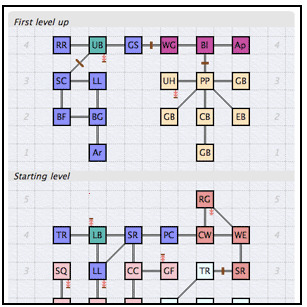
"Inform 7 is an interactive fiction authorship system. It’s not the only one out there (see the other resources on Writing IF for how to choose a system), but it’s the one I use; I’ve also been quite closely involved in its development."
Scoop.it!
Excerpt from article by Todd Finley at: http://www.edutopia.org/blog/troy-hicks-conversation-digital-writing-todd-finley
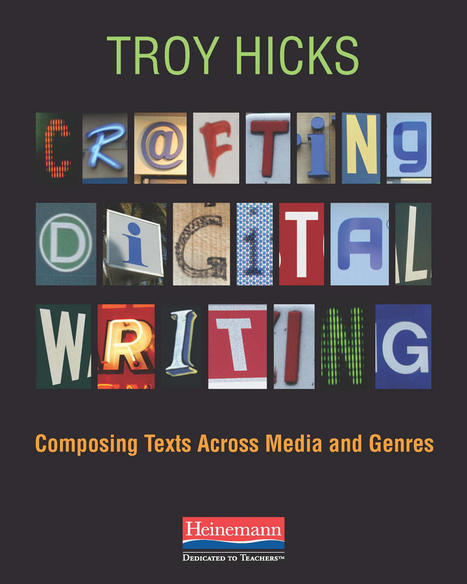
"Troy Hicks frequently uses the words "intentional" and "deliberate" to highlight the need for writers to conscientiously think through composing digital texts. Those two words could just as easily describe the author's thoughtful affect on Paul Allison's Teachers Teaching Teachers or the degree to which his new book, Crafting Digital Writing: Composing Texts Across Media and Genres, methodically articulates how 4th-12th grade instructors can introduce technology tools, mentor texts, composing practices, and heuristics for helping students write.
"We have all these devices and technologies available to us. How are we being intentional? How are we being thoughtful -- taking time to craft writing with these digital tools?"
"A professor of English Education at Central Michigan University and Director of the Chippewa Writing Project, Dr. Hicks published The Digital Writing Workshopin 2009. His YouTube summary of this book describes five writers' workshop principles that remain, regardless of available technology. To help stakeholders understand and support schools' digital writing initiatives, he coauthoredBecause Digital Writing Matters: Improving Student Writing in Online and Multimedia Environments in 2010 with Danielle Nicole DeVoss and Elyse Eidman-Aadahl."
Jim Lerman's insight:
Hicks has put together an excellent collection of resources on a wiki, with specific material to back up each of the chapters in his book. The assembled materials, links, articles, and examples are a terrific resource for teachers of writing in digital environments (and aren't we all).
Scoop.it!
Jim Lerman's curator insight,
July 28, 2013 9:32 AM
A seminal, synthesizing work; focused on the educative aspects of transmedia. |







great ideas for storytelling with students
Just for kids? Maybe not. We all have a story to share. Who is building the platform where we can upload stories from all these apps?