
Scriveners' Trappings
111.1K views |
+41 today


Aids and resources for creators and teachers of writing, interactive fiction, digital stories, and transmedia
Curated by
Jim Lerman
 Your new post is loading...
 Scoop.it! 
by Cassandra Khaw (TechHive) "Teacher Dave Basulto knows first hand what shrinking budgets can mean to school arts programs. His solution? Pair an inexpensive iPad mini with theiOgrapher (funding through April 13), a mounting system he’s developed for Apple’s tiny tablet. "The iOgrapher is a rigid plastic molding sporting wide, loopy handles intended to facilitate steadier operation of your device. Three accessory shoes, allowing you to attach equipment like lights or microphones, sit on the upper ridge. An attachment point placed underneath the iOgrapher enables you to mount the assemblage on various tripods, stands, and dollies. And a 37mm lens mount will let you add different lenses. "Basulto plans to lunach a companion site, iOgrapherU.com, alongside the mount with tutorials for both the iPad and his creation, as well as related apps, workflow techniques, editing, and other information helpful for those engaged in audio/visual media production. Only those who’ve purchased an iOgrapher or one of Basulto’s other planned products will be granted access." 

Jim Lerman's curator insight,
September 12, 2013 12:27 AM
I have no connection with this brand new company, founded by teacher Dave Basulto, but boy do I wish I did! This is a fabulous concept and looks like a dynamite product. The website says the base frame unit will start shipping on Sept. 13, 2013 and cost just $65. The Accessories page suggests lenses, lights, microphones, and tripods. Excluding the cost of the iPad Mini, users can equip themselves with a very functional video-making kit for less than $300 (including a bunch of great apps).
Scoop.it!

We, the denizens of the Web, who live and work here also call them as tag clouds. Call them “word clouds” or “tag clouds” – they are visualization tools that helps your brain process information in a rather unique way. Via Ana Cristina Pratas

Jane Logan's curator insight,
September 12, 2013 5:26 AM
I will be looking at many of these activities to do with my class 
Louise Robinson-Lay's comment,
September 12, 2013 6:17 AM
I particularly liked the idea of the writing activity. Thanks.
Louise Robinson-Lay's curator insight,
September 12, 2013 6:17 AM
Some useful ideas for using word clouds in class.
Scoop.it!

Robin Good's curator insight,
September 9, 2013 7:23 PM
Editorially is a collaborative free online editor which focuses on making it easy to revise, modify and comment on any text. With a minimal and inobtrusive UI, Editorially shines when it comes to see different contributors edits to the same text or to compare different versions of a story by different editors. To format text the Markdown annotation approach is used, freeing the user from having to deal with menus and buttons. Editorially automatically saves new versions of your text and it makes it easy to go back and see every single revision and edit made. It is possible to import plain text files and to export both Markdown and HTML. All mobile devices and screens are supported. My comment: Elegant, simple, easy to use. It offers powerful revision features making a very good alternative to other collaborative editors. Free to use. Try it out now: http://vimeo.com/73479976 
Alessandro Donadio's curator insight,
September 21, 2013 5:52 AM
Come usare uno strumento come questo nelle organizzazioni?
Scoop.it!

by Caitlin Tucker "Google docs has made it possible for me to go paperless. The decision to remove paper from my life has been liberating! Whenever I train teachers, I share my enthusiasm for a paperless classroom. My cries of joy and excitement are sometimes met with grunts and skeptical looks. I’ve met several teachers using Google docs, who still collect hard copies of assignments and essays to grade by hand. They are concerned that grading online will take longer than grading by hand. I disagree. "I want to share three tips and tricks I’ve used to make grading digital writing more efficient than hand grading student work."
Jim Lerman's curator insight,
September 9, 2013 2:14 PM
Although this post comes from and English teacher, there's no reason these techniques couldn't be used in any learning situation where significant amounts of writing take place. I particularly like the idea of making links to YouTube videos that illustrate various points of grammar or usage.
Scoop.it!
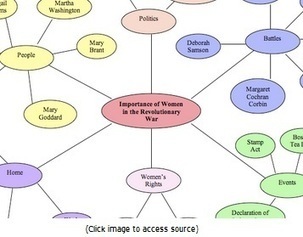
There are dozens of great brainstorming and organizing tools available on the web to help students prepare for writing assignments and develop their Via CoastalGLRS

Ann Kenady's curator insight,
March 19, 2013 1:54 PM
Graphic organizer can help writers with organization and logic flow.
Scoop.it!

by Beth Holland "One of the most valuable tools afforded by iPads is the ability to screencast -- to combine audio, images, drawing and text on a whiteboard to create a video. Given the multitude of outputs afforded by this one type of app, what if we focused on accelerating learning through a single tool? "As Kristen Wideen (@MrsWideen) demonstrates with her mixed first and second grade class, screencasting bridges the gap between the physical and the virtual in order to extend the learning context. Through the use of theExplain Everything app, in conjunction with a paper-based project, she encourages meta cognition and provides students with a voice to explain their thinking. In a similar vein, consider the learning target of presenting knowledge, demonstrating understanding, and offering an explanation. Not only does the following example from MIT offer an exposition of structures, but it also incorporates persuasive writing skills and complex communication." Via Grant Montgomery

Vanessa Cavazos's curator insight,
May 24, 2020 10:08 PM
Teachers use Screencastify to help explain information to students on their device. It is important for teachers to know how to use these applications and teach their students how to use them as well. Students should be able to implement Screencastify to explain their learning. A great example used is for a student to explain a math problem and share the video with their teacher for feedback.
Scoop.it!

'The word premieres of two interactive doc projects and the New York debuts of a handful of multiplatform titles — including “Charlie Victor Romeo,” the hit Off Broadway docu-play recently turned into a 3D film — are among the offerings on tap for Convergence, the New York Film Festival’s second annual slate of transmedia programming.
Driven by tech innovation and the proliferation of digital possibilities, transmedia storytelling has become an increasingly prominent component of film festivals as a growing number of filmmakers begin to explore multiplatform projects. Earlier this year the Tribeca Film Festival officially incorporated transmedia offerings into its festival lineup, while Film Society of Lincoln Center, which presents NYFF, launched its year-round Convergence initiative last year, a festival component of which kicked off as part of the 2012' Via siobhan-o-flynn
Scoop.it!

I really must recommend Mark Wolf’s excellent book “Building Imaginary Worlds: The Theory and History of Subcreation“. It’s full of great insights and examples. What occurs to me is that I often illustrate multiple stories existing inside a storyworld without dwelling too much on what’s inside all that space that fills the storyworld – there’s a kind of dark matter that holds everything together. This got me thinking about how storyworld elements are revealed – usually partially although sometimes more comprehensively – in each story. And this lead to the infographic below
Via siobhan-o-flynn
Scoop.it!
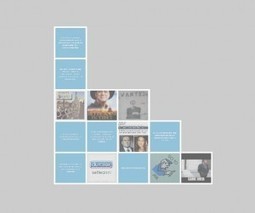
Storify Has Competition, and It’s Called Brickflow .. Brickflow allows users to search for hashtags and compile corresponding pieces of content (bricks) found across Twitter, Instagram, YouTube and Tumblr into a workable story. You can drag and drop each tile where you want it, piecing together a sensible visual narrative, and voila — you’ve got embeddable and sharable content for the Web. If the topic doesn’t need to be chronological, you can “remix” your flow and rearrange the story. Crowdfunded via Indiegogo (with a $10,000 goal) and led by a team that includes a former Harvard University-funded startup incubator participant, a man who worked for Prezi, and a filmmaker, Brickflow released its public beta just days ago. They say they are the first social media curator allowing users to string together multiple Instagram videos in a story format. That feature alone could be a game changer for journalists. Via Heiko Idensen
Scoop.it!

by Justin Marquis "The brain, it seems, does not make much of a distinction between reading about an experience and encountering it in real life; in each case, the same neurological regions are stimulated. Keith Oatley, an emeritus professor of cognitive psychology at the University of Toronto, has proposed that reading produces a vivid simulation of reality, one that "runs on minds of readers just as computer simulations run on computers." Fiction — with its redolent details, imaginative metaphors and attentive descriptions of people and their actions — offers an especially rich replica. Indeed, in one respect novels go beyond simulating reality to give readers an experience unavailable off the page: the opportunity to enter fully into other people’s thoughts and feelings." "The immediate thought prompted by this talk of "vivid simulation of reality," and being able to "give readers an experience unavailable off the page," was that video games do this too. In fact, they could provide a more richly interactive experience than reading because they have the capability to adapt for individual users and to provide branching scenarios based on different inputs. So the question is, can video games accomplish the same objectives that the authors are attributing to reading fiction?" Via JackieGerstein Ed.D.
Scoop.it!
WritingFix: prompts, lessons, and resources for writing classrooms ~ Northern Nevada Writing Project
"If you navigate this website's menu bar (at left, in the light blue area), you will quickly discover pages dedicated to our local inservice classes and their instructors, as well as links to hundreds of complete writing lessons developed during local workshops we ran between 2001 and 2011. Our lessons include thousands of student samples submitted by teachers all over the world who--even though they're not from Northern Nevada--use our posted materials to inspire their students to write." Via Katie Frank
Jim Lerman's insight:
Outstanding collection of resources that has been serving teachers and learners for over a decade.

Katie Frank's curator insight,
June 9, 2013 4:53 PM
This is one of my favorite resources for writing workshop and writing notebooks. |
Scoop.it!

"In 2012 Pixar Story Artist Emma Coats tweeted 22 storytelling tips using the hashtag #storybasics. The list circulated the internet for months gaining the popular title ‘Pixar’s 22 Rules of Storytelling’. We reposted this list two weeks ago and the response has been phenomenal with thousands of likes, shares, comments and emails. "Since posting the story, a number of people have contacted us regarding rule number 4 on the list, also know as ‘The Story Spine’: Once upon a time there was ___. Every day, ___. One day ___. Because of that, ___. Because of that, ___. Until finally ___."
Jim Lerman's curator insight,
September 12, 2013 9:56 AM
As an English teacher, I long ago discovered an even more succinct story spine on a handout from a publisher (I think it was Houghton Mifflin, but am not sure):
Between the two spines, I think we have a nice progression here, from utter simplicity to more fertile, elaborated nuance.
Scoop.it!
|


|
Scooped by
Jim Lerman
September 11, 2013 3:16 PM
|
Scoop.it!
Wiki Home
A companion site to Troy's Heinemann books The Digital Writing Workshop and Crafting Digital Writing, this wiki empowers teachers as they learn how to teach digital writing.
|
|
Scooped by
Jim Lerman
September 11, 2013 12:08 AM
|
Scoop.it!

by Howard Rheingold
"More important than the use of technology and pedagogy to light students’ enthusiasm, more important than the multimedia literacies they gain, even more important to the charisma and enthusiasm that Groom brings to the enterprise is the deeper philosophy of real autonomous accomplishment in the digital world and self-awareness by each student of the power of their online participation that Groom mentions in our conversation. He insists that students not use a siloed learning management system but, instead, learn to create their own WordPress site and to learn in public, because underlying the multimedia skills that the course is meant to impart is a sense, in Groom’s words, of “What it means to shape their digital identity, what it means to shape who they are online. That's the secret sauce to this class. We don't talk about it that much, but I want them to constantly think and reflect upon their creation and their process of creation so that when someone comes to their site, what they see is an amazing curation of a process for thinking, learning, and being as a person in the 21st century.”
|
|
Rescooped by
Jim Lerman
from 21st Century skills of critical and creative thinking
September 9, 2013 8:42 PM
|
Scoop.it!

This video gives instruction to middle school and high school students on writing.
Via Lynnette Van Dyke
|
|
Scooped by
Jim Lerman
September 7, 2013 8:46 PM
|
Scoop.it!

by Drew Minock
"During this first week of school, I wanted to inspire my students to be creative and have fun with their learning. In years past I have always struggled to make my writing lessons fun and engaging, yet productive. This is year I decided to introduce writing with the help of my favorite tech tool: Augmented Reality!
"I gave the students a choice to pick one of the 10 different coloring pages from the app ColAR Mix, and use the image on the page as a prompt to write a creative story. There was only two rules for the assignment:
1. Have fun
2. Use your imagination
"The students got started right away, some writing their story first, and some coloring. Many students were very excited about their stories saying, "Can I please share my story?!" This all happened because I gave the students a choice to create what they wanted and NOT what I wanted. "
- See more at: http://www.twoguysandsomeipads.com/2013/09/augmented-reality-to-inspire-creative.html#sthash.eeUegO2O.dpuf
|
|
Rescooped by
Jim Lerman
from Coastal GLRS Writing Resources
September 6, 2013 10:04 PM
|
Scoop.it!

Here's an analogy I find useful. As children learn to ride bikes, we support them as they practice the essential skills for bike riding: pedaling, braking, steering, and balancing on two wheels. We support these emerging bike riders by holding on to the seats of their bikes as they sharpen these skills and consolidate them to achieve proficiency.
Via CoastalGLRS
|
|
Rescooped by
Jim Lerman
from The Funnily Enough
September 6, 2013 4:46 PM
|
Scoop.it!

A Main Character who is larger-than-life, has certain attributes and who faces high stakes is often a winning combination. Yet when creating conflict for our characters, novel writers should beware of loading too much personal angst or not enough of a conscience. Balance is key.
Here are some ideas for balancing a Main Character's conflicts:
Via mooderino

|
|
Rescooped by
Jim Lerman
from Tracking Transmedia
September 5, 2013 12:06 AM
|
Scoop.it!

How are emerging technologies and innovations in digital media, from the web to 3D to mobile and social media, changing the way we tell stories -- stories that are not confined to a single narrative medium but told across a variety of platforms?
Via siobhan-o-flynn
|
|
Rescooped by
Jim Lerman
from Social Reading & Writing: cultural techniques with social networks
September 4, 2013 12:14 AM
|
Scoop.it!

Since Gingko is tree-based, one person can work on the overall organization, while a second is writing the main points of a particular section, and a third is taking those points and fleshing them out in a subsection.
"Gingko is an online word processor, that lets you
work on structure & content at the same time.
Whether you’re an artist, scholar, or entrepreneur,
this new medium lets you write better, faster."
Via Nik Peachey, Heiko Idensen

Alfredo Corell's curator insight,
September 22, 2013 6:32 PM
Very good app for long documents. You could work in a 3 tree level, allowing you to conect between levels, add links, pics, etc... quite user-friendly.

Anne-Christin Tannhäuser's curator insight,
February 25, 2014 5:52 AM
Need to try out this tool, looks exciting!

Asif Mehedi's curator insight,
June 11, 2014 12:56 PM
Now that I've discovered the wonderful Gingko App, my writing (and pre-writing) is not going to be the same again.
|
|
Rescooped by
Jim Lerman
from Ignite Reading & Writing
September 2, 2013 2:48 PM
|
Scoop.it!

Nick DeMartino: "The session was called "Unlock the Power of Fans" at Transmedia Los Angeles’ monthly meetup earlier this week, but I’ll remember it as the Fanthropology of Theatrics, because I learned so much about the way audiences are using the new collaborative storytelling platform that I was there to represent."
Via The Digital Rocking Chair, Katie Frank
Jim Lerman's insight:
Quite an intriguiging new platform.

The Digital Rocking Chair's curator insight,
June 8, 2013 1:36 AM
Nick DeMartino takes us through Theatrics, the storytelling tool behind Beckinfield, Welcome To Sanditon, and Psych's The S#cial Sector.

Fred Harden's curator insight,
June 9, 2013 10:30 PM
Now to move this up a notch, what about a few slicker videos, wannabe actors etc.?





Great story-telling ideas, quite similar to the Pixar story spine.