 Your new post is loading...

|
Rescooped by
Jim Lerman
from :: The 4th Era ::
March 19, 2016 7:30 AM
|
"P2PU is proud to launch a toolkit designed to allow anyone to run their own Learning Circles: lightly facilitated study groups for learners who want to take online courses together in a public library or other community space.
Run Your Own Learning Circles
Working with facilitators, librarians, and course participants, P2PU has developed a Learning Circles toolkit, complete with software tools, facilitation guides, a list of curated courses, and marketing templates that make it easy for librarians to organize Learning Circles at their branch with little additional help needed. All of this material is on our site, for free, licensed for re-use and remixing and ready to be downloaded and used by anyone who needs it.
In addition to the toolkit, P2PU is available to support individuals and organizations looking to get started with Learning Circles. Our services include facilitator training workshops, course selection and adaption expertise, ongoing facilitator support, web hosting, and software tool integration."
|
|
Rescooped by
Jim Lerman
from A Writing Life
March 19, 2016 12:09 AM
|
If you’ve persuaded audiences to read past your press release’s headline, the introduction is where you must seal the deal to keep them engaged. Follow these tips to write a press release introduction that delivers on your headline.
Via Shannon Bolithoe
|
|
Rescooped by
Jim Lerman
from Into the Driver's Seat
March 18, 2016 3:43 PM
|
"We’ve all heard that we shouldn’t judge a book by its cover, but the truth is that good looks inspire not only more attention, but more trust. This is not only true of people we meet, but the visual content we perceive around us.
"To give you an idea of how much design matters when it comes to that important pitch, we selected some less-than-attractive slides from real presentations and redesigned them as examples of what you should and shouldn’t do."
Via Jim Lerman
|
|
Rescooped by
Jim Lerman
from Cultivating Creativity
March 17, 2016 4:33 PM
|
"...content creation is time-consuming. And since your competitors have ramped up their content marketing, it's even harder to create new, enticing content that stays ahead of the curve.
That's why we created the ultimate kit of content creation templates, so you don't have to start from scratch. These templates will let you fill-in-the-blank so you can quickly create the content you need to fuel your inbound marketing machine.
This ultimate content marketing kit includes:
10 infographic templates
18 ebook templates
65 social media image templates
4 PowerPoint presentation templates
5 blog post templates
1 press release template
5 SlideShare templates"
Via Jim Lerman
|
|
Rescooped by
Jim Lerman
from digital marketing strategy
March 16, 2016 11:40 AM
|
Here are fifteen things you can do right after posting content to increase your traffic and find new readers. These tips can help a post go viral.
Via malek
|
|
Scooped by
Jim Lerman
March 16, 2016 1:31 AM
|
Technology affords students the opportunity to demonstrate their understanding in a multitude of ways. A student-centered writing classroom aims to move all writers forward and provides choice throughout the writing process. One important way for students to have ownership in their message is providing choice in the mode in which their ideas are communicated. In a traditional classroom, unimodal modes of communication are commonplace, unlike a technology ubiquitous learning environment in which writing comes in many forms of multimodal communication. Publishing and sharing are uniquely dependent upon the student’s choice.
In my classroom, students used a variety of modes to publish and share their writing and message with an audience beyond the classroom. The following are 3 unique ways to consider, along with technology integration to support:
|
|
Scooped by
Jim Lerman
March 13, 2016 9:59 AM
|
What is needed to start a Makerspace in a classroom or school?
Passion - You need to have passion and a belief in the educational value of maker-style projects.
Space - This can be a whole room or only part of a room.
Supplies - Start small with simple craft materials. Often sending a message out to colleagues and the community asking for donations of materials works well.
Storage - Create a place to store materials when they are not in use and student projects as they are being worked on.
Where should the Makerspace be placed?
Makerspaces can be located just about anywhere, but there are certain spaces that make more sense in a school setting. Often, the school library is selected to start a Makerspace, as a central location for students and because of the expertise of the librarian. Another option is an unused classroom; if there is an unused woodshop, this might be an ideal space as well. If you are starting small, create a Makerspace right in your classroom.
|
|
Scooped by
Jim Lerman
March 12, 2016 1:58 AM
|
On this episode of Getting Goosebumps: The Power of Storytelling, I was lucky enough to chat to storytelling expert Robert Mckee. As the most sought after screenwriting lecturer around the world, and teacher of over 60 Academy Award Winners so far, I had a huge amount of questions to ask him and was able to gather some really useful advice for business and storytelling.
|
|
Rescooped by
Jim Lerman
from Cultivating Creativity
March 12, 2016 1:32 AM
|
Patrick Moreau spends his days telling stories through his filmmaking at Stillmotion and helping others learn the power of story through their ...
Via José Carlos, elearning hoje, Jim Lerman
|
|
Rescooped by
Jim Lerman
from Digital Storytelling 2.0
March 12, 2016 12:49 AM
|
This freebie contains writing symbols. There are 97 unique icons in this pack. They are available in PNG, AI, EPS and SVG file formats.
Via elearning hoje
|
|
Rescooped by
Jim Lerman
from Digital Storytelling 2.0
March 11, 2016 8:03 PM
|
The class I teach is called “Story,” and the first assignment was to give a “TEDette.” I defined the project as a five minute talk using a personal story to make an audience care about a scientific...
Via José Carlos, elearning hoje
|
|
Scooped by
Jim Lerman
March 11, 2016 12:35 PM
|
The Toolbox provides you with Lessons, Student Writing Samples, Rubrics, Grade Specific Information and more!
|
|
Rescooped by
Jim Lerman
from Into the Driver's Seat
March 11, 2016 1:15 AM
|
The New York Times Learning Network is holding its third annual student editorial contest, featuring short, evidence-based persuasive essays where teenagers take a stand on an issue and attempt to convince readers of their point of view. Deadline: March 29, 2016
|
|
|
Rescooped by
Jim Lerman
from A Writing Life
March 19, 2016 12:11 AM
|
If you want to write better, you should start with one simple rule: "Always write with your audience in mind". Here are some notes on how to develop audience personas to better focus your content.
Via Shannon Bolithoe
|
|
Rescooped by
Jim Lerman
from A Writing Life
March 19, 2016 12:07 AM
|
“Many of you are growing as writers and seek opportunities beyond your blog. To continue this conversation, let’s talk about freelancing and getting paid to write, and the flip side of this: writing for free and exposure.”
Via Shannon Bolithoe
|
|
Rescooped by
Jim Lerman
from Into the Driver's Seat
March 17, 2016 6:07 PM
|
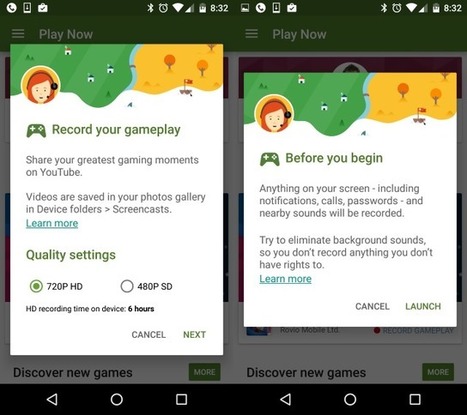
One of the most popular types of YouTube video is the screencast. Here's how to easily make your own.
Via Becky Roehrs, Jim Lerman
|
|
Scooped by
Jim Lerman
March 17, 2016 4:17 PM
|
Struggling with how to be more successful with your landing pages? Learn 4 key elements for how to build a killer landing page that converts
|
|
Scooped by
Jim Lerman
March 16, 2016 11:25 AM
|
I’ve written before about the importance of reading in writing. An extension of this goes a bit deeper: one of the easiest ways to start writing something is simply to riff off of something someone else has already written.
|
|
Scooped by
Jim Lerman
March 16, 2016 1:21 AM
|
Words tell stories, as do pictures. It’s a rare written piece that won’t benefit from art that supports it. I just discovered (thank you, Twitter) The New York Public Library ( NYPL Archives) has generously opened its archives of more than 187,000 images and we are free to use and share.
Visit the website, here: http://www.nypl.org/research/collections/digital-collections/public-domain
|
|
Rescooped by
Jim Lerman
from Cultivating Creativity
March 13, 2016 9:40 AM
|
What is a green screen?
In film and video, a green background can be placed behind subjects being filmed. This allows a separately-filmed background to be added to the final video. Using a green screen is a fun way to enhance any video project. Filming in front of a green screen allows any project to be virtually transported to a new location or setting.
Why use a green screen?
There are many green-screen film projects that can enhance learning in the classroom. Using a green screen can make projects more fun, interesting, and effective. For example:
|
|
Rescooped by
Jim Lerman
from Digital Storytelling 2.0
March 12, 2016 1:34 AM
|
Awards: Human Rights Award (FENACO, Peru) 1st prize - short film competition (Arraial Cine Fest, Brazil) Honorable Mention, Best Portuguese Short Award (Monstra,…
Via elearning hoje
|
|
Rescooped by
Jim Lerman
from Digital Storytelling 2.0
March 12, 2016 1:18 AM
|
"Scenes" is a tool and a method that was created to empower business leaders and professionals of all industries to shape their ideas and scenarios in the form of fun illustrative storyboards without the need of refined drawing skills. Learn how you can use it.
Via José Carlos, elearning hoje
|
|
Scooped by
Jim Lerman
March 12, 2016 12:44 AM
|
I’ve spent the last two years studying story architecture, reading everything I can get my hands on. I’ve read books by genre authors who write sci-fi, romance and horror. I’ve read literary greats, journalists, movie scriptwriters and comic book authors. Campbell? Freytag? Check and check. Three acts, seven points, circle, diamond and arc, I’ve got them. But for me, the biggest OMG was when I watched Kendall Haven’s video on the science behind story. You see he’s a scientist and storyteller who got a DARPA grant to study the body’s reaction to story. He did it all: MRI’s, electrodes, dopamine swabs. And his eight elements that create engagement mapped to the wisdom of the best-selling authors.
This is how I boil it down.
|
|
Rescooped by
Jim Lerman
from Into the Driver's Seat
March 11, 2016 2:52 PM
|
But, what about an eight-minute film? That’s the average length of our Film Club features, and these short documentary films do much more than just entertain. They challenge assumptions and offer new perspectives. They tell stories that often remain hidden, and introduce us to people and places foreign to us.
As with other short texts like stories, poems and articles, mini-documentary films can stimulate discussion, debate, thinking and writing. And, they can serve as a refreshing break from print media to help students explore curriculum themes and practice important literacy skills.
Below, we present eight films we’ve featured in our Film Club series that have already captured students’ and teachers’ attention. In addition, we offer practical teaching ideas, along with responses from students and teachers, for how you can use these documentaries, or films like them, to teach close reading and critical thinking skills.
And if these aren’t enough, our Film Club “meets” online every other Friday during the school year. Bring your students to join the conversation.
|
|
Scooped by
Jim Lerman
March 11, 2016 12:31 PM
|
"Here you will find an infographic showing Show, Don't Tell"
|














Outstanding work. Definitely worth checking out!
Outstanding work. Definitely worth checking out!
Outstanding work. Definitely worth checking out!