


News literacy is such a vital 21st-century skill for students, the information landscape is changing so quickly and it’s a real challenge for educators to teach this stuff because it’s changing all the time.
Via Nik Peachey, Jim Lerman

 Your new post is loading...
 Scoop.it! News literacy is such a vital 21st-century skill for students, the information landscape is changing so quickly and it’s a real challenge for educators to teach this stuff because it’s changing all the time. Via Nik Peachey, Jim Lerman 
Scoop.it!

Unlike more sales-oriented strategies, content marketing is a great way to educate existing and future customers about your industry in relevant ways. While eBooks and guides are useful long-form content marketing types, case studies are unique in the way they combine storytelling with providing information relevant to your business.
Jim Lerman's insight:
Not just for marketing! Case studies are also excellent writing exercises for students. Writing them incorporates so many skills: planning, interviewing, organizing, writing for an audience, creating a headline (main idea), persuasion. Students can write them in teams or individually. Via TechinBiz
Scoop.it!

7 Tools for Creativity including Evernote, Scrivener, CreateSpace, Canva, Mind Jet Mind Manager, Joel's Journals, iPhone
Scoop.it!

Storytelling techniques are a major part of getting people to hear about your brand and learn about your brand’s story. Here are 15. Via Ariana Amorim, Lynnette Van Dyke
Scoop.it!

Via The Scout Report
"Social studies teachers, debate coaches, and writing instructors may want to check out C-SPAN's Classroom Deliberations. This collection of resources, endorsed by the National Council for the Social Studies (NCSS), is designed to engage young people with a number of contemporary controversial issues. This resource collection consists of two components. Instructors can browse this collection by Issue; recent issues featured include "fake news," the Electoral College, and the death penalty. Each collection contains multiple video clips from C-SPAN, including interviews, town halls, and congressional speeches. These materials are accompanied by a lesson plan and related classroom materials, such as vocabulary charts and graphic organizers. The Classroom Deliberation page also includes links to outside resources that describe procedures for classroom activities instructors may want to pursue in regard to these topics, including student position papers and Structured Academic Controversies."
Scoop.it!

Via The Scout Report
"English literature instructors, along with fans of the prolific Shelley/Godwin/Wollstonecraft family, will want to check out this online exhibit and resource collection from the New York Public Library. This exhibit, examines Percy Shelley's life, Mary Shelley's Frankenstein and its enduring legacy, and other remarkable individuals in the Shelleys' circle, including Lord Byron. The site is organized into four sections: Shelley's Ghost, Frankenstein, Creation & Remix, and Outsiders. Showcased archival materials include a digitized copy of the earliest preserved Percy Shelley poem, "A Cat in Distress"; the frontispiece of an 1831 edition of Frankenstein; and a number of scrapbooks crafted by Anne Wagner and Julia Conyers, who were contemporaries of Percy and Mary Shelley. These books, as the site notes, were one of the few creative outlets available for women during this time period. Another highlight of this site is a series of short dramatic readings of Frankenstein that may serve as valuable classroom resources. Middle and high school English instructors will find additional classroom resources via Educator Resources in the Shelley's Ghost section. "
Scoop.it!

Welcome to our opportunities page. Here, we list competitions, literary events and publisher submission deadlines so you can keep track of your writing calendar. Click on the name of the opportunity/competition to be taken to the respective information page. If you’re a website or publication running competitions/events, feel free to get in touch and we’ll be happy to list them for our readers. April The Raymond Carver Short Story Contest The Raymond Carver Short Story Contest is one of the most renowned fiction contests in the world. Featuring prominent guest judges and offering $2500 across five prizes, the contest delivers exciting new fiction from writers all over the world. Deadline May 15th. Bath Short Story Award A selection of twenty winning, shortlisted and longlisted stories will be published in the 2016 anthology in digital and print format (publication likely in October, 2016). Short stories of up to 2200 words in all genres,
Scoop.it!

PLAYLISTS
Jim Lerman's insight: Click on the headline or the graphic to be taken to a page with these 6 questions (scroll down). The questions are hyperlinked to a wonderful collection of readings (and in some cases, videos) that provide outstanding analysis in relation to that question.
IF YOU ARE INVOLVED IN SCHOOL REFORM OR SCHOOL (RE)DESIGN, YOU WILL FIND THESE PLAYLISTS TO BE A GOLDMINE FOR YOUR RESEARCH. GREAT FOR GRADUATE STUDENTS IN EDUCATION AS WELL.
Scoop.it!
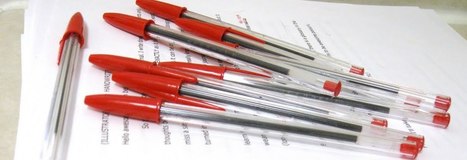
The truth is that spending one’s life reading good writing—not just reading it, but thinking about what makes it so good—is the best way to teach one’s self how to do it. For some people, this might mean enrolling in an MFA program. For me, I was lucky enough to learn by observing the other editors around me, and working on manuscripts as they went from rough drafts to finished books. It was the best writing education I could have received. Here are a few of the things I learned along the way:
Scoop.it!

Le Guin observes that like any tool, the imagination requires that we first learn how to use it — or, rather, that we unlearn how to squander it. Storytelling, she argues, is the sandbox in which we learn to use the imagination:
Scoop.it!

Bob Dylan received the 2016 Nobel Prize in Literature “for having created new poetic expressions within the great American song tradition.” This week, in a recording studio near Los Angeles, he recorded a 27-minute speech discussing the inspiration and arc of his creative life in words, sound and song. Via iPamba
Scoop.it!

The writing workshop/lecture Wonderbook: Scenes is an edited version, using as its starting point the transcript of a version presented at the Arkansas Book Festival in 2014. Both before that event…
Scoop.it!

Make 2017 your best writing year yet with our list of the best writing websites.
|
Scoop.it!

Book Creator is a simple EdTech tool to create ebooks on iPad, Android and Windows tablets. Create a book and publish it to Apple's iBooks Store. Via Yashy Tohsaku
Scoop.it!

Flash Fiction Center is a project developed as an Open Educational Resource (OER) for educators interested in teaching creative writing online using virtual worlds. Via elearning hoje
Scoop.it!
The Lazy Scholar teaches you how to create a character profile. The article includes a character profile worksheet.
Scoop.it!

Via The Scout Report
From the Butler University Libraries and Center for Digital Technology comes this LibGuide for Art and Visual Rhetoric resources. While librarian Sheri Storms designed this LibGuide specifically for students in a particular Butler University Arts course, this collection of resources may appeal more broadly to other arts instructors and students. The three sections that will be of most interest are Websites, Visual Culture Resources, and Visual Rhetoric Resources. The Websites section highlights a variety of internet resources related to art and art history, including online indices and galleries. The Visual Culture Resources section includes resources from a variety of universities along with books that may be of interest. Finally, the extensive Visual Rhetoric Resources section shares online resources related to typography, advertising, comic strips, and more. Via Jim Lerman
Scoop.it!
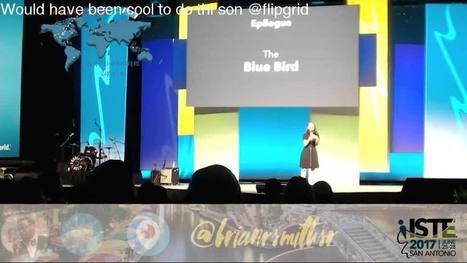
Tremendous buzz about this great preso. Shot from the audience, Magiera's preso starts about 25 minutes into the video.
Thanks to Terri Eichholz for writing about this and spreading the word! -JL
"I am not as eloquent as Jennie, so I encourage you to watch the Periscope linked above (for which she received a standing ovation). My hope is that every school will show her presentation to its teachers before the beginning of the new school year. They will be energized and motivated to look for untold stories that must be shared, develop deeper relationships with colleagues and students, and to undertake new adventures."
Scoop.it!

Description by Common Sense Education
"Calm presents an experience that is wholly devoted to its original intent: guiding relaxation. This app includes a robust level of content, which allows for extensive amounts of learning with daily lessons that are sure to last for several weeks, if not months. Not only does this app instruct users who are new to meditation and relaxation on how to begin this practice, but it offers scaffolding approaches to promote independence and generalization. A responsive calendar tracks the amount of time users spend on sessions, which users can share to social media to engage other learners. The app has built-in programs that can be tailored to mastery level, age level, or area of interest.
"Calm also links to additional resources in a blog community that has frequent posts to extend the in-app experience for parents, teachers, and practitioners alike. Overall this app promotes the essence of learning relaxation, and while the assistive technology may be slightly one-sided (for example, audio-only meditations), Calm presents a uniquely fresh and empowering experience for users of any age."
Scoop.it!
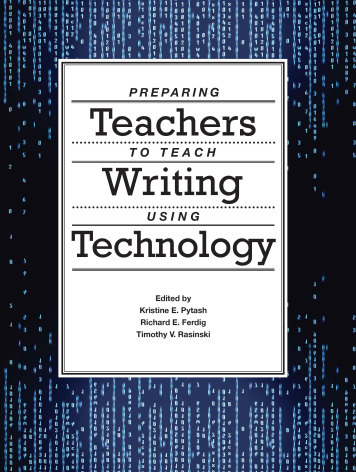
"Technology is changing not only how people write, but also how they learn to write. These profound changes require teachers to reconsider their pedagogical practices in the teaching of writing. This books shares instructional approaches from experienced teacher educators in the areas of writing, teacher education, and technology.
"Chapters explore teachers personal experiences with writing and writing instruction, effective pedagogical practices in methods writing courses, and professional development opportunities that effectively integrate technology into the writing classroom and contribute to students’ growth as writers and users of technology. While the chapters in this collection are written to inform practice, they are written from a theoretical and empirical base by research-oriented educators in our field.
"Each chapter provides a research base for a particular instructional approach, a description of their strategy, and examples from instructional settings that highlight how the pedagogical practice advanced the knowledge of the teachers in the areas of writing instruction and technology. This collected volume provides as up-to-date understanding of how teachers are prepared to teach writing using technology.
Scoop.it!

The best way for kids to learn to read is by writing, Learn to read by writing - Writereader Via Ana Cristina Pratas
Scoop.it!

"In my last blog post titled, “Stop Taking Grading Home,” I explained how I use the Station Rotation Model to provide students with real-time feedback as they work instead of taking grading home. I had one teacher ask me what I do when a student arrives at my teacher-led station and has not done the work required. That’s a great question, so I wanted to share my very simple strategy with my readers. Jim Lerman's insight:
Fantastic idea!
Scoop.it!

The Princeton University professor and Pulitzer Prize winner says she plans to bring poetry events “to parts of the country where literary festivals don’t always go.” Via iPamba
Scoop.it!

A machine mapped the most frequently used emotional trajectories in fiction, and compared them with the ones readers like best.
|







Lots of useful links in the text too.