Your new post is loading...

|
Rescooped by
Jim Lerman
from Into the Driver's Seat
March 11, 2019 2:34 PM
|
When students write for an authentic audience about issues that matter to them, by extension they suddenly care about sophisticated rhetorical moves, carefully selecting their words, and crafting strong rebuttals.
When they really want to effect change, they willingly read articles on the topic, watch TED Talks I recommend, and contemplate the other side of the issue with curiosity and incredulity.
When students are invested in their writing, we engage in rich and nuanced conversations to contemplate what might be their best approach to change their readers’ minds. Choice, provided wisely, is a powerful motivator.
Here is how I have used The New York Times Learning Network’s annual Student Editorial Contest as a way to motivate my students to share their insights and opinions beyond our classroom, because I feel strongly that the world needs to hear what they have to say.
|
|
Rescooped by
Jim Lerman
from Tools for Teachers & Learners
March 10, 2019 12:58 AM
|
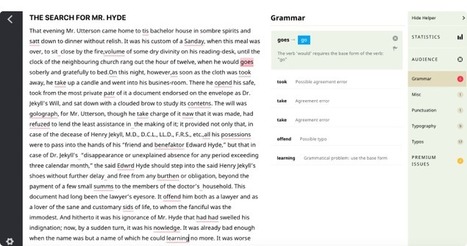
Millions trust Textly’s free writing app to make their messages, documents, and posts clear, mistake-free, and effective.
Via Nik Peachey
|
|
Rescooped by
Jim Lerman
from Into the Driver's Seat
February 13, 2019 7:45 PM
|
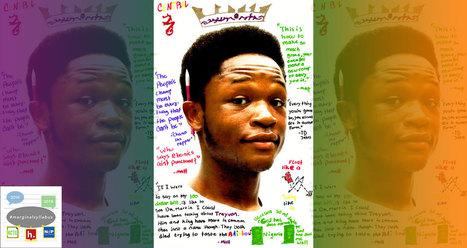
"Our February reading for Literacy, Equity + Remarkable Notes = LEARN critiques narratives of failure associated with literacy and literacy education that schools weave about Black male students. In an article published in Research in the Teaching of English, authors Valerie Kinloch, Tanja Burkhard, and Carlotta Penn detail the out-of-school literacy practices of two Black young men Khaleeq and Rendell. The authors discuss the importance of producing counter-narratives to negative messages that Khaleeq and Rendell receive in school about their intelligence and their community-based trajectories when “school is not enough.” "This is the fourth month of LEARN, a Marginal Syllabus co-developed with the National Writing Project (NWP) and the National Council of Teachers of English (NCTE). Each month during the 2018-19 academic year, we’ll collaboratively read and discuss an article, published by NCTE, that investigates the intersection of literacy and equity. Refer to the syllabus for information on all the annotatable readings, which will go “live” on the first Monday of each month, along with related events hosted by CLTV and others. February Topic: When School Is Not Enough: Understanding the Lives and Literacies of Black Youth,
by Valerie Kinloch, Tanja Burkhard, and Carlotta Penn"
|
|
Scooped by
Jim Lerman
February 13, 2019 7:24 PM
|
Description by National Council of Teachers of English "Writing for authentic audiences can transform students’ writing experiences. This list, compiled by the The New York Times for the 2018 NCTE Annual Convention, shares publication opportunities specifically for teenage writers and visual artists."
|
|
Rescooped by
Jim Lerman
from Into the Driver's Seat
February 12, 2019 7:39 PM
|
There are several great resources available to make your writing stand out like a pro, and create winning articles without the need for outsourcing. Take advantage of these tools to improve your content writing for better visibility.
Via Stefano Principato, massimo facchinetti, Jim Lerman
|
|
Rescooped by
Jim Lerman
from Into the Driver's Seat
February 7, 2019 9:08 AM
|
Free resource of educational web tools, 21st century skills, tips and tutorials on how teachers and students integrate technology into education
Via Dr. Tom D'Amico (@TDOttawa) , Jim Lerman
|
|
Rescooped by
Jim Lerman
from Into the Driver's Seat
February 5, 2019 1:07 PM
|
"Recently, Apple decided to renew its focus on the educational market. The company may have lost some ground to Google and other companies when it comes to owning the educational space, but there’s no denying it’s still a major player. One of the reasons that iOS devices remain popular in educational settings is because there’s no shortage of apps and tools that can be used in the classroom. "Writing is one particular niche where iOS developers have really done an exceptional job. There are a host of apps that students can use to become better, more prolific, creative writers. Here are some of the best."
|
|
Scooped by
Jim Lerman
February 1, 2019 8:50 AM
|
|
|
Scooped by
Jim Lerman
February 1, 2019 8:42 AM
|
The 400th Commemoration of the arrival of Africans in the first permanent English Colony in North America highlights the perseverance of Africans from 1619 to the present. The Association for the Study of African American Life and History (ASALH) views the 400th Commemoration as an event of historic importance for ALL people, but especially those of African descent. Each year ASALH establishes a Black History Theme. This commemoration speaks directly to ASALH’s selected annual Black History theme for 2019—“Black Migrations.”
The story of Africans in the English Colony of Virginia begins with the founding of the Colony in 1607, under the rule of King James I of England. In August of 1619, the first African men and women arrived by ship at Point Comfort, present-day Fort Monroe, in Hampton, Virginia. This fact is known because John Rolfe, Secretary and Recorder General of Virginia, recorded the arrival of “20 and odd Negroes” in 1619. Some of the Africans became part of the Jamestown Settlement in Virginia. America places historic importance on the Jamestown Settlement as the cornerstone of this nation.
Forced migration of Africans to the Virginia colony in 1619 reminds us that they came before the Mayflower (1620). By this commemoration, ASALH pays tribute to 400 years of the creative industry of a people who were kidnapped and brought unwillingly to these shores and who, with resolute African spirit, fought for human dignity and equality.
There have been several commissions created to commemorate this 400-year journey including the Federal legislation introduced by Congressman Bobby Scott titled “The 400 Years of African American History Commission Act,” H.R. 1242 – 115. (February 2018). ASALH has, in turn, established The 400th Commemoration Committee.
ASALH’s 400th Commemoration Committee seeks to educate America and the global community about the arrival of Africans in the Virginia Colony and tell the story of the resilience of the African American family, their contributions to America, and most of all African American perseverance over four centuries.
|
|
Rescooped by
Jim Lerman
from Cultivating Creativity
February 1, 2019 8:29 AM
|
"If you’re looking for resources for Black History Month, we have a collection that begins with 28 historic Times front pages, on events ranging from the Dred Scott decision of 1857 to the 2008 election of Barack Obama. The collection also includes recent articles, videos, photos and graphics about black history and contemporary culture, as well as related lesson plans and writing prompts." .
Via Jim Lerman
|
|
Rescooped by
Jim Lerman
from Into the Driver's Seat
January 30, 2019 8:29 AM
|
The iPhone could be an incredible tool, but most people use their phone as a life-shortening distraction device.
However, if you take the time to follow the steps in this article you will be more productive, more focused, and — I’m not joking at all — live longer.
Practically every iPhone setup decision has tradeoffs. I will give you optimal defaults and then trust you to make an adult decision about whether that default is right for you. Jim Lerman's insight: Very informative!
|
|
Rescooped by
Jim Lerman
from Into the Driver's Seat
January 29, 2019 7:14 PM
|
"This blog post, compiled with the help of member Laura M. Jiménez, offers graphic novels with characters, authors, and illustrators from many places, with varied backgrounds, identities, and abilities."
|
|
Rescooped by
Jim Lerman
from Into the Driver's Seat
January 23, 2019 8:22 PM
|
How can schools better align their practices with what the science says about human learning? Our new video series, featuring Linda Darling-Hammond, president and CEO of Learning Policy Institute, and Pamela Cantor, MD, founder and senior science advisor of Turnaround for Children, pairs research insights with a variety of illustrative strategies from schools, all grounded in the science of human learning and development.
We think these techniques will resonate with educators everywhere: They are focused on taking advantage of the incredible opportunity to help children reach their full potential by creating positive relationships, experiences, and environments in which every student can thrive. In fact, the science is beginning to hint at even more dramatic outcomes. Practices explicitly designed to integrate social, emotional, and cognitive skills in the classroom, the research suggests, can reverse the damages wrought by childhood trauma and stress—while serving the needs of all students and moving them onto a positive developmental and academic path. Jim Lerman's insight: Outstanding collection of new videos on the latest research -- both theoretical and practical.
|
|
|
Scooped by
Jim Lerman
March 10, 2019 1:02 AM
|
WriteBetter is a learning tool for written English that leverages the Data-Driven Learning (DDL) approach. DDL refers to an approach to learning foreign languages in which students discover patterns or rules of language use autonomously by exploring a large amount of sentences written by native speakers.
|
|
Rescooped by
Jim Lerman
from Into the Driver's Seat
February 15, 2019 11:09 PM
|
For teachers to support students with a range of abilities in writing, we must embrace new approaches to teaching that use technology strategically. Blended learning models, like whole group rotation, the station rotation model, and the flipped classroom, can help teachers give students more individual support.
|
|
Scooped by
Jim Lerman
February 13, 2019 7:34 PM
|
Description by the National Council of Teachers of English "The National African American Read-In is the nation’s first and oldest event dedicated to diversity in literature. It was established in 1990 by the Black Caucus of the National Council of Teachers of English to make literacy a significant part of Black History Month.
|
|
Scooped by
Jim Lerman
February 13, 2019 6:24 PM
|
"In Still Writing: The Pleasures and Perils of a Creative Life — one of the finest, most insightful reflections on the creative experience ever committed to words — writer Dani Shapiro mentions a set of instructions by the poet Jane Kenyon (May 23, 1947–April 22, 1995), a writing mantra of sorts, which she keeps tacked above her desk. These uncommonly sage instructions appear in a piece titled Everything I Know About Writing Poetry — Kenyon’s notes for a lecture she delivered at a literary conference in 1991, a superb addition to this growing compendium of writers’ advice on the craft. Although her advice is aimed at poets, at its heart is tremendous wisdom that applies to every field of creative endeavor and can electrify any artist. Spoken with the unpretentious honesty of her own experience as a working poet with decades of trial and triumph under her belt, Kenyon’s counsel comes as an offering of love: "Tell the whole truth. Don’t be lazy, don’t be afraid. Close the critic out when you are drafting something new. Take chances in the interest of clarity of emotion. "Be a good steward of your gifts. Protect your time. Feed your inner life. Avoid too much noise. Read good books, have good sentences in your ears. Be by yourself as often as you can. Walk. Take the phone off the hook. Work regular hours."
|
|
Rescooped by
Jim Lerman
from :: The 4th Era ::
February 11, 2019 2:06 PM
|
"Mind mapping is a creative exercise that begins when you write down a central idea or theme, then draw lines that branch out into new "nodes," each with a new word or idea that's related to the first. "Simple enough. And you can certainly mind map on a blank piece of paper, but digitalizing the process lends convenience and flexibility to the process. With a digital mind map, you're not confined to the size of your paper and can easily move ideas around with little effort. "We tested dozens of mind mapping tools, and here we'll present the 11 best to help you decide which is right for mapping that mind of yours."
Via Dr. Tom D'Amico (@TDOttawa) , Jim Lerman
|
|
Scooped by
Jim Lerman
February 5, 2019 1:10 PM
|
In the same way that students can find value in makerspaces by creating things without strict parameters, so too is there great value in free writing. Allowing students to use their imaginations to whip up whole worlds from thin air is powerful.
|
|
Rescooped by
Jim Lerman
from Into the Driver's Seat
February 3, 2019 6:12 PM
|
A new era of 360° camera technology has transformed the process of creating immersive learning experiences for education
Via NextLearning, Jim Lerman
|
|
Rescooped by
Jim Lerman
from Cultivating Creativity
February 1, 2019 8:48 AM
|
At Center for Racial Justice in Education, we believe that the histories, stories, and voices of Black people should be centered, honored, and uplifted in school curricula every day. We also acknowledge the importance, relevance and origins of Black History Month. In 1926, Carter D. Woodson and the ASALH (Association for the Study of African American Life and History) launched “Negro History Week” to promote the studying of African American history as a discipline and to celebrate the accomplishments of African Americans. Today, we still see the absence of Black history and experience in our textbooks, required readings, STEM, and overall curriculum of our educational system. As we enter February, Border Crossers is providing resources to be used beyond the scope of this one-month. Unless Black history is taught throughout the year, it perpetuates an “othering” of Black Lives and Black students, and is also a manifestation of anti-blackness. Ensuring the ongoing integration of Black history and experiences throughout all curriculum is imperative as educators continue to uplift every student and reinforce that Black Lives Matter everyday.
Via Jim Lerman
|
|
Scooped by
Jim Lerman
February 1, 2019 8:36 AM
|
It’s Black History Month! To celebrate, many readers are declaring a #ReadingBlackout—reading only books by Black authors for the month. (The hashtag reportedly originated with BookTuber Denise D. Cooper, who's reading only Black authors for a full year.)
So we’ve picked out one book by and/or about African Americans to recommend for each day of February. Black authors wrote some of our favorite works in the literary canon, but we wanted to make this list contemporary—all books published within the last five years—and offer up some books for readers of every age. We also included a range of nonfiction, memoir, literary fiction, and genre fiction (with science-fiction, romance, graphic novels, and more) to properly showcase the diversity of African American authors writing today.
This list is just the beginning, and by no means comprehensive! Tell us some of your must-reads in the comments. And check out more of NYPL's posts on Black History Month: our online exhibitions, favorite podcast episodes, and ways to research with e-resources.
|
|
Rescooped by
Jim Lerman
from Into the Driver's Seat
January 31, 2019 8:29 PM
|
|
|
Rescooped by
Jim Lerman
from Into the Driver's Seat
January 29, 2019 7:59 PM
|
"In this Language Arts article, Tony Medina discusses how his graphic novel I Am Alfonso Jones pushes boundaries, both textually and visually, as it reflects and considers the Black Lives Matter movement."
|
|
Rescooped by
Jim Lerman
from Cultivating Creativity
January 27, 2019 3:32 PM
|
"Roughly half of American school children have experienced at least some form of trauma — from neglect, to abuse, to violence. In response, educators often find themselves having to take on the role of counselors, supporting the emotional healing of their students, not just their academic growth. "With this evolving role comes an increasing need to understand and address the ways in which student trauma affects our education professionals. "In a growing number of professions, including firefighters, law enforcement, trauma doctors and nurses, child welfare workers, and therapists and case managers, it is now understood that working with people in trauma — hearing their stories of hardship and supporting their recovery — has far-reaching emotional effect on the provider. "The condition has numerous names: secondary traumatic stress (STS), vicarious trauma, compassion fatigue. "The symptoms are similar in some ways to post-traumatic stress disorder: withdrawing from friends and family; feeling unexplainably irritable or angry or numb; inability to focus; blaming others; feeling hopeless or isolated or guilty about not doing enough; struggling to concentrate; being unable to sleep; overeating or not eating enough; and continually and persistently worrying about students, when they’re at home and even in their sleep. [emphasis added] "But while STS is now well understood in many helping professions, there is a dearth of research, understanding, or acknowledgement of how it affects educators, according to Stephen P. Hydon, a clinical professor at the University of Southern California. One of the handful of studies of STS in schools found that more than 200 staff surveyed from across six schools reported very high levels of STS. "Teachers, counselors and administrators may recognize the cumulative stressors that they face, but they don't always realize that their symptoms are a common reaction to working with traumatized children — and that these symptoms have a name." Jim Lerman's insight: Thanks to author Jessica Lander for such an informative article about, what to me, is an extremely important topic! I experienced this for many years and knew nothing about it. This is so valuable.
Via Jim Lerman
|