This presentation was a homework assignment that I created for my medical education fellowship to practice giving large lectures. Would appreciate any feedba...
Sure, it can beat Ken Jennings at Jeopardy, tell you about your city, and dream up recipes for delectable delicacies, but now, IBM’s Watson is doing something even more important than all previous capabilities combined — it’s finally getting closer to becoming your doctor. Last April, the century-old company launched IBM Watson Health, and now, it’s opened up a new office in Cambridge, Massachusetts, home to some of the best universities in the U.S., and some of the most impressive biotech and pharmaceutical companies as well. In the last few months, Watson has already expanded its scope to take on some of our most pressing health issues and diseases, including cancer and diabetes, and with this new establishment, it seems that the supercomputer will only be taking on greater responsibilities in the industry.
We read the recently published paper on globalization of continuing professional development by Roberts et al with great interest [1]. The authors should be congratulated on their idea as well as their execution of this novel way of evaluating and describing Twitter-based journal clubs. We would like to add to their article by providing some additional advantages and features of a Twitter-based online journal club to provide the reader with a more complete appreciation of their educational potential.
First, we would like to caution the authors from relying on impressions as tracked by Symplur for two reasons. First, the impression count is the number of tweets multiplied by the number of followers the participant has. This calculation is performed at the time the analytics are generated, not at the time the participant tweeted. So, if participant X has 30 followers and tweets six times this will add 180 impressions to the analytics. If participant X subsequently gains an additional 970 followers, re-running the analytics will now show that participant X was responsible for 6000 impressions. Since users tend to gain more followers over time this makes early journal clubs look more successful than they actually were. Second, a few highly followed accounts can dramatically influence impressions. Today, #NephJC registers 15.4 million impressions, but this includes 2.4 million impressions from 8 spam accounts that tweeted using the #NephJC hashtag to put their message in front of physicians, but did not meaningfully participate in the chat (see Figure 1). Because of these problems, we advise investigators to be cautious when interpreting impressions and focus on the other analytics tracked by Symplur. Unfortunately, there is no easy solution to fix this problem. Regular audits of the hashtag could help to identify such accounts. However, this would require one to manually remove promiscuous tweets using the hashtag of interest.
Annunciata all'inizio dell'anno la nuova funzione del servizio di streaming musicale permette di creare in automatico delle playlist con brani dal ritmo più o meno veloce a seconda del nostro passo durante la corsa.
All'inizio di questo 2015, Spotify annunciò l'imminente introduzione di una nuova funzionalità dedicata agli appassionati di fitness all'interno della propria applicazione per lo streaming di contenuti musicali. Il nuovo strumento prende il nome di Spotify Running e promette di adattare la musica contenuta nella playlist degli utenti in base al passo tenuto durante la corsa o più in generale in base al ritmo del nostro allenamento.
La funzione, attivata praticamente da subito per quanto riguarda i dispositivi Apple, ovvero quelli dotati di sistema operativo iOS, è stata estesa a partira da queste ultime ore anche a tutti gli utenti Android. Lo strumento non si basa su alcun algoritmo scientifico e nemmeno necessita di accessori come un cardiofrequenzimetro per determinare il livello di sforzo dell'atleta.
L'applicazione si basa infatti semplicemente sui dati rilevati dai sensori di movimento presenti all'interno di qualsiasi smartphone e in base al ritmo di corsa o di movimento da essi stabilito crea una playlist con dei brani che offrono un bpm più o meno elevato.
There’s some new data coming from Adweek about how people use social media to learn about new products. This infographic created by Carlos Monteiro summarizes the results of the Accenture Interactive's Acquity Group's 2015 Next Generation of Commerce Study, which takes “a deep look into social habits across demographics.”
“Our study looks at the way digital technologies such as social media are shaping customer preferences,” Accenture Interactive managing director Jay Dettling told Adweek. “Marketing is witnessing a huge shift in what consumers expect from brands during their buying journey. The insights and data points provided in our report will help marketers better understand how consumers want to digitally engage with products and services and help them create updated experiences that resonate.”
Some of the key takeaways: Some are not surprising, for example, millennials are likely to buy products that appear in their feeds, but seniors are not. Some things are unexpected, for example, people tend to trust Facebook more than print newspapers.
Want to use the most trusted kind of message to reach your audience? Then make a funny video. Least trusted social network? Snapchat.
Pharma execs are still sitting on the social media sidelines, according to one new assessment. BrandFog social media consultancy has come up with its first top 20 list of healthcare and pharma Twitter influencers and not one pharma company staffer is on it.
There are a couple of pharma journalists, Ben Hershler fromReutersand Andrew Ward at theFinancial Times, along with a pharma consultant at McKinsey, Martin Loesch, but no pharma C-suite-level person--or even social media employee--made the list.
Not to worry though, said BrandFog CEO Ann Charles, because things are changing. Pharma executives, along with other professionals in industries like law and financial services, have been slow to get involved on Twitter. But in the past year, and especially in the past 6 months, she said, more people from those industries are inquiring about how to build a presence on social media.
"I expected them to be one of the last on board," she said, adding that while slow adoption is fine, no adoption isn't. Social media is important for those in the pharma C-suite, she said, and for pharma, that includes the CEO, CMO and maybe the chief scientist or R&D leader. Charles would not say whether anyone on the top-20 list is a current or former client, citing confidentiality agreements.
"Today people want to know who they're doing business with, and they want to know about the leadership of that business," Charles said. "Social media use humanizes the brand and that extends to the organization. … Many people in upcoming generations really want to patronize businesses that they have some shared sense of value with. Gone are the days of closing the door and issuing a press release."
What about regulatory concerns? CEOs are likely used to speeches and commentary being vetted through others in the company, including the legal department, and Twitter posts should be treated the same way, she said.
"You wouldn't talk about earnings in communications, so don't talk about it on Twitter. Don't reveal anything you wouldn't in any other communication," Charles said. "Keep in mind that social media at the brand level is very different than social media at the corporate level."
Candida Vitale and the other fellows at MD Anderson’s leukemia treatment center had known one another for only a few months, but they already were very tight. The nine of them shared a small office and were always hanging out on weekends.
But she wasn’t quite sure what to make of the new guy.
Above:
Watson, the computer brain of “Jeopardy!” fame, is training to be the world’s first artificial-intelligence expert in cancer. This is the program’s physical embodiment in an IBM server room in New York City. (Andrew Spear for The Washington Post)
The Human Upgrade:
Using their ideas and their billions, the visionaries who created Silicon Valley’s biggest technology firms are trying to transform the most complicated system in existence: the human body.
Rumor had it that he had finished med school in two years and had a photographic memory of thousands of journal articles and relevant clinical trials. When the fellows were asked to summarize patients’ records for the senior faculty in the mornings, he always seemed to have the best answers.
“I was surprised,” said Vitale, a 31-year-old who received her MD in Italy. “Even if you work all night, it would be impossible to be able to put this much information together like that.”
The new guy’s name was a mouthful, so many of his colleagues simply called him by his nickname: Watson.
Four years after destroying human competitors on “Jeopardy!” to win a suspense-filled tournament watched by millions, the IBM computer brain is everywhere. It’s done stints as a call center operator and hotel concierge, and been spotted helping people pick songs. It’s even published its own cookbook, with 231 pages of what the company calls “recipes for innovation.” (The reviews haven’t been flattering — one foodie declared one of Chef Watson’s creations “the worst burrito I’ve ever had.”)
New smart shirts, pants and bras are being developed to improve workouts.
There’s a bridge between the runways of New York Fashion Week in Manhattan and the U.S. Open in Queens, and it’s not the one spanning the East River. Wearable tech embedded in an emerging breed of clothing designed for functionality and fitness is also poised to make a fashion statement.
Proteus Digital Health et son partenaire Otsuka Pharmaceutical, sont sur le point de lancer un médicament connecté. Il sera le premier médicament de masse à intégrer un capteur ingérable. La commercialisation d’un médicament intégrant des capteurs va sans nul doute provoquer un bouleversement du monde industriel pharmaceutique.
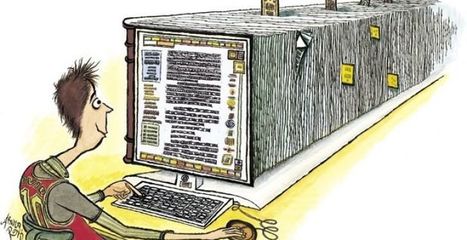
It was the most ambitious library project of our time—a plan to scan all of the world’s books and make them available to the public online. “We think that we can do it all inside of ten years,” Marissa Mayer, who was then a vice-president at Google, said to this magazine in 2007, when Google Books was in its beta stage. “It’s mind-boggling to me, how close it is.”
Today, the project sits in a kind of limbo. On one hand, Google has scanned an impressive thirty million volumes, putting it in a league with the world’s larger libraries (the library of Congress has around thirty-seven million books). That is a serious accomplishment. But while the corpus is impressive, most of it remains inaccessible. Searches of out-of-print books often yield mere snippets of the text—there is no way to gain access to the whole book. The thrilling thing about Google Books, it seemed to me, was not just the opportunity to read a line here or there; it was the possibility of exploring the full text of millions of out-of-print books and periodicals that had no real commercial value but nonetheless represented a treasure trove for the public. In other words, it would be the world’s first online library worthy of that name. And yet the attainment of that goal has been stymied, despite Google having at its disposal an unusual combination of technological means, the agreement of many authors and publishers, and enough money to compensate just about everyone who needs it.
Daniel Ghinn's presentation at #opnhealth hosts TEDxNijmegen live in Thessaloniki, Greece illustrates three ways in which social media is changing the lives of doctors, and includes a live demonstration of Creation Pinpoint, which analyzes social media conversations among healthcare professionals.
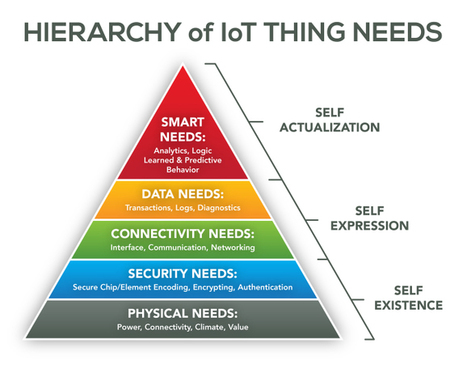
I received a lot of feedback on an article I wrote a few months ago about changing the way we perceive the “Things” in the Internet of Things (IoT).
The gist of my argument was that we should start treating these “Things” more like people — not in the sense of giving them the right to vote and the responsibility of paying taxes, but in the sense of thinking about them the way you would think about an employee hired to fulfill a specific function. Our perception of smart “Things” needs to be “people-ified,” if you will.
I thought it would be nice to follow up on that notion and formalize what, exactly, one of these “Things” comprises. After all, there are a lot of things in the world, objects too numerous to count, but not all of these things are (or should be, or ever will be) IoT “Things.”
Consider that individual people join to form committees and organizations, where the new group becomes its own individual entity. In much the same way, a single thing will combine with other things to create groups and networks of things that are regarded as other more “complex” things. These combined things will have their own needs that can be defined by this construct, as well. I especially like this Seussian micro to macro perspective when thinking about both things and the data that they collect and evolve into information.
The reason to think this way is to enable the use of familiar paradigms when “Thing” architecture and interaction models are designed. For example, consider this simple question: “What should you consider when purchasing an IoT thing?” With this new thinking, the answer becomes: “The same stuff you consider when you hire a new employee.” Trustworthiness, reliability and ability to work well with others form a great basis for consideration in both cases. As you “people-ify” things, notice how the perspective shift opens a world of paradigms to leverage.
The end of the summer marks the return to school and a time to digest our favorite summer publication: the Gartner Hype Cycle for Emerging Technologies Chart. Every year I feel a bit confused about this graph. Folks in B2B sectors swear by it and have pointed out that in the last two years the internet of things reached the dangerous 'peak of inflated expectations'.
Keen to dispel this largely constructed myth, I wanted to map out the last 10 years of this chart, analyse how the internet of things discourse is ongoing and show that this yearly report is nothing more than a snapshot of anxieties and aspirations in the technology sector as well as a reflection of what technologists really wish would pick up regardless of reality.
If you decide not to read on and just click on the pretty picture:
In yellow: topics which I connect to the internet of things
In orange: topics related to 3D printing In blue: random topics which Gartner don't seem to want to kill off when many other come and go.
In the beginning ...
So let's go back to 2005. I was still in Ivrea and the Arduino had just made its first batch. What does anyone know about the internet of things? Well judging by that year's chart nothing. Nevermind that Kevin Ashton had coined the term back in 2001 and that Nabaztag and Ambient Devices were going strong. There is nothing but RFID and mesh network love for the 2005-2009 charts. And because we're in the throngs ofSecond Life love-in, augmented reality and virtual worlds start to make an appearance and basically never leave the chart. The only virtual reality headset I've seen in the wild is in the BBC R&D's North Lab over a year ago. Just saying.
Smart health
The 2009 chart sees the first appearance of Home Health Monitoring. It reappears again in 2012 but doesn't come back again. Why? Well noone likes to think about death, not designers, not technologists, even if there's a huge amount of money there. It's also an area massively regulated making it difficult for startups to get involved in but certainly not possible (just ask Glowcaps, Kemuri or Lively). You don't need to look very deeply to see that the health sector and families dealing with chronic illness and palliative care could do with innovative services but somehow these existing companies don't help this term make a reappearance in its own right. Robots (first described as mobile then smart) on the other hand have been moving up and down the beginning of the chart since 2007. Having worked on a social robots project in the past I think the chart also reflects the amount of press particular areas receive.
For many, smartphones and other web-enabled technologies have become ubiquitous, mediating activities from shopping to travel, from banking to romancing. From health apps to patient forums, the experience of being unwell has been similarly transformed. Social networking sites (SNSs) such as Facebook and Twitter now host burgeoningnetworksfor individuals with chronic conditions. The size and reach of these networks means they have the potential to influence health behaviours on a grand and disruptive scale.
The NHS has historically been slow to integrate new web technologies into routine care services. So while we use social media to communicate with friends, colleagues, companies, and politicians, healthcare professionals have typically remained beyond patients’ reach.
Recently, however, government and professional policies have begun to address social media andtheir implications for healthcare. There are good reasons for doing so: SNSs multiply opportunities for communication between professionals, policy makers, patients, and the wider public. They can enable the government to gather feedback from service users and publicise health information, foster professional networks and patient communities, and facilitate online consultations.
Inevitably, policy and NHS activity have focused onsome of these opportunities more than others. Policy papers from theDepartment of HealthandNHS Englandhave embedded plans for social media within a digital information strategy focused on publishing data on NHS services, increasing patient choice, and gathering business-relevant “insight.” Social media have been positioned asa way to facilitate consumer choice, helping to shift healthcare towards consumer models serving not just patients but also “clients,” “customers” and a supposed “social networking generation.”
As members of the latter, we are said to uniformly demand greater knowledge of service options so we can make better choices. While the permeation of such consumerist thinking into healthcare policy predates the Web 2.0 era, social media have nevertheless been configured as a new vehicle for delivering consumerist policies based around increased choice, “patient empowerment” and patient responsibility. To this end, rather than providing or commissioning online services, the Department of Health’sThe Power of Information paper commits to “stimulating a market” and creating “space to innovate” for non-NHS organisations.
At the same time, the Department’s publications have largely overlooked social media’s potential to support therapeutic interactions between healthcare providers and service users. In some ways, this should be surprising. While claiming to address the demands of the “social networking generation,” recent policies neglect a significant reason why many individuals with chronic conditions already use SNSs —interacting with others with the same conditions through blogging, tweeting, reading, viewing, liking, sharing, and creating health-related content and using this to assist in their own self-care. Indeed, beyond a few papers by theNHS Confederation, the potential of social media to promote peer-support has remained a peripheral concern, despite examples ofhealth professionalsandorganisationsalready using sites to support patients.
In other ways, the government’s caution around social media is less surprising; determining how to pay for digital healthcare is complicated and remote consultations can be fraught with practical difficulties. Similarly, concerns around patient confidentiality are magnified by the corporate ownership of social media sites. For policy makers, managing these risks means limiting the government’s use of dynamic, flexible platforms to the less precarious tasks of disseminating information and sourcing patient feedback while letting the market meet remaining demand.
Yet, falling behind public and patient trends is also risky. Multiple competing sources of information that do not carry the credentials of a site likeNHS Choicescould create uncertainty over whose information to trust. By promoting third-sector and commercial social media organisations as providers of online services, policy is also encouraging the public into a digital health economy in which the users’ online contributions are routinely commodified and exploited for commercial ends. This can include generating research data and refining consumer-driven advertising for third party products but may also involve the sale of user-generated information to other businesses.
By retreating from providing care through social media, the government both misses opportunities and devolves risks onto the public and non-government organisations. Crucially, without a change in policy and working practices to reflect how the public use new media, our healthcare professionals will remain out of the loop with emerging patient practices.
Daniel Huntis a research associate on the “Chronic illness and online social networking: Expectations, assumptions and everyday realities” project at Queen Mary University of London, which examines the impacts of social networking technologies on the lives of individuals with chronic conditions.
Google is expanding the health information it provides to readers. Here's what medical experts think about that.
The doctor is in. Or online, anyway.
In early September, Google announced that it would be rolling out health information about 900 conditions in the coming weeks. It will include quick, at-a-glance info and easily downloadable pages that users can take to their doctors’ offices. Of course, this begs the question: How accurate will the information be? And does this have doctors terrified that ever more patients will be showing up after self-diagnosing themselves with rare diseases they almost certainly do not have?
A new innovation seeks to bring doctor consultation to your bedroom through the mobile phone. The Sema doctor mobile health service seeks to reach more ...
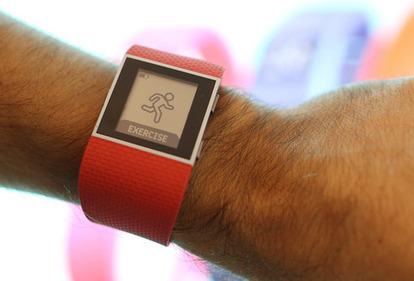
There are now so many top fitness trackers on the market that choosing the best one can be difficult.
And it's not just a case of Fitbit or Jawbone or nothing. The right activity tracker will be based on your individual needs; whether it's step counting, sleep tracking or 24/7 heart rate tracking, there's something for everyone – it's just about finding the right one for you.
The choice is getting all the more difficult thanks to the added tech that's coming in, which blur the lines further. From continuous heart rate monitoring like the tech that's found on the Fitbit Charge HR to smartwatchstyle notifications, there's a dizzying array of features to choose from.
We've completely reworked our round up of the best fitness tracker to help guide you to your ideal band, and added a new at-a-glance feature list to try and make it easier to spot the right band for you.
IBM’s new health-focused venture, Watson Health, opened its headquarters in Cambridge, Massachusetts last week, amid the same kind of flurry of announcements and partnerships that marked its launch last April. A partnership with Teva Pharmaceuticals was one of the biggest headlines, but the company is also working with ICON, Boston Children’s and Columbia Medical, and announced it just received a grant to team up with Medtronic and launch a digital health incubator in Israel.
Not everyone is bullish about IBM’s move into healthcare, though. Naveen Rao and Brian Murphy, both analysts at Chilmark Research, attended IBM’s launch event and questioned some of the omissions. Rao and Murphy wondered whether IBM has sufficient understanding of the healthcare space to effectively innovate in it, and whether the computing giant has an overarching strategy for healthcare.
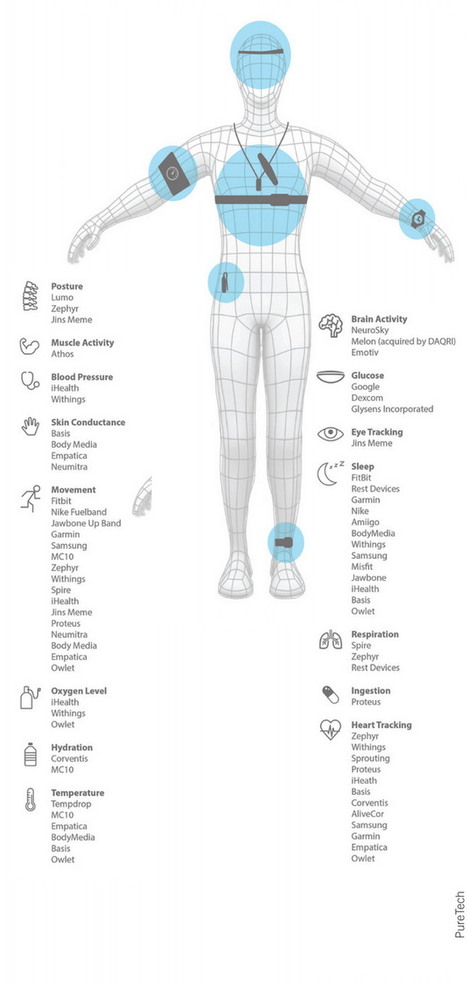
Pharmaceutical companies are enlisting Fitbits and other gadgets strapped to patients’ wrists, chests and skin as a way to bring drugs to market faster.
What began as an aid for athletes and dieters to track their movements is quickly becoming a critical tool for medical researchers and drugmakers. By outfitting trial participants with wearables, companies are beginning to amass precise information and gather round-the-clock data in hopes of streamlining trials and better understanding whether a drug is working. Down the line, wearables also could help pharmaceutical makers prove to insurance companies that their treatments are effective, thus reducing health costs.
“The use of wearables has the potential to be a revolution," said Kara Dennis, managing director of mobile health at Medidata Solutions Inc., which consults with companies on ways to improve clinical trials.
Drug researchers find this tracking technology is more accurate than human memory gleaned from subjective questionnaires that ask patients to rate their ability to walk on a scale of, say, zero to four. So far, there are at least 299 such clinical trials using wearables, according to the National Institutes of Health’s records
Ce n’est pas une surprise : l’une des grandes conclusions de l’enquête menée en France par Occurrence Healthcare, cabinet d’études marketing et communication pour la santé, vient rappeler que « les pharmaciens ne sont pas en avance sur les dispositifs médicaux connectés (DMC)*, qu’ils y vont timidement, mais qu’ils sont ouverts pour s’y intéresser de plus près dans un futur indéterminé », indique Laure Schapira, sa directrice générale.
Sempre più complete ed efficaci, le app medicali si inseriscono nel paradigma di assistenza sociosanitaria denominato dalla stessa Oms “mobile health” o “mHealth”: un settore in rapida evoluzione, che ha le potenzialità di modificare drasticamente il sistema di erogazione dei servizi sanitari. Studiato nel suo formato per essere sempre tenuto sempre nel taschino del camice dei medici, il volume “App medicali nella borsa del medico – quando le app per la salute sono dispositivi medici” è un vero e proprio vademecum sulle applicazioni in medicina. È il primo manuale che vuole trattare in maniera organica tutte le problematiche legate alla mobile health . Nato da un progetto di Gian Franco Gensini, Velio Macellari e Ornella Fouillouze, il volume raccoglie i contributi dei professionisti più riconosciuti nelle diverse discipline – dal settore biomedicale all'informatica, fino alla ricerca e alla clinica – e offre una visione approfondita, ma al contempo pragmatica e operativa, sul mondo delle app, sulle sue dinamiche e sulle sue potenzialità. Il volume è realizzato da 24 ORE Cultura , in collaborazione con Mediolanum Farmaceutici.
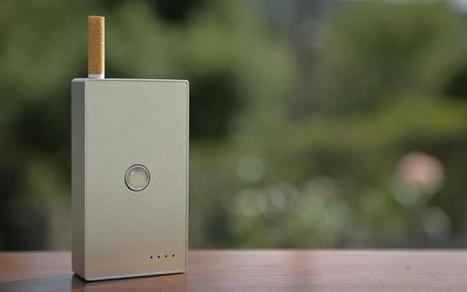
Parmi les fréquentes bonnes résolutions de rentrée figure en bonne position celle d'arrêter de fumer. Différents objets connectés voient le jour pour aider les plus motivés.Pour vaincre son addiction, les patchs nicotiniques et méthodes...
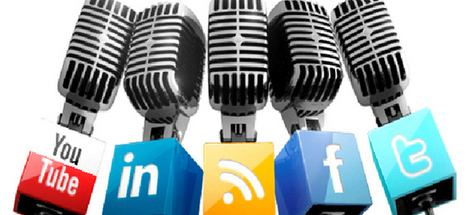
Les réseaux sociaux se sont imposés dans le quotidien des français et sont devenus un outil professionnel incontournable pour les journalistes. Mais quels usages en font-ils ? Cision France livre en une infographie quelques chiffres clés pour mieux appréhender ce nouveau paradigme.
« Et si tu n'existais pas, dis-moi pourquoi j'existerais ». Voilà comment on pourrait résumer l’idylle entre les journalistes et les réseaux sociaux. Véritable outil de veille, de partage et d’échange, ils sont plus de 54 % à déclarer : « je ne pourrais plus me passer des réseaux sociaux pour exercer mon métier » et on atteint 77% pour les journalistes online purs. Utilisé par une large majorité de la profession (91%), Facebook et consorts ont un impact direct sur le rendement des rédactions : 70,26% considèrent que les réseaux sociaux ont amélioré leur réactivité et 36, 91% leur productivité. On aurait aussi aimé par curiosité savoir le temps passé à scroller sur sa Timeline, à regarder défiler la vie de ses « amis » ou à guetter la moindre réaction suite à la publication d’un article.
40% des journalistes utilisent plus de deux heures les réseaux sociaux avec comme plateformes privilégiées par ordre de choix : Twitter, Facebook et Linkedin. L'"oiseau bleu" est, en effet, devenu le roi de l'instantanéité et les journalistes peuvent se constituer une véritable communauté. Autre point important, les medias sociaux sont aussi un point de contact à ne pas négliger pour les RP, ce qui permettrait sans doute de désengorger certaines boîtes mail : 22% des journalistes prêtant plus attention aux sollicitations envoyées via les réseaux sociaux. Mais attention à bien respecter la bienséance : 84% d'entre eux n’apprécient pas d’être interpellés publiquement sur Facebook ni sur Twitter pour 68%. Comme le décrit l'infographie ci-dessous.
To get content containing either thought or leadership enter:
To get content containing both thought and leadership enter:
To get content containing the expression thought leadership enter:
You can enter several keywords and you can refine them whenever you want. Our suggestion engine uses more signals but entering a few keywords here will rapidly give you great content to curate.


 Your new post is loading...


 Scoop.it!