Can folding a piece of paper 45 times get you to the moon? By seeing what happens when folding just one piece of paper, we see the unbelievable potential of exponential growth. This lesson will leave you wanting to grab a piece of paper to see how many times you can fold it!
Be aware of the insidious and unspoken lessons you learned as a child. To thrive in the world outside the classroom, you’re going to have to unlearn them.
Over a 24hr period we have up to 70,000 thoughts, which works out to be about 2 thoughts for every heartbeat – basically our brains never shut up!
Meditation is one of the best ways to give our overworked grey matter some valuable time out. Meditation can help decrease stress, lower blood pressure, ease pain and improve the metabolism. Not only that but it can make us calmer, happier, feel more engaged, and more able to get things done.
Some readers may hold a special place in their hearts for his 1970 picture book, In the Night Kitchen. It’s a surreal story that was named one of the Outstanding Children’s Books of 1970 by The New York Times. It’s also a story that stirred up some controversy. At points in the illustrated book, the three year old protagonist appears naked, shocking some critics and readers. These days, you’ll find the book ranking 25th on the American Library Association’s list of the 100 Most Frequently Challenged Books of 1990-2000.
While culture is a complicated cocktail, four ingredients propel an organization forward: the right people, appropriate rewards and incentives, a common language, and leadership role-modeling.
Author and illustrator Maurice Sendak, whose classic children's book Where the Wild Things Are became a perennial and award-winning favorite for generations of children, died Tuesday. He was 83.
Classrooms have come a long way. There’s been an exponential growth in educational technology advancement over the past few years. From overhead projectors to iPads, it’s important to understand not only what’s coming next but also where it all started.
Two of the top universities, MIT and Harvard are each pouring $30 million into a nonprofit partnership edX, which they hope will make the top-notch faculties and courses of their schools available for free to millions of people around the world -- free for anyone with an Internet connection. MIT's director of Technology Lab, Anant Agarwal, called this opportunity "the single biggest change in education since the printing press."
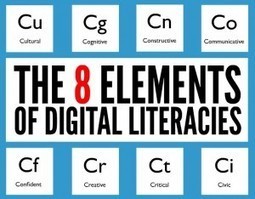
From Kevin Mclaughlin's blog and the work on Digital Literacy by Doug Belshaw:
To be digitally literate is to have access to a broad range of practices and cultural resources that you are able to apply to digital tools. It is the ability to make and share meaning in different modes and formats; to create, collaborate and communicate effectively and to understand how and when digital technologies can best be used to support these processes.
My art investigates impermanence and the invisible. The fragility of spaces “in between” comprise this realm. I am interested in visually depicting the ephemeral nature of thought. This research utilizes intuitive yet controlled processes and materials including water-based media and cut paper to achieve a sense of visual lightness and impermanence.
The universe is made of stories, not atoms,” poet Muriel Rukeyser memorably asserted, and Harvard sociobiologist E. O. Wilson recently pointed to the similarity between innovators in art and science, both of whom he called “dreamers and storytellers.” Stories aren’t merely essential to how we understand the world — they are how we understand the world.
Information graphics which are the visual representation of data known as infogographics are making rounds online these days. It seems like web users are favouring this form of content format over other forms. Their visually attractive display, the bright and shiny colours they include are what make out of them an appealing means of communication.
California-based artist Kristen Cumings spends hours on end piecing together detailed works of art out of thousands of colorful jelly beans. Needless to say her pieces look good enough to eat.
Although it must be fun working with jelly beans for a living, making 4 x 6 feet murals out of them is definitely painstaking work. Cumings uses between 8,000 and 12,000 jelly beans for her stunning masterpieces and it takes over 50 hours to complete each one.
Why are cultural icons so much easier to shop for than the people who we know in real life? We have absolutely no idea, but the rule definitely applies when it comes to finding interesting gifts for Mother’s Day. Sure, you could go the traditional route and send mom a greeting card, take her out to brunch, or buy her a plant, but how predictable is that?
Paper and ink, make way for the digital book. Everything from the latest bestsellers to classic, textbook tomes are getting the e-reader treatment, but who exactly is skipping the library in favor of a Kindle?
CONNECTED LEARNING: REIMAGINING THE EXPERIENCE OF EDUCATION IN THE INFORMATION AGE
We now have the capability to reimagine where, when, and how learning takes place; to empower and motivate youth to pursue knowledge and develop expertise at a pace, to a degree, and on a path that takes advantage of their unique interests and potential; and to build on innovations across a growing spectrum of learning institutions able to support a range of learning experiences for youth that were unimaginable even 15 years ago.
The fan art community is one of the most creative and active online. Taking pop culture stories and icons as its starting point, the fan community extends those characters into new adventures, unexpected relationships, bizarre remixes, and even as the source material for beautiful art. Limited only by the imagination of the artist, the fan art world is full of surprises and brilliance.
This chart provides the three stages of Personalized Learning Environments describing Stage One (Teacher-centered), Stage Two (Teacher and Learners as co-designers) and Stage Three (Learner-centered).
I am an artist from Berlin now living in Bristol. Drawing from a background in psychology, my art practice focuses on the notion of the “inner landscape”. Using generally discarded materials, I make objects as an invitation to the viewer to engage her/his own inner life in order to assign meaning to the artwork.
The book 'Information Graphics' by art historian Sandra Rendgen explores the four key aspects of visualizing data — Location, Time, Category, and Hierarchy — through exemplary work from more than 200 projects, alongside essays by information architect and TED founder Richard Saul Wurman, Guardian Datablog editor Simon Rogers, Density Design’s Paolo Ciuccarelli, and Rendgen herself.
To get content containing either thought or leadership enter:
To get content containing both thought and leadership enter:
To get content containing the expression thought leadership enter:
You can enter several keywords and you can refine them whenever you want. Our suggestion engine uses more signals but entering a few keywords here will rapidly give you great content to curate.


 Your new post is loading...