


A group of drugs already in everyday use to treat psychosis or depression may also be used to defeat deadly and emerging viruses, according to new research led by the University of Leeds.

 Your new post is loading...
 Scoop.it! A group of drugs already in everyday use to treat psychosis or depression may also be used to defeat deadly and emerging viruses, according to new research led by the University of Leeds. 
No comment yet.
Sign up to comment
Scoop.it!
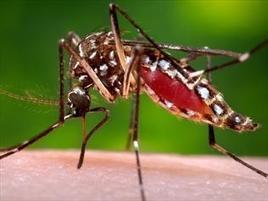
SA confirms first 2016 Zika virus case
Ed Rybicki's insight:
Not the REAL SA, then!
Scoop.it!

Deformed wing virus has hit Florida bees, which can lead to reduced pollination in the state's crops. When bees contract DWV along with Varroa mites, they can never fly again, and it can even kill entire honeybee colonies.
Ed Rybicki's insight:
And you thought you just had a Zika problem...
Scoop.it!

Ministerial Conference on Immunization in Africa 2016. A gathering of
Ed Rybicki's insight:
Major declaration by African leaders about vaccination: now, let's see it working!
Scoop.it!

That project will be applied throughout the Panamanian territory once all the details of the program could be known which includes the use of 18000 dosages of that vaccine as part of a first stage
Scoop.it!

A new study examines the success rate of the HPV vaccine in teens and young women.
Ed Rybicki's insight:
Amen!
Scoop.it!
When Ebola broke out in March 2014, Pardis Sabeti and her team got to work sequencing the virus's genome, learning how it mutated and spread. Sabeti immediat...
Scoop.it!

Ebola virus causes hemorrhagic fever with a high mortality rate and for which there is no approved therapy. Two human monoclonal antibodies, mAb100 and mAb114, in combination, protect nonhuman primates against all signs of Ebola virus disease, including viremia. Here, we demonstrate that mAb100 recognizes the base of the Ebola virus glycoprotein (GP) trimer, occludes access to the cathepsin-cleavage loop, and prevents the proteolytic cleavage of GP that is required for virus entry. We show that mAb114 interacts with the glycan cap and inner chalice of GP, remains associated following proteolytic removal of the glycan cap, and inhibits binding of cleaved GP to its receptor. These results define the basis of neutralization for two protective antibodies and may facilitate development of therapies and vaccines.
Ed Rybicki's insight:
Why is it that structural / molecular immunologic studies always "may facilitate development of therapies and vaccines"? Really?? How about looking at what the actual vaccines did in terms of eliciting sterilising immunity, or controlling viral load? So nice work, but it characterises the mode of action of just two monoclonal antibodies from the spectrum of many thousand that would be involved in reaction to infection, and of the hundreds that are involved in vaccine responses, and the many in any single individual that would be involved in actual neutralisation of infectivity / ADCC / infected cell killing, etc. What I'm getting at is that whole protein responses, in the context of live vaccine vector inoculations, are almost certainly more complex than anything that involves just these two antibodies, and elegant immunological / structural studies are a minor part of understanding the whole problem.
Scoop.it!

The virus AAV-PHP.B proves best at delivering genes to brain cells in mice. Similar viruses may eventually be used for gene therapy in humans. In a multivirus competition, a newcomer came out on top for its ability to transport genetic cargo to a mouse’s brain cells. The engineered virus AAV-PHP.B was best at delivering a gene that instructed Purkinje cells, the dots in the micrograph above, to take on a whitish glow. Unaffected surrounding cells in the mouse cerebellum look blue. Cargo carried by viruses like AAV-PHP.B could one day replace faulty genes in the brains of people. AAV-PHP.B beat out other viruses including a similar one called AAV9, which is already used to get genes into the brains of mice. Genes delivered by AAV-PHP.B also showed up in the spinal cord, retina and elsewhere in the body, Benjamin Deverman of Caltech and colleaguesreport in the February Nature Biotechnology.
Scoop.it!

Influenza is apparently sneakier than believed, going incognito in the body to avoid detection by the immune system. The flu virus masks itself with a protein, allowing it to easily and quickly spread before being attacked, according to new research.
Scoop.it!

The prevalence of human papillomavirus infections among teenage girls in the United States has declined by 64% since the HPV vaccination program was introduced, according to a new study.
Ed Rybicki's insight:
Yup! That's why they introduced them, after all....
Scoop.it!

A study by the Commonwealth Scientific and Industrial Research Organisation in Australia, found bats' immune systems are permanently on rather than merely responding to infections.
Ed Rybicki's insight:
Which is the ONLY accurate statement in this article - which otherwise, is full of absolute crap. There is still NO good evidence that bats are the reservoirs for MERS OR Ebola viruses, for example.
Scoop.it!

Michael Specter on why the conspiracy theories behind the spread of the Zika virus are so damaging. Late last month, Margaret Chan, the director of the World Health Organization, announced that the Zika-virus outbreak in Latin America had moved from being a “mild threat to one of alarming proportions.” This week, the Centers for Disease Control and Prevention made that threat palpable. The agency said it was investigating fourteen reports in which the virus appears to have been transmitted through sex, in addition to being spread by mosquitoes. In most cases, Zika is so mild that people can become infected and never know it. But the virus has also been associated with an otherwise-rare birth defect in which babies are born with abnormally small heads and underdeveloped brains, a condition known as microcephaly. It is also suspected of having caused Guillain-Barré syndrome, which leads to (an almost always temporary) paralysis. It is too soon for epidemiologists to have proven those links beyond question, but few, if any, experts doubt them.
|
Scoop.it!

From Yahoo News: When doctors told Christophe Novou that his leg would have to be amputated at the hip due to a raging bacterial infection, the 47-year-old Frenchman thought about killing himself. The treatment harnesses viruses called phages to attack and kill dangerous bacteria, including "superbugs" which have become progressively resistant to antibiotics. In Novou's case, it was Staphylococcus, a common bacteria which can cause anything from a simple boil to horrible flesh-eating infections.
Scoop.it!

Novavax Inc. previously responded to concerns about Ebola and Middle East Respiratory Syndrome by making new vaccine candidates. But it has remained mum on Zika virus, until now.
Scoop.it!

Findings published as experts warn that paralysing illness could overwhelm intensive care wards of Latin America
Scoop.it!

The benefits of immunisation extend far beyond health. When children are vaccinated, they have fewer illnesses so health care costs are lower for families and the health system.
Scoop.it!
Highlights of the launch of World's First Dengue Vaccine on February 2016 at the Marriott Hotel. More than 2000 Health Care Professionals gathered together t...
Scoop.it!
HAVANA, CUBA — While Cuba has long been famous for its cigars, the country is fast becoming known for its success in treating lung cancer. A new vaccine, Cim...
Scoop.it!

Collapse by smallpox...interesting premise! "TOM CLANCY’S THE DIVISION immerses players in a frighteningly chaotic New York City, which has been devastated by a fictional strain of smallpox - the Variola Chimera virus. The Division, a classified unit of self-supported tactical agents, is activated to restore order. Your mission as a player begins."
Scoop.it!

AUSTIN, Texas — Scientists from The University of Texas at Austin, the Stanford University School of Medicine and two other institutions have discovered that bacteria have a system that can recognize and disrupt dangerous viruses using a newly identified mechanism involving ribonucleic acid (RNA). It is similar to the CRISPR/Cas system that captures foreign DNA. The discovery might lead to better ways to thwart viruses that kill agricultural crops and interfere with the production of dairy products such as cheese and yogurt.
Scoop.it!

Once someone has contracted herpes the virus can emerge again at any time. The re-emergence is linked with periods of stress. Scientists have been looking into how this happens.
Scoop.it!

Tricking immune system into fighting nonexistent virus may protect gut microbes.
Scoop.it!

Where did Zika come from, and where does it appear to be heading?
Ed Rybicki's insight:
Nice historical piece.

Gilbert C FAURE's curator insight,
March 3, 2016 3:56 AM
Nice historical piece, but registration required
Scoop.it!

It spreads by direct contact and the best prevention is proper hand hygiene. The RS virus affects respiratory tracts and may develop into acute bronchitis and pneumonia. The infection is typical during the winter months and small children experience it at least once before the age of three, according to Josefine Grade Mann, a paediatrician at Viborg Hospital. Proper hand hygiene “We have seen lots of cases and we only get a small fraction here at the hospital,” Mann told DR. The virus spreads through the air and direct contact and the best prevention is proper hand hygiene.
|





