


|
Scooped by
Ed Rybicki
March 11, 2016 4:37 AM
|
 Scoop.it!
Ed Rybicki's insight:
NOW it'll get some attention - sadly.


 Your new post is loading...
Scoop.it!
Ed Rybicki's insight:
NOW it'll get some attention - sadly.
Scoop.it!

Check out the Ultimate New Guide to Autism Resources for Parents. Including our editors pick of top articles, websites and directories that you need to know
Scoop.it!

A chameleon in amber is 78 million years older than the oldest on record. "It was mind-blowing" to see the fossils for the first time, says Edward Stanley.
Scoop.it!
Ed Rybicki's insight:
I hope he crashes and burns...idiot!
Scoop.it!
Researchers from Boston College, US, have revealed the global spread of an ancient group of retroviruses that affected about 28 of 50 modern mammals' ancestors some 15 to 30 million years ago.
Retroviruses are abundant in nature and include human immunodeficiency viruses (HIV-1 and -2) and human T-cell leukemia viruses. The scientists' findings on a specific group of these viruses called ERV-Fc, to be published in the journal eLife, show that they affected a wide range of hosts, including species as diverse as carnivores, rodents, and primates. The distribution of ERV-Fc among these ancient mammals suggests the viruses spread to every continent except Antarctica and Australia, and that they jumped from one species to another more than 20 times.
Scoop.it!
Coronaviruses have been closely related with mankind for thousands of years. Community acquired human coronaviruses have long been recognized to cause common cold. However,zoonotic coronaviruses are now becoming more a global concern with the discovery of highlypathogenic severe acute respiratory syndrome (SARS) and Middle East respiratory syndrome(MERS) coronaviruses causing severe respiratory diseases. Infections by these emerging humancoronaviruses are characterized by less robust interferon production. Treatment of patients withrecombinant interferon regimen promises beneficial outcomes, suggesting that compromisedinterferon expression might contribute at least partially to the severity of disease. The mechanisms by which coronaviruses evade host innate antiviral response are under intense investigations. Thisreview focuses on the fierce arms race between host innate antiviral immunity and emerginghuman coronaviruses. Particularly, the host pathogen recognition receptors and the signaltransduction pathways to mount an effective antiviral response against SARS and MERScoronavirus infection are discussed. On the other hand, the counter-measures evolved by SARSand MERS coronaviruses to circumvent host defense are also dissected. With a betterunderstanding of the dynamic interaction between host and coronaviruses, it is hoped that insightson the pathogenesis of newly-identified highly pathogenic human coronaviruses and newstrategies in antiviral development can be derived.
Scoop.it!

From
-
March 8, 2016 4:22 AM

Endogenous retroviruses in the human genome can regulate genes involved in innate immune responses.
Scoop.it!

In 2002 a few of us here in South Africa wrote a booklet entitled "Castro Hlongwane…"‚ and sub-titled it "HIV/AIDS and the Struggle for the Humanisation of the African". AN OVERVIEW Here is an excerpt from that booklet, which speaks for itself: “The first report on the incidence of HIV in South and Southern Africa was published in the "New England Journal of Medicine" and the "South African Medical Journal", both in 1985. Two of the most important findings in this report were that in our country and region: HIV infection was confined to male homosexuals; and, HIV was not endemic in this region of the world. To quote this report, it said: "The only positive subjects were in the group compromising male homosexuals. The majority of these positive subjects had either recently been to the United States or had had sexual contact with other homosexuals who had visited the United States...
Ed Rybicki's insight:
Yes, Cde Mbeki, yes: you were wrong on HIV/AIDS, and you continue to be wrong. And if you are going to revisit your nonsense, then I am going to revisit mine - just to show what some people thought of you.
Because you wrote that "booklet", Cde Mbeki. There are those of us who know how to see who authored something, and the copy I had of that scurrilous piece of rubbish said it came from your laptop. It was rubbish then, and can be seen to be even more rubbish now. And if you are still a denialist, then I sincerely hope that there is a tribunal in your future.
Scoop.it!

Army scientists started vaccinations in the first clinical trial to test the safety and immune response in people for a vaccine candidate to prevent Middle East respiratory syndrome.,
Scoop.it!

Agencies rush to show that outbreak tactics have improved.
Scoop.it!

Critics say that Thabo Mbeki's character matters less than his AIDS denialism. But these things are actually intimately linked.
Ed Rybicki's insight:
So Thabo Mbeki is attempting to rewrite history, or at least his place in it, and he may or may not get to writing about his beliefs on HIV/AIDS.
As someone who was actively involved in telling him how wrong he was, I cannot say I am looking forward to seeing him attempt to explain himself. Because he was wrong in so many ways: wrong in his disbelief; wrong in his actively courting the loony dissidents; wrong in buying into the "ARVs are just poisons" belief; wrong in buying into the conspiracy theories around Big Pharma. And wrong not to believe scientists in his own country, who did their very best to convince him, using the best evidence on hand, that HIV causes AIDS, and ARVs mitigate the effects. I think he should appear before a tribunal of some kind, one day, to explain himself - and be prepared to take the withering criticism of those like me who believe he was partially culpable in the deaths of several hundreds of thousands of people in South Africa who could otherwise have been saved by ARVs. Manto Tshabala-Msimang should be alongside him, of course - but she has taken herself and her several livers off to the grave, and he would stand alone.
Scoop.it!
Thousands of persons have survived Ebola virus disease. Almost all survivors describe symptoms that persist or develop after hospital discharge. A cross-sectional survey of the symptoms of all survivors from the Ebola treatment unit (ETU) at 34th Regimental Military Hospital, Freetown, Sierra Leone (MH34), was conducted after discharge at their initial follow-up appointment within 3 weeks after their second negative PCR result. From its opening on December 1, 2014, through March 31, 2015, the MH34 ETU treated 84 persons (8–70 years of age) with PCR-confirmed Ebola virus disease, of whom 44 survived. Survivors reported musculoskeletal pain (70%), headache (48%), and ocular problems (14%). Those who reported headache had had lower admission cycle threshold Ebola PCR than did those who did not (p<0.03). This complete survivor cohort from 1 ETU enables analysis of the proportion of symptoms of post-Ebola syndrome. The Ebola epidemic is waning, but the effects of the disease will remain.
Scoop.it!
Concern over Ebola becoming endemic in West Africa has appeared in the medical and lay media. Routes of transmission, rates of viral evolution, suitability of humans as hosts and rarity of spillover events make this very unlikely. Without evidence that endemic Ebola is likely, ending epidemics should remain the focus.
Ed Rybicki's insight:
In humans: it may not become endemic in humans...what about other hosts??
|
Scoop.it!

As you’re no doubt aware, former President Thabo Mbeki has been addressing his legacy in a series of letters published on his Foundation’s homepage.
Scoop.it!
HIV victims' fight against prejudice continues Just like several others, Akshara and her family continues their fight against discrimination and prejudice ag...
Scoop.it!
Ancient viruses from Neanderthals have been found in modern human DNA by researchers at Oxford University and Plymouth University.
The researchers compared genetic data from fossils of Neanderthals and another group of ancient human ancestors called Denisovans to data from modern-day cancer patients. They found evidence of Neanderthal and Denisovan viruses in the modern human DNA, suggesting that the viruses originated in our common ancestors more than half a million years ago.
Ed Rybicki's insight:
Just more use of retroviruses as markers of mammalian evolution - and particularly of modern humans, in this instance.
Scoop.it!
Since the 2002–2003 severe acute respiratory syndrome (SARS) outbreak prompted a search forthe natural reservoir of the SARS coronavirus, numerous alpha- and betacoronaviruses have beendiscovered in bats around the world. Bats are likely the natural reservoir of alpha- and betacoronaviruses,and due to the rich diversity and global distribution of bats, the number of batcoronaviruses will likely increase. We conducted a surveillance of coronaviruses in bats in anabandoned mineshaft in Mojiang County, Yunnan Province, China, from 2012–2013. Six bat specieswere frequently detected in the cave: Rhinolophus sinicus, Rhinolophus affinis, Hipposiderospomona, Miniopterus schreibersii, Miniopterus fuliginosus, and Miniopterus fuscus. By sequencingPCR products of the coronavirus RNA-dependent RNA polymerase gene (RdRp), we found a highfrequency of infection by a diverse group of coronaviruses in different bat species in themineshaft. Sequenced partial RdRp fragments had 80%–99% nucleic acid sequence identity withwell-characterized Alphacoronavirus species, including BtCoV HKU2, BtCoV HKU8, and BtCoV1,and unassigned species BtCoV HKU7 and BtCoV HKU10. Additionally, the surveillance identifiedtwo unclassified betacoronaviruses, one new strain of SARS-like coronavirus, and one potentiallynew betacoronavirus species. Furthermore, coronavirus co-infection was detected in all six batspecies, a phenomenon that fosters recombination and promotes the emergence of novel virusstrains. Our findings highlight the importance of bats as natural reservoirs of coronaviruses andthe potentially zoonotic source of viral pathogens.
Scoop.it!

Veteran researcher offers intriguing ideas on outbreak Q: Do you think an antibody enhancementlike feature with Zika is behind the severe disease that’s been linked to microcephaly in babies and Guillain-Barré syndrome in adults? A: Absolutely. I’m certain of it. I’d bet a lot of money. In the 1980s Ademola Fagbami from Nigeria came to my lab at the University of Hawaii with Zika virus and we did an experiment, which we published, that showed it can be enhanced in mononuclear phagocytes [a type of immune cell]. We know that it grows in those cells and that antibody can enhance it. Zika is actually genetically fairly close to the dengue viruses, which means a lot of surface proteins on Zika are identical to surface proteins on dengue. It absolutely would not surprise me to find that dengue antibodies enhance Zika infections and that this entire sweep of Zika across the Pacific and into South America has all been promoted and propelled by enhancement. Q: What are the main unknowns about Zika? A: Does it grow in primary human monocytes in vitro? If somebody dies can we find the virus in monocytes and macrophages in vivo? Those are the key things. Q: What might be the mechanism behind Zika virus harming fetuses? A: I think dengue antibody is complexing with Zika virus and the immune complex is infecting monocytes so you have a much higher amount of virus produced. Maybe above a certain concentration of virus you begin to get virus spilling over into placenta.
Ed Rybicki's insight:
I like this guy B-) Anti-Zikasteria!
Scoop.it!

The tech giant contributes funding and technical support to monitor and respond to the spread of Zika infection across Latin America.
Scoop.it!
From
www
On 25 January 2016, the National IHR Focal Point of Benin notified WHO of an outbreak of Lassa fever.
Scoop.it!
Press Release by the University of Exeter, 1 March 2016 Academics have created a vaccine which has the potential to protect humans from the infection melioidosis, also called Whitmore's disease. The vaccine is the result of two decades of research, and is the most protective tested to date. Melioidosis is caused by the bacterium Burkholderia pseudomallei. It is thought to be spread in soil and dust, but experts do not yet know why it only affects people and animals in tropical regions. Occasionally people from the UK have contracted melioidosis while on holiday abroad. There is an urgent need for an effective vaccine. In North-East Thailand melioidosis is the third most common cause of death from infectious diseases, exceeded only by HIV and tuberculosis. In Darwin, Northern Australia, melioidosis is the most common cause of fatal community-acquired septicemic pneumonia.
Ed Rybicki's insight:
And the senior author has SUCH a good name...B-)
Scoop.it!

The call to action to address childhood vulnerability in Africa must go far beyond the 17.8 million children infected and affected by HIV.
Ed Rybicki's insight:
Absolutely! But it's a good starting point for further interventions, surely?
Scoop.it!

"Scientists have warned that panspermia - the theory of genetic material raining down from space - could make Zika stronger and more deadly" Genetic material falling on Earth from outer space could create a supercharged version of the Zika virus, scientists have warned. Experts claim that the virus, which is spreading across the globe, will become more prevalent and deadly in the future. Changes in Zika have already been noted, as it's changed to be passable through sexual contact. The disease, first discovered in monkeys in 1947, had previously only been transferable by mosquito bite. But now, scientists are warning that it could mutate, growing stronger and spreading more easily - with its victims suffering more serious consequences. They have warned that future strains could become worse thanks to panspermia - the theory of genetic material constantly raining down on Earth from outer space.
Ed Rybicki's insight:
The bullshirt is strong with this one...I have to include some conspiracy nonsense from time to time, just to show what's out there!
And what's out there for Zika is Fred Hoyle's old mate, Chandra Wickramasinghe, who really should stick to astronomy or astrophysics - because he's just making an idiot of himself. Consider these statements: "Genetic material falling on Earth from outer space could create a supercharged version of the Zika virus, scientists have warned." "Changes in Zika have already been noted, as it's changed to be passable through sexual contact." "Professor Chandra Wickramasinghe, of the University of Buckingham, has long held panspermia as a common route of viral and bacterial mutation.... Worryingly, he said, is the apparent ability of the Zika virus to pick up foreign DNA and adapt quickly to become more virulent." OK: just how, exactly, is Zika supposed to be able to interact with the genetic material falling from space? And how in heaven's name can anyone tie sexual transmission of Zika - which has only not been documented before, NOT shown not to happen - with picking up genetic material? Which, if Professor W is to be believed, is DNA - and Zika is a (+)sense RNA virus, which are not much given to picking up DNA fragments? As I said, bullshirt: Zika is quite capable of mutating all by itself, without extraplanetary influences.
Scoop.it!
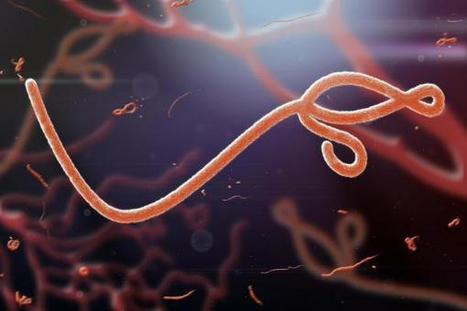
WASHINGTON, Feb. 26 (UPI) -- The Ebola virus remains in the bodies of survivors at low levels after recovery, causing symptoms and leaving open the possibility of spreading it, according to three recent studies of survivors in West Africa.
|







this is scary even it just being a suspicion. hopefully from finishing my studies i'd like to promote cologne citizens to understand the health and safety risk that will be at stake and take intensive care on themselves and others around them.