SAN FRANCISCO, Sept. 18, 2017 /PRNewswire-USNewswire/ -- The American Academy of Ophthalmology and the American Dermatological Association recommend people age 50 and older get the shingles vaccine – 10 years younger than a previous recommendation. It is now estimated that one in three people will develop
More than 40 percent of American teens are now getting vaccinated against human papillomavirus (HPV). But, despite HPV infection being associated with reduced semen quality and lower pregnancy rates, there is still public concern about whether the HPV vaccine itself could affect future fertility.
Hep b vaccine should be given sooner: pediatricians group MONDAY, Aug. 28, 2017 HealthDay News The first dose of the hepatitis B vaccine should be given t
Infections in poultry are an economic and health problem in Europe and worldwide. The most common infections are associated with salmonellosis, colibacillosis, campylobacteriosis, and others. The prevalence of Campylobacter-positive poultry flocks in European countries varies from 18% to 90%. In the United States, the prevalence of infected flocks is nearly 90%. A similar percentage of infection has been noted for salmonellosis (about 75–90%) and E. coli (90–95%). The occurence of Clostridium perfringens is a major problem for the poultry industry, with some estimates suggesting colonization of as many as 95% of chickens, resulting in clinical or subclinical infections. In the US, annual economic losses due to Salmonella infections run from $1.188 billion to over $11.588 billion, based on an estimated 1.92 million cases. Similar costs are observed in the case of other types of infections. In 2005 economic losses in the the poultry industry due to mortalities reached 1,000,000 USD. Infections caused by these pathogens, often through poultry products, are also a serious public health issue. The progressive increase in the number of multi-drug resistant bacteria and the complete ban on the use of antibiotics in livestock feed in the EU, as well as the partial ban in the US, have led to the growth of research on the use of bacteriophages to combat bacterial infections in humans and animals. The high success rate and safety of phage therapy in comparison with antibiotics are partly due to their specificity for selected bacteria and the ability to infect only one species, serotype or strain. This mechanism does not cause the destruction of commensal bacterial flora. Phages are currently being used with success in humans and animals in targeted therapies for slow-healing infections. They have also found application in the US in eliminating pathogens from the surface of foods of animal and plant origin. At a time of growing antibiotic resistance in bacteria and the resulting restrictions on the use of antibiotics, bacteriophages can provide an alternative means of eliminating pathogens.
Emerging infectious diseases are major threats to human health. Most severe viral disease outbreaks occur in developing regions where health conditions are poor. With increased international travel and business, the possibility of eventually transmitting infectious viruses between different countries is increasing. The most effective approach in preventing viral diseases is vaccination. However, vaccines are not currently available for numerous viral diseases. Virus-like particles (VLPs) are engineered vaccine candidates that have been studied for decades. VLPs are constructed by viral protein expression in various expression systems that promote the selfassembly of proteins into structures resembling virus particles. VLPs have antigenicity similar to that of the native virus, but are non-infectious as they lack key viral genetic material. VLP vaccines have attracted considerable research interest because they offer several advantages over traditional vaccines. Studies have shown that VLP vaccines can stimulate both humoral and cellular immune responses, which may offer effective antiviral protection. Here we review recent developments with VLP-based vaccines for several highly virulent emerging or re-emerging infectious diseases. The infectious agents discussed include RNA viruses from different virus families, such as the Arenaviridae, Bunyaviridae, Caliciviridae, Coronaviridae, Filoviridae, Flaviviridae, Orthomyxoviridae, Paramyxoviridae, and Togaviridae families.
Waterlogged: Six Tales of the Aquatic Undead: Horror Story Six-Packs, vol. 3 - Kindle edition by C. L. Hernandez, Walt McFee. Download it once and read it on your Kindle device, PC, phones or tablets. Use features like bookmarks, note taking and highlighting while reading Waterlogged: Six Tales of the Aquatic Undead: Horror Story Six-Packs, vol. 3.
After clean water, there is no health intervention that has saved more lives than vaccination – and none that has inspired more misguided opposition. This has been exemplified recently by the furore over the human papilloma virus (HPV) vaccine.
Yes, all vaccines have risks associated with them; no, HPV vaccines are not so obviously life-saving as polio, MMR and hepatitis - but would you really want YOUR child to take the chance of being one of the >300 000 women who die every year of cervical cancer, when it is preventable?
Just checking to see whether or not Dickson Despommier is reading these...see, Dickson, you get considerably more leeway to comment here than on Twitter, while at the same time being in a post that links to a Web page - and that can consierable text linked with it, not subject to being rendered as a JPG or other graphic!
Data released today from the US President’s Emergency Plan for AIDS Relief (PEPFAR) show that the HIV epidemic is coming under control in Lesotho. These results add to prior PEPFAR-supported …
Link found between HIV risk and individual and community level educational status. The study were more opt to engage in transactional sex, the exchange of sex for drugs.
WASHINGTON, Sept. 18 (Xinhua) -- One single injection carrying several doses of vaccines has become true thanks to the research of the Massachusetts Institute of Technology (MIT). The MIT reported the technical breakthrough on its website of MIT news last week, telling the world their method of...
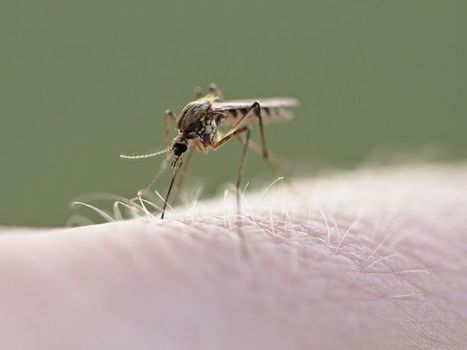
An emerging mosquito-borne arbovirus named Zika virus (ZIKV), of the family Flaviviridae and genus Flavivirus, is becoming a global health threat. ZIKV infection was long neglected due to its sporadic nature and mild symptoms. However, recently, with its rapid spread from Asia to the Americas, affecting more than 30 countries, accumulating evidences have demonstrated a close association between infant microcephaly and Zika infection in pregnant women. Here, we reviewed the virological, epidemiological, and clinical essentials of ZIKV infection.
Nameless and faceless, an army of 316 men came out en masse here on Wednesday to receive wages for spending days culling ailing chickens, ducks and quails to help control the avian flu outbreak.
The FDA has granted orphan drug status to pegylated interferon lambda 1a (Lambda, Eiger Bio, Inc.) as a potential treatment for chronic hepatitis delta virus (HDV) infection.
To get content containing either thought or leadership enter:
To get content containing both thought and leadership enter:
To get content containing the expression thought leadership enter:
You can enter several keywords and you can refine them whenever you want. Our suggestion engine uses more signals but entering a few keywords here will rapidly give you great content to curate.


 Your new post is loading...