Metagenomic analysis through high-throughput sequencing is a tool for detecting both known and novel viruses. Using this technique, a novel circular single-stranded DNA (ssDNA) virus genome was discovered in respiratory secretions from a febrile traveler. The virus, named human respiratory-associated PSCV-5-like virus (HRAPLV), has a genome comprising 3,018 bases, with two major putative ORFs inversely encoding capsid (Cap) and replicase (Rep) protein and separated by two intergenic regions. One stem-loop structure was predicted in the larger intergenic region (LIR). The predicted amino acid sequences of the Cap and Rep proteins of HRAPLV showed highest identity to those of porcine stool-associated circular virus 5 isolate CP3 (PoSCV 5) (53.0% and 48.9%, respectively). The host tropism of the virus is unknown, and further study is warranted to determine whether this novel virus is associated with human disease.
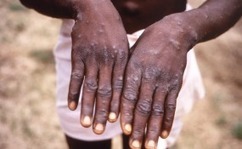
Against palpable fear over the spread of monkey pox disease in Nigeria, the Minister of Health, Prof. Isaac Adewole, has declared Lagos State free from the virus while Bayelsa State has recorded about three confirmed cases after laboratory tests.
Since 2006, human papillomavirus (HPV) vaccines have been introduced in many countries worldwide. Whilst safety studies have been reassuring, focus has been on the primary target group, the youn
Winter is almost here, which means flu season is just around the corner. It also means that anti-flu vaccine misinformation will go viral again (pun inten
(Reuters Health) - Roughly one in nine U.S. men have oral infections of the cancer-causing human papillomavirus (HPV), more than triple the infection rat
An examination of cases of Guillain-Barré syndrome in Puerto Rico identified Zika virus infection as a risk factor, according to a study published by JAMA.
As poultry farms deal with the crippling consequences of the avian influenza outbreak, consumers are warned to prepare themselves for higher prices and … source
Author summary Antibodies are an important component of antiviral host responses and their binding to the surface of virus particles usually leads to neutralization of viral infectivity. In some instances, however, antibodies at sub-neutralizing concentrations can enhance infection of certain cells, because they facilitate the uptake of infectious virus-antibody complexes through interactions with antibody-specific cellular receptors (Fcγ receptors). This mechanism is designated antibody-dependent enhancement of infection and implicated in the pathogenesis of dengue and possibly Zika virus infections, both mosquito-transmitted flaviviruses. Here we describe a novel mechanism of infection enhancement by antibodies that is independent of interactions with Fcγ receptors, using another important human-pathogenic flavivirus, tick-borne encephalitis virus. We demonstrate that binding of a specific antibody to the envelope protein E at the viral surface promotes the exposure of a structural element that interacts with the lipids of the cellular plasma membrane, thus increasing infection. Our study provides new insights into mechanisms that potentially modulate the antiviral effects of antibody populations present in post-infection sera.
Immunotherapy is a new approach that exploits body’s inner capability to put up a fight against cancer. Under the approach, either immune system is given a boost or the T cells are “trained’’ to identify recalcitrant cancer cells and kill them.
On 18, 25 August and 4 September 2017, the National Health and Family Planning Commission of China (NHFPC) notified WHO of four additional laboratory-confirmed cases of human infection with avian influenza A(H7N9) virus in China.Details of the case-p
Rabies is a lethal disease caused by the neurotropic virus rabies virus (RABV), and it remains an important public health problem globally. It is known that the host immune response is important for c
'There was a screw-up' UBC researchers pull paper linking vaccine component to autism. Researchers from the University of British Columbia are retractin
This raises concern over the availability of the rabies vaccine and the cost. New Vision TV offers analyzed news content on trending stories in Uganda, b
Cuba today became the first country in the world to receive validation from WHO that it has eliminated mother-to-child transmission of HIV and syphilis.
12:00 AM EDT April 13, 2015 HPV Vaccination of Adolescent Boys May Be Cost-Effective for Preventing Oropharyngeal Cancer A new study indicates that vaccinating 12-year-old boys against the humanpapilloma virus (HPV) may be a cost-effective strategy for preventing oropharyngeal squamous cell...
From 2012 to 2016, Gavi, the Vaccine Alliance, provided support for countries to conduct small-scale demonstration projects for the introduction of the human papillomavirus vaccine, with the aim of determining which human papillomavirus vaccine delivery strategies might be effective and sustainable upon national scale-up. This study reports on the operational costs and cost determinants of different vaccination delivery strategies within these projects across twelve countries using a standardized micro-costing tool. The World Health Organization Cervical Cancer Prevention and Control Costing Tool was used to collect costing data, which were then aggregated and analyzed to assess the costs and cost determinants of vaccination. Across the one-year demonstration projects, the average economic and financial costs per dose amounted to US$19.98 (standard deviation ±12.5) and US$8.74 (standard deviation ±5.8), respectively. The greatest activities representing the greatest share of financial costs were social mobilization at approximately 30% (range, 6–67%) and service delivery at about 25% (range, 3–46%). Districts implemented varying combinations of school-based, facility-based, or outreach delivery strategies and experienced wide variation in vaccine coverage, drop-out rates, and service delivery costs, including transportation costs and per diems. Size of target population, number of students per school, and average length of time to reach an outreach post influenced cost per dose. Although the operational costs from demonstration projects are much higher than those of other routine vaccine immunization programs, findings from our analysis suggest that HPV vaccination operational costs will decrease substantially for national introduction. Vaccination costs may be decreased further by annual vaccination, high initial investment in social mobilization, or introducing/strengthening school health programs. Our analysis shows that drivers of cost are dependent on country and district characteristics. We therefore recommend that countries carry out detailed planning at the national and district levels to define a sustainable strategy for national HPV vaccine roll-out, in order to achieve the optimal balance between coverage and cost.
Makers of generic AIDS drugs will start churning out millions of pills for Africa containing a state-of-the-art medicine widely used in rich countries, after securing a multi-million dollar guarantee that caps prices at just $75 per patient a year.
To get content containing either thought or leadership enter:
To get content containing both thought and leadership enter:
To get content containing the expression thought leadership enter:
You can enter several keywords and you can refine them whenever you want. Our suggestion engine uses more signals but entering a few keywords here will rapidly give you great content to curate.


 Your new post is loading...
 Scoop.it!