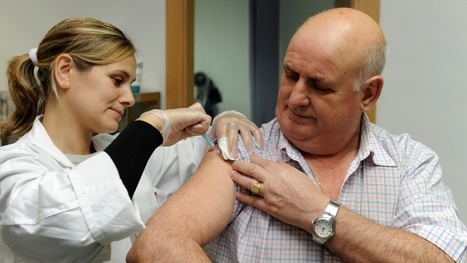
There were 27 flu-related deaths in the first week of January, bringing the winter total up to 85, statistics released today revealed. Health experts warne
The NGO is advising its members that Defra has today (18 January 2018) introduced an Avian Influenza Prevention Zone to cover the whole of England. Strict biosecurity is now a legal requirement.
Cassava mosaic disease (CMD) is a major constraint to cassava production in sub-Saharan Africa. Under field conditions, evaluation for resistance to CMD takes 12–18 months, often conducted across multiple years and locations under pressure from whitefly-mediated transmission. Under greenhouse or laboratory settings, evaluation for resistance or susceptibility to CMD involves transmission of the causal viruses from an infected source to healthy plants through grafting, or by using Agrobacterium-mediated or biolistic delivery of infectious clones. Following inoculation, visual assessment for CMD symptom development and recovery requires 12–22 weeks. Here we report a rapid screening system for determining resistance and susceptibility to CMD based on virus-induced gene silencing (VIGS) of an endogenous cassava gene. A VIGS vector was developed based on an infectious clone of the virulent strain of East African cassava mosaic virus (EACMV-K201). A sequence from the cassava (Manihot esculenta) ortholog of Arabidopsis SPINDLY (SPY) was cloned into the CP position of the DNA-A genomic component and used to inoculate cassava plants by Helios® Gene Gun microparticle bombardment. Silencing of Manihot esculenta SPY (MeSPY) using MeSPY1-VIGS resulted in shoot-tip necrosis followed by death of the whole plant in CMD susceptible cassava plants within 2–4 weeks. CMD resistant cultivars were not affected and remained healthy after challenge with MeSPY1-VIGS. Significantly higher virus titers were detected in CMD-susceptible cassava lines compared to resistant controls and were correlated with a concomitant reduction in MeSPY expression in susceptible plants. A rapid VIGS-based screening system was developed for assessing resistance and susceptibility to CMD. The method is space and resource efficient, reducing the time required to perform CMD screening to as little as 2–4 weeks. It can be employed as a high throughput rapid screening system to assess new cassava cultivars and for screening transgenic, gene edited and breeding lines under controlled growth conditions.
Using a ferret model of human influenza, we demonstrate that infection with one influenza B virus can prevent or limit infection with an influenza B virus of th
At least 2,500 people, including 20 children, have died of flu or pneumonia over the past 3 months in a "severe" season that U.S. health experts hope won't surpass the record number of infections during the 2014/2015 outbreak.
Aussie flu symptoms include fever, headaches, muscles aches and fatigue.The lethal H3N2 Aussie flu virus travelled to the UK from Australia, and has now been spotted in the US.Exactly 100 years ago, Spanish flu
A company in the UK is currently conducting a clinical trial of what could become the first universal flu vaccine in the world - an elusive goal that would have massive benefits for global public health and eliminate our need for annual injections.
"Vaccitech's patented vaccine MVA-NP+M1 has so far been successfully tested for safety across 145 people, so the next step is to find out if it's actually good at protecting humans against the flu." This has actually been around for years - shows how long it takes to get to human clinical trial!
Purpose The incidence of human papilloma virus (HPV)-positive oropharyngeal cancers has risen rapidly in recent decades among men in the United States. We investigated the US population-level effect of prophylactic HPV vaccination on the burden of oral HPV infection, the principal cause of HPV-positive oropharyngeal cancers. Methods We conducted a cross-sectional study of men and women 18 to 33 years of age (N = 2,627) within the National Health and Nutrition Examination Survey 2011 to 2014, a representative sample of the US population. Oral HPV infection with vaccine types 16, 18, 6, or 11 was compared by HPV vaccination status, as measured by self-reported receipt of at least one dose of the HPV vaccine. Analyses accounted for the complex sampling design and were adjusted for age, sex, and race. Statistical significance was assessed using a quasi-score test. Results Between 2011 and 2014, 18.3% of the US population 18 to 33 years of age reported receipt of at least one dose of the HPV vaccine before the age of 26 years (29.2% in women and 6.9% in men; P < .001). The prevalence of oral HPV16/18/6/11 infections was significantly reduced in vaccinated versus unvaccinated individuals (0.11% v 1.61%; Padj = .008), corresponding to an estimated 88.2% (95% CI, 5.7% to 98.5%) reduction in prevalence after model adjustment for age, sex, and race. Notably, the prevalence of oral HPV16/18/6/11 infections was significantly reduced in vaccinated versus unvaccinated men (0.0% v 2.13%; Padj = .007). Accounting for vaccine uptake, the population-level effect of HPV vaccination on the burden of oral HPV16/18/6/11 infections was 17.0% overall, 25.0% in women, and 6.9% in men. Conclusions HPV vaccination was associated with reduction in vaccine-type oral HPV prevalence among young US adults. However, because of low vaccine uptake, the population-level effect was modest overall and particularly low in men.
The highly pathogenic avian influenza viruses of the H5 subtype, such as the H5N1 viral strains or the novel H5N8 and H5N2 reassortants, are of both veterinary and public health concern worldwide. To combat these viruses, monoclonal antibodies (mAbs) against H5 hemagglutinin (HA) play a significant role. These mAbs are effective diagnostic and therapeutic agents and powerful tools in vaccine development and basic scientific research. The aim of this study was to obtain diagnostically valuable mAbs with broad strain specificity against H5-subtype AIVs. We applied the hybridoma method to produce anti-HA mAbs. The cloning and screening procedures resulted in the selection of 7 mouse hybridoma cell lines and their respective antibody clones. Preliminary immunoreactivity studies showed that these newly established mAbs, all of the IgG1 isotype, had high specificity and broad-range activities against the H5 HAs. However, these studies did not allow for a clear distinction among the selected antibodies and mAb-secreting hybridoma clones. To differentiate the analyzed mAbs and determine the exact number of hybridoma clones, peptide mapping of the Fc and Fab fragments was performed using a Matrix-Assisted Laser Desorption Ionization Time of Flight (MALDI-TOF/TOF) mass spectrometer. Detailed analyses of the acquired MS and MS/MS spectra confirmed that the Fc fragments constituted highly conserved species- and isotype-immunoglobulin components, whereas the Fab fragments exhibited considerable variation in the sequences that determine antibody specificity. This approach enabled unambiguous characterization of the selected mAbs according to their peptide composition. As a result, 6 different clones were distinguished. Our work provided a unique panel of anti-H5 HA mAbs, which meets the demand for novel, high-specificity analytical tools for use in serologic surveillance. Applications of these mAbs in areas other than diagnostics are also possible. Moreover, we demonstrated for the first time that peptide mapping of antibody fragments with mass spectrometry is an efficient method for the differentiation of antibody clones and relevant antibody-producing cell lines. The method may be successfully used to characterize mAbs at the protein level.
The flu is bad this year and no state in the country is seeing higher rates of it than Missouri. That’s according to Kinsa, a company that makes “smart thermometers” and has analyzed data collected from more than 1 million users nationwide.
Following a BuzzFeed News story, the Civil Aviation Authority announced on Thursday that people with HIV would no longer be barred from becoming commercial pilots.
Plant viruses in agricultural crops are of great concern worldwide, and over 75% of them are transmitted from infected to healthy plants by insect vectors. Tomato yellow leaf curl virus (TYLCV) is a begomovirus, which is the largest and most economically important group of plant viruses, transmitted by the whitefly Bemisia tabaci. The circulation of TYLCV in the insect involves complex insect-virus interactions, whereas the molecular mechanisms of these interactions remain ambiguous. The insect gut as a barrier for viral entry and dissemination is thought to regulate the vector specificity. However, due to its tiny size, information for the responses of whitefly gut to virus infection is limited. We investigated the transcriptional response of the gut of B. tabaci Middle East-Asia Minor 1 species to TYLCV infection using Illumina sequencing. A total of 5207 differentially expressed genes (DEGs) between viruliferous and non-viruliferous whitefly guts were identified. Enrichment analyses showed that cargo receptor and ATP-binding cassette (ABC) transporters were enriched in DEGs, and might help the virus to cross gut barrier. TYLCV could perturb cell cycle and DNA repair as a possible result of its replication in the whitefly. Our data also demonstrated that TYLCV can activate whitefly defense responses, such as antimicrobial peptides. Meanwhile, a number of genes involved in intracellular signaling were activated by TYLCV infection. Our results reveal the complex insect-virus relationship in whitefly gut and provide substantial molecular information for the role of insect midguts in virus transmission.
Back to my mid-term roots in geminivirology...it is an open question as to whether geminiviruses and especially TYLCV can replicate in vector insects, seeing as they do seem to be able to set them up to be persistent circulative vectors. Some swear they do; others that they don't - but I am willing to bet that TYLCV at any rate undergoes either partial replication, or expression from "repaired" dsDNA forms of the genomic DNA, in insect cells, so as to effect some of the changes seen in insect transcription.
I have another theory concerning trans-replication of gemini- and other ssDNA virus genomes by Reps or RCR-mediating proteins endogenous to or from viruses or even bacteria co-infecting the vectors, but that is the subject for another posting.
As the cases of shingles rise, especially among seniors, advocates are pushing for provincial governments to cover the cost of a new and effective vaccine.
This year I got a special birthday gift; someone sent me a piece about vaccine aluminum toxicity written by the noted anti-vaccine activist, J B Handley.
This collection includes Reviews and Research articles from across the Nature group of journals to showcase advances in our understanding of influenza virus biology, evolution and adaptation, and in surveillance and drug and vaccine development.
Anguilla, Antigua and Barbuda, Bermuda, Cayman Islands, Montserrat and Saint Kitts and Nevis were today certified by the World Health Organization (WHO) as having eliminated mother-to-child transmission of HIV
PURPOSE: This study was designed to evaluate potential preventive effects of meditation or exercise on incidence, duration, and severity of acute respiratory infection (ARI) illness.
METHODS: Community-recruited adults aged 50 years and older were randomized to 1 of 3 study groups: 8-week training in mindfulness meditation, matched 8-week training in moderate-intensity sustained exercise, or observational control. The primary outcome was area-under-the-curve global illness severity during a single cold and influenza season, using the Wisconsin Upper Respiratory Symptom Survey (WURSS-24) to assess severity. Health care visits and days of missed work were counted. Nasal wash collected during ARI illness was assayed for neutrophils, interleukin-8, and viral nucleic acid.
RESULTS: Of 154 adults randomized into the study, 149 completed the trial (82% female, 94% white, mean age 59.3 ± 6.6 years). There were 27 ARI episodes and 257 days of ARI illness in the meditation group (n = 51), 26 episodes and 241 illness days in the exercise group (n = 47), and 40 episodes and 453 days in the control group (n = 51). Mean global severity was 144 for meditation, 248 for exercise, and 358 for control. Compared with control, global severity was significantly lower for meditation (P = .004). Both global severity and total days of illness (duration) trended toward being lower for the exercise group (P=.16 and P=.032, respectively), as did illness duration for the meditation group (P=.034). Adjusting for covariates using zero-inflated multivariate regression models gave similar results. There were 67 ARI-related days of-work missed in the control group, 32 in the exercise group (P = .041), and 16 in the meditation group (P <.001). Health care visits did not differ significantly. Viruses were identified in 54% of samples from meditation, 42% from exercise, and 54% from control groups. Neutrophil count and interleukin-8 levels were similar among intervention groups.
CONCLUSIONS: Training in meditation or exercise may be effective in reducing ARI illness burden.
By Elgar Machuka A new study is raising concern that more children infected with HIV are dying early in hospitals in spite of anti-retroviral therapy (ART)…
Vaccitech isn’t just going after one of the Holy Grails in biotech R&D. It’s taking aim at two of them. A spinout from some leading vaccine experts at Oxford’s Jenner Institute, the startup has been following up on new research to go after both a universal flu vaccine as well
To get content containing either thought or leadership enter:
To get content containing both thought and leadership enter:
To get content containing the expression thought leadership enter:
You can enter several keywords and you can refine them whenever you want. Our suggestion engine uses more signals but entering a few keywords here will rapidly give you great content to curate.


 Your new post is loading...


 Scoop.it!