


Vectorology - GEG Tech top picks
23.4K views |
+2 today
 Your new post is loading...
 Scoop.it!
BigField GEG Tech's insight:
The scientists developed a lentiviral vector to express the human G6PC cDNA in the liver. Recombinant lentivirus were injected in neonatal mice with a G6pc deletion. They shown that lentiviral vector G6PC restores the glucose-6 phosphatase activity sufficiently to correct fasting hypoglycaemia during 9 months. 
Scoop.it!
BigField GEG Tech's insight:
The authors designed a novel siRNA validation vector using a dual luciferase reporter system for the functional screening of effective RNAi targets in mammalian cells. Thanks to their method, they identified rapidly optimal siRNA to target IRF7 and TLR4.
Scoop.it!
BigField GEG Tech's insight:
The scientists have developed a rapid and inexpensive method for measuring clone size based on random shearing of genomic DNA, minimal exponential PCR amplification, and shear site counts as a quantitative endpoint. Samples were analyzed from transplanted pigtail macaques and from a participant in our X-linked severe combined immunodeficiency (XSCID) lentiviral vector trial and yielded controlled and quantitative results in all cases.One case of early clonal dominance was detected in a monkey transplanted with limiting numbers of transduced HSCs while the clinical samples from the XSCID trial participant showed highly diverse clonal representation.
Scoop.it!

PLOS ONE: an inclusive, peer-reviewed, open-access resource from the PUBLIC LIBRARY OF SCIENCE. Reports of well-performed scientific studies from all disciplines freely available to the whole world.
BigField GEG Tech's insight:
In the present study, the scientists silenced CCR5 via CRISPR associated protein 9 (Cas9) and single guided RNAs (sgRNAs). They constructed lentiviral vectors expressing Cas9 and CCR5 sgRNAs. CCR5 gene-disrupted cells are not only resistant to R5-tropic HIV-1, including transmitted/founder (T/F) HIV-1 isolates, but also have selective advantage over CCR5 gene-undisrupted cells during R5-tropic HIV-1 infection.
Scoop.it!
BigField GEG Tech's insight:
In this review, the authors examine the organ disease phenotypes in new CF models and the opportunities to test gene therapies at various stages of disease progression in affected organs. They then discuss the progress in developing recombinant replication-defective adenovirus, adeno-associated virus, and lentiviral vectors to target genes to the lung and pancreas in ferrets and pigs, the two most affected organs in CF.
Scoop.it!
BigField GEG Tech's insight:
The authors developed novel lentiviral dual-promoter vectors (named UMG-LV) where transgene expression is driven by the potent UBC promoter and that of the reporter protein, EGFP, by the minimal regulatory element of the WASP gene. They isolated one UMG-LV version which been able to promote abundant expression of both transgene product and EGFP in all cells tested. The UMG-LVs represent therefore useful vectors for gene transfer-based studies in hematopoietic stem and progenitor cells, as well as in non-hematopoietic cells.
Scoop.it!
BigField GEG Tech's insight:
In the present study, we undertook an experimental approach which enabled direct correlation of the cell cycle stage of the target cell with the integration profile of LVs. The results indicate that approximately 10% of integration events occurred in actively transcribed genes and that the cell cycle stage of target cells affects integration pattern.
Scoop.it!
BigField GEG Tech's insight:
In a previous study, a DNA sequence expressing the cyclic peptide Cys‑Asn‑Gly‑Arg‑Cys (CNGRC) was designed to specifically penetrate in breast cancer cells. The results showed that the peptide has an antitumor activity.
Scoop.it!
BigField GEG Tech's insight:
The authors constructed a multicolor lentiviral TALE-Kruppel-associated box (KRAB) expression vector platform that enables knockdown of multiple gene targets. This platform is fully compatible with the Golden Gate TALEN and TAL Effector Kit 2.0, a widely used and efficient method for TALE assembly.
Scoop.it!
BigField GEG Tech's insight:
The lentiviral vector is a multifaceted tool. Indeed, different sort of vectors can be derived from the lentivirus HIV-1 , each with their own features. This video explain how work three of them. http://www.geg-tech.com/Vectors/
Scoop.it!

A previously published clinical trial demonstrated the benefit of autologous CD34+ cells transduced with a self-inactivating lentiviral vector (HPV569) containing an engineered β-globin gene (βA-T87Q globin) in a subject with β-thalassemia major. This vector has been modified to increase transduction efficacy without compromising safety. In vitro analyses indicated that the changes resulted in both increased vector titers (3 to 4 fold) and increased transduction efficacy (2 to 3 fold). An in vivo study in which 58 β-thalassemic mice were transplanted with vector- or mock-transduced syngenic bone marrow cells indicated sustained therapeutic efficacy. Secondary transplantations involving 108 recipients were performed to evaluate long-term safety. The six month study showed no hematological or biochemical toxicity. Integration site (IS) profile revealed an oligo/polyclonal hematopoietic reconstitution in the primary transplants and reduced clonality in secondary transplants. Tumor cells were detected in the secondary transplant mice in all treatment groups (including the control group), without statistical differences in the tumor incidence. Immunohistochemistry and quantitative PCR demonstrated that tumor cells were not derived from transduced donor cells. This comprehensive efficacy and safety data provided the basis for initiating two clinical trials with this second generation vector (BB305) in Europe and in the USA in patients with β-thalassemia major and sickle cell disease
BigField GEG Tech's insight:
geg-tech.com
Scoop.it!
Becker muscular dystrophy (BMD) is a variant of dystrophin deficiency resulting from DMD gene mutations. Phenotype is variable with loss of ambulation in late teenage or late mid-life years. There is currently no treatment for this condition. In this BMD proof-of-principle clinical trial, a potent myostatin antagonist, follistatin (FS), was used to inhibit the myostatin pathway. Extensive preclinical studies, using adeno-associated virus (AAV) to deliver follistatin, demonstrated an increase in strength. For this trial, we used the alternatively spliced FS344 to avoid potential binding to off target sites. AAV1.CMV.FS344 was delivered to six BMD patients by direct bilateral intramuscular quadriceps injections. Cohort 1 included three subjects receiving 3 × 10¹¹ vg/kg/leg. The distance walked on the 6MWT was the primary outcome measure. Patients 01 and 02 improved 58 meters (m) and 125 m, respectively. Patient 03 showed no change. In Cohort 2, Patients 05 and 06 received 6 × 10¹¹ vg/kg/leg with improved 6MWT by 108 m and 29 m, whereas, Patient 04 showed no improvement. No adverse effects were encountered. Histological changes corroborated benefit showing reduced endomysial fibrosis, reduced central nucleation, more normal fiber size distribution with muscle hypertrophy, especially at high dose. The results are encouraging for treatment of dystrophin-deficient muscle diseases.
BigField GEG Tech's insight:
geg-tech.com
|
Scoop.it!
BigField GEG Tech's insight:
The authors stably introduced light-activated channelrhodopsin-2 (ChR2, a cation channel activated with 480 nm light) into undifferentiated hESC thanks to a lentiviral vector. They shown that a light sensitive protein can enable in vitro optical control of hESC-CM and that this activation occurs optimally above specific light stimulation intensity and pulse width thresholds.
Scoop.it!
BigField GEG Tech's insight:
In the present study, the authors used Myb34.5, a second-generation replication-conditional HSV-1 mutant in which ICP6 gene expression is defective and expression of the HSV-1 γ34.5 gene is regulated by the cellular B-myb promoter. In experimental models of pancreatic ductal adenocarcinoma, mice receiving intratumoral Myb34.5 injections appeared healthy and tumour progression was inhibited, with evidences of tumour necrosis, haemorrhage, viral replication and cancer cell death by apoptosis.
Scoop.it!
BigField GEG Tech's insight:
In this study, ARPE-19 cells were transduced by a recombinant lentiviral vector carrying HTRA1-shRNA. The authors demonstrated that knockdown of HTRA1 in ARPE-19 cells was associated with reduced cellular proliferation and migration, and increased mRNA levels of TGF-B1, BMP4, and BMP2.
Scoop.it!
BigField GEG Tech's insight:
Using lentiviral transduction of a bacterial Cas9 gene and single guide RNAs (sgRNAs) specific for HBV, the authors observed effective inhibition of HBV DNA production in in vitro models of both chronic and de novo HBV infection. Cas9/sgRNA combinations specific for HBV reduced total viral DNA levels by up to ~1000-fold and HBV cccDNA levels by up to ~10-fold and also mutationally inactivated the majority of the residual viral DNA.
Scoop.it!

PLOS ONE: an inclusive, peer-reviewed, open-access resource from the PUBLIC LIBRARY OF SCIENCE. Reports of well-performed scientific studies from all disciplines freely available to the whole world.
BigField GEG Tech's insight:
The authors design a CD133-LV, a lentiviral vector presenting a single chain antibody against CD133 on its envelope, as a vehicle for the selective transduction of CD133-expressing GSCs. CD133-LV selectively transduces CD133-expressing cells in intracranial human GBM xenografts in NOD.SCID mice, but spares normal mouse brain tissue, neurons derived from human embryonic stem cells and primary human astrocytes. These findings indicate that CD133-LV represents a novel tool for the selective genetic manipulation of CD133-expressing GSCs, and can be used to answer important questions about how these cells contribute to tumor biology and therapy resistance.
Scoop.it!
BigField GEG Tech's insight:
The authors investigated whether the intron within the UBC promoter fragment is faithfully transmitted to target cells after lentiviral transduction.Genetic analysis revealed that more than 80% of proviral forms lack the intron of the UBC promoter. They shown that reversal of the UBC promoter also prevented intron loss and restored full expression in bidirectional lentiviral vectors.
Scoop.it!
BigField GEG Tech's insight:
The authors used lentiviral vectors expressing the human perforin gene, under the transcriptional control of the ubiquitous PGK promoter or a lineage-specific perforin promoter, to correct the defect in different murine models. The results shown that mice with >30% engraftment of gene modified cells exhibited reduction of cytokine hypersecretion and cytopenias.
Scoop.it!
BigField GEG Tech's insight:
The authors generated a lentiviral vector to overexpressed CXCR4 factor into mesenchymal stem cells (MSCs). In vivo, CXCR4 improved MSC homing and colonization of damaged lung tissue, and furthermore, the transplanted CXCR4-MSCs suppressed the development of acute lung injury in part by modulating levels of inflammatory molecules and the neutrophil count.
Scoop.it!
BigField GEG Tech's insight:
Scientists compared selection and expression efficacies in cells cotransduced with separate single-gene MGMT and GFP lentivectors to those obtained with dual-gene vectors employing either internal ribosome entry site (IRES) or 2A elements for co-expression strategies. The highest dual-gene expression (MGMT+GFP+) percentages were obtained with the 2A dual-gene vector, but half of the resulting gene products existed as fusion proteins. Equivalent MGMT expression levels were obtained with each strategy, but GFP expression levels derived from the IRES dual-gene vector were significantly lower.
Scoop.it!

Gene therapy of the central nervous system: General considerations on viral vectors for gene transfer into the brain
BigField GEG Tech's insight:
The purpose of this review is to present the characteristics of the most efficient virus-derived vectors used by researchers and clinicians to genetically modify particular cell types or whole regions of the brain. In addition, the authors discuss major issues regarding side effects, such as genotoxicity and immune response associated to the use of these vectors. http://www.geg-tech.com/Vectors/index.php/line-lenti-one.html?applications=69
Scoop.it!
BigField GEG Tech's insight:
The authors compared six HIV vectors carrying different integrases, either wild type or with different mutations shown to modify integrase enzymatic activity, oligomerization, or interaction with key cellular cofactor of HIV DNA integration as LEDGF/p75 or TNPO3. They report that an integrase carrying the D167H substitution improves vector transduction efficiency and integration in both HEK-293T and primary CD34+ cells. http://www.geg-tech.com/Vectors/index.php/line-lenti-one-epi.html
Scoop.it!
BigField GEG Tech's insight:
In this study, scientists evaluated the therapeutic potential of PhiC31 (phiC31) recombinase and/or piggyBac transposase (pBt) modified ADSCs expressing either TRAIL, IFNgamma, or co-expressing TRAIL/IFNgamma in mouse models of melanoma. geg-tech.com
|

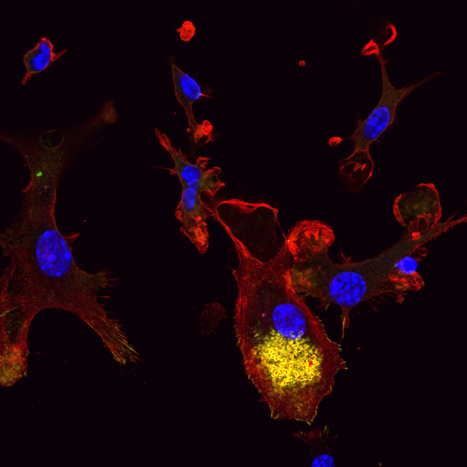















The authors used a lentiviral vector to highly expressed BMP2 in Urine-derived stem cells. This lentiviral-BMP2 construct provides sufficient stimuli for osteogenic differentiation. Histological analysis indicated that the transduced USCs induced robust new bone formation in nude mice. Six weeks after transplantation, human derived cells were observed to participate in bone formation.
www.geg-tech.com