


Twin sisters in Shelton who were born blind are using a new technological assistive device from California's Aira company to do things like read restaurant menus and navigate tight spaces.

 Your new post is loading...
 Scoop.it! Twin sisters in Shelton who were born blind are using a new technological assistive device from California's Aira company to do things like read restaurant menus and navigate tight spaces. 
No comment yet.
Sign up to comment
Scoop.it!

The latest electric vehicle in Musk's plan to save the planet.
Richard Platt's insight:
The Truck for the JobMusk believes that going after the big boys is the best way to have a real impact on climate change. In the five years since Tesla started producing its Model S sedan, it has sold about 200,000 cars. The US has more than 250 million passenger cars on the road, making the impact of this, roughly, zero. Even if Tesla scales up production of its “affordable” Model 3 sedan, it will still be a very long time before the Silicon Valley automaker can change the way humanity moves about enough for any dip in emissions to register as more than a blip.
Trucks offer a more effective way to do that, because they are particularly toxic. “Heavy-duty vehicles make up a small fraction of the vehicles on the road, but a large fraction of their emissions,” says Jimmy O’Dea, who studies clean vehicles at the Union of Concerned Scientists. In California, that category (which includes buses as well as trucks) accounts for 7 percent of total vehicles, but produces 20 percent of transportation-related greenhouse gas emissions and a third of all NOx emissions (those are the ones linked to asthma attacks and respiratory illnesses). Every truck you move with electricity instead of diesel has an outsize effect on the health of the planet and everything living on it. 18-wheelers are the ultimate force multiplier. Musk has done the math. And while lots of players are moving into electric trucking space, none have the star power of Tesla, the kind of clout that makes the whole country pay attention.
Scoop.it!

Caroline Stefani has a cool job: She works at the Benaroya Research Institute at Virginia Mason in Seattle, looking for new ways to treat diseases like… Via Florian Morandeau, Lionel Reichardt / le Pharmageek
Richard Platt's insight:
It’s not easy. In fact, it turns out a lot of scientists have a hard time wrapping their minds around the tiny, three dimensional structures that they work with every day, like cells and proteins. Luckily, Stefani’s office is right next door to Tom Skillman, who leads Benaroya’s research technology efforts. Talking with Stefani over drinks one evening, Skillman had an idea: using data from microscopes, he could build a full 3D model of the cells she studies — in virtual reality. A year later, the lab that Stefani works in has a fully-operational VR program that lets her and other researchers see their work like never before. It’s just one of many ways that virtual and augmented reality are making waves in the world of medicine and medical research. Adam Lacy-Hulbert, who runs the lab Stefani works in, says the program gets to the heart of a scientist’s work. Although it can seem flashy, medical research mostly means trying the same thing over and over — and over — again.

Florian Morandeau's curator insight,
November 9, 2017 2:40 AM
Using virtual reality for 3D models of the cells.
Scoop.it!

Jean-Christophe Lévêque's curator insight,
November 14, 2017 5:00 AM
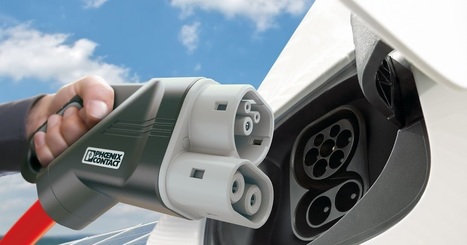
Des solutions de charge rapide pour les voitures électriques #MBAMCI
Scoop.it!

A variety of apps, some using Google’s Cardboard viewer, allow users to sample films and games with 3-D imagery.
Richard Platt's insight:
Start with the Within app, which is a free iOS and Android download. It uses so-called 360-degree video technology, which is similar to virtual reality and lets you look at a video in every direction and to interact with and explore a movie scene. Within works like this: Imagine you are watching a regular film on your phone — with a point of view decided by where the filmmaker was pointing a camera. In the app, you can move your phone around in the air, looking all around and up and down, as you slide your viewpoint all around the scene, seeing the actors and the set wrapping all around you. It’s almost as if you were there standing among the actors. At first it may feel unnerving, and you may find yourself bumping into things in your real-life room. But you will be mesmerized.
Scoop.it!

With 240-degree views, headsets and “sweet, musty scents,” a new kind of pornography offers a realism that is exciting to some, disturbing to others.
Richard Platt's insight:
Virtual reality uses many camera lenses to record the same scene from hundreds of angles. When the takes are stitched together, the viewer gets a 180- or 240-degree view of the room and the feeling that he or she is there, participating. As soon as Ms. Darling viewed the scene she recorded, she knew virtual reality would be a sea change to her job and the adult-entertainment industry. In early 2014 Ela Darling, 31, a pornographic actress, recorded her first virtual reality sex scene. She was in a college dorm room at the University of Maryland dressed in an R2-D2 swimsuit and high athletic socks. She sat on a twin bed, next to a wooden desk, and spoke to the camera as if it were a real person. There was no story line and no other actors. “It was a solo masturbation scene,” she said. “I was coy and flirty and then a little bit dirty. I felt sexy as hell.” Ms. Darling had been filming pornography since she was 22 and took her job seriously. It was her responsibility to convince audiences to connect with her physically and emotionally. She tried everything, including acting out bondage fetishes, performing erotic electrostimulation (“electrosex”) on another woman and dressing as a real-estate agent. Yet no matter what she did to entice and engage, the results had always been voyeuristic, since there was always a screen separating her and her fans. “You can pretend like you are in the bedroom with me, and it is someone you have a crush on,” she said. “You are in the experience.” By 2025 pornography will be the third-largest VR sector, according to estimates prepared by Piper Jaffray, an investment and management firm. Only video games and N.F.L.-related content will be larger, it predicted, and the market will be worth $1 billion. “We’re getting more and more of it every day,” said Mark Kernes, a senior editor at AVN Media Network, which covers the industry. “We are leading the technology in this area. Sex sells, and where there is money to be made, there will be entrepreneurs who want to adopt it and make money from it,” some by offering it for free to increase clicks. Pornography is what rushed along the first printing press, and spurred developments in the internet, online payment systems and other technology. Now it’s time for virtual reality, Mr. Kernes said: “I’m pretty sure there is more porn VR out there than regular VR.” Headsets Are Just the Beginning Ms. Darling first experienced regular old VR at E3, a conference for the video-game industry. Excited by the pornography possibilities, she found a college student on Reddit who knew the technology but lacked a star. Before long, Ms. Darling started streaming weekly VR segments live from her bedroom in Los Angeles.
Scoop.it!

wearable tech, wearable, technology, virtual reality, augmented reality, gaming, devices, lifestyle
Richard Platt's insight:
Nowadays, virtual reality games allow us to immerse into the gaming world and control our alter-ego by moving our bodies in the real world. Early scientific research on virtual reality tells us that it provides motivational physical activity (Harris & Reid, 2005) and that it increases enjoyment while decreasing tiredness (Plante, Aldridge, Bogden, & Hanelin, 2003). We had a look at what´s hot in the wearable gaming sector some time ago: A World Within Ours, Wearables Are Changing The Future Of Games, New Devices For Gaming – But let´s see what´s on the horizon and let´s get active while gaming. The German based ICAROS GmbH is combining a virtual reality head mounted display with a fully new engineered device which gave their company its name: ICAROS . Players plank in the ICAROS and by moving and tilting their body (and consequently activating different muscles) they “fly” in the virtual reality. Applications range from racing a motorcycle, diving with a submarine or flying a jetpack-like device – all controlled by your bodies movement.
Scoop.it!

The company, which has had a lot of success in ambient scenting for the home, is expanding in the retail market.
Richard Platt's insight:
Prolitec is an ambient scenting company based in Milwaukee, Wisconsin. They have executive offices in Seattle and a worldwide sales presence on top of it all. Their new innovation is called ScenXus, and it aims to combine a highly sophisticated scenting technology with a smart IoT platform to monitor and control the performance quality of commercial scenting devices. The system is the big brother to the company’s Aera line of products, which integrates scenting into in much the same way as devices like Sonos, Nest and other IoT devices interact within a smart home. While the new commercial technology is developing, where Prolitec’s bread is buttered is in the home market, where their Aera line of home scenting products is one of the most popular products in the Internet of Things (IoT) market. The pricing is different for each system, however, in that ScenXus clients pay a monthly subscription fee based on the complexity and individuality of their service, while Aera users simply purchase scenting cartridges based on their individual tastes. Aera is a system meant to complement existing IoT technology like Google Home or Alexa, according to Prolitec CEO Richard Weening. The Aera devices are already controllable with smart devices like Alexaand will eventually be connectible with all home IoT devices. “The story of ScenXus has to be the story of ambient scenting.” “From a home point of view, you have control of the temperature with Nest said. “What it is at its most basic is the use of scent in commercial settings for some marketing-related reason. The reasons range from making a place smell better to associating a particular scent with a brand, selling a product, or any other situation where scent can add value to the customer experience.”
Scoop.it!

Apps let you choose from thousands of objects to insert into your digital photographs.
Richard Platt's insight:
With the release of iOS 11 this month, Apple gave an already barreling augmented reality (AR) trend a hard shove forward. Put simply, augmented reality is technology that allows the insertion or superimposition of “digital objects” or other information on real-time environments, either through the screen of a smartphone or the lenses of a headset. Apple’s newly released operating system supports all kinds of AR applications, and the company is encouraging developers to get in on the action with its proprietary ARKit. And while the majority of apps currently available in this twilight before the release of iPhones 8 and X (both far more capable of bearing the processor burdens of AR) offer buggy “experiences” that feel more like momentary distractions, the technology is already working its way into our daily lives online. Responsive facial filters were the first application of AR on Snapchat and (soon after, as usual) Instagram. (You can even broadcast live “in costume” on Instagram.) And in the past year, Snapchat has rolled out a rotating menu of digital objects (i.e. dancing hotdogs) that can be dragged into a scene, pinched to proper size, and staged however one pleases. (It’s your world, after all.) And just this past week, Snapchat introduced AR sky filters that can lend your dull landscapes otherworldly atmospherics, and AR Bitmoji, personalized 3D avatars that users design, and that respond to the environments of your photos and videos (and tend to be cuter than you IRL). As for Facebook, it hasn’t played its AR hand quite yet — though its AR Studio for developers has been up and running since April, and experimental uses for its Facebook Camera platform are well underway — including the first large-scale “piece” of augmented reality art. -- And outside of social media, AR is quite literally finding its way into our homes. An app created by home design retailer Houzz allows users to test over 500,000 digital pieces of furniture and decor and position them around the house (as seen through your phone) at life-size scale in three dimensions. And IKEA has entered into the fray with IKEA Place, an app that lets you pick and place over 2,000 items wherever you like (even on a subway platform). Another app, Housecraft, bills itself as an “AR toybox for your home,” and that play on playfulness is on purpose – its fun to get creative and create a forest of ficuses in the kitchen, or a leaning tower of sofas in the driveway. Elsewhere in this rapidly expanding dimension is GIPHY World, an AR extension of the beloved animated GIF service, which allows real-world realization of your favorite memes. There’s the three-dimensional ruler app MeasureKit, and Tape Measure (which can export information as CAD files). And there are new and revamped games galore, like an AR-enhanced Splitter Critters, which plops a virtual puzzle box on your coffee table.
Scoop.it!

Google has a new holster to turn your smartphone into a virtual reality head-mounted display. During the company’s hardware event today in San Francisco, Google showed off its refined Daydream View that will sell for $99. This is an update to last year’s $80 View, which turned the Pixel smartphone into a headset.
Richard Platt's insight:
Google has a new holster to turn your smartphone into a virtual reality head-mounted display. During the company’s hardware event today in San Francisco, Google showed off its refined Daydream View that will sell for $99. This is an update to last year’s $80 View, which turned the Pixel smartphone into a headset. The new View features a number of improvements. Its overall design is more solid than than 2016 model, which used a soft cloth material for its body. The 2017 chassis will also come in a number of new colors. Google also upgraded the lenses to improve the field-of-view. People can use the View to access VR apps on Google Play, and they will now find more than 250 apps that support that ecosystem. And you can now cast those VR apps to the TV so your friends and family can see what you’re seeing.
Scoop.it!

New tools and troves of data have CIOs turning to neural nets and machine learning to deliver real-world results. Here’s how six 2017 CIO 100 leaders put AI to work.
Richard Platt's insight:
AI and cognitive systems are taking root in the banking and finance industry to do better fraud detection, in retail scenarios for personalization and product recommendations, and in manufacturing to do predictive maintenance. At the same time, AI is creeping into enterprise software platforms, where it is used to make recommendations for how to segment a marketing campaign, for example, or to automate back-office functions like software updates and network monitoring, freeing IT from time-consuming housekeeping tasks to focus on value-added activities. “AI is really about automation of automation,” he explains. “It’s really the idea that programs or applications can self-program to improve and learn and make recommendations and make predictions.” Schubmehl says IT organizations have to start thinking about AI (if they aren’t already) and working with line of business to identify possible use cases and pilot projects. They should also be evaluating the software vendors they currently use to ensure that AI and cognitive capabilities are part of those vendors’ product roadmaps, he adds. At the same, CIOs cast a critical eye on AI and cognitive capabilities, Schubmehl cautions. Data quality is a big issue as companies move forward, as is privacy, he says. For example, if you’re making predictions or recommendations to a customer based on bad data or information that should be safeguarded, you inevitably open up an organization to risk. “You need to get on board, but you have to understand what the positive impacts will be on the organization as well as examine the risk potential and liabilities,” he explains.
Scoop.it!

Intel and The ESL are at the forefront of eSports and the future of the immersive tech industries like VR and AR could be closely connected.
Richard Platt's insight:
While traditional eSports aren’t going away, many companies are building the foundation for a virtual reality subset. The current eSports numbers are staggering. According to Newzoo, of the 1.3 billion gamers worldwide, 256 million are eSports fans today. That number will grow to 385 million by 2017. ESports generated over $493 million in revenues last year and are expected to jump to $696 million this year. When you look at the gaming landscape, the only thing as “hot “as eSports is virtual reality. Newzoo forecasts global virtual reality and augmented reality will generate $569 billion by 2025. And gamers will be a big part of that revenue, with projections of spending $100 million on VR hardware by 2018.
Scoop.it!

Intel won't be releasing its Project Alloy VR headset platform anytime this year -- in fact, it won't be releasing the technology at all. The tech giant ha
Richard Platt's insight:
Intel won't be releasing its Project Alloy VR headset platform anytime this year -- in fact, it won't be releasing the technology at all. The tech giant has officially killed the initiative, which aimed to provide partner companies an open reference design for their own standalone VR devices. Intel was supposed to launch the platform this year, but according to RoadtoVR, it has decided to abandon the project this summer due to lack of partner interest. Kim Pallister, Intel's Virtual Reality Center of Excellence director, has also revealed another possible reason in his interview with PC World. He said the company realized that a standalone headset "isn't necessarily the optimum form factor" and can't compete with the performance of PC-powered devices. Instead of going forward with Project Alloy, Intel will focus on developing a WiGig link to enable wireless PC-powered VR headsets, as well as on making other VR-related technologies. It told RoadtoVR in a statement: "Intel has made the decision to wind down its Project Alloy reference design, however we will continue to invest in the development of technologies to power next-generation AR/VR experiences. This includes: Movidius for visual processing, Intel RealSense™ depth sensing and six degrees of freedom (6DoF) solutions, and other enabling technologies including Intel WiGig, Thunderbolt, and Intel Optane™. All of these Intel technology solutions are supported by a robust portfolio of software capabilities, and we're building out a VR support ecosystem, from software design kits to reference designs, to spur innovation that's enabling rich and immersive content. Project Alloy served as a great proof of concept for Intel and the industry – showing what's possible in a high-performance, immersive and untethered VR experience. What we've learned through Project Alloy will inform future efforts." The company has also been shifted its focus to VR content recently. Just this March, it snapped up Replay Technologies, which is known for creating 360-degree video replays for the NBA.
|
Scoop.it!
Richard Platt's insight:
The second-generation Tesla Roadster came to an abrupt halt, and a grinning Elon Musk came back on the mic to introduce his latest baby, which will likely cause Porsche and Ferrari to break a sweat. Musk claimed the base model will do zero to 60 in 1.9 seconds, which if true would make it the first time a production vehicle cracked the 2-second threshold. He also said the new Roadster would climb from 0 to 100 mph in 4.2 seconds, and will clear the quarter mile in 8.9 seconds (in case the Fast & Furious drag race franchise comes calling.) “It’ll be faster than that jet over there,” Musk quipped, as an airplane soared over the exultant crowd crammed into Tesla’s Hawthorne, California facility. Musk said he wouldn’t confirm the top speed, but hinted that it was “above 250 mph.” By comparison, the Agera RS by Sweden’s Koenigsegg currently holds the world record at 277.9 mph.
Scoop.it!

When Henrik Fisker relaunched its electric car startup last year, he announced that their first car will be powered by a new graphene-based hybrid supercapacitor technology, but he later announced …
Richard Platt's insight:
Solid-state batteries are thought to be a lot safer than common li-ion cells and could have more potential for higher energy density, but they also have limitations, like temperature ranges, electrode current density, and we have yet to see a company capable of producing it in large-scale and at an attractive price point competitive with li-ion. Now Fisker announced that they are patenting a new solid-state electrode structure that would enable a viable battery with some unbelievable specs. Here’s what they claim (via GreenCarCongress):
Scoop.it!

Virtual reality can help children to manage pain without the use of drugs, according to a study recently published in the Journal of Pediatric Psychology in October. The study, which used VR during blood drawing at the Los Angeles Children’s Hospital, found that using VR significantly reduced acute procedural pain and anxiety in patients compared to using the standard of care. Via Lionel Reichardt / le Pharmageek
Richard Platt's insight:
The study also reported that patients who reported being more fearful of physiological sensations related to anxiety benefited more from the VR treatment. “The integration of technology, specifically virtual reality, in the context of health care, has far-reaching implications for acute and chronic disease in children and adults,” author of the study Jeffrey Gold said in an email MobiHealthNews. “In particular, the current findings reflect the capacity of VR to minimize pain and anxiety in children undergoing blood draw. Generations of patients have needle fear and VR may have the capacity to reduce that phobia. Additionally, reduced needle phobia may lead to greater medical adherence and improved patient satisfaction with their overall medical treatment experience.” The study was comprised of 143 pediatric patients, plus their caregivers and their phlebotomists.
Scoop.it!

Marcelle Hopkins, deputy video editor and co-director of virtual reality, traces The Times’s push into V.R. and other visual technologies.
Richard Platt's insight:
Video has changed a lot in recent years. How have you and the video department incorporated new video technologies, and what technologies has the department helped pioneer for journalism? Journalists and technologists from various parts of The Times started experimenting with virtual reality a few years ago. We launched NYT VR in November 2015 with the publication of the V.R. documentary “The Displaced” (about three children displaced by war) and the distribution of more than one million Google Cardboard headsets to our subscribers. Since then, we’ve produced more than 20 V.R. films, and we learn a lot with each one. Last year, we launched The Daily 360, a series that produces a 360-degree video from somewhere in the world every day. The volume and cadence of daily publication accelerated our learnings in V.R. It allowed us to quickly iterate on a young storytelling form, train our journalists in a new reporting tool and introduce immersive journalism to a broad Times audience.
Scoop.it!

The theater chain has invested $20 million in the start-up Dreamscape Immersive and will open six locations offering V.R. experiences in the next 18 months.
Richard Platt's insight:
Just used the Regal Cinema's "Experience" (3-D glasses with Sensurround stereo and vibrating reclining chairs 2 weeks ago) watching BladeRunner 2049, pretty cool technology applied to entertainment, but it needs to be tweaked a little to be made better and more immersive. However this article is really talking about the next generation film as a medium entertainment that is using integrated technology to create an immersive experience for theater goers -- Steven Spielberg was an early investor. So were 21st Century Fox, Metro-Goldwyn-Mayer and Warner Bros. The venture’s leadership team includes the former chief of Disney’s theme park design division; the producer of the “Men in Black” movie series; and a live event kingpin. And now AMC Entertainment, the world’s largest theater chain, has invested $20 million in the fledgling company and agreed to finance the rapid roll-out of its product in the United States and Britain. The fuss is over Dreamscape Immersive, which has been working in a warehouse here for the last year and a half on what it calls a “virtual-reality multiplex.” Instead of a variety of movies, Dreamscape Immersive locations will offer a variety of virtual-reality experiences. Its technology, developed by a Swiss motion-capture firm, allows up to six people to explore a virtual-reality environment at once, seeing fully rendered avatars of one another. “We were mesmerized by what we saw,” said Adam Aron, chief executive of AMC Entertainment. “Their vision is to change what V.R. has been — away from just a heightened level of video game and toward cinematic storytelling — and we think it’s what consumers have been waiting for.” The AMC deal, which brings total investment in Dreamscape to more than $40 million, calls for up to six Dreamscape locations to open over the next 18 months. Some will be inside existing AMC theaters, and some will be stand-alone centers nearby. Additionally, Dreamscape will open a flagship location in the first quarter of next year at the Westfield Century City mall in Los Angeles. Westfield is another Dreamscape investor.
Scoop.it!

Facebook dropped a bombshell on the virtual reality world Wednesday: a $200 virtual reality headset that doesn't require wires or a smartphone to work. The headset could go a long way to helping Facebook get virtual reality into the hands of a "a billion people" -- a (timeframe-free) goal set by CEO Mark Zuckerberg.
Richard Platt's insight:
Facebook dropped a bombshell on the virtual reality world Wednesday: a $200 virtual reality headset that doesn't require wires or a smartphone to work. The headset could go a long way to helping Facebook get virtual reality into the hands of a "a billion people" -- a (timeframe-free) goal chief executive Mark Zuckerberg set Wednesday at a developers conference hosted by its VR company Oculus. Virtual reality has been a major focus for Facebook and other major tech firms such as Microsoft and HTC, but consumers haven't been quite as enthusiastic. The new headset, however, addresses two major problems analysts have said stand in the way of adoption: high prices and a complicated setup process. The price of virtual reality headsets has continued to drop, making the technology more accessible to a variety of people. Setting a $200 price for a headset that doesn't require any additional equipment, however, is a new landmark for the industry.
Scoop.it!

Countless books and articles have been written about Warren Buffett. Surprisingly few have been written about his business partner of over 40 years, Charlie Munger. Munger has stayed out of the…
Richard Platt's insight:
Being an expert-generalist allows individuals to quickly adapt to change. Research shows that they:
Scoop.it!
Richard Platt's insight:
There are more than one billion cars on the road worldwide today, and only one tenth of one percent of them have a plug. OPEC contends that even in the year 2040, EVs will make up just one percent. But don't be so sure. By 2020, some electric cars and SUVs will be faster, safer, cheaper, and more convenient than their gasoline counterparts. What if people just stop buying oil? In the first episode of our animated series, Sooner Than You Think, Bloomberg's Tom Randall does the math on when oil markets might be headed for the big crash.
Scoop.it!

Google has a new holster to turn your smartphone into a virtual reality head-mounted display. During the company’s hardware event today in San Francisco, Google showed off its refined Daydream View that will sell for $99. This is an update to last year’s $80 View, which turned the Pixel smartphone into a headset.
Richard Platt's insight:
Tuesday, Microsoft announced it had acquired the AltspaceVR team as part of its push into mixed reality, it is working with Samsung on the Odyssey mixed reality headset, and integration with SteamVR (meaning its library of apps and games will work with this device). Microsoft dubs mixed reality headsets as gear that can work with VR or AR. Right now, AR appears to on the rise, thanks to Apple’s ARKit and Google’s ARCore. These work with hundreds of millions of devices people already own, whereas VR right now requires pricey headsets and PCs powerful enough to run the software for this new reality. Is Microsoft trying to play it safe by making devices that run AR and VR? Or does the Windows and Xbox company get that marrying these options together will produce a transformative technology, one that does more than either VR or AR can do alone?
Scoop.it!

A rivals close in, the chipmaker takes a punt on ‘neuromorphic’ processors
Richard Platt's insight:
In the race to build better hardware for artificial intelligence, Intel is turning to an old, but unproven, type of computer processor. Neuromorphic chips, as they’re known, are modeled after the human brain, but after decades of research, have yet to show better performance in real-life applications than regular CPUs and GPUs. The veteran chipmaker wants to change that, unveiling a new neuromorphic chip this week designed specifically for R&D that the company has christened “Loihi.” Like all neuromorphic chips, Loihi uses what researchers call “spiking neurons” as its basic computational building block. These neurons replace the traditional logic gates found in today’s silicon, and instead of processing information as binary 1s and 0s, they weight the signals they send, making their functionality more analog than binary. And, unlike CPUs, these neurons aren’t controlled by a central “clock” that regulates their calculations in a tick-tock fashion, but can instead fire as and when needed. But despite the theoretical advantages of neuromorphic processors, the chips have yet to show real results outside the lab. They’ve performed well in academic and industrial research, but haven’t scale up to becoming a proper consumer product. As Steve Furber, a scientist in the field, told IEEE Spectrum earlier this year: “There currently is a lot of hype about neuromorphic computing [but] there is currently no compelling demonstration of a high-volume application where neuromorphic outperforms the alternative.” In other words, they’re just not ready for the primetime. For Intel, though, this isn’t just another avenue of research — it could be an essential counter to the rise of rivals like Nvidia and AMD. These companies have benefited from the AI boom thanks to their chip design which fits the needs of modern AI. (Just yesterday, Nvidia made a string of announcements that included new deals with Chinese tech giants for its hardware.) Other companies like Google are developing new processors for AI in the cloud, further cutting into Intel’s potential revenues.
Scoop.it!

Introducing Intel as ESL’s Global Technical Partner for all amateur and pro tournaments, as well as the brand-new $1,000,000 Intel Grand Slam for CS:GO.
Richard Platt's insight:
The full list of productions benefiting from the new deal below:
Scoop.it!

By Erik Day - We like to imagine what a VR experiences would look like if both tied to curriculum and tailored to students' competency via machine learning. Via Grant Montgomery

Oskar Almazan's curator insight,
September 22, 2017 8:48 AM
The intersection of Virtual Reality (VR) and Augmented Reality (AR) and personalized learning is a pool into which current technology has only begun to dip its toes, but it is a topic that conjures up fantastic (in the literal, J.K. Rowling sense of the word) possibilities. I’m not just talking about pulling competency-appropriate 3D lessons from a repository of ready-made material, or VR training for the operation of heavy machinery. I like to imagine what a learning experience would look like wherein students have access to VR that is both tied to curriculum and automatically tailored to their competency via machine learning–aspects that are sorely missing in many current educational VR experiences (and which, admittedly, can instill a little apprehension when taken to the extreme). |






Barbara Lombardi and Betsey Doane -- who were both born blind -- use pairs of Wi-Fi connected glasses, capable of contacting Aira agents for assistance with tasks that require another set of eyes. The devices are designed for the blind and people with very low vision. They include cameras that the agents can access. The sisters, ham radio operators for roughly the past six decades, say that before they began using Aira's glasses their communications were solely by touch and sound. "It's life-changing, absolutely life-changing," says Doane, who is a professor at Housatonic Community College. "I was at a conference recently...and I navigated the hotel. There were 1,600 teachers, and of course I had some help, but really I just navigated fine." Aira released the devices this year. The Shelton sisters are among more than 1,000 people in the country who use the service so far. "It's the freedoms we've never known," Lombardi says. "It's fantastic."