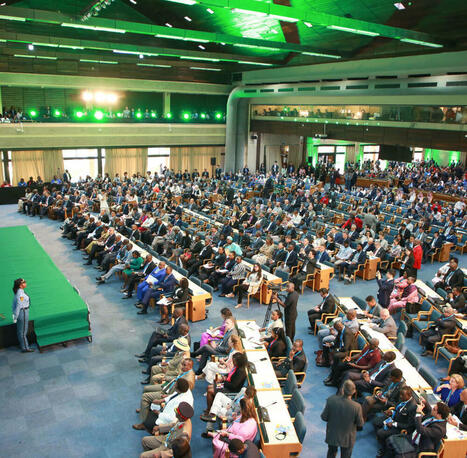
The New Urban Agenda was adopted at the United Nations Conference on Housing and Sustainable Urban Development (Habitat III) in Quito, Ecuador, on 20 October 2016 this presents a paradigm shift based on the science of cities and lays out standards and principles for the planning, construction, development, management and improvement of urban areas.
The New Urban Agenda is intended as a resource for these different actors: Local and Regional Governments, Inter-Governmental Organisations, Civil Society Organisation (NGOs, CSOs, CBOs), Business and Industry/Private Sector, Children and Youth, Academia and Research, Professional Associations, Women, Indigenous People, Workers and Trade Unions, Grassroots and Informal Settlements, People with Disabilities, Older Persons, Media, Foundations and Philanthropists, Farmers and all who reside in urban spaces of the world.
The New Urban Agenda highlights linkages between sustainable urbanization and job creation, livelihood opportunities and improved quality of life, and it insists on incorporation of all these sectors in every urban development or renewal policy and strategy. It was endorsed by the United Nations General Assembly at its sixty-eighth plenary meeting of the seventy-first session on 23 December 2016.
The New Urban Agenda represents a "shared vision" (Africa is left behind)for a better and more sustainable future. If well-planned and well-managed, urbanization can be a powerful tool for sustainable development for "both developing" (not true) and developed countries.
1. AGENDA 2030: NEW URBAN AGENDA (NUA) is not AGENDA 2063 - Is AGENDA 2063 a diversion to prevent full participation and oversight by the AU and PAP in all processes of AGENDA 2030? - Is AGENDA 2030 the Re-Colonising AGENDA?
2. DECENTRALISATION - Will National Governments and National Parliaments be useful after Local Government Autonomy and Constitutional Amendments? Will these changes allow foreign Actors in our countries? Are we Africans facilitating Re-Colonisation?
3. Are Local Governments influenced or directed by Local Government Associations, assisted by Foreign Actors to control Agenda 2030? Who are the biggest foreign actors involve in AGENDA 2030?
4. CANTONS (Welfare States System) If Cantons/Local Governments was Economic Transformation for citizens, then why are Switzerland citizens on a Welfare State System. Why Decentralising Africa and who's will benefit?
5. WHY WAS AFRICA TRICKED OUT OF AGENDA 2030 TO ADOPT AGENDA 2063 in 2013? Why was Africa's Parliamentarians not capacitated on all AGENDA 2030 processes while been mandated to make laws and policies for implementation.
Reducing inequality and promoting social inclusion and empowerment of vulnerable groups
Since the adoption of the New Urban Agenda in 2016, describe the progress that governments at all levels within your country (e.g., national, subnational, local), in partnership with any other relevant stakeholders, have achieved in the implementation of the agenda in eradicating poverty in all its forms, reducing inequality in urban areas, achieving social inclusion and empowerment of vulnerable groups (e.g., women, youth, older persons and persons with disabilities and migrants) and ensuring access to public spaces such as streets, sidewalks, and cycling lanes, among others.
Suggested indicators for measuring social inclusion and empowerment of vulnerable groups
Proportion of population below like poverty line,by sex,age at urban level
Presence of national legislation forbidding discrimination
UMF-15
Availability/existence of migration policies to facilitate orderly,safe,regular and responsible migration and mobility of people
Women’s recognized legal right to property inheritance and ownership
UMF-44
Average share of the built-up area of cities that is open space for public use for all
UMF-17
Life expectancy at birth,disaggregated by income group
Percentage of road length that has dedicated bike lanes and dedicated sidewalks
Member States should collect data on measuring social inclusion and ending poverty, aligned with the suggested indicators above. In case temporal data going back to 2016 are missing, justified, numerical estimates (e.g., from a scale of 1 to 10) can be provided for both 2016 and today to roughly estimate changes in the relevant indicator.
Member States should also consider the following questions for reflection:
What are the trends that can be identified based on the data collected by your country and what are the drivers to have improved or hindered social inclusion, ending poverty, empowerment of vulnerable groups and access to adequate housing and basic services?
Has your government acted mostly as an enabler or as a provider of housing and basic services?
What have been the key obstacles and challenges to effective implementation of the principles outlined in the New Urban Agenda? And what illustrative actions can your government highlight in which these principles have been advanced and what has their impact been on people?
Member States are encouraged to share their best practices on the Urban Agenda Platform for greater visibility, and are asked to tie answers to these questions into a cohesive narrative that clearly and explicitly connects data trends, identified key drivers of trends, and illustrative case studies.
Member States should then, based on the assessment made above, consider the following question:
What changes are governments in your country (at all levels) going to implement to accelerate the implementation of the principles of the New Urban Agenda in both the immediate term and before 2036?
Member States should collect data on measuring inclusivity, productivity and prosperity of the urban economy, in line with the suggested indicators above. In case temporal data going back to 2016 are missing, justified, numerical estimates (e.g., from a scale of 1 to 10) can be provided for both 2016 and today to roughly estimate changes in the relevant indicator.
Member States should also consider the following questions for reflection:
What are the trends that can be identified based on the data collected by your country and what are the drivers to have improved or hindered inclusivity, productivity and prosperity of the urban economy?
What has been the role of inequality as an obstacle to achieving greater prosperity for all? What have been the key obstacles and challenges to effective implementation of the principles outlined in the New Urban Agenda?
What illustrative actions can your government highlight in which these principles have been advanced and what has their impact been on people?
Member States are encouraged to share their best practices on the Urban Agenda Platform for greater visibility, and are asked to tie answers to these questions into a cohesive narra- tive that clearly and explicitly connects data trends, identified key drivers of trends, and illustrative case studies.
Member States should then, based on the assessment made above, consider the following question:
What changes are governments in your country (at all levels) going to implement to accelerate the implementation of the principles of the New Urban Agenda in both the immediate term and before 2036?
Since 2016, describe the progress that governments at all levels within your country (e.g., national, subnational, local), in partnership with relevant stakeholders, have achieved in the implementation of the New Urban Agenda’s commitment to enhance biodiversity and ecosystem conservation, including progress on resource conservation and waste reduction, reuse, and recycling, implementing environmentally sound management of water resources and urban coastal areas, strengthening the sustainable management of natural resources in urban areas and minimizing urban sprawl and loss of biodiversity resulting from it, among others.
Suggested indicators for measuring biodiversity and ecosystem conservation
UMF-51
Ratio of land consumption rate to population growth rate
UMF-40
Proportion of domestic and industrial wastewater flow safely treated
UMF-49
Proportion of land under protected natural areas
UMF-41
Proportion of municipal solid waste collected and managed in controlled facilities
Existence of an enforced coastal land mangement plan in the country
UMF- 47
Green Area per capita
Review and assessment
Member States should collect data measuring sustainable and resilient urban development, aligned with the suggested indicators above. In case temporal data going back to 2016 are missing, justified, numerical estimates (e.g., from a scale of 1 to 10) can be provided for both 2016 and today to roughly estimate changes in the relevant indicator.
Member States should also consider the following questions for reflection:
What are the trends that can be identified based on the data collected by your country and what are the drivers to have improved or hindered adaptation, mitigation and conservation?
What have been the key obstacles and challenges to effective implementation of the principles outlined in the New Urban Agenda?
Is your country on track to achieve the urban component of your own climate goals as outlined in the Nationally Determined Contributions or other national climate action plans?
What illustrative actions can your government highlight in which these principles have been advanced and what has their impact been on people?
Member States are encouraged to share their best practices on the Urban Agenda Platform for greater visibility, and are asked to tie answers to these questions into a cohesive narra- tive that clearly and explicitly connects data trends, identified key drivers of trends, and illustrative case studies.
Member States should then, based on the assessment made above, consider the following question:
What changes are governments in your country (at all levels) going to implement to accelerate the implementation of the principles of the New Urban Agenda in both the immediate term and before 2036?
Reporting on progress in environmentally sustainable and resilient urban development contributes to achieving the Paris Agreement and the global stocktake on assessing the collective progress towards long-term climate goals.
Planning and managing of urban spatial development
Since 2016, describe the progress that governments at all levels within your country (e.g., national, subnational, local), in partnership with relevant stakeholders, have achieved in the implementation of the New Urban Agenda’s commitment to effective planning and management of urban spatial development, including progress on implementing integrated and balanced territorial development polices, integrating housing into urban development plans, including culture as a priority component of urban planning, implementing planned urban extensions and infill, urban renewal and regeneration of urban areas, improving capacity for urban planning and design, training for urban planners at all levels of government, strengthening the role of small and intermediate cities and towns, and implementing sustainable multimodal public transport systems including non-motorized options.
Progress may also be considered on whether urban planning systems include well-coordinated decision- making mechanisms; designated offices on urban and territorial planning; policies, plans, designs and rules and regulation for all planning scales; effective financial and legal frameworks; and incorporation of an evidence- based approach in developing visions and plans, supported by spatial maps, among others.
Reporting on progress in urban governance structure also contributes to upholding the International Guidelines on Urban and Territorial Planning
Suggested indicators for measuring Planning and Managing Urban Spatial Development
Number of counties, regional governments, and sities in which plans and designs are publicly accessible to residents (on-line) and can be consulted at all times
Number of urban planners per 100,000 persons
UMF-06
Proportion of population that feel safe walking alone around the area they live after dark
UMF-08
Death rate due to road traffic injuries
UMF-29
Proportion of trips made in Public Transport
Land-use mix Population density
UMF-76
Presence of urban policies or regional development plans that: (a) respond to population dynamics, (b) ensure balanced territorial development, (c) increase local fiscal space
Mobilization of financial resources
Since 2016, describe the progress that governments at all levels within your country (e.g., national, subnational, local), in partnership with relevant stakeholders, have achieved in the implementation of the New Urban Agenda, including progress on developing a financing framework for implementing the agenda, mobilizing own-source revenues of local and regional governments , enhancing the cost-effectiveness of revenue administration/ departments, expand and enhance credit rating for local and regional governments and formulating coherent, reliable and accountable systems of financial transfers from national to subnational and local governments based on realistic needs.
Reporting on progress on mobilization of financial resources aligns with the commitments made within the Addis Ababa Action Agenda
KRII-KROTOASA RESEARCH-INTENSIVE INSTITUTE 's insight:
KRII-KROTOASA RESEARCH-INTENSIVE INSTITUTE 's insight:
2.5 Strategic ways forward
In the final section of the National Progress Report, Member States are encouraged to take a step back and reflect more broadly on the strategic changes that are required to accelerate the implementation of the transformative commitments in the New Urban Agenda. Specifically,
they should consider the following strategic questions in consultation with a broad range of national stakeholders, such as through a National Urban Forum:
Which key actions in your country planning to implement in the period up 2036 to achieve the transformative commitments within the New Urban Agenda?
Which aspects of implementation have so far been lacking the most and need to improve to enable achieving the transformative commitments?
What are the ways in which adequate political commitment at all levels of government can be secured to accelerate the implementation of the New Urban Agenda?
In this final section, Member States are also invited to complement actions required within their country with recommendations to the international community on how multilateral action can help accelerate the implementation of the New Urban Agenda and achieve the SDGs.
KRII-KROTOASA RESEARCH-INTENSIVE INSTITUTE 's insight:
Since early 2020, the Covid-19 pandemic and pandemic responses such as government lockdowns have highlighted and exacerbated many of the chronic stresses urban poor communities live with and struggle against daily.
As such, the strategies supported by this SDI / Cities Alliance partnership are about more than Covid-19 response and recovery: they are about sustainable, inclusive, and pro-poor urban development that provides communities with meaningful opportunities to work with government and other stakeholders to address issues such as food security, access to livelihood opportunities, skills training, and basic services like water and sanitation, as well as the need for accurate slum data to drive government responses in times of crisis.
The examples provided in this document highlight how federations have the information, knowledge, and skills to work with government and other stakeholders to implement effective, scalable solutions to chronic and acute urban challenges.
KRII-KROTOASA RESEARCH-INTENSIVE INSTITUTE 's insight:
Grassroots women, informal settlements and slum dwellers associations are at the forefront in building inclusive, safe, resilient, and sustainable cities and communities. They have built a movement that works collectively for action on a common set of locally driven objectives that seek to influence policies, programmes, and key decisions that effect change at local, national, regional, and global level.
These groups are the first responders to any crises and are critical contributors to solutions, which are a better fit to the local context. With the continued effect of the global health crisis of the COVID-19 pandemic, grassroot organizations continue to support marginalized and vulnerable communities in building forward better post COVID-19. Grassroots Movements are associated with bottom-up decision making, encouraging community members to contribute by taking responsibility and action for their community.
The COVID-19 pandemic and pandemic responses, such as government lockdowns, have highlighted and exacerbated many of the chronic stresses urban poor communities live with and struggle against daily. As such, effective solutions to « build back better » need to be about more than COVID-19 response and recovery: they must address the need for sustainable, inclusive, and pro-poor urban development that provides communities with meaningful opportunities to work with government and other stakeholders to address issues such as secure tenure, food security, livelihood opportunities, and basic services like water and sanitation, as well as the need for accurate Community data to drive government responses in times of crisis.
Over many decades, organized grassroots communities have shown that they have the social networks and systems in place to respond efficiently and effectively to disasters and chronic stress. They have demonstrated their critical role to governments and development partners as reliable actors at the forefront of provision of information on and services to the most vulnerable. Indeed, with lockdowns and government restrictions, many external organizations were unable to access the vulnerable communities where these communities live and work, highlighting the immense value of working directly with grassroots organizations and networks. They will continue to advocate and catalyze positive change in their communities.
Understanding the range of interdependencies among the global agendas is key to unlocking their full potential, optimizing resources and leveraging resource development outcomes at every level of government, within the United Nations system and across all sectors and stakeholders. UN-Habitat is working to deliver this through:
Creating a coherence among global agendas at the urban level;
Enhancing Policy Coherence;
Driving progress towards an integrated approach
2.Establishing an incremental & inclusive reporting system
Most of the reporting related to the New Urban Agenda draws on the system of indicators and data that are available from the 2030 Agenda monitoring framework are coordinated by the Statistics Division.
UN-Habitat is working to provide an incremental approach to reporting on the implementation of the New Urban Agenda, building on the Sustainable Development Goal global monitoring framework which is led by the Department of Economic and Social Affairs and the Statistics Division (UNDESA).
UN-Habitat is working to deliver this through:
Providing a system to host user-friendly & participatory data platforms
Reinforcing partners platforms for engagement, participation & partnership
Establishing partnerships within the UN System.
The High-Level Meeting of the General Assembly on the progress in the implementation of the New Urban Agenda
Member States gathered in New York for the High-Level Meeting of the General Assembly on 28 April 2022 to review progress on the implementation of the New Urban Agenda six-years after its adoption at the Habitat III Conference in Quito, Ecuador.
The Urban Agenda Platform is an online portal for sharing knowledge, monitoring and reporting on progress to accelerate the implementation of the New Urban Agenda to achieve the Sustainable Development Goals.
A one-stop shop for a knowledge hub with key resources, a best practice database, a learning and capacity development component, as well as tools for stakeholder engagement and participation. The implementation of the New Urban Agenda contributes to the localization of the 2030 Agenda for Sustainable Development in an integrated manner, and to the achievement of the Sustainable Development Goals and targets, including Goal 11 of making cities and human settlements inclusive, safe, resilient and sustainable. The platform provides a centralized, virtual reporting mechanism of the New Urban Agenda implementation and urban related SDGs.
2nd Webinar for Member States on preparing National Reports of the Implementation of the New Urban Agenda
1st Webinar for Member States on preparing National Reports of the Implementation of the New Urban Agenda
How to register on the Urban Agenda Platform
Issue Papers and Policy Units
The process towards Habitat III included the elaboration of 22 Issue Papers and the creation of 10 Policy Units. The Habitat III Issue Papers are summary documents that address one or more research areas, highlight general findings, and identify research needs on topics related to housing and sustainable urban development. The Habitat III Policy Units brought together high-level expertise to explore state-of-the-art research and analysis; identify good practices and lessons learned, and develop independent policy recommendations on particular issues regarding sustainable urban development.
The platform also provides linkages with global, regional, and thematic knowledge platforms, in order to reinforce collaboration and coherence among other platforms. Voluntary contribution to the implementations of the New Urban Agenda and urban related SDGs is done by partners across the global, regional, national, and local level. These partners include:
UN-Habitat is the United Nations programme working towards a better urban future. Its mission is to promote socially and environmentally sustainable human settlements development and the achievement of adequate shelter for all.
Cities are facing unprecedented demographic, environmental, economic, social and spatial challenges. There has been a phenomenal shift towards urbanization, with 6 out of every 10 people in the world expected to reside in urban areas by 2030. Over 90 per cent of this growth will take place in Africa, Asia, Latin America, and the Caribbean. In the absence of effective urban planning, the consequences of this rapid urbanization will be dramatic.
In many places around the world, the effects can already be felt: lack of proper housing and growth of slums, inadequate and outdated infrastructure – be it roads, public transport, water, sanitation, or electricity – escalating poverty and unemployment, safety and crime problems, pollution and health issues, as well as poorly managed natural or man-made disasters and other catastrophes due to the effects of climate change. Mindsets, policies, and approaches towards urbanization need to change in order for the growth of cities and urban areas to be turned into opportunities that will leave nobody behind. UN-Habitat, the United Nations programme for human settlements, is at the helm of that change, assuming a natural leadership and catalytic role in urban matters.
In October 2016, at the UN Conference on Housing and Sustainable Urban Development – Habitat III – member states signed the New Urban Agenda. This is an action-oriented document which sets global standards of achievement in sustainable urban development, rethinking the way we build, manage, and live in cities. Through drawing together cooperation with committed partners, relevant stakeholders, and urban actors, including at all levels of government as well as the private sector, UN-Habitat is applying its technical expertise, normative work and capacity development to implement the New Urban Agenda and Sustainable Development Goal 11 – to make cities inclusive, safe, resilient and sustainable.
Mandated by the UN General Assembly in 1978 to address the issues of urban growth, it is a knowledgeable institution on urban development processes, and understands the aspirations of cities and their residents. For forty years, UN-Habitat has been working in human settlements throughout the world, focusing on building a brighter future for villages, towns, and cities of all sizes. Because of these four decades of extensive experience, from the highest levels of policy to a range of specific technical issues, UN-Habitat has gained a unique and a universally acknowledged expertise in all things urban.
This has placed UN-Habitat in the best position to provide answers and achievable solutions to the current challenges faced by our cities. UN-Habitat is capitalizing on its experience and position to work with partners in order to formulate the urban vision of tomorrow. It works to ensure that cities become inclusive and affordable drivers of economic growth and social development.
Developing a holistic and global approach towards urbanization
Cities need to be green and manageable in a sustainable way, as well as future foot print in tune with the environment. Furthermore, cities must ultimately become blooming places for the self-fulfillment of all residents. UN-Habitat has therefore developed a holistic and global approach towards urbanization that embraces much more than just technical considerations. Beyond its traditional core areas — such as city planning, infrastructure development, and participatory slum upgrading — UN-Habitat, today, also focuses on urban legislation and risk management, as well as gender, youth and capacity building for all actors involved in the urbanization process.
UN-Habitat undertakes cutting edge research on urban trends, with the resulting flagship reports being authoritative and highly regarded within the urban development community. Through its global advocacy platforms such as the World Urban Campaign (WUC), and events, such as the World Urban Forum (WUF), UN-Habitat also establishes think tanks and networks that enable governments, experts, civil society groups, multilateral organizations, private sector, and all other development partners to jointly address present and future urban predicaments.
Worldwide presence
UN-Habitat is active in over 90 countries around the world during 2014 to 2019. UN-Habitat manages this work through its headquarters (the UN-Habitat Secretariat) in Nairobi, Kenya, as well as through four regional offices, one for Latin America and the Caribbean in Rio de Janeiro, Brazil, one for Asia and the Pacific in Fukuoka, Japan, one for the Arab States in Cairo, Egypt, and one for Africa also based in Nairobi, Kenya. UN-Habitat also has several liaison and information offices around the world.
UN-Habitat’s work depends on close partnerships with national and local governments, helping authorities and institutions to identify and address their specific needs. Despite UN-Habitat’s tremendous efforts to prevent uncoordinated human settlement growth and urbanization issues from becoming the world’s next major crisis after climate change, this challenge still requires involvement from all sectors of society. Governments, policy makers, experts, media actors, and members of the public are all vital to addressing the massive urban challenges that we face today, and we encourage everyone to get involved in transforming our shared urban future.
Funding
Most of UN-Habitat’s funding comes from voluntary contributions from governmental and intergovernmental donors, while the UN General Assembly provides part of the regular budget. Other UN bodies, local authorities, the private sector, and multilateral organizations provide funds for specific projects (termed “earmarked” or “non-core activities”). These are UN-Habitat’s sources of funding:
Regular budget allocations, which are approved by the UN General Assembly, entering the core funding
General purpose contributions, which are non-earmarked voluntary contributions from governments to support core funding and the implementation of the approved work programme
Special contributions, which are earmarked voluntary contributions from governments and other donors for the implementation of specific activities in the work programme and are consistent with the UN-Habitat mandate
Technical cooperation contributions, which are earmarked resources from governments and other donors for the implementation of country-level activities
History, mandate & role in the UN system
Although the UN General Assembly had already urged its members before on several occasions to address urbanization issues, it is only in the 1970s that tangible yet timid actions were taken to deal with the rapid and often uncontrolled growth of cities. On 1 January 1975, the UN General Assembly established the United Nations Habitat and Human Settlements Foundation (UNHHSF), the first official UN body dedicated to urbanization. Then under the umbrella of the United Nations Environment Programme (UNEP), its task was to assist national programmes relating to human settlements through the provision of capital and technical assistance, particularly in developing countries. The UNHHSF was only given an initial budget of 4 million US dollars for a total period of four years.
At the time, urbanization and its impacts were less prominent in the UN agenda, mainly because two-thirds of humanity was still rural. The first international UN conference to fully recognize the challenge of urbanization was held in 1976 in Vancouver, Canada. This conference – Habitat I – resulted in the creation, on 19 December 1977, of the precursors of UN-Habitat: the United Nations Commission on Human Settlements – an intergovernmental body – and the United Nations Centre for Human Settlements (commonly referred to as “Habitat”), which served as the executive secretariat of the Commission.
Habitat was then also mandated to manage the UNHHSF funds. From 1978 to 1996, with meagre financial and political support, Habitat struggled to prevent and to ameliorate problems stemming from massive urban growth, particularly in developing countries. In 1996, the United Nations held a second conference on cities – Habitat II – in Istanbul, Turkey to assess two decades of progress since Habitat I in Vancouver and to set fresh goals for the new millennium. Adopted by 171 countries, the political document – dubbed the Habitat Agenda – that came out of this “city summit” contained over 100 commitments and 600 recommendations. From 1997 to 2002, Habitat – guided by the Habitat Agenda and, later, the United Nations Millennium Declaration in 2000 – underwent a major revitalization, using its experience to identify emerging priorities for sustainable urban development and to make needed adjustments and corrections in its direction and organizational structure. On 1 January 2002, through General Assembly Resolution A/56/206, Habitat’s mandate was strengthened and its status elevated to a fully-fledged programme in the UN system, giving birth to UN-Habitat, the United Nations Human Settlements Programme. Key recommendations and fine tuning of the agenda were now underway, along with new strategies for achieving the urban development and shelter goals and targets for the next 15 years.
In 2015, member states approved the Sustainable Development Goals including a dedicated goal for urban development, SDG11 which calls to “Make cities and human settlements inclusive, safe, resilient and sustainable.” A year later, at the UN Conference on Housing and Sustainable Urban Development – Habitat III – member states signed the New Urban Agenda. This is an action-oriented document which sets global standards of achieving SDG11, rethinking the way we build, manage, and live in cities.
UN-Habitat, the United Nations Human Settlements Programme, is mandated by the UN General Assembly to promote socially and environmentally sustainable towns and cities. It is the focal point for all urbanization and human settlement matters within the UN system. The main documents outlining UN-Habitat’s mandate are the Vancouver Declaration on Human Settlements (Habitat I), the Istanbul Declaration on Human Settlements (Habitat II and the Habitat Agenda), the Declaration on Cities and Other Human Settlements in the New Millennium, and Resolution 56/206. UN-Habitat’s current mandate is also shaped by the United Nations General Assembly resolution 3327 (XXIX), which, in 1975, established the United Nations Habitat and Human Settlements Foundation (UNHHSF).
The mandate was expanded in 1977 through resolution 32/162, which transformed the Committee on Housing, Building, and Planning into the Commission on Human Settlements. This Commission, comprising fifty-eight member countries, was serviced by the Centre for Human Settlements (also known as “Habitat”) that served as the focal point for human settlements actions and the coordination of activities within the United Nations system. Later, in 2002, through resolution 56/206, the UN General Assembly merged the UNHHSF foundation, the Commission on Human Settlements, and Habitat into UN-Habitat, a fully-fledged UN programme managed by its own secretariat and headed by its own Executive Director (who is also a UN Under-Secretary General).
The mandate of UN-Habitat is further derived from other internationally agreed upon development goals, including those established in the United Nations Millennium Declaration (Assembly resolution 55/2) — in particular the target on achieving a significant improvement in the lives of at least 100 million slum-dwellers by the year 2020,* and the target to halve the proportion of people without sustainable access to safe drinking water and basic sanitation by the year 2015.** Through the UN General Assembly resolution 65/1, Member States also committed themselves to continue working towards cities without slums, beyond current targets, by reducing slum populations and improving the lives of slum-dwellers.
This target has already been achieved in 2013, seven years ahead of target. Nevertheless, the overall number of slum dwellers has increased due to more people from the informal settlements losing employment and arriving into slums than those leaving, calling for more efforts and actions than ever to curb this trend. ** From the Plan of Implementation of the World Summit on Sustainable Development
The Istanbul Declaration on Human Settlements (Habitat II) and the Habitat Agenda
In 1996, the UN General Assembly organized the Second United Nations Conference on Human Settlements in Istanbul, Turkey to assess the member nations’ progress made towards tackling urbanization issues since the Vancouver Declaration (Habitat I) 20 years before. During the conference, held from 3 to 14 June 1996, the participating governments acknowledged a global deterioration of shelter and living conditions, already attaining crisis proportions in several countries of the developing world. The urgency of immediate and bold action became clear to all, resulting in the proclamation of the Habitat Agenda, a strategic plan adopted by 171 countries and containing over 100 commitments and 600 recommendations.
Stating that “cities must be places where human beings lead fulfilling lives in dignity, good health, safety, happiness and hope,” it also formulated UN-Habitat’s (then still the Habitat Commission) current main twin goals, namely 1) to ensure adequate shelter for all and 2) to guarantee sound development of human settlements in an urbanizing world. To improve the quality of life within urban areas and human settlements, the Habitat Agenda outlined several focal areas necessary for efficient urban development, such as proper urban planning and access to basic services, infrastructure, and adequate housing. Economic, social, cultural, spiritual, and environmental concerns were also taken into account.
Already advocating decentralized systems, the Habitat Agenda moreover stipulated that financial and institutional capacities of municipalities and local authorities be strengthened, thus creating a streamlined and more enabling environment to solve the problems of rapidly growing cities at the ground level. Furthermore, it was stressed that more responsibilities be taken by the private sector to help address human settlements growth, joining in the efforts of governments and local authorities. Likewise, the UN General Assembly agreed to strengthen the Habitat Commission, both in its mandate and financially in order to help member states achieve the goals and commitments set by the Habitat Agenda.
The Declaration on Cities and Other Human Settlements in the New Millennium
On 9 June 2001, the UN General Assembly adopted the Declaration on Cities and Other Human Settlements in the New Millenium. This declaration reaffirmed the fundamentals of the Habitat Agenda and renewed the commitments made during the Habitat II conference in Istanbul. It also noted with great concern that, despite governments’ continued efforts to fulfill their commitments in regards to the Habitat Agenda, the general situation of human settlements was still worsening in many countries. Widespread poverty still remained the core obstacle to sustainable development in numerous places. In addition to working towards the goals set by the Habitat Agenda, it was decided that UN-Habitat would concentrate on more efficient poverty eradication strategies.
This, in turn, required not only renewed political will, but also the mobilization and allocation of new and additional resources at both the national and international levels. The Declaration asked developed countries to enact their commitment (first pledged in 1970 during the UN General Assembly) to contribute 0.7% of their gross national product (GNP) to official development work in general, in addition to looking into solutions to relieve the external debt burden of developing countries. In the Declaration, it was further resolved to empower local authorities, non-governmental organizations, and other Habitat Agenda actors beyond the government level, with the aim of including more partners – many of which were already in possession of valuable and untapped urban knowledge – in the shelter and human settlements development endeavours. Efforts were also directed toward providing urban dwellers with appropriate housing finance, supporting savings mechanisms in the informal sector, and strengthening regulatory and legal frameworks in regards to housing finance.
Furthermore, the declaration advocated popularizing the use of adequate and sustainable building materials and technologies, with the aim of providing low-cost housing and services within the reach of the poor, especially in slums and unplanned settlements. The declaration also reiterated the aim of the “Cities without Slums” initiative to make a significant improvement in the lives of at least 100 million slum dwellers by 2020.
In 2002, the UN General Assembly adopted resolution 25/206, strengthening the mandate and status of the Commission on Human Settlements and the status, role, and functions of the United Nations Centre for Human Settlements (Habitat). Effective from 1 January 2002, the resolution transformed the United Nations Centre for Human Settlements into a direct subsidiary organ of the UN General Assembly, the United Nations Human Settlements Programme, to be known as UN-Habitat. Likewise, the Commission on Human Settlements – the intergovernmental decision-making body – then became the Governing Council (GC) of UN-Habitat.
It was decided that the Governing Council would be composed of fifty-eight members, to be elected by the UN’s Economic and Social Council for four-year terms. Sixteen members were to be elected from the African States, thirteen from Asian and Pacific States, six from the Eastern European States, ten from Latin American and Caribbean States, and thirteen from Western European and other States. The resolution also mandated UN-Habitat to manage and oversee the United Nations Habitat and Human Settlements Foundation (UNHHSF), the body receiving funds and distributing financial assistance to urban development programmes. It furthermore placed utmost emphasis on the implementation of the Habitat Agenda, with a particular focus on attaining the goals of adequate shelter for all and sustainable development of human settlements.
HABITAT I Istanbul 1996 World Leaders adopt the Habitat Agenda as a global plan of action for adequate shelter for all, with the notion of sustainable human se…
The World Bank Land and Poverty Conference 2017 convened under the theme, 'Responsible Land Governance—Towards an Evidence-Based Approach,' from 20-24 March in Washington DC, US.
The event addressed, among other issues, the role of land rights for poverty reduction and sustainable development.
Participants highlighted the fundamental importance of secure land tenure for sustainable communities, agriculture, infrastructure, resilience and equal rights of disadvantaged groups.
24 March 2017: At the Land and Poverty Conference 2017, scientists, policy makers and representatives of civil society discussed the role of land rights for poverty reduction and sustainable development, as well as the potential of reforms, interventions and innovations in the land sector to improve land tenure.
Participants agreed that secure land tenure is fundamental to building sustainable communities, cities and countries, and is particularly important for agriculture, infrastructure, resilience, and equal rights of women, indigenous peoples, minorities and vulnerable groups.
During the five-day event organized by the World Bank, which convened under the theme ‘Responsible Land Governance—Towards an Evidence-Based Approach,’ participants discussed research and policy practice of land governance under six themes, three of which focused on issues relating to Sustainable Development Goal (SDG) implementation: land and urbanization; land for infrastructure, investment and disaster risk reduction (DRR); and securing land rights for equity, sustainability and resilience.
World Bank Senior Director for Social, Urban, Rural and Resilience Global Practice Ede Ijjasz-Vasquez underlined that “authorities need accurate spatial information to plan roads, public services and infrastructure while creating jobs.”
The conference highlighted, among other issues, that in most countries, a majority of the population still lacks legally-registered title to their land. Land reform can therefore be an important driver for investment, growth and shared prosperity, as well as social inclusion of disadvantaged groups, which can include indigenous peoples. Speaking at the conference, World Bank Senior Director for Social, Urban, Rural and Resilience Global Practice Ede Ijjasz-Vasquez underlined that “authorities need accurate spatial information to plan roads, public services and infrastructure while creating jobs.”
Panels at the conference also addressed current projects, including, for example, a real estate and cadastre registration project in the Republic of Macedonia, which led to an almost ten-fold increase in mortgage values; and a project in Nicaragua that registered ancestral indigenous land titles and led to better recognition of indigenous peoples’ rights.
The Land and Poverty Conference 2017 was held from 20-24 March 2017, in Washington DC, US, at the World Bank headquarters. It was attended by more than 1,200 participants, making it one of the largest global events on land governance. [World Bank Press Release] [Conference Website] [Agenda and Presentations]
To mark the International Day of the World's Indigenous Peoples on 9 August 2013, actress and activist Q'Orianka Kilcher has teamed up with the ILO to spea
Since the adoption of the New Urban Agenda in 2016, describe the progress that governments at all levels within your country (e.g., national, subnational, local) in partnership with stakeholders, have achieved in the implementation of the agenda in ensuring access to adequate and affordable housing, ensure access tosustainable housing finance options, establishing security of tenure and fostering slum upgrading programmes, among others.
Suggested indicators for access to adequate housing
UMD-12
Proportion of total adult population with secure tenure rights to land
UMF-21
Mortgage debt relative to GDP
UMF-23
Proportion of urban population living in slum,informal settlements,or inadequate housing
Share of urban population affected by displacement
Total investment in housing (in both formal and informal sectors in the urban area), as a percentage of GDP
Median spending on housing and transportation per household as a percentage of the median annual hoousehold income of tenants
Presence of urban welfare programmes
Access to basic services
Since the adoption of the agenda in 2016, describe the progress that governments at all levels within your country (e.g., national, subnational, local) in partnership with stakeholders, have achieved in the implementation of the New Urban Agenda in providing access to basic services, including access to drinking water, sanitation services, waste collection, internet and public transport, among others. A more detailed outline of key basic services to monitor and report is available under the metadata for SDG indicator 1.4.1.
Suggested indicators for measuring access to basic services
UMD-2
Proportion of population using safely managed drinking water services
UMF-09
Proportion of population living in households with access to basic services
UMF-3
Proportion of population using safely managed sanitation services
UMF-10
Proportion of population that has convenient access to public transport, by sex, age and persons with disabilities
UMF-34
Fixed Internet broadband subscriptions per 100 inhabitants,by speed
Since the adoption of the New Urban Agenda in 2016, describe the progress that governments at all levels within your country (e.g., national, subnational, local), in partnership with relevant stakeholders, have achieved in the implementation of the agenda’s commitment to tackle inequality and unemployment, including progress on reducing inequality, in achieving productive employment for all including youth employment, strengthen the informal economy, developing technical and entrepreneurial skills to thrive in a modern urban economy and promoting an enabling, fair and responsible environment for business and innovation, among others.
Suggested indicators for measuring the inclusivity of the urban economy
UMF-24
Gini coefficient at national/ city/ urban levels
UMF-27
Unemployment rate by sex, age, persons with disabilities and by city
Proportion of informal employment in non-agriculture employment, by sex
Annual number of vocational and technical education individuals trained
UMF-32
Participation rate of youth and adults in formal and non-formal education and training
Urban productivity and prosperity
Since 2016, describe the progress that governments at all levels within your country (e.g., national, subnational, local), in partnership with relevant stakeholders, have achieved in the implementation of the agenda in positioning urbanization as tool for generating urban prosperity, including progress on diversification of theurban economy, promotion of cultural and creative industries, support of small- and medium-sized enterprises and development of urban-rural linkages to maximize productivity, among others.
Suggested indicators for measuring urban productivity and prosperity
UMF-72
Own source revenue as percentage of the total city revenue
UMF-36
Days to start a business
UMF-57
Employment in cultural and creative industries of as proportion of total employment
Manufacturing employment as a proportion of total employment
Annual growth rate of realGDP per employed person
Small and medium- sized enterprises percentage share of GDP
Since 2016, describe the progress that governments at all levels within your country (e.g., national, subnational, local), in partnership with relevant stakeholders, have achieved in the implementation of the New Urban Agenda’s commitment to tackle inequality and unemployment, including progress on developing systems to reduce the impact of natural and human-made disasters, building urban resilience through quality infrastructure and spatial planning and allocating adequate resources for adaptation actions, among others.
Suggested indicators for measuring resilience and adaptation to climate change
UMF-74
City or local authority adoption or implementation of local disaster risk reduction strategies in line with national disaster risk reduction strategies
The number of cities that have/ percentage of urban population that is covered by multi-hazard early warning systems.
Share of urban population exposed to climate threats
UMF-52
Proportion of subnational/ local government budget dedicated to climate change mitigation and adaptation actions
Mortality rate attributed to household and ambient air pollution
Urban heat island as variation of temperature relative to non-urban area
Climate change mitigation
Since 2016, describe the progress that governments at all levels within your country (e.g., national, subnational, local), in partnership with relevant stakeholders, have achieved in the implementation of the New Urban Agenda’s commitment to mitigate climate change through action in urban areas, including progress on reducing greenhouse gas emissions, promoting renewable energy and adopting a smart-city approach that leverages digitization, clean energy and technologies, among others.
Suggested indicators for measuring climate change mitigation
UMF-42
Annual mean levels of fine particulate matter (e.g. PM2.5 and PM10) in cities (population weighted)
Domestic material consumption per capita & per GDP
Material footprint per capita & per GDP
UMF-50
Total greenhouse gas emissions per year per capita
UMF- 46
Renewable energy share in the total final energy consumption
The realization of the transformative commitments set out in the New Urban Agenda will require enabling policy frameworks at the national, subnational and local levels, integrated by participatory planning and management of
urban spatial development and effective means of implementation. In reporting on effective
Data collection
Building the urban governance structure: establishing a supportive framework
Since 2016, describe the progress that governments at all levels within your country (e.g., national, subnational, local), in partnership with relevant stakeholders, have achieved in the implementation of the New Urban Agenda’s commitment to build a supportive governance structures to implement the transformative commitments of the agenda, including progress on enabling subnational and local governments to undertake their assigned responsibilities through decentralization, linking urban policies to finance mechanisms and budgets, developing legal and policy frameworks to enhance the ability of governments to implement urban policies, building capacities of local and subnational governments to implement local and metropolitan multilevel governance, implement participatory, age- and gender-responsive approaches to urban policy and planning and achieve women’s full participation in all fields and all levels of decision-making.
Reporting on progress in urban governance structure also contributes to upholding the International Guidelines on Decentralization and Access to Basic Services for All
Suggested indicators for measuring biodiversity and ecosystem conservation
UMF-73
Percentage of the total budget that the local/ sub-national government have discretion over to decide on priorities
Estimated share of revenue lost due to corruption
UMF-69
Proportion of seats held by women in sub-national/ local governments
Proportion of the population satisfied with their last experience of public services
UMF-67
Presence of direct participation structure of civil society in urban planning and management that operate regularly and democratically
UMF-68
Utilizing e-governance and citizen-centric digital governance tools by local authorities
Proportions of positions in national and local institutions, including (a) the legislatures;
(b) the public service; and (c) the judiciary,compared to national distributions,by sex, age, persons with disabilities and population groups
KRII-KROTOASA RESEARCH-INTENSIVE INSTITUTE 's insight:
KRII-KROTOASA RESEARCH-INTENSIVE INSTITUTE 's insight:
Capacity development and enhanced knowledge-sharing
Since 2016, describe the progress that governments at all levels within your country (e.g., national, subnational, local), in partnership with relevant stakeholders, have made in implementing the New Urban Agenda, including progress on capacity building programmes (e.g., trainings, city-to-city learning) to support agenda implementation, progress in expanding opportunities for city-to-city cooperation and fostering exchanges of urban solutions and mutual learning, progress on enhancing the capacity of all levels of government to monitor and implement the New Urban Agenda, including access and support of adequate higher-level education in built environment professions and fostering of professional associations for built environment professions.
Technology and innovation
Since 2016, describe the progress that governments at all levels within your country (e.g., national, subnational, local), in partnership with relevant stakeholders, have achieved in technology and innovation, including progress on developing user-friendly, participatory data and digital platforms through e-governance and citizen-centric digital governance tools, expanding deployment of frontier technologies and innovations to enhance shared prosperity of cities and regions, implementing digital tools, including geospatial information systems to improve urban and territorial planning, land administration and access to urban services.
Reporting on progress in technology and innovation also contributes to delivering on the forthcoming International Guidelines on People-Centred Smart Cities.
Review and assessment
Member States should collect data measuring sustainable and resilient urban development, aligned with the suggested indicators above. In case temporal data going back to 2016 are missing, justified, numerical estimates (e.g., from a scale of 1 to 10) can be provided for both 2016 and today to roughly estimate changes in the relevant indicator.
Member States should also consider the following questions for reflection:
Based on the assessment of the level of effective implementation on each of the three transformative commitments, which enabling frameworks have been most beneficial to achieving progress and why?
What have been the key obstacles and challenges to effective implementation of the principles outlined in the New Urban Agenda?
What illustrative actions can your government highlight in which the implementation of the transformative commitments of the New Urban Agenda has been greatly enhanced by effective implementation mechanisms?
Member States are encouraged to share their best practices on the Urban Agenda Platform for greater visibility, and are asked to tie answers to these questions into a cohesive narrative that evaluates the degree to which progress on each of the transformative commitments has been enabled by better implementation frameworks. with the degree to which progress on these commitments have been enabled
Member States should then, based on the assessment made above, consider the following question:
What changes are governments in your country (at all levels) going to implement to accelerate the implementation of the principles of the New Urban Agenda in both the immediate term and before 2036?
KRII-KROTOASA RESEARCH-INTENSIVE INSTITUTE 's insight:
Upgrading informal settlements is now widely accepted by governments and international agencies as the most effective way to improve conditions for their inhabitants. Such upgrading is endorsed by the Sustainable Development Goals along with a commitment to ensure access for all to adequate, safe and affordable housing and basic services by 2030. Even where upgrading is accepted, there are still many challenges.
This publication draws from the rich and varied experiences in upgrading of the South African SDI Alliance, in particular the Informal Settlement Network (ISN) and Federation of the Urban and Rural Poor (FEDUP). It describes the community-led practices for upgrading and the tools that support these, especially mobilizing through savings and data collection.
It describes how these examples helped change national government policies towards commitments to community-led upgrading. It also describes a decade of partnerships with local governments that sought to greatly increase the scale of upgrading and reflects on where this worked well – and less well. What makes this publication so interesting and so relevant is its discussion on what has been learnt on the challenges of scaling up upgrading, without diminishing community engagement and control.
It provides valuable learning of relevance to all grassroots organizations on how to support community-led upgrading and how to get local government support at scale, without diminishing community engagement and control. It also shows how grassroots-led upgrading can open up new development possibilities that government and professionals are unable either to see or to realize.
KRII-KROTOASA RESEARCH-INTENSIVE INSTITUTE 's insight:
The e-learning platform of myPSUP is open to all who are willing to learn more about slum upgrading. The courses in this platform will help you understand the main challenges of, and UN-Habitat’s approach to, slum upgrading, and gain in depth knowledge about relevant areas for the set up and the implementation of impactful interventions.
UN-Habitat is mandated by the United Nations General Assembly to promote socially and environmentally sustainable towns and cities and communities. As such, it helps countries access reliable data and information on urban conditions and trends as well as efficiently monitor and report on global agendas such as the 2030 Agenda and the New Urban Agenda.
UN-Habitat develops tools and approaches such as the urban observatory model, the City Prosperity Initiative, and the national sample of cities approach. It also builds the capacities of national and local governments, establishes local, regional, and global urban monitoring mechanisms, and supports urban data collection, analysis, and dissemination.
Monitoring and reporting of SDGs and NUA
As the UN focal point for sustainable urbanization and human settlements, UN-Habitat is the custodian agency for 9 of the 15 indicators under SDG 11 and supports the monitoring and reporting of 4 indicators in other goals. UN-Habitat leads the methodological development of guides and tools for the urban-related SDG indicators and targets. It also works with other UN agencies and urban stakeholders to strengthen the capacity of countries and cities to efficiently monitor and report on these indicators.
The global movement of Voluntary Local Reviews (VLRs) is growing exponentially. Cities, local and regional governments worldwide are using VLRs to track and report on SDG progress. UN-Habitat views VLRs as powerful accelerators of the process of localizing the Sustainable Development Goals.
To do so, UN-Habitat provides partners worldwide with direct technical support to develop VLRs. It also leads the development of cutting-edge research and guidance on VLRs and provides opportunities for peer learning, capacity building, and international engagement.
The SDG Cities flagship programme builds on the data, narratives, and priorities identified via the Urban Monitoring Framework and Voluntary Local Reviews to improve SDG implementation in cities. It does so through evidence-based planning; capacity-building in planning, governance, revenue, and service delivery; and securing the financing for local SDG impact initiatives.
The programme aims to positively impact a million lives in about 1,000 cities through a systematic approach that combines evidence-based policymaking, digitized tools, technical backstopping, and matchmaking finances with catalytic, impactful projects that advance the SDGs.
With humanity becoming increasingly urban, trends indicate poverty is also becoming increasingly urban. Sustainable urbanization improves the lives of people in human settlements around the world and increases prosperity.
Sustainable urbanization increases food security. The presence of cultivatable land for farming provides food for urban areas and supports agricultural productivity whilst improving the livelihoods of rural populations.
Through integrated urban planning, access to basic services, and access to decent and affordable housing, sustainable cities contribute to better health.
Inclusive and sustainable cities provide better access to education by the urban poor, women and girls. Inclusive and equitable education provides adequate skills for decent jobs and improved living conditions.
Providing women and girls with equal access to education, health care, decent work, and representation in political and economic decision-making processes nurtures sustainable economies, and helps develop inclusive and sustainable cities.
Effective urban planning and urban waste management systems ensure access to safe drinking water, sanitation and hygiene, and improve the quality and sustainability of water resources worldwide.
Access to clean and efficient energy systems is crucial for the development of safe, resilient and sustainable cities, allowing them to grow and perform efficiently while reducing pollution and mitigating climate change.
Inclusive and sustainable cities are a positive and potent force for addressing sustainable economic growth and prosperity, as they drive innovation, consumption and investment.
Investment in infrastructure, industrialization and innovation are key to making cities safe, resilient, inclusive and sustainable.
Sustainable cities address prevailing inequalities through better urban planning, design and governance, providing better opportunities for employment, affordable housing and accessible transport.
Half the world's population now live in cities, and this is projected to increase to two-thirds by 2050. Cities can solve many of the challenges our world faces. Urban areas drive innovation, consumption and investment worldwide, making them a positive and potent force for addressing sustainable economic growth, urban development and prosperity.
Sustainable urbanization uses natural resources innovatively and efficiently. These sustainable patterns of production and consumption increase cities productivity and reduce negative environmental impacts.
Sustainable cities provide real opportunities to mitigate and adapt to the effects of climate change, through environmentally sustainable and resilient urban design, development and governance.
Sustainable urban planning and proper management of resources can reduce the pressure coastal cities put on the environment. Proper management of waste generated by cities prevents ocean pollution and protects biodiversity.
Sustainable urbanization and better urban planning, including the development of green infrastructures and the safe management and treatment of waste, can conserve and restore terrestrial ecosystems.
Peaceful, inclusive and sustainable cities rely on the kind of institutions we build in cities. This impacts how we govern our cities as well as how we implement the process of urbanization itself.
Increasing international cooperation is seen as vital to achieving each of the 16 previous goals. Achieving the SDGs, including Goal 11, will only be possible if there are strong partnerships within and across with all the goals.
Publications
GLOBAL REPORT
The Sustainable Development Goals Report 2022
The Sustainable Development Goals Report 2022 provides a global overview of progress on the implementation of the 2030 Agenda for Sustainable Development, using the latest available data and estimates. It tracks the global and regional progress towards the 17 Goals with in-depth analyses of selected indicators for each Goal.
According to the Report, cascading and interlinked crises are putting the 2030 Agenda for Sustainable Development in grave danger, along with humanity’s very own survival. The Report highlights the severity and magnitude of the challenges before us. The confluence of crises, dominated by COVID-19, climate change, and conflicts, are creating spin-off impacts on food and nutrition, health, education, the environment, and peace and security, and affecting all the Sustainable Development Goals (SDGs). The Report details the reversal of years of progress in eradicating poverty and hunger, improving health and education, providing basic services, and much more. It also points out areas that need urgent action in order to rescue the SDGs and deliver meaningful progress for people and the planet by 2030.
Partnering for Transformative SDG-Oriented Urban Development: Guidance for Multi-Partner Initiatives from the Global Future Cities Programme” provides guidance for international multi-partner programmes that seek to go beyond the “business as usual approach” to sustainable urban development. It is based on experiences from the Global Future Cities Programme (GFCP), a three-year £80 million multi-partner initiative funded by the United Kingdom. The Programme supports 31 transformative projects that strengthen the enabling environment for sustainable urban development in line with the SDGs in 19 cities in 10 emerging economy countries. The GFCP is a collaboration between the United Kingdom’s Foreign, Commonwealth & Development Office (UK FCDO), five private-sector delivery partners, UN-Habitat, and the UK Built Environment Advisory Group (UKBEAG). This report shares best practices, lessons learned, and recommendations for how transformative multi-partner programmes can be designed and implemented to accelerate local SDG implementation. This is especially relevant since ...
Integrating the SDGs in Urban Project Design: Recommendations from the Global Future Cities Programme
Integrating the SDGs in Urban Project Design: Recommendations from the Global Future Cities Programme” provides a handbook on how to design SDG-oriented urban projects guidance in collaboration between the public sector, private sector and civil society through an iterative method that goes beyond the “business as usual approach” to sustainable urban development. It is based on experiences from the Global Future Cities Programme (GFCP), a three-year 80 million GBP ($106.8 million) multi-partner initiative funded by the United Kingdom. The Programme supports 31 transformative projects that strengthen the enabling environment for sustainable urban development in line with the SDGs in 19 cities across 10 ...
Partnering for Transformative SDG-Oriented Urban Development: Guidance for Multi-Partner Initiatives from the Global Future Cities Programme
Partnering for Transformative SDG-Oriented Urban Development: Guidance for Multi-Partner Initiatives from the Global Future Cities Programme” provides guidance for international multi-partner programmes that seek to go beyond the “business as usual approach” to sustainable urban development. It is based on experiences from the Global Future Cities Programme (GFCP), a three-year £80 million multi-partner initiative funded by the United Kingdom. The Programme supports 31 transformative projects that strengthen the enabling environment for sustainable urban development in line with the SDGs in 19 cities in 10 emerging economy countries. The GFCP is a collaboration between the United Kingdom’s Foreign, Commonwealth & Development Office (UK FCDO), five private-sector delivery partners, UN-Habitat, and the UK Built Environment Advisory Group (UKBEAG). This report shares best practices, lessons learned, and recommendations for how transformative multi-partner programmes can be designed and implemented to accelerate local SDG implementation. This is especially relevant since ...
Target 6.3 is: “By 2030, improve water quality by reducing pollution, eliminating dumping and minimizing release of hazardous chemicals and materials, halving the proportion of untreated wastewater and substantially increasing recycling and safe reuse globally”.
Indicator 6.3.1 tracks the proportion of total, industrial and household wastewater flows safely treated in compliance with national or local standards. The household component includes both sewage and faecal sludge, treated on-site or off-site, with linkages to indicator 6.2.1a on sanitation.
This report presents the global status on wastewater treatment and acceleration needs to achieve target 6.3 by 2030, based on the latest data on indicator 6.3.1 (total wastewater flows as well as flows from industrial sources and households).
In 2015, in the 42 countries (representative of 18 per cent of the global population) reporting both generation and treatment of total wastewater flows, 32 per cent received at least some treatment. The proportion of industrial wastewater flow treated was 30 per cent, and could only be calculated for 14 countries (representing 4 per cent of the global population). ...
Guidelines for Voluntary Local Reviews Volume 2: Towards a New Generation of VLRs: Exploring the local-national link
Almost five years into the SDG era, at least 67 voluntary local reviews(VLRs) from 61 different local governments have been published. The VLR phenomenon expanded significantly in 2020 and early 2021, especially when considering the challenges posed by the COVID-19 pandemic and the inevitable backlash on local political priorities and the withering resources available to even the most committed or aware of local governments.
Volume 2 of the VLR Series, the Guidelines for Voluntary Local Reviews, provides an overview and analysis of how the linkage between national and local levels is playing out. VNRs and VLRs are inherently complimentary; however, their ability to merge constructively is currently not a given. This Volume explores to what degree the local level, the localization of the SDGs and the untapped potential of local action are acknowledged in national reviews.
UCLG and UN-Habitat have long been partners in supporting local governments willing to engage with this process. Together, they have designed tools, methods and institutional opportunities through which local and regional governments have approached the global agendas and the ...
The second session of the United Nations Habitat Assembly was held from 5 to 9 June 2023, at the UN-Habitat Headquarters in Nairobi. The theme of the session was “A sustainable urban future through inclusive and effective multilateralism: achieving the Sustainable Development Goals in times of global crises”
UN-Habitat’s governance structure is a three-tier structure made up of the UN-Habitat Assembly, the Executive Board and the Committee of Permanent Representatives. The General Assembly of the United Nations in its resolution A/RES/73/239 decided to dissolve the Governing Council of the United Nations Human Settlements Programme and to replace it with a United Nations Habitat Assembly of the United Nations Human Settlements Programme (UN-Habitat Assembly). UN-Habitat Assembly is a universal body composed of the 193 member states of the United Nations and convenes every four years at the Headquarters of UN-Habitat in Nairobi. The Executive Board is composed of 36 member states elected by the UN-Habitat Assembly and meets three times a year to increase the oversight by Member States of UN-Habitat operations. The Committee of Permanent Representatives of UN-Habitat (CPR) meets twice every four years in an open-ended manner. The three governing bodies together are intended to strengthen the accountability and transparency of UN-Habitat, and provide an effective oversight mechanism for UN-Habitat to enhance its normative and operational activities.
Highlights
The second session of the United Nations Habitat Assembly was held from 5 to 9 June 2023, at the UN-Habitat Headquarters in Nairobi.
5 June 2023
The second session of the United Nations Habitat Assembly was held from 5 to 9 June 2023 in Nairobi. Kenya. The theme of the session was “A sustainable urban future through inclusive and effective multilateralism: achieving the Sustainable Development Goals in times of global crises.”
All governing bodies Committee of Permanent Representatives Executive Board High Level Meeting UN-Habitat Assembly
Filter by meeting 1st Meeting of the Executive Board 1st UN-Habitat Assembly: Plenary (Monday afternoon) 1st UN-Habitat Assembly: Plenary (Tuesday morning) 1st UN-Habitat Assembly: Regional Groups (Monday morning) 69 Regular Meeting of the CPR 2018-2019 Third Meeting of the CPR Subcommittee on Roadmap to the 2020-2025 Strategic Plan Preparations and Outcome of WUF9 2020 first session of the Executive Board meeting Briefing by the Executive Director on Urban October, WUF 10, SG Climate Summit 2019 and New Urban Agenda Executive Board of the United Nations Human Settlements Programme First Meeting (resumed) First Bureau meeting of the Executive Board
Title Governing body Type of document MeetingMeeting dateSort ascending HSP/HA/1/7 Draft strategic plan of the United Nations Human Settlements Programme for the period 2020‒2025
Document 1st UN-Habitat Assembly: Plenary (Monday afternoon) 27 May 2019 HSP/HA/1/3/Add.1-English-Report of the Committee of Permanent Representatives on its work during the intersessional period Addendum; 72 Regular Meeting of the CPR
Consult the final report on the United Nations system engagement for Habitat III here.
As part of interagency collaboration on preparations for Habitat III, a United Nations Task Team (UNTT) was established to mobilize the United Nations system as a whole within the work of the preparatory process to Habitat III. The UNTT’s participation was vital not only at the conference but also during the intensive two-year preparatory process leading to the formulation and adoption of the New Urban Agenda. Read more
Convention on Biological Diversity (CBD)
Food and Agriculture Organization (FAO)
International Civilian Aviation Organization (ICAO)
International Fund for Agricultural Development (IFAD)
International Labour Organization (ILO)
International Organization for Migration (IOM)
International Telecommunication Union (ITU)
Joint United Nations Programme on HIV/AIDS (UNAIDS)
Office of the High Commissioner for Human Rights (OHCHR)
Office of the High Representative for the Least Developed Countries, Landlocked Developing Countries and Small Island Developing States (OHRLLS)
Office of the Special Adviser on Africa (OSAA)
Office of the Special Representative of the UN Secretary-General on Violence against Children (OSRSG VAC)
UN-Women
United Nations Capital Development Fund (UNCDF)
United Nations Centre for Regional Development (UNCRD)
United Nations Children’s Fund (UNICEF)
United Nations Conference on Trade and Development (UNCTAD)
United Nations Department of Economic and Social Affairs (UNDESA)
United Nations Development Programme (UNDP)
United Nations Economic and Social Commission for Asia and the Pacific (UNESCAP)
United Nations Economic and Social Commission for Western Asia (UNESCWA)
United Nations Economic Commission for Africa (UNECA)
United Nations Economic Commission for Europe (UNECE)
United Nations Economic Commission for Latin America and the Caribbean (UNECLAC)
United Nations Educational, Scientific and Cultural Organization (UNESCO)
United Nations Environment Programme (UN Environment)
United Nations High Commission for Refugees (UNHCR)
United Nations Human Settlements Programme (UN-Habitat)
United Nations Industrial Development Organization (UNIDO)
United Nations Institute for Training and Research (UNITAR)
United Nations Interregional Crime and Justice Research Institute (UNICRI)
United Nations Office at Geneva (UNOG)
United Nations Office for Disaster Risk Reduction (UNISDR)
United Nations Office for Project Services (UNOPS)
United Nations Office of Disarmament Affairs (UNODA)
Indigenous peoples, the 2030 agenda, and the Sustainable Development Goals
On 25 September 2015, the UN Member States adopted 17 sustainable development goals and 169 targets that will guide global development efforts on poverty eradication, food security, environmental sustainability and the rule of law from now till 2030.
The 2030 development framework only has a few specific references to indigenous peoples. Nevertheless, it will have an enormous impact on indigenous peoples as the goals and target will direct global and national efforts and funding with regards to the environment, water, agriculture, education, health, gender etc. for the next decade and a half.
We measure what we treasure
The goals and targets are widely anchored in international human rights standards as shown by the Human Rights Guide to the SDGs elaborated by the Danish Institute for Human Rights.
However, the goals and targets are underpinned by indicators that may either strengthen or dilute their human rights base as they are implemented locally.
It is therefore crucial that indigenous peoples and other concerned groups monitor the indicator process closely and make consistent demands to keep a strong human rights focus on the implementation of the Sustainable Development Goals.
Indicators
Indigenous Peoples' Major Group has developed aposition paper on the proposed SDG Indicators, which was presented at the second meeting of the IAEG-SDGs, held in Bangkok on 26-28 October 2015.
Work to complete the list of indicators and define the monitoring and reporting system is undertaken by the Inter-agency and Expert Group on the SDG Indicators (IAEG-SDGs).
The list of global indicators was be adopted by the UN Statistical Division in March 2016. These must now be adopted to local circumstances by national statistical offices.
The Inter-agency and Expert Group on Sustainable Development Goal Indicators (IAEG-SDGS) conducted an open consultation on the development of a global indicator framework for the Sustainable Development Goals with all countries, regional and international agencies, civil society, academia and the private sector, which was closed in September 2015. The inputs received informed the discussion at the Bangkok meeting.
Roundtable conference on indigenous peoples, Copenhagen 8-9 October 2015
Two weeks after the adoption by the United Nations of the Sustainable Development Goals indigenous peoples gathered in Copenhagen to take stock and strategize on their involvement in the 2030 agenda.
To get content containing either thought or leadership enter:
To get content containing both thought and leadership enter:
To get content containing the expression thought leadership enter:
You can enter several keywords and you can refine them whenever you want. Our suggestion engine uses more signals but entering a few keywords here will rapidly give you great content to curate.


 Your new post is loading...