


.


|
Scooped by
KRII-KROTOASA RESEARCH-INTENSIVE INSTITUTE
onto AGENDA 21 & AGENDA 2030: New Urban Agenda, Decentralisation, Local Governments, Cantons (Welfare State System) September 3, 2024 9:00 AM
|


 Your new post is loading... Your new post is loading...
|
|
|
Scooped by
KRII-KROTOASA RESEARCH-INTENSIVE INSTITUTE
August 26, 11:30 PM
|
|
|
Scooped by
KRII-KROTOASA RESEARCH-INTENSIVE INSTITUTE
August 26, 11:24 PM
|
|
|
Scooped by
KRII-KROTOASA RESEARCH-INTENSIVE INSTITUTE
August 26, 11:19 PM
|
|
|
Scooped by
KRII-KROTOASA RESEARCH-INTENSIVE INSTITUTE
August 26, 11:13 PM
|
|
|
Scooped by
KRII-KROTOASA RESEARCH-INTENSIVE INSTITUTE
August 26, 11:09 PM
|
|
|
Scooped by
KRII-KROTOASA RESEARCH-INTENSIVE INSTITUTE
August 26, 11:00 PM
|

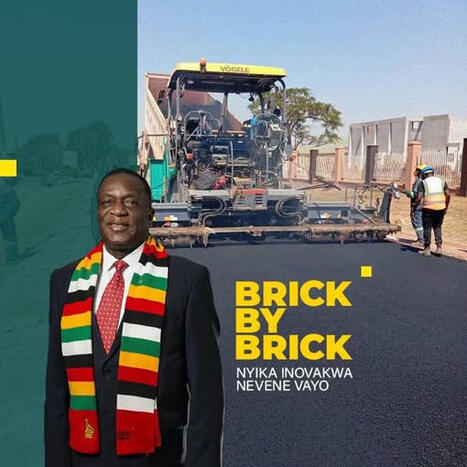
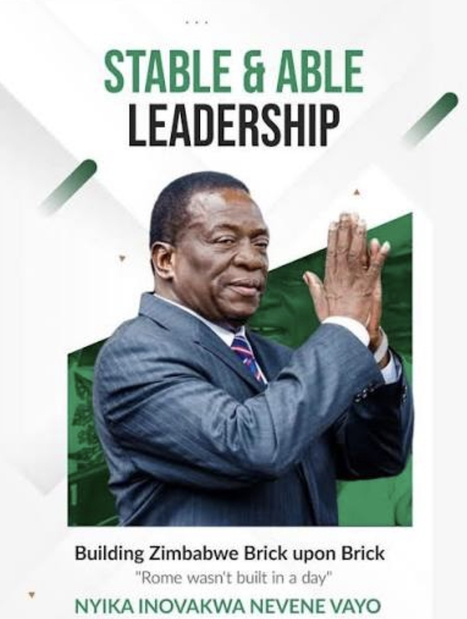
Brick by Brick, We’re Rebuilding Zimbabwe.
From vision to reality - every project, every innovation, every hardworking Zimbabwean is laying the foundation for a stronger, modern, and prosperous nation.
|
|
Scooped by
KRII-KROTOASA RESEARCH-INTENSIVE INSTITUTE
August 26, 10:55 PM
|

|
|
Scooped by
KRII-KROTOASA RESEARCH-INTENSIVE INSTITUTE
August 26, 9:49 PM
|
|
|
Scooped by
KRII-KROTOASA RESEARCH-INTENSIVE INSTITUTE
August 26, 9:35 PM
|
We are forever focused until the Great Vision is achieved because what we want is progress and growth of the nation👏👏
|
|
Rescooped by
KRII-KROTOASA RESEARCH-INTENSIVE INSTITUTE
from ALKEBULAN INDIGENOUS
August 26, 9:30 PM
|
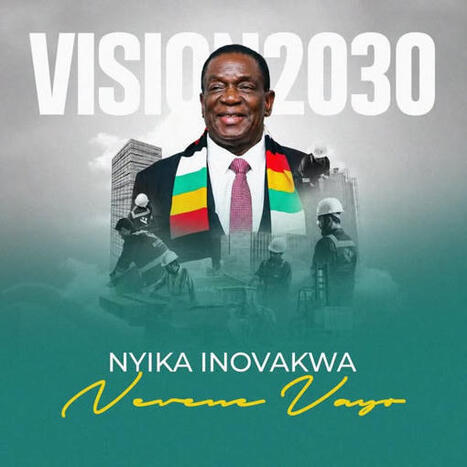
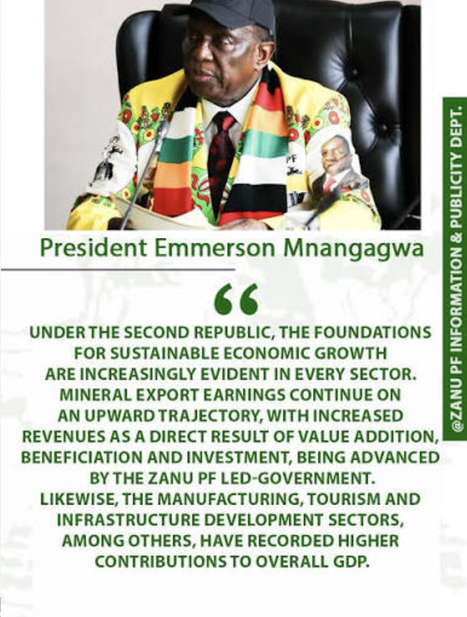
“Under the leadership of His Excellency President Emmerson Dambudzo Mangagwa, Zimbabwe continues to build, grow, and transform.
From infrastructure development, energy, mining, agriculture, and industrialisation, to job creation and investment, the Second Republic is delivering results that matter to every household.
Vision 2030 is not just a slogan - it’s a roadmap to a prosperous, empowered, and middle-income Zimbabwe. Brick by brick, project by project, we are getting there.
#Vision2030 #EDWorks # Building Zimbabwe
#NyikalnovakwaNeveneVayo”
|
|
Scooped by
KRII-KROTOASA RESEARCH-INTENSIVE INSTITUTE
April 20, 2025 2:28 AM
|

All Series American History TV Book TV Washington Journal Congress Executive Supreme Court LOGIN
Legislatures Around The World
In 1979, the U.S. cable television industry created C-SPAN in order to put the U.S. House of Representatives on satellite, becoming the first television channel anywhere committed to live, gavel-to-gavel coverage of its national legislature. C-SPAN has since committed itself to assisting other organizations and individuals wanting to bring coverage of their legislatures to television.
Democratic Republic of Congo Government No
Falkland Islands Legislative Assembly No
Macedonia Assembly of the Republic Yes
|
|
Scooped by
KRII-KROTOASA RESEARCH-INTENSIVE INSTITUTE
April 20, 2025 2:19 AM
|
C-SPAN is a public service created by the American Cable Television Industry
|
|
Scooped by
KRII-KROTOASA RESEARCH-INTENSIVE INSTITUTE
August 26, 11:34 PM
|
|
|
Scooped by
KRII-KROTOASA RESEARCH-INTENSIVE INSTITUTE
August 26, 11:28 PM
|

A prosperous Zimbabwe is within our reach but we must work together to achieve it.
|
|
Scooped by
KRII-KROTOASA RESEARCH-INTENSIVE INSTITUTE
August 26, 11:20 PM
|
|
|
Scooped by
KRII-KROTOASA RESEARCH-INTENSIVE INSTITUTE
August 26, 11:17 PM
|
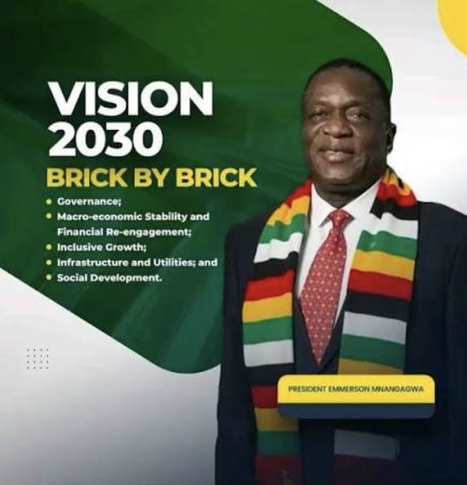
Vision 2030 Priorities
1. Governance
2. Macro-economic Stability and Financial Re-engagement
3. Inclusive Growth
4. Infrastructure and Utilities and
5. Social Development
|
|
Scooped by
KRII-KROTOASA RESEARCH-INTENSIVE INSTITUTE
August 26, 11:11 PM
|
|
|
Scooped by
KRII-KROTOASA RESEARCH-INTENSIVE INSTITUTE
August 26, 11:07 PM
|
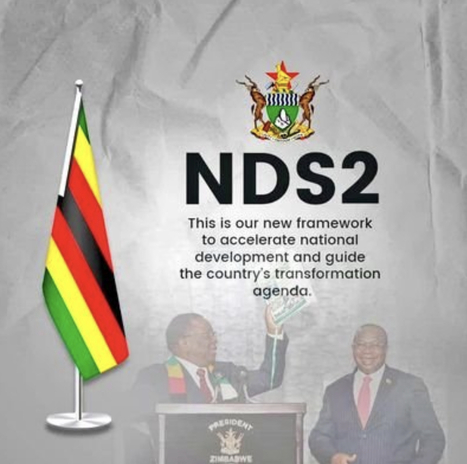
Zimbabwe NDS2:
This is our new framework to accelerate national development and guide the country's transformational agenda
|
|
Scooped by
KRII-KROTOASA RESEARCH-INTENSIVE INSTITUTE
August 26, 10:58 PM
|
|
|
Scooped by
KRII-KROTOASA RESEARCH-INTENSIVE INSTITUTE
August 26, 9:55 PM
|
|
|
Scooped by
KRII-KROTOASA RESEARCH-INTENSIVE INSTITUTE
August 26, 9:32 PM
|
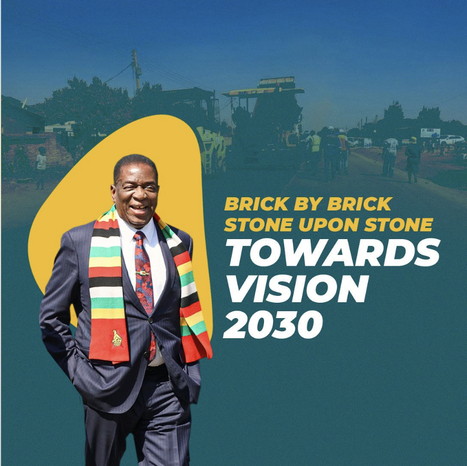
So many modern buildings are rising across Zimbabwe under President ED Mnangagwa’s leadership. The country is literally changing before our eyes brick by brick, stone upon stone! 🇿🇼
|
|
Rescooped by
KRII-KROTOASA RESEARCH-INTENSIVE INSTITUTE
from ALKEBULAN INDIGENOUS
August 26, 9:29 PM
|
Zimbabwe is being built brick by brick - with focus, vision, and unwavering determination.
Under the leadership of President Mnangagwa, we are steadily moving forward. NaBaba Mnangagwa, tinosvika chete.
|
|
Scooped by
KRII-KROTOASA RESEARCH-INTENSIVE INSTITUTE
April 20, 2025 2:22 AM
|
C‑SPAN is a public service.
We are a non-profit created in 1979 by a then-new industry called cable television. Today, we remain true to our founding principles, providing gavel-to-gavel coverage of the workings of the U.S. Congress, both the House of Representatives and Senate, without editing, commentary or analysis.
Over the years, we've grown to be so much more than simply one television channel. You can find C‑SPAN on three television channels, online, on radio, in newsletters, through podcasts, on social platforms including X, Instagram , Facebook , TikTok , Threads and YouTube and on a mobile app, C‑SPAN Now. In addition to Congress, we've grown to cover a wide variety of public policy and political events from campaign stops to press briefings and panel discussions to author interviews. In so doing, we promote open and transparent dialogue between the public and their elected and appointed officials – and those campaigning for office.
Underpinning this impartial, balanced coverage is the fact that no government or taxpayer dollars support C‑SPAN, as we continue to be primarily funded as a public service from your cable or satellite provider. We have recently begun to diversify our revenue streams by placing limited advertising on our digital platforms and by taking donations from viewers .
C‑SPAN began with only four employees: Brian Lamb, Jana Dabrowski Fay, Don Houle and Brian Lockman. Those four transmitted the first television feed from the U.S. House of Representatives to C‑SPAN viewers on March 19, 1979, the first day the House allowed television coverage of its floor debates. That televised congressional session began with a one-minute speech by then-Congressman Al Gore and reached just 3 million American homes.
For C‑SPAN founder Brian Lamb the televised House feed was only the beginning. C‑SPAN added what became its signature call-in programs the following year to provide a direct conduit between the public and the nation's political leaders. That direct viewer-to-leader dialogue of current events continues each day on the Washington Journal.
In 1982, the network expanded from eight to 16, and then 24 hours, enabling it to add a wider variety of public affairs programming to viewers while maintaining its commitment to carry the proceedings of the U.S. House.
In 1986, the U.S. Senate voted to televise its debates, and C‑SPAN launched a second channel, C‑SPAN2, to provide unfiltered, gavel-to-gavel access to that body.
When the House and Senate are in session, C‑SPAN voluntarily commits to covering both bodies live and in their entirety - there is no contract with Congress to carry its proceedings.
In 2001, C‑SPAN3 was launched to provide access to additional public affairs events, particularly live coverage of key congressional hearings.
Beginning in 1998, weekends on C‑SPAN2 became Book TV which covers non-fiction book and author events. In 2011, weekends on C‑SPAN3 became American History TV to offer historical lectures, oral histories and special history series. Today, both continue each weekend on C‑SPAN2.
C‑SPAN also extensively covers the president and the executive branch, including regular coverage of the daily White House and Department of State briefings. Coverage of the Supreme Court has been more challenging. Beginning in 1988, with a letter to then-Chief Justice William Rehnquist, C‑SPAN has consistently called for the Supreme Court to allow cameras to cover its approximately 75 hours of annual oral arguments. To date, the court has refused this request, however starting in 2020, they have provided a live audio feed of their oral arguments which we provide to our audience. The network has televised more than 100 oral arguments before federal courts as well as many state supreme courts.
In 1993, C‑SPAN created the C‑SPAN Bus, a 45-foot interactive learning center to travel across the nation visiting schools and community events in partnership with C‑SPAN's cable providers. Bus visitors engage with C‑SPAN representatives and interactive tools to learn about our unique public affairs programming and online resources. In 2021, after 26 years on the road and multiple visits to all 50 states, the C‑SPAN Bus was retired.
In 1997, we added C‑SPAN Radio, available in the Washington, D.C., area and via a mobile app.
In 2010, C‑SPAN launched the Video Library. All C‑SPAN content, since 1987, is archived on our website and is free for public use – now with nearly 300,000 hours of searchable and shareable content - and growing every day.
In 2021, C‑SPAN launched our free mobile app, C‑SPAN Now, featuring the day's biggest political events. Users are able to watch live and on demand videos or the most recent government events on C‑SPAN. In 2023, C‑SPAN launched our connected-TV app, C‑SPAN Select, available in Comcast/Xfinity and Charter/Spectrum service areas.
Our deep multi-platform presence – television, audio, social platforms, mobile and connected-TV apps and our website – makes C‑SPAN the go-to resource for political journalists, Capitol Hill staff, members of Congress and the interested public. In the current media marketplace, there's no other place quite like C‑SPAN, and perhaps none more trusted. C‑SPAN’s highly motivated viewers know they are getting a unique product, one with a special place in the news media.
C‑SPAN is the recipient of dozens of national awards and citations, including three George Foster Peabody Awards: one for institutional excellence in 1993, one in the historical documentary category for its 1999 American Presidents series, and one in 2011 for the C‑SPAN online Video Library.
Forty-five years ago, C‑SPAN first put the U.S. House of Representatives on television, opening a window for viewers to get an unfiltered view of government. While Washington may have changed, we haven't. Our unblinking eye on Congress and public debate continues. The window is still open, giving the world a front-row-seat to democracy – allowing you to make up your own mind.












Capacity development and enhanced knowledge-sharing
Since 2016, describe the progress that governments at all levels within your country (e.g., national, subnational, local), in partnership with relevant stakeholders, have made in implementing the New Urban Agenda,
including progress on capacity building programmes (e.g., trainings, city-to-city learning) to support agenda implementation, progress in expanding opportunities for city-to-city cooperation and fostering exchanges of urban solutions and mutual learning, progress on enhancing the capacity of all levels of government to monitor and implement the New Urban Agenda, including access and support of adequate higher-level education in built environment professions and fostering of professional associations for built environment professions.
Technology and innovation
Since 2016, describe the progress that governments at all levels within your country (e.g., national, subnational, local), in partnership with relevant stakeholders, have achieved in technology and innovation, including progress on developing user-friendly, participatory data and digital platforms through e-governance and citizen-centric digital governance tools, expanding deployment of frontier technologies and innovations to enhance shared prosperity of cities and regions, implementing digital tools, including geospatial information systems to improve urban and territorial planning, land administration and access to urban services.
Reporting on progress in technology and innovation also contributes to delivering on the forthcoming International Guidelines on People-Centred Smart Cities.
Review and assessment
Member States should collect data measuring sustainable and resilient urban development, aligned with the suggested indicators above. In case temporal data going back to 2016 are missing, justified, numerical estimates (e.g., from a scale of 1 to 10) can be provided for both 2016 and today to roughly estimate changes in the relevant indicator.
Member States should also consider the following questions for reflection:
Based on the assessment of the level of effective implementation on each of the three transformative commitments, which enabling frameworks have been most beneficial to achieving progress and why?
What have been the key obstacles and challenges to effective implementation of the principles outlined in the New Urban Agenda?
What illustrative actions can your government highlight in which the implementation of the transformative commitments of the New Urban Agenda has been greatly enhanced by effective implementation mechanisms?
Member States are encouraged to share their best practices on the Urban Agenda Platform for greater visibility, and are asked to tie answers to these questions into a cohesive narrative that evaluates the degree to which progress on each of the transformative commitments has been enabled by better implementation frameworks. with the degree to which progress on these commitments have been enabled
Member States should then, based on the assessment made above, consider the following question:
What changes are governments in your country
(at all levels) going to implement to accelerate the implementation of the principles of the New Urban Agenda in both the immediate term and before 2036?