URBANmedias
76.1K views | +0 today
Follow
URBANmedias
le mediation des aménagements urbains
Your new post is loading...
Scooped by association concert urbain
August 15, 2014 4:54 AM
Scoop.it!

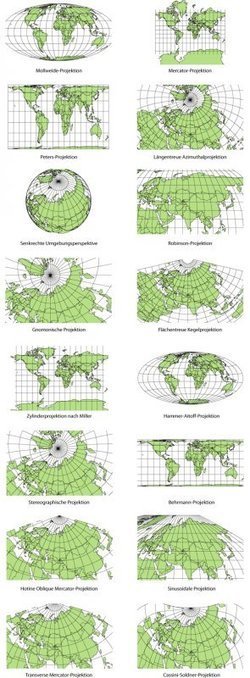
Cartographic ANOMALIES: How Map Projections Have Shaped Our Perceptions of the World

Cartographic ANOMALIES: How Map Projections Have Shaped Our Perceptions of the World | URBANmedias | Scoop.it

Elizabeth Borneman explores how cartography and cartographic projections help and hinder our perception of the world.

"How do you think the world (starting with our perceptions) could change if the map looked differently? What if Australia was on top and the hemispheres switched? By changing how we look at a map we truly can begin to explore and change our assumptions about the world we live in."


Geography doesn’t just teach us about the Earth; it provides ways for thinking about the Earth that shapes how we see the world.  Maps do the same; they represent a version of reality and that influences how we think about places. 


Tags: mapping, perspective.

samantha benitez's curator insight, November 22, 2014 2:53 PM

helps show the different perspectives of our world and how it has changed. also shows many different forms of mapping our world throughout time.

Emily Coats's curator insight, May 27, 2015 10:34 AM

UNIT 1 

This article discusses map projections and how they shape our perception of the world. Maps influence how we see the world, and could change the way we see it as well. These projections show us many different views of the Earth, which is very influential to our perspectives. This applies to unit 1 and its major concepts and underlying geographical perspective such as analyzing maps. 

Vicki S Albritton's curator insight, August 26, 2016 8:35 PM
What we see isn't always what is.
Rescooped by association concert urbain from APHG EMiller
October 4, 2012 9:39 AM
Scoop.it!

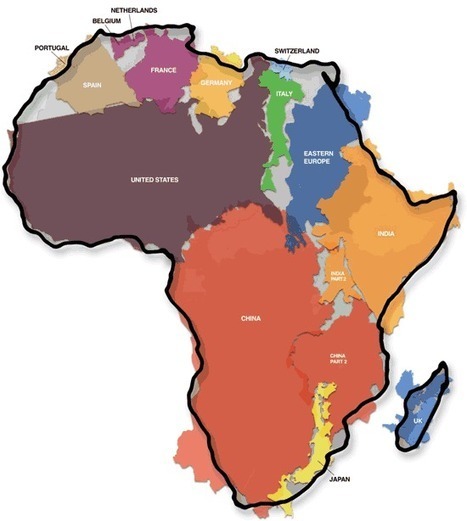
The True Size Of Africa

The True Size Of Africa | URBANmedias | Scoop.it

This is another old classic image that I might have shared earlier but it merits repeating. As Salvatore Natoli (a leader in geography education) once said, "In our society we unconsciously equate size with importance and even power." This is one reason why many people have underestimated the true size of Africa relative to places that they view as more important or more powerful.


Tags: mapping, Africa, perspective, images. 


Via Erin Miller
Afrikasources's curator insight, January 15, 2014 10:10 AM

Just a reminder

Maria la del Varrio's curator insight, December 5, 2014 11:01 AM

It is incredible big, but unfortunately most of the north area is cover by the big Sahara and most of the are is typically unfertilized. 

Jason Schneider's curator insight, March 9, 2015 4:29 PM

As we can see, there's a little overlapping here and some empty spots but it's pretty accurate. The United States and China are in the top 5 largest countries of the world list and they still fit in the 2nd largest continent of the world, Africa. I'd like to see the size comparison between Africa and Russia. I did some research on that and it turns out that Russia is a little over half the size of Africa, maybe the size of the combination of the United States and China.

Rescooped by association concert urbain from Geography in the News
July 13, 2013 2:44 AM
Scoop.it!

Geography in the News: EURASIA's Boundaries

Geography in the News: EURASIA's Boundaries | URBANmedias | Scoop.it

"Europe and Asia, while often considered two separate continents, both lie on the same landmass or tectonic plate, the Eurasian supercontinent. The historic and geographic story of the Eurasian boundary is intriguing."


Via Neal G. Lineback
Wilmine Merlain's curator insight, December 18, 2014 2:26 PM

If Europe and Asia are not different continents based on the tectonic plates that they both share, would that mean that Russia is in a fact a part of Europe. Wouldn't its ties be closely link to that of Asia, because growing up in school, I was taught that Russia was closely related to the Asian continent than it was to Europe. Though Russia is sometimes perceived as being its own continent, I wonder what this discovery will mean for them long term.

David Lizotte's curator insight, February 20, 2015 1:32 PM

The article states that the idea of separate continents comes from European scholars whom wanted to give more definition to there culture and area of the world, essentially there region. I wonder if this could be said in regards to the inhabitant East of the Ural Mountains. Did they want a form of boundary to represent and distinguish there region? None the less, we live in the west so the western perspective is what guides us. 

Even if there never was a Europe and an Asia, there would still be land disputes as to whom has claim to which region/area of land. On a global perspective its viewed as Europe and Asia but when one takes a closer look its simply country and country... not continent and continent. This article is revealing the importance of Eurasia, how it truly does exist. A quasi boundary is not going to separate the once "two continents" rather nothing separates the continents, its all part of Eurasia. 

A neat part of the article is how the writer states recognizing the land mass as two continents is old and out of date. Its basically wrong and non-intelligent. I believe this is important and is something that needs to be recognized on a national scale (here in the United States). Personally I've always recognized the realm as "Eurasia." I now feel more intelligent for doing so! How do people in Europe and with this being said Asia, feel about this more reformed definition of the supercontinent? Do they even recognize it as true? Perhaps they realize there are more important issues at hand like current  countries  disputed and invaded borders.

None the less there is disputed boundaries on a more micro level, when compared to the continent versus continent scheme. For example Russian backed separatists have claimed a portion of Eastern Ukraine. Do people actually see this as Asians expanding into Europe or rather a transcontinental country (Russia) expanding itself more westward. The importance here lies in the disputed country boundaries, not continental boundaries, yet one cannot not deny the significance of the  "continental boundary" which some people do believe in. But the core of the matter is the country to country ratio. 


Kristin Mandsager San Bento's curator insight, April 9, 2015 2:25 PM

This was interesting to read because I don't associate the two till I can visually see it.  Then to further call it Eurasia makes sense as well.  There is a population that are considered Asian Russians.  I did a study on this culture and I couldn't believe there were Asian Russians. This sounds crazy.  It would make sense for cross cultures in this region.  

Scooped by association concert urbain
May 8, 2012 4:19 PM
Scoop.it!

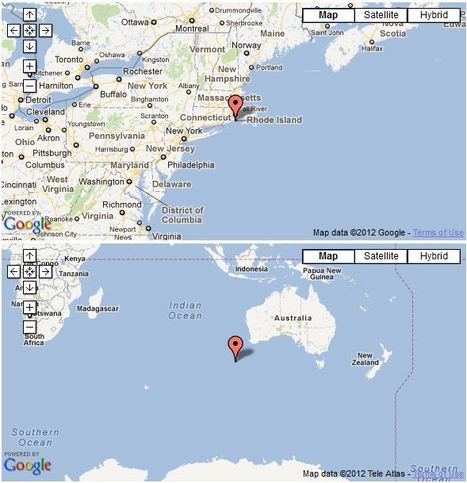
Antipodes Map: The other side of the world

Antipodes Map: The other side of the world | URBANmedias | Scoop.it
In geography, the antipodes of any place on Earth is its antipodal point; that is, the region on the Earth's surface which is diametrically opposite t...


I know that most Americans have learned at an early age that if you dig a hole through the center of the Earth, you'll end up in China.  Geologic and impossibilities aside, most Americans would actually end up in the Indian Ocean as displayed by this clever pairing up maps that shows the user the Antipode of any given place on Earth.  Try it out!  http://www.antipodemap.com/

No comment yet.