 Your new post is loading...
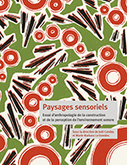
Depuis longtemps, la géographie et l’architecture analysent la notion de paysage sonore. L’anthropologie qui avait négligé cette dimension du sensible propose aujourd’hui à travers cet ouvrage de définir à son tour cette notion tout en proposant des outils conceptuels pour pouvoir réaliser une « ethnologie du sonore ».
. Il s’agit ici de rendre intelligibles les mécanismes sociaux et cognitifs de constitution de tout paysage sensoriel. Comment certains sons se démarquent d’un environnement sonore ordinaire pour mieux distinguer des appartenances sociales ou souligner un rituel.
. 12 articles pluridisciplinaires (ethnomusicologie, architectes-urbanistes,
anthropologues et géographes) présentent les divers paysages sonores de nos sociétés,
du Caire, à Naples en passant par les vignobles français et Londres, ils interrogent
la multiplication et la standardisation des sons.
Joël Candau est anthropologue, professeur à l’université de Nice Sophia Antipolis, ses principales thématiques de recherche : anthropologie de la coopération, anthropologie cognitive et sensorielle. Auteur de Anthropologie de la mémoire, Armand Colin, 2005 (2e éd.) ; Mémoire et identité, PUF, 1998.
Marie-Barbara Le Gonidec est ethnomusicologue, responsable du département musique du Mucem, ses principales thématiques de recherche : organologie, musiques pastorales européennes.
Via Horizome
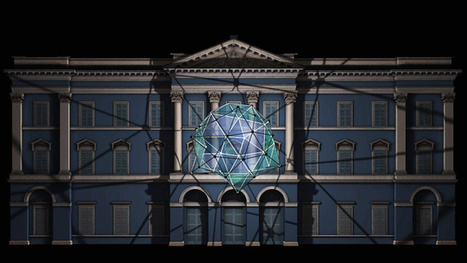
You could call him a projection mapper's projection mapper—a cult favorite in the industry. This relatively new iteration of spacial augmented reality is becoming more and more prominent in digital arts scenes the world over. Roberto Fazio is an Italian digital artist with a studio based in Bologna considered to be a “guru” in the field. Not only has Fazio cultured his own aesthetic touch—a style that incorporates negative space as a lever to increase the incandescence of his grid-heavy projections—but he’s even helped make the tools of his craft more accessible to artist communities by creating 3D mapping computer programs and hosting 101-type workshops at festivals internationally. More details and images at the article link.
Via Lauren Moss

|
Scooped by
association concert urbain
September 26, 2013 7:53 AM
|
La Société du Grand Paris (SGP) a désigné les groupements de maîtrise d’oeuvre architecturale des gares emblématiques Villejuif Institut Gustave Roussy et Noisy Champs de la ligne 15 Sud du Grand Paris Express. L’un emmené parDominique Perrault, avec Jean-Paul Lamoureux et RPO SAS pour la gare de Villejuif Institut Gustave Roussy, l’autre conduit par l’agence Duthilleul, avec AREP SAS pour la gare de Noisy-Champs. Ces architectes auront en charge la conception et le suivi de la réalisation des gares concernées, dans le respect de la charte d’architecture et de design élaborée avec le concours de Jacques Ferrier, architecte conseil de la SGP depuis avril 2012, et en coresponsabilité avec les maîtres d’oeuvre de la ligne 15 sud désignés le 5 septembre dernier.
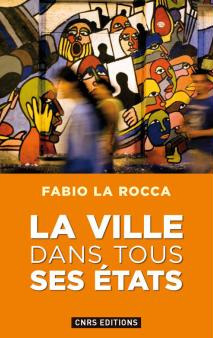
A ré-écouter, émission Les Bons Plaisirs du 24 juillet : Table ronde : la ville dionysiaque avec : Fabio La Rocca Sociologue de la ville Auteur de La ville dans tous ses états aux éditions CNRS Djinn Carrénard Réalisateur pour son film Donoma, sorti en 2010 et présenté le 25 juillet à 16h30 au Forum des Images dans le cadre du cycle Imaginaire du Grand Paris Edouard François Architecte
Via So
|
|
Scooped by
association concert urbain
May 16, 2013 8:49 AM
|
Un cycle de conférences autour de personnalités de l'urbanisme La prochaine conférence "Quel Grand Paris ?" se tiendra à l’Ecole Spéciale d’Architecture, mercredi 22 mai à 19h. Nous recevrons Marie Evo, architecte de l’agence Christian Devillers et Associés. Elle viendra nous présenter le projet développé au sein de l’AiGP parLes Urbanistes Associés "Aménager le Grand Paris à partir de ses bassins de vie : Pôles‐Réseaux-Territoires".
Rotterdam’s Floating Pavilion by Deltasync and PublicDomain Architects is the first pilot project for a sustainable floating district. In an effort to address the challenges of climate change and sea level rise, the City of Rotterdam has started to build some intriguing floating structures. The first pilot project is a catalyst for climate change-proof architecture called the Floating Pavilion that consists of three connected hemispheres that look like bubbles anchored within the Dutch city’s old harbor. An initiative of Rotterdam Climate Proof (part of the Rotterdam Climate Initiative), the mixed-use pavilion was designed by Deltasync and Public Domain Architects, and it sets an unprecedented example for innovative, sustainable and climate-proof architecture.
Via Lauren Moss
|
|
Rescooped by
association concert urbain
from Eco-conception
December 5, 2012 12:13 PM
|
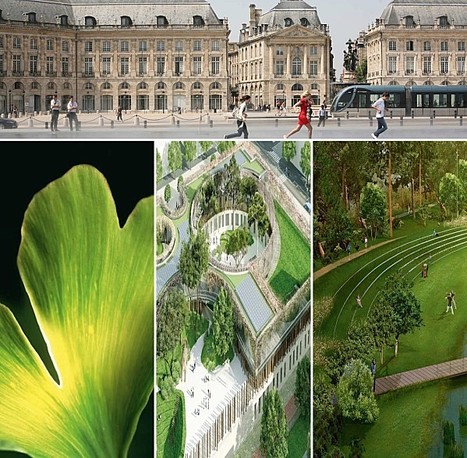
Totalement intégré à Bordeaux et très accessible, Ginko valorise un patrimoine naturel encore confidentiel pour de nombreux bordelais. Le Lac, économiquement très dynamique, offre un large bassin d’emploi, de services, de commerces et se redécouvre comme un lieu d’habitat au plus près de la nature, au plus près de la ville.
Via Laurence
What makes a city a “Smart City” as opposed to a city where some “smart things” happen? Three obvious criteria for answering that question stand out: 1. Smart Cities are led from the top – they have a strong and visionary leader championing the Smart agenda across the city. 2. Smart Cities have a stakeholder forum – they have drawn together a community of city stakeholders across the city. Those stakeholders have not only created a compelling vision for a Smart City; they have committed to taking an ongoing role coordinating a programme to deliver it. 3. Smart Cities invest in technology infrastructure – they are deploying the required information and communication technology (ICT) platforms across the city; and doing so in such a way as to support the integration of information and activity across city systems. It’s also important, though, to consider what is different about the structure and organisation of city systems in a Smart City. How does a city decide which technology infrastructures are required? Which organizations will make use of them, and how? How can they be designed and delivered so that they effectively serve individuals, communities and businesses in the city? What other structures and processes are required to achieve this progress in a Smart City? Read on to learn about the design of the infrastructures and systems of Smart Cities and view them visually represented in an accompanying diagram.
Via Lauren Moss, landscape architecture &sustainability
|
|
Rescooped by
association concert urbain
from Energy Nexus
July 5, 2012 11:19 AM
|
To enable as many cities as possible to have their own 3D city model, the specialists from 3D Reality Maps, perfected the next generation of high resolution 3D landscape models, and the technology for 3D modeling of cities.
Via Sakis Koukouvis, Lockall, DanielePiccolo
|
Bazar Urbain est un collectif pluridisciplinaire qui intervient sur l’espace urbain construit et social par la réflexion et l’action sur les usages, les ambiances et la conduite de projet. Composé de praticiens, d’enseignants et de chercheurs de différentes disciplines, Bazar Urbain développe, avec un fort ancrage au terrain, des méthodes d’appréhension, d’analyse et de construction...
Via Horizome
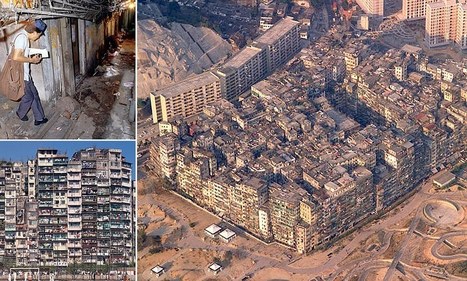
Taken by Canadian photographer Greg Girard in collaboration with Ian Lamboth the pair spent five years familiarising themselves with the notorious Chinese city before it was demolished in 1992.
Via René Z.
|
|
Rescooped by
association concert urbain
from Bionic City®
July 16, 2013 8:26 AM
|
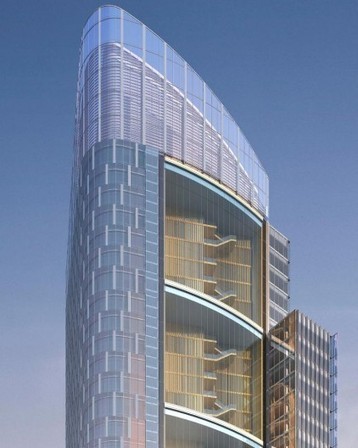
The PNC Financial Services Group hopes to exceed LEED Platinum requirements while promoting a healthy workplace with a recent development – the Tower at PNC Plaza. Located in downtown Pittsburgh, the building will be 800,00 sq.ft (74,322 sq.mt) with a construction budget of approximately US $240 million.
The "breathing" design created by architecture firm Gensler moves away from the traditional closed air-conditioned environment and has the lofty aim of becoming the greenest skyscraper in the world.
Employees in the 33 floor glass tower will access daylight and fresh air. The PNC Tower design recognizes that the Pittsburgh climate can provide increased levels of natural light onto the floorspace along with improved regulation of temperatures for much of the year without using traditional, energy-intensive HVAC systems. The Tower hopes to achieve this with a double-skin facade of two panes of glass separated by an enclosed cavity, allowing external air inside. The facade features operable doors and windows that admit fresh air into the building during optimal conditions, while a solar chimney is another passive system- it pulls air in through the open windows, the air then travels across the floors, is heated and exhaled through the roof shaft.
The Tower will consume less than 50 percent of the energy a typical office building uses and will save PNC at least 30 percent on its energy costs...
Via Lauren Moss
|
|
Rescooped by
association concert urbain
from Bouche à Oreille
December 30, 2012 6:01 AM
|
Adnan Alagić, Bojan Kanlić et Amila Hrustić ont remporté la compétition pour dessiner le design de ce pont il y a 5 ans lorsqu’ils étaient encore étudiants à l’Academy of Fine Arts. Ce projet, appelé « Festina Lente » est maintenant situé à Sarajevo.
Via p-worochob
Des débats à écouter ou à télécharger : le rêve des “ cités jardins ” est-il vraiment fini ? Et si nos toits devenaient des jardins ? Aspirations individuelles et intérêts collectifs : peut-on satisfaire les deux ? Quelle est la bonne échelle pour faire la ville ? L'esthétique est-elle une affaire d'expert ?...
Via So
|
|
Rescooped by
association concert urbain
from Urbanisme
August 25, 2012 10:55 AM
|
With cities running out of room, the world’s ever-expanding population may soon need to find new homes. But where? Sea, sky, or desert? We look at the alternatives Waterworlds: Seasteading Artificial oasis: The Eco-City 'Cities in the sky’: Superskyscrapers
Via Sakis Koukouvis, Lockall
|









![[Flipboard] Bionic City magazine, September 2013 | URBANmedias | Scoop.it](https://img.scoop.it/q78tsVeOdHqHzpK6NCNrxzl72eJkfbmt4t8yenImKBVvK0kTmF0xjctABnaLJIm9)



![[ Sarajevo ] Looping Bridge | URBANmedias | Scoop.it](https://img.scoop.it/Y27zBs4T8zd5G-yUfxqvmzl72eJkfbmt4t8yenImKBVvK0kTmF0xjctABnaLJIm9)

![[ Sea, sky, or desert? ] The way we'll live next | URBANmedias | Scoop.it](https://img.scoop.it/NroAnKsVLJVxLgXYlXW4lTl72eJkfbmt4t8yenImKBVvK0kTmF0xjctABnaLJIm9)




