Your new post is loading...
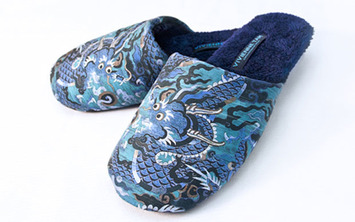
From Harrods in London to Hilton hotels worldwide, a number of companies are introducing new services to attract Chinese travellers. The waves of Chinese tourists now travelling the world are reshaping the industry as airlines, hotels and brands scramble to make them feel welcome and offer them the comforts of home.
Asia’s wealthy are travelling more, with the total number of flights increasing to 6.8 million as well as the proportion of people who have had three or more business trips increasing from 5.7 per cent to 6.4 per cent. Those flying business or first class have also increased regionally from 2.5 per cent to 2.7 per cent. Leisure trips are also up in the region, with 36 per cent of respondents flying at least once (from 35 per cent last year) and the number flying at least three times a year up to 7.1 per cent from 6.7 per cent. Asia’s well-to-do are also increasingly treating themselves to business or first class when they travel for leisure, with 2.7 per cent eschewing coach, compared with 2.1 per cent last year.
The Beijing Daxing International Airport, to be built outside the capital city, will have room for 130 million passengers each year. In comparison, New York's three airports (LaGuardia, JFK, and Newark) have a combined capacity of 110 million.
In a survey of 1,000 passengers traveling domestically, IMS found that people thought $4 to $5 for inflight Wi-Fi was the average value for their money, though they'd still be willing to pay $7 to $10. Anything above $12 is getting too expensive — and these amounts didn't vary much between longer and shorter flights. These amounts weren't necessarily what people paid, but what they thought about paying those prices for inflight Wi-Fi. "About a third of respondents already indicated they have chosen to fly with one airline because it offered inflight Wi-Fi," said IMS's Yin about their survey. "And over a third who did not, would consider doing so in the future." Added to all the other arbitrary fees the airlines tack on, it's almost enough to start to make travelers want to stay on.
Though mainland Chinese tourists continue to flock to nearby Hong Kong for duty-free shopping sprees — more than 28 million visit the city every year — lower-than-expected statistics for the first three-quarters of the year indicate that these travelers are doing more of their luxury consumption elsewhere. This reflects not a drop in luxury demand but rather highlights the global spread of the Chinese luxury consumer.
Approximately 40 percent of Chinese consumers intend to increase spending in the next 12 months, a drastic contrast from the 9 percent of U.S. and British consumers who intend to spend more during this time.
18 months after the launch of a pilot duty-free program aimed at boosting high-end shopping and expanding consumption among mainland Chinese tourists in April 2011, later this month customs authorities are set to raise the duty-free allowance for domestic and international visitors to Hainan island from 5,000 yuan (US$795) to 8,000 yuan ($1,273).
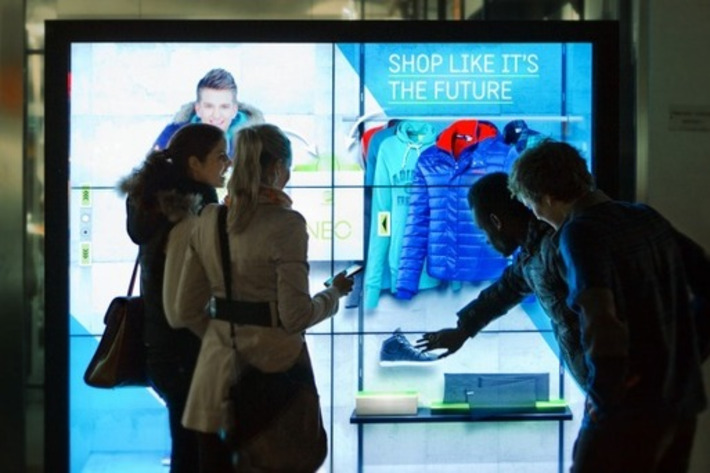
Adidas today launched a new kind of in-store window shopping experience with a big giant screen that allows you order clothing and other products. The new storefront window is a fully functioning virtual store with life-size products. The intuitive interface of the touch-screen window lets shoppers explore, play and drag life-size products they are interested in directly into their smartphone for easy and convenient purchase from adidas NEO online. By visiting a simple URL via their smartphone and typing in a one-time PIN, the shopper’s mobile becomes interlinked in real time with a shopping bag on the window, showing a live view of its contents. Any product dropped into the window’s shopping bag instantly appears on the mobile. The shopper can edit product details, save products for immediate or later purchase and share with friends through social media or email.
In the airport environment consumers have limited time to get what they need before boarding. This could anything from buying suntan lotion and a new swimsuit to having a pre-flight meal or buying a magazine.
Via ALBERTO CORRERA
Selling to China’s diverse 1.34 billion has long been a challenge for many companies, but the difficulties are mounting as China’s population of consumers divides even further along class lines. A dichotomy is widening between a group of wealthier, younger consumers who want indulgent products that express individuality and a group of poorer consumers who are just now beginning to buy goods they want, not just those they need for basic living.
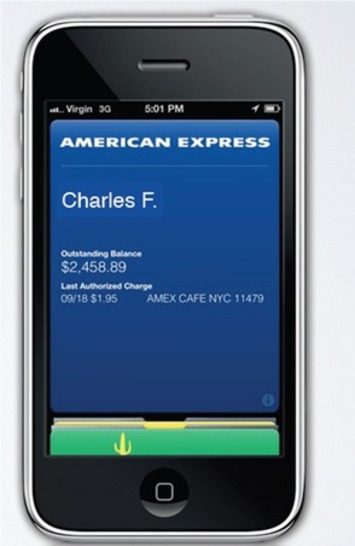
American Express is launching an integration with Apple's Passbook today. The real-time notification capability allows AmEx to have a two-way dialogue with consumers that hasn’t really existed before. This creates a channel that AmEx could use for new features, like see nearby offers from merchants based on your phone’s location...
Nothing like rising international tensions to cast a pall over tourism. Travel companies say they are seeing slowing business between China and Japan as the two countries ratchet up the rhetoric in a territorial dispute over a group of East China Sea islands. That has led to occasionally violent protests in China with a definite anti-Japanese tone.
China is putting its money into urban transportation and air travel. This week, China's top economic planning agency approved 25 urban rail projects with a total of almost $ US 127 billion. Earlier it was decided to dramatically speed up China’s airport investment programme.
FlightView polled 2,600 travelers on the tech and mobile services they want on planes and at airports. 40% want coupons to terminal shops... 36% expect in the future to receive on their mobile coupons & specials for airport shops & restaurants...
JMG-Research has released its annual PAX behaviour study, analysing what passengers do and don't, both at the airport and during their flights. JMG-Research is now working on a major update concerning Chinese passengers. The two-part study will feature a quantitative element, whereby JMG will question 4,500 Chinese international travellers (1,500 living in Shanghai, 1,500 in Beijing and 1,500 in second-tier cities), and a qualitative section involving face-to-face interviews with Chinese international travellers (also from Shanghai, Beijing and a second-tier city).
More than 5 billion travelers passed through the airports of the world in 2011, according to Airports Council International. That’s an incredible number, considering the population of the entire planet is something like 7 billion. To reconnect with irritated and discombobulated travelers, airports around the world are reinventing themselves as relaxing destinations--complete with pools, golf courses, and movie theaters--rather than just the awful place where they search your bags before you get on a plane. Airport owners and developers around the globe are reinventing the airport as a place that people actually want to spend time. That includes the “forevermore” kind of time.
Once-untouchable luxury goods are beginning to enter ordinary households in China as the country becomes the world's second largest consumer of luxury goods. More and more young Chinese people are becoming fans of luxury goods, making up an increasing share of China's luxury consumer group. On average, Chinese luxury consumers are 15 years younger than their European counterparts and 25 years younger than their U.S. counterparts, according to a study by the World Luxury Association (WLA).
The new Passbook app in Apple's iOS 6 software for the iPhone and iPad, which provides digital versions of boarding passes, movie tickets and membership cards, could prove to be the first step towards Apple's all-encompassing iTravel ecosystem.
Chinese consumers are complex, confident shoppers, who enjoy purchasing online, while having a strong desire for aspiration brands. Within seven different geographical areas — south, east, north, northeast, central, southwest and northwest — there are varying types of consumers, with different needs and aspirations based on their region’s economic stage of development.
This 2012 study combines findings from Google's annual Traveler's Road to Decision study and Google search data. Learn new insights about how leisure and business travelers research and book trips across different devices.
Brand new report: Airbus’ Global Market Forecast for 2012-2031 offers a forward-looking view of the air transport sector’s evolution – taking into account such drivers and factors as population growth, urbanization, emerging markets, innovation and environmental impact.
Unlike the oft-apathetic airlines, the next generation of airports is growing more thoughtful, addressing the new travails of air travel. We’re spending more time in airports because of heightened security measures that require us to arrive earlier. We’re stranded more often because of airline mergers that have short-sheeted flight schedules. And once we’re settled in a terminal, we’re more desperate for food and drink, now that airlines charge for meals (or skip them altogether) and the Transportation Security Administration bans our beverages.
Delta Air Lines announced on Wednesday that it has begun deploying iPads in restaurants at Minneapolis-St. Paul International Airport, joining New York's LaGuardia Airport in serving customers food in 15 minutes or less. Wednesday's kick-off utilizes 250 iPads, but will quickly expand to a total of 2,500 over the next 18 months. In all, Delta will have more than 4,500 iPads in use at three of its airport hubs over the next year alone.
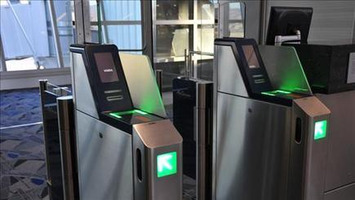
Airlines are laying the groundwork for the next big step in the increasingly automated airport experience: a trip from the curb to the plane without interacting with a single airline employee.
Rome's Fiumicino airport has defended its security procedures after a drunk Norwegian tourist fell asleep on a baggage belt and travelled 160 feet before being identified by an X-ray scanner.
|
|