 Your new post is loading...

|
Scooped by
Charles Tiayon
September 12, 11:08 AM
|
Estudiantes de informática crean aplicación de reconocimiento gestual que expande capacidades de inclusión comunicacional "Traductor de lengua de señas desarrollado en escuela técnica obtiene registro de propiedad intelectual
Estudiantes de informática crean aplicación de reconocimiento gestual que expande capacidades de inclusión comunicacional Estudiantes de una escuela técnica de la región metropolitana desarrollaron una aplicación de traducción de Lengua de Señas Argentina que acaba de obtener registro de propiedad intelectual y está siendo evaluada para implementación municipal. El proyecto, denominado Sign Language Translator (SLT), surgió como iniciativa de cuatro alumnos de la especialidad… Estudiantes de una escuela técnica de la región metropolitana desarrollaron una aplicación de traducción de Lengua de Señas Argentina que acaba de obtener registro de propiedad intelectual y está siendo evaluada para implementación municipal. El proyecto, denominado Sign Language Translator (SLT), surgió como iniciativa de cuatro alumnos de la especialidad en Informática que dedicaron aproximadamente dieciocho meses al desarrollo bajo supervisión docente. La aplicación aborda un problema estructural en la comunicación: las barreras que enfrentan personas sordas o hipoacúsicas que utilizan lengua de señas cuando interactúan con quienes no dominan este lenguaje. El sistema funciona mediante reconocimiento gestual en tiempo real, utilizando la cámara de dispositivos móviles o computadoras para identificar configuraciones de mano y asociarlas a significados específicos. Arquitectura técnica y evolución del sistema
El desarrollo inicial utilizó Python con bibliotecas de visión computacional (MediaPipe y OpenCV) en una versión de escritorio que reconocía letras individuales. Esta aproximación requería que los usuarios deletrearan palabra por palabra, lo que limitaba su utilidad práctica. El equipo identificó esta restricción y reorientó el proyecto hacia el reconocimiento de palabras completas, implementando un sistema de normalización que toma la muñeca como punto de referencia. Esta técnica permite que la aplicación funcione independientemente de la distancia o el tamaño de la mano frente a la cámara, mejorando significativamente la precisión. La migración a una versión móvil requirió una reestructuración completa de la arquitectura y el procesamiento de datos. Actualmente, la aplicación reconoce diez señas críticas, con proyecciones de expansión a más de 50 expresiones en el mediano plazo y entre 150 y 300 en el largo plazo. Implicaciones para la inclusión y escalabilidad
El proyecto representa un caso de estudio sobre cómo la tecnología de reconocimiento gestual puede resolver problemas de accesibilidad comunicacional a escala municipal. La evaluación para implementación en servicios públicos sugiere una viabilidad operativa que va más allá del prototipo académico. Esto implica consideraciones sobre integración con infraestructura existente, mantenimiento del modelo de reconocimiento y expansión del vocabulario de señas según necesidades locales. La metodología empleada—donde estudiantes identifican problemáticas del entorno y desarrollan soluciones con guía docente—establece un precedente para instituciones educativas técnicas. El equipo había trabajado previamente en proyectos de asistencia para personas con discapacidad visual, lo que sugiere una línea de desarrollo consistente en soluciones de accesibilidad. Desde una perspectiva de negocio y gobernanza, la obtención de registro de propiedad intelectual por parte de estudiantes de una institución pública plantea preguntas sobre modelos de licenciamiento, escalabilidad y sostenibilidad de desarrollos educativos que trascienden el aula. La evaluación municipal indica que existe demanda institucional por herramientas de este tipo, aunque los desafíos de implementación—capacitación de usuarios, mantenimiento técnico, expansión de vocabulario—requieren estrategias de implementación más allá del desarrollo inicial."
https://noticiasneo.com/article/169523
#metaglossia
#metaglossia_mundus

"Charles Tiayon, cartographer of the translation world
Charles Tiayon is a translator, lecturer and consultant whose Scoop.it activity reflects the professional universe named in his bio: translation, terminology, lexicography and intercultural issues. Through METAGLOSSIA, his public selection tracks language as a field of work, a field of rights, and a field being altered by AI.
A systems view of language
Tiayon looks at translation as a living system. His selections connect interpreters, translators, dictionary makers, universities, publishers, language activists and software companies, rather than treating them as separate worlds.
Technology with memory
AI is a recurring concern, but it is not treated as the whole story. Real-time speech translation, OCR and voice AI appear alongside older and slower forms of linguistic work: dictionaries, terminology, literary translation and language education.
A multilingual compass
The geographic spread is notably international, with attention to French, Spanish, Chinese, Arabic, Maltese, Breton, Ukrainian, Filipino, Indigenous languages in Canada and Indian language politics. No single country dominates the map.
What defines this selection
Archive-scale attention
With 99,235 posts analysed in a single topic, this is a long-running, high-volume observatory of the translation world. The account dates back to 2011, giving the selection the feel of an archive as much as a live feed.
A broad professional lens
The material moves easily between AI translation tools, national dictionaries, literary translation, terminology work, market news and language policy. That range reflects a professional view of language work as both craft and infrastructure.
Mixed-source reliability
The sources span institutions, universities, technology companies, mainstream media and regional outlets. UNESCO, university sites, DeepL, Mistral, CBC, Ouest-France and other sources create a mixed diet of policy, research, product news and local reporting.
Specialist reach, public scale
The audience numbers are substantial, with more than 567,000 views and over 424,000 unique visitors across all topics. The reach suggests sustained interest beyond a narrow specialist circle.
Topics
◍
Metaglossia: The Translation World
This flagship topic covers translation, interpreting, intercultural communication, terminology and lexicography as they unfold in public life. It is especially strong on AI language tools, institutional language policy, minority languages, literary translation and dictionaries.
99.2K posts
en
Deep dives
Where language becomes infrastructure
Charles Tiayon’s main topic reads like a newsroom for the language professions, but with a wider lens than trade news alone. Translation, interpreting, terminology and lexicography appear beside minority-language rights, literary circulation, dictionaries, competitions, and the fast-moving world of AI speech and OCR tools.
Metaglossia: The Translation World
The strongest thread is the collision between language as culture and language as system. A new Maltese digital dictionary, a Doha historical dictionary with text-to-speech, UNESCO and Unicode cooperation, and First Nations language translation all sit in the same frame as DeepL, Mistral OCR, and real-time speech models.
Metaglossia: The Translation World
His editorial voice is not silent aggregation. The analysis points to regular INSIGHT notes, often substantial and quote-based, with an explanatory tone and occasional sharper framing when language politics or AI consequences are at stake. The result is a practical map of a field being reshaped by institutions, software, markets and communities at once."
Courtesy
Scoop.it
06.07.2026
#metaglossia_mundus
#metaglossia

Obtenir la traduction de quelque 6000 anciens jugements de la Cour suprême
L'organisme Droits collectifs Québec poursuit son combat juridique pour obtenir la traduction de quelque 6 000 anciens jugements de la Cour suprême…
L’organisme Droits collectifs Québec (DCQ) et son directeur général, Étienne-Alexis Boucher, se tournent vers la Cour d’appel fédérale pour obliger la Cour suprême du Canada à traduire en français ses documents d'avant 1970. L'ancien député du Parti québécois et son organisme ont porté en appel, le 26 août, le jugement de première instance qui leur était défavorable. Ils estiment que la décision de la juge Denise A. LeBlanc est affectée par un certain nombre d’erreurs de droit et d’interprétation juridique déterminantes justifiant de faire appel, selon les documents transmis à Radio-Canada.
« On ne pense pas que c’est un bon jugement pour un pays bilingue », souligne Étienne-Alexis Boucher, directeur général de Droits collectifs Québec.
« On pense qu’on a des motifs raisonnables et pertinents de porter appel d’une décision qui, à nos yeux, non seulement ne respecte pas la jurisprudence établie - notamment par l’arrêt Beaulac, qui vise à interpréter de manière très large et généreuse les droits linguistiques, notamment ceux des francophones -, mais aussi parce qu’on ne voit pas comment ce jugement permet au Canada de tendre vers une égalité réelle entre tous ses citoyens, peu importe la langue officielle qu’ils parlent », explique M. Boucher en entrevue à Radio-Canada.
6000 décisions à traduire
DCQ et son directeur général souhaitent voir traduites en français quelque 6000 décisions rendues avant l'entrée en vigueur, en 1969, de la Loi sur les langues officielles (LLO). Avant cette loi, le plus haut tribunal du pays n'était pas tenu de publier ses jugements dans les deux langues officielles du Canada. La plupart de ses décisions étaient rendues en anglais, même lorsqu’il s’agissait de causes ayant rapport avec le Québec.
En juin dernier, la juge LeBlanc s'était rangée derrière les arguments du Bureau du registraire de la Cour Suprême du Canada. Elle avait conclu que les décisions historiques de la CSC ne constituent ni des services ni des communications au public soumises à l’obligation de traduction prévue par (...) la LLO. Selon la magistrate, l'obligation de respecter les deux langues officielles du Canada ne s'applique qu’au site web de la Cour suprême, et non pas au contenu des décisions à proprement parler.
Le Bureau du registraire est l'instance visée par la plainte, puisque la Cour suprême du Canada elle-même est protégée contre ce genre de recours en vertu du principe de l’indépendance des tribunaux. Invité à réagir, le Bureau a refusé de commenter le dossier comme il s’agit d’une affaire actuellement devant les tribunaux.
Des traductions, à quel coût?
La démarche judiciaire entreprise a déjà permis d'obtenir une victoire, souligne M. Boucher. En 2025, la Cour suprême du Canada s'est engagée, pour les 150 ans du tribunal, à traduire en français 24 des principaux jugements rendus avant 1970. Mais en ne traduisant pas l'ensemble des 6000 décisions, Droits collectifs Québec et M. Boucher estiment que la Cour suprême du Canada continue d'enfreindre la Loi sur les langues officielles, ce qu'avait aussi conclu le Commissaire aux langues officielles (CLO) dans deux rapports, en octobre 2021 et en septembre 2024. Par le passé, le juge en chef de la Cour suprême du Canada, Richard Wagner, avait toutefois affirmé qu'une telle opération serait beaucoup trop onéreuse.
De plus, selon lui, l'utilité de traduire ces décisions serait minime, la plupart d'entre elles n'ayant plus vraiment de portée dans le système juridique moderne. Deux arguments que conteste M. Boucher. Le manque de ressources (...) ce n’est pas une excuse pour brimer les droits fondamentaux. Plusieurs cours le disent à travers le Canada, dont la Cour suprême, souligne l'ancien député péquiste. Il rappelle également que de très nombreux jugements rendus avant 1969 font partie de la jurisprudence et sont encore cités par les parties qui veulent remporter des litiges devant les tribunaux.
« Ne serait-ce que pour permettre à la Cour (suprême du Canada) de donner l’exemple, (...) nous, on pense d’un nécessaire absolu que la Cour suprême procède à la traduction desdits jugements », mentionne Étienne-Alexis Boucher.
Pour lui, c'est une question d'égalité pour l'ensemble des juristes d'expression francophones de pouvoir disposer des mêmes outils, des mêmes avantages que leurs collègues anglophones. L'avocat Gabriel Poliquin devant la Faculté de droit de l'Université d'Ottawa.
Une déclaration que confirme l'avocat constitutionnaliste Gabriel Poliquin, qui est récemment intervenu dans l'affaire de la nomination de la lieutenante-gouverneure du Nouveau-Brunswick.
« Les seuls jugements qui étaient vraiment pertinents, c'étaient des jugements d'avant 1970, des jugements du Conseil privé en Angleterre (...) disponibles seulement en anglais », raconte celui qui est également le directeur du Programme de certification de common law en français de l'Université d'Ottawa.
Les appelants demandent que toutes ces décisions soient traduites dans un délai de 10 ans... ou plus si nécessaire.
« DCQ n’est pas dogmatique à un point tel qu’on imposerait à la Cour suprême un défi qui est insurmontable. (...) Je pense qu’on pourrait simplement pousser plus loin les travaux déjà entamés et faire une hiérarchie de ces travaux-là. Est-ce que ça pourrait prendre 10 ans, 15 ans, 20 ans? Ce que nous demandons, c’est un plan de match ».
Pour Me Poliquin, l'appel qui a été déposé est d'autant plus pertinent que plusieurs points restent à clarifier après le premier jugement.
« La question juridique, c'est une question vraiment de noir et blanc : soit il existe une obligation (de traduire), soit elle n'existe pas », mentionne Me Gabriel Poliquin, avocat constitutionnaliste Mais pour lui, même si la Cour d'appel fédérale donne tort aux appelants, un compromis pourrait encore être trouvé.
« On pourrait arriver à un compromis (...) sur le plan pratique d'au moins traduire les décisions qui sont d'intérêt public ».
L'audience devant la Cour d'appel fédérale devrait se tenir à Montréal à une date qui n'a pas encore été révélée."
Radio Canada
2026-09-02 10:30:29
https://droit-inc.com/conseils-carriere/nouvelles/traduction-a-la-cour-supreme-la-saga-judiciaire-nest-pas-terminee
#metaglossia
#metaglossia_mundus

"Google Traduction : vous pouvez désormais écouter les traductions « à l'oreille ».
Google Google a apporté des améliorations significatives à son service de traduction, notamment en introduisant une nouvelle fonctionnalité pour les utilisateurs iOS qui leur permet d'écouter le texte traduit directement via le haut-parleur de leur téléphone. Cette mise à jour vise à améliorer l'interaction dans les environnements bruyants et à rendre le processus de traduction plus naturel.
Écoute « aurale » des traductions pour les utilisateurs d’iPhone
Grâce à la dernière mise à jour de l'application Google Traduction pour iOS, les utilisateurs peuvent désormais porter leur iPhone à l' oreille pour écouter la traduction en temps réel via le haut-parleur, comme lors d'un appel téléphonique. Cette fonctionnalité évite d'avoir à diffuser la traduction à un volume élevé, ce qui peut s'avérer gênant dans les lieux publics. Auparavant, les utilisateurs devaient choisir entre écouter la traduction via le haut-parleur ou utiliser des écouteurs. Cette nouvelle fonctionnalité simplifie grandement l'utilisation de la traduction dans les environnements bruyants, la rendant plus discrète et pratique.
Améliorations Android : traduction en arrière-plan
Parallèlement aux mises à jour iOS, Google a également amélioré la version Android de Google Traduction. L'application prend désormais en charge le fonctionnement continu en arrière-plan tout en utilisant la traduction en temps réel. Ainsi, les utilisateurs peuvent passer à d'autres applications, comme Maps ou le navigateur, ou même verrouiller l'écran de leur téléphone, sans que la traduction ne soit interrompue. Auparavant, l'application Google Traduction devait rester active au premier plan pour garantir une traduction continue.
Selon Google, plus d'un tiers des sessions de traduction en temps réel durent plus de cinq minutes, ce qui souligne l'importance de pouvoir continuer à traduire sans craindre que l'application ne soit interrompue par le passage à une autre tâche ou le verrouillage de l'écran.
Ces améliorations témoignent de l'engagement de Google à faire de son traducteur un outil plus polyvalent et pratique pour la communication internationale. La possibilité d'écouter les traductions « à l'oreille » sur iPhone et de poursuivre la traduction en arrière-plan sur Android accroît considérablement l'intérêt de Google Traduction pour les voyageurs, les étudiants et tous ceux qui rencontrent régulièrement des barrières linguistiques.
Aucune date de sortie précise n'a encore été annoncée pour cette mise à jour, mais elle devrait être disponible prochainement. Les utilisateurs sont invités à consulter régulièrement l'App Store et Google Play pour vérifier les mises à jour."
Kostya Mogilevskyï -05.09.2026
https://expert.com.ua/fr/221149-google-translate-teper-slushat-perevody-mozhno-na-uho.html
#metaglossia
#metaglossia_mundus
Living in Languages Explores Translation Across Literature, Culture and Identity
"By Michael Parker
ALBANY, N.Y. (Sept. 10, 2026) — Translation is often understood as the act of carrying words from one language into another.
The newest volume of Living in Languages, an open-access, peer-reviewed journal invites readers to think more broadly about how translation can carry memory, identity, culture and meaning across languages.
Collaboratively managed by UAlbany’s Departments of English and Languages, Literatures and Cultures, and in collaboration with scholars from the University of Massachusetts Amherst and Westfield State University, Living in Languages’ 4th volume brings together translations of poetry and short fiction from Spanish, French, Chinese and Tamil.
The volume features critical essays on translation and Taiwanese divination, and translation’s role in Ursula K. Le Guin’s science fiction novel The Dispossessed.
Among the featured contributors is April Schmidt, a UAlbany alumna whose translation of Venezuelan poet Hanni Ossott’s “Del país de la pena” introduces English-language readers to one of Ossott’s major works.
Translating a Major Venezuelan Poet
Schmidt, who earned her PhD in Spanish from UAlbany in 2012, is now an instructor of World Languages at Jefferson Community College in Watertown. Her contribution to Living in Languages, “From the Land of Pain,” marks a return to the poet who shaped her doctoral research. Schmidt’s dissertation, Everything and Nothing: The Poetry of Hanni Ossott, examined the central themes of Ossott’s first six books of poetry.
UAlbany alum and instructor at Jefferson Community College April Schmidt
Ossott, who lived from 1946 to 2002, is widely recognized in Venezuela but remains less familiar to many English-language readers. She wrote 10 books of poetry, won major Venezuelan poetry prizes and also published essays and translations.
“Hanni Ossott’s poetry tends to be rather philosophical and esoteric, and she has been called ‘a poet’s poet,’” Schmidt said. “But, when I was leafing through an anthology of her poetry for the first time, one of the poems that caught my attention was ‘La casa, ese depósito de ángeles’ — ‘Home, the angels’ depository.’ Some of the ideas in it reminded me of how I’d felt several years before, when we were leaving the house we had lived in for 20 years.”
In “Del país de la pena,” Ossott repeatedly asks, “Who am I?” For Schmidt, that question is part of what makes Ossott’s work important for new readers.
“I believe Ossott’s poetry is important because it often focuses on ideas and questions that tend to get lost amid the pressures and fast pace of modern life,” Schmidt said. “In ‘Del país de la pena,’ Ossott explores these questions, making us rethink something we usually take for granted: our own existence.”
Meaning Across Languages
For Schmidt, translating poetry means trying to recreate not only the literal meaning of a poem, but also the emotional and imaginative experience of encountering it.
“I often feel like the ideas and emotions expressed in poetry transcend language, existing outside of and beyond it,” Schmidt said. “The writers used one language to try to capture their thoughts and feelings, but I always feel that they are capable of being conveyed in another language as well, if I can only find the right words.”
Translation, according to English Associate Professor Aashish Kaul, “does more than carry or convey. It signals that a given line, sentence or phrase in the original can be rendered in more than one way, and the translator’s task is to understand not what the original means, but how it means.”
Associate Emerita Professor Helen Regueiro Elam added that translation “signals the rich densities of the original, and, ultimately, the way in which language, far from being a mere vehicle of transport, is constitutive of culture, is the force that allows and enables different modes of thinking and being.”
That broader understanding of translation runs throughout the new volume, where works of poetry, fiction and criticism use translation to explore identity, memory, belief, political struggle and belonging.
“This volume continues our conversation about translation as a multilingual engagement with various modes and genres,” said Rumi Coller-Takahashi, lecturer in UAlbany’s Writing and Critical Inquiry Program and co-editor of Living in Languages. “The works explore languages through the lens of a flowing sense of identity, surrealistic entanglement, the locus of divinity and revolutionary force.”
“Translation is such a deep and active engagement with languages. It is empowering, as it allows us to connect the self with the other, and even discover elements of the other in the self,” said Languages, Literatures and Cultures Chair and Associate Professor Ilka Kressner.
In addition to the journal homepage, Living in Languages is also available through UAlbany’s Scholars Archive. Volume four and past issues can also be found online through the journal’s UAlbany Digital Commons page."
https://www.albany.edu/news-center/news/2026-living-languages-explores-translation-across-literature-culture-and-identity
#metaglossia
#metaglossia_mundus

Localization to English, Spanish and French has been completed
"Magical Girl Witch Trials’ English, Spanish and French translations complete, developers ask for more patience as small team handles final work
Acacia, the creative team under Japanese game studio Re;AER, has published an update on the much-awaited global versions of its hit death game visual novel Magical Girl Witch Trials. The announcement was made via the team’s newly created “Acacia West” X account, which will presumably serve as an official channel of communication with international fans going forward.
The developers bring some exciting news – localization of the game’s script to English, Spanish and French has been completed. From here, the team will move onto in-game implementation, quality assurance, UI adjustments, and other related tasks. At the same time, Acacia warns that it’s working with a small development team and a limited number of dedicated programmers, so it’s still going to take some time before the devs are able to announce a release schedule.
The announcement also mentions that the translation teams worked closely together with the game developers to ensure a high-quality localization that will make players “feel the worst,” true to the game’s sadistic nature.
Acacia will provide a release schedule for Magical Girl Witch Trials’ international versions as soon as it is decided (it was previously tentatively announced for late 2026). In the meantime, the devs have shared work-in-progress screenshots of the game in English, Spanish and French.
Despite releasing exclusively in Japanese and Simplified Chinese, Magical Girl Witch Trials has already sold over 700,000 units as of August 31. The game currently holds an “Overwhelmingly Positive” rating on Steam out of over 34,000 reviews, so it’s not surprising that gamers are all but hounding Acacia for additional language support. Still, this project marks Re;AER’s first in-house localization effort, so the developers have asked for a little more patience.
Magical Girl Witch Trials is available for PC (Steam) and Nintendo Switch systems."
2026-09-11
Amber V1
https://automaton-media.com/en/news/magical-girl-witch-trials-english-spanish-and-french-translations-complete-developers-ask-for-more-patience-as-small-team-handles-final-work/
#metaglossia
#metaglossia_mundus

$3,500 to one translator working from an Eastern Armenian source text into English
"The applications for the International Armenian Literary Alliance’s four grants are now open through Sept. 30, 2026. The grants for creative writing and literary translation — worth up to $3,500 each — will be offered to one writer and three translators.
The International Armenian Literary Alliance’s Creative Writing Grant will award $2,500 to one Armenian writer whose work-in-progress shows exceptional literary and creative ability. The grant genre rotates annually to support a diverse range of literary voices. Following previous years focused on fiction and nonfiction, the 2026 grant will be awarded for a collection of poetry, to be judged by Armen Davoudian.
IALA’s Creative Writing Grant is meant to foster the development of contemporary Armenian literature in English through an annual monetary award and support Armenian writers who have historically lacked resources in the publishing world. Additionally, IALA will support grant recipients in promoting their publications through marketing on our website and social media channels, book reviews, readings and discussions.
The Israelyan Eastern Armenian Translation Grant from the International Armenian Literary Alliance will award $3,500 to one translator working from an Eastern Armenian source text into English, whose work-in-progress shows exceptional literary and creative ability. In 2026, the grant will be awarded for a work of literature, in any literary genre, written in Eastern Armenian and published any time after 1915, including the Modernist and Contemporary periods. The grant will be judged by Dr. Shushan Avagyan and Dr. Myrna Douzjian.
Many in the Armenian diaspora and the English-speaking world are unable to read works in the original Armenian, and therefore, have centuries of literature inaccessible to them. Translators working with Armenian texts have traditionally lacked resources in the publishing world, as well as access to other funding, due to the overwhelming influence of so-called “majority languages.” IALA’s Israelyan Eastern Armenian Translation Grant, made possible by Souren A. Israelyan, supports translators working with Armenian literature through a monetary award. Additionally, IALA will support grant recipients in promoting their publications through marketing on our website and social media channels, book reviews, readings and discussions."
https://armenianweekly.com/2026/09/11/applications-open-for-ialas-2026-grants/
#metaglossia
#metaglossia_mundus
Emotion and performance in technology-mediated translation
"Exploring the association between emotional dynamics and performance in technology-mediated translation
Yan He, Yi Wang & Yiyi Hu
Scientific Reports (2026)
Abstract
Translation technologies have changed the professional workflows in the translation industry, bringing cognitive and emotional demands to translators. We investigated the association between student translators’ emotional dynamics and their performance in technology-mediated translation. Sentiment analysis was adopted to analyze student translators’ positive, neutral and negative emotions, as well as the polarity and subjectivity of their responses during the project. Our findings showed that neutral emotions took the largest proportion, followed by positive emotions, with negative emotions accounting for the smallest proportion overall. Descriptive week-by-week analyses showed variations in emotions: positive emotions decreased during the mid to late stages with an increase in negative emotions, and positive emotions recovered by the end of the project. Last but not least, Bayesian Linear Regression analysis suggested a potential positive association between student-level sentiment and technology-mediated translation performance, with higher sentiment scores associated with better performance. The findings highlight the importance of considering emotional factors in translator training alongside technical skills, particularly in technology-mediated learning environments. Both may be relevant to their performance and professional development in the changing landscape of the translation industry."
Open access
Published: 11 September 2026
https://www.nature.com/articles/s41598-026-70240-y
#metaglossia
#metaglossia_mundus
Accepter» les migrants ou ne pas les accepter, that is the question
"L’étrange différence entre les versions anglaise et française du protocole sur l’immigration signé par Jordan Bardella et Nigel Farage
Réservé aux abonnés
Un passage du document, stipulant en anglais que la France va «accepter» sur son sol les migrants interceptés dans les eaux britanniques, ne figure pas dans la traduction française.
Nigel Farage et Jordan Bardella après la signature de l'accord sur l'immigration prévoyant de renvoyer en France les migrants interceptés dans les eaux britanniques. (Temilade Adelaja/Reuters)
ParChez Pol
Publié le 07/09/2026 à 11h34
Extrait de Chez Pol, notre newsletter politique réservée à nos abonnés : découvrez-la gratuitement.
Séquence hallucinante vendredi 4 septembre, en Angleterre, où Jordan Bardella a signé en compagnie du leader d’extrême droite anglais Nigel Farage un accord sur l’immigration qui prévoit, notamment, le renvoi vers la France de migrants interceptés dans les eaux britanniques. Le monde politique a glosé tout le week-end sur cette signature, dénoncée par tout le monde ou presque.
D’autant qu’un détail s’est glissé dans le protocole signé, comme l’a remarqué le journaliste Paul Larrouturou, sur X. Dans l’article 5 de l’accord, qui prévoit le renvoi en France des réfugiés interceptés, un passage a disparu entre la version anglaise et la version française, qui figurent pourtant côte à côte dans le document. «France will ordinarily accept these persons, who will be repatriated to their home country in accordance with the law in force in France concerning expulsion», peut-on lire dans la langue de Shakespeare.
«Accepter» les migrants ou ne pas les accepter, that is the question
Un morceau a été supprimé dans la traduction française : «Ordinarily accept these persons», qu’on peut traduire, dans la langue de Molière, par «acceptera généralement ces personnes». Dans la version frenchie, une simple formule : «La France reconduira ces personnes vers leur pays d’origine conformément au droit en vigueur en France..."
https://www.liberation.fr/politique/letrange-difference-entre-les-versions-anglaise-et-francaise-du-protocole-sur-limmigration-signe-par-jordan-bardella-et-nigel-farage-20260907_47FTJU6XF5FVLDCPORBI4DKD7A/
#metaglossia
#metaglossia_mundus

"Jordan Bardella et Nigel Farage ont signé le 4 septembre un accord sur le retour des migrants interceptés dans les eaux britanniques. Mais entre les versions française et anglaise du texte, une phrase a disparu. Une différence de traduction qui pourrait bien changer la portée de l'engagement pris par le président du RN.
Ce texte correspond à une partie de la retranscription du reportage ci-dessus. Cliquez sur la vidéo pour la regarder dans son intégralité.
Une poignée de main et une signature aux côtés de Nigel Farage(Nouvelle fenêtre), leader du parti d'extrême droite en Grande-Bretagne. Dans le très grand texte que les deux hommes tiennent pour la photo, Jordan Bardella s'engage à reprendre les migrants interceptés dans les eaux britanniques. Mais en regardant de plus près, nous avons repéré un petit problème de traduction, loin d'être anecdotique. Dans le texte en anglais comme en français, concernant les migrants, il est écrit que : "la France reconduira ces personnes vers leur pays d'origine." Mais dans la version anglaise, il existe une petite phrase en plus qui semble aller beaucoup plus loin : "La France acceptera en principe ces personnes." En anglais, Jordan Bardella s'engage donc à accepter le retour des migrants sur le territoire français.
Une décision surprenante pour des sympathisants du RN à Calais. "Je vous crois mais ça me paraît tellement fou", estime l'une d'elles, une autre lance : "Ah il veut les ramener ? Ah bah non, s'il faut les ramener non."
Une phrase absente de la version française
Pourquoi manque-t-il une phrase dans la version française ? Au RN, on évoque une volonté de rendre le texte plus lisible. Mais sur le fond, cela ressemble à un revirement. En 2021, Marine Le Pen voulait au contraire que ce soient les Britanniques qui gèrent les migrants arrivés dans leurs eaux territoriales. Invitée du Grand Jury sur RTL le 28 novembre 2021, elle déclarait : "Ce qu'il faudrait obtenir, c'est une modification des accords du Touquet pour que les Britanniques, lorsqu'ils sont confrontés à des clandestins qui sont arrivés en Grande-Bretagne, les renvoient dans leur pays d'origine plutôt que les renvoient en France."
Nous lui avons posé à nouveau la question ce lundi 7 septembre, ce à quoi elle nous répond : "J'en parlerai quand j'aurai décidé de le faire, c'est-à-dire sous peu."
Du côté du Rassemblement national, on écarte toute polémique et on rappelle que ce texte n'est qu'une déclaration d'intention à affiner par la suite."
https://www.franceinfo.fr/politique/jordan-bardella/jordan-bardella-pris-au-piege-de-la-traduction-ce-que-revele-l-accord-avec-nigel-farage_8181680.html
#metaglossia
#metaglossia_mundus

Bénin : un recours contre la traduction de l’hymne en fongbé examiné ce jeudi
Cette adaptation comporte six couplets, contre trois dans la version française officielle
La Cour constitutionnelle examine ce jeudi 10 septembre 2026 à Cotonou le recours contestant la conformité à la Constitution de la version en fongbé de l’hymne national L’Aube Nouvelle. Le dossier, enregistré sous le numéro 1571/281/REC-24, a été introduit le 31 juillet 2024 par Thomas D. Dakpogan contre le garde des Sceaux, ministre de la Justice et de la Législation, ainsi que le gouvernement.
Un recours introduit en 2024
L’affaire figure au rôle de l’audience plénière de vacation prévue ce jeudi à 15 heures dans la salle des audiences publiques de la Cour constitutionnelle. Elle fait partie des onze dossiers inscrits à cette session.
(📲 Rejoignez dès maintenant 👉 la communauté de La Nouvelle Tribune sur WhatsApp !)
Le document officiel de mise au rôle qualifie la procédure de recours en inconstitutionnalité visant la version fongbè de l’hymne national. Il ne précise toutefois pas les passages de la traduction contestés, les dispositions constitutionnelles invoquées par le requérant ni l’origine exacte de la version concernée. Ces éléments ne permettent donc pas, avant l’audience, de conclure à une éventuelle irrégularité de cette traduction.
Le gouvernement présente officiellement L’Aube Nouvelle comme l’hymne national du Bénin. L’œuvre a été écrite et composée par l’abbé Gilbert Jean Dagnon et adoptée en 1960, lors de l’indépendance du pays. Elle a été maintenue après le changement de dénomination du Dahomey en République populaire du Bénin en 1975, avec l’adaptation de certaines références dans le texte. InformationsBénin
Plusieurs versions en langues nationales
Le débat judiciaire porte sur une version en fongbé, mais l’existence de différentes interprétations de l’hymne dans les langues nationales n’est pas nouvelle.
Une traduction en fongbé est publiée par l’Institut pédagogique d’étude et de développement de l’écrit en fongbè (IPEDEF). Elle est attribuée à Innocent Kagbotemi et au père Barthélémy Adoukonou. Selon les informations publiées à ce sujet, cette adaptation comporte six couplets, contre trois dans la version française officielle.
Le site officiel du gouvernement reproduit actuellement les paroles françaises de L’Aube Nouvelle et ne permet pas d’identifier une traduction en fongbé comme version juridiquement officielle de l’hymne. Cette distinction est déterminante pour le contentieux : le rôle de la Cour mentionne une « version fongbè de l’hymne national », sans identifier davantage la traduction visée par le recours.
Une audience qui ne préjuge pas de la décision
L’inscription du dossier au rôle signifie que les juges constitutionnels vont examiner le recours. Elle ne permet pas d’affirmer qu’une décision définitive sera rendue ce jeudi.
La Cour constitutionnelle a déjà traité plusieurs contentieux portant sur des questions institutionnelles et des droits constitutionnels. Son registre officiel compte plus de 7 400 décisions répertoriées, dont plusieurs décisions rendues en 2026. Le dossier sur la version fongbè sera donc examiné avec dix autres affaires lors de l’audience plénière du 10 septembre. La décision de la juridiction permettra de connaître la position retenue sur la conformité constitutionnelle de la version visée par le recours."
10/09/2026
par Armel TOGNON
https://lanouvelletribune.info/2026/09/benin-un-recours-contre-lhymne-en-fongbe-examine-ce-jeudi/
#metaglossia
#metaglossia_mundus

"New study challenges the myth of “the lonely translator”
Marie Curie Research Fellow Raphael Sannholm is interested in the cognitive dimensions of translation. “Cognition is not just something that happens in our minds; it is manifested through interactions in real-life settings,” he notes.
Marie Curie Research Fellow Raphael Sannholm studies how institutional translators jointly process information through interaction. His ongoing research examines the work of EU translators and will result in the development of new theoretical models that can be applied to workplace studies. Sannholm also hopes that the findings will inform translator education and training.
Throughout the spring of 2026, Marie Curie Research Fellow Raphael Sannholm travelled back and forth between Tampere and Luxembourg, spending a total of six weeks observing the work of translators at the European Parliament. His goal was to examine the interactions between translators and, more specifically, the role of collaboration in the translation process.
Sannholm has now collected the majority of his research data. The material includes tens of hours of video recordings that mostly document virtual interaction, as translators spend much of their working day on their computers. It also includes recordings of face-to-face encounters as well as documents that translators use to share information.
Interviews with translators are scheduled for this autumn.
“That will be the final stage of the data collection. Although I have invited the translators to continue sharing materials from their digital interactions, such as recordings of Teams conversations, the bulk of my research data has now been collected,” says Sannholm.
Translator teams as distributed cognitive systems
Sannholm’s study, titled Translating Institutional Systems (TRAILS), examines how institutional translators work collaboratively to solve problems, make decisions, document and share information, and develop shared practices that support their work.
The study will provide new insights into the collaborative processes through which translations are produced to meet societal needs.
What brings a distinctive perspective to Sannholm’s research is his strong interest in cognition.
“I am interested in exploring how groups of people work together as distributed cognitive systems. My research approach is socio-cognitive,” he says.
During the TRAILS study, Sannholm will develop new theoretical models that can inform future workplace studies. He also hopes the findings will have implications for translator education and training.
“We have a stereotype of translators as solitary professionals. But what if we viewed translation as a collaborative activity? What would collaboration mean for translation, and how might collaborative practices be incorporated into the training of future translators?” he asks.
Raphael Sannholm spent much of spring 2026 in Luxembourg observing the work of EU translators. “If we want to understand what happens during translation, we need to study it in action,” he says.Photo: Jonne Renvall / Tampere University
From private to public
Sannholm’s interest in interactions among translators stems from his own professional background as a translator. Before starting his doctoral research, he worked as an English-language translator in the private sector. It was during this time that he began to reflect on the translation profession and its social context.
His doctoral dissertation at Stockholm University examined interactions among translators working in the private sector. One of his key findings was that many of these interactions centred on colleagues working proactively together to address potential issues before they arose.
For his Marie Curie fellowship, Sannholm wanted to shift his focus to the public sector. Methodologically, he moved from observational research to the analysis of interactional data.
“I thought the EU would be a fruitful institution to study. I was especially intrigued by what happens in the moment-to-moment interactions between translators,” Sannholm says.
“The research environment at Tampere University is excellent”
Sannholm is now halfway through his two-year Marie Curie Research Fellowship in the Faculty of Information Technology and Communication Sciences (ITC) at Tampere University.
Finland and Tampere have left a very positive impression on him.
“The research environment at Tampere University is excellent because there are so many colleagues working at the intersection of cognitive science, linguistics and translation studies. This is a great place to be,” he says.
Sannholm hopes to continue his current line of research beyond his postdoctoral fellowship, both methodologically and theoretically. He is especially interested in studying interactions in workplace settings.
Further research on translators working in the private sector is also an option.
“One timely area of research is the use of artificial intelligence in translation and the ways in which it is reshaping translation practices,” he says."
Published on 9.9.2026
Tampere University
https://www.tuni.fi/en/tau/news-and-events/new-study-challenges-myth-lonely-translator
#metaglossia
#metaglossia_mundus
Identify translations and gaps, and consider what these presences and absences reveal about the circulation and visibility of Black Canadian writing in translation...
- Sept. 28, 2026 3:00 PM - 4:30 PM
- 2-20A Visualization Lab, Digital Scholarship Centre, Cameron Library
"This presentation examines the relative absence of translation in scholarship on Black Canadian writing. While my focus is specifically on Black Canadian writers and translation, I situate this inquiry within the broader history of Black Canadian writing and the bibliographic and scholarly efforts that have documented its development, diversity, and significance. These efforts have challenged what Yvonne Brown describes as the “absent presence” of Blackness in Canada by documenting, recovering, and critically engaging with Black Canadian literary histories and contributions. Yet the question of translation remains largely absent from this discussion.
Against this background, I ask what happens when translation is brought into the picture. This preliminary inquiry maps existing scholarship and bibliographic records to identify translations and gaps, and considers what these presences and absences reveal about the circulation and visibility of Black Canadian writing in translation. By bringing translation into conversations about representation and literary recognition, the presentation seeks to open a space for further scholarly inquiry into the historical, institutional, and publishing conditions that shape the circulation of Black Canadian writing across languages and cultural contexts.
Cost
Free
Links
MLCS Research Conference Series
Audience
Community, Public
Faculty, Staff
Undergraduate Students
Graduate Students"
https://www.ualberta.ca/en/events/arts/mlcs-research-conference-series/2026/the-missing-translations-beyond-the-absent-presence-of-black-canadian-voices.html
#metaglossia
#metaglossia_mundus
"BrainCX AI Launches Interpreterly, an AI Phone Interpreter for Spanish-Speaking Callers
News Provided By
Braincx Ai Inc.
September 09, 2026, 15:30 GMT
Interpreterly conferences into an existing phone call and interprets both directions in real time, with no app required for the caller.
Interpreterly positioning: traditional interpreters add a third person, AI replaces the employee, Interpreterly does neither
Three steps to AI phone interpretation: dial Interpreterly into the call, talk normally, both people understood
Language barriers cost you customers. BrainCX AI launches interpreterly.com, a proven solution with 40% more bilingual bookings and 99% accuracy.
WEST PALM BEACH, FL, UNITED STATES, September 9, 2026 /EINPresswire.com/ -- About 45 million people in the United States speak Spanish at home, and many speak little English. They book medical appointments, apply for loans, enroll in school, and call customer service every day. Yet many organizations are not staffed to serve them in Spanish.
How Interpreterly Works
BrainCX AI today launched Interpreterly to close that gap. Interpreterly is an AI phone interpreter that interprets live conversations between English-speaking staff and customers who speak another language. Both people speak their own language. Interpreterly interprets between them in real time.
Organizations register at interpreterly.com and use Interpreterly on the calls they already take. According to the company, the service requires no telephony reconfiguration and no implementation period, and most accounts place a first interpreted call within 15 minutes of registration.
Live Deployment
Interpreterly has been running inside a national behavioral health network for more than a year. The reported result: a 40% increase in bilingual appointment bookings, and approximately 99% accuracy capturing patient names, email addresses, and phone numbers on live calls, using spoken read-back confirmation. Fewer than 1% of callers have asked whether they were speaking with an AI system.
Interpreterly launches in Spanish and Brazilian Portuguese interpretation, with more languages in development. The platform is SOC 2 Type II compliant.
"LanguageLine has been charging $3.95 a minute for a human interpreter for more than a decade. Every business treats language access as a cost to bill for. We built it as revenue to recover." Tariq Alinur, Founder and CEO, BrainCX AI
Offshore concentration has long been a continuity question for US companies that route Spanish-language calls to a single country or facility. English volume can usually be shifted between sites or covered with overtime. Spanish volume cannot, because the constraint is the language skill rather than the seat. Interpreterly runs on AI infrastructure and is available 24/7.
Tariq Alinur, BrainCX AI CEO, spent three decades running contact center operations, including Apple and JPMorgan Chase. He co-founded FirstRing, now Firstsource Solutions, India's first publicly traded BPO. He built Interpreterly from thirty years of seeing what language barriers cost organizations.
Why Language Access Demand is Rising
Demand is coming from every direction. Section 1557 of the Affordable Care Act prohibits national-origin discrimination by healthcare organizations that receive federal funding, and failing to serve a patient in a language they understand can fall within that prohibition. The 2024 final rule confirmed that accepting Medicare Part B payments makes a provider a covered entity, which brought a large number of ordinary medical practices into scope for the first time, with compliance required by July 2025 for newly covered practices.
For financial institutions, state law also applies when non-English speakers sign loan documents. California Civil Code 1632 requires a business that negotiates a covered contract mainly in Spanish to give the consumer a translated copy before signing.
Every contact center serving US consumers already receives calls from Spanish-speaking customers, whether it is staffed for them or not.
"We held Interpreterly to a single standard for a year before we opened it to anyone: that the caller is heard rather than processed or transferred." Rose Flores, Chief Experience Officer, BrainCX AI
The Cost Comparison
Interpretation has historically been billed by the minute. LanguageLine Solutions, the dominant incumbent, charges by the minute using human interpreters. The industry also commonly applies a minimum charge of two to five minutes on every call, so a short scheduling question is billed at the minimum.
Interpreterly was built as an alternative to LanguageLine's traditional cost per minute model. It is sold on a flat monthly subscription starting at $147 per month, with monthly minute allowances and published overage rates.
Interpreterly helps organizations meet their live conversation obligations on routine calls. It is not a certified or licensed interpreter service, does not guarantee legal compliance, and does not replace a qualified human interpreter where one is legally required. Organizations should confirm their specific obligations with their own counsel.
Interpreterly is available at interpreterly.com.
About Interpreterly
Interpreterly (interpreterly.com) is a BrainCX AI brand. It is an AI-powered interpretation service built on a relay model: the AI interprets between English-speaking staff and non-English-speaking customers in real time, so both people speak their own language. Available in Spanish and Brazilian Portuguese with more languages coming soon. The platform is SOC 2 Type II compliant and HIPAA-compliant, with BAA agreements available.
About BrainCX AI
BrainCX AI is a native AI voice services company built for high-consequence industries. The BrainCX AI phone agent answers calls, qualifies leads, books appointments, and serves customers in their own language, around the clock. Founded in 2021 and headquartered in West Palm Beach, Florida. Clients pay against results: booked appointments, qualified leads, and resolved contacts over a minimum platform fee.
Reported results across live deployments: 40% increase in bilingual bookings, 200% increase in enrollment across five universities, fewer than 1% of callers asked whether they were speaking with AI, and 99.9% uptime.
BrainCX AI's technology is patent-pending.
braincx.com | interpreterly.com
Media Contact
BrainCX AI
media@braincx.com
West Palm Beach, Florida
braincx.com | interpreterly.com"
https://www.einpresswire.com/article/940597152/braincx-ai-launches-interpreterly-an-ai-phone-interpreter-for-spanish-speaking-callers
#metaglossia
#metaglossia_mundus
??Proposer un support vocal dans davantage de langues sans dépendre d'interprètes...??
"Zendesk lance la traduction vocale en temps réel pour Zendesk Contact Center
Zendesk a présenté Real-Time Voice Translation pour Zendesk Contact Center, une solution de traduction bidirectionnelle assistée par intelligence artificielle (IA) pour les appels en direct, permettant aux clients et aux agents de s'exprimer naturellement dans leurs langues respectives. Ce service permet aux entreprises de proposer un support vocal dans davantage de langues sans dépendre d'interprètes, sans créer de files d'attente spécifiques par langue, et sans contraindre les clients à utiliser des canaux plus lents comme l'e-mail ou le SMS pour des demandes sensibles ou urgentes. Real-Time Voice Translation offre aux centres de contact une méthode plus flexible pour gérer les appels multilingues.
Les agents peuvent traiter des appels dans les langues prises en charge sans transférer automatiquement les clients vers une file d'attente dédiée ou un interprète, tandis que les équipes peuvent orienter les appels en fonction de la problématique et de l'expertise de l'agent. Directement intégrée à Zendesk Contact Center, la traduction vocale en temps réel permet aux agents et aux administrateurs de gérer la traduction au sein de leurs flux de travail habituels. Une seule équipe peut ainsi servir plus de clients dans plus de langues via un système et un ensemble de processus uniques, aidant les entreprises à répondre plus souplement à la demande, à réduire les coûts du support multilingue et à étendre leur assistance vocale lors de l'entrée sur de nouveaux marchés.
La langue d'un client peut être spécifiée pour une file d'attente d'appels ou sélectionnée par l'agent en cas de besoin. Les agents peuvent activer ou désactiver la traduction bidirectionnelle sans quitter l'appel, tandis que les administrateurs peuvent contrôler la disponibilité de la traduction, définir les préférences linguistiques et choisir de conserver l'audio original, l'audio traduit, ou les deux. Ces commandes aident les équipes à gérer la demande linguistique avec plus de flexibilité tout en permettant aux agents de rester concentrés sur le client et la résolution du problème.
Real-Time Voice Translation sera disponible en octobre 2024 pour les clients éligibles utilisant Zendesk Contact Center Native via un programme d'accès anticipé (Early Access Program) fermé."
Publié le 10/09/2026 à 15:21
Capital IQ - Traduit par Zonebourse
https://www.zonebourse.com/actualite-bourse/zendesk-lance-la-traduction-vocale-en-temps-reel-pour-zendesk-contact-center-ce785bdedf8ef226
#metaglossia
#metaglossia_mundus
"L’Institut de traduction de Tunis annonce son intention de passer un contrat des traducteurs pour traduire une série de livres pour son compte, dans le cadre de la mise en œuvre de son programme annuel de traduction et conformément aux procédures et réglementations en vigueur.
L’Institut invite toutes les personnes souhaitant participer à cette offre à retirer le cahier des charges directement au bureau d’ordre de l’Institut de traduction de Tunis, ou à le télécharger directement depuis le site web officiel de l’Institut, à soumettre leurs offres et à s’engager à respecter les exigences qui y sont formulées.
La date limite de réception des offres est fixée au 18 septembre à 16h00.
Les offres doivent obligatoirement être envoyées par courrier recommandé ou par courrier exprès à l’adresse suivante : Institut de traduction de Tunis – Cité de la Culture, Avenue Mohammed V 1001 – Tunis, ou déposées directement au bureau d’ordre de l’Institut de traduction de Tunis, le cachet du bureau d’ordre faisant foi pour déterminer la date de dépôt. La mention “À ne pas ouvrir – Consultation n° 2026/10 pour le choix de traducteurs” doit être inscrite sur l’enveloppe extérieure."
https://www.lequotidien.com.tn/fr/culture/11044-l-institut-de-traduction-de-tunis-a-la-recherche-des-traducteurs
#metaglossia
#metaglossia_mundus

Alphabétisation : 23 millions de Congolais ne savent ni lire ni écrire, selon le Gouvernement | Radio Okapi
"Alphabétisation : 23 millions de Congolais ne savent ni lire ni écrire, selon le Gouvernement
Publié le mer, 09/09/2026 - 12:16 | Modifié le mer, 09/09/2026 - 14:14
Kinshasa analphabétisme Eva Bazaiba Société Actualité National
La République démocratique du Congo compte au moins 23 millions de personnes ne sachant ni lire ni écrire, soit un taux d’analphabétisme de près de 20 %, selon les chiffres présentés mardi 8 septembre 2025 par la ministre d’État en charge des Affaires sociales, Ève Bazaiba.
Elle s’exprimait à l’occasion de la 60e édition de la Journée mondiale de l’alphabétisation, célébrée autour du thème : « Alphabétisation pour le peuple, la planète et la prospérité ».
Les conflits et les crises affectent l’accès à l’éducation
Selon le gouvernement, cette situation est notamment liée à la persistance des conflits armés, aux crises épidémiques et aux chocs climatiques, qui provoquent des déplacements massifs de populations.
Dans sa déclaration, Ève Bazaiba a souligné les conséquences de ces déplacements sur l’accès à l’éducation.
« Arrachées de leur cadre de vie habituel, les personnes déplacées internes et les réfugiés subissent des conditions d’existence particulièrement précaires qui compromettent durablement leur accès à l’éducation. »
Les personnes déplacées et les réfugiés font ainsi partie des populations particulièrement exposées aux difficultés d’accès à la scolarisation et aux programmes d’alphabétisation.
Des programmes de rattrapage et de formation
Pour répondre à cette situation, le gouvernement indique avoir engagé plusieurs actions avec les acteurs du secteur. Elles portent notamment sur l’actualisation et le renforcement des programmes de rattrapage scolaire et d’alphabétisation.
L’exécutif prévoit également la production de supports pédagogiques et andragogiques ainsi que la professionnalisation des éducateurs sociaux.
Le développement des compétences professionnelles et la recherche de solutions adaptées aux besoins des populations vulnérables figurent également parmi les mesures annoncées.
La Journée mondiale de l’alphabétisation s’inscrit dans le cadre de l’Agenda 2030 des Nations unies et de l’Objectif de développement durable (ODD) n°4, consacré à une éducation inclusive et équitable." https://www.radiookapi.net/2026/09/09/actualite/societe/alphabetisation-23-millions-de-congolais-ne-savent-ni-lire-ni-ecrire
#metaglossia
#metaglossia_mundus

Avec la traduction, le dispositif franchit une étape autrement sensible. GoRead décrit une succession d’agents : première version, traitement séparé des noms, lieux et expressions locales, reprise des formulations signalées comme incertaines, révision linguistique, puis arbitrage contextuel.
"Trois mille couronnes suédoises — environ 270 € — pour faire passer un roman de 80.000 mots dans une autre langue. GoRead, la plateforme d’autoédition cofondée par Jonas Tellander, cofondateur de Storytel, ajoute la traduction automatique à sa chaîne de production. Neuf langues sont proposées, sans relecture humaine systématique. Un tarif qui change l’échelle économique de l’opération, sans faire disparaître les questions de droits.
À ce prix-là, GoRead change sérieusement l’échelle annoncée. Selon Boktugg dans son enquête du 7 septembre 2026, le service permet désormais de traduire un manuscrit entre neuf langues : suédois, danois, finnois, islandais, anglais, allemand, polonais, néerlandais et bulgare. Pour un roman d’environ 80.000 mots, la facture tourne autour de 3000 SEK (Couronne Suédoise) par langue, soit quelque 270 €.
Le service de publication de GoRead, lancé en février 2026, aurait déjà fait paraître 250 titres, principalement en Suède, indique Jonas Tellander. La société avait jusque-là concentré son automatisation sur la fabrication du livre : contrôle orthographique, proposition de quatrième de couverture, couverture, EPUB, fichier pour l’impression et narration audio. Sur son propre site, elle revendique 70 % des revenus reversés à l’auteur, qui conserve ses droits sur l’ouvrage.
Avec la traduction, le dispositif franchit une étape autrement sensible. GoRead décrit une succession d’agents : première version, traitement séparé des noms, lieux et expressions locales, reprise des formulations signalées comme incertaines, révision linguistique, puis arbitrage contextuel.
« Cela fonctionne vraiment bien lorsque les différents agents examinent le travail du précédent », assure Tellander. Mais aucune vérification manuelle n’est effectuée par GoRead. L’auteur peut faire relire le résultat avant publication — à ses frais et à son initiative. Le tarif porte donc sur la génération et le traitement automatisé du texte, pas sur une validation humaine.
Neuf langues, et l’audio avec
L’extension linguistique vaut aussi pour le livre audio. GoRead annonce pouvoir produire des narrations synthétiques dans les mêmes neuf langues et distribuer ebooks et audiolivres sur les marchés couverts par Storytel, BookBeat, Nextory et Audible. Au lancement du service, les voix artificielles étaient produites avec la technologie d’ElevenLabs.
C’est du côté d’Audible que l’information mérite une précaution. Boktugg affirme que GoRead est parvenu à faire accepter ses narrations produites par IA, alors que le service n’acceptait jusque-là pas, selon le média suédois, les voix artificielles provenant de producteurs extérieurs. Aucune annonce publique d’Audible consultée ne permet cependant d’en conclure à une ouverture générale de sa plateforme. Le développement doit donc rester attribué à GoRead et à Boktugg.
Spotify devrait suivre, probablement au cours de l’automne. Pour le papier, l’internationalisation demeure plus prosaïque : GoRead continue de travailler avec Publit et ne distribue actuellement les exemplaires imprimés hors de Suède qu’en Finlande et au Danemark, les frais de transport limitant une extension plus large.
Un bouton « traduire » ne cède pas les droits
Reste la question que 3000 couronnes ne règlent pas : a-t-on le droit de faire traduire le texte que l’on vient de déposer ? En Suède, rien n’interdit en soi de recourir à une IA pour traduire un ouvrage. En revanche, l’article 2 de la loi suédoise sur le droit d’auteur réserve au titulaire des droits l’exploitation de l’œuvre, y compris « en traduction ou adaptation ». Un écrivain qui possède encore ses droits de traduction peut donc recourir à un tel outil ; celui qui les a cédés doit d’abord regarder son contrat.
La promesse commerciale de GoRead — l’auteur conserve ses droits face au service — ne répond pas à cette question préalable. Elle décrit la relation avec GoRead, pas les engagements éventuellement conclus avec un éditeur, un agent ou un autre partenaire.
Un second problème apparaît une fois le texte traduit. L’article 4 de la même loi reconnaît des droits à celui qui traduit ou adapte une œuvre, sans lui permettre de porter atteinte à ceux attachés à l’original. Mais le PRV, l’office suédois de la propriété intellectuelle, rappelle que la protection suppose un créateur humain capable d’effectuer des choix libres et créatifs. La Cour de justice de l’Union européenne applique elle aussi ce critère d’originalité.
Pour une version générée intégralement par une machine, sans intervention créative humaine suffisante, l’existence d’une protection autonome demeure donc incertaine. À l’inverse, une reprise substantielle par une personne peut introduire des choix susceptibles d’être protégés. Aucun texte ni aucune décision identifiés ne tranchent spécifiquement le cas des traductions produites par GoRead.
L’AI Act européen ne rend pas davantage le service illégal. Son article 50 prévoit notamment, pour les fournisseurs de systèmes générant du texte ou de l’audio synthétique, des obligations techniques de marquage des sorties, assorties d’exceptions. Mais l’obligation faite aux utilisateurs de signaler un texte produit ou manipulé par IA vise les contenus publiés afin d’informer le public sur des questions d’intérêt public : elle ne crée pas, à elle seule, une mention obligatoire « traduit par IA » sur chaque roman.
GoRead ne précise pas publiquement quel modèle assure ses traductions. Impossible, dans ces conditions, d’attribuer plus précisément les obligations entre les différents acteurs techniques.
Pour les auteurs autoédités — et, demain, les petites maisons auxquelles GoRead veut également ouvrir ses outils — la barrière économique baisse brutalement. La responsabilité éditoriale et juridique, elle, reste entre des mains très humaines.
Nicolas Gary
09/09/2026
Contact : ng@actualitte.com
https://actualitte.com/article/133775/economie/pour-3000-couronnes-goread-traduit-un-roman-par-ia
#metaglossia
#metaglossia_mundus

New Translation of the Epistles Named Australian Christian Book of the Year
"A new translation making the New Testament epistles accessible to children has been named the 2026 Australian Christian Book of the Year, with judges calling the project "unprecedented".
The award was announced at the SparkLit Awards Night on Thursday 20 August, alongside the Australian Christian Teen Writer Award, won by Hanna Pheh for The Unintended Race.
The Australian Christian Book of the Year Award has recognised excellence in Christian writing since 1981 and carries a 3000 dollar prize for the winning author.
A children’s translation of the New Testament epistles has taken out the country’s top honour for Christian writing, with judges praising its ability to bring ancient Scripture to life for readers of all ages.
God’s Very Special Letters: The Epistles for Kids – covering Philippians, Colossians and Philemon, and 1 Peter – has been named the 2026 Australian Christian Book of the Year. The announcement was made at the SparkLit Awards Night, held on Thursday 20 August at St Alfred’s Anglican Church in Blackburn North, Melbourne.
A fresh way into familiar Scripture
The book is a collaboration between Matt Dodd, a pastor at Lakemba Anglican Church, and illustrator and cartoonist Thom Bransdon, published through The Open Word.
Judges praised the translation for its direct, plain language, noting it’s “a joy to read” and that the accompanying illustrations advance the narrative, reflect the culture of the original readers, and keep people at the centre of complex theological ideas.
Judges called the project “unprecedented”, posing the question many readers may find themselves asking:
“This unprecedented and wonderful initiative makes these epistles accessible to children and offers older readers a fresh encounter with familiar and favourite parts of Scripture. Why hasn’t this been done before?”
Why the epistles, and why now
Speaking to Hope 103.2’s Ben McEachen last year, Matt explained the thinking behind the project and why it doesn’t take the easy road of simply paraphrasing an existing children’s Bible.
“There have been many attempts to translate the Bible into the language of children,” Matt said.
Hope 103.2 is proudly supported by
“There also have been many attempts to adapt the message of the Bible into kids’ resources that look and feel like kids’ books. But there really hasn’t been an attempt to do both at the same time.”
Matt and Thom chose to begin with Philippians, Colossians and 1 Peter partly because the epistles can be overlooked as biblical texts for younger readers.
“The letters in the New Testament are windows on to the lives of real Christian people being transformed by the gospel, diverse communities of young and old coming together around Christ,” he said.
“We want to make books for children that are full of colour and adventure, because the Epistles are full of colour and adventure.”
For Matt, the goal goes beyond readability. He wants children to be able to encounter God’s word for themselves, without needing an adult to translate or explain it along the way.
“[They] can have a personal relationship with God without needing the help of adults,” he said.
“They can relate to God, from the word of God themselves, without barriers, stress or pressure. I can hear the voice of my heavenly Father; he can be my father; I can be his child. That’s the passion; that’s what is driving us.”
A night of celebration for Christian writers
The Australian Christian Book of the Year Award has been presented annually since 1981, recognising original writing by Australian citizens that contributes to Christian literature in Australia. The winning author receives a 3000 dollar prize, along with a framed certificate for both author and publisher.
This year’s shortlist of nine included a wide range of voices and genres, from Stan Grant’s reflections on faith and identity in Murriyang, to Jessica Claire Bond’s A King Washes Feet, an exploration of grace inspired by her popular footwashing series.
The same night also saw Hanna Pheh, from Mount Waverley in Victoria, awarded the 2026 Australian Christian Teen Writer Award for her novel The Unintended Race, which follows a young girl wrestling with questions of life, death, forgiveness and divine providence as her family comes to faith, set against the backdrop of 1980s Kuala Lumpur.
Encouraging the next generation of Christian writing
This year’s judging panel – Greg Clarke, Amy Isham and Grace Lung – read and assessed entries on their originality, literary style, design, and contribution to Christian writing in Australia.
Whether you’re after a fresh way to introduce your children to Scripture, or simply want to see familiar passages in a new light, God’s Very Special Letters is available now through The Open Word.
Congratulations to Matt Dodd, Thom Bransdon, Hanna Pheh, and everyone shortlisted this year."
By Hope 103.2
8 September, 2026
https://hope1032.com.au/books/new-translation-of-the-epistles-named-australian-christian-book-of-the-year/
#metaglossia #metaglossia_mundus
The Axon body camera can translate more than 50 languages during calls
The sheriff's office says the technology is over 90 percent accurate in translating
"LEE COUNTY, Fla. — The Lee County Sheriff's Office is equipping deputies with real-time translation technology for body cameras.
The new artificial intelligence feature is designed to improve communication in the field. The Axon body camera can translate more than 50 languages during calls.
Advertisement
LCSO started rolling out the new Axon body cameras in May. Sheriff Carmine Marceno says a series of federal grants paid for them this year.
"This is going to be the body cam of choice," said Marceno.
When translation is activated, the body camera records both audio and video. The sheriff's office says the technology is over 90 percent accurate in translating.
Sheriff Marceno says it's been a game-changer for deputies in the field.
"If I pull up to a residence, someone is a Spanish-speaking person, I can talk to them and speak to them in Spanish and understand exactly what their needs are, and they can understand what mine are," said Marceno.
For those who struggle with getting information across in English, Margot Aguilar says this new feature will make interactions with deputies more comfortable.
"Well, I think it's really important for all the community of Latinos. The translation is good for interacting with police, so that there's no confusion for those who don't know the language," said Aguilar (translated to English)."
Updated: 5:35 PM EDT Sep 8, 2026
Editorial Standards
Madison Zaleski
Reporter
https://www.gulfcoastnewsnow.com/article/lee-county-deputies-get-real-time-translation-body-cameras/73644531
#metaglossia
#metaglossia_mundus

"Google has introduced major upgrades to Live Translate in its Google Translate app, bringing real-time, two-way conversational audio and on-screen text translation to Android and iOS users.
According to Google, the upgrades are designed to make conversations across languages more seamless, with Live Translate now supporting more than 70 languages, including Hindi, Arabic, French, Korean, Spanish and Tamil.
A key addition is Gemini-powered speech intelligence. Google says its advanced speech recognition and multimodal Gemini models can help isolate background noise in environments such as busy cafés and airports, while also recognizing accents, intonation and conversational pauses.
Live Translate also provides dual-language transcripts on screen while playing the translated audio, allowing users to follow conversations both visually and through sound. The app can automatically detect the active language as users speak.
Google has also added a companion language-learning feature that creates customized speaking and listening practice sessions based on individual learning goals.
How to use Live Translate:
1. Open the Google Translate app on an Android or iOS device.
2. Tap the Live translate option.
3. Select the source and target languages.
4. Start speaking naturally. The app automatically detects the active language and displays and reads out the translation.
Google has also announced two additional Live Translate upgrades. On Android, Live Translate can process conversations in the background, including when the phone's screen is locked, allowing users to multitask. Support for this functionality on iOS is coming soon.
On iOS, translated audio can now be played through the phone's earpiece. This complements the existing Android support for hands-free listening, particularly in noisy environments such as airports and public transport.
The latest changes are aimed at making real-time translation more practical for travel and everyday conversations, while expanding the ways users can listen to and follow translated speech within the Translate app."
Story by ANI | Posted by Ashhar Alam | Date 08-09-2026
https://www.awazthevoice.in/gadgets-news/google-translate-gets-real-time-two-way-translation-upgrade-67175.html
#metaglossia
#metaglossia_mundus

Accelerating its production of English-language translations of popular genre titles from France, Germany, Italy, and Spain to meet growing demand
European translations will account for nearly 25% of its slate of English-language Originals, which includes audiobook content that Audible commissions, produces, or releases exclusively for its own platform
"Audible says it has "quadrupled" the number of titles it has translated into English from European languages so far this year, with translations from the continent up 300% year-over-year. (The company did not provide a comparative figure from last year).
According to the company, by the end of 2026, European translations will account for nearly 25% of its slate of English-language Originals, which includes audiobook content that Audible commissions, produces, or releases exclusively for its own platform. The titles primarily come from Germany, France, Spain, and Italy. A spokesperson for Audible confirmed that all translations were done by humans, not AI.
All this is being done, the company said in an announcement, to meet demand for genre titles, including crime, thriller, mystery, and romantasy. German-language titles are among the most popular, including Anthony Khaseria's The Ratcatcher 2, and Elli J. Morrigan's romantasy sequel Forged By Fire, which follows Bound By Fire, Audible's most-listened-to English translation to date.
"The success of these titles has reinforced our belief that great storytelling transcends language and borders," Aurelie de Troyer, Audible's head of content, international, said in a statement. "As audio becomes increasingly global, we're able to introduce English-speaking listeners to exceptional writers and creators through a new medium.""
By Ed Nawotka |
Sep 08, 2026
https://www.publishersweekly.com/pw/by-topic/international/international-book-news/article/101185-audible-ramps-up-english-translations-of-european-audiobooks.html
#metaglossia
#metaglossia_mundus

UN resolves on Africa's true size on the world map
164 member states vote in favour, the US votes against, while six other countries — Serbia, Estonia, Georgia, Lithuania, Moldova and Ukraine — abstain
"The United Nations General Assembly endorsed a new world map that represents Africa more accurately in its larger size, a culmination of a recent campaign led by African countries and advocacy groups.
Friday’s resolution, which was sponsored by Togo and backed by members of the African Union, was passed with 164 member states voting in favour. Only the US voted against it while six other countries — Serbia, Estonia, Georgia, Lithuania, Moldova and Ukraine — abstained.
The vote encourages governments and institutions around the world to replace the traditional Mercator map, commonly used since the 16th Century, with the Equal Earth projection that advocates and geographers say shows locations more accurately.
The Mercator projection shows Greenland and Africa as appearing to be about the same size whereas in the Equal Earth projection that shows continents in their true proportions, Africa is 14 times larger than Greenland.
Friday’s resolution does not ban the Mercator projection or impose a replacement, but only encourages the use of the Equal Earth projection, the UN said in its report.
“Maps shape our understanding of the world,” the global body quoted Togo’s Foreign Minister Robert Dussey as saying before the vote. “They guide education, nourish the imagination, and influence collective perceptions.”
Africa No Filter, one of the lead campaigners for the adoption of the new map, hailed the resolution, adding: “We want to see accurate maps in schools, textbooks, newsrooms, businesses and on the digital platforms billions of people use every day.”
Several countries hailed the adoption and urged the adoption of the Equal Earth map. “Changing the map obviously doesn’t change the world. But correcting a representation that distorts it is already an act of truth,” French Foreign Minister Jean-Noël Barrot said on X after the vote.
The Mercator map was designed by Flemish cartographer Gerardus Mercator to help European navigators at sea, but advocates say it distorted landmasses by enlarging regions near the poles such as North America and Greenland while shrinking Africa and South America.
The 2018 Equal Earth projection, on the other hand, follows the Earth’s curvature and shows continents in their true proportions.
Geographers say the traditional map is only useful for navigation.
“Outside of that very narrow navigation application, there is no point in using it,” according to Mark Monmonier, a Syracuse University professor of geography.
New world map reflecting Africa's true size endorsed by UN https://share.google/pCJOBZCCFBkm3PDJP
#metaglossia
#metaglossia_mundus
Not just language conversion but cultural transmission”: comparing human-first and AI-first workflows for translation quality, efficiency, and speed in the Anthropocene
"Artificial intelligence (AI) has reshaped translation workflows, moving from manual, sentence-level crafting to integrated pipelines using translation memories, neural machine translation, and large language models, yet education struggles to prepare translators for these shifts, risking deskilling and ethical challenges. This study aimed to optimize training by comparing two AI-assisted workflows in a food-related menu translation task, evaluating quality, time, edits, and trainee perceptions to enhance efficiency, accuracy, and self-efficacy. Class 1 (n = 29) used an AI-first workflow, where AI generated initial drafts followed by human post-editing to correct errors and refine outputs. Class 2 (n = 27) employed a human-first workflow, with translators drafting texts and AI polishing to enhance style and coherence. Quality (fluency, adequacy), time, edit behaviors (total, necessary, harmful), and perceptions were assessed via quantitative metrics and qualitative feedback. Class 2 outperformed Class 1 in adequacy (M = 43.02 vs. 39.22, p = 0.002, d = −0.85) and total score (M = 89.93 vs. 86.67, p = 0.012, d = −0.68), with no fluency difference. Class 1 was faster (M = 2763.69 s vs. 3494.11 s, p < 0.001, d = −2.40) but made more harmful edits (d = 1.07). Class 1’s time-quality correlation (r = 0.905, p < 0.001) showed effort-intensive post-editing, unlike Class 2’s efficiency. Human-first workflows improve quality and confidence, while AI-first prioritize speed. Training should emphasize human-first workflows, prompt design, and selective post-editing to align with workplace curation roles, countering deskilling."
Kefang Chen
Humanities and Social Sciences Communications (2026)
Abstract
https://www.nature.com/articles/s41599-026-08906-1
#metaglossia
#metaglossia_mundus
"48% of Localization Isn't Translation, and AI Can't Do That Part
2002 Studios Media CEO, Steven Gurevitz, explains why faster translation doesn't always lead to better localization.
Translation services are expected to account for more than 52% of the global localization strategies market by service type this year, according to Coherent Market Insights, making them the industry's largest service category.
That leaves 48% of the spend going to everything else.
Demand is growing across the wider language services industry, too. Fortune Business Insights projects the global language services market will increase from $81.5 billion this year to $147.5 billion by 2034, a compound annual growth rate of nearly 8%.
But Steven Gurevitz, CEO of 2002 Studios Media, a leading content production and localization agency, says the larger share of that spend buys the least valuable part of the job.
"A lot of the spend on localization, which is translation, is what I call churn spend. In fact, no one's making money out of it. It's being fed into AI credits, and nowadays it's a commoditized item. The bit where the value is in the 48%," Gurevitz says.
AI can now translate huge volumes of content in seconds.
In fact, 88% of content decision-makers say their organizations already use generative AI for translation in some form, and 70% of translations are now machine-assisted, according to Forrester's Rethinking Localization in the Age of AI.
But customers experience much more than text. They move through websites, apps, videos, and support material, all of which need to work naturally in their language and culture.
The team at 2002 Studios Media believes that's where many localization projects begin to fall apart, because businesses often underestimate the engineering, production, and testing that follow translation.
Gurevitz adds that even with the translation speed offered by AI, the amount of work needed to localize digital products hasn't gone down.
"Customers aren't reading isolated blocks of text. They're using websites, apps, videos, and software. Every part of that experience has to work naturally in their language."
Why Businesses Keep Putting the Translation Process First
The misconception that localization means translation isn't new.
Much of the localization industry grew around translation services, so linguistics naturally became the starting point for many projects.
"The industry was set up by translation companies. They're often who people are going to. They've got the most money, they do the customer acquisition. But you're essentially getting into a food chain where we're at the back end," Gurevitz says.
Unfortunately, this resulted in production planning, engineering, multimedia, and quality assurance being treated as separate stages that come later.
Problems often begin before translation starts. Websites, videos, and e-learning courses are sometimes sent for translation before the source material has been properly prepared.
As layouts or technical requirements change, translators, designers, developers, and editors can find themselves revisiting work that could have been done correctly the first time around.
This is also seen when it comes to video localization.
A 30-second television commercial usually needs every translated voiceover to match the original runtime. A two-minute training or promotional video often doesn't because viewers won't compare different language versions side by side.
Yet many organizations still request tightly synchronized audio for every project because those selling and managing these solutions often don't understand the variables and options available to them, given that their core expertise is linguistics.
This often adds production time without necessarily improving the final experience.
"Many localization problems are created long before anyone starts translating," Gurevitz says.
"If nobody questions the project scope or workflow at the beginning, every team that follows spends time fixing problems that didn't need to exist.""
Ryan de Smidt
Sep 03 2026
https://news.designrush.com/ai-translation-localization-2002-studios
#metaglossia
#metaglossia_mundus

"For Egyptian translator and scholar Yahya Mokhtar, Chinese began as a university subject. It later became a seven-year journey in China, leading to more than 30 translations, major awards and a career connecting Egyptian and Chinese cultures.
Egyptian scholar and translator Dr. Yahya Mokhtar, who teaches Chinese literature and translation at Suez University, has translated more than 30 Chinese literary, academic and cultural works into Arabic. (Photo/Ayman El-Kady, Bridging News Cairo Bureau)
Cairo - When Yahya Mokhtar first enrolled in the Chinese language department at university, he was beginning what seemed like a conventional academic journey: four years of studying a language that was geographically distant, linguistically unfamiliar and culturally very different from his own.
He did not know then that Chinese would eventually take him far beyond the classroom.
It would take him to Beijing, where he would spend seven years pursuing master’s and doctoral degrees, introduce him to a rapidly transforming China, and eventually turn him into an academic and translator whose work has carried Chinese literature and culture into the Arabic-speaking world.
Today, Mokhtar teaches Chinese literature and translation at Suez University and works as a translator of Chinese literary, academic and cultural works.
Over the years, he has translated more than 30 works from Chinese into Arabic and received recognition in both Egypt and China for his work.
But for Mokhtar, the journey began with a decision to go further than simply learning the language.
From studying Chinese to living in China
“I started my relationship with the Chinese language during university, when I joined the Chinese language department,” Mokhtar told Bridging News.
He studied Chinese in Egypt for four years before deciding that university classes alone would not be enough.
He began studying independently, preparing for the HSK, the standardized Chinese language proficiency examination.
After eventually achieving the highest level, he earned a scholarship to pursue a master’s degree at Beijing Language and Culture University, one of the world’s best-known institutions for the study of Chinese language and culture.
The master’s degree opened another door. While studying in Beijing, Mokhtar succeeded in securing another scholarship for a doctoral degree, allowing him to complete both degrees in China.
In total, he spent seven years there. Those years were more than an academic experience. From around 2010 to 2017 or 2018, Mokhtar witnessed China undergo rapid economic, technological and social change.
“I witnessed with my own eyes the enormous economic development taking place in China,” he said.
He also saw what he described as the commitment and attention to detail in everyday life. For the young Egyptian student, China became more than a subject to study; it became a society he could observe from within.
Mokhtar’s memories of China extend beyond universities and classrooms.
As a foreign student, he received extensive support with administrative procedures, academic matters and personal challenges.
“We found all kinds of support and assistance from the Chinese people,” he said, adding that the experience left a lasting impression on him.
That experience continued to shape how he viewed China after returning to Egypt and influenced his approach to his work.
Mokhtar did not study Chinese culture from a distance. He lived in China, learned the language, studied its literature and witnessed the country’s rapid transformation—experiences that later became central to his work as a translator.
Bringing Chinese literature Into Arabic
Today, Mokhtar is a lecturer in Chinese literature and translation at Suez University, while also working as a translator of literary, academic and cultural works.
His translations have covered novels, poetry, studies and reference works, including Beijing Beijing, The Black Horse, River of Time, 1942, Meeting in Beijing, China at the Forefront, The Chinese Islamic Encyclopedia and works examining the cultural and economic dimensions of the Belt and Road Initiative.
He has also participated in cultural exchanges between Egyptian and Chinese writers and intellectuals, as well as conferences and workshops involving literary figures from both countries.
His work has extended beyond written translation. He has participated in interpretation and joint cultural activities and previously taught Arabic at Beijing Language and Culture University.
Among the Chinese literary figures with whom he has crossed paths is Nobel laureate Mo Yan. His achievements have brought recognition from both sides.
He has also received several honors in China, including the Wang Zengqi Literary Writing Award and recognition from the China Scholarship Council.
In Egypt, he won the Best Translated Book Award at the 2022 Cairo International Book Fair for his translation of the encyclopedia Economies of the Belt and Road Countries and Regions. The award was presented by Egypt’s Ministry of Culture and National Center for Translation.
He has also been recognized in China for his contributions to books and literary exchange. Yet his awards and publications tell only part of the story. The deeper challenge lies in what happens between the two languages.
Egyptian translator Yahya Mokhtar, left, meets renowned Chinese writer Alai. They are pictured with Alai’s novel The Dust Settles. (Photo/Ayman El-Kady, Bridging News Cairo Bureau)
Choosing the right story for the Arabic reader
For an Arabic translator, Chinese is difficult for reasons that go far beyond its thousands of characters and tonal pronunciation.
Mokhtar says the greater challenge lies in the history, culture and meaning embedded in the language. Proverbs, idioms and cultural references often cannot be translated word for word into Arabic.
“There are many people who master a language but do not master translation,” he said.
For Mokhtar, translation is an art built through study and practice. Translators must work across journalistic, political, scientific, economic, legal and literary texts before reaching a professional level.
Literature is especially demanding. The translator must carry more than information between languages, preserving the original work’s atmosphere, rhythm, cultural references and emotional meaning.
Mokhtar tends to avoid works with highly complex historical and cultural backgrounds. Heavy with local references, historical events and ancient philosophies, they can be difficult for readers unfamiliar with that context. Adding too many explanatory notes, he says, can weaken the spirit of literary translation.
He prefers short novels and novellas, describing them as complete, satisfying meals that are easier and quicker to digest. There is also a practical reason: Chinese works often become significantly longer in Arabic, making an already lengthy novel even more daunting.
For Mokhtar, a translator must consider not only the original author, but also the reader discovering that author in another language.
A published profile of Egyptian translator Yahya Mokhtar presents his work promoting literary exchange between China and the Arab world, alongside several Chinese books he has translated into Arabic. (Photo/Ayman El-Kady, Bridging News Cairo Bureau)
From translator to cultural bridge
A finished translation begins with work that closely resembles a writer’s. Before starting a project, Mokhtar researches the author’s life, style and reputation, reads reviews and academic studies, and, most importantly, finishes the entire book.
Then he prepares his tools: a computer, dictionaries, reference materials and a quiet workspace. Unlike many translators, he starts early.
“I like to work in the early morning,” he said.
Mokhtar also sets a daily target and makes sure he meets it. The routine underscores a central truth about translation: language skills alone are not enough. Recreating a book requires discipline and a deep understanding of the original text.
Mokhtar’s work now extends beyond translation. He researches Chinese literature, teaches students in Egypt and participates in exchanges between Egyptian and Chinese writers and intellectuals.
He sees this work as essential to bilateral relations. Political and economic ties may provide the framework, but cultural exchange builds familiarity between people. For him, success is measured not only by agreements and investments, but also by how each society views the other.
His journey reflects that idea. He began as an Egyptian student learning Chinese, spent seven years living and studying in China, and returned home to bring Chinese literature to Arabic readers. He has also taught Arabic in China and joined exchanges aimed at bringing the two cultures closer.
His career shows that cultural bridges are often built through the patient work of individuals who learn another language deeply enough to understand the world behind it.
Chinese was once simply Mokhtar’s university subject. Today, it is the foundation of his career—and a bridge between two civilizations."
Vivian Yan
https://www.ichongqing.info/2026/09/02/he-chose-to-learn-chinese-seven-years-later-hes-bridging-egypt-and-china/amp/
#metaglossia
#metaglossia_mundus
|


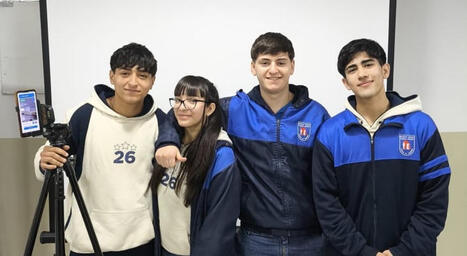







"Traductor de lengua de señas desarrollado en escuela técnica obtiene registro de propiedad intelectual
Estudiantes de informática crean aplicación de reconocimiento gestual que expande capacidades de inclusión comunicacional
Estudiantes de una escuela técnica de la región metropolitana desarrollaron una aplicación de traducción de Lengua de Señas Argentina que acaba de obtener registro de propiedad intelectual y está siendo evaluada para implementación municipal. El proyecto, denominado Sign Language Translator (SLT), surgió como iniciativa de cuatro alumnos de la especialidad…
Estudiantes de una escuela técnica de la región metropolitana desarrollaron una aplicación de traducción de Lengua de Señas Argentina que acaba de obtener registro de propiedad intelectual y está siendo evaluada para implementación municipal. El proyecto, denominado Sign Language Translator (SLT), surgió como iniciativa de cuatro alumnos de la especialidad en Informática que dedicaron aproximadamente dieciocho meses al desarrollo bajo supervisión docente.
La aplicación aborda un problema estructural en la comunicación: las barreras que enfrentan personas sordas o hipoacúsicas que utilizan lengua de señas cuando interactúan con quienes no dominan este lenguaje. El sistema funciona mediante reconocimiento gestual en tiempo real, utilizando la cámara de dispositivos móviles o computadoras para identificar configuraciones de mano y asociarlas a significados específicos.
Arquitectura técnica y evolución del sistema
El desarrollo inicial utilizó Python con bibliotecas de visión computacional (MediaPipe y OpenCV) en una versión de escritorio que reconocía letras individuales. Esta aproximación requería que los usuarios deletrearan palabra por palabra, lo que limitaba su utilidad práctica. El equipo identificó esta restricción y reorientó el proyecto hacia el reconocimiento de palabras completas, implementando un sistema de normalización que toma la muñeca como punto de referencia. Esta técnica permite que la aplicación funcione independientemente de la distancia o el tamaño de la mano frente a la cámara, mejorando significativamente la precisión.
La migración a una versión móvil requirió una reestructuración completa de la arquitectura y el procesamiento de datos. Actualmente, la aplicación reconoce diez señas críticas, con proyecciones de expansión a más de 50 expresiones en el mediano plazo y entre 150 y 300 en el largo plazo.
Implicaciones para la inclusión y escalabilidad
El proyecto representa un caso de estudio sobre cómo la tecnología de reconocimiento gestual puede resolver problemas de accesibilidad comunicacional a escala municipal. La evaluación para implementación en servicios públicos sugiere una viabilidad operativa que va más allá del prototipo académico. Esto implica consideraciones sobre integración con infraestructura existente, mantenimiento del modelo de reconocimiento y expansión del vocabulario de señas según necesidades locales.
La metodología empleada—donde estudiantes identifican problemáticas del entorno y desarrollan soluciones con guía docente—establece un precedente para instituciones educativas técnicas. El equipo había trabajado previamente en proyectos de asistencia para personas con discapacidad visual, lo que sugiere una línea de desarrollo consistente en soluciones de accesibilidad.
Desde una perspectiva de negocio y gobernanza, la obtención de registro de propiedad intelectual por parte de estudiantes de una institución pública plantea preguntas sobre modelos de licenciamiento, escalabilidad y sostenibilidad de desarrollos educativos que trascienden el aula. La evaluación municipal indica que existe demanda institucional por herramientas de este tipo, aunque los desafíos de implementación—capacitación de usuarios, mantenimiento técnico, expansión de vocabulario—requieren estrategias de implementación más allá del desarrollo inicial."
https://noticiasneo.com/article/169523
#metaglossia
#metaglossia_mundus