


The key to effectively leading with vision is to be able to communicate your vision as effectively as possible in an inspirational manner.

 Your new post is loading...
 Scoop.it! The key to effectively leading with vision is to be able to communicate your vision as effectively as possible in an inspirational manner. 
Scoop.it!

Don't send your team the message that they need to be workaholics.

Marcel Daane's curator insight,
February 26, 2013 7:23 AM
Research is showing that today's uncertain global econonmy is forcing organizations to make leaner and smarter talent management decisions by developing a more agile and adaptable workforce that can effectively respond to, and take advantage of, market demands. However, further research is showing that In today’s global business climate, executives work more hours per week with much greater pressures than ever before. The resulting increase in stress and fatigue affect work-life balance, health, happiness and ultimately performance.
What can we do to put a halt to the age-old belief that quantity of work hours , rather than quantity of work produced, equates to higher levels of performance?

Garrett Weiner's comment,
February 26, 2013 7:44 AM
improved quantity and most definitely quality of work produced are often sacrificed by requirements of "seats in butts" for hours, similar to what the new CEO for Yahoo has just declared - in a surprising move. Although she moved from Google, so it's not entirely surprising. Google can be a high-stress environment, tho it is successful, it can churn and burn its employees.

Pedro Barbosa's curator insight,
February 26, 2013 8:03 AM
We all need this : Real lives
Pedro Barbosa | www.pbarbosa.com | www.harvardtrends.com
Scoop.it!

Love Learning's curator insight,
February 20, 2013 6:33 AM
A great leader should ask themselves "Why would anyone want to follow me?" If you're not leading for the right reasons, no one will follow! This article shows 12 qualities often shared by great leaders.

John Michel's curator insight,
February 22, 2013 5:20 AM
It’s not easy being a manager these days. You’re responsible for recruiting, hiring, training, coaching, modeling, engaging, monitoring, motivating, anticipating, prioritizing, planning, evaluating, clarifying, adapting, envisioning, directing, disciplining, reinforcing, reporting, recognizing, budgeting, and building alliances. And that’s all before lunch. And if you struggle with just one, your reports will say you’re over your head ///////// John Michel, experienced leader, humanitarian, visioneer, and renown status quo buster, is the author of the ground breaking book, Mediocre Me: How Saying No to the Status Quo will Propel you from Ordinary to Extraordinary. Check out his blog at www.MediocreMe.com or drop him a note at johnmichel@MediocreMe.com
Scoop.it!

Leading, managing and operating a business are 3 very different things. Here's how to tell which you might be good at and which...not so much.
Scoop.it!

Loving who we are (weaknesses and all), loving the work we do, and the people we are here to serve are key to authentic leadership.
Scoop.it!

Economics teaches us that if something is scarce, it is more valuable. And while self-esteem might be scarce in your workplace, it doesn’t have to be. (RT @KevinEikenberry: Have you seen this one?
Scoop.it!
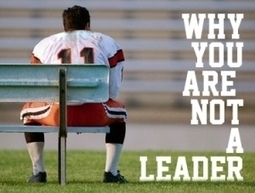
Everybody thinks they’re a leader – most are far from it. The harsh reality is that we live in a world awash with wannabe leaders. As much as some don’t want to admit it, not everyone can or should become a leader (my take on the born vs.

Lauran Star's curator insight,
February 18, 2013 10:49 AM
Leaders drive results ... Are you a leader or are you still on the bench?
Scoop.it!

Systematic pursuit of children's wellbeing and happiness in secure environments takes precedence over measured academic achievements in Finnish schools, according to Pasi Sahlberg, author of the award-winning book, Finnish Lessons: What Can the...
Scoop.it!

Brian Vickery shares the 12 Most Thrilling “T” Trademarks of Great Leaders.
Scoop.it!

Will you reach new heights in 2013?(Photo credit: brewbooks) The New Year is a great opportunity to reset your leadership aspirations. While we step back to think about taking our organizations to higher levels each year, rarely do we step back with...

Students Elective Course's curator insight,
February 20, 2013 3:56 AM
Great simple 6 questions which may change a lot in the way you lead and act at work.
Students Elective Course's curator insight,
February 20, 2013 3:56 AM
Great 6 questions, quite simple, that can change your management style. 
ratzelster's curator insight,
June 24, 2013 1:33 PM
Where do you stand on your New Year's resolutions to do a more effective job of leading? Check out this January 1st kind of article and see if you need to put more punch into your summer re-tooling plans!
Scoop.it!

A leader’s job is to create contexts that will allow followers to adopt new perspectives on the challenges they face, and therefore, new actions that lead

Rikke Bräuner's curator insight,
December 13, 2012 2:20 PM
"Everything we perceive is colored and shaped by the context for whatever we are dealing with"
Scoop.it!

Leading by Transforming: Utilizing the Dark Goddess & Rebirth for Effective Leadership Maya Leon, Erin Lightfoot, Dawn Lueck, and Kelsey Sweet California Institute of Integral Studies Author No...
Scoop.it!

Just ask any person in a leadership position and they would tell you that they love working and making a difference for the organization or the society.
|
Scoop.it!

Communicating in a large, heterogeneous and complex enterprise can be difficult, very much like trying to make waves by throwing a pebble into a tar pit. This is true whether an organization is mission-based, margin-based or a combination of both.
Scoop.it!

The leaders who inspire me are people who accomplish the impossible. Deep leaders explore their own core values and find a vision that causes other people to say, "That would be great, but it will ...

Michael Binzer's curator insight,
June 18, 2014 5:13 AM
Finding your own values can lead to new ground as a leader. For me it was a game changer
Scoop.it!

True iconoclasts don't just happen upon a novel approach. Their brains are actually wired in a way that makes them more likely to take the road less...
John Michel's curator insight,
February 22, 2013 5:24 AM
Mark Twain called them "corn-pone opinions." Take a path that veers from the norm, and you'll hear from a chorus of naysayers. "That'll never work." "Don't rock the boat." "That's impossible." (Of course, once your idea has been proven to work, they claim to have known it all along.) Bucking the herd isn't easy for a species designed to conform, so it takes a certain mindset to be an outlier. "Most people's brains are just not wired to go against what everybody else is doing," says Gregory Berns, author of Iconoclast and a neuroscientist at Emory University in Atlanta. Berns has taken an unorthodox path himself, exploring the roots of motivation and reward in ultramarathoners, sushi chefs and S&M enthusiasts. He argues that innovation occurs in brains that are adept at not just creative insights, but also at overriding the fears that come along with them--such as facing flak from the peanut gallery. ///////// John Michel, experienced leader, humanitarian, visioneer, and renown status quo buster, is the author of the ground breaking book, Mediocre Me: How Saying No to the Status Quo will Propel you from Ordinary to Extraordinary. Check out his blog at www.MediocreMe.com or drop him a note at johnmichel@MediocreMe.com
Scoop.it!

Leadership is learned behavior that becomes unconscious and automatic over time. For example, leaders can make several important decisions about an issue in the time it takes others to understand the question.

Guido Alfredo A. Delgado's curator insight,
March 1, 2013 7:06 PM
To do these 15 things "automatically" requires a complex web of experiences, relationships, formal and informal education throughout one's formative years. Some people realize their leadership abilities much early in their careers and they learn how to nurture further their leadership skills. In my experience, it is not easy to find someone with excellent leadership abilities. However, once you see one, you know he or she is a leader. 
Pef Skema's curator insight,
February 12, 2014 6:14 PM
This article show me what a true good leader is or should be. But I think only young generation of directors can be like that for example during my last internship , the director was only 32 years old and he did almost everything it is described on the list, whereas where I'm currently doing my internship the manager is 53 years old , I notice that he is the complete opposite of what it is describe on the list, even if I do my best I have nothing in return only a lot of pressure. I think is is necessary to every leader to look for knowledge and creative ways in order to be an effective and better leader.

Saskia Zdm's curator insight,
February 17, 2015 3:44 AM
This article shows how many things a successful leader should do in his company, with his employees. A leader should build confidence between him and employees to make them speak freely and as a consequence to ignite collective creativity from bottom up. The most important factor is having a very deep partnership with employees. That goes along with well measuring and rewarding performance and being trustworthy. This article is very interesting because it shows how much successful leaders should interact with employees by making them participating to decisions or by showing how much he is responsible. A successful leader must for sure know how to solve problems and this leads to positive energy and attitude within teams. Flexible thinking and bottom up participation are the best actions a successful leader should do. Empowered employees to generate ideas bring more value to leaders at less cost. Furthermore it allows them to properly deploy talent. During my last internship, the director used creative genius within employees and was fully responsible for it. She was a very good problem solver and brought positive attitude in the company so each teams were very positive and cooperating. And she was indeed a very good leader.
Scoop.it!
What is Transformational Leadership? First posted on my Invoke Results Blog, this article and short video answers the question says you can become one too! ("@sighonline: '@BigBreakLegacy: What is Transformational Leadership?
Scoop.it!
RT @matthancockmp: RT: @CathyEllis121 The #MOOC in Further Education Colleges – distraction or lever for change? http://t.co/2YqhOEGn << v interesting piece
Scoop.it!

A recent HBR Blog post by John Kotter speaks to the confusion surrounding management and leadership. He continues by outlining three key mistakes people make in confusing management and leadership...
Scoop.it!

When you’re constantly fighting fires, endlessly bombarded with emails, and double-booked in meetings for 60 or 70 hours a week, it’s hard to get ahead and easy to lose perspective on what really matters.

Randi Thompson's curator insight,
January 11, 2013 10:22 AM
What can you learn from effective leaders? What do they do? 
John Wade: pragmatic support for law firm leaders's comment,
January 20, 2013 8:48 AM
It's easy to be overwhelmed by the noise of business management. Focusing on what is really important is more likely to get things done. What this article neatly does is give you some thoughts on how and why that focus can be attained and maintained. Read it, though - you'll be surprised at some of the suggestions...
Scoop.it!

Dave Hoffer of Frog Design shares some insights on creativity and Shaking up habits through disruptive realism
Students Elective Course's curator insight,
February 20, 2013 3:58 AM
Talking about changing the way we see the world...
Students Elective Course's curator insight,
February 20, 2013 5:50 AM
Disrtuptive realism to shok minds and make peoples get out of their own reality and way of thinking. Banksy is a kind of leader, a prescriptor, by using the street to express his different way of thinking, of seeing. Is one of the leader of this street art by making pass messages through the street to shock and to change the reality.
Scoop.it!
20 differences between training & development: 6. Training is transactional – Development is transformational http://t.co/vcn5rSxa
Scoop.it!

Trait theory questions if natural leaders are born or made in the case with Steve Jobs I believe it is both (Eisenberg, 250). Let’s investigate further. Steve Jobs is the former maniacal lead...
Scoop.it!
Standing for journalism, strengthening democracy | Journalism training, media news & how to's...

sandra_barret's comment,
December 27, 2012 6:45 PM
Well written post that succinctly describes ways to improve leadership skills. Great read.
|








This is a video that most people in the network marketing and direct sales industry need to watch over and over again until they get the message. http://en.teamtissa.com/zzYf (www.scafidi.com/entv)
Painting a clear picture of your vision and communicating it is THE hardest part of business planning. If you are not clear, reach out to a coach or mentor. Let them ask you questions until you have your vision clear and detailed in your mind.
A compelling and inspiring vision that is clearly articulated can move mountains.