


Think it's time to disconnect for a break? After unplugging from the Internet for a week we take a look at the amazing benefits of a digital detox vacation.

 Your new post is loading...
 Scoop.it! Think it's time to disconnect for a break? After unplugging from the Internet for a week we take a look at the amazing benefits of a digital detox vacation. 
No comment yet.
Sign up to comment
Scoop.it!

In last month’s post, What is a #ConnectedEducator, we looked at a few ways we can become more connected virtually and share online. Being a connected educator is one of the best ways to build your personal learning network, connect... Read More ›
GwynethJones's insight:
Great article from the amazing Ashley!
Scoop.it!
Polly-Alida Farrington writes: "Amit Agarwal of Digital Inspiration has created many handy tools and shares great tips on his blog. His TallTweets tool was originally created to create very long twitter posts. Enter your text and TallTweets parses it out into a bunch of connected tweets and posts them for you. Now that Twitter has added that feature, TallTweets has been repurposed to create gifs from Google slide decks." Via Mary Reilley Clark, Bookmarking Librarian
GwynethJones's insight:
Interesting! Reminds me of the lesson I did years ago Tweeting a book review or Story in 140 -- guess I'll have to change that title, huh? LOL

Mary Reilley Clark's curator insight,
January 18, 2018 5:02 PM
I love this! And Polly's ideas for uses have sparked some of my own. What about creating a gif of book covers to display on your whiteboard while students are coming into the library for class? Or as she suggests, sharing introductory information or keywords from the presentation you'll be doing? (This would be great if you were presenting about the impact of libraries to your school board! Think of all the images you could include!) Have students make one for a 10 second book talk!
I'm sure you can come up with a variety of ways to use TallTweets immediately! 
Martha Bongiorno's curator insight,
January 19, 2018 12:07 PM
Interesting ideas! I can see tying this into a literature circle or exit ticket of some sort.
Scoop.it!
GwynethJones's insight:
Love a Quick Exit Ticket!

Arizona State University, Claire McLaughlin's curator insight,
January 20, 2018 7:04 PM
Step by step video that clearly explains and demonstrates how to use Google Forms. Great for pre- and post surveys, exit tickets, etc.
Scoop.it!

Are kids reading anymore? We see falling book circulation at all type of libraries. The hope is, if they are not reading print books maybe eBooks
GwynethJones's insight:
Reading culture? Yes, please!
Scoop.it!

Many dedicated educators blog about some of the best education technologies and trends available to teachers and students. These 10 are ou
GwynethJones's insight:
Really honored by this! Thank you! It's a great way to add to my reading list!
Scoop.it!

About a week ago I had an interesting conversation on my Facebook page with a teacher who was looking for help convincing he
GwynethJones's insight:
--> When in doubt with INNOVATION, get ADMIN support and a permission slip signed by parents. That's what I did before #BYOD in my district & it worked!
Scoop.it!

When it comes to technology use, can educators strike a balance between access and concerns about screen addiction? Via EDTECH@UTRGV
GwynethJones's insight:
This has been on my mind lately. Kids, devices, & mindfulness.
Scoop.it!

GwynethJones's insight:
Share with your math teachers!
Scoop.it!

"Why not use comics as a way to spur student learning? In fact, I challenge you to set up an occasional 20-minute comic strip segment during which your students create a comix about something they learned or read or experienced that day ..." Via Leona Ungerer, Dean J. Fusto
GwynethJones's insight:
Love comic strips!
Scoop.it!

Take a well-deserved break and enjoy our picks for the best recent parody videos for educators and their students. Via John Evans
GwynethJones's insight:
Love parodies!
Scoop.it!

Flipgrid is a fantastic service for collecting video responses to prompts that you pose to your students. It has been a hit whenever Via Dr. Tom D'Amico (@TDOttawa)
GwynethJones's insight:
Sweet!
Scoop.it!

"Many university faculty members and higher-ed advocates are on edge this week over an upcoming vote by the Federal Communications Commission on Thursday that may reverse net neutrality." Via EDTECH@UTRGV
GwynethJones's insight:
This is a good read! Our kiddos need to know about this.
|
Scoop.it!

From
www

During Teacher Appreciation Week, this teacher shares why he remains passionate about his work -- he brings his passion for comics into the classroom, and it's paid off.
GwynethJones's insight:
Great article! LOVE Comics & Social Studies! I'm now following @historycomics and of course, @pbsnewshour
Scoop.it!

A blog about school libraries and the role of the librarian in teaching and learning. Why information literacy is important.
GwynethJones's insight:
Honored & thrilled to be mentioned on this fine blog!
Scoop.it!

Ronnie Burt, Sue Waters and Kathleen Morris write: "Want your students to write more in your class? Looking for prompts or ideas for student blog posts? You are in luck! This post aims to get your creative juices flowing with over 100 ideas and examples..." Via Mary Reilley Clark
GwynethJones's insight:
What Mary says.
Mary Reilley Clark's curator insight,
January 19, 2018 9:50 PM
Ah, the power of blogging! I read over 100 blogs thanks to the Feedly app. Right after I read this article, a teacher emailed me to ask if I could help her students create blogs--and figure out a reason for them to use them! Didn't I look like a genius when I suggested we use the types of blog posts from Ronnie, Sue and Kathleen's article and write blogs about the novel her students were reading?
This project has since morphed into a grade-level one. All 7th graders are reading the novel Tangerine as part of our new language arts curriculum. Each blog post students write has to relate to something in the novel. (There's something for everyone in this book--bullying, environmental issues, inequity in education, prejudice, sports, etc.) So, everyone is blogging and everyone is reading and commenting on other students' blogs. Most students are used to sharing work with their classmates, but now they will share with all students in their grade!
I used this presentation to introduce the types of posts they'd be writing. I encouraged teachers to customize: give students a choice of 6-8 types of posts, limit post length, etc. I was able to get them brainstorming by asking for examples from Hatchet, a novel most of them had read in 6th grade. They were very enthusiastic! A journal post from the perspective of the moose Brian encounters? Or a sales post for a plane, slightly used and maybe moldy? A curation post on how to determine which foods in the wilderness are safe to eat? We also looked at blogs on topics that might interest them and talked about how to find and follow them.
After the presentation all students signed up for Blogger and created their blogs. We wanted a standard format for the blog addresses, so one student demonstrated on our interactive board as everyone followed along. Next up, they write, they customize their theme, they find images that are free to use and share, etc. I can't wait to see the results! And I am happy to say that several students immediately thought of ideas for personal blogs. And all this happened because I read blogs:)
Scoop.it!

Melissa Stewart writes: "If you’re a longtime reader of Celebrate Science, you may remember that back in 2012 and 2013, I spent a lot of time trying to develop a Nonfiction Family Tree. This effort to categorize and understand the various kinds of nonfiction and the interplay among them was heavily influenced by the ideas of such nonfiction thought leaders as Marc Aronson, Myra Zarnowski, Sue Bartle, and Mary Ann Cappiello. Eventually, I gave up on the family tree and started to think about other ways to classify nonfiction, but recently I decided to take a fresh look at the tree analogy, and I came up with something that I think is worth sharing..." Via Mary Reilley Clark
GwynethJones's insight:
Interesting!
Mary Reilley Clark's curator insight,
January 15, 2018 12:39 PM
Melissa's post and her follow-up here made me think about my ongoing frustrations with our nonfiction section. ****NB: Melissa just shared this wonderful article she wrote for SLJ. It gets at so much of what bothered me as an elementary librarian, when students are steered away from non-fiction to chapter books.**** We have so many incredible books that just don't circulate. I do a lesson with 6th graders similar to speed dating in which they browse tables full of books, but even though they enthusiastically check those out, they rarely wander through the nonfiction shelves on subsequent visits.
It's still in development, but I am going to use Melissa's post about teaching the different types of nonfiction in a new lesson. We talk during the genre speed dating lesson about how you can drill down into subgenres: "I like the mystery genre, but I focus on the forensic subgenre myself," or "Yes, I read historical fiction, if you consider alternative history a subgenre of that." (We use our best pretentious voices while stating our preferences.) Now it's time for a lesson on the kinds of nonfiction!
I still remember my neighbor and current 8th grade student discovering narrative nonfiction last year. He was one of many students who considered himself a non-reader because he doesn't like reading fiction. (Or rather, he doesn't like reading teacher-assigned whole class novels.) After he read Unbroken, he came back for The Boys Who Challenged Hitler, The Nazi Hunters, The Port Chicago 50, and many more. He told his teacher, "I didn't know narrative nonfiction was a thing, but now I know what I want to read."
First up, I will make more specific resource lists for students to highlight narrative nonfiction, etc. Next, we'll get busy on some displays, and perhaps make it a goal to have a nonfiction display every month.
I'm grateful to Melissa for getting the wheels turning on this!
Scoop.it!
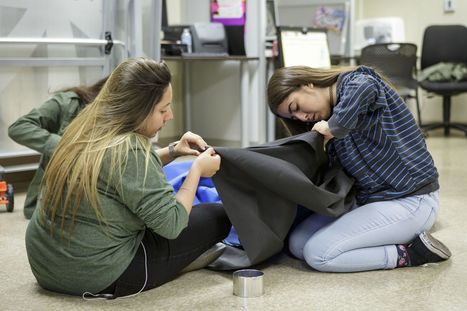
A group of teen girls learned to code, solder, sew, and 3D-print to invent a solar-powered tent for the homeless. Via John Evans
GwynethJones's insight:
Love this! Go girl power!
Scoop.it!

As technologies and the workforce change, society must help equip students with the skills for success in the workplace. Via EDTECH@UTRGV
GwynethJones's insight:
YES!
Scoop.it!

Want to add deep, critical thinking, engaging visuals and a little fun? Try using Caption This! activities using Google Drawings and/or Slides! Via Dr. Tom D'Amico (@TDOttawa)
GwynethJones's insight:
This is definitely COOL! AND it uses @Bitmoji !! Thanks @jmattmiller!
Scoop.it!
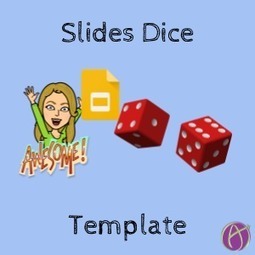
Try out my Slides Dice template. Notice the addition of a dice menu to this Google Slides template. Roll dice while using Google Slides. Via Dr. Tom D'Amico (@TDOttawa)
GwynethJones's insight:
That @AliceKeeler is just made of amazing!

Roxanna Villalobos's curator insight,
September 20, 2020 1:44 PM
While using Google Slides in edit mode rather than presentation mode your students may have need to roll some dice. Maybe for math, maybe for a Slides game you created, maybe as a way to take turns, check it out!
Scoop.it!

Tis the season to be grateful. A couple weeks ago the On Our Mind blog by Scholastic shared an article featuring 15 Librarians t
GwynethJones's insight:
15 Librarians To Follow On Instagram +5 More! -NEW POST! Lessons Learned from our #TLChat PLN! Esp. @shannonmmiller @SEMSLibraryLady @fr3dt3ch @crabberlibrary @lucasjmaxwell @ReadersBAdvised & @kristenmajkut Thanks @Scholastic!
Scoop.it!

As adults witness the rising tides of teenaged anxiety, it’s tough not to notice a common thread that runs through the epidemic — something that past generations never dealt with. Clutched in the hand of nearly every teen is a smartphone, buzzing and beeping and blinking with social media notifications. Via John Evans
GwynethJones's insight:
I'm going to write about this soon, cool - great quotes & resources!

Shaina Feingold's curator insight,
September 5, 2019 11:45 PM
It can be hard being a teenager. Does social media make those years even more challenging? Or are they just different?
Scoop.it!

Comic strips and comic strips captivated us as children. Tap into that energy in the classroom with Google Drawings comic strips! Here's how.
GwynethJones's insight:
OMGosh! YES! BTW, Fun fact! @LJDougherty is one of my oldest librarian friends met on the Interwebs! Love her!
Scoop.it!

Facebook and Twitter won't fix fake news alone, says danah boyd. Today's information wars are also a reflection of us. Via Ivon Prefontaine, PhD, Bookmarking Librarian
GwynethJones's insight:
I always love reading what danah boyd aka @zephoria is talking about - she's always on point!
|






I really am going to try this FOR REAL someday soon! I didn't make it my full Winter Break because I was writing about THIS TOPIC!! LOL But soon, I swear!