Your new post is loading...
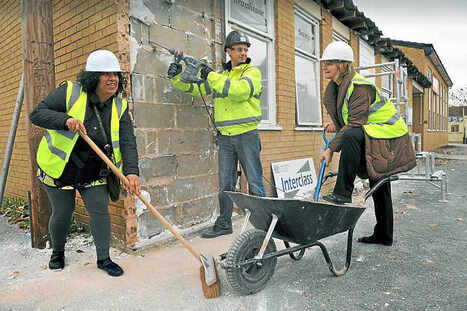
Plans for the Brasshouse Community Centre in Smethwick have been on the drawing board since it was taken over by North Smethwick Development Trust in 2007, but builders have moved on site to demolish parts of the old building that date back to the 1970’s.
The centre in Brasshouse Lane is being rebuilt by the trust to allow people to access a wider range of services and activities aimed at improving the life chances of families, adults and children living in the area.
Sue Howarth, chief executive for the charity said: “The centre is going to be a significant improvement on what we have now and will allow us to achieve a lot more in the community”.
Earlier in the year the trust announced it had signed a 99-year lease with Sandwell Council on the site, which allowed it to win a half a million pound grant from the National Lottery.
“The fact that we have such a long lease has given us the opportunity to raise the funds necessary for work to begin,” said Mrs Howarth.
“We are working with local builders and merchants because we want to make sure we are contributing back to the local economy.”
The handing over of the centre is the first time that the council has handed over an asset to a community group and is part of a pilot to put the running of services in the hand of those nearest to the communities.
She said: “We consulted more than 530 local people from all backgrounds and we have really taken on board what they have suggested.
“We are all really excited about the centre as is the rest of the community.”
When completed visitors will walk through a glass fronted archway, lined with specially designed bricks and will walk into a café and social space where they will be able to seek out employment and volunteering opportunities and use the centres free broadband.
The centre will be opened in June 2014.
An environmental committee at Massachusetts Statehouse has approved a bill, imposing a 10-year ban on fracking for natural gas. The move comes as a wave of earthquakes in Texas has raised new concerns over the controversial drilling technique.
The Massachusetts fracking moratorium bill is designed to protect the state’s drinking water from possible contamination and thus “ensure that the health and prosperity of our communities is maintained,” according to one of the legislation’s sponsors, Northampton Democratic state Rep. Peter Kocot, cited by AP.
To become law, the temporary ban on fracking has yet to be approved by the lawmakers and signed by the Democratic Governor, Deval Patrick.
The Massachusetts legislative move was taken on Friday, the day after Texas was stuck by a 3.6 magnitude earthquake, one in a row of similar episodes during the last three weeks. The finger of blame is being pointed at fracking. The series of small earthquakes caused no casualties, but left local
Click headline to read more--
A popular Bitcoin discussion forum warned on Monday some user passwords may have been intercepted after the site's DNS (Domain Name System) registrar was breached.
An attacker found a flaw in Bitcointalk.org's domain name registrar, a company based in Japan called Anonymous Speech, wrote an administrator for the forum who goes by the nickname "Theymos." Anonymous Speech could not immediately be reached for comment.
Tampering with a DNS server is a powerful attack. A hacker can direct traffic destined for one website to one that he or she controls, even if a person types in the correct domain name in the URL address bar of a browser.
The attacker could then execute a man-in-the-middle attack on Bitcointalk.org, intercepting encrypted forum submissions, passwords sent during login sessions, authentication cookies, private messages and more, Theymos wrote.
The attack occurred between 06:00 UTC on Sunday and 20:00 UTC Monday. People who logged into the site during this period should change their passwords, Theymos wrote.
Since many people tend to re-use passwords, hackers usually try to see if the captured login credentials are valid on other services.
People who had the "Remember me" login feature enabled should not be at risk, Theymos wrote. Security codes used to let people login without entering their passwords again have now been invalidated.
Click headline to read more--
Parkes constituents travelled to Dubbo on Tuesday to deliver a petition containing more than 270,000 signatures, asking the Federal Government to retain the fibre-to-the-house model for the National Broadband Network (NBN).
The petition, hosted by platform change.org in Australia, was started on the weekend of the Federal election by Queensland student Nick Paine, and led to the creation of fibre-to-the-premises supporter groups across Australia.
Petitions were delivered to over 150 electorate offices, including that of Member for Parkes Mark Coulton, by concerned residents hoping to influence Minister for Communications Malcolm Turnbull.
Allison Reynolds, acting as spokesperson for Save the NBN- Day of Action for the Parkes electorate, said the petition was signed by Australians who understood that using the current copper network to transport internet to Parkes residents and businesses was a backwards step.
“There has been a clear indication to the current government from day one that Australia wants a fast internet service that will last into the future, rather than a piecemeal network that will need constant maintenance and repairs, as well as delivering a substandard service,” Ms Reynolds said.
“Fast, reliable internet is the way of the future and Parkes deserves the best NBN service possible”
Ms Reynolds said the NBN promotes high speed access benefits to regional and rural towns by increasing access to health care specialists for residents and improving businesses services.
Click headline to read more--
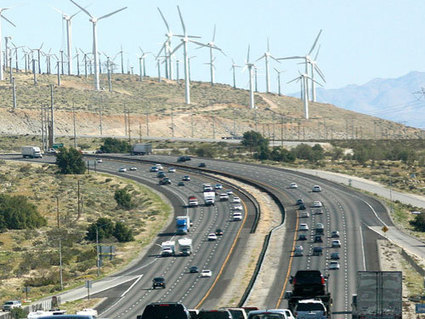
The clean power facilities that Apple built in Maiden, North Carolina, might be awe-inspiring, but they’re also both a bit controversial (because of the massive amount of land used) and not so realistic for other smaller data center operators to replicate (mostly because of cost). Other clean power options that data centers are adopting, like fuel cells, aren’t necessarily all that clean if powered by natural gas.
Amazon’s data center rockstar James Hamilton writes in a recent blog post that Facebook’s decision to work with a utility in Iowa to have a new data center powered entirely by a nearby wind farm is a solid model for data center operators that want to adopt more clean power. That model doesn’t require the data center operator to build its own clean power, it leaves the power development in the hands of the utility, and the data center is located in an area where wind power is relatively economic.
Click headline to read more--
Sales of the Nissan Leaf have picked up steam after a price cut earlier this year, but executives are still looking to move consumers en masse into electric vehicles. Taking a page from Tesla’s playbook, a Nissan executive hinted that a Leaf with different battery size options could be in the pipeline of future products.
Plug-in Cars spoke with Pierre Loing, Nissan’s vice president of product and advanced planning, who said that “The packaging easiness (of the battery) makes it easier to put more batteries in the car, and you will see this.” He then noted that Tesla offers different battery options at different price points, saying “Maybe you will see this from Nissan.”
That sounds like a not-so-subtle hint, and the move is a practical one to be sure. The Tesla Model has been by far the most successful electric car on the market, and major automakers are looking to the California automaker for their next move in regards to EVs. Click headline to read more--
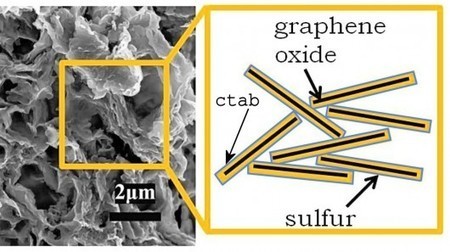
Batteries. We buy them at the store, use them up, and throw them away without much thought. In reality, however, batteries are remarkably complex electrochemical devices that are continually evolving. The latest example of this comes from the Lawrence Berkeley National Laboratory, where researchers have invented an advanced lithium/sulfur (Li/S) cell that offers a unique combination of energy storage, power, recharge speed, and survivability.
Lithium/sulfur rechargeable batteries offer a remarkably large capacity for energy storage, mainly because two electrons are produced each time a molecule is processed through the battery's chemistry.
Click headline to read more and view graphics--
A Paris civil court has ordered a number of search engines, including Google, Yahoo and Microsoft’s Bing, alongside all French internet service providers (ISPs), to block sixteen websites that stream copyrighted content.
Reuters reports that back in 2011 five unions representing film and TV producers requested that access to allostreaming.com, allomovies.com and other similar sites should be blocked, as they were ‘entirely or nearly entirely dedicated to copying audiovisual productions without the consent of their authors.’
On 28 November 2013, the French court ruled that the websites break the country’s intellectual property laws, and access should be blocked; however, the court stopped short of providing guidance how the decision should be executed. Further, the ruling can be appealed by the companies affected.
Google, one of four search engines targeted by the lawsuit, said it was disappointed and would evaluate whether to appeal, adding: ‘We will continue to work with content owners to help them combat piracy across Google’s services.’
Orange France, the country’s largest internet service provider (ISP), said it would apply the decision despite concerns on ‘policing the internet.’ The operator, however, pointed out: ‘We remain convinced that the only real effective solution against piracy is the development of attractive legal services for consumers.’
Which modern technology “enables us to send communications…with the quickness of thought, and to annihilate time as well as space”? If you answered “the internet,” you’re right. If you answered “the telephone,” “the television” or any other speed-of-light telecommunication technology, you’re also right. That quote is from an 1860 book by George Bartlett Prescott, an American telegraph official.
In 1860, the fastest telecommunication link between California and New York was the Pony Express, which took at least 10 days to get a message to the other side of the continent. Then one day in 1861, the First Transcontinental Telegraph was completed and you could send the same message across the continent in 10 seconds. Two days later, the Pony Express officially ceased operations. Prescott was onto something.
The Ancient Greek word “tele” means “far away”. To telecommunicate is to communicate farther than you can shout. When you connect two points with a speed-of-light telecommunication channel, you annihilate the spacetime-distance between the points. You get a kind of wormhole.
The internet is a network of spacetime wormholes connecting every human being on the planet. If you want to chat with someone face to face, you just stare into your cell phone and they stare into theirs. You can’t tell if they’re a thousand miles away, or in the next room.
But when it comes to physical things, we’re still living under the tyranny of spacetime. Kevin Ashton, the inventor of the term “Internet of Things”, wrote in 1999: “We’re physical, and so is our environment … You can’t eat bits, burn them to stay warm or put them in your gas tank. Ideas and information are important, but things matter much more.” Just look around the room right now, at anything other than your cell phone. All the things you can see and touch depend on where you are in space, or on how much time you spend moving yourself to a new location.
That’s a problem, because at any given moment, most of the things you care about aren’t in your line of sight. Almost none of the food you’re going to eat that day is. Almost none of the appliances you’re going to use that night are. That’s the tyranny of spacetime, which the internet of things is now beginning to overthrow.
The internet of things has three major spacetime-annihilating functions:
Click headline to read more--
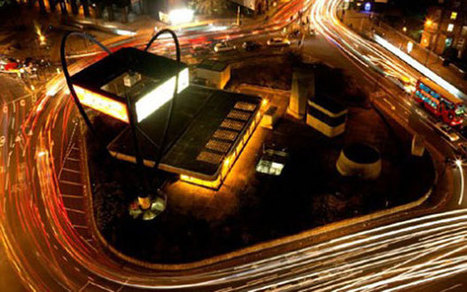
The number of technology and digital companies in London has almost doubled since 2009, the head of a government initiative to stimulate the sector will announce this week. Joanna Shields, the former head of Facebook in Europe, will reel off a string of impressive statistics at the third anniversary of the Tech City programme on Friday.
Technology and digital companies now provide 30pc of jobs growth in the capital, according to a report compiled for the occasion. The total number of jobs in the sector is up by nearly a fifth since Tech City was launched, against a backdrop of total jobs growth of just 0.3pc, it will reveal.
Ms Shields, pictured right, who became chief executive of Tech City a year ago, said: “No one who looks at the figures can dispute that the tech and digital economy is powering UK growth.
“We are living through an amazing period of technology-driven creativity and innovation that holds the potential to transform society, culture and business on a mass scale.”
Click headline to read more--
Ireland’s top diplomat in Boston is looking to build bridges to the Bay State’s business community as a way to help get his country’s economy back on track.
Breandan O Caollai, the Consul General of Ireland in Boston, said local companies could be key to Ireland’s continued economic recovery.
“It’s a huge potential there,” he said.
O Caollai, who started in August, said one of his priorities will be to find economic opportunities for Ireland, largely by convincing local companies to open offices in his island nation. The relationship between Ireland and Boston should be about more than just heritage and history, he said.
“We just don’t want to sentimentalize this, we don’t want it to just be St. Patrick’s Day,” he said. “We want it more than that.”
As Ireland’s economy recovers, the country is hoping American investments can play a part in its continued growth. Last week, the country’s unemployment rate dropped to 12.8 percent, the lowest rate since 2009, and down from a high of 15.1 percent.
Companies “can invest in Ireland, you can have your European headquarters in a sympathetic country which has its economy in good shape,” he said.
More than a dozen Boston area companies have offices in Ireland, largely technology, life sciences and financial companies, O Caollai said.
He said many companies choose to open offices in Ireland because of the availability of talent, the relatively short travel time and lower corporate taxes than similar countries.
Click headline to read more--
OVER the recent decade, Islamic finance had achieved remarkable growth and development.
The continued success and viability of Islamic finance will also depend critically on ensuring focus on preserving financial stability. While contractual relationships and obligations may be different under Islamic finance, thus requiring different risk governance arrangements and skill sets, both conventional and Islamic financial institutions are exposed to similar risks including credit, market, liquidity and operational risks. For these reasons, the relevance of reforms to strengthen capital and liquidity buffers such as that under Basel III also extends to Islamic financial institutions and their universal implementation is important to avoid competitive distortions and regulatory arbitrage.
Beyond prudential standards however, ensuring strong adherence to syariah principles is central to delivering the financial stability benefits that were found wanting in conventional financial systems prior to the global financial crisis. In addition, the agenda to promote fair, responsible and professional conduct by Islamic financial institutions and more empowered consumers must be equally advanced.
In Malaysia, the new legal framework for Islamic banking and takaful that recently came into force is set to pave the way for the development of an end-to-end syariah compliant regulatory framework, reinforcing the effective application of syariah principles in the conduct of Islamic financial institutions.
It is encouraging to see that substantive progress has been made in respect of the development of prudential standards for Islamic financial institutions and the cooperation arrangements that are taking place to facilitate the implementation of these standards at national levels. Since its establishment in 2002, the Islamic Financial Services Board (IFSB) has introduced prudential standards for the Islamic financial services industry in the areas of capital adequacy, risk management, corporate governance and syariah governance.
Nine countries have implemented these standards and 19 more are expected to implement them within the next few years. The Accounting and Auditing Organisation for Islamic Financial Institutions (AAOIFI) has also contributed to the issuance of more than 80 standards in the areas of accounting, auditing, governance, ethics and syariah for the international Islamic financial industry.
Click headline to read more--
This is hardly a surprise, but more reports are coming out revealing that the US's ongoing strategy in negotiating the TPP (Trans Pacific Partnership) agreement is to not take into account the many, many concerns about the US's hardline, maximalist position on both intellectual property issues and efforts to give corporations sovereignty over national laws under the misleadingly named (and purposely boring) "investor state dispute settlements" (ISDS).
You would think that with widespread dissection and concerns expressed about the leaked intellectual property chapter, that the USTR might possibly ease up on its crazy maximalist demands. Not so -- but that's to be expected when you have Stan McCoy as the lead negotiator on intellectual property issues. McCoy is a famed extreme maximalist on IP issues who has more or less admitted to having no interest at all in hearing from public interest groups, while lapping up any opportunity to parrot bogus claims from the industry.
McCoy was the same guy behind the embarassing disaster known as ACTA, which flopped so miserably. You'd think he'd take a hint, but instead it appears he's decided to dig in his heels and make sure the US continues to live up to its reputation as an obnoxious bully.
Multiple reports have called out the US (and McCoy in particular) for its aggression and "bullying" in the negotiations. Others have accused the US of engaging in a "negotiation by exhaustion," in which US negotiators seem to figure if they just stand their ground forever, everyone will eventually be bullied into agreeing to the US's positions.
Click headline to read more--
|
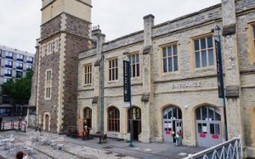
Bristol’s ambition to be a world-class city for innovation and creativity takes a leap forward today when Brunel’s original railway station at Temple Meads re-opens as a hi-tech enterprise hub.
The Engine Shed, once Bristol’s gateway to the world, has been transformed into a modern centre to spearhead the city’s inward investment drive, create jobs and encourage a new generation of high-growth businesses.
The Grade I-listed building, opened in 1841 as one of the world’s first railway stations, is now one of the its most connected enterprise hubs, acting as a ‘shopfront’ for potential investors in the region and a showcase for Bristol’s innovation.
The result of a £1.7m upgrade, thanks to a partnership between Bristol City Council, the University of Bristol and the West of England Local Enterprise Partnership (LEP), over the next 15 years the Engine Shed is expected to generate 5,000 high-value jobs in the high-tech, creative and low carbon sectors.
Minister for cities Greg Clark will this evening join Bristol’s Mayor George Ferguson and Professor Sir Eric Thomas, the Vice-Chancellor of Bristol University, to officially the Engine Shed.
The Mayor’s support for the project meant it got off the ground with unprecedented speed, moving from initial approval from the council in March to the completion of building work in November.
Mayor Ferguson said: “The opening of Engine Shed in record time demonstrates the innovation, ambition and collaborative working that exists here in the city. Once home to Brunel’s innovative railway, Engine Shed is now in the heart of Bristol’s Enterprise Zone and is home to creative and high tech companies developing the technology of the future. It is also key node on the GigaBit Bristol broadband network connecting buildings in the city, and developing the potential for new collaborative and creative working.”
Click headline to read more--
The Internet’s main engineers have asked the architects of Tor—networking software designed to make Web browsing private—to consider turning the technology into an Internet standard.
If widely adopted, such a standard would make it easy to include the technology in consumer and business products ranging from routers to apps. This would, in turn, allow far more people to browse the Web without being identified by anyone who might be spying on Internet traffic.
If the discussions bear fruit, it could lead to the second major initiative of the Internet Engineering Task Force (IETF) in response to the mass surveillance by the National Security Administration. Already the IETF is working to encrypt more of the data that flows between your computer and the websites you visit (see “Engineers Plan a Fully Encrypted Internet”).
Collaborating with Tor would add an additional layer of security and privacy. When Tor is successfully used, the websites you visit don’t know the true address and location of your computer, and anyone watching traffic from your computer wouldn’t know where you’re browsing—a distinct layer of protection that goes beyond encrypting your communications.
Stephen Farrell, a computer scientist at Trinity College, Dublin, believes that forging Tor into a standard that interoperates with other parts of the Internet could be better than leaving Tor as a separate tool that requires people to take special action to implement. “I think there are benefits that might flow in both directions,” he says. “I think other IETF participants could learn useful things about protocol design from the Tor people, who’ve faced interesting challenges that aren’t often seen in practice. And the Tor people might well get interest and involvement from IETF folks who’ve got a lot of experience with large-scale systems.”
Click headline to read more--
Nestled around the remnants of a medieval stone cross, the hamlet of Dean in the heart of the Cotswolds can hardly be said to have entered the digital age. But there is at least one house that boasts a modern, superfast internet connection. The prime minister's constituency home has a line leased by the Home Office from BT.
His neighbours make do with the grindingly slow copper broadband network, and now their hopes of an upgrade have been dashed. Despite behind-the-scenes support from David Cameron and the more overt backing of his culture secretary, Maria Miller, a project designed to bring fibre connections to every home in Dean, and a total of 1,300 premises in west Oxfordshire, is to miss out on government funding.
Cotswolds Broadband was one of four projects championed by Miller that could have brought a total of 14,000 remote homes and offices online starting next year, but now look set to be denied public funding. They were some of the dozens of local broadband initiatives bidding for a share of the £20m rural community broadband fund (RCBF).
Launched two years ago with the aim of bringing superfast service to 70,000 remote homes and businesses, the taxpayer-funded scheme was trumpeted as a means of countering economic decline in villages.
The RCBF is to be wound down in March next year with just a fraction of the money spent. So far only three projects – claiming less than £1m in total – have been approved, and these will connect just 2,500 homes. Frustrated at the lack of progress, spurned communities are now in open rebellion. Many blame their failure on BT.
Red tape, complex rules drawn up by civil servants and a reluctance on the part of councils to hand work to companies other than BT have left numerous projects unable to secure money from the scheme, which is operated by the Department for Environment, Food and Rural Affairs.
Click headline to read more--
It’s just one aspect of the future for just one city among hundreds: researchers have calculated that, for every extra notch on the temperature scale, Salt Lake City in the state of Utah, USA, will face a serious drop in the annual flow of fresh stream and river water to its people.
The fall in flow could be anything from 1.8 to 6.5%. The measure of temperature used by the Americans is Fahrenheit, and 1°F is the equivalent of five ninths of 1°C. But average temperatures in the region have risen 2°F in the last century and are expected to go on climbing.
By mid-century, according to Tim Bardsley from the University of Colorado at Boulder, some of the streams that feed the city will dry up several weeks earlier each summer and autumn. Climate scientists have predicted that the American Southwest could become steadily more arid as the planet warms through a build-up of carbon dioxide in the atmosphere. But city planners need more than general warnings: they need a clear idea of what might happen in this or that environment.
“Because our research team included hydrologists, climate scientists and water utility experts, we could dig into the issues that mattered most to the operators responsible for making sure clean water flows through taps and sprinklers without interruption,” said Bardsley.
Click headline to read more--
Google is taking its cameras indoors in an effort to map international transit hubs, starting with 16 airports and more than 50 train and subway stations.
The new panoramic images are part of the company's Street View feature within Google Maps and Google Earth. It's not the average update though, because you'd be hard-pressed to find actual streets. In its announcement, Google described the expansion as the company's first efforts to map global transit locations.
Apparently Google wants people to use its services not just to see their destination -- or gaze in longing at places deemed out of reach -- but also to help them get there.
The Street View update might come in handy for travelers who need help finding their way around an airport, the company suggested. "Don't let travel logistics get you down this holiday season," Google said.
A handful of the new images are of transportation hubs in the U.S., though more are scattered throughout Europe and Asia. There are several airports in Spain and at least half a dozen train stations throughout Italy, judging by an interactive map of the new locations, and also a range of hubs in the U.K. and Japan. Users can see panoramic images of the Tokyo International Airport, Eindhoven Airport in the Netherlands -- oddly, that's the only transport hub in the country Google mapped for this project, passing on more widely used Schiphol -- the Madrid-Barajas Airport and Waterloo Station in London.
The Internet company also got hyper-local with the project: The inside of some Emirates planes at the Dubai Airport were also photographed.
Click headline to read more--
A team of theoretical physicists from the US Department of Energy’s (DOE) SLAC National Accelerator Laboratory and Stanford University is predicting that stanene, a single layer of tin atoms laid out in a two-dimensional structure, could conduct electricity with one hundred percent efficiency at room temperature. If the findings are confirmed they could pave the way for building computer chips that are faster, consume less power, and won't heat up nearly as much.
Stanene is an example of a topological insulator, a class of materials that conduct electricity only on their outside edges or surfaces. When topological insulators are just one atom thick, their edges conduct electricity with 100 percent efficiency, forcing electrons to move in defined lanes, without resistance.
The team responsible for this work, led by Stanford physics professor Shoucheng Zhang, has studied several other structures which were later confirmed to be topological insulators, but if stanene is all they claim it is, then it would be a significant discovery because it would be the first topological insulator that is able to function at room temperature.
Click headline to read more--
There haven't been too many moments of levity over the past four months for those intimately involved in the story of Edward Snowden. It hasn't been a laughing matter for the man himself, who is now stuck in Russia, the intelligence agencies whose secrets he has disclosed, or the governments that have had to deal with the consequences.
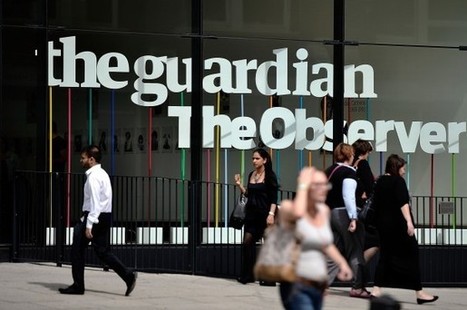
But the impasse between the opposing forces in this unprecedented and complex saga has been broken on occasion. One of these moments came at the Guardian's London headquarters, near King's Cross station, on Wednesday 17 July.
The scene was a second-floor office overlooking Regent's Canal, the time 11am. On one side of a large, round wooden table sat two senior officials from the Cabinet Office, nursing cups of coffee and unconcealed irritation. Facing them were two journalists from the Guardian.
After hollow pleasantries and firm handshakes, the conversation turned to the right to freedom of speech on issues that might affect national security. And, though no voices were raised, the message – which had come directly from the prime minister – was loud, clear and intended to unnerve.
The Guardian had become a target for every intelligence service in the world, intoned the grey-suited official. His colleague nodded. She took notes. Hostile foreign agencies would be using all manner of low tricks and high technology to get hold of the classified files gifted to us by Snowden.
The tactics might include anything from pointing long-range lasers at plastic cups used by our reporters (very good for eavesdropping apparently), to bribing members of our staff. Had we recruited anyone in the past few weeks, they inquired? Any Chinese, perhaps?
The Guardian had to be alert to such dangers because the threat could come from anyone, anywhere, at any time.
"Some of the best assets of the best intelligence services in the world will be interested in you," said the bespectacled official. At precisely that moment, and with implausibly good timing, two window cleaners slowly dropped into view on the outside of the building. In a cradle hanging from the roof, they soaped, swiped and polished, moving slowly up and down just a few feet away.
"Are they yours or the Chinese?" said one of the editors. Even the mandarins managed a smile.
For a few moments the absurdity of the situation overwhelmed the seriousness; and if it wasn't quite football between the trenches at Christmas, the meeting ended cordially, with both sides recognising the difficulties of the other.
Since then, the debate has become rather more polarised, entrenching views at a time when a more rounded and less doctrinal discussion might be better for the people who really matter in all this.
Those people do not include Snowden or the reporters working on the stories; or the directors of intelligence who have been so affronted by the disclosures; or even the presidents and prime ministers on whose watches surveillance has entered a new, remarkable, era. The principal characters in this drama are not the giant computers used for storage, analysis and codebreaking, or the technicians who built them.
The people who really count are the millions who send emails or search on Google or use mobile phones – and expect privacy. Those who use Skype, send direct messages on Twitter, post on Facebook or rely on the internet to buy groceries also make up the cast. Because all this information, whatever safeguards you have taken, can be swept up, decoded and analysed by British and American intelligence agencies.
Arguments over Snowden's motives, whether he is a whistleblower or a traitor, whether his disclosures have damaged the agencies or just embarrassed them, may never be reconciled. But on one matter there is no doubt. The highly classified files have shown that espionage has changed.
Click headline to read more--
The UK cellular operator EE has revealed that just one of its 26 mobile virtual network operator (MVNO) partners is set to begin reselling 4G Long Term Evolution (LTE) services in 2014.
Jason Bellman, EE’s director of MVNO operations, has said in an interview with Mobile Today that the pace of the rollout to resellers will be dictated largely by its partners, which range from niche operations such as Econet to large MVNO partnerships with the likes of BT and Virgin Media.
He said: ‘It depends on what our clients’ propositions are. 2G and 3G services are still a priority for many and we are working with each of our customers on a case-by-case basis.’
When we were young, our mothers would tell us to turn off the lights before going to bed. But our mothers’ best efforts to encourage conservation at home have not carried over into our working lives.
We leave lights, printers and more on when we leave the office. And when it comes to the problem of energy conservation, we need to remember mom’s advice because in the business world, saving money is making money.
The number of devices that remain on when you’re not using them is astounding: from printers and desk phones ATMs, vending machines and light posts. The bright side? Technology can help us conserve energy and save big.
Click headline to read more--
Living in self-imposed exile in Russia, former National Security Agency contractor Edward Snowden may be safely beyond the reach of Western powers. But dismayed by the continued airing of transatlantic intelligence, British authorities are taking full aim at a messenger shedding light on his secret files here — the small but mighty Guardian newspaper.
The pressures coming to bear on the Guardian, observers say, are testing the limits of press freedoms in one of the world’s most open societies. Although Britain is famously home to a fierce pack of news media outlets — including the tabloid hounds of old Fleet Street — it also has no enshrined constitutional right to free speech.
The Guardian, in fact, has slipped into the single largest crack in the free speech laws that are on the books here — the dissemination of state secrets protecting queen and country in the British homeland.
A feisty, London-based news outlet with a print circulation just shy of 200,000 — albeit with a far bigger footprint online with readers in the many millions — the Guardian, along with The Washington Post, was the first to publish reports based on classified data spirited out of the United States by Snowden. In the months since, the Guardian has continued to make officials here exceedingly nervous by exposing the joint operations of U.S. and British intelligence — particularly their cooperation in data collection and snooping programs involving British citizens and close allies on the European continent.
In response, the Guardian is being called to account by British authorities for jeopardizing national security. The Guardian’s top editor, Alan Rusbridger, is being forced to appear before a parliamentary committee Tuesday to explain the news outlet’s actions. The move comes after British officials ordered the destruction of hard drives at the Guardian’s London headquarters, even as top ministers have taken to the airwaves to denounce the newspaper. Scotland Yard has also suggested it may be investigating the paper for possible breaches of British law.
The government treatment of the Guardian is highlighting the very different way Britons tend to view free speech, a liberty that here is seen through the prism of the public good and privacy laws as much as the right to open expression.
Click headline to read more--
The first item I see in Amazon's Swansea warehouse is a package of dog nappies. The second is a massive pink plastic dildo. The warehouse is 800,000 square feet, or, in what is Amazon's standard unit of measurement, the size of 11 football pitches (its Dunfermline warehouse, the UK's largest, is 14 football pitches). It is a quarter of a mile from end to end. There is space, it turns out, for an awful lot of crap.
But then there are more than 100m items on its UK website: if you can possibly imagine it, Amazon sells it. And if you can't possibly imagine it, well, Amazon sells it too. To spend 10½ hours a day picking items off the shelves is to contemplate the darkest recesses of our consumerist desires, the wilder reaches of stuff, the things that money can buy: a One Direction charm bracelet, a dog onesie, a cat scratching post designed to look like a DJ's record deck, a banana slicer, a fake twig. I work mostly in the outsize "non-conveyable" section, the home of diabetic dog food, and bio-organic vegetarian dog food, and obese dog food; of 52in TVs, and six-packs of water shipped in from Fiji, and oversized sex toys – the 18in double dong (regular-sized sex toys are shelved in the sortables section).
On my second day, the manager tells us that we alone have picked and packed 155,000 items in the past 24 hours. Tomorrow, 2 December – the busiest online shopping day of the year – that figure will be closer to 450,000. And this is just one of eight warehouses across the country. Amazon took 3.5m orders on a single day last year. Christmas is its Vietnam – a test of its corporate mettle and the kind of challenge that would make even the most experienced distribution supply manager break down and weep. In the past two weeks, it has taken on an extra 15,000 agency staff in Britain. And it expects to double the number of warehouses in Britain in the next three years. It expects to continue the growth that has made it one of the most powerful multinationals on the planet.
Right now, in Swansea, four shifts will be working at least a 50-hour week, hand-picking and packing each item, or, as the Daily Mail put it in an article a few weeks ago, being "Amazon's elves" in the "21st-century Santa's grotto".
Click headline to read more--
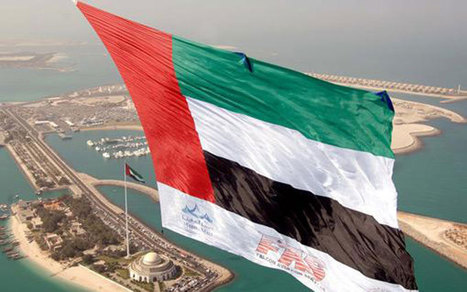
On December 2, 2013, the United Arab Emirates (UAE) celebrates its 42nd National Day and over the years since its founding, it has accomplished, on the local level, high rates of sustainable development and achieved happiness, satisfaction and welfare for its citizens.
At regional and international levels, the UAE occupies a prominent pioneer status on the map of the most progressive, prosperous and stable countries in the world, according to indicators from the Global Competitiveness Report for the World Economic Forum (Davos), for the year 2013-2014.
The great construction phase of the Emirates’ renaissance began like a miracle led by the late Sheikh Zayed bin Sultan Al Nahyan, the founder of its regeneration, with wisdom, patience, professionalism and generosity in giving, dedication and sincerity in work, who dedicated himself and all the means available to achieve progress for the country, and to provide a decent life and pride for its citizens, with sincere cooperation and strong determination from his brothers, the founding pioneers.
That initial phase was launched almost from scratch, and it included the implementation of development programmes and projects affecting all walks of life. It was represented by different infrastructure projects and basic service supplies such as electricity, water, roads, hospitals, schools, airports, ports, transportation, housing construction and many other projects which have supported the march of progress and prosperity across the U.A.E.
President His Highness Sheikh Khalifa bin Zayed Al Nahyan, recalled in his speech on the 41st anniversary of National Day on the 2nd of December 2012, of whom he said, "They laid down the foundations of a state, which we are proud to belonging to and defend."
Sheikh Khalifa re-affirmed his keenness to follow the legacy of the founding fathers, stressing that this approach is based on justice, which itself is the basis of governance, and the rule of law. Human dignity, achieving social justice and providing a decent life are the pillars of society and fundamental rights guaranteed by the constitution and protected by an independent and fair judiciary.
Click headline to read more--
|