 Your new post is loading...
A picture is worth a thousand words.
This graph compares the price history of solar energy to conventional energy sources. The comparison is striking. This is what a disruptive technology looks like. While conventional energy prices remained pretty flat in inflation adjusted terms, the cost of solar is dropping,fast, and is likely to continue doing so as technology and manufacturing processes improve. First, about the graph. I recently published an article, Bitcoin Energy and the Future of Money, which explores the idea of using energy as the basis for money. One of the key concepts in this is to standardize the way energy commodities are measured, to measure them in terms of energy content rather than parochial units of measure (e.g. therms or cubic feet of natural gas, gallons of diesel, kilowatt hours of electricity, and so on). See also www.joulestandard.com for more information about this idea. The graph above charts the inflation adjusted price of different types of energy, not in terms of gallons, but in terms of gigajoules of energy (a gigajoule is one billion Joules, the standard metric unit for energy). Pricing energy commodities in terms of their energy content makes it easier to compare the relative cost of different sources of energy. Click headline to read more and view the graph full screen--
Several years ago, a senior officer in the CIA clandestine service attended a closed-door conference for overseas operatives. Speakers included case officers who were working in the manner Hollywood usually portrays spies — out on their own.
Most CIA officers abroad pose as U.S. diplomats. But those given what’s called non-official cover are known as NOCs, pronounced “knocks,” and they typically pose as business executives. At the forum, the NOCs spoke of their cover jobs, their false identities and measures taken to protect them. Few said much about gathering intelligence.
A colleague passed a caustic note to the senior officer. “Lots of business,” it read. “Little espionage.”
Twelve years after the CIA began a major push to get its operatives out of embassy cubicles and into foreign universities, businesses and other local perches to collect intelligence on terrorists and rogue nations, the effort has been a disappointment, current and former U.S. officials say. Along with other parts of the CIA, the budget of the so-called Global Deployment Initiative, which covers the NOC program, is now being cut.
“It was a colossal flop,” a former senior CIA official said in sentiments echoed by a dozen former colleagues, most of whom spoke on condition of anonymity to discuss a classified program.
Spurred by Congress after the attacks of Sept. 11, 2001, the CIA rushed to put its eyes and ears in gritty corners of the globe where al-Qaida and other adversaries operate or recruit. The risk was considerable: Unlike CIA officers in embassies, NOCs have no diplomatic immunity if caught, and could face imprisonment or worse.
The CIA spent at least $3 billion on the program, and the number of specially trained spies grew from dozens to hundreds. The entire clandestine service is believed to total about 5,000 people.
But because of inexperience, bureaucratic hurdles, lack of language skills and other problems, only a few of the deep cover officers recruited useful intelligence sources, several former officers said.
Click headline to read more--
Like in other areas of electronics, silicon dominates the solar field. But researchers have pinpointed other promising materials that could someday lead to cheaper and/or more efficient solar cells.
Polymers are one of those materials. They are used in organic solar cells, which many say could someday help lower the cost of solar panels and help them compete more effectively with fossil fuel power. They are also physically flexible, which means they could be incorporated into many different types of surfaces to create new types of solar energy collection.
But organic cells have a flaw: They are less efficient at converting light energy into electricity than silicon cells, and their efficiency declines as they operate. Preventing that decline in efficiency is necessary if backers want to make them a cost-effective alternative to silicon cells.
Click headline to read more--
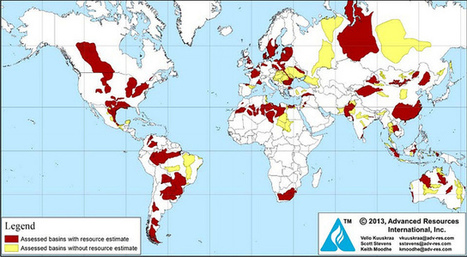
In Mexico, as in many countries, information on amounts of recoverable shale gas reserves is uncertain. In 2011, the U.S. Energy Information Administration placed Mexico in fourth place worldwide. In 2013, we slipped to sixth place. Pemex, the Mexican state petroleum company, estimates the quantity to be even more modest. Regardless of how much gas lies beneath our feet, the consequences of the ambitious battle to frack our country is likely to be felt in many communities.
When it comes to hydrocarbon extraction, the context in Mexico is quite different from that in the U.S. In 1938, Mexican President Lázaro Cárdenas nationalized all oil and gas reserves. For the last few decades, Pemex has been responsible for all fossil fuel extraction in the country. This is central to the government’s income since it represents 32 percent of all federal income. Pemex is so important that it managed to escape the many reforms made to other sectors in Mexico when the country joined the North American Free Trade Agreement (NAFTA) in 1994. However, powerful international energy corporations have been pushing for a share of Mexico’s energy resources over the last decade, and are currently already working with Pemex through service contract arrangements.
But they want much more.
Our current president, Enrique Peña Nieto, is proposing a Constitutional Reform that would allow further private participation. The main pretext for this change is that Pemex cannot develop our unconventional energy resources on its own, so Mexico needs to bring the international oil and gas corporations onboard. This reform is likely to be discussed and voted on over the following days. Although many disagree with the reform, most of the public debate is concentrated on whether or not bringing private companies to the game is in the best interest of the country.
Don’t get me wrong, this is an important debate, but it cannot be the only issue. We need a much fuller public discussion on how are we going to wean ourselves off fossil fuels and deploy truly sustainable energy solutions.
Click headline to read more--
The Dutch Minister of the Interior and Kingdom Relations will question the U.S. Embassy over the purpose of its rooftop antennas, the minister wrote in a letter to the House of Representatives Monday.
Minister Ronald Plasterk will question the embassy after concerns were raised that the antennas can be used to intercept data from mobile phones used in the nearby Ministry of the Interior in The Hague and the Binnenhof, where the houses of parliament are located.
The issue was raised by the Dutch radio show "Met het Oog op Morgen" ("With an Eye on Tomorrow") and led to formal questions in the House on Nov. 18.
While it is technically possible to intercept phone traffic from a nearby building, that does not mean that is actually happening, wrote Plasterk in response to those questions. It is common for embassies to use antennas for their own communication, he added.
Foreign powers are not allowed to conduct intelligence operations on Dutch soil unless they have the necessary approval, said Plasterk. Operations conducted without that permission are "unacceptable," he said. But there is no reason to currently assume that the U.S. does not comply with the agreements, he added.
Nevertheless, Plasterk said he would ask the embassy for clarification, adding that he would brief the House about the outcome.
The Ministry of the Interior could not immediately respond to a request for comment. The U.S. Embassy could not be reached for comment.
Click headline to read more--
As the debate about the type of broadband infrastructure Australia is investing in rolls on, the really big question concerns the extent to which Australians will benefit from this investment. This is not about the type of network, but rather, the way we will use broadband.
This issue is even more critical when you consider new research from the Australian Centre for Broadband Innovation. It found businesses with a web presence that invested more in technology were ultimately more profitable than their unconnected competitors.
More generally, it found people that had a greater and more diverse use of digital services tended to have a higher level of well-being, timelier access to healthcare, increased community engagement and an improved capacity to grow their knowledge and skills. And yet one in five adult Australians are still not using the internet.
Determining the long-term impact of broadband uptake is difficult to do. As with the introduction of other general technologies (like electricity) that enable many and varied uses, it is difficult to accurately determine the benefits.
The impact of next generation broadband is influenced by a complex interplay between people, organisations, markets and social institutions. It requires understanding the behaviour and capabilities of people and organisations to adopt and gain benefit from digital services. These capabilities will largely determine the overall level benefit for Australia in terms of growing businesses, creating new jobs and improving economic productivity.
Click headline to read more--
Industrial robots have proven useful in reducing production costs in large factories, with major enterprises enlisting their services to execute repetitive tasks. The Factory-in-a-Day project, which kicked off in October, aims to also make robotic technology beneficial to small and medium enterprises (SMEs), by developing adaptable robots that can be integrated with workplace systems within 24 hours.
Until now, SMEs have not been well suited to the benefits of robotic technology as, compared to enterprises of larger size, they rely on a more agile workforce made up of few large machines and many humans completing simple repetitive tasks. Common short-duration batch operations in SMEs, such as packing or checking the quality of seasonal fruit, only have small production periods. As developing and training a robot to execute these tasks can take weeks or even months, the expense generally outweighs the money saved in labor costs.
The research team behind the Factory-in-a-Day project aims to bridge this gap by developing a suite of robots with predefined skills – much like a smartphone comes with applications for different uses. If all goes to plan, this will culminate in a kind of temp agency for robots, where the machines can be leased, are adaptable and can be installed and ready to work within 24 hours.
In order to achieve same-day integration, the work process will first be analyzed by a system integrator to determine which roles can be robotized. Hardware components specific to the customer’s requirements are then 3D-printed and installed on the grippers of the robot. The robot is then taken to the factory and connected to the machinery software and taught how to perform necessary tasks, such as how to grasp an object.
Click headline to read more--
Local lawmakers hope Massachusetts can be a bellwether by banning hydraulic fracturing -- or fracking -- for natural gas.
A bill making its way through the Legislature would impose a 10-year moratorium on the technique and make Massachusetts the second state after Vermont to do so.
Though the Berkshires probably contain few, if any, shale gas deposits, the U.S. Geological Survey identified deposits in Pioneer Valley last December.
"It's a statement bill," said state Rep. William "Smitty" Pignatelli, D-Lenox. "No fracking way."
State Rep. Paul Mark, D-Peru, co-sponsored the legislation, which cleared the Legislature's Joint Committee on Environment and Natural Resources on Wednesday, Nov. 27.
The issue hits close to home for Mark's eastern constituency -- towns like Colrain, Leyden and Bernardston.
Concern among residents of these and other Pioneer Valley towns grew parallel with the U.S. Geological Survey's findings, he said.
Click headline to read more--
According to the online portal of Bisnis Indonesia, the country’s dominant telecoms provider PT Telkom Indonesia plans to construct and launch a new satellite in early 2014 – its fourth communications orbiter – and to that end, will soon issue a request for proposal (RFP) to manufacturers.
The group’s director of network and solutions, Rizkan Chandra, says that the satellite will be a replacement for Telkom-3 which failed to reach its orbit position in August this year. Costing USD185 million, Telkom-3 was launched in Kazakhstan to replace Telkom-2, whose own orbit has expired. Telkom-2 had been in service since November 2005.
The wireless world is evolving rapidly in response to the explosion of intelligent devices, applications and data, and the IEEE 802.11ad standard, commonly known as WiGig, is poised to help.
WiGig is a step change from the 802.11 evolution we have witnessed over the last 10 years, adding a new frequency band, 60 GHz, to existing products: 802.11n operates in the 2.4-GHz and 5-GHz bands, while newer 802.11ac products operate in the 5-GHz band.
By enabling the emergence of tri-band products -- such as 802.11n/ac + 802.11ad -- WiGig opens the door to exciting applications and makes it more possible for all intelligent devices to be connected through a high speed Wi-Fi network.
But, we get ahead of ourselves. First, let’s see what WiGig is all about.
Click headline to read more--
The undersigned companies believe that it is time for the world’s governments to address the practices and laws regulating government surveillance of individuals and access to their information.
While the undersigned companies understand that governments need to take action to protect their citizens’ safety and security, we strongly believe that current laws and practices need to be reformed.
Consistent with established global norms of free expression and privacy and with the goals of ensuring that government law enforcement and intelligence efforts are rule-bound, narrowly tailored, transparent, and subject to oversight, we hereby call on governments to endorse the following principles and enact reforms that would put these principles into action.
Click headline to read more--
Baidu, China’s biggest search engine, stopped accepting Bitcoins after the nation’s central bank barred financial institutions from handling transactions, triggering a drop in the virtual currency.
Bitcoin fell more than 20 percent and was quoted at 4,250 yuan ($863) Friday on BTC China, the most active online exchange where it’s traded. It lost 30 percent to $575 on Bitstamp, another web platform where the digital money is exchanged for dollars and other currencies.
A Baidu website-hosting venture started accepting the digital money on Oct. 14 as Bitcoins gained popularity in China, fueling a global rally. Prices topped $1,000 last week, compared with about $138 two months ago on Bitstamp. The People’s Bank of China said Bitcoin isn’t a currency with “real meaning” and can’t be accorded the same legal status.
“Baidu’s website-acceleration platform decided to suspend Bitcoin payment acceptance from Friday as recent large fluctuations in Bitcoin’s value makes it unable to safeguard users’ interests,” the company said in a statement on its website Saturday.
The decision follows the Chinese government’s announcement, according to the Beijing-based company.
China’s central bank said the public is free to participate in Internet transactions provided they take on the risk themselves. The ban on financial institutions handling Bitcoins signals concerns that the digital currency may threaten capital controls and financial stability. The country became the world’s biggest Bitcoin trader this year, according to BTC China.
Bitcoin’s rally was also blunted after Alan Greenspan, the former chairman of the U.S. Federal Reserve, said Bitcoin prices are unsustainably high, calling the gain in prices a “bubble.”
Click headline to read more--
The call went out on Twitter: "For insane profits come and join the pump."
It was an invitation to a penny stock-style pump-and-dump scheme — only this one involved Bitcoin, the soaring, slightly scary virtual currency that has beckoned and bewildered people around the world.
While such bid 'em up, sell 'em off scams are shut down in the financial markets all the time, this one and other frauds involving digital money have gone unchecked. The reason: Government authorities do not agree on which laws apply to Bitcoin — or even on what Bitcoin is.
The person behind the recent scheme, a trader known on Twitter as Fontas, said in a secure Internet chat that he operated with little fear of a crackdown.
"For now, the lack of regulations allows everything to happen," Fontas said in the chat, where he verified his control of the Twitter account, which has thousands of followers, but did not give his identity. He added that Bitcoin and its users would benefit when someone stepped in to police this financial wild west, and that he would stop his schemes when they do.
Chinese authorities drew attention to the issue Thursday when they announced that they were barring Chinese banks from making Bitcoin transactions. The same day, the Bank of France issued its own warning about the potential risks. The news sent the price of Bitcoin tumbling, but it quickly bounced back to near its all-time high of around $1,200.
Click headline to read more--
|
Broadband access and coverage may have increased across the country, but businesses aren’t investing in the required skills to facilitate innovation, technology leaders heard today.
The launch of the Australian Centre for Broadband Innovation’s broadband impact and challenges report saw a roundtable of experts discuss how Australian businesses needed the “education of desire”, to educate people to want to use technology more effectively.
Colin Griffith, the director of the Centre, told the gathering that for large corporations, “the rough rule of thumb is for every $1 invested in IT infrastructure, an equivalent $1 needs to be spent in terms of change management in order to get effective use of technology”.
“We can treat this more generally to see if we need a comparable level of investment in innovation and training, which could be provided by private firms, not-for-profits or by government agencies,” Griffith said.
Some training had taken place in areas that were about to receive the NBN, the research found. But Griffith said the scale and reach of existing schemes isn’t enough. “While they may connect to hundreds of individuals, we need to connect to thousands if not 10,000.”
Click headline to read more--
An area Britain’s telecom giant BT pronounced “not commercially viable” for a fiber broadband upgrade sold out every available connection after residents successfully campaigned BT to change its mind.
The unassuming ”Cabinet 82″ in Hunslet (Middleton, north of Manchester, near South Leeds) was left off the telecom company’s fiber upgrade list because the company was convinced residents were satisfied with the DSL speeds they were getting and it wouldn’t be worth the cost to upgrade service.
Nearly 300 residents had complained about slow Internet speeds and requested a fiber upgrade for “Cabinet 82″ since 2012, initially to no avail. After relentless complaints from local residents, BT changed its mind.
A newly upgraded cabinet with fiber to the neighborhood service was inaugurated earlier today and within hours, every available connection was sold, proving BT’s assumptions about customer demand for faster speeds wrong.
Click headline to read more--
With the latest round of TPP negotiations ongoing, the folks over at Huffington Post got a hold of two leaked documentsincluding a very useful spreadsheet highlighting all of the positions and areas of disagreement concerning every chapter of the TPP. What's quite revealing (and very good to see, though we'll see how it holds up) is that on many of the worst proposals, it appears that the US is very isolated, with either no one agreeing or maybe just one or two other countries agreeing.
Of course, the US is obviously the most powerful force in these negotiations, so never underestimate the ability of the USTR to pressure countries to agree to these harmful policies -- but so far, it appears that other governments have been willing to push back on the US's extreme view of corporate sovereignty ("investor dispute resolution settlements") which would allow companies to ignore the laws of countries and sue those countries for "lost profits" when they disagree with the legal regime (say, for example, if a patent they wanted isn't granted). These programs have been a disaster in current agreements, and hopefully it appears that other countries now recognize this.
It also appears that the US is somewhat isolated in its intellectual property proposals. Only Australia and Peru agree with the US's "patentability criteria." And no one at all agrees with the US's plans for extra protection for patents or to extend protections to new uses (such as plants, animals and surgical procedures.
The US is also the only one supporting programs favorable to pharmaceutical companies around data protection. On the copyright side, it appears that everyone disagrees with the US's view of parallel importation (which, if still the same as it was from the last leaked version, disagrees with the US Supreme Court's own ruling on parallel importation. Only the US wants "establishment of criminal offenses for unintentional infringements of copyright, related rights and trademarks."
Click headline to read more--
Global intellectual property (IP) legislation continues to be negotiated behind closed doors this week in Singapore where discussions are underway on a secretive international trade treaty that could have far-reaching effects on Internet services, copyright law and civil liberties.
The Trans-Pacific Partnership (TPP) agreement aims to enhance trade and investments, promote innovation and help economic growth among 12 trans-Pacific countries: the U.S., Canada, Japan, Mexico, New Zealand, Australia, Brunei, Chile, Malaysia, Peru, Singapore and Vietnam.
The negotiations, however, are covered in secrecy. Anyone not closely connected to the talks is being kept in the dark about the exact proposals being discussed. The Australian government, for instance, refused to give the Senate access to the secret text of the draft treaty being negotiated in a final round of talks in Singapore, the Sydney Morning Herald reported Monday. The results of the negotiations will only be made public after the treaty has been signed, the Australian government said, according to the paper.
But texts of purported drafts of the treaty have been leaked to the public, most recently on Monday by Wikileaks, which published two documents said to show the state of negotiations after talks held in Salt Lake City from Nov. 19 to 24.
Click headline to read more--
Kacific Broadband Satellites today announced plans to launch a Ka Band High Throughput Satellite (HTS) to provide enhanced broadband to 40 million people in the Pacific including the Pacific islands, New Zealand, eastern Indonesia and Papua New Guinea.
According to the World Bank, the Pacific is significantly underserved in terms of broadband access. Estimated total potential demand for bandwidth by Pacific island states is 44 Gbps. Today just 20 percent, or less than 10 Gbps, is supplied. The Pacific has the highest internet pricing and the highest Skype call prices on earth. Substandard, over-contended, 1 Mbps broadband services can cost more than US$700 per month in some territories. Kacific will sell wholesale bandwidth and anticipates that telcos and ISPs will offer it to end users at speeds of up to 10 Mbps and at price points as low as 5 percent of current costs. The service will be provided through small terminals costing just a few hundred dollars.
“This will be the world’s most geographically dispersed broadband satellite footprint,” says Kacific CEO Christian Patouraux. “Our aim is to create a high quality broadband network offering direct internet access to around 99 percent of the government agencies, institutions, businesses and people within the total footprint area.”
Kacific expects to commission its launch vehicle and payload in 2014 and to provide broadband services to the region by late 2016.
Click headline to read more--
A Microsoft storage patent that was used to get a sales ban on products from Google-owned Motorola Mobility in Germany has been invalidated by the German Federal Patent Court.
Microsoft'sA FAT (File Allocation Table) patent, which concerns a "common name space for long and short filenames" was invalidated on Thursday, a spokeswoman for the Federal Patent Court said in an email Friday. She could not give the exact reasons for the court's decision before the written judicial decision is released, which will take a few weeks.
The File Allocation Table is a file system that traditionally only supports short file names in a rigid format, which makes it hard to give media files understandable and searchable names. Because that can be frustrating, Microsoft wanted to provide a system that supports a common name space for both long and short file names, so people can easily label and find their files, according to the patent in question.
In July 2012, the Regional Court of Mannheim granted Microsoft an injunction against several Motorola phones based on the same patent. However, before the injunction could be enforced, Microsoft needed to take certain steps such as posting a bond, in case the injunction was overturned on appeal. While Microsoft said at the time it wanted the injunction to be enforced, it is unclear whether this actually happened.
The ban was for phones including the Motorla Droid Razr, the Droid Razr Maxx and the Motorola Atrix.
Click headline to read more--
Even though the de facto moratorium on high-volume horizontal hydraulic fracturing in New York State continues, the disposal of waste from hydraulic fracturing (fracking) operations is occurring in New York now and deserves our attention. The extraction of natural gas using fracking produces large amounts of liquid and solid waste that can contain a number of harmful pollutants, including salts (sometimes expressed as total dissolved solids or TDS); chemical additives, which may include ethylene glycol, naphthalene, and sulfuric acid; metals; organic compounds; and other contaminants. Fracking waste from extraction activities in the Marcellus Shale can also contain naturally-occurring radioactive materials (NORMs)such as radium-226 and radium-228.
In July 2013, Riverkeeper wrote to the New York State Department of Environmental Conservation (NYSDEC) and requested information about one method of handling fracking waste that New York is currently allowing: the use of production brine from conventional, low-volume fracking on New York roads for de-icing, dust control, and road stabilization. Specifically, we asked the agency to provide information regarding its approvals – known as Beneficial Use Determinations or BUDs – of the use of natural gas production brine for road spreading from June 2011 to July 2013.
In its response, NYSDEC indicated that its records did not differentiate between brine from different well types: “The records may reflect brine originating from oil extraction wells as well as natural gas extraction wells.” As a result, even though we only requested information regarding natural gas production brine BUDs, we received BUDs from other sources as well. In all we received copies of 30 BUDs, 14 of which were clearly for use of natural gas brine for road spreading purpose. Of the 14 natural gas brine BUDs, 11 appear to authorize road spreading of brine from natural gas storage facilities, while 3 authorize road spreading of production brine from natural gas wells. Of the remaining BUDs, 1 indicated that the source of the brine was oil wells, while the source of brine for the balance was unspecified.
The results were concerning the natural gas brine BUDs indicated that the road spreading of natural gas production brine has been approved in 13 municipalities in 4 western New York counties: Wyoming, Erie, Cattaraugus, and Seneca. Road spreading of natural gas brine from natural gas storage has been approved in 10 municipalities in 2 western New York counties: Allegany and Steuben.
Click headline to read more--
In northeast Maastricht, new offices, residential dwellings and sports facilities are going up on the fringes of the park surrounding Geusselt Castle, which lends the area its name. Masterminded by Slangen + Koenis, the swimming pool complex is typically embellished with a tiled façade from Mosa and is at once the highlight and the heart of the district’s new sports complex.
The Geusseltbad is part of this ambitious modernization scheme. The architects at Slangen + Koenis increasingly play the part of general contractor for planning assignments of this kind. As a result, they enjoy a growing influence when it comes to implementing sustainable concepts and selecting materials. Accordingly, the highest energy-saving standards duly came to bear in the planning of the aquatic complex, an ensemble spanning five different pools and with a GSA of 1,400 square meters, which obviously uses substantial amounts of energy. However, thanks to triple glazing, solar panels and geothermal energy, the power consumption could be curbed to one third of what one would expect for a building of this size.
In addition, the architects also included the cradle-to-cradle principle as a fundamental design aspect. This principle not only specifies energy-saving standards, but it also involves a full product cycle at the end of which any materials used can be recycled and applied to a different purpose (hence the metaphor of the cradle.) So the architects choose Mosa anti-slip tiles for the floors, and Mosa tiles in the wet areas, where they feature a refreshing palette of colours. Tiles of various dimensions in beige and brown shades were used for the walls in the corridors and the dining area, emphasising the linear structure of the Geusseltbad. One hundred percent C2C materials and pigments were used in producing the tiles; in regard to sourcing, both the clay and the pigments are from a known origin.
Click headline to read more and view pix--
The U.S. is collecting nearly 5 billion records a day on the location of cellphones around the world to feed a large database of the location of "at least hundreds of millions of devices," according to a newspaper report.
Although the program does not target Americans' location data by design, the National Security Agency collects "incidentally" a substantial amount of information on the location of domestic cellphones, according to a report Wednesday in The Washington Post, which cited documents provided by former NSA contractor Edward Snowden and interviews with U.S. intelligence officials.
The revelation tops other disclosures by Snowden through news reports, including claims that the NSA has access to phone records of U.S. citizens and the ability to access content on the servers of Internet companies in real time, and also taps into communications links that connect Yahoo and Google data centers around the world.
The U.S. government has admitted to some of the programs, including the bulk collection of phone metadata. It has said that its analysis tools require the collection of data in bulk.
The Washington Post quoted a senior collection manager, speaking on condition of anonymity, who said the NSA was getting vast volumes of location data by tapping into cables that connect mobile networks globally and that serve U.S. cellphones as well as foreign ones, and from data often collected from the tens of millions of Americans who travel abroad with their cellphones every year.
"It is staggering that a location-tracking program on this scale could be implemented without any public debate, particularly given the substantial number of Americans having their movements recorded by the government," said Catherine Crump, staff attorney with the American Civil Liberties Union's Speech, Privacy & Technology Project, in a statement.
The location data can reveal a lot on people's political, professional, and intimate relationships, and flouts international obligations to respect the privacy of foreigners and Americans alike, Crump added.
Click headline to read more--
There are currently several million smartphones certified to run on a "HotSpot 2.0" Wi-Fi network. In November, about 400 of them finally got a chance to do so -- in Beijing, China.
Attendees at a carrier Wi-Fi conference found that their smartphones, from different “home” carriers, automatically authenticated with and connected securely to a Cisco Wi-Fi network hosted by China Mobile.
The next big public demonstration of what’s confusingly referred to as both Hotspot 2.0 and Next Generation Hotspot (NGH) will be in February 2014: an estimated 75,000 attendees at the next Mobile World Congress in Barcelona will be able to take part.
But don’t hold your breath waiting for a HotSpot 2.0 near you, unless you are visiting Boingo’s network at O’Hare airport in Chicago or you are a Towerstream user in New York City, the only two, still limited deployments in the U.S. While the technical details have been sorted out, including a Wi-Fi Alliance equipment certification program, networking companies, carriers, and mobile operators are still haggling over Wi-Fi roaming agreements and puzzling over how, or whether, to make money from it.
Click headline to read more--
Thank you for inviting me to share in this important event on the Qatar National Broadband Plan.
We’re here to discuss the choices Qatar should make as to its broadband ecosystem. I thought I’d start by noting how different this is from many other policy debates.
Often, whatever the topic, both sides express hypothetical and apocalyptic visions about what will happen if we walk a path different than the one they advocate. Such debates remind me of comedic advice once offered new college graduates: “Mankind is facing a crossroad. One road leads to despair and utter hopelessness. The other leads to total extinction. I hope you will have the wisdom to choose correctly.”
That is not the choice when it comes to broadband.
By its nature, broadband should provide us all optimism. As with every technological change, there are challenges, but broadband offers us all an avenue to share the most important resource on the planet and one that—as noted at the beginning of the Qatar plan—“is our future because unlike natural resources, it cannot be exhausted.” That resource is knowledge.
Knowledge, however, is only valuable to the extent it is exchanged effectively. Otherwise, it has the same value as the oil that has fueled your growth had 12 decades ago.
We are really here to celebrate the opportunity that the technology revolutions of the last two decades in computing, storage, and broadband have created in providing a platform for exchanging information in ways that can positively transform every part of the economy and everything we do.
Broadband is also different from a lot of other policy debates in that we don’t have to debate hypothetical endgames.
In fact, we know the endgame.
It is ubiquitous, constant Internet access, with abundant bandwidth, connecting all manner of devices, with the final connection being over some manner of spectrum but with the traffic traveling most of its journey over a wired network. As we progress towards that endgame, we will do kinds of things over broadband--that commons of collaboration--that we currently do but in far less efficient ways.
The debate is not about that endgame. It is about how to get there.
What I would like to do today is talk about how National Broadband Plans map out a path for countries to reach that endgame, and how some Plans do it more successfully than other. I also want to discuss one big question affecting the path by which we reach that endgame. I will conclude with a few comments and ideas for Qatar as it moves forward with its long-term goal of establishing itself as a leader in the world with that critical, sustainable resource of information.
First, let’s look at National Broadband Plans.
All National Broadband Plans rely on the same four foundation stones to build a thriving broadband ecosystem.
Click headline to read more--
When it comes to Smartphones and their applications to everyday life as well as regional economic development and sustainability applied through some form or platform of intelligent overlays of an urban “Smart Grid”, the book has yet to be written. Too many ideas are still evolving and I would say that all the rules have yet to be tested out and proven, let alone accepted and written.
The revelations brought forth by the book can be easily disputed because we are not at a point where everything that should be developed, has been developed (and applied). In fact, with technology, applications and user creativity running at such an accelerated pace, we may never reach that final point of saying, “Here are the four principles of designing and implementing Smart Cities” or “This is the cookie-cutter approach to Smart Cities”.
As I mentioned in my comment after the article:
It is too early to have any concrete conclusions on how all the elements will be put together for “smart cities” and to make any conclusive judgments at this point is admitting a lack of vision or just a lack of understanding the foundations of what smart buildings and intelligent infrastructure have already incorporated.
There needs to be a work that can be read by all to get everyone on the same page at least from a basic understanding of how these elements are coming together. (Intelligent Buildings go back to the mid-1980s and concepts have been introduced, implemented and modified both in single venue and multi-venue (intelligent business campuses and/or industrial parks) for the last three decades.
Real estate, infrastructure, technology, and regional economic development are all converging and we are still in the early stages where there are no hard-and-fast rules-of-thumb or enough years of data to make hard conclusions on what works and what doesn’t.
Click headline to read more--
|






















Notice the rapid fall in solar costs up until around 1988, and imagine how much better things would be now if we had continued on that path, which we finally resumed 2 decades later.