By 2030, nearly half the world's young people will be African. Yet for decades, the continent's learning crisis was treated with systems unfit for reality on the ground. Social entrepreneur Rapelang Rabana shows how homegrown leadership and technology designed for African classrooms can deliver foundational skills to millions of children — and shape a new future of education across the continent.
Ideas from around the world to improve your classes....brought to you courtesy of the Rondebosch Boys' High School Library (If you would like to receive a weekly newsletter of the latest items in this Scoop just mail me at library@rondebosch.com)
Tests show a rapid decline in reading skills among fifteen-year-olds around the world, from Germany to China. Experts Maryanne Wolf and Andreas Schleicher tell us what they think is behind this worrying trend, what it means for society, and how we can bring back ‘deep reading’.
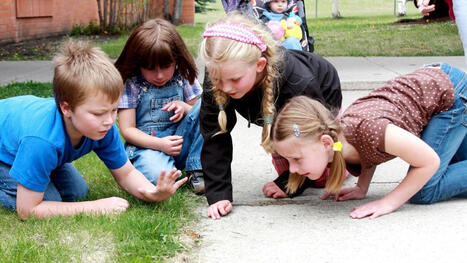
The best play environments offer freedom and novelty that kids can explore as much or as little as they like. But traditional playgrounds don’t offer much flexibility— swings, slides, and climbing frames are hardly novel structures. So, how do we create better play spaces? Explore the cognitive benefits of risky play and how we can design playgrounds that promote fun, agency, and development.
Before the last few centuries, children around the world spent most of their time learning through play: observing and mimicking adults, roaming their surroundings, and sharing what they learned with friends and family. Many communities and educators still believe play is one of the best teachers we have. Explore the benefits and challenges of using self-directed play-based learning in schools.- they-them.
It began with a fear familiar to millions of young Indians: if the examinations that determine their future cannot be trusted, what can?
Weeks later, tens of thousands of young men and women tried to march on India's parliament. Police responded with tear gas and baton charges. Thousands more have returned to the streets in the days since.
The Cockroach Janta Party (CJP), a youth-led movement, which started out as a meme on social media, born out of anger over repeated examination paper leaks, quickly became India's biggest student mobilisation in years.
The right getting-to-know-you activities can help students move beyond introductions and make connection feel natural—not forced.
Building a strong classroom community is an essential task at the start of a new school year, no matter the grade level, and it starts with helping students feel comfortable enough to be themselves. But traditional icebreakers don't always make it easy. In fact, the word “icebreaker” makes many students (and teachers!) cringe—or immediately want to flee the scene. Questions like "Tell us a fun fact about yourself" can unintentionally create pressure, especially for students who are shy, anxious, or worried about saying the "right" thing.
People learn more when they process what they're learning, not just receive information. These low-lift PD structures create those processing opportunities.
The coronavirus pandemic is the largest disruption of global education systems in history. When the pandemic first hit, around one-and-a-half billion students around the world were sent home as schools closed their doors. Some have since re-opened. But class isn't in session for half of the world's school children. The lucky ones were able to pursue their studies online. But for many, even in developed countries, that's not an option. The world was already struggling to come to grips with educational inequality. Now the United Nations warns the COVID 19 crisis is making it worse, disproportionately affecting the most vulnerable and threatening to wipe out decades of progress for this generation and possibly beyond.
Parents and teachers keep asking: When can school go back to normal? Few people are asking: Should we return to normal? With more than half of Texas third graders unable to read on grade level, it’s time to change what’s normal.
During times of crisis, showing empathy for your staff and the broader world will help you pull together as a team and feel capable of moving through this challenging time together. Empathy helps you relate to one another on a personal level, showing you care deeply about each other as human beings. Thus, successfully navigating a crisis together can dramatically enhance trust and unity.
Published on May 6, 2018 2018 Washington Teacher of the Year Mandy Manning recalls that as a first-year teacher, she felt that she had no idea what she was doing. Although she was unprepared, “it was a wonderful year,” she says. Her advice to any new teacher is to simply trust your instincts. She believes the key is to know your students, be compassionate, accept students for who they are, and to “walk beside them as they learn and grow.” By mastering these skills above all, she says, everything else will work out too.
While some Utah educators have resorted to using devices to curtail distractions and prevent cheating, others see benefits to taking a more nuanced approach.
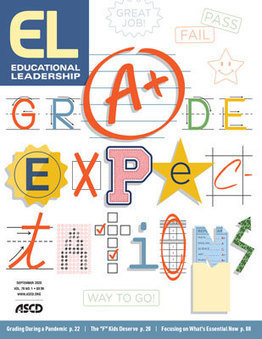
Work-life balance is a struggle for both beginning and veteran teachers, and grading seems to be one of the biggest barriers to overcome in maintaining this balance. These ideas may help you give effective and efficient feedback on student work across the disciplines.
By 2030, nearly half the world's young people will be African. Yet for decades, the continent's learning crisis was treated with systems unfit for reality on the ground. Social entrepreneur Rapelang Rabana shows how homegrown leadership and technology designed for African classrooms can deliver foundational skills to millions of children — and shape a new future of education across the continent.
A new generation of influencers is promoting extreme thinness to millions online. Dateline investigates the growing trend and meets the families taking on Big Tech.
By providing every student with an opportunity to actively remember yesterday’s lesson, teachers can set the stage for today’s success.
Hopping from subject to subject, navigating hallway chaos, chattering with friends—high school can be a frenzy of activity. So in classrooms where lessons span multiple days, students often benefit from a quick opportunity to reconnect with previous learning before moving forward. At Delta High School in Delta, Colorado, ninth-grade teacher Alicia Bechard begins class with a collaborative routine designed to help students recall key ideas from the day before and focus their attention in preparation for the lesson ahead.
Eric “Buzz” Rubenstein argues that the next generation of AI tools shouldn’t police student writing—they should illuminate the thinking behind it, giving teachers a clearer understanding of how students learn.
35 killed after Russian attack on Ukrainian military base, Ukrainian refugees begin to spread into neighboring countries, and new wrestling champion breaking down barriers.
I asked my son, Ben, straight up: "Did you turn these stories in to Ms. J or Ms. C?" No, he didn't. "Did either of them see them?" Yes, they saw everybody's as the class worked on them. "Did they comment on them or say anything to you about them?" Well, sometimes. At that moment, something profound occurred to me. This teacher and her aide knew exactly what they were doing, but I was deeply stuck in a paradigm—a dangerous paradigm. One that we teachers have foisted on students for many decades. It is the paradigm that every bit of work produced by students must be graded. It has produced a mindset on the parts of students that anything not being graded is not worth doing, or at the very least, not worth doing well.
Despite all this, I’ll be the first to say that for most students, distance learning can’t replace a great in-person experience. Pure distance-learning is suboptimal, but we have to do it out of necessity because of the pandemic. I have been working with teachers over the last several months and together we have realized that lesson plans designed for in-person classes don’t work in this coronavirus world.
Value everyone's journey "Building a positive culture starts with valuing everyone’s journey within that culture. The more we recognize the great work happening in our spaces, acknowledge to the person that it’s great work, and extend the conversation about that work to someone who wasn’t there so they know that it is happening, the better chance we have to provide an environment where everyone can flourish.
At the beginning of the 21st century, about 8% of students reported being bullied. Currently it is not uncommon for 25% of students to report being bullied, and as many as 50% of students are cyber-bullied. It is critically important to address school violence for many reasons. First, bullying can result in a lifetime of emotional scars. Second, violent schools are low-performing schools. And perhaps most importantly, violent schools are crucibles for future violence, including rampage shootings.
How do we reconcile the research-based benefits of cooperative learning with the potential detriment to our introverted students? By allowing students to choose their group partners, encouraging individual and peer accountability in groups, and intentionally empowering all students, we can teach effective collaboration for all of our students.
To get content containing either thought or leadership enter:
To get content containing both thought and leadership enter:
To get content containing the expression thought leadership enter:
You can enter several keywords and you can refine them whenever you want. Our suggestion engine uses more signals but entering a few keywords here will rapidly give you great content to curate.


 Your new post is loading...