Ideas from around the world to improve your classes....brought to you courtesy of the Rondebosch Boys' High School Library (If you would like to receive a weekly newsletter of the latest items in this Scoop just mail me at library@rondebosch.com)
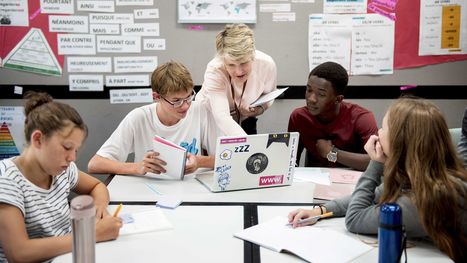
Even the best lesson plans do not survive unchanged on first contact with students. Successful instruction plans for these differentiation needs—and highly effective instruction also involves students’ readiness, interests, and learning preferences. Learners evaluate a lesson based on their readiness, their sense that it’s something they can do. Does the learning experience provide sufficient supports to help them develop the skills to succeed?
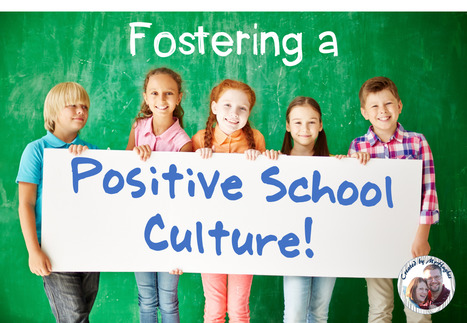
Research shows that developing a positive school culture can support students' success and resilience in school. According to the National School Climate Council, "Empirical research has ... shown that when school members feel safe, valued, cared for, engaged and respected, learning measurably increases, and staff satisfaction and retention are enhanced." Positive climates do not just happen, of course. They arise from the practices and rituals implemented and encouraged within a school.
Schools are incessantly busy places. Those in charge must make complex decisions at wearying speed, knowing that those decisions bear strongly on the welfare of others, and yet finding sparse opportunity to reflect on their actions in the press of the day. School leaders seek to do well for the adults whose work they guide. Teachers seek to do well for the young people they teach. And yet, there are few sustained conversations in many schools about a compass we agree to use that points us to "due north"—to the direction most likely to lead us to a good place.
Memory is inextricable from learning; there's little sense in teaching students something new if they can't recall it later. Ensuring that the knowledge teachers impart is appropriately stored in the brain and easily retrieved when necessary is a vital component of instruction. In How to Teach So Students Remember, author Marilee Sprenger provides you with a proven, research-based, easy-to-follow framework for doing just that.
My classroom is my happy place, and I truly love my job. This wasn’t always the case for me. Years ago, I had become so focused on curriculum and objectives that I had lost sight of the most important element of my professional existence: teenagers. A few changes in my behavior helped improve my relationship with the students, which led me to my current perspective.
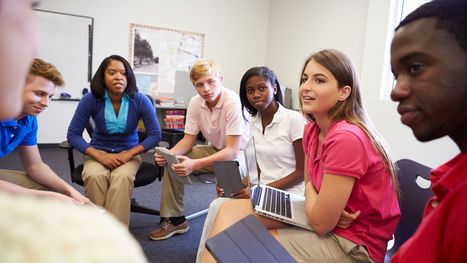
1. Make a case: At the beginning of class, share a single, open-ended question about the text. It should be an essential question—one that will elicit varied or even polarized responses. Have multiple copies of documents related to that question and multiple dictionaries on a table for students to use—I recommend saying nothing about these and seeing what happens. Instruct your students to work together to consider the question from multiple angles before ultimately voting to come up with an answer the majority feels good about.
How should teachers — both K-12 and college — deal with the use of computers and phones by students in class? On the one hand, those sleek little supercomputers promise to connect us to all human knowledge. On the other hand, they are also scientifically designed by some of the world’s top geniuses to feel as compelling as oxygen. So where does that leave teachers? Should you ban these devices in the classroom? Let students go whole hog? Or is there a happy medium?
Published on Oct 24, 2017 College student Maya had the eye-opening opportunity to take a class through Gateways, an education program that enables incarcerated youth to learn alongside college students. Once you’re put into the system, it’s hard to get the public to see you as anything other than a criminal. In this episode of Gateways, JJ urges you to look at him not as a statistic but as a college student motivated to do good.
The rapid pace of the school day is tiring and tiredness can lead to stress. Labelling these children as just ‘introverts’ or ‘extroverts’ is unhelpful, but it is important we recognise their particular difficulties and plan appropriately so they can achieve success. It’s not about encouraging them to match the level of sociability presented by the loudest, but it is about noticing them and giving them a calm chance to shine.
Published on Mar 23, 2017 A learning organization encourages personal mastery and cultivates open feedback to see problems and opportunities on all levels. Some argue that learning organizations attract and retain more talents. Others say that there is a competitive advantage for an organization whose people learn faster than the people of other organizations. Here are 6 characteristics most have in common
Published on Nov 1, 2016 Arts integration is more than an afterthought. You can use the arts to both meet your arts standards and deepen academic learning.
Published on Nov 12, 2015 As kids are starting school at an earlier age and school days are becoming longer, play time is becoming more and more important. Why is recess necessary?
This October, for Bullying Prevention Month, empower kids by showing them how one person can make a difference when it comes to bullying. It takes courage to move from being a bystander, who is merely observing cruel behavior, to being an upstander, who speaks up against it. I've gathered some resources for you to help teach the kids in your life to be upstanders instead of bystanders, starting by simply choosing kindness and inclusion.
Published on Mar 28, 2018 When students at London’s Charlton Manor Primary School learn about history, they use chocolate. In math class, they weigh and measure fruit smoothies. For a lesson in shapes and sizes, they utilize bananas and grapes. Taking inspiration from Jamie Oliver, head teacher Timothy Baker began incorporating food into all subjects at the primary school. By making food an integral part of the curriculum, Baker hopes to teach children the importance of valuing food and cultivating healthy eating habits.
Published on Mar 22, 2018 A leading neuroscientist and author of "The Teenage Brain", explains how brain development is at least partly to blame for your moody and impulsive kids.
As I contemplated the writing assignment for our required reading of The Odyssey, I was filled with dread at the thought of reading 120 uninspired essays in which my ninth graders would dutifully recount details from the epic. Essay grading is tedious work, and I’m convinced that the hours we spend grading papers are the least effective way to positively impact students.
So I considered a framing question from the first edition of Grant Wiggins and Jay McTighe’s Understanding by Design: “To what extent does the idea, topic, or process represent a ‘big idea’ having enduring value beyond the classroom?”
Despite the many recent sexual abuse cases reported at schools, they are where young people were likely to speak more freely about their abuse – at least more comfortably than at home, a recent study showed. In the UCT study more than one in three young people interviewed in schools had experienced some form of sexual abuse at some point in their lives.
Bergrivier has, like many other schools in the country, shown that there are more important things in life than language. To give a child access to education comes first. This is Bergrivier’s contribution to democracy – as is the case with many other “overcrowded” schools in our country. It is my wife and many other hard-working teachers’ modest attempt to help build a new South Africa.
Published on Feb 11, 2018 At a Varnett charter school in Houston, Eddie Brown is teaching sixth graders about different forms of energy. The kids love him in the classroom - and so do audiences across the country, who flock to his "Teacher's Only" comedy tour. Steve Hartman reports.
“I like the concept of ‘yes, and’ when you are trying to figure out the push-pull between those opposite poles,” he says. “Yes, we are going to leverage social media as a modern communication tool to inform the public, engage parents and allow students to dialog. We also are going to protect students’ privacy.”
Published on Oct 11, 2017 Today, (October 11th ) marks the annual United Nations Day of the Girl Child. Its purpose is to highlight the continuing challenges girls face all over the world. One of the biggest is getting an education. VOA's Kevin Enochs looks at one pop-up school in Pakistan that's trying to help.
Published on May 29, 2017 Good children don’t cause problems; they always do what others expect. They seem to be on track. But there are real problems with people who never have a chance to be a little bad
Published on Jan 18, 2017 Mind the Gap takes a hard look at the skills that school systems are developing in graduates, and how those skills no longer align with the expectations of today’s employers. The short film also takes a deeper look at what skills are in fact the most useful in today’s economy, and skills that schools should focus on the most going forward.
"I also worry that tying external rewards and punishments to character assessment will create incentives for cheating. Policy makers who assume that giving educators and students more reasons to care about character can be only a good thing should take heed of research suggesting that extrinsic motivation can, in fact, displace intrinsic motivation. While carrots and sticks can bring about short-term changes in behavior, they often undermine interest in and responsibility for the behavior itself."
Want to make your school a better place for everyone? Make emotional health a habit. Teachers who deny the emotional elements of learning can become exhausted from ceaseless confrontations with students' emotional states, often blaming their personal stress and students' failure to learn on students' lack of motivation or maturity. It doesn't have to be this way. We can develop constructive responses to our own affective needs as teachers and equip our students to do the same. Borrowing and modifying the premise from Stephen Covey (1989), let's explore the seven habits of highly affective teachers.
To get content containing either thought or leadership enter:
To get content containing both thought and leadership enter:
To get content containing the expression thought leadership enter:
You can enter several keywords and you can refine them whenever you want. Our suggestion engine uses more signals but entering a few keywords here will rapidly give you great content to curate.


 Your new post is loading...