Your new post is loading...

|
Scooped by
dromius
December 12, 2016 3:27 AM
|
(via T. Lahaye, thx) Jia et al, 2016 Citrus is a highly valued tree crop worldwide, while, at the same time, citrus production faces many biotic challenges, including bacterial canker and Huanglongbing (HLB). Breeding for disease resistant varieties is the most efficient and sustainable approach to control plant diseases. Traditional breeding of citrus varieties is challenging due to multiple limitations, including polyploidy, polyembryony, extended juvenility, and long crossing cycles. Targeted genome editing technology has the potential to shorten varietal development for some traits, including disease resistance. Here, we used CRISPR/Cas9/sgRNA technology to modify the canker susceptibility gene CsLOB1 in Duncan grapefruit. Six independent lines, DLOB2, DLOB3, DLOB9, DLOB10, DLOB11 and DLOB12, were generated. Targeted next-generation sequencing of the six lines showed the mutation rate was 31.58%, 23.80%, 89.36%, 88.79%, 46.91% and 51.12% for DLOB2, DLOB3, DLOB9, DLOB10, DLOB11, and DLOB12, respectively, of the cells in each line. DLOB2 and DLOB3 showed canker symptoms similar to wild type grapefruit, when inoculated with the pathogen Xanthomonas citri subsp. citri (Xcc). No canker symptoms were observed on DLOB9, DLOB10, DLOB11 and DLOB12 at 4 days post inoculation (DPI) with Xcc. Pustules caused by Xcc were observed on DLOB9, DLOB10, DLOB11 and DLOB12 in later stages, which were much reduced compared to that on wild type grapefruit. The pustules on DLOB9 and DLOB10 did not develop into typical canker symptoms. No side effects and off-target mutations were detected in the mutated plants. This study indicates that genome editing using CRISPR technology will provide a promising pathway to generate disease resistant citrus varieties.
|
|
Scooped by
dromius
December 7, 2016 12:20 PM
|
Khandagale & Nadaf, 2016 Recent advances in gene/genome editing technologies, such as engineered meganucleases (EMNs), zinc finger nucleases (ZFNs), transcription activator-like effector nuclease (TALENs) and clustered regularly interspaced palindromic repeats (CRISPR/Cas9) allowed researchers to precisely modify or mutate genes. These genome editing tools make double-strand breaks (DSB) in DNA and then repair it by employing error-prone non-homologous end joining (NHEJ) or homology directed repair (HDR) mechanism which leads to mutation in specific location in genome. Since these editing techniques are simple to use, highly efficient and specific as compared to earlier mutation methods, their use in plant biology research is increasing rapidly to enhance biotic and abiotic stress tolerance, increased nutritional value and new trait development. Here, we review the applications of EMNs, ZFNs, TALENs and CRISPR/Cas9 in various plants (cereals, vegetable, oil crops and fruits), comparison of genome editing methods and their biosafety regulations.
|
|
Scooped by
dromius
December 1, 2016 8:20 AM
|
(via T. Lahaye, thx) Garcia-Bloj et al, 2016 The aberrant epigenetic silencing of tumor suppressor genes (TSGs) plays a major role during carcinogenesis and regaining these dormant functions by engineering of sequence-specific epigenome editing tools offers a unique opportunity for targeted therapies. However, effectively normalizing the expression and regaining tumor suppressive functions of silenced TSGs by artificial transcription factors (ATFs) still remains a major challenge. Herein we describe novel combinatorial strategies for the potent reactivation of two class II TSGs, MASPIN and REPRIMO, in cell lines with varying epigenetic states, using the CRISPR/dCas9 associated system linked to a panel of effector domains (VP64, p300, VPR and SAM complex), as well as with protein-based ATFs, Zinc Fingers and TALEs. We found that co-delivery of multiple effector domains using a combination of CRISPR/dCas9 and TALEs or SAM complex maximized activation in highly methylated promoters. In particular, CRISPR/dCas9 VPR with SAM upregulated MASPIN mRNA (22,145-fold change) in H157 lung cancer cells, with accompanying re-expression of MASPIN protein, which led to a concomitant inhibition of cell proliferation and induction of apoptotic cell death. Consistently, CRISPR/dCas9 VP64 with SAM upregulated REPRIMO (680-fold change), which led to phenotypic reprogramming in AGS gastric cancer cells. Altogether, our results outlined novel sequence-specific, combinatorial epigenome editing approaches to reactivate highly methylated TSGs as a promising therapy for cancer and other diseases.
|
|
Scooped by
dromius
November 17, 2016 3:01 AM
|
Drehkopf et al, 2016 Gram-negative plant- and animal-pathogenic bacteria use type III secretion (T3S) systems to translocate effector proteins into eukaryotic host cells. Type III-dependent delivery of effector proteins depends on a secretion and translocation signal, which is often located in the N-terminal protein region and is not conserved on the amino acid level. Translocation signals in effector proteins have been experimentally confirmed by employing reporter proteins, which are specifically activated inside eukaryotic cells. Here, we describe a method to monitor effector protein translocation using a deletion derivative of the transcription activator-like (TAL) effector protein AvrBs3 as reporter. AvrBs3 is a type III effector of the tomato and pepper pathogen X. campestris pv. vesicatoria and is imported into the plant cell nucleus where it binds to specific promoter elements of target genes and activates their transcription. The N-terminal deletion derivative AvrBs3∆2 lacks a functional T3S and translocation signal but contains the effector domain and induces plant gene expression when fused to a functional translocation signal. In resistant pepper plants, AvrBs3 and translocated AvrBs3∆2 fusion proteins induce the expression of the Bs3-resistance gene, which triggers a strong, macroscopically visible defense response. The protocol for translocation assays with AvrBs3∆2 fusion proteins includes (1) the generation of expression constructs by Golden Gate cloning, (2) the transfer of expression constructs into bacterial recipient strains, (3) in vitro secretion assays with reporter fusion proteins and (4) infection of AvrBs3-responsive pepper plants.
|
|
Scooped by
dromius
November 7, 2016 7:09 AM
|
(via R. Koebnik, thx) Ji et al, 2016 Plant pathogenic bacteria of the genus Xanthomonas possess transcription activator-like effectors (TALEs) that activate transcription of disease susceptibility genes in the host, inducing a state of disease. Here we report that some isolates of the rice pathogen Xanthomonas oryzae use truncated versions of TALEs (which we term interfering TALEs, or iTALEs) to overcome disease resistance. In comparison with typical TALEs, iTALEs lack a transcription activation domain but retain nuclear localization motifs and are expressed from genes that were previously considered pseudogenes. We show that the rice gene Xa1, encoding a nucleotide-binding leucine-rich repeat protein, confers resistance against X. oryzae isolates by recognizing multiple TALEs. However, the iTALEs present in many isolates interfere with the otherwise broad-spectrum resistance conferred by Xa1. Our findings illustrate how bacterial effectors that trigger disease resistance in the host can evolve to interfere with the resistance process and, thus, promote disease.
|
|
Scooped by
dromius
November 3, 2016 7:37 PM
|
Forsyth et al, 2016 Targeted DNA integration into known locations in the genome has potential advantages over the random insertional events typically achieved using conventional means of genetic modification. Specifically integrated transgenes are guaranteed to co-segregate, and expression level is more predictable, which makes downstream characterization and line selection more manageable. Because the site of DNA integration is known, the steps to deregulation of transgenic crops may be simplified. Here we describe a method that combines TALEN-mediated induction of double strand breaks (DSBs) and non-autonomous marker selection to insert a transgene into a pre-selected, transcriptionally active region in the potato genome. In our experiment, TALEN was designed to create a DSB in the genome sequence following an endogenous constitutive promoter. A cytokinin vector was utilized for TALENs expression and prevention of stable integration of the nucleases. The donor vector contained a gene of interest cassette and a promoter-less plant-derived herbicide resistant gene positioned near the T-DNA left border which was used to select desired transgenic events. Our results indicated that TALEN induced T-DNA integration occurred with high frequency and resulting events have consistent expression of the gene of interest. Interestingly, it was found that, in most lines integration took place through one sided homology directed repair despite the minimal homologous sequence at the right border. An efficient transient assay for TALEN activity verification is also described.
|
|
Scooped by
dromius
October 19, 2016 3:59 AM
|
(via T. Lahaye, thx) Jie et al, 2016 Transcription activator-like effector nuclease (TALEN) represents a valuable tool for genomic engineering due to its single-nucleotide precision, high nuclease activity and low cytotoxicity. We report here systematic design and characterization of twenty eight novel TALENs targeting multiple regions of CCR5 gene (CCR5-TALEN) which encodes the co-receptor critical for entry of human immunodeficiency virus type I (HIV-1). By systemic characterization of these CCR5-TALENs, we have identified one (CCR5-TALEN-515) with higher nuclease activity, specificity and lower cytotoxicity compared to zinc-finger nuclease (CCR5-ZFN) currently undergoing clinical trials. Sequence analysis of target cell line GHOST-CCR5-CXCR4 as well as human primary CD4+ T cells showed that the double-strand breaks at the TALEN targeted sites resulted in truncated or nonfunctional CCR5 proteins thereby conferring protection against HIV-1 infection in vitro. None of the CCR5-TALENs had detectable levels of off-target nuclease activity against the homologous region in CCR2 although substantial level was identified for CCR5-ZFN in the primary CD4+ T cells. Our results suggest that the CCR5-TALENs identified here are highly functional nucleases that produce protective genetic alterations to human CCR5. Application of these TALENs directly to the primary CD4+ T cells and CD34+ haematopoietic stem cells (HSCs) of infected individuals could help to create an immune system resistant to HIV-1 infection, recapitulating the success of "Berlin patient" and serving as an essential first step towards a "functional" cure of AIDS.
|
|
Scooped by
dromius
October 13, 2016 10:26 AM
|
Zhao et al, 2016 Transcription activator-like effector nucleases (TALENs) are powerful tools for targeted genome editing in diverse cell types and organisms. However, the highly identical TALE repeat sequences make it challenging to assemble TALEs using conventional cloning approaches, and multiple repeats in one plasmid are easily catalyzed for homologous recombination in bacteria. Although the methods for TALE assembly are constantly improving, these methods are not convenient because of laborious assembly steps or large module libraries, limiting their broad utility. To overcome the barrier of multiple assembly steps, we report a one-step system for the convenient and flexible assembly of a 180 TALE module library. This study is the first demonstration to ligate 9 mono-/dimer modules and one circular TALEN backbone vector in a one step process, generating 9.5 to 18.5 repeat sequences with an overall assembly rate higher than 50%. This system makes TALEN assembly much simpler than the conventional cloning of two DNA fragments because this strategy combines digestion and ligation into one step using circular vectors and different modules to avoid gel extraction. Therefore, this system provides a convenient tool for the application of TALEN-mediated genome editing in scientific studies and clinical trials.
|
|
Scooped by
dromius
October 11, 2016 1:13 PM
|
(via T. Lahaye, thx) Wan et al, 2016 TAL effectors (TALEs) contain a modular DNA-binding domain that is composed of tandem repeats. In all naturally occurring TALEs, the end of tandem repeats is invariantly a truncated half repeat. To investigate the potential role of the last half repeat in TALEs, we performed comparative molecular dynamics simulations for the crystal structure of DNA-bound TALE AvrBs3 lacking the last half repeat and its modeled structure having the last half repeat. The structural stability analysis indicates that the modeled system is more stable than the nonmodeled system. Based on the principle component analysis, it is found that the AvrBs3 increases its structural compactness in the presence of the last half repeat. The comparison of DNA groove parameters of the two systems implies that the last half repeat also causes the change of DNA major groove binding efficiency. The following calculation of hydrogen bond reveals that, by stabilizing the phosphate binding with DNA at the C-terminus, the last half repeat helps to adopt a compact conformation at the protein-DNA interface. It further mediates more contacts between TAL repeats and DNA nucleotide bases. Finally, we suggest that the last half repeat is required for the high-efficient recognition of DNA by TALE.
|
|
Scooped by
dromius
October 6, 2016 11:03 AM
|
(via P. Carella, thx) Forsyth et al, 2016 Targeted DNA integration into known locations in the genome has potential advantages over the random insertional events typically achieved using conventional means of genetic modification. Specifically integrated transgenes are guaranteed to co-segregate, and expression level is more predictable, which makes downstream characterization and line selection more manageable. Because the site of DNA integration is known, the steps to deregulation of transgenic crops may be simplified. Here we describe a method that combines TALEN-mediated induction of double strand breaks (DSBs) and non-autonomous marker selection to insert a transgene into a pre-selected, transcriptionally active region in the potato genome. In our experiment, TALEN was designed to create a DSB in the genome sequence following an endogenous constitutive promoter. A cytokinin vector was utilized for TALENs expression and prevention of stable integration of the nucleases. The donor vector contained a gene of interest cassette and a promoter-less plant-derived herbicide resistant gene positioned near the T-DNA left border which was used to select desired transgenic events. Our results indicated that TALEN induced T-DNA integration occurred with high frequency and resulting events have consistent expression of the gene of interest. Interestingly, it was found that, in most lines integration took place through one sided homology directed repair despite the minimal homologous sequence at the right border. An efficient transient assay for TALEN activity verification is also described.
|
|
Scooped by
dromius
October 4, 2016 5:13 AM
|
Li et al, 2016 in this study, we constructed the TALENs targeted for rice chloroplast genome which was co-transferred with chloroplast homologous recombination plasmid containing hpt (encoding hygromycin phosphotransferase) and EGFP (encoding enhanced green fluorescence protein) genes by particle bombardment. Results showed that the transformation efficiency for the exogenous fragments with assistance from the TALENs was approximately two times more than that of solely transforming the chloroplast homologous recombination plasmid, preliminarily providing the foundation for future experiments to explore the establishment of chloroplast transformation system in monocotyledonous crops.
|
|
Scooped by
dromius
September 27, 2016 2:10 AM
|
Akmammedov et al, 2016 Owing to their modular and highly specific DNA recognition mode, transcription activator-like effector nucleases (TALENs) have been rapidly adopted by the scientific community for the purpose of generating site-specific double-strand breaks (DSBs) on a DNA molecule. A pair of TALENs can be used to produce random insertions or deletions of various lengths via nonhomologous end-joining or together with a homologous donor DNA to induce precise sequence alterations by homologous recombination (HR). Here, we describe a method for TALEN assembly (easyT) and a strategy for genome engineering via HR.
|
|
Scooped by
dromius
September 25, 2016 9:35 AM
|
Becker & Boch 2016 TALE proteins search for target sequences along a DNA substrate in a uniquely one-dimensional and non-rotating fashion.
|
|
|
Scooped by
dromius
December 11, 2016 6:18 AM
|
Wang et al, 2016 TAL effectors delivered by phytopathogenic Xanthomonas species are DNA sequence-specific transcriptional activators of host susceptibility genes and sometimes resistance genes. The modularity of DNA recognition by TAL effectors makes them important also as tools for gene targeting and genome editing. Effector binding elements (EBEs) recognized by native TAL effectors in plants have been identified only on the forward strand of target promoters. Here, we demonstrate that TAL effectors can drive plant transcription from EBEs on either strand and in both directions. Further, we show that a native, X. oryzae pv. oryzicola TAL effector drives expression of a target with an EBE on each strand of its promoter. By inserting that promoter and derivatives between two reporter genes oriented head-to-head, we show that the TAL effector drives expression from either EBE in the respective orientations, and that activity at the reverse-strand EBE also potentiates forward transcription driven by activity at the forward-strand EBE. Our results reveal new modes of action for TAL effectors, suggesting the possibility of yet unrecognized targets important in plant disease, expanding the search space for off-targets of custom TAL effectors, and highlighting the potential of TAL effectors for probing fundamental aspects of plant transcription.
|
|
Scooped by
dromius
December 7, 2016 12:13 PM
|
Gaj et al, 2016 Targeted nucleases have provided researchers with the ability to manipulate virtually any genomic sequence, enabling the facile creation of isogenic cell lines and animal models for the study of human disease, and promoting exciting new possibilities for human gene therapy. Here we review three foundational technologies—clustered regularly interspaced short palindromic repeats (CRISPR)-CRISPR-associated protein 9 (Cas9), transcription activator-like effector nucleases (TALENs), and zinc-finger nucleases (ZFNs). We discuss the engineering advances that facilitated their development and highlight several achievements in genome engineering that were made possible by these tools. We also consider artificial transcription factors, illustrating how this technology can complement targeted nucleases for synthetic biology and gene therapy.
|
|
Scooped by
dromius
November 26, 2016 6:11 AM
|
(via T. Lahaye and T Schreiber, thx) Tochio et al, 2016 In this report, comparison of the physicochemical properties between CT- and VT-TALEs revealed that VT-TALE has a larger amplitude motion along the superhelical axis (superhelical motion) compared with CT-TALE. The greater superhelical motion in VT-TALE enabled more TAL-repeats to engage in the target sequence recognition compared with CT-TALE. The extended sequence recognition by the TAL-repeats improves site specificity with limiting the spatial distribution of FokI domains to facilitate their dimerization at the desired site. Molecular dynamics simulations revealed that the non-RVD mutations alter inter-repeat hydrogen bonding to amplify the superhelical motion of VT-TALE. The TALEN activity is associated with the inter-repeat hydrogen bonding among the TAL repeats.
|
|
Scooped by
dromius
November 15, 2016 7:04 AM
|
(via P. Carella, thx) Nakanishi et al, 2016 Transcription activator-like effector nucleases (TALENs) are versatile tools that enable the insertion of DNA into different organisms. Here, we confirmed TALEN-mediated knock-in via non-homologous end joining in the crustacean Daphnia magna, a model organism for ecological and toxicological genomics. We tested two different TALENs, ey1 TALEN and ey2 TALEN, both of which target the eyeless locus. The donor DNA plasmid, harbouring the H2B-GFP reporter gene, was designed to contain both TALEN target sites and was co-injected with each TALEN mRNA into eggs. The ey1 TALEN and ey2 TALEN constructs both resulted in H2B-GFP expression in Daphnia with a germline transmission efficiency of 3%. Of the three transgenic animals generated, two had donor DNA at the targeted genomic site, which suggested concurrent cleavage of the injected plasmid DNA and genome DNA. The availability of such tools that are capable of targeted knock-in of foreign genes will be extremely useful for advancing the knowledge of gene function and contribute to an increased understanding of functional genomics in Daphnia.
|
|
Scooped by
dromius
November 5, 2016 10:03 AM
|
(via T. Schreiber, thx) Maurer et al, 2016 Transcription-activator-like effector (TALE) proteins consist of concatenated repeats that recognize con- secutive canonical nucleobases of DNA via the major groove in a programmable fashion. Since this groove displays unique chemical information for the four human epigenetic cytosine nucleobases, TALE repeats with epigenetic selectivity can be engineered, with potential to establish receptors for the pro- grammable decoding of all human nucleobases. TALE repeats recognize nucleobases via key amino acids in a structurally conserved loop whose backbone is positioned very close to the cytosine 5-carbon. This complicates the engineering of selec- tivities for large 5-substituents. To interrogate a more promis- ing structural space, we engineered size-reduced repeat loops, performed saturation mutagenesis of key positions and screened a total of 200 repeat-nucleobase interactions for new selectivities. This provided insights into the structural re- quirements of TALE repeats for affinity and selectivity, re- vealed repeats with improved or relaxed selectivity, and re- sulted in the first selective sensor of 5-carboxylcytosine.
|
|
Scooped by
dromius
November 3, 2016 1:26 PM
|
(via T. Lahaye, thx) Yang et al, 2016 Precise editing is essential for biomedical research and gene therapy. Yet, homology-directed genome modification is limited by the requirements for genomic lesions, homology donors and the endogenous DNA repair machinery. Here we engineered programmable cytidine deaminases and test if we could introduce site-specific cytidine to thymidine transitions in the absence of targeted genomic lesions. Our programmable deaminases effectively convert specific cytidines to thymidines with 13% efficiency in Escherichia coli and 2.5% in human cells. However, off-target deaminations were detected more than 150 bp away from the target site. Moreover, whole genome sequencing revealed that edited bacterial cells did not harbour chromosomal abnormalities but demonstrated elevated global cytidine deamination at deaminase intrinsic binding sites. Therefore programmable deaminases represent a promising genome editing tool in prokaryotes and eukaryotes. Future engineering is required to overcome the processivity and the intrinsic DNA binding affinity of deaminases for safer therapeutic applications.
|
|
Scooped by
dromius
October 14, 2016 8:57 AM
|
TALEN or CRISPR, the best gene-editing tool depends on the application.
|
|
Scooped by
dromius
October 12, 2016 4:06 AM
|
(via T. Schreiber, thx) Liška et al, 2016 Recently, it has been found that spontaneous mutation Lx (polydactyly-luxate syndrome) in the rat is determined by deletion of a conserved intronic sequence of the Plzf (Promyelocytic leukemia zinc finger protein) gene. In addition, Plzf is a prominent candidate gene for quantitative trait loci (QTLs) associated with cardiac hypertrophy and fibrosis in the spontaneously hypertensive rat (SHR). In the current study, we tested the effects of Plzf gene targeting in the SHR using TALENs (transcription activator-like effector nucleases). SHR ova were microinjected with constructs pTAL438/439 coding for a sequence-specific endonuclease that binds to target sequence in the first coding exon of the Plzf gene. Out of 43 animals born after microinjection, we detected a single male founder. Sequence analysis revealed a deletion of G that resulted in frame shift mutation starting in codon 31 and causing a premature stop codon at position of amino acid 58. The Plzf tm1Ipcv allele is semi-lethal since approximately 95% of newborn homozygous animals died perinatally. All homozygous animals exhibited manifestations of a caudal regression syndrome including tail anomalies and serious size reduction and deformities of long bones, and oligo- or polydactyly on the hindlimbs. The heterozygous animals only exhibited the tail anomalies. Impaired development of the urinary tract was also revealed: one homozygous and one heterozygous rat exhibited a vesico-ureteric reflux with enormous dilatation of ureters and renal pelvis. In the homozygote, this was combined with a hypoplastic kidney. These results provide evidence for the important role of Plzf gene during development of the caudal part of a body—column vertebrae, hindlimbs and urinary system in the rat.
|
|
Scooped by
dromius
October 7, 2016 3:47 AM
|
(via T. Schreiber, thx) Fujimoto et al. 2016 Live imaging of the dynamics of nuclear organization provides the opportunity to uncover the mechanisms responsible for four-dimensional genome architecture. Here, we describe the use of fluorescent protein (FP) fusions of transcription activator-like effectors (TALEs) to visualize endogenous genomic sequences in Arabidopsis thaliana. The ability to engineer sequence-specific TALEs permits the investigation of precise genomic sequences. We could detect TALE-FP signals associated with centromeric, telomeric, and rDNA repeats and the signal distribution was consistent with that observed by fluorescent in situ hybridization. TALE-FPs are advantageous because they permit the observation of intact tissues. We used our TALE-FP method to investigate the nuclei of several multicellular plant tissues including roots, hypocotyls, leaves, and flowers. Because TALE-FPs permit live-cell imaging, we successfully observed the temporal dynamics of centromeres and telomeres in plant organs. Fusing TALEs to multimeric FPs enhanced the signal intensity when observing telomeres. We found that the mobility of telomeres was different in sub-nuclear regions. Transgenic plants stably expressing TALE-FPs will provide new insights into chromatin organization and dynamics in multicellular organisms.
|
|
Scooped by
dromius
October 4, 2016 9:40 AM
|
(via L. Triplett, thx) Read et al, 2016 Delivered into plant cells by type III secretion from pathogenic Xanthomonas species, TAL (transcription activator-like) effectors are nuclear-localized, DNA-binding proteins that directly activate specific host genes. Targets include genes important for disease, genes that confer resistance, and genes inconsequential to the host-pathogen interaction. TAL effector specificity is encoded by polymorphic repeats of 33-35 amino acids that interact one-to-one with nucleotides in the recognition site. Activity depends also on N-terminal sequences important for DNA binding and C-terminal nuclear localization signals (NLS) and an acidic activation domain (AD). Coding sequences missing much of the N- and C-terminal regions due to conserved, in-frame deletions are present and annotated as pseudogenes in sequenced strains of X. oryzae pv. oryzicola (Xoc) and pv. oryzae (Xoo), which cause bacterial leaf streak and bacterial blight of rice, respectively. Here we provide evidence that these sequences encode proteins we call ‘truncTALEs,’ for ‘truncated TAL effectors.’ We show that truncTALE Tal2h of Xoc strain BLS256, and by correlation truncTALEs in other strains, specifically suppress resistance mediated by the Xo1 locus recently described in the heirloom rice variety Carolina Gold. Xo1-mediated resistance is triggered by different TAL effectors from diverse X. oryzae strains, irrespective of their DNA binding specificity, and does not require the AD. This implies a direct protein-protein rather than protein-DNA interaction. Similarly, truncTALEs exhibit diverse predicted DNA recognition specificities. And, in vitro, Tal2h did not bind any of several potential recognition sites. Further, a single candidate NLS sequence in Tal2h was dispensable for resistance suppression. Many truncTALEs have one 28 aa repeat, a length not observed previously. Tested in an engineered TAL effector, this repeat required a single base pair deletion in the DNA, suggesting that it or a neighbor disengages. The presence of the 28 aa repeat, however, was not required for resistance suppression. TruncTALEs expand the paradigm for TAL effector-mediated effects on plants. We propose that Tal2h and other truncTALEs act as dominant negative ligands for an immune receptor encoded by the Xo1 locus, likely a nucleotide binding, leucine-rich repeat protein. Understanding truncTALE function and distribution will inform strategies for disease control.
|
|
Scooped by
dromius
September 29, 2016 3:41 AM
|
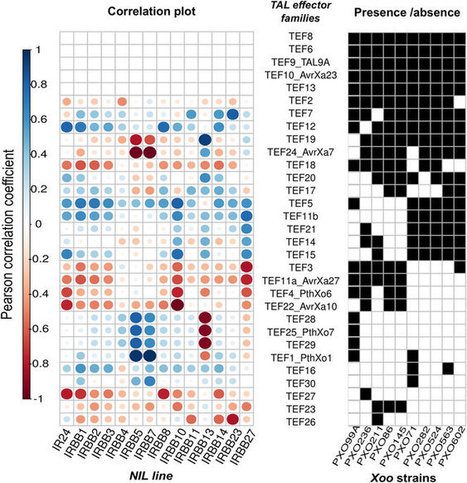
Quibod et al, 2016 Understanding the processes that shaped contemporary pathogen populations in agricultural landscapes is quite important to define appropriate management strategies and to support crop improvement efforts. Here, we took advantage of an historical record to examine the adaptation pathway of the rice pathogen Xanthomonas oryzae pv. oryzae (Xoo) in a semi-isolated environment represented in the Philippine archipelago. By comparing genomes of key Xoo groups we showed that modern populations derived from three Asian lineages. We also showed that diversification of virulence factors occurred within each lineage, most likely driven by host adaptation, and it was essential to shape contemporary pathogen races. This finding is particularly important because it expands our understanding of pathogen adaptation to modern agriculture.
|
|
Scooped by
dromius
September 25, 2016 9:44 AM
|
(via T. Lahaye, thx) Lin et al, 2016 In this study, we generated a novel repression system to demonstrate the repressor function of TALEs in
Arabidopsis thaliana, based on the Unit Assembly method. In parallel, we generated an inducible TALER system (iTALER) based on the pTA7002 plasmid, to further evaluate the effect of TALEs on repressing gene expression. Here, our study provided several lines of evidence for the repressor effects of TALEs. We found that TALEs repressed the transcription of target genes by binding to the exon region of the sense strand. Further analyses revealed that TALEs effectively repressed the expression of both endogenous and exogenous genes. More importantly, this repression effect was independent of a functional domain fused to TALEs. Based on our results, we proposed that the mechanism that binding TALEs inhibited the transcription of target gene was probably due to the binding blocked, or at least, partially blocked the transcription process.
|