Your new post is loading...

|
Scooped by
Gerd Moe-Behrens
July 9, 2016 8:43 AM
|
The use of Bacillus subtilis in synthetic biology and metabolic engineering is highly desirable to take advantage of the unique metabolic pathways present in this organism. To do this, an evaluation of B. subtilis’ intrinsic biological parts is required to determine the best strategies to accurately regulate metabolic circuits and expression of target proteins. The strengths of promoter candidates were evaluated by measuring relative fluorescence units of a green fluorescent protein reporter, integrated into B. subtilis’ chromosome. A total of 84 predicted promoter sequences located upstream of different classes of proteins including heat shock proteins, cell-envelope proteins, and proteins resistant against toxic metals (based on similarity) and other kinds of genes were tested. The expression levels measured ranged from 0.0023 to 4.53-fold of the activity of the well-characterized strong promoter P43. No significant shifts were observed when strains, carrying different promoter candidates, were cultured at high temperature or in media with ethanol, but some strains showed increased activity when cultured under high osmotic pressure. Randomly selected promoter candidates were tested and found to activate transcription of thermostable β-galactosidase (bgaB) at a similar level, implying the ability of these sequences to function as promoter elements in multiple genetic contexts. In addition, selected promoters elevated the final production of both cytoplasmic bgaB and secreted protein α-amylase to about fourfold and twofold, respectively. The generated data allows a deeper understanding of B. subtilis’ metabolism and will facilitate future work to develop this organism for synthetic biology.
|
|
Scooped by
Gerd Moe-Behrens
July 9, 2016 8:40 AM
|
Chemical biology has long sought to build protein switches for use in molecular diagnostics, imaging, and synthetic biology. The overarching challenge for any type of engineered protein switch is the ability to respond in a selective and predictable manner that caters to the specific environments and timescales needed for the application at hand. We previously described a general method to design switchable proteins, called "chemical rescue of structure", that builds de novo allosteric control sites directly into a protein's functional domain. This approach entails first carving out a buried cavity in a protein via mutation, such that the protein's structure is disrupted and activity is lost. An exogenous ligand is subsequently added to substitute for the atoms that were removed by mutation, restoring the protein's structure and thus its activity. Here, we begin to ask what principles dictate such switches' response to different activating ligands. Using a redesigned β glycosidase enzyme as our model system, we find that the designed effector site is quite malleable and can accommodate both larger and smaller ligands, but that optimal rescue comes only from a ligand that perfectly replaces the deleted atoms. Guided by these principles, we then altered the shape of this cavity by using different cavity-forming mutations, and predicted different ligands that would better complement these new cavities. These important findings demonstrate how the protein switch's response can be tuned via small changes to the ligand with respect to the binding cavity, and ultimately enabled us to design an improved switch. We anticipate that these insights will help enable design of future systems that tune other aspects of protein activity, whereby, like evolved protein receptors, remolding the effector site can also adjust additional outputs such as substrate selectivity and activation of downstream signaling pathways.
|
|
Scooped by
Gerd Moe-Behrens
July 8, 2016 8:53 AM
|
RT @TwistBioscience: Need a refresher on how #DNA can be used to store digital data? Check out our Blog post https://t.co/h2KuVnIKcR https:…
|
|
Scooped by
Gerd Moe-Behrens
July 8, 2016 7:23 AM
|
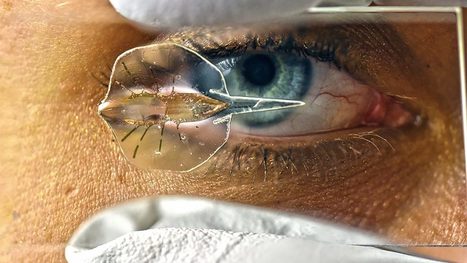
Kevin Kit Parker wants to build a human heart. His young daughter loves the New England Aquarium in Boston. In this Science report, father’s and daughter’s obsessions have combined in an unlikely creation: a nickel-sized artificial stingray whose swimming is guided by light and powered by rat heart muscle cells.
Incorporating advances in engineering, cell culture, genetics, and biomechanics, the “living” robot is “clearly a technical tour de force,” says Adam Summers, an integrative biologist at the University of Washington, Seattle. And some think that by melding cells and artificial materials into a pulsating structure, the device brings Parker’s dream of engineering a human heart a step closer. “One can imagine that one day we can use this technology to rebuild parts of the human body,” says Kedi Xu, a neural engineer at Zhejiang University in Hangzhou, China.
|
|
Scooped by
Gerd Moe-Behrens
July 7, 2016 4:35 PM
|
Beneath all the fancy talk, economic growth comes down to something quite simple: turning low-value commodities into high-value items. An item is high value typically because it is scarce and people want it. That is how economies have worked for millennia.
The first crack came with the digital economy. Digital copies are flawless and pretty much cost-neutral. Suddenly stuff wasn't as scarce. But that was only ephemeral, digital stuff. Real stuff is still bound by the same rules that 18th-century economist Adam Smith understood.
|
|
Scooped by
Gerd Moe-Behrens
July 7, 2016 7:28 AM
|
Make science go faster. Help us discover more by funding research in curing cancer, space exploration, and dinosaurs.
|
|
Scooped by
Gerd Moe-Behrens
July 6, 2016 7:55 AM
|
Covering: up to 2016In this highlight, we describe the current landscape for dereplication and discovery of natural products based on the measurement of the intact mass by LC-MS. Often it is assumed that because better mass accuracy (provided by higher resolution mass spectrometers) is necessary for absolute chemical formula determination (≤1 part-per-million), that it is also necessary for dereplication of natural products. However, the average ability to dereplicate tapers off at ∼10 ppm, with modest improvement gained from better mass accuracy when querying focused databases of natural products. We also highlight some recent examples of how these platforms are applied to synthetic biology, and recent methods for dereplication and correlation of substructures using tandem MS data. We also offer this highlight to serve as a brief primer for those entering the field of mass spectrometry-based natural products discovery.
|
|
Scooped by
Gerd Moe-Behrens
July 6, 2016 7:46 AM
|
Recently I got to volunteer again at a “Building with Biology” event at the Museum of Science in Boston. Last year was the first event of its kind and now the program is spreading all over the country. The Building with Biology project has developed new resources and activities to engage and inform the public on synthetic biology. The NSF funded project is ramping up to include 200 sites nationwide that will each bring together scientists and the public to talk and learn from each other about synthetic biology. Last summer 8 museums held pilot events to test out the kits and guide the development of outreach resources.
|
|
Scooped by
Gerd Moe-Behrens
July 5, 2016 6:59 AM
|
MIT engineers have developed a new type of easily customizable vaccine that can be manufactured in one week, allowing it to be rapidly deployed in response to disease outbreaks. So far, they have designed vaccines against Ebola, H1N1 influenza, and Toxoplasma gondii (a relative of the parasite that causes malaria), which were 100 percent effective in tests in mice.
The vaccine consists of strands of genetic material known as messenger RNA, which can be designed to code for any viral, bacterial, or parasitic protein. These molecules are then packaged into a molecule that delivers the RNA into cells, where it is translated into proteins that provoke an immune response from the host.
In addition to targeting infectious diseases, the researchers are using this approach to create cancer vaccines that would teach the immune system to recognize and destroy tumors.
“This nanoformulation approach allows us to make vaccines against new diseases in only seven days, allowing the potential to deal with sudden outbreaks or make rapid modifications and improvements,” says Daniel Anderson, an associate professor in MIT’s Department of Chemical Engineering and a member of MIT’s Koch Institute for Integrative Cancer Research and Institute for Medical Engineering and Science (IMES).
Anderson is the senior author of a paper describing the new vaccines in the Proceedings of the National Academy of Sciences the week of July 4. The project was led by Jasdave Chahal, a postdoc at MIT’s Whitehead Institute for Biomedical Research, and Omar Khan, a postdoc at the Koch Institute; both are the first authors of the paper.
Customizable vaccines
Most traditional vaccines consist of an inactivated form of a virus or other pathogen. These vaccines usually take a long time to manufacture, and for some diseases they are too risky. Other vaccines consist of proteins normally produced by the microbe, but these don’t always induce a strong immune response, requiring researchers to seek an adjuvant (a chemical that enhances the response).
RNA vaccines are appealing because they induce host cells to produce many copies of the proteins they encode, which provokes a stronger immune reaction than if the proteins were given on their own. The idea of using messenger RNA molecules as vaccines has been around for about 30 years, but one of the major obstacles has been finding a safe and effective way to deliver them.
Khan decided to package RNA vaccines into a nanoparticle made from a branched molecule known as a dendrimer. One key advantage of this material is that the researchers can give it a temporary positive charge, which allows it to form close associations with RNA, which is negatively charged. Khan can also control the size and pattern of the final structure. By inducing the dendrimer-RNA structure to fold over itself many times, Khan generated spherical vaccine particles with a diameter of about 150 nanometers. That makes them of similar size as many viruses, enabling the particles to enter cells by exploiting the same surface proteins that viruses use for this purpose.
By customizing the RNA sequences, the researchers can design vaccines that produce nearly any protein they want. The RNA molecules also include instructions for amplification of the RNA, so that the cell will produce even more of the protein.
The vaccine is designed to be delivered by intramuscular injection, making it easy to administer. Once the particles get into cells, the RNA is translated into proteins that are released and stimulate the immune system. Significantly, the vaccines were able to stimulate both arms of the immune system — a T cell response and an antibody response.
In tests in mice, animals that received a single dose of one of the vaccines showed no symptoms following exposure to the real pathogen — Ebola, H1N1 influenza, or Toxoplasma gondii.
“No matter what antigen we picked, we were able to drive the full antibody and T cell responses,” Khan says.
The researchers also believe that their vaccines would be safer than DNA vaccines, another alternative that scientists are pursuing, because unlike DNA, RNA cannot be integrated into the host genome and cause mutations.
“The option of rapidly creating a completely synthetic formulation that can be effective as a vaccine is an important addition to currently available vaccine strategies,” says Hidde Ploegh, an MIT professor of biology, a member of the Whitehead Institute, and an author of the paper, who added that it will be important to assess safety and cost.
Rapid deployment
The ability to rapidly design and manufacture these vaccines could be especially beneficial for fighting influenza, because the most common flu vaccine manufacturing method, which requires the viruses to be grown inside chicken eggs, takes months. This means that when an unexpected flu strain appears, such as the 2009 pandemic-causing H1N1 virus, there is no way to rapidly produce a vaccine against it.
“Typically a vaccine becomes available long after the outbreak is over,” Chahal says. “We think we can become interventional over the course of a real outbreak.”
Joseph Rosen, a professor of surgery at Dartmouth College’s Geisel School of Medicine and adjunct professor of engineering at Dartmouth’s Thayer School of Engineering, describes the new approach to vaccine development as “revolutionary,” because it could dramatically reduce the amount of time needed to respond to disease outbreak.
“This could not only be applicable to the bugs they talked about, but could also be applicable for something even more important, which is an unknown virus,” says Rosen, who was not involved in the research. “In response to a pandemic, whether natural, accidental, or intentional, they could produce a vaccine in a week.”
Khan and Chahal plan to start a company to license and commercialize the technology. In addition to the vaccines they have already designed, they hope to create vaccines for Zika virus and Lyme disease.
They are also working on cancer vaccines. At a recent “Mission: Possible” competition hosted by the Koch Institute, Khan and Chahal were part of a team that ended up withdrawing from the competition because an outside funder, the Advanced Medical Research Foundation, offered to support them.
For that project, the researchers designed vaccines that target genes that are normally turned on only during embryonic development. These genes, dormant in adults, often become reactivated in a type of cancer known as non-small cell lung tumors.
“We are all excited about the potential of this new approach to provide a new way of vaccine delivery,” says Robert Langer, the David H. Koch Institute Professor at MIT and an author of the paper.
Other authors of the paper include Whitehead Institute researchers Justine McPartlan, Lucas Tilley, Saima Sidik, and Sebastian Lourido; Koch Institute technical assistant Jonathan Tsosie; and U.S. Army Medical Research Institute of Infectious Diseases researchers Christopher Cooper and Sina Bavari.
The research was funded by the Department of Defense Office of Congressionally Directed Medical Research’s Joint Warfighter Medical Research Program, MediVector Inc., the Ragon Institute of MGH, MIT, and Harvard, and the Defense Threat Reduction Agency/Joint Science and Technology Office program in vaccines and pre-treatments.
|
|
Scooped by
Gerd Moe-Behrens
July 3, 2016 1:59 PM
|
MIT researchers have developed synthetic biological circuits (from bacteria, for example, as shown here) that combine analog and digital computation as living
|
|
Scooped by
Gerd Moe-Behrens
July 2, 2016 8:46 AM
|
|
|
Scooped by
Gerd Moe-Behrens
July 2, 2016 8:18 AM
|
New biomaterial developed for injectable neuronal control
|
|
Scooped by
Gerd Moe-Behrens
July 2, 2016 8:17 AM
|
Bioartists use scientific methods and technology to explore living systems
|
|
|
Scooped by
Gerd Moe-Behrens
July 9, 2016 8:41 AM
|
The advent of second generation chimeric antigen receptors and the CD19 paradigm have ushered a new therapeutic modality in oncology. In contrast to earlier forms of adoptive cell therapy, which were based on the isolation and expansion of naturally occurring T cells, CAR therapy is based on the design and manufacture of engineered T cells with optimized properties. A new armamentarium, comprising not only CARs but also chimeric costimulatory receptors, chimeric cytokine receptors, inhibitory receptors and synthetic Notch receptors, expressed in naïve, central memory or stem cell-like memory T cells, is being developed for clinical use in a wide range of cancers. Immunological principles are thus finding a new purpose thanks to advances in genetic engineering, synthetic biology and cell manufacturing sciences.
|
|
Scooped by
Gerd Moe-Behrens
July 9, 2016 8:38 AM
|
Microbial synthesis of ubiquinone by fermentation processes has been emerging in recent years. However, as ubiquinone is a primary metabolite that is tightly regulated by the host central metabolism, tweaking the individual pathway components could only result in a marginal improvement on the ubiquinone production. Given that ubiquinone is stored in the lipid bilayer, we hypothesized that introducing additional metabolic sink for storing ubiquinone might improve the CoQ10 production. As human lipid binding/transfer protein saposin B (hSapB) was reported to extract ubiquinone from the lipid bilayer and form the water-soluble complex, hSapB is chosen to build a compensatory metabolic sink for the ubiquinone storage. As a proof-of-concept, hSapB-mediated metabolic sink systems were devised and systematically investigated in the model organism of Escherichia coli. The hSapB-mediated periplasmic sink resulted in more than 200% improvement of CoQ8 over the wild type strain. Further investigation revealed that hSapB-mediated sink systems could also improve the CoQ10 production in a CoQ10-hyperproducing E. coli strain obtained by a modular pathway rewiring approach. As the design principles and the engineering strategy reported here are generalizable to other microbes, compensatory sink systems will be a method of significant interest to the synthetic biology community.
|
|
Scooped by
Gerd Moe-Behrens
July 8, 2016 7:32 AM
|
Materials, energy and just about everything around us is finite. A more thorough understanding of the Earth’s limitations and commodity price volatility has made this a critical realisation for 21st century economies.
Still, conserving natural resources, while still enabling economic, environmental and social prosperity presents a significant challenge, especially in a context of increasing demands for “things”, in particular from the 3 billion new middle class consumers predicted to hit the global markets before 2050.
An emerging discipline may have at least part of the answer – want more “stuff”? Grow it!
Using micro-organisms, like yeasts and bacteria, modifying their DNA to turn them into microscopic factories, chemists and biologists are now able to grow a huge range of resources, from real cow’s milk to high-performance silk fibres.
|
|
Scooped by
Gerd Moe-Behrens
July 7, 2016 4:45 PM
|
A few years ago, Michael Levin faced a conundrum. He and his colleagues at the Tufts Center for Regenerative and Developmental Biology just outside Boston wanted to find a model that would explain why the flatworm—a model organism used throughout biology—looks the way it does. At a fundamental level, they wanted to be able to describe the cascade of events that leads to the growth of a head in one place and a tail in the other.
In fact, it was almost the same problem that Thomas Hunt Morgan, a Nobel Prize-winning evolutionary biologist and one of the founders of the modern study of genetics, faced more than a century ago. Back then, he was busying himself making careful cuts into flatworms. He sliced them lengthwise. He dissected them in half. From each segment, the worm grew a complete body. Eventually, Morgan carved off 1/279th of the worm, a bit selected from its mid-section, and demonstrated that it could regenerate an entirely new animal. He was trying, unsuccessfully, to understand why and how certain body parts developed where they did: Why did a head appear at one end of the worm after a cut?
|
|
Scooped by
Gerd Moe-Behrens
July 7, 2016 9:55 AM
|
2/2 Argh ..! And then the Gordon Research Conference on Synthetic Biology 30 Jul-4 Aug 2017 https://t.co/e7wTyNPrbJ! Difficult to decide!
|
|
Scooped by
Gerd Moe-Behrens
July 6, 2016 7:57 AM
|
The use of Bacillus subtilis in synthetic biology and metabolic engineering is highly desirable to take advantage of the unique metabolic pathways present in this organism. To do this, an evaluation of B. subtilis' intrinsic biological parts is required to determine the best strategies to accurately regulate metabolic circuits and expression of target proteins. The strengths of promoter candidates were evaluated by measuring relative fluorescence units of a green fluorescent protein reporter, integrated into B. subtilis' chromosome. A total of 84 predicted promoter sequences located upstream of different classes of proteins including heat shock proteins, cell-envelope proteins, and proteins resistant against toxic metals (based on similarity) and other kinds of genes were tested. The expression levels measured ranged from 0.0023 to 4.53-fold of the activity of the well-characterized strong promoter P43. No significant shifts were observed when strains, carrying different promoter candidates, were cultured at high temperature or in media with ethanol, but some strains showed increased activity when cultured under high osmotic pressure. Randomly selected promoter candidates were tested and found to activate transcription of thermostable β-galactosidase (bgaB) at a similar level, implying the ability of these sequences to function as promoter elements in multiple genetic contexts. In addition, selected promoters elevated the final production of both cytoplasmic bgaB and secreted protein α-amylase to about fourfold and twofold, respectively. The generated data allows a deeper understanding of B. subtilis' metabolism and will facilitate future work to develop this organism for synthetic biology.
|
|
Scooped by
Gerd Moe-Behrens
July 6, 2016 7:54 AM
|
Synthetic biology has boomed since the early 2000s when it started being shown that it was possible to efficiently synthetize compounds of interest in a much more rapid and effective way by using other organisms than those naturally producing them. However, to thus engineer a single organism, often a microbe, to optimise one or a collection of metabolic tasks may lead to difficulties when attempting to obtain a production system that is efficient, or to avoid toxic effects for the recruited microorganism. The idea of using instead a microbial consortium has thus started being developed in the last decade. This was motivated by the fact that such consortia may perform more complicated functions than could single populations and be more robust to environmental fluctuations. Success is however not always guaranteed. In particular, establishing which consortium is best for the production of a given compound or set thereof remains a great challenge. This is the problem we address in this paper. We thus introduce an initial model and a method that enable to propose a consortium to synthetically produce compounds that are either exogenous to it, or are endogenous but where interaction among the species in the consortium could improve the production line.
|
|
Scooped by
Gerd Moe-Behrens
July 5, 2016 1:01 PM
|
Wyss Institute at Harvard
|
|
Scooped by
Gerd Moe-Behrens
July 5, 2016 5:22 AM
|
Simple and Versatile 3D Printed Microfluidics Using Fused Filament Fabrication
|
|
Scooped by
Gerd Moe-Behrens
July 3, 2016 1:57 PM
|
Robot scientist Eve can perform a wide range of biological assays, screening at a moderately high throughput rate (credit: Kevin Williams et al./J. R. Soc.
|
|
Scooped by
Gerd Moe-Behrens
July 2, 2016 8:19 AM
|
A scanning electron micrograph shows a free-standing Bombyx mori silk nanofibril membrane. Image courtesy of the researchers.
|
|
Scooped by
Gerd Moe-Behrens
July 2, 2016 8:18 AM
|
BBC Cambridgeshire features an artistic collaboration between Anton Kan and Bernardo Pollack in the Department of Plant Sciences and conceptual fashion designer Victoria Geany inspired by a SynBio Fund supported project on bioluminescent bacteria.
|


 Scoop.it!