Your new post is loading...

|
Scooped by
Gerd Moe-Behrens
July 18, 2016 8:48 AM
|
Read about how one doctor was inspired to create an Arduino-powered bioreactor and ended up with an affordable, accurate device.
|
|
Scooped by
Gerd Moe-Behrens
July 16, 2016 5:53 PM
|
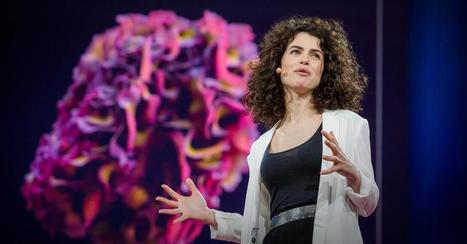
TED Talk Subtitles and Transcript: Designer and architect Neri Oxman is leading the search for ways in which digital fabrication technologies can interact with the biological world.
|
|
Scooped by
Gerd Moe-Behrens
July 16, 2016 8:12 AM
|
The era of synthetic biology heralds in a new, more "green" approach to fine chemical and pharmaceutical drug production. It takes the knowledge of natural metabolic pathways and builds new routes to chemicals, enables nonnatural chemical production, and/or allows the rapid production of chemicals in alternative, highly performing organisms. This route is particularly useful in the production of monoterpenoids in microorganisms, which are naturally sourced from plant essential oils. Successful pathways are constructed by taking into consideration factors such as gene selection, regulatory elements, host selection and optimization, and metabolic considerations of the host organism. Seamless pathway construction techniques enable a "plug-and-play" switching of genes and regulatory parts to optimize the metabolic functioning in vivo. Ultimately, synthetic biology approaches to microbial monoterpenoid production may revolutionize "natural" compound formation.
|
|
Scooped by
Gerd Moe-Behrens
July 16, 2016 8:10 AM
|
Next-generation sequencing technologies have rapidly expanded the genomic information of numerous organisms and revealed a rich reservoir of natural product gene clusters from microbial genomes, especially from Streptomyces, the largest genus of known actinobacteria at present. However, genetic engineering of these bacteria is often time consuming and labor intensive, if even possible. In this chapter, we describe the design and construction of pCRISPomyces, an engineered Type II CRISPR/Cas system, for targeted multiplex gene deletions in Streptomyces lividans, Streptomyces albus, and Streptomyces viridochromogenes with editing efficiency ranging from 70% to 100%. We demonstrate pCRISPomyces as a powerful tool for genome editing in Streptomyces.
|
|
Scooped by
Gerd Moe-Behrens
July 13, 2016 7:36 AM
|
DNA origami lights up a microscopic glowing Van Gogh
|
|
Scooped by
Gerd Moe-Behrens
July 13, 2016 7:34 AM
|
|
|
Scooped by
Gerd Moe-Behrens
July 13, 2016 5:43 AM
|
The current study describes multiple-overlap-extension PCR (MOE-PCR) as a simple and effective approach to assembling multiple DNA fragments with various sizes and features in a single in vitro reaction. In this research, 50 bp of homology in overlapping DNA fragments and a specific touchdown PCR program resulted in successful assembly of eight different DNA fragments using a single PCR protocol. The simplicity, speed, reliability and cost-effectiveness of MOE-PCR offers it as an attractive method for assembling and/or cloning single and multiple DNA fragments. Indeed, the method is a one-step approach that eliminates some of the routine steps such as ligation and complex enzymatic reactions as well as sequence limitations of the other methods. The applications of this relatively high fidelity method could be extended to the construction of chimeric recombinant sequences that can be widely used in metabolic engineering, functional analysis of genes and genetic elements, expression studies of multi-domain proteins, protein engineering and the most recent genome editing strategies which together with synthetic biology are revolutionizing the life sciences. We expect the technique to be used as a robust, reliable and fast method in synthetic biology.
|
|
Scooped by
Gerd Moe-Behrens
July 12, 2016 7:35 AM
|
Welcome to Sc2.0, the synthetic yeast genome web site.
This is the site where you will learn about our ongoing project to synthesize the genome – from oligos to chromosomes, and the design features of the new version of Saccharomyces cerevisiae which we fondly refer to as Sc2.0.
Also, these pages describe the Build-A-Genome course, an innovative educational program to engage undergraduate students and others directly in the Sc2.0 project by producing Building Blocks that will be directly used in the project.
These pages also serve as a forum for engaging the yeast and synthetic biology communities in a new initiative to synthesize a modified version of the genome, chromosome by chromosome, from the “bottom up”. We welcome input on the best design features for yeast 2.0 – or future versions. An important aspect of this will be to leverage the formidable collective knowledgebase of the yeast and synthetic biology communities.
|
|
Scooped by
Gerd Moe-Behrens
July 12, 2016 7:32 AM
|
RT @deCordovaSPandM: Creating Life: Art, Design, and Synthetic Biology Tues 7/19 6:30pm https://t.co/JIJCJ4bIFv art/science discussion
|
|
Scooped by
Gerd Moe-Behrens
July 10, 2016 11:13 AM
|
As we reported earlier, Microsoft has been looking to biological resources for potential data storage solutions, and they bought ten million strands of synthetic DNA from Twist Bioscience because they believe that DNA is a high-capacity, highly efficient, long-term storage option that can safely store 1,000,000,000 TB per gram.
And now, it looks like DNA is moving forward as one of the top contenders in the battle for data storage. Microsoft has announced that they have successfully packed 200 MB of data into DNA all at once—a feat that no one has done before.
|
|
Scooped by
Gerd Moe-Behrens
July 10, 2016 9:38 AM
|
Scientists in Singapore have found a green, efficient way to deal with the growing amount of food waste that the country produces.. Read more at straitstimes.com.
|
|
Scooped by
Gerd Moe-Behrens
July 10, 2016 9:37 AM
|
|
|
Scooped by
Gerd Moe-Behrens
July 9, 2016 8:45 AM
|
Fluctuating oil prices and environmental concerns have led to a directed effort by industry to develop sustainable production of high value chemicals. Mesaconate, an industrially relevant platform chemical used in the production of methyl methacrylate, can be synthesised through the L-glutamate degradation pathway present in certain anaerobic organisms. This study investigates the potential of genes derived from this pathway to be expressed in Corynebacterium glutamicum, as a cellular factory to produce mesaconate in the first instance, with future scope to produce methyl methacrylate. C. glutamicum was chosen as a primary organism due to its existing industrial use as a microbial workhorse for the production of Lglutamate. Firstly, as the proposed process incorporated the initial over production of Lglutamate, various induction methods were investigated to establish an optimal process. Genetically engineered strains were then constructed and examined for their ability to produce mesaconate. Further process development was carried out to develop an efficient induction protocol. While the accumulation of mesaconate remains unclear, novel expression of the desired glutamate mutase and methylaspartate ammonia-lyase within C. glutamicum ATCC 13869 was established. A secondary approach where production of desired chemicals under oxygen limited conditions was examined. High cell densities of several mutant strains of C. glutamicum were investigated during a bioconversion process. Significant levels of succinic acid were achieved, however, further conversion to α-ketoglutarate, the precursor to L-glutamate was not observed. Co-factor regeneration appeared to be crucial for successful application of this process. Finally, toxicity of potential products and feedstocks were analysed to identify detrimental or toxic effects. While many of the compounds appeared to have little effect on the organisms examined, presence of methyl methacrylate, methacrylic acid and methanol significantly decreased growth and/or production. Design of future processes will be significant in maintaining these compounds at non-inhibitory levels to ensure efficiency.
|
|
|
Scooped by
Gerd Moe-Behrens
July 17, 2016 1:00 PM
|
Stem Cells Transl Med. 2016 Jul 15. pii: sctm.2015-0235. [Epub ahead of print]
|
|
Scooped by
Gerd Moe-Behrens
July 16, 2016 5:52 PM
|
PLoS Blogs (blog)“Building with Biology” Synbio Outreach | PLOS Synthetic Biology ...PLoS Blogs (blog)Recently I got to volunteer again at a “Building with Biology” event at the Museum of Science in Boston.
|
|
Scooped by
Gerd Moe-Behrens
July 16, 2016 8:11 AM
|
Bisindoles are a class of natural products derived from oxidative dimerization of tryptophan, and many of these molecules have potential use as anticancer agents. The recent isolation of new bisindoles and their corresponding gene clusters has greatly expanded the repertoire of biosynthetic genes available to synthetic biologists. This chapter describes methods to exploit the biosynthetic pathways leading to bisindoles, using cladoniamides as a representative example. Specifically, we describe how to identify and heterologously express gene clusters and how to manipulate pathways in order to generate new bisindoles. We also discuss methods for cultivating, extracting, purifying, and characterizing these new metabolites.
|
|
Scooped by
Gerd Moe-Behrens
July 14, 2016 8:22 AM
|
Clay Wang brought his kids to the California Space Center a few years ago to show them the Space Shuttle. But as he looked up at Endeavour and pondered human space exploration, the pharmacologist wondered, "What if a crew runs out of medicine halfway to Mars?"
A lot of things can go wrong during a three-year mission to Mars, and there's only so much medicine you can pack. "For food you can predict exactly how much the astronauts will need to eat," says Wang. "Medicine you can't predict."
What if they develop a sudden need for a drug that wasn't packed? Compounding the problem is the fact that the space environment seems to make many drugs lose potency and degrade more quickly compared to drugs on Earth.
Those are all reasons why Wang thinks future Mars explorers may need to grow their own medicine. And his lab at the University of Southern California is about to launch an experiment that could pave the way to make that possible.
If all goes as planned, a few lucky samples of a fungus called Aspergillus nidulans will ride on a SpaceX rocket to the International Space Station on Friday.
|
|
Scooped by
Gerd Moe-Behrens
July 13, 2016 7:36 AM
|
See this Instagram photo by @igem_ucsc • 8 likes
|
|
Scooped by
Gerd Moe-Behrens
July 13, 2016 6:43 AM
|
ACS Synth Biol. 2016 Jul 12. [Epub ahead of print]
|
|
Scooped by
Gerd Moe-Behrens
July 12, 2016 7:39 AM
|
The advance of human civilization has been driven by game-changing technologies that give us new capabilities to improve the fundamental aspects of our lives. Examples of such technologies include autonomous vehicles and 3D printing. One game-changing technology of the future—with as much disruptive potential as both 3D printing and autonomous vehicles—is synthetic biology. What grounds are there for taking this view?
Predicting Game Changers
Synthetic biology is the engineering of biology to carry out the various functions that we need and want, from producing new food ingredients to molecules for treating cancer—enabling us to engineer biology in the same way that we create computers using electronic components. Synthetic biology is possible today because of the advances made in reading and writing DNA and computing power. This biology is an exciting prospect; however, we cannot possibly predict what synthetic biology will be used for in the future from today’s knowledge, just as we could not for past game-changing technologies such as glass manufacturing and the World Wide Web.
When our ancestors first manufactured glass, they could not have predicted its considerable impact on the way we live. It led to the microscope, the discovery of cells, and therefore much of modern medicine. Glass led to our understanding of the universe through the invention of the telescope. It has allowed us to correct short sightedness and use fiber-optic cables for data transmission in our homes. A more recent game-changing technology is the internet. Enabled by more powerful computing hardware, it has influenced the way we do almost everything, from communication and financial transactions to shopping. There is no way that we could have foreseen that a palm-sized device could give anyone access to any book, film, or music anywhere at any time!
History tells us that it seems impossible to predict the future applications for synthetic biology. In part, this is because we do not know how the technology will evolve. Glass manufacturing evolved through the addition of lead, and the Internet developed with computer hardware. The components that enable synthetic biology will improve, from DNA synthesis to computer-aided simulation of biological behavior—we just cannot predict precisely how.
Synthetic Biology and Healthcare
Another way to view technology applications is as the solutions we need to solve our problems. One application of the Internet has been to manage the treatment of patients from remote locations; this is important because aging populations are a major problem for the developed world. Therefore, we could predict the future applications of synthetic biology by considering the major problems that we need to solve today by looking at current trends.
In the area of foods, short-term trends are leading to challenges in agriculture, logistics, and answering consumer choice. Consumers want food products to be available without seasonal or geographic restrictions. Long-term supply-and-demand concerns will be caused globally by increasing populations, reduced land availability, and climate change. Food production will need to be more efficient, consistent, and less subject to external factors. An example application of synthetic biology to solving these problems today is the use of engineered baker’s yeast to produce vitamins—saving the excessive land, water, and energy use to produce small amounts of these vitamins in plants.
In healthcare, we are being challenged by rising costs outstripping budgets, changing global demographics, and R&D gaps in future clinical products. This is leading to new situations where patients are taking charge of their own treatment as well as other structural changes in how healthcare is delivered.
The world’s population is moving from rural areas to cities and is aging, causing an overall increase in cancer, obesity, diabetes, and heart disease. There has been an increase in infectious disease, driven by the emergence of drug resistance and global pandemics. The delivery of healthcare is changing— becoming more proactive and less hospital-based, requiring Internet-based communication technologies to enable anywhere and anytime patient monitoring and treatment. Overall, these trends suggest that we need to improve our ability to care for patients outside of the hospital and novel treatments that improve our ability to treat these diseases.
Synthetic biology has been used to develop tests for infectious diseases that are inexpensive (that for Ebola is an example) and can be used anywhere to detect antibiotic-resistant strains. Perhaps more significant is the contribution to drug discovery that could be made by synthetic biology, where nearly 95% of drugs reaching Phase I do not receive approval. A key area of need is that of novel antibiotics because a shortage of potent antibiotics may lead to 10 million deaths per year globally by 2050. Here synthetic biology is being used to alter the genes that produce antibiotics in bacteria to generate potential new antibiotics.
Synthethic Biology in Industry
The impact of synthetic biology on industry could be as great as that on healthcare. Key problems in industry revolve around raw materials supply, manufacturing costs, and the functionality of processed materials. Raw materials and manufacturing are costly, due to scarcity, energy, and capital requirements and they can be hazardous to workers and the environment. The materials we produce have limitations in their functions and properties. Biological materials are inexpensive, abundant, and have novel functions, such as self-repair, with energy-efficiency and clean manufacturing.
Synthetic biology could reduce the energy, costs, and environmental impact of materials while bringing improved properties. Improved properties could include strength, as demonstrated by the production of spider silk using engineered bacteria to create stronger textiles. Other novel materials include acrylics produced using bacteria, a process that reduces the dependence on scarce petrochemicals as well as greenhouse gas emissions. In manufacturing, biocatalysts are being developed for chemical production to replace the costly and environmentally unfriendly processes used today.
Many of the challenges in industry are due to energy sources, with problems within energy demand, access, and climate change. Energy demand is continuing to grow rapidly because of an increasing global population and the developing world. Large amounts of oil and gas reserves belong to a small group of politically unstable nations. Provision of energy has come at the expense of our global environment and climate. The key opportunities for synthetic biology in energy are in replacing fossil fuels, improving efficiency, and dealing with pollution. Currently in development is a fuel formed by the optimization of metabolic processes in bacteria through increasing their alcohol content. Fuels such as these would be completely green and sustainable.
By examining global trends and problems, and looking for solutions and applications, we start to build a compelling position that synthetic biology is a game-changing technology for the future. There are many exciting applications that directly address global needs in a fundamental way.
Challenges for Synthetic Biology
There are significant challenges in delivering these applications. The big technical challenge for synthetic biology is achieving predictable outcomes from our designs. We may know the DNA sequences for different control elements and the expression of different proteins, but these parts do not work together predictably. Cells containing the same genetic circuits work differently, with causes varying from different growth conditions and unexpected genetic mutations. There is still much to learn and invent.
Furthermore, the potential of new technologies is often constrained by safety concerns or worries about their misuse. Synthetic biology certainly has this challenge. Genetically modified (GM) crops have always had the potential to alleviate many of the food shortages caused by the growing demand for food across the world. There have been strong movements against GM foods due to concerns about their safety, driven by environmental groups and a strong press backlash. In the case of the Internet, it has sadly enabled criminal activities and opened up our private lives to government scrutiny. However, the huge array of potentially life-enhancing applications of a web-enabled world on our lives has overridden those concerns.
A strong regulatory framework to address safety concerns, clear scientific evidence of the undeniable potential benefits, and a well-managed media profile will all be necessary if synthetic biology is to realize its potential as a game-changing technology of our future.
|
|
Scooped by
Gerd Moe-Behrens
July 12, 2016 7:34 AM
|
|
|
Scooped by
Gerd Moe-Behrens
July 11, 2016 1:33 PM
|
Tiny man-made machines could be powered by the movement of bacteria, a group of researchers has said.
The natural movement of bacteria and the chaotic way it swarms can be used to "turn cylindrical rotors and provide a steady power source".
Physicists from Oxford University have created computer simulations to show bacteria is able to spontaneously organise itself so small rotors are turned "spontaneously".
READ MORE
Without this gene, we'd all still be slime
Without this gene, we'd all still be slime
By EMILY REYNOLDS
"We didn’t have to pre-design microscopic gear-shaped turbines," Tyler Shendruk from the University's department of physics said. "The rotors just self-assembled into a sort of bacterial windfarm."
The research team, which has published its findings in the Science Advances journal said adding multiple microrotors to their simulations made the bacteria act differently.
A single rotor "got kicked around randomly," whereas an array of 64 rotors formed a regular pattern "with neighbouring rotors spinning in opposite directions".
|
|
Scooped by
Gerd Moe-Behrens
July 10, 2016 11:04 AM
|
It’s happening: as early as later this year, the gene-editing power tool CRISPR could be used in its first ever human trial. On Tuesday June... read more
|
|
Scooped by
Gerd Moe-Behrens
July 10, 2016 9:37 AM
|
By Bikramjit Basu & his group Indian Institute of Science, BangaloreFor a variety of medical treatments these days, artificial, synthetic materials are inserted..
|
|
Scooped by
Gerd Moe-Behrens
July 10, 2016 9:36 AM
|
Build a Biomakespace: Sponsorship Sprint & BBQ
Sunday, Jul 10, 2016, 10:00 AM
Makespace
16 Mill Lane Cambridge, GB
5 Members Attending
Biomakespace is a community lab being established in Cambridge in Sep 2016. We need a strong set of communications materials and sponsorship proposals to find funding to get the space off the ground and we need YOU to help!
We'll be meeting at Cambridge Makespace to see how far we can get in a day, fuelled by tea and biscuits and followed by a BBQ ...
Check out this Meetup →
Biomakespace is a community lab being established in Cambridge in Sep 2016.
|


 Scoop.it!