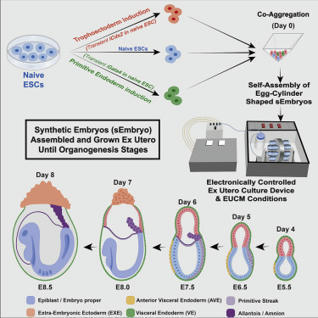

Post-gastrulation stages of development with organ progenitors and complex extra-embryonic
compartments are achieved ex utero entirely from assembled naive mouse embryonic stem
cells.

 Your new post is loading...
 Scoop.it! Post-gastrulation stages of development with organ progenitors and complex extra-embryonic 
No comment yet.
Sign up to comment
Scoop.it!

How researchers created complex tiling patterns with bioengineered bacteria
Scoop.it!
|

|
Scooped by
Gerd Moe-Behrens
August 11, 2022 7:59 AM
|
Scoop.it!
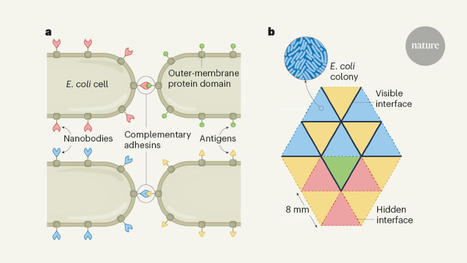
Adhesion molecules used to form multicellular patterns.
|
|
Scooped by
Gerd Moe-Behrens
July 29, 2022 7:19 AM
|
Scoop.it!
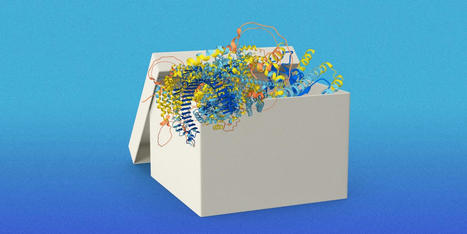
DeepMind says its AlphaFold tool has successfully predicted the structure of nearly all proteins known to science. The AI lab is offering its database of over 200 million proteins to anyone for free.
|
|
Scooped by
Gerd Moe-Behrens
July 25, 2022 5:55 PM
|
Scoop.it!
Instead of predicting the shapes of naturally occurring molecules, software designs original ones
|
|
Scooped by
Gerd Moe-Behrens
July 21, 2022 7:59 AM
|
Scoop.it!
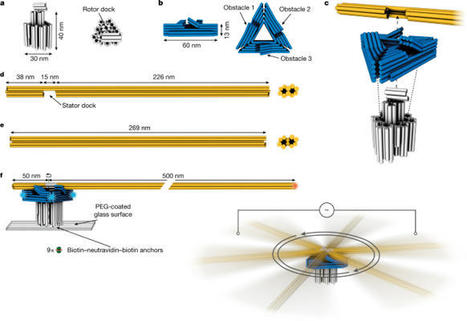
To impart directionality to the motions of a molecular mechanism, one must overcome the random thermal forces that are ubiquitous on such small scales and in liquid solution at ambient temperature. In equilibrium without energy supply, directional motion cannot be sustained without violating the laws of thermodynamics. Under conditions away from thermodynamic equilibrium, directional motion may be achieved within the framework of Brownian ratchets, which are diffusive mechanisms that have broken inversion symmetry1–5. Ratcheting is thought to underpin the function of many natural biological motors, such as the F1F0-ATPase6–8, and it has been demonstrated experimentally in synthetic microscale systems (for example, to our knowledge, first in ref. 3) and also in artificial molecular motors created by organic chemical synthesis9–12. DNA nanotechnology13 has yielded a variety of nanoscale mechanisms, including pivots, hinges, crank sliders and rotary systems14–17, which can adopt different configurations, for example, triggered by strand-displacement reactions18,19 or by changing environmental parameters such as pH, ionic strength, temperature, external fields and by coupling their motions to those of natural motor proteins20–26. This previous work and considering low-Reynolds-number dynamics and inherent stochasticity27,28 led us to develop a nanoscale rotary motor built from DNA origami that is driven by ratcheting and whose mechanical capabilities approach those of biological motors such as F1F0-ATPase. A nanoscale rotary motor made of DNA origami, driven by ratcheting and powered by an external electric field, shows the ability to wind up a spring and has mechanical capabilities approaching those of biological motors.
|
|
Scooped by
Gerd Moe-Behrens
June 23, 2022 6:51 AM
|
Scoop.it!

The α-helix is pre-eminent in structural biology1 and widely exploited in protein folding2, design3 and engineering4. Although other helical peptide conformations do exist near to the α-helical region of conformational space—namely, 310-helices and π-helices5—these occur much less frequently in protein structures. Less favourable internal energies and reduced tendencies to pack into higher-order structures mean that 310-helices rarely exceed six residues in length in natural proteins, and that they tend not to form normal supersecondary, tertiary or quaternary interactions. Here we show that despite their absence in nature, synthetic peptide assemblies can be built from 310-helices. We report the rational design, solution-phase characterization and an X-ray crystal structure for water-soluble bundles of 310-helices with consolidated hydrophobic cores. The design uses six-residue repeats informed by analysing 310-helical conformations in known protein structures, and incorporates α-aminoisobutyric acid residues. Design iterations reveal a tipping point between α-helical and 310-helical folding, and identify features required for stabilizing assemblies of 310-helices. This work provides principles and rules to open opportunities for designing into this hitherto unexplored region of protein-structure space. A study demonstrates the rational de novo design of water-soluble assemblies constructed from long 310-helical peptides, and details their characterization by circular dichroism spectroscopy, analytical ultracentrifugation and X-ray crystallography.
|
|
Scooped by
Gerd Moe-Behrens
May 10, 2022 4:13 PM
|
Scoop.it!
Computational Protein Design has the potential to contribute to major advances in enzyme technology, vaccine design, receptor-ligand engineering, biomaterials, nanosensors, and synthetic biology. Although Protein Design is a challenging problem, proteins can be designed by experts in Protein Design, …
|
|
Scooped by
Gerd Moe-Behrens
May 9, 2022 7:20 PM
|
Scoop.it!
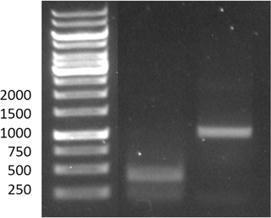
A protein roadblock forms when a protein binds DNA and hinders translocation of other DNA binding proteins. These roadblocks can have significant effects on gene expression and regulation as well as DNA binding. Experimental methods for studying the effects of such roadblocks often target endogenous sites or introduce non-variable specific sites into DNAs to create binding sites for artificially introduced protein roadblocks. In this work, we describe a method to create programmable roadblocks using dCas9, a cleavage deficient mutant of the CRISPR effector nuclease Cas9. The programmability allows us to custom design target sites in a synthetic gene intended for in vitro studies. These target sites can be coded with multivalency—in our case, internal restriction sites which can be used in validation studies to verify complete binding of the roadblock. We provide full protocols and sequences and demonstrate how to use the internal restriction sites to verify complete binding of the roadblock. We also provide example results of the effect of DNA roadblocks on the translocation of the restriction endonuclease NdeI, which searches for its cognate site using one dimensional diffusion along DNA.
|
|
Scooped by
Gerd Moe-Behrens
April 15, 2022 12:33 PM
|
Scoop.it!
Biogenic crystals are crystals that grow inside or under the influence of living organisms. These crystals are incredibly diverse, and the process of their growth is extremely complex. Despite their ubiquity, only several dozen biogenic crystals have been identified and studied. On page 312 of this issue, Avrahami et al. (1) present studies of coccoliths, which are micrometer-sized calcite (CaCO3) single plates formed by coccolithophores, a type of single-celled algae. The coccolithophores form around themselves a calcite shell called a coccosphere, which is composed of dozens of coccolith plates. Before discussing the most important and specific aspects of this study, it is worth exploring the diverse world of biogenic crystals.
https://www.science.org/doi/10.1126/science.abo2781
|
|
Scooped by
Gerd Moe-Behrens
April 4, 2022 6:27 PM
|
Scoop.it!
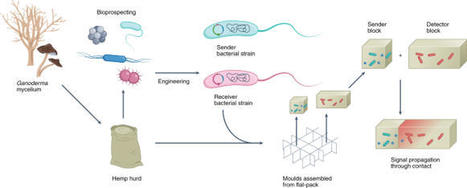
A prototypical biocomposite block comprising a blend of bacteria, fungi and feedstock can be assembled into human-sized, living structures with self-healing and environmental sensing capabilities.
|
|
Scooped by
Gerd Moe-Behrens
August 15, 2022 10:16 AM
|
Scoop.it!
3D bioprinting technology shows attractive potential for the manufacture of engineered living material (ELM).
Selection of living components and matrix biomaterials is reviewed.
Mechanisms of 3D-printed ELMs realizing functions are discussed.
3D bioprinting technology enables precise control over the distribution of different cells.
Widespread applications of 3D-printed ELMs are reviewed, providing new ideas for future research directions.
The design of engineered living materials (ELMs) is an emerging field developed from synthetic biology and materials science principles. ELMs are multi-scale bulk materials that combine the properties of self-healing and organism adaptability with the designed physicochemical or mechanical properties for functional applications in various fields, including therapy, electronics, and architecture. Among the many ELM design and manufacturing methods, three-dimensional (3D) bioprinting stands out for its precise control over the structure of the fabricated constructs and the spatial distribution of cells. In this review, we summarize the progress in the field, cell type and material selection, and the latest applications of 3D bioprinting to manufacture ELMs, as well as their advantages and limitations, hoping to deepen our understanding and provide new insights into ELM design. We believe that 3D bioprinting will become an important development direction and provide more contributions to this field.
https://www.sciencedirect.com/science/article/abs/pii/S2772950822003302
|
|
Scooped by
Gerd Moe-Behrens
August 12, 2022 7:32 AM
|
Scoop.it!
The catalytic asymmetric construction of Csp3–Csp3 bonds remains one of the foremost challenges in organic synthesis.1 Metal-catalyzed cross-electrophile couplings (XEC) have emerged as a powerful tool for C–C bond formation.2-5 However, coupling two distinct Csp3-electrophiles with high cross- and stereoselectivity continues as an unmet challenge. Here, we report a highly chemo- and enantioselective Csp3–Csp3 XEC between alkyl halides and nitroalkanes catalyzed by flavin-dependent ‘ene’-reductases. Photoexcitation of the enzyme-templated charge-transfer complex between an alkyl halide and flavin cofactor enables the chemoselective reduction of alkyl halide over the thermodynamically favored nitroalkane partner. The key C–C bond-forming step occurs via the reaction of an alkyl radical with an in situ generated nitronate to form a nitro radical anion that collapses to form nitrite and an alkyl radical. An enzyme-controlled hydrogen atom transfer affords high levels of enantioselectivity. This reactivity is unknown in small molecule catalysis and highlights the potential for enzymes to use new mechanisms to address long-standing synthetic challenges.
|
|
Scooped by
Gerd Moe-Behrens
August 11, 2022 7:59 AM
|
Scoop.it!

Multicellular systems, from bacterial biofilms to human organs, form interfaces (or boundaries) between different cell collectives to spatially organize versatile functions1,2. The evolution of sufficiently descriptive genetic toolkits probably triggered the explosion of complex multicellular life and patterning3,4. Synthetic biology aims to engineer multicellular systems for practical applications and to serve as a build-to-understand methodology for natural systems5–8. However, our ability to engineer multicellular interface patterns2,9 is still very limited, as synthetic cell–cell adhesion toolkits and suitable patterning algorithms are underdeveloped5,7,10–13. Here we introduce a synthetic cell–cell adhesin logic with swarming bacteria and establish the precise engineering, predictive modelling and algorithmic programming of multicellular interface patterns. We demonstrate interface generation through a swarming adhesion mechanism, quantitative control over interface geometry and adhesion-mediated analogues of developmental organizers and morphogen fields. Using tiling and four-colour-mapping concepts, we identify algorithms for creating universal target patterns. This synthetic 4-bit adhesion logic advances practical applications such as human-readable molecular diagnostics, spatial fluid control on biological surfaces and programmable self-growing materials5–8,14. Notably, a minimal set of just four adhesins represents 4 bits of information that suffice to program universal tessellation patterns, implying a low critical threshold for the evolution and engineering of complex multicellular systems3,5. A synthetic cell-cell adhesion logic using swarming E. coli with 4 bits of information is introduced, enabling the programming of interfaces that combine to form universal tessellation patterns over a large scale.
|
|
Scooped by
Gerd Moe-Behrens
July 31, 2022 11:22 AM
|
Scoop.it!
Genomically minimal cells, such as JCVI-syn3.0 and JCVI-syn3A, offer an empowering framework to study relationships between genotype and phenotype. With a polygenic basis, the fundamental physiological process of cell division depends on multiple genes of known and unknown function in JCVI-syn3A. A …
|
|
Scooped by
Gerd Moe-Behrens
July 25, 2022 5:58 PM
|
Scoop.it!
The binding and catalytic functions of proteins are generally mediated by a small number of functional residues held in place by the overall protein structure. Here, we describe deep learning approaches for scaffolding such functional sites without needing to prespecify the fold or secondary structure of the scaffold. The first approach, “constrained hallucination,” optimizes sequences such that their predicted structures contain the desired functional site. The second approach, “inpainting,” starts from the functional site and fills in additional sequence and structure to create a viable protein scaffold in a single forward pass through a specifically trained RoseTTAFold network. We use these two methods to design candidate immunogens, receptor traps, metalloproteins, enzymes, and protein-binding proteins and validate the designs using a combination of in silico and experimental tests.
|
|
Scooped by
Gerd Moe-Behrens
July 12, 2022 3:16 PM
|
Scoop.it!
Engineering of optogenetic devices for biomedical applications in mammalian synthetic biology
Gene‐ and cell‐based therapies are the next frontiers in the field of medicine. Both are transformative and innovative therapies; however, a lack of safety data limits the trans- lation of such promising technologies to the clinic. Improving the safety and promoting the clinical translation of these therapies can be achieved by tightly regulating the release and delivery of therapeutic outputs. In recent years, the rapid development of optogenetic technology has provided opportunities to develop precision‐controlled gene‐ and cell‐ based therapies, in which light is introduced to precisely and spatiotemporally manipu- late the behaviour of genes and cells. This review focuses on the development of optogenetic tools and their applications in biomedicine, including photoactivated genome engineering and phototherapy for diabetes and tumours....
https://ietresearch.onlinelibrary.wiley.com/doi/pdfdirect/10.1049/enb2.12022
|
|
Scooped by
Gerd Moe-Behrens
May 24, 2022 5:42 PM
|
Scoop.it!
|
|
Scooped by
Gerd Moe-Behrens
May 10, 2022 4:11 PM
|
Scoop.it!
Synthetic biology research and its industrial applications rely on deterministic spatiotemporal control of gene expression. Recently, electrochemical control of gene expression has been demonstrated in electrogenetic sys- tems (redox-responsive promoters used alongside redox inducers and electrodes), allowing for the direct inte- gration of electronics with biological processes. However, the use of electrogenetic systems is limited by poor activity, tunability, and standardization. In this work, we developed a strong, unidirectional, redox-responsive promoter before deriving a mutant promoter library with a spectrum of strengths. We constructed genetic circuits with these parts and demonstrated their activation by multiple classes of redox molecules. Last, we demonstrated electrochemical activation of gene expression under aerobic conditions using a novel, modular bioelectro- chemical device. These genetic and electrochemical tools facilitate the design and improve the performance of electrogenetic systems. Furthermore, the genetic design strategies used can be applied to other redox-responsive promoters to further expand the available tools for electrogenetics.
|
|
Scooped by
Gerd Moe-Behrens
April 24, 2022 12:50 PM
|
Scoop.it!
Over the past two decades, molecular cell biology has graduated from a mostly analytic science to one with substantial synthetic capability. This success is built on a deep understanding of the structure and function of biomolecules and molecular mechanisms. For synthetic biology to achieve similar success at the scale of tissues and organs, an equally deep understanding of the principles of development is required. Here, we review some of the central concepts and recent progress in tissue patterning, morphogenesis and collective cell migration and discuss their value for synthetic developmental biology, emphasizing in particular the power of (guided) self-organization and the role of theoretical advances in making developmental insights applicable in synthesis.
|
|
Scooped by
Gerd Moe-Behrens
April 12, 2022 3:50 PM
|
Scoop.it!
Protein-protein interactions (PPIs) govern numerous cellular functions in terms of signaling, transport, defense and many others. Designing novel PPIs poses a fundamental challenge to our understanding of molecular interactions. The capability to robustly engineer PPIs has immense potential for the …
|
|
Scooped by
Gerd Moe-Behrens
April 4, 2022 6:29 PM
|
Scoop.it!

A computational and experimental strategy was developed to redesign biosynthetic gene
clusters into synthetic genetic elements that can be expressed across a wide range
of prokaryote and eukaryote hosts, expanding our ability to discover and characterize
a variety of natural products and biosynthetic pathways.