"Obsessive gamers’ hours at the computer have now topped scientists’ efforts to improve a model enzyme, in what researchers say is the first crowdsourced redesign of a protein.
The online game Foldit, developed by teams led by Zoran Popovic, director of the Center for Game Science, and biochemist David Baker, both at the University of Washington in Seattle, allows players to fiddle at folding proteins on their home computers in search of the best-scoring (lowest-energy) configurations...."
"Optogenetics has been hailed as a breakthrough in biomedical science—it promises to use light to precisely control cells in the brain to manipulate behavior, model disease processes, or even someday to deliver treatments.
But so far, optogenetic studies have been hampered by physical constraints. The technology requires expensive, bulky lasers for light sources, and a fiber-optic cable attached to an animal—an encumbrance that makes it difficult to study how manipulating cells affects an animal's normal behavior."
"Today I am very happy to have Andrew Hessel as my guest on Singularity 1 on 1. During the interview Andrew shares his truly infectious passion about synthetic biology and the unique opportunities that lie ahead of the budding first generation of DIY bio-hackers.
We also discuss a variety of other interesting issues such as the singularity, religion, the promise of personalized medicine as cancer treatment, the risks and benefits of open-source synthetic-biology and the fact that biology is a dual-use technology.
I have to admit that I was so infected by Andrew's passion and his unique, open-source approach that I couldn't help it but buy a 20 dollar share in the Pink Army Cooperative. So, check out the interview and don't hesitate to let me know what you think..."
"As the field of synthetic biology is developing, the prospects for de novo design of biosynthetic pathways are becoming more and more realistic. Hence, there is an increasing need for computational tools that can support these efforts. A range of algorithms has been developed that can be used to identify all possible metabolic pathways and their corresponding enzymatic parts. These can then be ranked according to various properties and modelled in an organism-specific context. Finally, design software can aid the biologist in the integration of a selected pathway into smartly regulated transcriptional units. Here, we review key existing tools and offer suggestions for how informatics can help to shape the future of synthetic microbiology."
"New biological materials for tissue engineering are now being developed using common genetic engineering capabilities to clone and express a variety of genetic elements that allow cost-effective purification and scaffold fabrication from these recombinant proteins, peptides or from chimeric combinations of these. The field is limitless as long as the gene sequences are known. The utility is dependent on the ease, product yield and adaptability of these protein products to the biomedical field. The development of recombinant proteins as scaffolds, while still an emerging technology with respect to commercial products, is scientifically superior to current use of natural materials or synthetic polymer scaffolds, in terms of designing specific structures with desired degrees of biological complexities and motifs. In the field of tissue engineering, next generation scaffolds will be the key to directing appropriate tissue regeneration. The initial period of biodegradable synthetic scaffolds that provided shape and mechanical integrity, but no biological information, is phasing out. The era of protein scaffolds offers distinct advantages, particularly with the combination of powerful tools of molecular biology. These include, for example, the production of human proteins of uniform quality that are free of infectious agents and the ability to make suitable quantities of proteins that are found in low quantity or are hard to isolate from tissue. For the particular needs of tissue engineering scaffolds, fibrous proteins like collagens, elastin, silks and combinations of these offer further advantages of natural well-defined structural scaffolds as well as endless possibilities of controlling functionality by genetic manipulation."
"Biological systems evolved with the ability to communicate with their biotic surroundings through chemical signalling. Production, perception and decoding of the information carried by signal molecules allow individuals of a community to interact, cooperate, and coordinate their activities, establishing complex social behaviours. In this paper we speculate about the opportunity to use semi synthetic minimal cells (SSMCs) as artificial entities able to communicate, by processing biochemical information, with natural systems. SSMCs are liposome-based cell-like molecular assemblies designed for displaying minimal cellular functions, like gene transcription and translation. The technological advancements in the last few years led to successful production of functional proteins in SSMCs raises the possibility to generate semi synthetic cell-like systems expressing the biochemical apparatus for signal molecules production, perception and decoding. The variety of chemical “languages” evolutionary selected by bacteria to communicate provides a broad spectrum of biochemical opportunities exploitable to reach this goal in the near future. More in general, the consequences arising from the construction of synthetic systems capable of communicating with natural living organisms would greatly impact the applications of synthetic biology and biochemical-based information and communication technologies (ICTs) in medical sciences, for example for smart programmable and drug-producing systems."
"ACS Synthetic Biology is dedicated to research in synthetic biology including the study of systems. The journal is particularly interested in studies on the design and synthesis of new genetic circuits and gene products; computational methods in the design of systems; and integrative applied approaches to understanding disease and metabolism."
"Prospecting macroalgae (seaweeds) as feedstocks for bioconversion into biofuels and commodity chemical compounds is limited primarily by the availability of tractable microorganisms that can metabolize alginate polysaccharides. Here, we present the discovery of a 36–kilo–base pair DNA fragment from Vibrio splendidus encoding enzymes for alginate transport and metabolism. The genomic integration of this ensemble, together with an engineered system for extracellular alginate depolymerization, generated a microbial platform that can simultaneously degrade, uptake, and metabolize alginate. When further engineered for ethanol synthesis, this platform enables bioethanol production directly from macroalgae via a consolidated process, achieving a titer of 4.7% volume/volume and a yield of 0.281 weight ethanol/weight dry macroalgae (equivalent to ~80% of the maximum theoretical yield from the sugar composition in macroalgae)...."
"A decade ago, hot on the heels of whole-genome sequencing, the idea of three-dimensional genome mapping was developed1. Now, the highest-resolution 3D map of the fruitfly genome has been produced2, an important step towards understanding whether, and how, the structure of the genome affects its function."
"A colony of cells cooperates to form a multicellular organism under the direction of a genetic program shared by the members of the colony. A swarm of bees cooperates to construct a hive. Humans group together to build towns, cities, and nations. These examples raise fundamental questions for the organization of computing systems:
How do we obtain coherent behavior from the cooperation of large numbers of unreliable parts that are interconnected in unknown, irregular, and time-varying ways? What are the methods for instructing myriads of programmable entities to cooperate to achieve particular goals?..."
"Physical and genetic interaction networks provide key insights into complex biological systems, from how different processes communicate to the function of individual residues on a single protein (Beltrao et al, 2010). For instance, the systematic identification of pairwise protein interactions (Stelzl et al, 2005; Tarassov et al, 2008; Yu et al, 2008; Consortium, 2011) or protein complexes (Butland et al, 2005; Gavin et al, 2006; Krogan et al, 2006; Sowa et al, 2009) has been a widely used strategy for understanding the physical architecture of the cell. Other types of physical interactions that are being mapped systematically include transcriptional protein–DNA interactions (Ren et al, 2000; Iyer et al, 2001) and kinase–substrate interactions (Ptacek et al, 2005; Linding et al, 2007). Genetic networks, in contrast, chart pairs of genetic mutations that in combination cause lethality or other phenotype—information that complements the structural information provided by the physical network (Tong et al, 2001; Roguev et al, 2007; Butland et al, 2008; Typas et al, 2008; Horn et al, 2011). Large network databases such as BioGRID, HPRD, IntAct, DIP and GeneMania (Xenarios et al, 2002; Keshava Prasad et al, 2009; Aranda et al, 2010; Warde-Farley et al, 2010; Stark et al, 2011) record hundreds of thousands of physical and genetic interactions from a wide variety of organisms......"
"The process of authoring, reviewing, and publishing scholarly articles remains an expensive, time-consuming process that can require significant up-front investment and technical expertise. Coupled with lengthy review processes this can create delays of up to a year before new scientific findings are published. Annotum, a new, open-source, open-access authoring publishing platform based on WordPress, provides an easy-to use alternative to existing publishing systems that supports very rapid expert review and professional online publishing. In this live demonstration, we will show how Annotum can be used by scholarly authors to collaboratively author articles with rich text formatting, structured figures and equations, and citations. Then we'll show how authors can submit their article to a peer-review process, demonstrate the review and approval workflow, and publish the approved article online as well as in PDF and NLM-compatible XML formats. And did we mention that Annotum is completely free and open source, and available for free on WordPress.com? Annotum is a product of Solvitor LLC with heavy lifting by Crowd Favorite. Annotum is free..."
Inspired by the number of people that the Khan Academy's free video lectures reached, Stanford professor Sebastian Thrun put his own artificial intelligence class online and enrolled 160,000...
"The promises of modern biotechnology hinge upon the hope that we can understand microscopic cellular complexity and in doing so create novel function. In this regard, the fields of systems and synthetic biology are important for accelerating both our understanding of biological systems and our ability to quantitatively engineer cells. At the nexus of these two fields is a unique synergy that can help attain these goals. Thus, the next greatest advances in biology and biotechnology are arising at the intersection of the top-down systems approach and the bottom-up synthetic approach. Collectively, these developments enable the precise control of cellular state for systems studies and the discovery of novel parts, control strategies, and interactions for the design of robust synthetic function. This review seeks to highlight this activity as well as provide a perspective for future directions. Combining these efforts can provide novel insights into cellular function and lead to robust, novel synthetic design."
"The aim of synthetic biology is to make genetic systems more amenable to engineering, which has naturally led to the development of computer-aided design (CAD) tools. Experimentalists still primarily rely on project-specific ad hoc workflows instead of domain-specific tools, which suggests that CAD tools are lagging behind the front line of the field. Here, we discuss the scientific hurdles that have limited the productivity gains anticipated from existing tools. We argue that the real value of efforts to develop CAD tools is the formalization of genetic design rules that determine the complex relationships between genotype and phenotype."
"The second release of the Bio! iGEM History is on its beta version. We have updated it with the iGEM 2011 results and with prize information. Information for some teams is still under development.
The database file may work better as an Excel sheet, using the filter functions to navigate the keyword columns."
"Peptide natural products continue to play an important role in modern medicine as last-resort treatments of many life-threatening diseases, as they display many interesting biological activities ranging from antibiotic to antineoplastic. A large fraction of these microbial natural products is assembled by ribosome-independent mechanisms. Progress in sequencing technology and the mechanistic understanding of secondary metabolite pathways has led to the discovery of many formerly cryptic natural products and a molecular understanding of their assembly. Those advances enable us to apply protein and metabolic engineering approaches towards the manipulation of biosynthetic pathways. In this review we discuss the application potential of both templated and non-templated pathways as well as chemoenzymatic strategies for the structural diversification and tailoring of peptide natural products."
"The development of new molecular approaches in biology and biotechnology introduced new scientific terms which include genome, genomics, methylome and methylomics. These are currently used in the literature of molecular and synthetic biology to refer various molecular concepts and applications. The present study is about the requirement of new “ome” and “omics” terms. This is because there are unique structural and functional aspects associated with genome and methylome at specific regions in the DNA sequence which are not explained by the two currently used terms methylome and genome. There is a requirement for new ome/omics terms to refer specific structural and functional matters associated with particular specialized zones in the DNA sequences. These genomic regions contain both the fifth base “methyl cytosine” and the other four coding bases. Methylated and non methylated DNA sequences are involved in gene expression of RNA and proteins, beside their role in the structural organization of the DNA sequence and the chromosome. In this study I suggest introducing two words which are derived from the established scientific terms “genome, genomics, methylome and methylomics”. The two new derived words are: gethylome and gethylomics. I suggest that these two words might be useful and could be used to explain various issues related to specific regions in the DNA sequence and chromosomes of eukaryotic organisms which contain the fifth base. Furthermore, gethylomics will help to refer more precisely to new applications in synthetic biology and genomics to design or redesign specific gethylomic circuits."
"You’ll find continual tries and also innovations happening inside the health-related globe. A brand new tips is actually man made chemistry and biology, quite a new medical material. A number of the top professionals inside the industry will still be just a little puzzled by the way in which really good urls to be better man made chemistry and biology will work, yet it’s not ending the health care industry via improving inside the industry. Basically, man made chemistry and biology is the process of shuffling gene history all around to help make human being cells over completely from scratch without actually using almost any organic cells..."
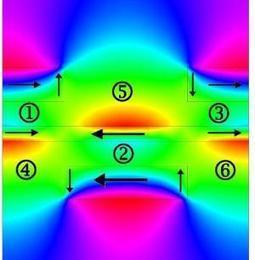
"Electromagnetic interactions with biological systems promise new possibilities in medical applications and synthetic biology. Creating a controlled action in biological systems requires an efficient transduction of the electromagnetic energy to thermal or mechanical biosignals. In this paper, we present the design and optimization for a nano-scale magnetic torque transducer based on a tunable nanomechanical resonator. Operating in the resonance regime allows the presented system to efficiently absorb a large amount of energy from the source. In addition, systems tuned on well separated resonance frequencies may operate simultaneously without any interference. We describe the theoretical model of the system and show the possibility of achieving the resonance in biological settings for a system with reasonable dimensions."
Imagine Having A High-Powered Microscope On Your Cellphone (shared by Jeff Sayre)
A researcher from Michigan Technological University has made a significant breakthrough that will allow optical lenses to overcome the 200 nanometer diffraction limit. Using his new technique, a superlens could push through the diffraction limit across the "entire spectrum of visible light...from the infrared all the way past visible light and into the ultraviolet spectrum" .
This breakthrough could has a number of practical application. It could enable the fabrication of smaller components than traditional lithography allows, thereby helping to continue the Moore's law reduction of microchip component sizes. Furthermore, since this technique can leverage any wavelength of visible light, the fabrication costs of smaller electronic component could be reduced using a cheaper light source.
This innovation would also allow what the researcher excitedly describes as a:
"cheap, accessible super lens [that] could open our collective eyes to worlds previously known only to a very few. The public's access to high-powered microscopes is negligible. With superlenses, everybody could be a scientist. People could put their cells on Facebook. It might just inspire society's scientific soul."
Could a superlens microscopy be coming to a smartphone near you?
To get content containing either thought or leadership enter:
To get content containing both thought and leadership enter:
To get content containing the expression thought leadership enter:
You can enter several keywords and you can refine them whenever you want. Our suggestion engine uses more signals but entering a few keywords here will rapidly give you great content to curate.


 Your new post is loading...