


SynBioFromLeukipposInstitute
130.0K views |
+0 today
 Your new post is loading...
 Scoop.it!
Gerd Moe-Behrens's insight:
by Life is defined by organic chemistry. There's software for artificial life and artificial intelligence, but these are, well, artificial — they exist in silico rather than in vivo. Conversely, synthetic biology is re-coding genes, but it isn't very synthetic; it uses the same sets of proteins as the rest of molecular biology. If, however, bits could carry mass as well as information, the distinction between artificial and synthetic life would disappear. Virtual and physical replication would be equivalent. There are in fact promising laboratory systems that can compute with bits represented by mesoscopic materials rather than electrons or photons. Among the many reasons to do this, the most compelling is fabrication: instead of a code controlling a machine to make a thing, the code can itself become a thing (or many things). That sounds a lot like life. Indeed, current work is developing micron-scale engineered analogs to amino acids, proteins, and genes, a "millibiology" to complement the existing microbiology. By working with components that have macroscopic physics but microscopic sizes, the primitive elements can be selected for their electronic, magnetic, optical or mechanical properties as well as active chemical groups. Biotechnology is booming (if not bubbling). But it is very clearly segregated from other kinds of technology, which contribute to the study of, but not the identity of, biology. If, however, life is understood as an algorithm rather than a set of amino acids, then the creation of such really-artificial or really-synthetic life can enlarge the available materials, length, and energy scales. In such a world, biotechnology, nanotechnology, information technology, and manufacturing technology merge into a kind of universal technology of embodied information. Beyond the profound practical implications, forward- rather than reverse-engineering life may be the best way to understand it." 
Scoop.it!
Gerd Moe-Behrens's insight:
*I need your help* As the field of personalized medicine develops, there are an increasing number of smartphone apps and wireless devices that people are using to monitor and track their health and fitness. I wish to understand your needs and usage patterns with these apps and devices -- why and how you use them to help you reach your fitness and health goals. These data will then be used to develop a strategy to innovate advanced synthetic biology applications, to invent applications and devices that people truly need. The data collected will be anonymous and private. I will not trackback answers to an individual. Individual results will be confidential. Also, the aggregated results will be kept private as they are for internal use only. We would appreciate it if you shared a link to this survey with your social network. Thank you for your participation and help. http://www.surveymonkey.com/s/5DX99JJ Please re share! PS source of the pic http://bit.ly/WtVnje ;
Scoop.it!
Gerd Moe-Behrens's insight:
by
Scoop.it!
Gerd Moe-Behrens's insight:
In this decade some extinct species will begin to come back. Rapid advances in molecular biology are converging with new perspectives in conservation biology to create a new field called “de-extinction.” Now is the time to begin public discussion of how de-extinction projects can best proceed responsibly. On Friday, March 15, National Geographic is hosting the first-ever public exploration of the subject of reviving extinct species at TEDxDeExtinction, a daylong event at Grosvenor Auditorium in Washington, DC. Speakers include: Chris Anderson, Michael Archer, David Burney, George Church, David Ehrenfeld, John Fahey, Alberto Fernández-Arias, Hank Greely, Susan Haig, Kate Jones, Henri Kerkdijk-Otten, Isabella Kirkland, Robert Lanza, Michael Mace, Michael McGrew, Ben Novak, Hendrik Poinar, William Powell, Kent Redford, Oliver Ryder, Joel Sartore, Beth Shapiro, James Tate, Stanley Temple, Carl Zimmer
Scoop.it!
The MASTER (methylation-assiste
|


|
Scooped by
Gerd Moe-Behrens
February 28, 2013 1:50 PM
|
Scoop.it!

Gerd Moe-Behrens's insight:
by
Ang J, McMillen DR.
"Synthetic biology includes an effort to use design-based approaches to create novel controllers, biological systems aimed at regulating the output of other biological processes. The design of such controllers can be guided by results from control theory, including the strategy of integral feedback control, which is central to regulation, sensory adaptation, and long-term robustness. Realization of integral control in a synthetic network is an attractive prospect, but the nature of biochemical networks can make the implementation of even basic control structures challenging. Here we present a study of the general challenges and important constraints that will arise in efforts to engineer biological integral feedback controllers or to analyze existing natural systems. Constraints arise from the need to identify target output values that the combined process-plus-controller system can reach, and to ensure that the controller implements a good approximation of integral feedback control. These constraints depend on mild assumptions about the shape of input-output relationships in the biological components, and thus will apply to a variety of biochemical systems. We summarize our results as a set of variable constraints intended to provide guidance for the design or analysis of a working biological integral feedback controller."
http://bit.ly/YK4sTi
|
|
Scooped by
Gerd Moe-Behrens
February 27, 2013 4:38 PM
|
Scoop.it!

Gerd Moe-Behrens's insight:
by
Christina Agapakis |
"I take a lot of photos of bacteria on my phone, and sometimes I use those pictures as my phone’s wallpaper. These photos are meta-phone bacteria wallpapers: photographs of bacteria that I collected off the surface of my phone (h/t to Nick for the microbial inspiration). To sample the phone’s microbiome I simply placed it on a plate of fresh LB agar and incubated for two weeks at 30 degrees Celsius. Click for higher resolution...."
http://bit.ly/15R9cJX
|
|
Scooped by
Gerd Moe-Behrens
February 27, 2013 4:08 PM
|
Scoop.it!

Gerd Moe-Behrens's insight:
by
Bor-Sen Chen and Ying-Po Lin
"Robust stabilization and environmental disturbance attenuation are ubiquitous systematic properties that are observed in biological systems at many different levels. The underlying principles for robust stabilization and environmental disturbance attenu- ation are universal to both complex biological systems and sophisticated engineering systems. In many biological networks, network robustness should be large enough to confer: intrinsic robustness for tolerating intrinsic parameter fluctuations; genetic robustness for buffering genetic variations; and environmental robustness for resisting environmental disturbances. Network robustness is needed so phenotype stability of biological network can be maintained, guaranteeing phenotype robustness. Synthetic biology is foreseen to have important applications in biotechnology and medicine; it is expected to contribute significantly to a better understanding of functioning of complex biological systems. This paper presents a unifying mathematical framework for investigating the principles of both robust stabilization and environmental disturbance attenuation for synthetic gene networks in synthetic biology. Further, from the unifying mathematical framework, we found that the phenotype robustness criterion for synthetic gene networks is the following: if intrinsic robustness + genetic robustness + environmental robustness network robustness, then the phenotype robustness can be maintained in spite of intrinsic parameter fluctuations, genetic variations, and environmental disturbances. Therefore, the trade-offs between intrinsic robustness, genetic robustness, environmental robustness, and network robustness in synthetic biology can also be investigated through corresponding phenotype robustness criteria from the systematic point of view. Finally, a robust synthetic design that involves network evolution algorithms with desired behavior under intrinsic parameter fluctuations, genetic variations, and environmental disturbances, is also proposed, together with a simulation example."
http://bit.ly/13lrF1L
|
|
Scooped by
Gerd Moe-Behrens
February 26, 2013 4:43 PM
|
Scoop.it!
Gerd Moe-Behrens's insight:
Synthetic Biology as Understanding, Control, Construction, andCreation? Techno-Epistemic and Socio-Political Implications of Different Stances in Talking and Doing Technoscience
Systems biology and synthetic biology are said to represent ‘two sides of the same coin,’ with systems biology focussing on understanding and synthetic biology on construction. This notion is based on the implicit assumption that understanding and construction (or science and engineering) are, in themselves, ‘two sides of the same coin.’ Moreover, synthetic biology has been framed as an approach that encompasses understanding as well as control, construction, and creation. In the’ talking’ and ‘doing’ of synthetic biology, one can discern a contemplative, interventionist, constructionist, and creationist stance. It is the aim of this paper to illustrate these stances in detail and to discuss more generally their techno-epistemic and socio-political implications.
by
Karen Kastenhofer,Systems biology and synthetic biology are said to represent ‘two sides of the same coin,’ with systems biology focussing on understanding and synthetic biology on construction. This notion is based on the implicit assumption that understanding and construction (or science and engineering) are, in themselves, ‘two sides of the same coin.’ Moreover, synthetic biology has been framed as an approach that encompasses understanding as well as control, construction, and creation. In the’ talking’ and ‘doing’ of synthetic biology, one can discern a contemplative, interventionist, constructionist, and creationist stance. It is the aim of this paper to illustrate these stances in detail and to discuss more generally their techno-epistemic and socio-political implications.
|
|
Scooped by
Gerd Moe-Behrens
February 26, 2013 4:13 PM
|
Scoop.it!

Gerd Moe-Behrens's insight:
*Modeling the effect of cell division on genetic oscillators*
by
Gonze D.
"Many genetic oscillators (circadian clocks, synthetic oscillators) continue to oscillate accross the cell division cycle. Since cell divisions create discontinuities in the dynamics of genetic oscillators the question about the resilience of oscillations and the factors that contribute to the robustness of the oscillations may be raised. We study here, through stochastic simulations, the effect of the cell division cycle on genetic oscillations using the Repressilator - a genetic oscillator developed in the context of synthetic biology. We consider intrinsic noise (molecular noise due to the limited number of molecules) and extrinsic noise (variability in the cell division time and in the partition of the molecules into daughter cells, cell-cell variability in kinetic parameters, etc). Our numerical simulations show that, although noisy, oscillations are quite resilient to cell division and that cell-cell heterogeneity may be the main source of variability observed experimentally. Finally, similar simulations performed with another model, the Goodwin model, show that oscillations may be entrained and synchronized by cell division. This highlights the influence of the clock architecture on the robustness of genetic oscillations. Our approach provides a general framework to study the effect of cell division on dynamical systems and several possible extensions are described."
http://bit.ly/ZGXAsy
|
|
Scooped by
Gerd Moe-Behrens
February 25, 2013 4:35 PM
|
Scoop.it!

Gerd Moe-Behrens's insight:
*Reading and writing ones*
by
Church GM.
"‘Systems Technologies' are increasingly potent drivers of biological research. Molecular Systems Biology will be illustrating this evolution with a new Reviews Series highlighting key technologies in systems medicine, genome-scale, computational, quantitative and synthetic biology. The series is launched with a review from the Snyder group on reading human omes (Soon et al, 2013) and a companion review on writing genomes from Harvard's Wyss Institute (Esvelt and Wang, 2013)."
http://1.usa.gov/15eSz9H
|
|
Scooped by
Gerd Moe-Behrens
February 25, 2013 4:15 PM
|
Scoop.it!

Gerd Moe-Behrens's insight:
Keynote Presentation: George Church: Microbial and Human Multiplex Genome
Synthetic Biology: Chris Voighttp://bit.ly/11SUaV0 see alsohttp://bit.ly/XBLVoN
Synthetic Biology: Chris Voighttp://bit.ly/11SUaV0 see alsohttp://bit.ly/XBLVoN
|
|
Scooped by
Gerd Moe-Behrens
March 3, 2013 6:07 PM
|
Scoop.it!

Gerd Moe-Behrens's insight:
by Elina Needham
"As per reports, Cancer Research UK has collaborated with technical experts of Google, Facebook and Amazon for developing a new mobile game that will provide information about the genetic data.
|
|
Scooped by
Gerd Moe-Behrens
March 2, 2013 5:42 PM
|
Scoop.it!

Gerd Moe-Behrens's insight:
+Omri Drory
"presentation and Q&A session about reading, designing and Writing in DNA."
http://bit.ly/13xwchG
BTW their app is really great. I recommend to download it and try! It is for free!
|
|
Scooped by
Gerd Moe-Behrens
March 1, 2013 4:53 PM
|
Scoop.it!

Gerd Moe-Behrens's insight:
*Nature Publishing Group and Frontiers form alliance to further open science*
"Emerging publisher Frontiers is joining Nature Publishing Group (NPG) in a strategic alliance to advance the global open science movement.
http://bit.ly/WtQd6Q
|
|
Scooped by
Gerd Moe-Behrens
February 28, 2013 6:37 PM
|
Scoop.it!

Gerd Moe-Behrens's insight:
*US science to be open to all*
by
Richard Van Noorden
"The rumours have been buzzing around Capitol Hill since before last year’s election, and last week, supporters of open-access publication in the United States got most of what they wanted. The White House declared that government-funded research would be made free for all to read, rather than kept behind paywalls. However, those hoping that the government would require papers to be free from the time of publication were disappointed.
In a 22 February memo, John Holdren, director of the White House’s Office of Science and Technology Policy (OSTP), gave federal agencies until 22 August to produce plans for making the data and papers from the research they fund more accessible to the public. The move, he says, would “accelerate scientific breakthroughs and innovation” and boost economic growth. Agencies should aim to make research papers free by 12 months after publication — a concession to publishers, who say that a year’s delay is needed to maintain their revenue from subscriptions....."
http://bit.ly/Z0TkOo
|
|
Scooped by
Gerd Moe-Behrens
February 28, 2013 4:17 PM
|
Scoop.it!

Gerd Moe-Behrens's insight:
June 9-14, 2013
Mount Snow Resort VT""Synthetic biology" is an emerging field that is very rapidly gaining currency within the scientific community and society at large. Although in itself not an entirely new concept and having been referred in literature for the first time as early as 1912, the advancements in molecular biology, high-throughput "omics" analysis and on computer and engineering sciences, only now begin to enable a serious, systematic approach to the development and forward engineering of biological circuits and cellular capabilities that may be ultimately translated into processes or products. The core of this concept is that, by drawing on knowledge developed in biology, chemistry, robotics and adapting engineering design and production principles stemming from Information Technologies, it is possible now to set off the creation of artificial (i.e. "synthetic") and hybrid systems using biological engineering design principles with unprecedented power and efficiency. The pursuit of synthetic biology is both the design and fabrication of biological components and systems that do not exist in the natural world as well as the re-design and fabrication of already existing biological systems. Eventually, it is envisioned to build up from scratch - bottom-up approaches - cellular components, compartments and even cells to create living devices and use them either as molecular-scale factories, to detect chemical weapons, clean up pollutants, make simple computations, diagnose disease, deliver vaccines, produce water for water or sunlight, or to create new, hybrid materials. Other on-going efforts - top-down approaches - with ultimately the very same goals focus on simplifying and genetically reprogramming existing cells with simple genomes. This vision has thus tremendous scientific, technological and economical impacts. However, regardless of a number of recent advances in this regard of the extraordinary possibilities, Synthetic Biology is as yet in its infancy, with knowledge being is highly scattered and scarce, and facing many serious scientific, technological and societal challenges ahead. This conference will provide an in-depth discussion forum among practitioners of the various fields underlying Synthetic Biology. It aims to pin-point the challenges, realistically assess the potential and pitfalls and to lay the basis for future developments and consolidation of the field towards fulfilling the envisaged - and ambitious - goals. Because of the lack of a common language among the scientists from the many different fields involved, longer meetings with large blocks of time dedicated to discussions, rather than series of presentations held at 'traditional' conferences, are favored for establishing such a forum. In addition to bringing together a collection of investigators who are at the forefront of their field, this conference will provide opportunities for junior scientists and graduate students to present their work in poster format and exchange ideas with leaders in the field. The collegial atmosphere of this conference, with programmed discussion sessions as well as opportunities for informal gatherings in the afternoons and evenings, provides an avenue for scientists from different disciplines to brainstorm and promotes cross-disciplinary collaborations in the various research areas represented."
http://bit.ly/15UaqUI
|
|
Scooped by
Gerd Moe-Behrens
February 28, 2013 3:51 PM
|
Scoop.it!

Gerd Moe-Behrens's insight:
by
Blätke MA, Dittrich A, Rohr C, Heiner M, Schaper F, Marwan W.
"Mathematical models of molecular networks regulating biological processes in cells or organisms are most frequently designed as sets of ordinary differential equations. Various modularisation methods have been applied to reduce the complexity of models, to analyse their structural properties, to separate biological processes, or to reuse model parts. Taking the JAK/STAT signalling pathway with the extensive combinatorial cross-talk of its components as a case study, we make a natural approach to modularisation by creating one module for each biomolecule. Each module consists of a Petri net and associated metadata and is organised in a database publically accessible through a web interface (). The Petri net describes the reaction mechanism of a given biomolecule and its functional interactions with other components including relevant conformational states. The database is designed to support the curation, documentation, version control, and update of individual modules, and to assist the user in automatically composing complex models from modules. Biomolecule centred modules, associated metadata, and database support together allow the automatic creation of models by considering differential gene expression in given cell types or under certain physiological conditions or states of disease. Modularity also facilitates exploring the consequences of alternative molecular mechanisms by comparative simulation of automatically created models even for users without mathematical skills. Models may be selectively executed as an ODE system, stochastic, or qualitative models or hybrid and exported in the SBML format. The fully automated generation of models of redesigned networks by metadata-guided modification of modules representing biomolecules with mutated function or specificity is proposed."
http://bit.ly/ZEynev
|
|
Scooped by
Gerd Moe-Behrens
February 27, 2013 4:47 PM
|
Scoop.it!

Gerd Moe-Behrens's insight:
"Lab researchers have achieved a major advance in understanding how genetic information is transcribed from DNA to RNA by providing the first step-by-step look at the biomolecular machinery that reads the human genome." Berkeley Lab on G+
|
|
Scooped by
Gerd Moe-Behrens
February 27, 2013 4:19 PM
|
Scoop.it!

Gerd Moe-Behrens's insight:
6. *Synthetic Biology*
by
George Dvorsky
"This is the big one, and it's the emerging world-changing scientific discipline that many of us are already familiar with.
|
|
Scooped by
Gerd Moe-Behrens
February 27, 2013 3:32 PM
|
Scoop.it!
Gerd Moe-Behrens's insight:
Review by
Louisa Flintoft"One challenge of synthetic biology is to assemble genetic circuits efficiently that can carry out complex logic processing functions. Another is to combine processing and memory in a single device. ...."
http://bit.ly/ValnOW
|
|
Scooped by
Gerd Moe-Behrens
February 26, 2013 4:40 PM
|
Scoop.it!
Gerd Moe-Behrens's insight:
Realizing the promise of biotechnology: Infrastructural-icons in synthetic biology
by
Adrian MackenzieThat part of synthetic biology concerned with engineering promises to make good on the potential of biotechnology to address problems of food, energy, health and environment. How do the synthetic biologistsrealize the promise of biology as technology? In analysing realization of promise in synthetic biology, I suggest that we should pay close attention to different rates of realization. Synthetic biologists have consistently focused on making particular kinds of devices such as oscillators, timers and clock that both address problems of control over rates, and that themselves resemble and link to other rate-controlling mechanisms such as the many clocks found in large technical systems. They have also, again in those parts of the field concerned with engineering, expended much effort in developing infrastructures, techniques, methods and systems for rapid assembly of parts and components. The clocks and assembly methods function as both as iconic signs and as infrastructural elements or practices that will realise the promise of biotechnology. The field has not only produced what we might call infrastructural-icons for biology as technology, but almost defined itself in terms of a promise of realisation. In analysing how synthetic biology or any other technological endeavour shows how things could be (icons), and makes operational connections between things (infrastructures), the main goal is not to situate field in social or economic contexts. Rather, it is to open a way to see how synthetic biologists and others -- philosophers, social scientists, historians, artists, designers, scientists engineers, as students or consumers–manage to address the gaps that open up as the promise of biology as technology is realized at different rates.
|
|
Scooped by
Gerd Moe-Behrens
February 26, 2013 3:10 PM
|
Scoop.it!

Gerd Moe-Behrens's insight:
*Understanding and Exploiting Feedback in Synthetic Biology*
by
Taliman Afroz, Chase L. Beisel
"Synthetic biology employs traditional engineering concepts in the construction of cells and organisms. One of the most fundamental concepts is feedback, where the activity of a system is influenced by its output. Feedback can imbue the system with a range of desirable properties such as reducing the rise time or exhibiting an ultrasensitive response. Feedback is also commonly found in nature, further supporting the incorporation of feedback into synthetic biological systems. In this review, we discuss the common attributes of negative and positive feedback loops in gene regulatory networks, whether alone or in combination, and describe recent applications of feedback in metabolic engineering, population control, and the development of advanced biosensors. The examples principally come from synthetic systems in the bacterium Escherichia coli and in the budding yeast Saccharomyces cerevisiae, the two major workhorses of synthetic biology. Through this review, we argue that biological feedback represents a powerful yet underutilized tool that can advance the construction of biological systems."
http://bit.ly/YyiFP5
|
|
Scooped by
Gerd Moe-Behrens
February 25, 2013 4:22 PM
|
Scoop.it!
Gerd Moe-Behrens's insight:
By JOHN MARKOFF
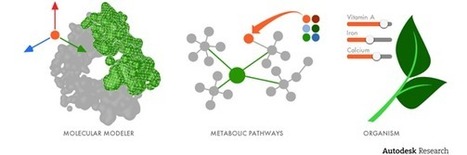
"Autodesk, a quirky software start-up in Marin County, north of San Francisco, rose to prominence in the early 1980s because of AutoCAD, its computer-aided design program that was intended for use on personal computers. Over the next decade, AutoCAD became the standard design tool for architects and engineers.





by
More than a decade ago, Collins, a decorated scientist at Boston University, helped give birth to synthetic biology, which soon grew into arguably the world's hottest and most poorly defined scientific discipline. Its practitioners made big promises: that by harnessing the ideas of engineering and applying them to genetics, they would create cheap, abundant biofuels, customized medicine, even self-growing houses, as one scientist predicted. The potential for mastering life was so exciting that scientists talked about applications decades away as if they were around the bend. Scholars from the Bay Area and Boston issued forth into industry, promising to reinvent life from the inside out, evolution be damned. Drawing inspiration from electrical circuits and computing, they'd create standardized biological parts. The notion drew easy comparisons to Legos: Snap them together, and soon enough you'd have control of life. Since 2004 investors have poured at least $1.84-billion into synthetic-biology start-ups; the government has added many more millions in research dollars. But more recently, the hype has died down. Most of those companies have made grinding progress, not breakthroughs. Much potential remains to reinvent manufacturing and medicine, but the road is far longer than some imagined......"Paul Voosen
"Let's make one thing clear: Jim Collins won't grow you a house any time soon.
http://bit.ly/XkOKOz