



SynBioFromLeukipposInstitute
130.0K views |
+0 today
 Your new post is loading...
 Scoop.it!
Gerd Moe-Behrens's insight:
by 
Scoop.it!
Gerd Moe-Behrens's insight:
Michal Galdzicki Evren Sirin Tuesday, June 4, 2013 01:30 PM - 02:15 PM Level: Technical - Introductory "Synthetic Biology is an emerging interdisciplinary field that takes an engineering approach to the design and development of novel biological devices and systems for useful purposes ranging from the production of anti-malarial drugs, to improved antibiotics, to tumor-tracking bacteria, and to engineering new biofuels. The main idea behind Synthetic Biology is to treat DNA sequences as Lego bricks and put these bricks together in different ways to build a new DNA strand that will perform a specific function.In this talk, we will describe how Semantic Technologies are being used to address many challenges synthetic biologists face today in the management of information throughout the synthetic biology research lifecycle. We will describe the RDF-based Synthetic Biology Open Language (SBOL), a standard for sharing and reusing synthetic biology designs that we have been helping to develop over the last several years, and SBPkb, a public SPARQL endpoint populated with more than 20 thousand synthetic biology parts. We will describe our early successes applying the principles of version control management from software engineering to annotate versions of synthetic biology designs using RDF. We will explain how Semantic Technologies are crucial for our ultimate goal of building intelligent CAD tools that allow researchers not only leverage reusable libraries of components, but also to carry out intelligent component retrieval, error detection, workflow management, and decision support for the design and assembly of new biological constructs. Dr. Evren Sirin is the Chief Technology Officer of Clark & Parsia, LLC. He is responsible for the ongoing design, maintenance, and implementation of the OWL 2 reasoner Pellet along with other C&P products based on semantic technologies. His areas of expertise include automated reasoning for Web ontologies, Description Logic (DL) reasoning, and AI planning. Before joining C&P, Dr. Sirin was a graduate research assistant at the MINDSWAP research group directed by Prof. Jim Hendler and received his PhD degree in Computer Science from University of Maryland, College Park in 2006. He authored many publications in top-tier journals and conferences about the Semantic Web and contributed to the standardization efforts for OWL and OWL-S. Michal is a Senior Fellow in the Department of Biomedical Informatics and Medical Education at the University of Washington. His research is focused on informatics for synthetic biologists. He works on the Synthetic Biology Information Lifecycle Management for the Enterprise project with Professors John Gennari and Herbert Sauro in collaboration with Dr. Evren Sirin from Clark and Parsia, LLC. Michal completed his PhD in Biomedical and Health Informatics at the University of Washington in 2012. As part of his dissertation research he co-founded the Synthetic Biology Open Language (SBOL) an information exchange standard for biological engineering. Michal continues to serve as an SBOL Editor. His previous research at the Children’s Hospital Boston was on the genetic basis of Autism. He received a BS in Biology from the University of Maryland in 2002 and a MS in Bioinformatics from Boston University in 2005."http://bit.ly/12G9EMp ;
Scoop.it!
Gerd Moe-Behrens's insight:
by
Scoop.it!
Gerd Moe-Behrens's insight:
Have a look at this awesome special edition of science. I am wondering about the possibilities of a quantumbiocomputer.
Scoop.it!
Gerd Moe-Behrens's insight:
Scoop.it!
Gerd Moe-Behrens's insight:
"Synthace, a UCL spin-out, has been awarded funding from the Technology Strategy Board for a collaborative project with UCL and the University of Manchester. The company was one of over a dozen cutting-edge synthetic biology companies which received part of a £5.3 million government cash injection into research in this area, with the investment from the Technology Strategy Board and Research Councils helping to fund 15 projects across the UK. Synthetic biology is an emerging, multidisciplinary approach at the intersection of engineering, bioscience, chemistry, and information technology, and builds atop many areas of innovation in which the UK has traditionally been a world leader. It aims to design and engineer novel biologically based parts, devices and systems, as well as redesign existing natural biological systems. “This funding will enable us to bring together a unique suite of technologies for the rapid engineering of a micro-organism which can produce a commercially high-value chemical,” says Sean Ward, Synthace’s CEO. “The project will demonstrate a new way of engineering biology, with timescales in months rather than years, which will impact sectors across the UK and global economies.......*
Scoop.it!
Gerd Moe-Behrens's insight:
A gret conference about the future of scientific publishing http://bit.ly/Zip6df
Scoop.it!
Gerd Moe-Behrens's insight:
by
Scoop.it!
Gerd Moe-Behrens's insight:
by
Scoop.it!
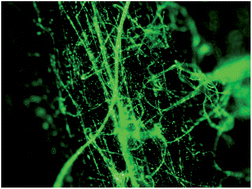
Recent years have seen interest in approaches for directly generating fibers and scaffolds following a rising trend for their exploration in the health sciences.
Gerd Moe-Behrens's insight:
By Jayasinghe SN. "Recent years have seen interest in approaches for directly generating fibers and scaffolds following a rising trend for their exploration in the health sciences. In this review the author wishes to briefly highlight the many approaches explored to date for generating such structures, while underlining their advantages and disadvantages, and their contribution in particular to the biomedical sciences. Such structures have been demonstrated as having implications in both the laboratory and the clinic, as they mimic the native extra cellular matrix. Interestingly the only materials investigated until very recently for generating fibrous architectures employed either natural or synthetic polymers with or without the addition of functional molecule(s). Arguably although such constructs have been demonstrated to have many applications, they lack the one unit most important for carrying out the ability to directly reconstruct a three-dimensional functional tissue, namely living cells. Therefore recent findings have demonstrated the ability to directly form cell-laden fibers and scaffolds in useful quantities from which functional three-dimensional living tissues can be conceived. These recent developments have far-reaching ramifications to many areas of research and development, a few of which range from tissue engineering and regenerative medicine, a novel approach to analyzing cell behavior and function in real time in three-dimensions, to the advanced controlled and targeted delivery of experimental and/or medical cells and/or genes for localized treatment. At present these developments have passed all in vitro and in vivo mouse model based challenge trials and are now spearheading their journey towards initiating human clinical trials."http://rsc.li/13DEjcz ;
Scoop.it!
Gerd Moe-Behrens's insight:
by
Scoop.it!

Event listing from the UC Berkeley Calendar Network
Gerd Moe-Behrens's insight:
Seminar | March 6 | 4:10 p.m. | 114 Morgan Hall
|
Scoop.it!
Gerd Moe-Behrens's insight:
By Paul Voosen
Scoop.it!
Gerd Moe-Behrens's insight:
"Predictable activity is what synthetic biologists seek as they combine DNA parts they have designed in order to re-create a biological process. Two methods published online this week in Nature Methods propose how to first assess the quality of current biological parts and then how to design an element that performs reliably. One of the ongoing challenges in synthetic biology is that parts that work well in one local DNA neighborhood or genomic context fail to perform in another. Drew Endy, Adam Arkin, and colleagues tackled this problem of reliability with two studies. First they introduce a statistical framework to assess the quality of bacterial transcription and translation control elements. They assign to each part a quality score that predicts its performance across different contexts. Then they design a control element to drive the expression of a gene of interest that performed reliably over a 1,000-fold dynamic range. These methods will take most of the guess work out of synthetic circuit design. Once a large number of elements are characterized, researchers can more confidently select the part they need to achieve the desired level of expression, without having to worry that neighboring DNA will interfere with or even silence the part."
Scoop.it!
|


|
Scooped by
Gerd Moe-Behrens
March 9, 2013 1:16 PM
|
Scoop.it!

Gerd Moe-Behrens's insight:
Right in line with the discussion initialized by the extra edition of Science about quantum computer: *Quantum Biology at the Cellular Level-elements of the research program* byBordonaro M, Ogryzko V. "Quantum biology is emerging as a new field at the intersection between fundamental physics and biology, promising novel insights into the nature and origin of biological order. We discuss several elements of QBCL (Quantum Biology at Cellular Level)-a research program designed to extend the reach of quantum concepts to higher than molecular levels of biological organization. We propose a new general way to address the issue of environmentally-induced decoherence and macroscopic superpositions in biological systems, emphasizing the 'basis-dependent' nature of these concepts. We introduce the notion of 'formal superposition' and distinguish it from that of Schroedinger's cat (i.e., a superposition of macroscopically distinct states). Whereas the latter notion presents a genuine foundational problem, the former one contradicts neither common sense nor observation, and may be used to describe cellular 'decision-making' and adaptation. We stress that the interpretation of the notion of 'formal superposition' should involve non-classical correlations between molecular events in a cell. Further, we describe how better understanding of the physics of Life can shed new light on the mechanism driving evolutionary adaptation (viz., 'Basis-Dependent Selection', BDS). Experimental tests of BDS and the potential role of synthetic biology in closing the 'evolvability mechanism' loophole are also discussed." http://bit.ly/WT6fBY ref and fig http://bit.ly/Y1JdLM
|
|
Scooped by
Gerd Moe-Behrens
March 8, 2013 3:52 PM
|
Scoop.it!

Gerd Moe-Behrens's insight:
by
Shi Z, Wedd AG, Gras SL.
"The development of synthetic biology requires rapid batch construction of large gene networks from combinations of smaller units. Despite the availability of computational predictions for well-characterized enzymes, the optimization of most synthetic biology projects requires combinational constructions and tests. A new building-brick-style parallel DNA assembly framework for simple and flexible batch construction is presented here. It is based on robust recombination steps and allows a variety of DNA assembly techniques to be organized for complex constructions (with or without scars). The assembly of five DNA fragments into a host genome was performed as an experimental demonstration."
http://bit.ly/WzeTL9
|
|
Scooped by
Gerd Moe-Behrens
March 8, 2013 2:45 PM
|
Scoop.it!

Gerd Moe-Behrens's insight:
by
Emmanuelle Charpentier& Jennifer A. Doudna
"A bacterial enzyme that uses guide RNA molecules to target DNA for cleavage has been adopted as a programmable tool to site-specifically modify genomes of cells and organisms, from bacteria and human cells to whole zebrafish."
http://bit.ly/WPTWXd
Fig ref http://bit.ly/MyJGkY

keith martin's curator insight,
September 16, 2013 8:30 AM
there taking the dna out of zebrafish and changeing it. there changing the genome. they used the bacterial enzyme that guids rna to dna as a tool to change genomes of cells in a orginism. Its like they take the dna that gives the fish black stripes and alter it to blue and then inject it in another fish and the fish becomes white and blue.

|
|
Scooped by
Gerd Moe-Behrens
March 7, 2013 5:22 PM
|
Scoop.it!

Gerd Moe-Behrens's insight:
by
Furukawa K, Hohmann S.
"All living cells respond to external stimuli and execute specific physiological responses through signal transduction pathways. Understanding the mechanisms controlling signalling pathways is important for diagnosing and treating diseases and for reprogramming cells with desired functions. Although many of the signalling components in the budding yeast Saccharomyces cerevisiae have been identified by genetic studies, many features concerning the dynamic control of pathway activity, cross-talk, cell-to-cell variability or robustness against perturbation are still incompletely understood. Comparing the behaviour of engineered and natural signalling pathways offers insight complementary to that achievable with standard genetic and molecular studies. Here, we review studies that aim at a deeper understanding of signalling design principles and generation of novel signalling properties by engineering the yeast mitogen-activated protein kinase (MAPK) pathways. The underlying approaches can be applied to other organisms including mammalian cells and offer opportunities for building synthetic pathways and functionalities useful in medicine and biotechnology."
http://bit.ly/XYPju1
|
|
Scooped by
Gerd Moe-Behrens
March 6, 2013 3:53 PM
|
Scoop.it!

Gerd Moe-Behrens's insight:
On 03/25 SynBERC and Discover Magazine will co-host: *Programming life*: *The Revolutionary Potential of Synthetic Biology*....
|
|
Scooped by
Gerd Moe-Behrens
March 5, 2013 5:08 PM
|
Scoop.it!
Gerd Moe-Behrens's insight:
Talk by
Atul Butte
"There is an urgent need to translate genome-era discoveries into clinical utility, but the difficulties in making bench-to-bedside translations haven't been well described. The nascent field of translational bioinformatics may help. Dr. Butte's lab at Stanford University builds and applies tools that convert more than 300 billion points of molecular, clinical, and epidemiological data (measured by researchers and clinicians over the past decade) into diagnostics, therapeutics, and new insights into disease. Dr. Butte, a bioinformatician and pediatric endocrinologist, will highlight his lab's work on using publicly available molecular measurements to find new uses for drugs, discovering new treatable mechanisms of disease in type 2 diabetes, and evaluating patients presenting with whole genomes sequenced."
Runtime: 01:07:42
http://bit.ly/XM7o0z
|
|
Scooped by
Gerd Moe-Behrens
March 5, 2013 4:33 PM
|
Scoop.it!

Gerd Moe-Behrens's insight:
by
Saunders K, Lomonossoff GP.
"This review discusses the varying roles that have been played by many plant-viral regulatory sequences and proteins in the creation of plant-based expression systems and virus particles for use in nanotechnology. Essentially, there are two ways of expressing an exogenous protein: the creation of transgenic plants possessing a stably integrated gene construction, or the transient expression of the desired gene following the infiltration of the gene construct. Both depend on disarmed strains of Agrobacterium tumefaciens to deliver the created gene construction into cell nuclei, usually through the deployment of virus-derived components. The importance of efficient mRNA translation in the latter process is highlighted. Plant viruses replicate to sustain an infection to promote their survival. The major product of this, the virus particle, is finding increasing roles in the emerging field of bionanotechnology. One of the major products of plant-viral expression is the virus-like particle (VLP). These are increasingly playing a role in vaccine development. Similarly, many VLPs are suitable for the investigation of the many facets of the emerging field of synthetic biology, which encompasses the design and construction of new biological functions and systems not found in nature. Genetic and chemical modifications to plant-generated VLPs serve as ideal starter templates for many downstream synthetic biology applications."
http://bit.ly/VBDNZ9
|
|
Scooped by
Gerd Moe-Behrens
March 5, 2013 3:20 PM
|
Scoop.it!

Gerd Moe-Behrens's insight:
Congratulations!
The Synthetic Biology Open Language a data exchange standard for biological engineering
by
+Michal Galdzicki
"Synthetic biology is the emerging research and engineering field concerned with the design and construction of new biological functions and systems. Synthetic biologists are engineering organisms to solve outstanding problems in medicine, bio-energy, environmental health, and nutrition. Their goal is to improve the biological engineering process by applying standardization, decoupling, and abstraction. To more efficiently engineer gene circuits synthetic biologists need software tools that support standardized data exchange. For my dissertation research I led the development and deployment of the Synthetic Biology Open Language (SBOL). In this dissertation, I present the SBOL community, the specification, and demonstrations of its use. The SBOL community is supported by stakeholders from the synthetic biology software community. The SBOL Core specifies the vocabulary, data model, and format to define the standard. I describe SBOL Core as a common representation for synthetic biology designs capable of describing theoretical DNA component designs; annotated DNA sequence; and collections of components. To aid the exchange synthetic biological designs among software tools I explain the software libraries which support the implementation of SBOL. Then, I illustrate the recognition of its value and acceptance by the stakeholders through the deployment of the technology at collaborating sites. Finally, I show how the choice of Semantic Web technology to facilitate the information exchange between software can also be used for information retrieval to improve the selection of DNA components in new designs. Through this work I contribute to the development of informatics standards a computational infrastructure to enable a rapid biological engineering process for biotechnology."
http://bit.ly/XR9qNX
see also
http://www.sbolstandard.org
|
|
Scooped by
Gerd Moe-Behrens
March 4, 2013 4:56 PM
|
Scoop.it!
Gerd Moe-Behrens's insight:
Talk btDr. David Deamer
UC Santa Cruz, Biomolecular Engineering "Synthetic life, defined as life that did not arise from preexisting life, spontaneously emerged when the first cell-like structures assembled from mixtures of organic molecules on the early Earth. These structures, referred to as protocells, exhibited certain properties of living systems and represented evolutionary steps toward the first forms of cellular life. Driven by the forces of natural selection, those first cells evolved into the biosphere we inhabit today. In my talk I will describe how we can learn about the origin of life by fabricating protocells in the laboratory."
http://bit.ly/XSsvvZ

Emily Anna Baker's curator insight,
March 5, 2013 1:09 PM
A fantastic enlightenment into the origins of every species.





by
By Paul Voosen"In any science, it’s hard to talk to the outside world without resorting to metaphor and analogy. That is especially true for the nascent field of synthetic biology, which promises to apply the ideas of engineering to life, as I detail this week in The Chronicle Review. At some level, really, synthetic biology is nothing but an extended metaphor. Yet such metaphors, designed to convey complex science to the public, could be why the expectations of synthetic biology have gone so far beyond its capabilities. By “debiologizing” the work, the metaphors of computing and Lego bricks suggest an advanced understanding of the function, reliability, and purpose of living organisms that is often at odds with what’s known in biology. At least, that’s the case made by Eleonore Pauwels, a research scholar who has studied synthetic biology for the past few years at the Woodrow Wilson International Center for Scholars. “If researchers … are aware of the relative weakness of the analogy around the ‘software of life,’” she writes in a new study, out soon in BioScience, “the narratives produced in its wake might affect not only public perceptions and trust but might also have broader ramifications that would influence debates on safety assessment and ownership.” No one scientist, communicator, or journalist is responsible for how synthetic biology has been conveyed to the public. But when the Wilson Center conducted several focus groups on synthetic biology in recent years, they discussed in particular one paragraph, from a well-known article by The New Yorker’s Michael Specter: [Scientists] in the field, who have formed bicoastal clusters in the Bay area and in Cambridge, Massachusetts, see cells as hardware and genetic code as the software required to make them run. Synthetic biologists are convinced that with enough knowledge, they will be able to write programs to control those genetic components, programs that would let them not only alter nature but guide evolution as well. The hype building off such easy metaphors pains some scientists. Take Timothy S. Gardner, who helped invent the field with Jim Collins back in the late 1990s. Gardner is vice president for research and development at Amyris, one of the most prominent synthetic-biology start-ups. I reached him on the phone last year, while he was checking out the firm’s new fermenting facilities in Brazil. He’s frustrated with how the public sees the field. People seem to think scientists can literally design an organism from scratch, he said. And he can’t blame them if they think designer dinosaurs are just a few years off. “That’s fueled by the hype a lot of scientists generate,” he said. “They are intentionally blurring the line between science fiction and science fact. … Ultimately we do a disservice to ourselves to blur that line.” At times, such hype seems almost part of the scientific process. It’s happened before. See nanotechnology. Or biotechnology. It will happen again. See Big Data. It’s all part of a modern regime of innovation built on “technoscientific promises,” as Pauwels put it. Indeed, based on the center’s research, which amounts to several large national polls and a cluster of focus groups, the public may be more savvy than expected. When briefed on synthetic biology—by 2010 one-quarter of people had heard of the discipline—the public expressed neither candid optimism nor unilateral rejection. People were intrigued by the potential for doing good. And yes, they also expressed wariness of the field, but they were less worried about scientists’ ”playing God” than about their failure to admit uncertainty. Amyris’s Gardner rarely has the time to publish, given how he’s been pushing the 100 researchers that work under him. (“We’ve literally been in a sprint for five years,” he said.) But this year, he did write a short essay for Trends in Biotechnology, laying out his thoughts on the field. It still has revolutionary implications, he writes. But its most profound result could be a way of communicating, as biologists finally learn to standardize how they talk about biological function. The processes used to “characterize, archive, and communicate the function of biological parts are wholly inadequate,” he writes. They must do better. There’s another metaphor that can be applied to synthetic biology, he adds. And this one might be a bit more apt, given where things are: “Relative to its ambitions,” he writes, “synthetic biology is where aerospace engineering was in the 1800s—pre-flight.”..."
http://bit.ly/ZBQNxU