SynBioFromLeukipposInstitute
130.0K views | +0 today
SynBioFromLeukipposInstitute
Your new post is loading...
Scooped by Gerd Moe-Behrens
March 26, 2013 5:24 PM
Scoop.it!

Synthesizing Biomolecule-Based Boolean Logic Gates

Synthesizing Biomolecule-Based Boolean Logic Gates | SynBioFromLeukipposInstitute | Scoop.it
Gerd Moe-Behrens's insight:

A great review about the different kinds of logic gates engineered with biological material:

*Synthesizing Biomolecule-Based Boolean Logic Gates*

by
Miyamoto T, Razavi S, Derose R, Inoue T.

"One fascinating recent avenue of study in the field of synthetic biology is the creation of biomolecule-based computers. The main components of a computing device consist of an arithmetic logic unit, the control unit, memory, and the input and output devices. Boolean logic gates are at the core of the operational machinery of these parts, hence to make biocomputers a reality, biomolecular logic gates become a necessity. Indeed, with the advent of more sophisticated biological tools, both nucleic acid- and protein-based logic systems have been generated. These devices function in the context of either test tubes or living cells and yield highly specific outputs given a set of inputs. In this review, we discuss various types of biomolecular logic gates that have been synthesized, with particular emphasis on recent developments that promise increased complexity of logic gate circuitry, improved computational speed, and potential clinical applications."

http://bit.ly/ZbHwem ;

No comment yet.
Scooped by Gerd Moe-Behrens
March 24, 2013 8:24 PM
Scoop.it!

New opportunities by synthetic biology for biopharmaceutical production in Pichia pastoris

New opportunities by synthetic biology for biopharmaceutical production in Pichia pastoris | SynBioFromLeukipposInstitute | Scoop.it
Gerd Moe-Behrens's insight:

*New opportunities by synthetic biology for biopharmaceutical production in Pichia pastors*

by
Thomas Vogl, Franz S Hartner, Anton Glieder

"Biopharmaceuticals are an integral part of modern medicine and pharmacy. Both, the development and the biotechnological production of biopharmaceuticals are highly cost-intensive and require suitable expression systems. In this review we discuss established and emerging tools for reengineering the methylotrophic yeast Pichia pastoris for biopharmaceutical production. Recent advancements of this industrial expression system through synthetic biology include synthetic promoters to avoid methanol induction and to fine-tune protein production. New platform strains and molecular cloning tools as well as in vivo glycoengineering to produce humanized glycoforms have made P. pastoris an important host for biopharmaceutical production."

http://bit.ly/100fP89

No comment yet.
Scooped by Gerd Moe-Behrens
March 22, 2013 7:42 PM
Scoop.it!

nmeth.2434_video_s4

http://www.nature.com/news/flashing-fish-brains-filmed-in-action-1.12621 It looks like an oddly shaped campfire, but it is activity of individual neurons acr...
Gerd Moe-Behrens's insight:

It looks like an oddly shaped campfire, but it is activity of individual neurons across a larval fish brain. It is the first time that researchers have been able to image an entire vertebrate brain at the level of single cells.

NATURE Methods | Article:
http://www.nature.com/nmeth/journal/vaop/ncurrent/full/nmeth.2434.html

No comment yet.
Scooped by Gerd Moe-Behrens
March 22, 2013 7:28 PM
Scoop.it!

Text-mining spat heats up

Text-mining spat heats up | SynBioFromLeukipposInstitute | Scoop.it
Gerd Moe-Behrens's insight:

*Scientists and publishers clash over licences that would let machines read research papers* 

by
Richard Van Noorden

"It is seen as the future of computer-based research — if only the gatekeepers would let scientists in. Researchers have complained bitterly over the past year that publishers do not allow them to use computer programs to download and crawl across the text of research articles, a methodology known as text mining that can reveal large-scale patterns in the studies (see ‘Uses of text mining’).

 Fearful that their content might be freely redistributed, publishers tend to block programs that they find crawling the full text of articles, making no exceptions for users who have paid for access. They give permission only on a case-by-case basis to those who negotiate agreements on access and use. Now, the European Commission (EC) and publishers’ consortia are trying to craft clearer rules. But complaints last month to an EC group set up to discuss text and data mining suggest that disagreements are still rife. “Data- and text-mining techniques … could hold the key to the next medical breakthrough, if only we freed them from their current legal tangle,” Neelie Kroes, vice-president of the European Commission, told a Brussels intellectual-property summit last September."


http://bit.ly/ZienvB

No comment yet.
Scooped by Gerd Moe-Behrens
March 21, 2013 5:45 PM
Scoop.it!

A controllable gene expression system in liposomes that includes a positive feedback loop

A controllable gene expression system in liposomes that includes a positive feedback loop | SynBioFromLeukipposInstitute | Scoop.it
Gerd Moe-Behrens's insight:

by
Shungo Kobori ,  Norikazu Ichihashi ,  Yasuaki Kazuta and Tetsuya Yomo

"We introduced a positive feedback loop into a LacI-dependent gene expression system in lipid vesicles, producing a cell-like system that senses and responds to an external signal with a high signal-to-noise ratio. This fully reconstituted system will be a useful tool in future applications in in vitro synthetic biology."


http://rsc.li/Z42L2A

No comment yet.
Scooped by Gerd Moe-Behrens
March 20, 2013 4:24 PM
Scoop.it!

Andrew Hessel - Synthetic Biology

Gerd Moe-Behrens's insight:

Video 7:45 min: 

*Andaaz talks to several amazing experts on innovation in Synthetic Biology*

" We visit Boston, MA and speak to Andrew Hessel from Autodesk, Reshma Shetty and Tom Knight from Ginko Bioworks, and Dr. Ron Weiss from MIT about Synthetic Biology and how scientists are working on the cure for cancer.

 Andaaz is an inspirational talk show on Sony Entertainment Television covering topics of entrepreneurship, innovation, health, entertainment, spirituality, travel, food, fashion and much more."


http://bit.ly/11gIE1a

No comment yet.
Scooped by Gerd Moe-Behrens
March 19, 2013 5:04 PM
Scoop.it!

Cold Spring Harbor’s first Synthetic Biology Course – now accepting applications! – The Haynes Lab

Cold Spring Harbor’s first Synthetic Biology Course – now accepting applications! http://t.co/pAqHR71Ihr
No comment yet.
Scooped by Gerd Moe-Behrens
March 18, 2013 7:09 PM
Scoop.it!

Organovo – The Company Behind The First Commercial Bioprinter - 3D Printing Industry

Organovo – The Company Behind The First Commercial Bioprinter - 3D Printing Industry | SynBioFromLeukipposInstitute | Scoop.it
Organovo is a company that specialises in bioprinting – the laboratory engineering of tissue. Bioengineering is also the focus of several other universities and research instates.
No comment yet.
Scooped by Gerd Moe-Behrens
March 18, 2013 6:33 PM
Scoop.it!

Biotechnology as Art Form

Biotechnology as Art Form | SynBioFromLeukipposInstitute | Scoop.it
Gerd Moe-Behrens's insight:

by
Carolina A. Miranda 

"IIn the spring of 2008, curator Paola Antonelli at the Museum of Modern Art in New York was forced to kill a work of art. A thumb-size “jacket” cultivated from mouse tissue that lived inside a sterile glass ball, Victimless Leather was not your typical museum piece. The cells were very much alive—and they were multiplying. So rapidly, in fact, that five weeks into the exhibition, they were threatening to clog the incubation system that kept them alive. Antonelli would have to cut off the nutrient supply. But she couldn’t bring herself to do it. “There was no way I was going to switch it off,” she recalls. “I can’t even kill a mosquito.”

 Victimless Leather (2004) was produced by Oron Catts and Ionat Zurr, the Australian art duo known as Tissue Culture & Art Project (TC&A). For almost 20 years, they have created works that are as much about art as they are about cell biology. The two have grown wings from pig bone cells and made miniature dolls out of mouse tissue. In 2003, they produced Semi-Living Steak, lab-grown meat consisting of frog cells cultivated in a bioreactor. These were cooked up in a honey-garlic sauce and served to diners at a museum in France, while the frog that supplied the cells looked on quietly from a tank. (The “steak,” says Catts, had the consistency of gelatinous goo wrapped around felt. The sauce, however, was “really good.”)...."


http://bit.ly/15jiCLd

No comment yet.
Scooped by Gerd Moe-Behrens
March 17, 2013 2:56 PM
Scoop.it!

The biological computer startup CytoComp - Top team at Stanford online class

The biological computer startup CytoComp - Top team at Stanford online class | SynBioFromLeukipposInstitute | Scoop.it
Gerd Moe-Behrens's insight:

CytoComp is one of the few top teams on Venture Lab

(Technological Entrepreneurship by Professor Chuck Eesley, online class provided by Stanford University)
selected for a one-to-one interview with a well known expert/investor to get
feedback

http://www.cytocomp.com/

No comment yet.
Scooped by Gerd Moe-Behrens
March 17, 2013 1:25 PM
Scoop.it!

A Data-Driven Framework for Identifying Nonlinear Dynamic Models of Genetic Parts

A Data-Driven Framework for Identifying Nonlinear Dynamic Models of Genetic Parts | SynBioFromLeukipposInstitute | Scoop.it
Gerd Moe-Behrens's insight:

by
Kirubhakaran Krishnanathan , Sean R. Anderson , Stephen A. Billings , and Visakan Kadirkamanathan

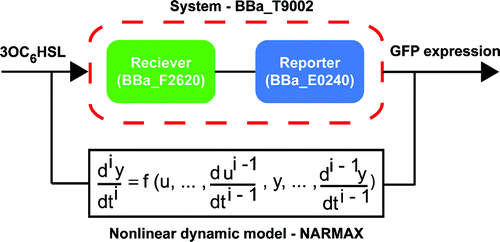
"A key challenge in synthetic biology is the development of effective methodologies for characterization of component genetic parts in a form suitable for dynamic analysis and design. In this investigation we propose the use of a nonlinear dynamic modeling framework that is popular in the field of control engineering but is novel to the field of synthetic biology: Nonlinear AutoRegressive Moving Average model with eXogenous inputs (NARMAX). The framework is applied to the identification of a genetic part BBa_T9002 as a case study. A concise model is developed that exhibits accurate representation of the system dynamics and a structure that is compact and consistent across cell populations. A comparison is made with a biochemical model, derived from a simple enzymatic reaction scheme. The NARMAX model is shown to be comparably simple but exhibits much greater prediction accuracy on the experimental data. These results indicate that the data-driven NARMAX framework is an attractive technique for dynamic modeling of genetic parts."

http://bit.ly/WPSrgW

No comment yet.
Scooped by Gerd Moe-Behrens
March 17, 2013 1:14 PM
Scoop.it!

Automated Selection of Synthetic Biology Parts for Genetic Regulatory Network

Automated Selection of Synthetic Biology Parts for Genetic Regulatory Network | SynBioFromLeukipposInstitute | Scoop.it
Gerd Moe-Behrens's insight:

by
Fusun Yaman, Swapnil Bhatia, Aaron Adler, Douglas Densmore and Jacob Beal

"Raising the level of abstraction for synthetic biology design requires solving several challenging problems, including mapping abstract designs to DNA sequences. In this paper we present the first formalism and algorithms to address this problem. The key steps of this transformation are feature matching, signal matching, and part matching. Feature matching ensures that the mapping satisfies the regulatory relationships in the abstract design. Signal matching ensures that the expression levels of functional units are compatible. Finally, part matching finds a DNA part sequence that can implement the design. Our software tool MatchMaker implements these three steps."

http://bit.ly/L9BYbZ

No comment yet.
Scooped by Gerd Moe-Behrens
March 17, 2013 1:11 PM
Scoop.it!

Hierarchical Modeling for Synthetic Biology

Hierarchical Modeling for Synthetic Biology | SynBioFromLeukipposInstitute | Scoop.it
Gerd Moe-Behrens's insight:

by
Deepak Chandran  and Herbert M. Sauro

"One of the characteristics of synthetic biology is that it often combines mathematical modeling with experimental work. The link between modeling and experiments is carried out by human researchers who have a conceptual understanding of the underlying biological system. At present, there is no method for representing a conceptual description that can be used to connect mathematical models and experimental data, especially sequence annotations, pertaining to the same underlying biological system. One reason for this limitation is that there can exist different mathematical models of the same biological system. In such cases, the same annotation in a DNA sequence would map differently to different models of the same system. In order to enable software support for synthetic biology, a software framework is needed such that it is able to capture a conceptual description of a biological system, including quantitative values, without confining itself to one mathematical model. The novel use of hierarchical modeling inside TinkerCell (www.tinkercell.com) provides one potential software solution for representing a “conceptual diagram” of a biological system. The conceptual diagram does not assume any underlying model. Rather, the diagram is mapped automatically to one of several models. The diagram can then contain information relevant for both modeling and experimental work. Computer-aided design (CAD) can be very useful to synthetic biology. CAD allows engineers to spend more effort at the design stage and less at the construction stage by automatically performing many tasks that are currently performed by human researchers. The ability to automatically link models and experimental results will be one step in the development of practical CAD systems for synthetic biology."

http://bit.ly/SSDHaX

No comment yet.
Scooped by Gerd Moe-Behrens
March 25, 2013 7:51 PM
Scoop.it!

Genome engineering in Saccharomyces cerevisiae using CRISPR-Cas systems

Genome engineering in Saccharomyces cerevisiae using CRISPR-Cas systems | SynBioFromLeukipposInstitute | Scoop.it
Gerd Moe-Behrens's insight:

 by
James E. DiCarlo, Julie E. Norville, Prashant Mali, Xavier Rios, John Aach2 and George M. Church

"Clustered Regularly Interspaced Short Palindromic Repeats (CRISPR) and CRISPR-associated (Cas) systems in bacteria and archaea use RNA-guided nuclease activity to provide adaptive immunity against invading foreign nucleic acids. Here, we report the use of type II bacterial CRISPR-Cas system in Saccharomyces cerevisiae for genome engineering. The CRISPR-Cas components, Cas9 gene and a designer genome targeting CRISPR guide RNA (gRNA), show robust and specific RNA-guided endonuclease activity at targeted endogenous genomic loci in yeast. Using constitutive Cas9 expression and a transient gRNA cassette, we show that targeted double-strand breaks can increase homologous recombination rates of single- and double-stranded oligonucleotide donors by 5-fold and 130-fold, respectively. In addition, co-transformation of a gRNA plasmid and a donor DNA in cells constitutively expressing Cas9 resulted in near 100% donor DNA recombination frequency. Our approach provides foundations for a simple and powerful genome engineering tool for site-specific mutagenesis and allelic replacement in yeast."

http://bit.ly/109hfvH

No comment yet.
Scooped by Gerd Moe-Behrens
March 23, 2013 8:21 PM
Scoop.it!

Building-in Biosafety for Synthetic Biology

Building-in Biosafety for Synthetic Biology | SynBioFromLeukipposInstitute | Scoop.it
Gerd Moe-Behrens's insight:

by
Wright O, Stan GB, Ellis T.

"As the field of synthetic biology develops, real-world applications are moving from the realms of ideas and laboratory-confined research towards implementation. A pressing concern, particularly with microbial systems, is that self-replicating re-engineered cells may produce undesired consequences if they escape or overwhelm their intended environment. To address this biosafety issue, multiple mechanisms for constraining microbial replication and horizontal gene transfer have been proposed. These include the use of host-construct dependencies such as toxin-antitoxin pairs, conditional plasmid replication or the requirement for a specific metabolite to be present for cellular function. While refactoring of the existing genetic code or tailoring of orthogonal systems, e.g. xeno nucleic acids, offer future promise of more stringent 'firewalls'; between natural and synthetic cells, here we focus on what can be achieved using existing technology. The state-of-the-art in designing for biosafety is summarised, and general recommendations are made (e.g. short environmental retention times) for current synthetic biology projects to better isolate themselves against potentially negative impacts."

http://1.usa.gov/X3ztU8 ;

see also: 

*Preparing synthetic biology for the world*

by
Gerd H. G. Moe-Behrens, Rene Davis and Karmella A. Haynes

"Synthetic Biology promises low-cost, exponentially scalable products and global health solutions in the form of self-replicating organisms, or “living devices.” As these promises are realized, proof-of-concept systems will gradually migrate from tightly regulated laboratory or industrial environments into private spaces as, for instance, probiotic health products, food, and even do-it-yourself bioengineered systems. What additional steps, if any, should be taken before releasing engineered self-replicating organisms into a broader user space? In this review, we explain how studies of genetically modified organisms lay groundwork for the future landscape of biosafety. Early in the design process, biological engineers are anticipating potential hazards and developing innovative tools to mitigate risk. Here, we survey lessons learned, ongoing efforts to engineer intrinsic biocontainment, and how different stakeholders in synthetic biology can act to accomplish best practices for biosafety."

http://bit.ly/W8eV9J

No comment yet.
Scooped by Gerd Moe-Behrens
March 22, 2013 7:37 PM
Scoop.it!

A Unifying Mathematical Framework for Genetic Robustness, Environmenta

A Unifying Mathematical Framework for Genetic Robustness, Environmenta | SynBioFromLeukipposInstitute | Scoop.it
Gerd Moe-Behrens's insight:

*A Unifying Mathematical Framework for Genetic Robustness, Environmental Robustness, Network Robustness and their Trade-off on Phenotype Robustness in Biological Networks Part I*: *Gene Regulatory Networks in Systems and Evolutionary Biology*

by
Bor-Sen Chen and Ying-Po Lin

"Robust stabilization and environmental disturbance attenuation are ubiquitous systematic properties observed in biological systems at different levels. The underlying principles for robust stabilization and environmental disturbance attenuation are universal to bo th complex biological systems and sophisticated engineering systems. In many biological networks, network robustness should be enough to confer intrinsic robustness in order to tolerate intrinsic parameter fluctuations, genetic robustness for buffering genetic variations, and environmental robustness for resisting environmental disturbances. With this, the phenotypic stability of biological network can be maintained, thus guaranteeing phenotype robustness. This paper presents a survey on biological systems and then develops a unifying mathematical framework for investigating the principles of both robust stabilization and environmental disturbance attenuation in systems and evolutionary biology. Further, from the unifying mathematical framework, it was discovered that the phenotype robustness criterion for biological networks at different levels relies upon intrinsic robustness + genetic robustness + environmental robustness % network robustness. When this is true, the phenotype robustness can be maintained in spite of intrinsic parameter fluctuations, genetic variations, and environmental disturbances. Therefore, the trade-offs between intrinsic robustness, genetic robustness, environmental robustness, and network robustness in systems and evolutionary biology can also be investigated through their corresponding phenotype robustness criterion from the systematic point of view."

http://bit.ly/16Ociig

No comment yet.
Scooped by Gerd Moe-Behrens
March 21, 2013 5:50 PM
Scoop.it!

Dissecting and engineering metabolic and regulatory networks of thermophilic bacteria for biofuel production

Gerd Moe-Behrens's insight:

by

Lin L, Xu J.

"Interest in thermophilic bacteria as live-cell catalysts in biofuel and biochemical industry has surged in recent years, due to their tolerance of high temperature and wide spectrum of carbon-sources that include cellulose. However their direct employment as microbial cellular factories in the highly demanding industrial conditions has been hindered by uncompetitive biofuel productivity, relatively low tolerance to solvent and osmic stresses, and limitation in genome engineering tools. In this work we review recent advances in dissecting and engineering the metabolic and regulatory networks of thermophilic bacteria for improving the traits of key interest in biofuel industry: cellulose degradation, pentose-hexose co-utilization, and tolerance of thermal, osmotic, and solvent stresses. Moreover, new technologies enabling more efficient genetic engineering of thermophiles were discussed, such as improved electroporation, ultrasound-mediated DNA delivery, as well as thermo-stable plasmids and functional selection systems. Expanded applications of such technological advancements in thermophilic microbes promise to substantiate a synthetic biology perspective, where functional parts, module, chassis, cells and consortia were modularly designed and rationally assembled for the many missions at industry and nature that demand the extraordinary talents of these extremophiles."


http://1.usa.gov/Z44lBk

 
No comment yet.
Scooped by Gerd Moe-Behrens
March 20, 2013 4:54 PM
Scoop.it!

Microbial production of isoprenoids enabled by synthetic biology

Microbial production of isoprenoids enabled by synthetic biology | SynBioFromLeukipposInstitute | Scoop.it
Gerd Moe-Behrens's insight:

by
Cheryl M. Immethun1, Allison G. Hoynes-O’Connor, Andrea Balassy and Tae Seok Moon

"Microorganisms transform inexpensive carbon sources into highly functionalized compounds without toxic by-product generation or significant energy consumption. By redesigning the natural biosynthetic pathways in an industrially suited host, microbial cell factories can produce complex compounds for a variety of industries. Isoprenoids include many medically important compounds such as antioxidants and anticancer and antimalarial drugs, all of which have been produced microbially. While a biosynthetic pathway could be simply transferred to the production host, the titers would become economically feasible when it is rationa"lly designed, built, and optimized through synthetic biology tools. These tools have been implemented by a number of research groups, with new tools pledging further improvements in yields and expansion to new medically relevant compounds. This review focuses on the microbial production of isoprenoids for the health industry and the advancements though synthetic biology."


http://bit.ly/XqiNRq


Fig http://en.wikipedia.org/wiki/Isoprenoids

No comment yet.
Scooped by Gerd Moe-Behrens
March 19, 2013 5:20 PM
Scoop.it!

MANIPULATING MICROBIAL METABOLISM

MANIPULATING MICROBIAL METABOLISM | SynBioFromLeukipposInstitute | Scoop.it
Gerd Moe-Behrens's insight:

by
Eva J. Gordon

"Reactive oxygen species (ROS), chemically reactive substances such as hydrogen peroxide (H2O2) and superoxide anion radical (O2−), are normal byproducts of oxygen metabolism in organisms ranging from bacteria to humans. However, their high reactivity contributes to their destructive side, which manifests as damage to various biomolecules including DNA, RNA, proteins, and lipids. The destructive properties of ROS in microbes can be exploited to help kill pathogenic varieties, a skill that is desperately needed to combat the growing number of antibiotic-resistant bacteria that have emerged across the globe. However, the networks responsible for ROS production in bacteria are not well delineated. Now, Brynildsen et al. (Nat. Biotechnol. 2013, 31, 160−165) use computational metabolic modeling to guide strategies for manipulating ROS production in bacteria for the purpose of enhancing the organism’s susceptibility to toxic agents...."

http://bit.ly/WU1JIT

No comment yet.
Scooped by Gerd Moe-Behrens
March 19, 2013 4:23 PM
Scoop.it!

Ground-breaking frontier science explored at Imperial Fringe

Ground-breaking frontier science explored at Imperial Fringe | SynBioFromLeukipposInstitute | Scoop.it
Gerd Moe-Behrens's insight:

The 5th Imperial Fringe looking at the important work in synthetic biology
 
03/21
Imperial College London
Entrance on Exhibition Road 17:30 – 20.30.

http://bit.ly/WBTZJ9

No comment yet.
Scooped by Gerd Moe-Behrens
March 18, 2013 7:00 PM
Scoop.it!

Tools for the Synthetic Biology Revolution

Tools for the Synthetic Biology Revolution | SynBioFromLeukipposInstitute | Scoop.it
Gerd Moe-Behrens's insight:

by
Research.gov admin

"Engineered biological systems show promise for many human needs, such as computing, chemicals, energy, food, materials and health care. To create these systems, engineers and scientists in the field of synthetic biology develop new biological devices that exhibit desired behavior by altering and/or combining biological parts in new ways. 

 Active parts registries are a vital prerequisite for developing quality components that drive this emerging field. Making these parts and design tools freely available to the entire research community is a central goal of the NSF-funded Synthetic Biology Engineering Research Center (SynBERC), headquartered at the University of California, Berkeley. SynBERC has taken several important steps toward creation of a robust Web of Registries. The initial development in this area was the Massachusetts Institute of Technology's (MIT) Registry of Standard Biological Parts (RSBP). Led by MIT's Tom Knight and Randy Rettberg, and Stanford University's Drew Endy, the RSBP records and indexes biological parts and offers synthesis and assembly services to construct new parts, devices and systems. The RSBP is an invaluable resource for the emerging synthetic biology community. This year, the SynBERC Registry was created, adding an important new node in the Web of Registries. The SynBERC Registry interfaces with BioCAD tools for automated assembly, has options for public versus private (i.e., patentable and IP-protected) parts, and interfaces with all software coming out of SynBERC. The suite of tools associated with the SynBERC Registry enables integrated design and development of synthetic biology parts and devices within different organisms. Through the Web of Registries, researchers can access both the MIT RSBP and the SynBERC registry, and potentially registries from other institutions...."


http://1.usa.gov/Z9Z6Ng

No comment yet.
Scooped by Gerd Moe-Behrens
March 17, 2013 3:37 PM
Scoop.it!

Neuristors and the future of brain-like computing

Neuristors and the future of brain-like computing | SynBioFromLeukipposInstitute | Scoop.it
Gerd Moe-Behrens's insight:

by
John Hewitt

"Hewitt Crane was a practical minded kind of guy. To help the world get a better feel for just how much oil it used in a year, he came up with the unit he called the cubic mile of oil (CMO) to considerable acclaim. Crane was actually one of the pioneers of computing. He was an early developer of magnetic core RAM, eye-tracking devices, pen input devices, and invented the first all-magnetic computers still finding extensive use for fail-safe systems in the military. Today, another kind of device he presciently envisioned back in 1960 is starting to attract attention – the neuristor.

A neuristor is the simplest possible device that can capture the essential property of a neuron – that is, the ability to generate a spike or impulse of activity when some threshold is exceeded. A neuristor can be thought of as a slightly leaky balloon that receives inputs in the form of puffs of air. When its limit is reached, it pops. The only major difference is that more complex neuristors can repeat the process again and again, as long as spikes occur no faster than a certain recharge period known as the refractory period.  Read more: http://www.itproportal.com/2013/01/02/the-neuristor-and-the-future-of-computing/#ixzz2NpLisMKp...";


http://bit.ly/141PbRJ

No comment yet.
Scooped by Gerd Moe-Behrens
March 17, 2013 1:33 PM
Scoop.it!

Synthetic Biology Market Analyzed

Synthetic Biology Market Analyzed | SynBioFromLeukipposInstitute | Scoop.it
Gerd Moe-Behrens's insight:

by
ADMIN in FEATURED, MISCELLANEOUS ARTICLES, TECHNOLOGY 

"Recent advances allowing for the better understanding of the ways in which living DNA creates the materials of life have opened remarkable new possibilities in materials science and chemical engineering. According to physicist Freeman Dyson, “The ability to design and create new forms of life marks a turning point in the history of our species and our planet.”

 These advances also mark an economic turning point, creating a market vision of synthetic biology life forms and life processes tailored to produce specific substances. The desired yield of such substances as biofuels can be measured in millions of tons, whereas pharmaceuticals can be measured in grams or milligrams. The door that is opening is likely to affect important markets for decades. Intense research and development continues to be both privately and publicly funded, but the work has emphatically moved out of the laboratory and into the marketplace. Major corporations are putting new intellectual properties to work in new factories in the U.S. and abroad. The players on this new field include new companies that come directly out of university research riding large holdings of intellectual property and established multinational giants that have the networks necessary to distribute and market the new materials. Between these two ends of the spectrum, companies are emerging that can intermediately supply the substances and services that bridge the gaps. The result is intricate patterns of interconnection between layers of the new supply chains. Acquisitions up and down these supply chains are frequent, as capital is freely available due to the obvious potential. This document examines 10 of the top companies in the field and discusses their positions in these complex patterns of supply and demand, as well as their investments and alliances. The chosen companies have effectively positioned themselves to connect the ends of the chain from the specialized tools and materials end or acquired the ability to make the most effective use of these tools and materials. This Research selected 10 companies that deserve recognition as leaders in the industry. Some are large established multinationals that have embraced the new technology. Others are startup pioneers that grow directly out of the research and development process. They are: Life TechnologiesDNA2.0OrigeneSynthetic GenomicsDuPontPfizerNovozymesAmrys BiotechnologiesScarab GenomicsBritish PetroleumAny top 10 list has subjective elements, and thus five other companies are profiled in less detail....."


http://bit.ly/115Wqr3

No comment yet.
Scooped by Gerd Moe-Behrens
March 17, 2013 1:21 PM
Scoop.it!

Specification and Simulation of Synthetic Multicelled Behaviors

Specification and Simulation of Synthetic Multicelled Behaviors | SynBioFromLeukipposInstitute | Scoop.it
Gerd Moe-Behrens's insight:

by
Seunghee S. Jang , Kevin T. Oishi , Robert G. Egbert , and Eric Klavins

"Recent advances in the design and construction of synthetic multicelled systems in E. coli and S. cerevisiae suggest that it may be possible to implement sophisticated distributed algorithms with these relatively simple organisms. However, existing design frameworks for synthetic biology do not account for the unique morphologies of growing microcolonies, the interaction of gene circuits with the spatial diffusion of molecular signals, or the relationship between multicelled systems and parallel algorithms. Here, we introduce a framework for the specification and simulation of multicelled behaviors that combines a simple simulation of microcolony growth and molecular signaling with a new specification language called gro. The framework allows the researcher to explore the collective behaviors induced by high level descriptions of individual cell behaviors. We describe example specifications of previously published systems and introduce two novel specifications: microcolony edge detection and programmed microcolony morphogenesis. Finally, we illustrate through example how specifications written in gro can be refined to include increasing levels of detail about their bimolecular implementations."

http://bit.ly/XSxVuL

No comment yet.
Scooped by Gerd Moe-Behrens
March 17, 2013 1:12 PM
Scoop.it!

Computational Modeling of Synthetic Microbial Biofilm

Computational Modeling of Synthetic Microbial Biofilm | SynBioFromLeukipposInstitute | Scoop.it
Gerd Moe-Behrens's insight:

by
Timothy J. Rudge, Paul J. Steiner, Andrew Phillips, and Jim Haseloff 

"Microbial biofilms are complex, self-organized communities of bacteria, which employ physiological cooperation and spatial organization to increase both their metabolic efficiency and their resistance to changes in their local environment. These properties make biofilms an attractive target for engineering, particularly for the production of chemicals such as pharmaceutical ingredients or biofuels, with the potential to significantly improve yields and lower maintenance costs. Biofilms are also a major cause of persistent infection, and a better understanding of their organization could lead to new strategies for their disruption. Despite this potential, the design of synthetic biofilms remains a major challenge, due to the complex interplay between transcriptional regulation, intercellular signaling, and cell biophysics. Computational modeling could help to address this challenge by predicting the behavior of synthetic biofilms prior to their construction; however, multiscale modeling has so far not been achieved for realistic cell numbers. This paper presents a computational method for modeling synthetic microbial biofilms, which combines three-dimensional biophysical models of individual cells with models of genetic regulation and intercellular signaling. The method is implemented as a software tool (CellModeller), which uses parallel Graphics Processing Unit architectures to scale to more than 30,000 cells, typical of a 100 μm diameter colony, in 30 min of computation ti..."

http://bit.ly/144Xnko

No comment yet.