"Protein engineering has traditionally relied on random mutagenesis strategies to generate diverse libraries, which require high-throughput screening or selection methods to identify rare variants. Alternatively, approaches to semi-rational library construction can be used to minimize the screening load and enhance the efficiency by which improved mutants may be identified. Such methods are typically limited to characterization of relatively few variants due to the difficulties in generating large rational libraries. New tools from synthetic biology, namely multiplexed DNA synthesis and homologous recombination, provide a promising avenue to rapidly construct large, rational libraries. These technologies also enable incorporation of synthetically encoded features that permit efficient characterization of the fitness of each mutant. Extension of these tools to protein library design could complement rational protein design cycles in an effort to more systematically search complex fitness landscapes. The highly parallelized nature with which such libraries can be generated also has the potential to expand directed protein evolution from single protein targets to protein networks whose concerted activities are required for the biological function of interest."
by Hans-Jörg Frasch1, Marnix H Medema, Eriko Takano , Rainer Breitling
"Synthetic biology is revolutionizing the way in which the biosphere is explored for natural products. Through computational genome mining, thousands of biosynthetic gene clusters are being identified in microbial genomes, which constitute a rich source of potential novel pharmaceuticals. New methods are currently being devised to prioritize these gene clusters in terms of their potential for yielding biochemical novelty. High-potential gene clusters from any biological source can then be activated by ‘refactoring’ their native regulatory machinery, replacing it by synthetic, orthogonal regulation and optimizing enzyme expression to function effectively in an industry-compatible target host. Various part libraries and assembly technologies have recently been developed which facilitate this process." http://bit.ly/14D54y2
"The study reveals new ways to better mimic the enormous complexity of tissue development, regeneration, and disease, and is published online in the Proceedings of the National Academy of Sciences.
“George Eng, an MD/PhD student in my lab who just received his doctoral degree, designed a lock-and-key technique to build cellular assemblies using a variety of shapes that lock into templates much the way you would use LEGO building blocks,” says Gordana Vunjak-Novakovic, who led the study and is a professor of biomedical engineering at Columbia Engineering and professor of medical sciences...."
*Assembly of complex cell microenvironments using geometrically docked hydrogel shapes*
by George Enga, Benjamin W. Leea, Hesam Parsaa, Curtis D. China, Jesse Schneidera, Gary Linkovb, Samuel K. Siaa, and Gordana Vunjak-Novakovica
"Cellular communities in living tissues act in concert to establish intricate microenvironments, with complexity difficult to recapitulate in vitro. We report a method for docking numerous cellularized hydrogel shapes (100–1,000 µm in size) into hydrogel templates to construct 3D cellular microenvironments. Each shape can be uniquely designed to contain customizable concentrations of cells and molecular species, and can be placed into any spatial configuration, providing extensive compositional and geometric tunability of shape-coded patterns using a highly biocompatible hydrogel material. Using precisely arranged hydrogel shapes, we investigated migratory patterns of human mesenchymal stem cells and endothelial cells. We then developed a finite element gradient model predicting chemotactic directions of cell migration in micropatterned cocultures that were validated by tracking ∼2,500 individual cell trajectories. This simple yet robust hydrogel platform provides a comprehensive approach to the assembly of 3D cell environments." http://bit.ly/11dcNQD
UVioO - Luke Bawazer works in Fiona Meldrum's laboratory at University of Leeds, where he conducts research at the interface of chemistry, materials science, and synthetic biology.
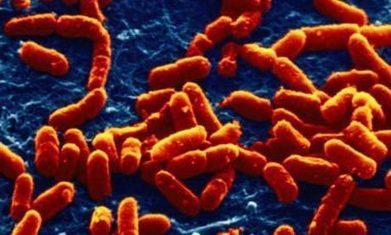
"Mankind’s first 'colonists' on other planets might not be humans at all - but instead, modified microscopic life-forms which would glue together concrete buildings before our first manned ships touched down.
The idea sounds like science fiction - and suspiciously like Star Trek’s 'terraforming' - but NASA is already experimenting with 'synthetic biology' to achieve it - tailor-making an organism to help us make concrete from sand. "NASA is investigating a synthetic version of bacteria that secrete calcite. If you put them in sand, they form bricks," says Andrew Rutherford, an editor at science journal 'Nature' and author of new book 'Creation'. "NASA is investigating a synthetic version of these bacteria - which could form bricks. One of the biggest costs in space exploration is getting materials off Earth. With this, if you take a flask of bacteria, you’ve got all your building material. The research is some way off, but NASA is taking a very serious line in synthetic biology." Rutherford’s book looks at the emerging science of 'synthetic life' - lifeforms modified in the lab using genetic engineering, tailor-made to our needs. The research has provoked fears of bioterrorism, or man-made plagues - but Rutherford insists the benefits far outweigh the risks. "Genetic modification is an engineering discipline," says Rutherford. "It has the potential to be the biggest industrial revolution in history - changing food production, the environment, drug production. "We have been designed in a blind process that has lasted four billion years - with each gene tested to destruction, either through death or extinction. A gene is basically a tool."
"There’s been a lot of interesting papers out this month in synthetic biology. Here’s a quick roundup of some news and research:
Oliver Wright, Guy-Bart Stan and Tom Ellis. Building-in Biosafety for Synthetic Biology. Microbiology, March 2013. Preprint PDF available here.Christine Rabinovitch-Deer, John Oliver, Gabriel Rodriguez, and Shota Atsumi. Synthetic BIology and Metabolic Engineering Approaches to Biofuels. Chemical Reviews, March 2013.The BIOFAB: International Open Facility Advancing Biotechnology published two papers this month about the precise control of gene expression in E. coliMutalik et al. Precise and Reliable Gene Expression via Standard Transcription and Translation Initiation Elements. Nature Methods, March 2013.Mutalik et al. Quantitative Estimation of Activity and Quality for Collections of Functional Genetic Elements. Nature Methods, March 2013.An interesting New Scientist article discusses these papers in the context of industrialization of synthetic biology, from “handcrafted” production pathways in yeast to the “Ikea” of synthetic biology production: “Quality control opens path to synthetic biology’s Ikea.”Jerome Bonnet, Peter Yin, Monica Ortiz, Pakpoom Subsoontorn, and Drew Endy. Amplifying Genetic Logic Gates. Science, March 2013.“Scientists create transistor-like biological device,” Guardian Science News.A great piece by Carl Zimmer on Synthetic Biology at Download The Universe: “A Comic Book Guide to Rewiring Life.”,..."
by Jerome Bonnet, Peter Yin, Monica E. Ortiz, Pakpoom Subsoontorn, and Drew Endy
"Organisms must process information encoded via developmental and environmental signals to survive and reproduce. Researchers have also engineered synthetic genetic logic to realize simpler, independent control of biological processes. We developed a three-terminal device architecture, termed the transcriptor, that uses bacteriophage serine integrases to control the flow of RNA polymerase along DNA. Integrase-mediated inversion or deletion of DNA encoding transcription terminators or a promoter modulate transcription rates. We realize permanent amplifying AND, NAND, OR, XOR, NOR, and XNOR gates actuated across common control signal ranges and sequential logic supporting autonomous cell-cell communication of DNA encoding distinct logic gate states. The single-layer digital logic architecture developed here enables engineering of amplifying logic gates to control transcription rates within and across diverse organisms."
"Stanford researchers demonstrate 'transcriptors' inside E coli bacteria, in advance in synthetic biology.
Scientists have used biological tissue to recreate one of the main components of a modern computer inside living cells. The biological device behaves like a transistor, one of the tiny switches that are etched on to microchips in the billions to perform computer calculations. The researchers demonstrated the device inside E coli bacteria, one of the most common bugs used in genetic engineering. The work marks one of the latest advances in the growing field of synthetic biology, which recasts biology as a toolset for engineers. Writing in the journal Science, researchers at Stanford University explain how their biological transistors could be connected together inside living cells to perform computing jobs such as controlling how genes are expressed in an organism. Led by Drew Endy, a pioneer in the field, the team showed that different arrangements of biological transistors worked like logic gates, which take input signals and process them into different outputs. In keeping with their heritage, Endy calls these arrangements Boolean Integrase Logic (BIL) gates. Normal transistors control the flow of electrons along metal wires. In the biological device, dubbed a "transcriptor", the wire is a strand of DNA and the electrons are replaced by an enzyme. A modern computer chip holds several billion transistors that are wired together to carry out calculations. The same can be achieved with transcriptors, each of which is built from about 150 letters of the genetic code. Scientists hope to build computers within living cells that perform useful jobs. "The first things that can be done are more precise biosensing. You could see if a cell has been exposed to different combinations of chemicals, and have a specific signal only when a certain pattern of interest shows up, say glucose and caffeine," said Jerome Bonnet, the first author on the paper...."
"Although it is now possible to engineer sophisticated biological devices, there remains a major need for reliable, reusable 'parts' that allow the rational design of new genetic systems. A pair of recent studies helps to meet this need through systematic assessment of components."
"That was the message of panelists at an afternoon session yesterday (March 25) in Stanley Hall auditorium titled “Programming Life: the revolutionary potential of synthetic biology.” Co-presented by UC Berkeley’s Synthetic Biology Engineering Research Center (SynBERC) and Discover magazine, the panels brought together a dozen of synthetic biology’s pioneers from academia and industry, in addition to ethicists focused on the societal impact of the technology.
Keynote speaker Juan Enriquez, a self-described “curiosity expert” and co-founder of the company Synthetic Genomics, compared the digital revolution spawned by thinking of information as a string of ones and zeros to the coming synthetic biology revolution, premised on thinking about life as a mix of interchangeable parts – genes and gene networks – that can be learned and manipulated like any language. At the moment, this genetic manipulation, a natural outgrowth of genetic engineering, focuses on altering bacteria and yeast to produce products they wouldn’t normally make, such as fuels or drugs. “To do with biology what you would do if you were designing a piece of software,” according to moderator Corey Powell, editor at large of Discover, which plans to publish a story about the conference and post the video online. UC Berkeley chemical engineer Jay Keasling has been a key player in developing the field of synthetic biology over the last decade. Enriquez introduced Keasling as someone “who in his spare time goes out and tries to build stuff that will cure malaria, and biofuels and the next generation of clean tech, all while mentoring students at this university and at the national labs and creating whole new fields of science.” Keasling, director of SynBERC, a UC Berkeley-led multi-institution collaboration that is laying the foundations for the field, expressed excitement about the newest development: the release next month by the pharmaceutical company sanofi aventis of a synthetic version of artemsinin, “the world’s best antimalarial drug,” he said. Sparked by discoveries in Keasling’s lab more than a decade ago, the drug is produced by engineered yeast and will be the first product from synthetic biology to reach the market. “There are roughly 300 to 500 million cases of malaria each year,” he said. “Sanofi will initially produce about 100 million treatments, which will cover one-third to one-quarter of the need.”..."
"Much of the discussion surrounding synthetic biology involves some degree of speculation about the future. This paper reports on two workshops we held with the aim of ‘opening up’ and exploring possible futures for synthetic biology, one at the Synthetic Biology 4.0 conference (Hong Kong, October 2008) and the other at the BioSysBio meeting (Cambridge, UK, March 2009). We developed an interactive ‘causes and consequences’ exercise for these workshops, with the aim of creating a space for members of the synthetic biology community to discuss issues about the future of the field that they might not regularly explore in their daily work. We analyse the outputs and discussions from these workshops in the light of three key themes: the connections between social and technical issues in synthetic biology, the roles and responsibilities of synthetic biologists in shaping possible futures for the field, and the suitability of this method for opening up discussions about the future."
*VNTI-Designer*- *a New Platform for Synthetic Biology Software*
by Haw Siang Brandon Ang
"Synthetic biology is an emerging field that aims to apply engineering principles to design of assays and expression systems. This is achieved through the use of functionally characterized sequences, termed parts, that can be flexibly combined to produce predictable transcriptionally and translationally regulated genomic circuits. A major challenge for scientists is the ability to find an optimal solution for selecting parts, host organisms and assembly strategies amongst an abundance of possibilities. Our group is developing a solution to this problem, which we call Vector NTI® Express Designer. The key components of this software include a dynamic database, a graphical designer platform and an assembly canvas. Designer will enable users to develop comprehensive collections of fully characterized parts from target organisms. It will have an integrated graphical visualization tool to help customers prototype, design and assemble in silico devices and circuits from their parts collection. We will integrate this strategy with typical bioinformatics tools for codon optimization, restriction analysis, primer design etc. Designer has a rule-based engine that automatically designs solutions based upon the user’s needs, and suggest solutions in a configurable fashion. Designer helps users with experimental assembly choices using available cloning technologies and a one-click solution to synthesize or assemble their sequence through GeneArt."
"Vector NTI® Express Designer Software leads the way in engineering the next generation of in silico cloning and assembly. The newly developed interface is a virtual project canvas for both simplified drag-and-drop vector construction and simplified sequence alignment between projects. Vector NTI® Express Designer Software also provides access to GeneArt® web tools to obtain optimized protein expression levels.
Vector NTI® Express Designer Software is based upon the robust Vector NTI® Express Software, and has both Mac® OS X® and PC operating system versions available."
"The circadian clock controls many physiological processes in higher plants and causes a large fraction of the genome to be expressed with a 24h rhythm. The transcripts encoding the RNA-binding proteins AtGRP7 (Arabidopsis thaliana Glycine Rich Protein 7) and AtGRP8 oscillate with evening peaks. The circadian clock components CCA1 and LHY negatively affect AtGRP7 expression at the level of transcription. AtGRP7 and AtGRP8, in turn, negatively auto-regulate and reciprocally cross-regulate post-transcriptionally: high protein levels promote the generation of an alternative splice form that is rapidly degraded. This clock-regulated feedback loop has been proposed to act as a molecular slave oscillator in clock output. While mathematical models describing the circadian core oscillator in Arabidopsis thaliana were introduced recently, we propose here the first model of a circadian slave oscillator. We define the slave oscillator in terms of ordinary differential equations and identify the model's parameters by an optimization procedure based on experimental results. The model successfully reproduces the pertinent experimental findings such as waveforms, phases, and half-lives of the time-dependent concentrations. Furthermore, we obtain insights into possible mechanisms underlying the observed experimental dynamics: the negative auto-regulation and reciprocal cross-regulation via alternative splicing could be responsible for the sharply peaking waveforms of the AtGRP7 and AtGRP8 mRNA. Moreover, our results suggest that the AtGRP8 transcript oscillations are subordinated to those of AtGRP7 due to a higher impact of AtGRP7 protein on alternative splicing of its own and of the AtGRP8 pre-mRNA compared to the impact of AtGRP8 protein. Importantly, a bifurcation analysis provides theoretical evidence that the slave oscillator could be a toggle switch, arising from the reciprocal cross-regulation at the post-transcriptional level. In view of this, transcriptional repression of AtGRP7 and AtGRP8 by LHY and CCA1 induces oscillations of the toggle switch, leading to the observed high-amplitude oscillations of AtGRP7 mRNA."
Frontiers | Recent progress in synthetic biology for microbial production of C3–C10 alcohols | Frontiers in Microbiotechnology, Ecotoxicology and Bioremediation publishes articles on the most outstanding discoveries across the research spectrum of...
Using the tools of synthetic biology, researchers are engineering healthy plants whose lignocellulosic biomass can more easily be broken down into simple sugars for the production of clean, green and renewable advanced biofuels.
"Synthetic biology research is based on the art of designing genetic material from the code up. Rather than slicing, dicing and splicing existing genetic material, new synthesising protocols allow the specification and production of genetic sequences; to order...."
Have a research project that requires large data collection and analysis? Working on a tight budget and an even tighter timeline? Ever thought about outsourcing some of this work to the public?
*Webinar*: *How to recruit citizen scientists for discovery*
"Have a research project that requires large data collection and analysis? Working on a tight budget and an even tighter timeline? Ever thought about outsourcing some of this work to the public? Using the power of the crowd, via the Internet and social media, citizen scientists can help get the job done on time and on budget.
This webinar brings together three experts in crowdsoucing. They will show you how it works, where to find citizen scientists, and how to insure you get the best data possible. Join us April 5 at 12 noon ET for this hour-long webinar, brought to you by AAAS MemberCentral.There will also be a live conversation on Twitter about the webinar, join the conversation at #AAASWebinar Speakers: Darlene Cavalier Founder of SciStarter and Science Cheerleader Darlene Cavalier is the founder of SciStarter.com, an online citizen science community. The site is a one-stop-shop for potential citizen scientists and a share space where researchers recruit participants. She is also the founder of ScienceCheerleader.com, a site that creates mechanisms for public engagement in scientific research and policy discussions, but is far better known for giving rise to the “Science Cheerleaders” comprised of more than 250 current and former NFL and NBA cheerleaders who are also scientists and engineers. Cavalier herself was a cheerleader for the Philadelphia 76ers. These so-called Science Cheerleaders playfully challenge stereotypes, inspire young women to consider science careers, and involve people from all walks of life in citizen science. Cavalier is the Director of Special Projects at Discover Magazine. She holds a Masters Degree from the University of Pennsylvania in Philadelphia where she resides with her husband and four children. William Ludington Bowes Fellow at UC Berkeley Cofounder of uBiome Will Ludington, PhD, is Bowes faculty fellow in the Immunology and Pathogenesis Division of the Molecular Cell Biology Department at UC Berkeley, where he studies the interactions between endogenous gut microbes, the host immune system, and host behavior using metagenomics and experimental model systems. Coming from a background in both large scale ecology and cell biology, the microbiome was a natural research direction. Will cofounded the citizen science startup, uBiome, in order to put metagenomic research into the hands of the public. Iyad Rahwan Associate Professor & Head Computing & Information Science, Masdar Institute Coauthor of Balloon Challenge and Tag Challenge Iyad Rahwan is Associate Professor at Masdar Institute, a research institute established in cooperation with MIT. He is an Honorary Fellow at the University of Edinburgh, and was previously a visiting scholar at the MIT Media Lab. He holds a PhD from the University of Melbourne. Dr. Rahwan's research on crowdsourcing and social mobilization appeared in major academic journals, including Science, PNAS, and IEEE Computer, and was featured in popular media, such as The Economist, MSNBC, New Scientist, and Popular Science. Dr. Rahwan led the winning team in the 2012 US State Department's Tag Challenge, in which he used crowdsourcing to successfully locate 3 people in remote cities in less than 12 hours. Moderator: Adam Ruben is a writer, comedian, storyteller, and molecular biologist in Washington, DC who has performed stand-up comedy for over 10 years at clubs, colleges, and private venues. Adam is the author of the book Surviving Your Stupid, Stupid Decision to Go to Grad School (Broadway Books, 2010) and the monthly humor column "Experimental Error" in Science Careers. He has appeared on NPR's "All Things Considered," the Food Network's "Food Detectives," and the Science Channel's "Head Rush," and currently co-hosts "You Have Been Warned" on the Discovery Channel. Learn more at adamruben.net."
How do transcriptors and transcriptor-enabled genetic logic work? A rough video primer detailing work presented in Bonnet et al., "Amplifying Genetic Logic G...
*Major changes in scientific publishing - the dead of the scientific journal as we know it*
As the publishing industry in general is under major changes, so also scientific publishing.
A a major driver behind this is our move into the digital age, especially a huge capacity of data storage and digital social networks.
One major problem in science is the big data problem. We produce so much information, that it is impossible to digest it in the traditional way, even in your small scientific field.
We need text mining by robots to deal with this data amount. We need novel form of data presentation, hierarchical structured data instead of the journal format. Social networks can help to structure and find data.
My guess and suggestion: we move to a future where we get direct publishing of real time results on the blogs of the individual scientist. We will get post publication reviews in the frame of social networks. Scientific work will no longer be published in static papers, but projects will develop in a dynamic fashion. We will constantly utilize the collaborative intelligence found in the cloud. The scientific agenda will no longer be defined by a small group of editors, but by a large crowd. Maybe Google or other companies will take over the role a major publisher. Author tracking apps, data mining and novel forms of data presentation will take over. The new Nature might be an iterative child of apps like Summly.
As we face such fundamental changes, the business model of large journal such a s Science and Nature get challenged. The centerpiece of the business model of the academic government employee does the same (tax founded position for many high impact publications).
It looks like that we need to rethink the social praxis of science. Depending on our science political stand point, has different cultures evolved.
One interesting collection of view points from the standpoint of a traditional publisher went online today.
This collection can be a great beginning to start a broader discussion. We will need this, as we need a new social agreement for scientific publishing in order to get well adapted to the realities of the digital age.
"After interviewing Dennis Shasha about DNA programming it got me thinking. What will the DNA programming language of the future be? The idea of using the Watson-Crick building blocks to assemble a functional program is not new. It is, after all, the way organic life forms function. The distinction between the inorganic computers we use today and the organic computers of the future is simply the medium used to calculate or compare two values.
DNA Programming Peeled down its bare essence, all digital computers do is one of two things: Either add two values together or compare two values and determine if they are the same. Inorganic computers are by definition rigid structures. Various metals and semiconductor materials are bonded to a non-conductive silica substrate to form the component parts of the arithmetic, logic and memory along with the necessary supporting circuitry. Organic computers appear to be self-supporting structures, in that the framework is integrated with the computational units, analogous to comparing a static office building to a kinetic sculpture. Initially, any nucleotide computer will need to be “manually assembled,” with the first functional parts becoming the tools to build ever more sophisticated organic devices. The mechanics of attaching Watson-Crick pairings into various forms to replicate the processes of AND gates, OR gates and NOT inverters for logic circuits and calculation engines are still speculative. Each model, however, has methodology for sculpting strands by coupling and decoupling assemblers. A compiler will be required to check the DNA coding to ensure problematic combinations of the Watson-Crick pairs have not been created inadvertently. Because of the nature of the limited number of pairings, it seems unlikely that any interpreted version of DNA coding is probable. However, it’s only a matter of time before true artificial intelligence is capable of passing the Turing test. The interface between the coder and the DNA engine is all speculative at this point. Researchers have been focusing their attention on the methodologies of connectivity between the component parts of nucleotides to establish a solid foundation for supporting DNA sculptures. Much as the initial research for LASER technology was focused on creating a beam of coherent light, the context of the frame was built before any attempts were made to modulate the beam to carry digital traffic. The same is true of the current state of the art in DNA programming. A more apropos analogy can be made regarding the development of computer languages. The microcode or basic instruction set had to be established and implemented before object code could be assembled to form a program capable of performing a task. As the nature of computer languages, higher level languages were developed to enable coders to perform tasks of ever-increasing complexity. DNA and nucleic programming will follow a similar development cycle. The future of DNA coding is bright. We already know the concept works, because organic life is a massive series of DNA programs running concurrently and independently of each other at the nanoscopic level, yet capable of complex interactions at macroscopic levels. The proof of concept has already been amply demonstrated by the hundreds of thousands of living species. The question isn’t “Can DNA be used as a computer language?” It is rather “How can we write DNA code that is capable of achieving productive results?” Today’s DNA researchers are already at work, with several proposals for handling the mechanical aspects of assembling nucleotides. It is only a matter of time and concentrated effort that stands between us and addressing DNA programs. Stay tuned for quantum leaps to be made in the realm of DNA programming and DNA computers as it will probably be the most natural module for integrating technology into humans. Read more:A programming language for composable DNA circuits, by Andrew Phillips Storing Clocked Programs Inside DNA: A Simplifying Framework for Nanocomputing, by Denniss Shasha Integrating DNA nanotechnology with traditional silicon processing for sub-20nm resolution"
To get content containing either thought or leadership enter:
To get content containing both thought and leadership enter:
To get content containing the expression thought leadership enter:
You can enter several keywords and you can refine them whenever you want. Our suggestion engine uses more signals but entering a few keywords here will rapidly give you great content to curate.
by
Nordwald EM, Garst A, Gill RT, Kaar JL.
"Protein engineering has traditionally relied on random mutagenesis strategies to generate diverse libraries, which require high-throughput screening or selection methods to identify rare variants. Alternatively, approaches to semi-rational library construction can be used to minimize the screening load and enhance the efficiency by which improved mutants may be identified. Such methods are typically limited to characterization of relatively few variants due to the difficulties in generating large rational libraries. New tools from synthetic biology, namely multiplexed DNA synthesis and homologous recombination, provide a promising avenue to rapidly construct large, rational libraries. These technologies also enable incorporation of synthetically encoded features that permit efficient characterization of the fitness of each mutant. Extension of these tools to protein library design could complement rational protein design cycles in an effort to more systematically search complex fitness landscapes. The highly parallelized nature with which such libraries can be generated also has the potential to expand directed protein evolution from single protein targets to protein networks whose concerted activities are required for the biological function of interest."
http://bit.ly/XoECWZ