Paola Antonelli, Director of R&D and Senior Curator, Department of Architecture and Design, MoMA, introduces the symposium Synthetic Aesthetics: New Frontiers in Contemporary Design, an investigation of the intersections between synthetic biology and design.
The symposium features guest speakers David Benjamin, Daisy Ginsberg, Dan Grushkin, and William Shih.
http://research.ncsu.edu/ges In his talk “The Future of Human Genomics and Synthetic Biology,” Church discussed the exponentially fast pace of emerging genet...
"Start-up firms say robotics and software that autonomously record every detail of an experiment can transform the efficiency and reliability of research. Max Hodak has spent much of his academic career fixing the ways that scientists collect data. As a biomedical engineering student at Duke University in Durham, North Carolina, it frustrated him that his laboratory recorded its experiments in paper notebooks, leaving researchers to scour through the pages to find relevant data. So in 2008, he indexed all the notebook data on a computer and wrote a program to allow users to query it. “People were saying, 'Why are you wasting your time? That's not going to lead to publication,'” he recalls. But a year-and-a-half later, he returned to the lab from a stint in Silicon Valley to find that many of those earlier sceptics were now using his system. To Hodak, it was a sign that he should pursue his quest for efficiency in the lab. “I was always more interested in finding ways to do analysis more efficiently than in doing the actual analysis,” he says......"
If the controversy over genetically modified organisms (GMOs) tells us something indisputable, it is this: GMO food products from corporations like Monsanto are suspected to endanger health. On the other hand, an individual’s right to genetically modify and even synthesize entire organisms as part of his dietary or medical regimen could someday be a human right.
"The pioneering works of Watson, Crick, Wilkins, and Franklin [1,2] on the structure of DNA have captivated our imaginations for over half a century and continue to shape our future endeavors. The genetic code, a mystery for many years, was soon thereafter decoded by organic chemists employing organic synthesis of polynucleotides [3]. Ever since, the construction of DNA has been central to our ability to probe the molecular nature of life. Synthetic biologists now push the limits of what can be engineered using DNA – from scratch if needed: complex genetic circuits, large metabolic pathways, and even whole genomes."
"Dr. Jay Keasling has biologically done what no one has been able to do chemically: cheaply and quickly synthesize an effective malaria medication (1).
Many of the 400 million individuals infected with malaria each year suffer because of a lack of effective, affordable therapies, especially after the malaria-causing Plasmodium parasite became resistant to often-used chloroquine-based drugs.
Artemisinin-based drugs are now faster acting and more effective. However, so far, the chemical has been laboriously sourced from the plant Artemisia annua, a type of wormwood. It appeared to be too expensive for large-scale use; that is, until Keasling recruited the tools of synthetic biology to coax yeast cells into making …"
"Researchers have made great progress in recent years in the design and creation of biological circuits — systems that, like electronic circuits, can take a number of different inputs and deliver a particular kind of output. But while individual components of such biological circuits can have precise and predictable responses, those outcomes become less predictable as more such elements are combined.
A team of researchers at MIT has now come up with a way of greatly reducing that unpredictability, introducing a device that could ultimately allow such circuits to behave nearly as predictably as their electronic counterparts. The findings are published this week in the journal Nature Biotechnology, in a paper by associate professor of mechanical engineering Domitilla Del Vecchio and professor of biological engineering Ron Weiss.
The lead author of the paper is Deepak Mishra, an MIT graduate student in biological engineering. Other authors include recent master’s students Phillip Rivera in mechanical engineering and Allen Lin in electrical engineering and computer science.
There are many potential uses for such synthetic biological circuits, Del Vecchio and Weiss explain. “One specific one we’re working on is biosensing — cells that can detect specific molecules in the environment and produce a specific output in response,” Del Vecchio says. One example: cells that could detect markers that indicate the presence of cancer cells, and then trigger the release of molecules targeted to kill those cells.
It is important for such circuits to be able to discriminate accurately between cancerous and noncancerous cells, so they don’t unleash their killing power in the wrong places, Weiss says. To do that, robust information-processing circuits created from biological elements within a cell become “highly critical,” Weiss says.
To date, that kind of robust predictability has not been feasible, in part because of feedback effects when multiple stages of biological circuitry are introduced. The problem arises because unlike in electronic circuits, where one component is physically connected to the next by wires that ensure information is always flowing in a particular direction, biological circuits are made up of components that are all floating around together in the complex fluid environment of a cell’s interior.
Information flow is driven by the chemical interactions of the individual components, which ideally should affect only other specific components. But in practice, attempts to create such biological linkages have often produced results that differed from expectations.
“If you put the circuit together and you expect answer ‘X,’ and instead you get answer ‘Y,’ that could be highly problematical,” Del Vecchio says.
The device the team produced to address that problem is called a load driver, and its effect is similar to that of load drivers used in electronic circuits: It provides a kind of buffer between the signal and the output, preventing the effects of the signaling from backing up through the system and causing delays in outputs.
While this is relatively early-stage research that could take years to reach commercial application, the concept could have a wide variety of applications, the researchers say. For example, it could lead to synthetic biological circuits that constantly measure glucose levels in the blood of diabetic patients, automatically triggering the release of insulin when it is needed.
The addition of this load driver to the arsenal of components available to those designing biological circuits, Del Vecchio says, “could escalate the complexity of circuits you could design,” opening up new possible applications while ensuring that their operation is “robust and predictable.”
James Collins, a professor of biomedical engineering at Boston University who was not associated with this research, says, “Efforts in synthetic biology to create complex gene circuits are often hindered by unanticipated or uncharacterized interactions between submodules of the circuits. These interactions alter the input-output characteristics of the submodules, leading to undesirable circuit behavior.”..."
Neri Oxman's team at MIT Media Lab has created 3D-printed "skins" designed to facilitate synthetic biological processes for travelling to other planets.
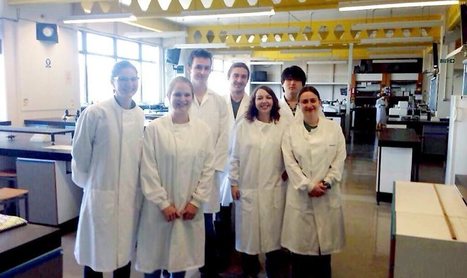
Each year, it begins with 30 or so Edinburgh University applicants. Everyone is highly qualified; their interest in the subject has propelled them to the top of their respective classes for the bet...
by Yuchen Liu,Yayue Zeng,Li Liu,Chengle Zhuang,Xing Fu,Weiren Huang& Zhiming Cai
"The conventional strategy for cancer gene therapy offers limited control of specificity and efficacy. A possible way to overcome these limitations is to construct logic circuits. Here we present modular AND gate circuits based on CRISPR-Cas9 system. The circuits integrate cellular information from two promoters as inputs and activate the output gene only when both inputs are active in the tested cell lines. Using the luciferase reporter as the output gene, we show that the circuit specifically detects bladder cancer cells and significantly enhances luciferase expression in comparison to the human telomerase reverse transcriptase-renilla luciferase construct. We also test the modularity of the design by replacing the output with other cellular functional genes including hBAX, p21 and E-cadherin. The circuits effectively inhibit bladder cancer cell growth, induce apoptosis and decrease cell motility by regulating the corresponding gene. This approach provides a synthetic biology platform for targeting and controlling bladder cancer cells in vitro."
O que acontece quando a biologia e mais especificamente , os materiais nucleicos e os processos que sustentam o ciclo de vida de todos os seres vivos desde o nascimento , à existência , à doença e à morte torna-se sinteticamente replicáveis por seres humanos e consequentemente se tornam projetos de design ? Na sequência da recente publicação MIT Estética sintética e apenas alguns dias antes do iGEM (International Máquinas Geneticamente Modificadas ) Biologia Sintética 2014 Jamboree no início de Novembro de 2014, o Moma se propôs a discutir esta complexa questão, hospedando um painel de discussão, Estética sintéticas: Novas Fronteiras da Contemporary Design.
"The development of RNA-based devices called toehold switches that regulate translation might usher in an era in which protein production can be linked to almost any RNA input and provide precise, low-cost diagnostics."
by Medema MH, Cimermancic P, Sali A, Takano E, Fischbach MA
"Bacterial secondary metabolites are widely used as antibiotics, anticancer drugs, insecticides and food additives. Attempts to engineer their biosynthetic gene clusters (BGCs) to produce unnatural metabolites with improved properties are often frustrated by the unpredictability and complexity of the enzymes that synthesize these molecules, suggesting that genetic changes within BGCs are limited by specific constraints. Here, by performing a systematic computational analysis of BGC evolution, we derive evidence for three findings that shed light on the ways in which, despite these constraints, nature successfully invents new molecules: 1) BGCs for complex molecules often evolve through the successive merger of smaller sub-clusters, which function as independent evolutionary entities. 2) An important subset of polyketide synthases and nonribosomal peptide synthetases evolve by concerted evolution, which generates sets of sequence-homogenized domains that may hold promise for engineering efforts since they exhibit a high degree of functional interoperability, 3) Individual BGC families evolve in distinct ways, suggesting that design strategies should take into account family-specific functional constraints. These findings suggest novel strategies for using synthetic biology to rationally engineer biosynthetic pathways."
"Considerable work has focused on the control of gene expression, motivated by both a fundamental interest in biological research as well as by applications ranging from gene therapy to metabolic engineering.
Synthetic biology provides the platform and tools to design artificial regulators to control mRNA translation. In this work, we report a genetically encoded system to regulate mRNA translation using the Pumilio and FBF (PUF) domains in mammalian cells. PUF domain serves as a designable scaffold to recognize specific RNA elements, and the specificity can be altered easily to target any 8-nt RNA. In this system, the gene expression could be varied by over 17-fold when using PUF-based activators and repressors. The specificity of the method was established by using wild-type and mutant PUF domains.
Optogenetics is a technology that allows control of cellular events using visible light as the signal/inducer. We designed an optogenetic system that employs the light-sensitive dimerizing partners from Arabidopsis thaliana , Cryptochrome 2 (CRY2) and Cryptochrome-interacting basic-helix-loop-helix 1 (CIB1), to reconstitute an RNA binding peptide and a translation initiation protein, thereby activating target mRNA translation downstream of the binding sites. Moreover, the combination of the two technologies allows us to construct to a light-inducible gene expression system using PUF domains, which can be used to regulate cellular RNA functions in a light-sensitive manner.
Additionally, we found that PUF domains could also be used to repress mRNA translation in E. coli. Such a system adds an important tool of RNA/protein interaction into the repertoire of tools for genetic circuit construction in E. coli."
"The ability to perturb living systems is essential to understand how cells sense, integrate, and exchange information, to comprehend how pathologic changes in these processes relate to disease, and to provide insights into therapeutic points of intervention. Several molecular technologies based on natural photoreceptor systems have been pioneered that allow distinct cellular signaling pathways to be modulated with light in a temporally and spatially precise manner. In this review, we describe and discuss the underlying design principles of natural photoreceptors that have emerged as fundamental for the rational design and implementation of synthetic light-controlled signaling systems. Furthermore, we examine the unique challenges that synthetic protein technologies face when applied to the study of neural dynamics at the cellular and network level."
"For more than half a century chemists have searched for a plausible prebiotic synthesis of RNA. The initial advances of the 1960s and 1970s were followed by decades of measured progress and a growing pessimism about overcoming remaining challenges. Fortunately, the past few years have provided a number of important advances, including new abiotic routes for the synthesis of nucleobases, nucleosides, and nucleotides. Recent discoveries also provide additional support for the hypothesis that RNA is the product of evolution, being preceded by ancestral genetic polymers, or pre-RNAs, that are synthesized more easily than RNA. In some cases, parallel searches for plausible prebiotic routes to RNA and pre-RNAs have provided more than one experimentally verified synthesis of RNA substructures and possible predecessors. Just as the synthesis of a contemporary biological molecule cannot be understood without knowledge of cellular metabolism, it is likely that an integrated approach that takes into account both plausible prebiotic reactions and plausible prebiotic environments will ultimately provide the most satisfactory and unifying chemical scenarios for the origin of nucleic acids. In this context, recent advances towards the abiotic synthesis of RNA and candidates for pre-RNAs are beginning to suggest that some molecules (e.g., urea) were multi-faceted contributors to the origin of nucleic acids, and the origin of life."
By Glen Martin Good luck trying to jam Christina Agapakis into any kind of vocational box. Her CV cites disparate accomplishments as a scientist, writer, and artist — and teacher.
"A team of researchers have created the world’s first enzymes made from artificial genetic material. The synthetic enzymes, which are made from molecules that do not occur anywhere in nature, are capable of triggering chemical reactions in the lab. The research is published in the journal Nature and promises to offer new insights into the origins of life, as well as providing a potential starting point for an entirely new generation of drugs and diagnostics. In addition, the authors speculate that the study increases the range of planets that could potentially host life. All life on Earth depends on the chemical transformations that enable cellular function and the performance of basic tasks, from digesting food to making DNA. These are powered by naturally-occurring enzymes which operate as catalysts, kick-starting the process and enabling such reactions to happen at the necessary rate. For the first time, however, the research shows that these natural biomolecules may not be the only option, and that artificial enzymes could also be used to power the reactions that enable life to occur. The findings build on previous work in which the scientists, from the MRC Laboratory of Molecular Biology in Cambridge and the University of Cambridge, created synthetic molecules called “XNAs”. These are entirely artificial genetic systems that can store and pass on genetic information in a manner similar to DNA. Using these XNAs as building blocks, the new research involved the creation of so-called “XNAzymes.” Like naturally occurring enzymes, these are capable of powering simple biochemical reactions. Dr. Alex Taylor, a Post-doctoral Researcher at St John’s College, University of Cambridge, who is based at the MRC Laboratory and was the study’s lead author, said: “The chemical building blocks that we used in this study are not naturally occurring on Earth, and must be synthesized in the lab. This research shows us that our assumptions about what is required for biological processes– the ‘secret of life’– may need some further revision. The results imply that our chemistry, of DNA, RNA and proteins, may not be special and that there may be a vast range of alternative chemistries that could make life possible.”..."
*Mind-controlled transgene expression by a wireless-powered optogenetic designer cell implant*
by Marc Folcher,Sabine Oesterle,Katharina Zwicky,Thushara Thekkottil,Julie Heymoz,Muriel Hohmann,Matthias Christen,Marie Daoud El-Baba,Peter Buchmann& Martin Fussenegger
"Synthetic devices for traceless remote control of gene expression may provide new treatment opportunities in future gene- and cell-based therapies. Here we report the design of a synthetic mind-controlled gene switch that enables human brain activities and mental states to wirelessly programme the transgene expression in human cells. An electroencephalography (EEG)-based brain–computer interface (BCI) processing mental state-specific brain waves programs an inductively linked wireless-powered optogenetic implant containing designer cells engineered for near-infrared (NIR) light-adjustable expression of the human glycoprotein SEAP (secreted alkaline phosphatase). The synthetic optogenetic signalling pathway interfacing the BCI with target gene expression consists of an engineered NIR light-activated bacterial diguanylate cyclase (DGCL) producing the orthogonal second messenger cyclic diguanosine monophosphate (c-di-GMP), which triggers the stimulator of interferon genes (STING)-dependent induction of synthetic interferon-β promoters. Humans generating different mental states (biofeedback control, concentration, meditation) can differentially control SEAP production of the designer cells in culture and of subcutaneous wireless-powered optogenetic implants in mice."
To get content containing either thought or leadership enter:
To get content containing both thought and leadership enter:
To get content containing the expression thought leadership enter:
You can enter several keywords and you can refine them whenever you want. Our suggestion engine uses more signals but entering a few keywords here will rapidly give you great content to curate.


 Your new post is loading...


 Scoop.it!