


SynBioFromLeukipposInstitute
130.0K views |
+2 today
 Your new post is loading...
 Scoop.it! 
A highly acidic protein from salt-loving bacteria could be used to remove radioactive cesium from contaminated soil. Via Integrated DNA Technologies 
Scoop.it!
Gerd Moe-Behrens's insight:
by
Scoop.it!
Gerd Moe-Behrens's insight:
by
Scoop.it!

Genetically identical cells can have many variable properties. A study of correlations between cells in a lineage explains paradoxical inheritance laws, in which mother and daughter cells seem less similar than cousins. See Letter p.468
Scoop.it!
Gerd Moe-Behrens's insight:
by
Scoop.it!
Gerd Moe-Behrens's insight:
on IndieGoGo
"Harness the tools and techniques of Rapid DNA Prototyping to build your own sophisticated genetic circuits. This powerful set of modular parts enables you to determine your own complex projects. The power of synthetic biology has never been so accessible!" http://bit.ly/1EEbQkB
Scoop.it!

20n, one of a wave of biotech-related startups that Y Combinator is starting to fund, is the brainchild of a UC Berkeley professor and a post-doc. Saurabh..
Scoop.it!

SynBio is fast lane to entrepreneurial high tech opportunities | Vipal Jain | March 18, 2015 | Genetic Literacy Project
Scoop.it!

I was first introduced to RNA in 1962. As a newly minted PhD in synthetic organic chemistry I had just joined in Madison, Wisconsin a team of four postdocs charged with the challenging task of chemically synthesizing 64 ribotrinucleotides by the most modern methods (manual synthesis, of course, requiring gallons of dry pyridine every day). My advisor, Har Gobind Khorana, a man of boundless energy, vision and courage, was convinced that these RNA triplets would be essential for the elucidation of the genetic code. It was an exciting time in molecular biology as the first details of the mechanism of protein synthesis and the genetic code emerged. Then, after three years of intense work with great team spirit the code was cracked! At the end of my time in Wisconsin I had become a molecular biologist, spellbound by the genetic code and by tRNA. I would never lose interest in this molecule, and it guided my research for the next five decades.
Scoop.it!
Gerd Moe-Behrens's insight:
by
Gretchen Vogel "Asilomar. The word conjures up not only stunning California coastline but also vexing questions posed by new, potentially world-changing technologies. In 1975, the Asilomar conference center hosted a meeting where biologists crafted guidelines for research that altered the DNA of living organisms. Now scientists are calling for another Asilomar—this time to discuss the possibility of genetically engineered human beings. In 1975, the notion of using recombinant DNA to design human babies was too remote to seriously consider, but the explosion of powerful new genome-editing technologies such as CRISPR-Cas9, zinc fingers, and TALENs has changed that. They have made it easy for anyone with basic molecular biology training to insert, remove, and edit genes in cells, including sperm, eggs, and embryos, potentially curing genetic diseases or adding desirable traits. Rumors are rife that scientists in China have already used CRISPR on human embryos. Researchers fear that publicity surrounding such experiments could trigger a public backlash that would block legitimate uses of the technology. In two commentaries, one published online in Science on 19 March and one in Nature on 12 March, two groups of scientists recommend what steps the scientific community could take to ensure the technology would be used safely and ethically."
Scoop.it!
Gerd Moe-Behrens's insight:
by Jennifer Doudna and her colleagues found an enzyme in bacteria that makes editing DNA in animal cells much easier. In Hopes Of Fixing Faulty Genes, One Scientist Starts With The Basics The CRISPR enzyme (green and red) binds to a stretch of double-stranded DNA (purple and red), preparing to snip out the faulty part. It's not new that scientists can manipulate human DNA — genetic engineering, or gene editing, has been around for decades. But it's been hard, slow and very expensive. And only highly skilled geneticists could do it. Recently that's changed. Scientists have developed new techniques that have sped up the process and, at the same time, made it a lot cheaper to make very precise changes in DNA. There are a couple of different techniques, but the one most often talked about is CRISPR, which stands for clustered regularly interspaced short palindromic repeats. My colleague Joe Palca described the technique for Shots readers last June. Why scientists are nervous On the one hand, scientists are excited about these techniques because they may let them do good things, such as discovering important principles about biology. It might even lead to cures for diseases. The big worry is that CRISPR and other techniques will be used to perform germline genetic modification...."
|
Scoop.it!
Gerd Moe-Behrens's insight:
by But many users don’t just want a chain of nucleotides, they want ready-to-use sequences that can be inserted into a cell to make a product of interest. Such DNA products, known as constructs, include two components – a vector that will be read by host machinery and initiate transcription, and an inserted gene that will generate the non-native biomolecule. Constructs can be thousands of bases in length, but once they’re uploaded to the cell, production should be good to go. This niche is where Genscript is staking its claim. “We’re the world’s largest provider for construct based gene synthesis,” says Jeffrey Hung, a Genscript Vice President, “and a lot of our growth is coming from higher demand for biologics,” or medicinal biomolecules generated through a microbial host (as opposed to an exclusively chemical synthetic process). Most frequently, the company takes orders for non-native products to be expressed in a different organism, turning the unwitting target cell into a biofactory for recombinant proteins or antibodies. In many cases, biologics – the result of intentional expression of known biomolecules – are safer than uncharacterized but empirically promising small molecules taken from a cellular milieu. And using the cell as a production platform is an appealing prospect: organisms can tune behavior and metabolism to changing conditions, so small fluctuations in temperature or reactant concentration won’t doom a costly industrial process."
Scoop.it!
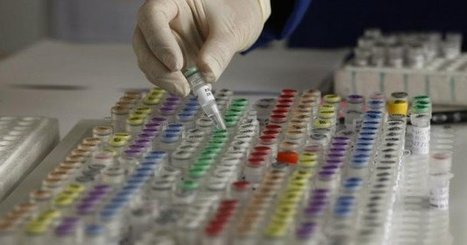
The latest scientific advances will soon enable us to take charge of evolution itself, writes Nayef al-Rodhan.
Scoop.it!

Heritable human genetic modifications pose serious risks, and the therapeutic benefits are tenuous, warn Edward Lanphier, Fyodor Urnov and colleagues.
Scoop.it!
Gerd Moe-Behrens's insight:
by made it so. Similarly, some scientists have gazed at geckos walking up walls and wondered whether humans could do the same. Now they can. In June 2014, a 100-kilogram man wearing a heavy pack climbed up a vertical sheet of glass using only a pair of hand-held paddles made from an advanced material inspired by geckos. The synthetic gecko skin on the paddles has plenty of company in the world of materials science. Researchers are increasingly looking towards plants and animals for ideas on how to design coatings and textures that imbue surfaces with special properties. The adhesive that ivy uses to cling to walls, for example, has inspired a material that might help damaged tissues to regenerate. Molecules taken from mussel adhesives could provide a way to target cancer cells. And the veins on nasturtium leaves have led to the development of a synthetic surface that could prevent rain from freezing on aeroplane wings or keep grimy fingerprints off smartphone screens. The trick is to take ideas sparked by nature — some of them long in development, others brand new — and make them practical and durable......"
Scoop.it!
Gerd Moe-Behrens's insight:
by
Scoop.it!
|




|
Scooped by
Gerd Moe-Behrens
March 24, 2015 10:16 AM
|
Scoop.it!

When it comes to the commercial side of synthetic biology, we often think about small startups working on wild new technologies and powerful new data tools.
|
|
Scooped by
Gerd Moe-Behrens
March 23, 2015 1:27 PM
|
Scoop.it!

Gerd Moe-Behrens's insight:
*Cold Spring Harbor Lab*:
*SYNTHETIC BIOLOGY*
July 27 - August 10, 2015
Application Deadline: April 15, 2015
Instructors and Co-Instructors:
John Dueber,University of California, Berkeley
Mary Dunlop, University of Vermont
Karmella Haynes, Arizona State University
Julius Lucks, Cornell University
Pamela Peralta-Yahya, Georgia Institute of Technology
Stanley Qi, Stanford University
"Synthetic biology is a discipline wherein living organisms are genetically programmed to carry out desired functions in a reliable manner. This field takes inspiration from our ever-expanding ability to measure and manipulate biological systems, and the philosophical reflections of Schrodinger and Feynman that physical laws can be used to describe and rationally engineer biology to accomplish useful goals. After all, cells are the world’s most sophisticated chemists, and their ability to learn to adapt to changing environments offer enormous potential to solving modern engineering challenges. Nonetheless, biological systems are noisy, massively interconnected, and non-linear, and have not evolved to be easily engineered. The grand challenge of synthetic biology is to reconcile the desire for a predictable, formalized biological design process with the inherent ‘squishiness’ of biology.
"Synthetic biology is a discipline wherein living organisms are genetically programmed to carry out desired functions in a reliable manner. This field takes inspiration from our ever-expanding ability to measure and manipulate biological systems, and the philosophical reflections of Schrodinger and Feynman that physical laws can be used to describe and rationally engineer biology to accomplish useful goals. After all, cells are the world’s most sophisticated chemists, and their ability to learn to adapt to changing environments offer enormous potential to solving modern engineering challenges. Nonetheless, biological systems are noisy, massively interconnected, and non-linear, and have not evolved to be easily engineered. The grand challenge of synthetic biology is to reconcile the desire for a predictable, formalized biological design process with the inherent ‘squishiness’ of biology.
Learn Techniques and Perform Research at the Forefront of Synthetic Biology: The course will focus on how the complexity of biological systems, combined with traditional engineering approaches, results in the emergence of new design principles for synthetic biology. The Course centers around an immersive laboratory experience. Here, students will work in teams to learn the practical and theoretical underpinnings of cutting edge research in the area of Synthetic Biology. Broadly, we will explore how cellular regulation- transcriptional, translational, post-translational and epigenetic- can be used to engineer cells to accomplish well-defined goals. Specific laboratory modules will cover the following areas: cell-free transcription and translation systems, high-throughput cloning techniques, computational biology using ordinary differential equations models, biosensor development for metabolic engineering, and CRISPR for genome editing in mammalian cells to regulate synthetic genes and physical cell properties. Students will first learn essential synthetic biology techniques in a four-day ‘boot-camp’, and then rotate through research projects in select areas.
In addition, students will interact closely with a panel of internationally-recognized speakers who will give students a broad overview of applications for synthetic biology, including renewable chemical production and therapeutics, the current state-of-the-art techniques, and case studies in human practices and socially responsible innovation.
Speakers in 2015 include:
Elisa Franco, University of California, Riverside
Nathan Hillson, Harvard Medical School
Mo Khalil, Boston University
Thomas Knight, Ginkgo BioWorks
Vincent Noireaux, University of Minnesota
Pamela Silver, Harvard Medical School
Danielle Tullman-Erceck, University of California, Berkeley
Harris Wang, Columbia University"
|
|
Scooped by
Gerd Moe-Behrens
March 23, 2015 1:02 PM
|
Scoop.it!

Gerd Moe-Behrens's insight:
by
Kyung-In Jang, Ha Uk Chung, Sheng Xu, Chi Hwan Lee, Haiwen Luan, Jaewoong Jeong, Huanyu Cheng, Gwang-Tae Kim, Sang Youn Han, Jung Woo Lee, Jeonghyun Kim, Moongee Cho, Fuxing Miao, Yiyuan Yang, Han Na Jung, Matthew Flavin, Howard Liu, Gil Woo Kong, Ki Jun Yu, Sang Il Rhee et al.
"Hard and soft structural composites found in biology provide inspiration for the design of advanced synthetic materials. Many examples of bio-inspired hard materials can be found in the literature; far less attention has been devoted to soft systems. Here we introduce deterministic routes to low-modulus thin film materials with stress/strain responses that can be tailored precisely to match the non-linear properties of biological tissues, with application opportunities that range from soft biomedical devices to constructs for tissue engineering. The approach combines a low-modulus matrix with an open, stretchable network as a structural reinforcement that can yield classes of composites with a wide range of desired mechanical responses, including anisotropic, spatially heterogeneous, hierarchical and self-similar designs. Demonstrative application examples in thin, skin-mounted electrophysiological sensors with mechanics precisely matched to the human epidermis and in soft, hydrogel-based vehicles for triggered drug release suggest their broad potential uses in biomedical devices."
http://bit.ly/19fsqhO
|
|
Scooped by
Gerd Moe-Behrens
March 23, 2015 12:53 PM
|
Scoop.it!

Scientists Seek Ban on Method of Editing the Human Genome
|
|
Scooped by
Gerd Moe-Behrens
March 23, 2015 12:46 PM
|
Scoop.it!
A framework for open discourse on the use of CRISPR-Cas9 technology to manipulate the human genome is urgently needed





by
JEFFREY MARLOW
"OVER THE LAST several decades, DNA – the genetic material of life as we know it – has completed a remarkable scientific cycle. In 1953, it was a mysterious blur on an X-ray diffractogram. By the 1970s, it was possible to determine the sequence of short nucleotide chains. And now, a scientist can produce her own genetic code of choice with the click of a mouse.
http://wrd.cm/1yw72LV