Your new post is loading...

|
Scooped by
EcoVadis
April 25, 2025 2:57 AM
|
One of them is Condition-Based Maintenance (CBM). This proactive maintenance approach enhances the reliability and efficiency of trains and contributes significantly to environmental and sustainability goals.
Historically, train operators have relied on scheduled or reactive maintenance practices, often leading to inefficiencies and unnecessary resource consumption. Routine maintenance schedules, while necessary, can result in overhauls or replacements that might be premature if based solely on time-based criteria.
This traditional approach not only adds to operational costs but also has significant repercussions, considering the energy-intensive nature of maintenance procedures and the disposal of components.
|
|
Scooped by
EcoVadis
April 25, 2025 2:54 AM
|
The European Union aims to make the transport sector and supply chain more eco-friendly, typically focusing on vehicle emissions and infrastructure upgrades. Yet, a crucial aspect often overlooked is digital pollution.
At the RailFreight Summit ’24, Willem Jan Groenewoud, CEO of Ab Ovo, shed light on this issue and proposed solutions.
|
|
Scooped by
EcoVadis
April 25, 2025 2:52 AM
|
Alstom’s €63 million investment plan for 2024-2026 aims to enhance Italy’s rail infrastructure through sustainable innovations like hydrogen trains and expanded production capacities across multiple sites.
|
|
Scooped by
EcoVadis
April 25, 2025 2:50 AM
|
Hitachi Rail launches annual Environmental, Social and Governance report at InnoTrans, highlighting performances for fiscal year 23
Business has achieved remarkable 14% reduction in scope emissions compared to a target of 5% yoy
FY23 also saw Hitachi Rail awarded two first-of-their-kind sustainable product certifications, as it progresses towards a circular business model
|
|
Scooped by
EcoVadis
April 25, 2025 2:49 AM
|
The rail industry, in collaboration with Campaign for Better Transport, has highlighted the potential environmental benefits of choosing train travel over car journeys. New research from the industry shows that replacing even one return car journey with a train trip can significantly reduce carbon emissions, a key factor in addressing climate change.
The study reveals that 67% of people are interested in reducing their carbon footprint. However, 22% are skeptical that individual actions will have an impact, 17% find the changes too challenging, while 16% say there is not enough information available on how to make a difference.
According to the research, a single round-trip car-to-train switch can save as much CO2 as four weeks of recycling or 55 loads of laundry washed at 30°C instead of 40°C. If all 42.3 million licensed drivers in Britain made just one car-to-train switch annually, it would save the same amount of carbon as turning off half of the UK’s streetlights for a year or insulating over 265,000 homes.
|
|
Scooped by
EcoVadis
April 25, 2025 2:31 AM
|
Over the last decade, there has been altered disease patterns, with rising heat and air pollution-related illnesses and increased vector borne diseases among other issues. While the health professionals and the sector have had a ringside view of how these changes are impacting human health, the realisation of the impact of the healthcare sector on global emissions had never been this profound.
The pursuit of sustainability and decarbonization in healthcare is critical, requiring a deep understanding of emission sources within hospitals.
A recent report shows the global health sector contributes 5.2% of global emissions (2.7 GtCO2e) while representing 10% of global GDP. Its heavy use of anaesthetic gases, single-use plastics, biomedical waste generation, and slow shift to renewable energy worsen this issue. As health services expand globally, emissions are expected to rise, heightening the sector's environmental impact in the future.
|
|
Scooped by
EcoVadis
April 25, 2025 2:29 AM
|
In the ever-evolving realm of healthcare, the connection between human health and environmental health has emerged as a key concern. Across the Asia-Pacific region, where 70 per cent of the 6.5 million annual global deaths from air pollution occur, the impact of climate change on public health looms large.
For instance, extreme weather events as well as rising temperatures and carbon dioxide levels increase cardiovascular risks and threaten vulnerable communities disproportionately. What’s more, the Organisation for Economic Cooperation and Development reports that the healthcare sector contributes 4.4 per cent to global nett emissions, utilises 10 per cent of all extracted raw ma
|
|
Scooped by
EcoVadis
April 25, 2025 2:27 AM
|
Faced with ongoing staff shortages and growing patient demand, healthcare organizations around the world are being compelled to rethink how and where they deliver care. There is also a growing recognition of the importance of reducing the sector’s environmental impact. These 10 healthcare technology trends highlight the potential of innovation to help deliver better care to more people, in a sustainable way.
|
|
Scooped by
EcoVadis
April 25, 2025 2:26 AM
|
Materials suppliers and distributors for the medical plastics market are sticking with sustainability and nearshoring trends as they address demand for PFAS-free, bio-based and monomaterial solutions.
|
|
Scooped by
EcoVadis
April 25, 2025 2:24 AM
|
99% of healthcare leaders in APAC say reducing the environmental impact and CO2 emissions of the industry should be top priorities for healthcare organizations, higher than global (86%)
Healthcare leaders in APAC are driving change through a range of strategies, such as using virtual care technologies/remote monitoring to reduce emissions, and they are looking at adopting even more sustainable practices in the next three years
Philips showcasing a range of sustainable solutions at RSNA 2024, including precision imaging innovations that will revolutionize care for patients while reducing environmental impact
|
|
Scooped by
EcoVadis
April 25, 2025 2:22 AM
|
MGS, in collaboration with its product design and development firm Technolution, share how they take sustainability into consideration in their product design process using a transformative set of six Eco-Design Principles to help Pharma, Diagnostic and MedTech innovators reduce their environmental footprint.
|
|
Scooped by
EcoVadis
April 25, 2025 2:21 AM
|
Nowadays, it is hard to go a day without hearing about sustainability, the environment, and the climate crisis.
But it wasn’t always that way—and we didn’t always have ways to track the environmental impacts of different sectors, much less tackle them.
“In the field of health care, sustainability was a hidden priority,” said alum Mellissa Nguyen MAITP/MBA ’09, senior program manager of environmental sustainability at Vizient, the largest healthcare process improvement organization in the U.S. “Health care’s main focus was on keeping hospitals open and delivering patient care.”
However, the U.S. healthcare sector has a huge impact on the environment. The industry produces roughly 1.7 million tons of plastic waste every year. If the U.S. healthcare industry were its own country, it would be the seventh largest emitter of greenhouse gases in the world.
“It’s more than the emissions from furnaces and ambulances,” Nguyen said. “It’s the products and services used to deliver patient care, which includes personal protective equipment, anesthetic gases, food, surgical tools, electronics, lab equipment, paint on the walls. Everything has an environmental impact, which, in turn, has an impact on the health of the community.”
|
|
Scooped by
EcoVadis
April 25, 2025 2:19 AM
|
Diagnostic tests inform 70-80% of healthcare decisions. They also account for a significant portion of the sector’s waste and carbon footprint. With the environmental impact of healthcare facing greater scrutiny, there’s a strong case for enhancing R&D with sustainability considerations. Handled well, this can have a positive impact across both environmental and commercial performance.
As the sector starts to consider sustainability alongside patient safety, there are new commercial opportunities for companies that can strike an effective balance.
|
|
|
Scooped by
EcoVadis
April 25, 2025 2:56 AM
|
New research from WPI Economics, commissioned by Rail Delivery Group, reveals the rail industry generated £26 billion in economic, environmental and social benefits to UK over the past year, with rail customers contributing £98 billion through spending within local communities.
With the rail network facilitating over three million journeys each day, its impact on the UK economy is significant, playing a key role in the productivity of our cities and towns. The industry also directly employs over 100,000 people across varying roles – from station staff and train drivers to underwater divers and seasons delivery managers.
|
|
Scooped by
EcoVadis
April 25, 2025 2:53 AM
|
The California High-Speed Rail Authority has published its 2024 Sustainability Report, outlining progress on building the state’s first 220-mph electrified high-speed rail system, which will be powered by 100% renewable energy.
The report reflects the project’s environmental, social, and economic priorities, contributing to California’s carbon neutrality goals.
|
|
Scooped by
EcoVadis
April 25, 2025 2:51 AM
|
At InnoTrans 2024, TÜV SÜD Rail will present itself as a competent and experienced provider of testing, inspection and certification (TIC) services for the rail industry.
The company’s experts support manufacturers and operators to ensure safe and sustainable rail transport. At the trade fair, TÜV SÜD will present its simulator for wheel-slide protection (WSP) tests. (Hall A/Stand 645 and Hall 7.2C/Stand 236).
Dr Martin Webhofer, CEO of TÜV SÜD Rail GmbH, said:
We support manufacturers and opetrators to implement modernisation and digitalisation effectively, efficiently and safely.
|
|
Scooped by
EcoVadis
April 25, 2025 2:49 AM
|
Canadian National (CN) has introduced its innovative hybrid diesel electric locomotive, marking a significant milestone in sustainable rail operations and setting the stage for a greener future. This was reported by the railway transport news portal Railway Supply.
|
|
Scooped by
EcoVadis
April 25, 2025 2:47 AM
|
In an era where environmental consciousness is not just valued but essential, the rail industry is stepping up as a leader in sustainable transport.
This journey towards sustainability is not just about reducing environmental impact; it’s about redefining the role of rail transport in the global effort to preserve our planet.
|
|
Scooped by
EcoVadis
April 25, 2025 2:30 AM
|
Bupa has launched a new report designed to support the healthcare sector to reduce its environmental impact.
The report, a collaboration between Bupa Global, India & UK (BGIUK), The University of Manchester and The Tyndall Centre for Climate Change Research, aims to tackle the issues faced by the healthcare sector, currently responsible for almost 5% of global greenhouse gas emissions.
The report explores the financial, operational and logistical challenges of reducing organisations’ environmental footprints, plus opportunities to reduce emissions, update clinical practices to reduce environmental impact, engage employees and work with supply-chains.
Included is a showcase of best practice from hospital and technology providers, NHS trusts, insurers and industry and sustainability associations. It adds to a growing body of work and pulls together best practice examples with practical actions for healthcare providers.
|
|
Scooped by
EcoVadis
April 25, 2025 2:28 AM
|
In today’s rapidly evolving healthcare landscape, sustainability has emerged as a critical focal point, particularly in industries reliant on plastic packaging. With billions of pounds of healthcare plastics being produced annually, the environmental impact of single-use plastics in the medical sector is undeniable. As the global community shifts towards more sustainable practices, the medical device and pharmaceutical sectors are facing increasing pressure to address their environmental footprint.
|
|
Scooped by
EcoVadis
April 25, 2025 2:27 AM
|
Revolutionizing Healthcare with AI
The healthcare sector is undergoing significant transformations, with technology at the forefront. Enbasekar D, Co-founder & CTO of MediBuddy, shares insights into how AI-powered tools are enhancing patient-centric care.
“Artificial Intelligence, particularly advanced language models like Llama and GPT-4, are revolutionizing healthcare interactions. These AI-powered tools can provide preliminary medical information, answer health-related questions, and offer preliminary guidance based on symptoms. While not replacing medical professionals, they serve as valuable first-line resources for health information and initial assessments.” says Enbasekar.
|
|
Scooped by
EcoVadis
April 25, 2025 2:25 AM
|
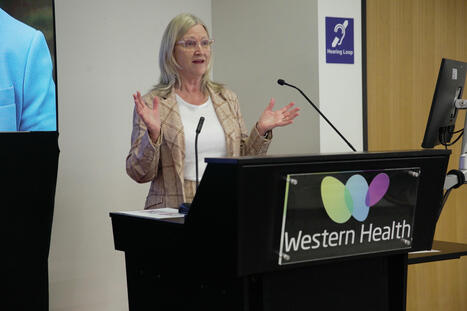
A new virtual laboratory, which will gather insights into the healthcare industry’s environmental footprint to accelerate sustainable solutions, was launched today.
The University of Melbourne-led Healthcare Carbon Lab, at Western Health, will measure the environmental impacts and costs of common single-use items and medical equipment compared to reusable alternatives.
Project lead and Associate Dean of Healthcare Sustainability in the Faculty of Medicine, Dentistry and Health Sciences, Associate Professor Forbes McGain, said the lab will track and calculate the energy for the creation, use and disposal of medical equipment used in hospitals every day.
Associate Professor McGain, who is also an intensive care doctor at Western Health, said the lab will accelerate the long history of collaborating with University of Melbourne engineers to research and improve the efficiency of hospital energy use.
“It is well-documented Australia’s healthcare system contributes 7% of Australia’s carbon emissions, but what we need is more of the data to be able to understand how we can make better, more sustainable choices while keeping patient care front of mind,” Associate Professor McGain said.
|
|
Scooped by
EcoVadis
April 25, 2025 2:24 AM
|
Bupa is working to reduce the environmental impact of the healthcare sector by addressing the use of single-use items (SUIs).
The healthcare sector contributes 4.4% of global emissions and generates millions of tonnes of waste annually, a significant share of which comes from disposable medical products.
|
|
Scooped by
EcoVadis
April 25, 2025 2:22 AM
|
In this Q&A, Eastman’s Katherine Hofmann explores the vital connection between sustainability and healthcare. She highlights the importance of medical plastics in achieving sustainability goals, discussing challenges, regulations, and emerging solutions. Her insights offer a comprehensive overview of ongoing efforts to advance sustainability in healthcare, with a focus on medical packaging and patient safety.
|
|
Scooped by
EcoVadis
April 25, 2025 2:20 AM
|
The healthcare industry has a responsibility to step up to address climate change, and the power to drive meaningful change. By collaborating with partners, together we can drive sustainable healthcare to benefit both the environment and the health of future generations. Leaders from several healthcare organizations share their firsthand experiences with sustainability.
|