


Dixie Press Online
Relationship Connection: Raising children in a pornified culture
Dixie Press Online
Pay attention to the messages being sent by advertisers and other forms of media. Develop a critical mind by becoming more media literate.

 Your new post is loading...
 Scoop.it! Dixie Press Online 
No comment yet.
Sign up to comment
Scoop.it!
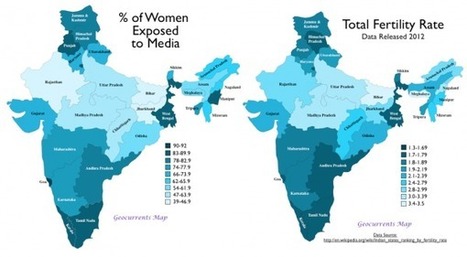
All my children: How soap operas helped end high fertility rates San Francisco Chronicle (blog) Lewis looked at a number of data points, including female literacy, to try and assess what the important factors were that ultimately led to a decline...
Scoop.it!

Life can get complicated in Xinjiang, the far-Western Chinese province perhaps best known as the home of ethnic Uighurs, who are majority Muslim. Via Matt Beiriger
Scoop.it!

So, who is going to reform political culture in African countries?
Scoop.it!

New York Times
Scoop.it!

Medical Marketing and Media Angelina Jolie's fearless but flawed message Medical Marketing and Media Dropping information—even crucial or compelling data—onto the heads of an unprepared public, or expecting a response to another “call to action,”...
Scoop.it!
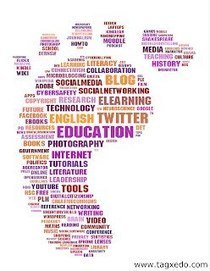
Goal: The overall goal for this adventure is to help you understand how you project yourself to world on the Internet. Specifically, we want to help you:
--learn more about the many ways in which you leave a trail of your presence on the web
--understand how your presence is often permanent and beyond your ability to change or delete
--and, on the positive side, how these facts provide you an opportunity to create a positive, on-going public presence about yourself as a digital citizen
Situation: Much of what you do online leaves ongoing traces of our activities on the Internet. Every day most of us contribute to an evolving public presentation of who we are that anyone can see and that we cannot erase. We might think we are at home on our laptops, cell phones or iPad,s communicating with just a few people on our Friend's list. But in reality we are in a huge auditorium speaking into a public address system to a world that can record and redistribute everything we say.
Click headline to read more--
Via Chuck Sherwood, Former Senior Associate, TeleDimensions, Inc
Scoop.it!

FOR five days Iran’s interior ministry opened its doors to the people, inviting presidential hopefuls to register for the election on June 14th. Via Matt Beiriger
Scoop.it!

From
gizmodo

In the past few seconds, someone from Canada edited the Wikipedia page for The Hangover Part III while another person in Fresno, California tweaked the page for Armenian cuisine. It keeps on going. Via Dr. Susan Bainbridge

Olivia Solis Casso's comment,
May 19, 2013 7:24 PM
It sounds really cool. Specially now that I´m back in college for my second degree.
Scoop.it!

From
gigaom
Over the past couple of months, massive open online course (MOOC) providers have been the focus of dissension on some college campuses. But now online learning company 2U is getting some pushback of its own.
Last fall, the company, which has partnered with several leading universities for online masters degree programs that feature small classes and live instruction, announced a new for-credit online program for undergraduates. But three of the 10 schools that had originally committed to the program have since backed out.
Last month, Duke revealed that it was withdrawing from the program after a faculty vote against the program. And, according to Inside Higher Ed, Vanderbilt and University of Rochester have also pulled out as of Friday, with Wake Forest sitting on the fence.
“Each school has their own process for evaluating these opportunities,” 2U’s SVP of communications Chance Patterson said, adding that the company is moving ahead with its plans to launch the program this fall with the remaining schools, including Northwestern, Emory and Brandeis. 2U also said that Boston College has since joined the consortium and that it’s in talks with 20 other schools.
At Duke, faculty concerns over the lack of administrator transparency related to the 2U deal, as well as unease with awarding school credit to students not admitted to the college, apparently led to the withdrawal.
Click headline to read more--
Via Chuck Sherwood, Former Senior Associate, TeleDimensions, Inc
Scoop.it!

Maps are ideally supposed to be objective depictions of reality, but they can also be used as an instrument of propaganda, portraying the world not as it is but as it is imagined by the cartographer.
|
Scoop.it!

We like to view higher education as the "great equalizer" that leads to social mobility. But selective colleges have long been accused of perpetuating class divides, rather than blurring them.
A recent landmark study by Stanford's Caroline Hoxby and Harvard's Christopher Avery lent further empirical evidence to this accusation, finding that high-achieving low-income students do not have access to selective schools. The study showed that the mismatch is due to a lack of knowledge, not quality. Low-income students outside of major urban centers do not even apply to the top-tier colleges for which they are qualified.
Many commentators and the study authors themselves have looked for ways to alleviate this mismatch. A follow-up study found that supplying basic information to applicants could substantially increase the number of low-income students applying to more selective schools. Just giving low-income kids packets of information helped them apply to better schools.
Yet while the information gaps are real and need to be addressed, there is a much deeper structural problem. If most top colleges wanted to be truly equitable, they could not be with their current business model. There is not a golden pot of low-income applicants that schools want but are failing to reach. Instead, many schools don't want more low-income students because they won't be able to pay for them without a major overhaul of school funding practices. Outside of the handful of super-elite universities with fortress endowments, colleges' finances are currently designed around enrolling a disproportionately high number of high-income students. These schools could not afford to support more low-income or middle-income students absent either a huge increase in tuition, a commensurate reduction in spending, or a dramatic change in public funding.
In fact, schools are already moving away from a more equitable system. Colleges actively recruit "full pay" students who can attend and will not need financial aid. A 2011 survey by Inside Higher Ed found that about 35 percent of admissions directors at 4-year institutions, particularly public colleges, had increased their efforts to target "full pay" students. Far from wanting to enroll more low-income students, colleges recruit more affluent ones who will pay full price to attend.
Click headline to read more--
Via Chuck Sherwood, Former Senior Associate, TeleDimensions, Inc

Bryan Kay's curator insight,
October 22, 2015 8:34 PM
I hope this article provides insight on how to confront student issues as an educational leader.
As a future leader, my goal is to provide an opportunity for students to be able to attain a higher education. Inequity is all around us in schools. It will be my job one day to ensure equity is taking place where I have control.
Scoop.it!

Europe's first advanced civilisation was local in origin and not imported from elsewhere, a study says.
Analysis of DNA from ancient remains on the Greek island of Crete suggests the Minoans were indigenous Europeans, shedding new light on a debate over the provenance of this ancient culture.
Scholars have variously argued the Bronze Age civilisation arrived from Africa, Anatolia or the Middle East.
The concept of the Minoan civilisation was first developed by Sir Arthur Evans, the British archaeologist who unearthed the Bronze Age palace of Knossos on Crete.
Evans named the people who built these cities after the legendary King Minos who, according to tradition, ordered the construction of a labyrinth on Crete to hold the mythical half-man, half-bull creature known as the minotaur.
Evans was of the opinion that the real-life Bronze Age culture on Crete must have its origins elsewhere.
And so, he suggested that the Minoans were refugees from Egypt's Nile delta, fleeing the region's conquest by a southern king some 5,000 years ago.
"He was surprised to find this advanced civilisation on Crete," said co-author George Stamatoyannopoulos, from the University of Washington in Seattle, US.
The evidence for this idea included apparent similarities between Egyptian and Minoan art and resemblances between circular tombs built by the early inhabitants of southern Crete and those built by ancient Libyans.
But other archaeologists have argued for origins in Palestine, Syria, or Anatolia.
In this study, Prof Stamatoyannopoulos and colleagues analysed the DNA of 37 individuals buried in a cave on the Lassithi plateau in the island's east. The majority of the burials are thought to date to the middle of the Minoan period - around 3,700 years ago.
Click headline to read more--
Via Chuck Sherwood, Former Senior Associate, TeleDimensions, Inc

Christine Barron's curator insight,
January 31, 2014 3:24 PM
They were surprised to find advanced cvilization at the major tourist attraction Crete. There was an analysis of the skeletons' DNA that was found in a cave.
Scoop.it!
Ethiopia World's Fourth Largest Exporter Of Flowers
Scoop.it!

The Guardian Working with Chinese contractors The Guardian Sven Grimm, director of the Centre for Chinese studies at Stellenbosch University, points out that, though the means by which Chinese firms win contracts are varied – some are state...
Scoop.it!

In the United States, at least 9% of school-aged children have been diagnosed with ADHD, and are taking pharmaceutical medications. In France, the percentage of kids diagnosed and medicated for ADHD is less than .5%. How come the epidemic of ADHD—which has become firmly established in the United States—has almost completely passed over children in France?
Is ADHD a biological-neurological disorder? Surprisingly, the answer to this question depends on whether you live in France or in the United States. In the United States, child psychiatrists consider ADHD to be a biological disorder with biological causes. The preferred treatment is also biological--psycho stimulant medications such as Ritalin and Adderall.
French child psychiatrists, on the other hand, view ADHD as a medical condition that has psycho-social and situational causes. Instead of treating children's focusing and behavioral problems with drugs, French doctors prefer to look for the underlying issue that is causing the child distress—not in the child's brain but in the child's social context. They then choose to treat the underlying social context problem with psychotherapy or family counseling. This is a very different way of seeing things from the American tendency to attribute all symptoms to a biological dysfunction such as a chemical imbalance in the child's brain.
French child psychiatrists don't use the same system of classification of childhood emotional problems as American psychiatrists. They do not use the Diagnostic and Statistical Manual of Mental Disorders or DSM.According to Sociologist Manuel Vallee, the French Federation of Psychiatry developed an alternative classification system as a resistance to the influence of the DSM-3. This alternative was the CFTMEA (Classification Française des Troubles Mentaux de L'Enfant et de L'Adolescent), first released in 1983, and updated in 1988 and 2000. The focus of CFTMEA is on identifying and addressing the underlying psychosocial causes of children's symptoms, not on finding the best pharmacological bandaids with which to mask symptoms.
Click headline to read more-- Via Chuck Sherwood, Former Senior Associate, TeleDimensions, Inc
Scoop.it!

In an era of electronic entertainment, the term “home library” increasingly has the word “video” in the middle. But before parents start giving away books to clear shelf space for DVDs, they’ll want to consider the results of a comprehensive new study (PDF).
After examining statistics from 27 nations, a group of researchers found the presence of book-lined shelves in the home — and the intellectual environment those volumes reflect — gives children an enormous advantage in school.
“Home library size has a very substantial effect on educational attainment, even adjusting for parents’ education, father’s occupational status and other family background characteristics,” reports the study, recently published in the journal Research in Social Stratification and Mobility. “Growing up in a home with 500 books would propel a child 3.2 years further in education, on average, than would growing up in a similar home with few or no books.
“This is a large effect, both absolutely and in comparison with other influences on education,” adds the research team, led by University of Nevada sociologist M.D.R. Evans. “A child from a family rich in books is 19 percentage points more likely to complete university than a comparable child growing up without a home library.”
Click headline to read more--
Via Chuck Sherwood, Former Senior Associate, TeleDimensions, Inc

Enrico De Angelis's curator insight,
May 18, 2013 5:39 AM
what about the relation with books of a community of PhD candidates and researchers?
Scoop.it!

A portrait of John James Audubon shows the artist and naturalist in a dark wolf-skin cloak, cradling a gun and sporting curly dark hair that was likely smoothed back with bear grease. The picture was painted during Audubon's 1826 trip to England and Scotland, when he was playing up his role as the American woodsman to raise money for his opus, The Birds of America. Once completed, the collection included 435 prints of birds flying, eating, perching and fighting. Audubon is still lauded for his contributions to the fields of ornithology and art.
In the U.K. Audubon drummed up enough subscribers to support his project and found an engraver skilled enough to translate his original watercolors to hand-colored prints. As Audubon worked, The Birds of America was mailed to subscribers in sets of five prints. Each installment included one large, one medium and three small birds. Bound together, the original collection of prints is called the "double elephant folio" because the handmade paper pages are one meter tall by 72.4 centimeters wide. The size allowed Audubon to depict even large birds life-size. Less than 200 copies of the elephant folio were ever made. At the time, each subscriber paid approximately $1,050 over 13 years—from 1827 through 1838. That was then—in 2010 a copy sold for $11.5 million in auction.
Yet far more valuable are the original watercolors on which the prints are based. Those paintings are currently being shown as a three-part series by the New-York Historical Society. The first part is on view at the society's museum in Manhattan until May 19. It showcases more than 200 Audubon watercolors, including the first 175 that were engraved in The Birds of America. Parts II and III will follow in other exhibitions during the next two years. Also on view are some of Audubon's early drawings and paintings along with other objects from the society's Audubon collection, such as letters and a beaded coin purse made by the artist's wife, Lucy Bakewell Audubon.
Click headline to read more and view the video slide show of Audubon prints--
Via Chuck Sherwood, Former Senior Associate, TeleDimensions, Inc
Scoop.it!

From
www
Hundreds of candidates are vying to become Iran's next president, with hopefuls ranging from friends to foes of current President Mahmoud Ahmadinejad. Via Matt Beiriger, Janet Espinosa
Scoop.it!

Seth Dixon's curator insight,
May 13, 2013 9:35 AM
To become truly fluent in a language, mastering idioms is often the last and greatest hurdle. In this video is show way understanding idioms are so difficult because they are often stripped of their cultural context. For example, people smuggling contraband that knew their shipments were going to be searched would hide objects in large barrels of beans. So, to reveal a secret is to 'spill the beans.' Today, that cultural context is lost, but idioms can endure far beyond their cultural context.
Scoop.it!
From
vimeo
"We came to Sri Lanka with every intention of filming a video about an organic, fair trade tea farmer. That is exactly what we were planning when we set foot on the small tea farm of Piyasena and his wife Ariyawatha. What we didnt expect was to be so taken with the relationship between the two of them. What started as a farm story quickly turned into a story about love and dedication amongst the Ceylon tea fields."

James Matthews's curator insight,
May 21, 2013 11:16 AM
Definitely a case of oppression versus admiration - what a wonderful story. 
Nathan Chasse's curator insight,
April 12, 2014 12:38 AM
This video is about a tea farming couple whose arranged marriage has been very successful. The cultural tradition of arranged marriage may seem oppressive to us, but there are a great number of them where the couple stays happy. In these cultures with arranged marriage, divorce is usually not a realistic option, so these couples are possibly more willing to cooperate to make their marriage work than in the United States, but undoubtedly many remain unhappily married.
Scoop.it!
From
gizmodo
Water and electricity: historically, not a great combo! But Antonin Fourneau, a French artist and engineer, combines both to remarkable ends in his installation, Water Light Graffiti, which landed in New York this week.
The surface of Water Light Graffiti is dotted by thousands of LEDs, each ringed by a sensor that triggers the light when it's wet. Visitors are welcome to grab a paintbrush or super soaker (or straight-up bucket) and go to town on the board, which fades back to black after a few minutes. The idea, Fourneau says, is to get people creating and interacting without the self-consciousness of actually painting. He describes the installation as a way to "share magically:"
"The “Water Light Graffiti” is a surface made of thousands of LED illuminated by the contact of water. You can use a paintbrush, a water atomizer, your fingers or anything damp to sketch a brightness message or just to draw. Water Light Graffiti is a wall for ephemeral messages in the urban space without deterioration. A wall to communicate and share magically in the city.
"The piece debuted in Paris a few months ago, but Fourneau and his patron, the French arts foundation DigitalArti, have been on the road with the installation ever since. It'll be on view at the Grohe showroom as part of New York Design Week until Friday, when it heads back to France.
Click headline to view pix and watch video clip--
Via Chuck Sherwood, Former Senior Associate, TeleDimensions, Inc
Scoop.it!
Sometime technology doesn't directly change us; it just changes the basic assumptions of our world, taking us along for the ride.
As spring spreads across New England, out at the National Seashore on Cape Cod perennial clumps of marsh grass have started to sprout. On May 15 each year (hey kids, that’s this week!), researchers go forth and measure the height and density of these plants as they stretch out their roots after the winter.
Year after year, in the same four locations, on the same day of the year, the folks at the National Park Service (NPS) record the same information, the same way. Over time, you see, all this data about height and density on the same day of the year begins to show growth trends that give us clues about changes in climate change.
But this year something new is happening: Regular people have joined in. This one moment in time, this one place, this one project spotlights a much bigger trend in science. Think of it as the opening of the doors to the lab to everyone.
The rise of the citizen-scientist — and the notion of crowdsourcing of science – mirror broader societal and cultural changes. No one piece of technology made this happen. No “poof” of smoke granted a special magical wand of science participation. Rather, what we’re seeing represents the logical destination of an always connected, digital, mobile world.
Click headline to read more--
Via Chuck Sherwood, Former Senior Associate, TeleDimensions, Inc
|






