“ Not every school has the resources necessary to take their students on an airplane . . . or spaceship. The iPad can bring the world to your students' fingertips in ways never before possible. Many na”
Via John Evans
Use the iPad as a window on the world. Visit the Louvre or under the ocean. Possibilities are endless. If you haven't considered this approach to your classroom then read this post for some ideas.
Are you looking for ways to connect your students to various locations around the planet? Checkout this list of apps compiled by Edutopia that takes you to various historical and geographical locations. You may even find yourself in outer space too.
Thanks to John Evans for sharing this article from Edutopia.
This is a great new game from Google which helps students develop their vocabulary through spelling and pronunciation. Using Chrome, students can actually speak to the computer and listen to the pronunciation of the words as they build a word tower. They can even listen to a speaking dictionary telling them what the words mean. This should get your students working autonomously to develop their own vocabulary and if they sign in they can track and share their results.
Via Nik Peachey
'Farish says the racks are a way to improve the look of a city by reducing clutter. “It’s a rare opportunity to give a visible upgrade to a street,” he says, explaining that much of the work that cities do often goes unnoticed by the public. “It’s really a way of encouraging cycling and doing it a way that doesn’t compromise the street’s aesthetic.”'
A plan to skirt Russia’s state energy behemoth, Gazprom, by reverse-flowing natural gas into Ukraine has been hindered by reticence from neighboring Slovakia, seemingly due to pressure from the Russian company.
About 10,000 years ago, hunter-gatherers, aided by rudimentary agriculture, moved to semi-permanent villages and never looked back. With further developments came food surpluses, leading to commerce, specialization and, many years later with the Industrial Revolution, the modern city. Vance Kite plots our urban past and how we can expect future cities to adapt to our growing populations.
Another example of how one thing can begin in one region, go to another, then another, and then find a new identity as its previous one fades away. As part of what can be said to be a "devlopment" cycle, as a nation goes past manufacturing and into the services sector as well as its populace becoming more secular, the leaders of the church still need to bring in wealth for their coffers. What the missionarys started under colonialism is perhaps starting to pay off. Culture travels just as traded commodities does, by having peoples from different places inter-mingle and the largest motivator of that is global trade bringing people that ordinarily would not have met, together. Or in some cases, bible toting missionaries attempting to "civilize" a "primitive" people. If Jesus doesnt work, there is always opium.. again.
It's interesting to think there are those who believe crime will diminish because there are more Christians. I guess that's an infusion of Confucian morality and hope into their Christian ideals. I hope that this will pave a way for the growth of human rights and more political freedom for China.
diMany plants that we call weeds today were essential food in medieval times and they can still offer important benefits – nectar for helpful insects and protection for crops
What is a weed? Technically it is any plant that we don't want or desire in our garden. Many of these so-called weeds don't fit with the manicured lawns and perfect gardens however if one wants a more natural or a cottage garden all of these weeds now become attractive. I also really love a plant generally considered a weed, the dandelion.
After an exodus, white South Africans are returning home in their thousands (Why South African whites are coming home http://t.co/KaH6eayFrP #SAElections2014 http://t.co/CFyCzWisa9)...
Let me introduce you to a new bio-optical knowledge recording and dissemination system, responding to the trade name : MAP. "Map" is an unprecedented technol...
"The American policymaking sphere has long been dominated by political scientists and economists. While I have nothing against these disciplines, and acknowledge that they have made important contributions to our public discourse, I am also concerned that we have not always heard the full range of perspectives on important questions of the day. Geography has a different perspective to offer, and our public discourse is impoverished without it."
A great article discussing why geography matters in ongoing discussions about public policy. The spatial perspective is a key thing to remember in any decision-making process.
Slides from Nik Peachey concerning iPad use in the context of one-to-one teaching. As well as providing some practical tips there are some useful links to tools that will enable students to practise diverse literacy skills.
Here is a great presentation filled to the brim with simple ideas for using iPads - from Tellagami (recorded animation) to TodaysMeet (backchannel) to Fotobabble (recording voice over a picture). Some of these are ones we have used at school before, others open up new channels we are yet to explore!
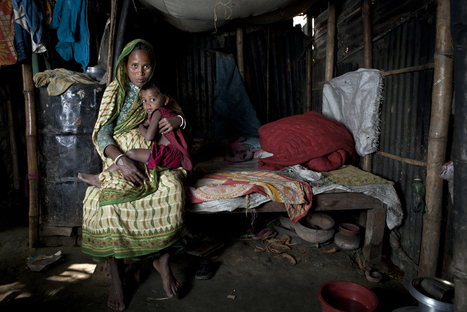
There has been great progress in improving the health of most young kids, but newborns have not seen the same success. Researchers know the main causes of death. The challenge now is combating them.
It's perfectly human to grapple with questions, like ‘Where do we come from?’ and ‘How do I live a life of meaning?’ These existential questions are central to the five major world religions -- and that’s not all that connects these faiths. John Bellaimey explains the intertwined histories and cultures of Hinduism, Judaism, Buddhism, Christianity and Islam.
Bill Gates introduces Mosquito Week on his personal blog, the Gates Notes. Everything posted this week is dedicated to this deadly creature. Mosquitoes carry devastating diseases like malaria, dengue fever, yellow fever, and encephalitis.
So the most dangerous animal is a mosquito - which cause many different diseases. We hear more about sharks and bears being so dangerous but often the most deadly are the hardest to see.
"C'est pas la p'tite bête qui manger la grosse". La manger, je ne sais pas, être le vecteur de son décès, c'est plus probable. Les moustiques et le paludisme tuent plus de personnes en 4min que les requins en un an! On pourrait aussi drastiquement réduire le nombre de décès humains en désormais tous ces humains dotés d'une arme...
"From the scrunchies and jean jackets that dominated the 1980s to the plaid shirts and heavy boots that defined 1990s grunge, everyone has their favorite teenage fashion trend. But what would we have worn if we were flower children of the 1970s or flappers of the 1920s? Ohio State University student Annalisa Hartlaub was able to paint a picture by depicting each decade's quintessential mainstream and counterculture looks. Using herself as a model and tinting each picture to realistically reflect the technology of the decade, Hartlaub's "Counter // Culture" photo project catalogs nearly 100 years of fashion history from 1920 through today."
Here is a great photo study to use when teaching counterculture. Students often have difficulty seeing persons in other eras as anything but "foreign". This photo study may also help students convey a sense of familiarity across time and social groups.
To get content containing either thought or leadership enter:
To get content containing both thought and leadership enter:
To get content containing the expression thought leadership enter:
You can enter several keywords and you can refine them whenever you want. Our suggestion engine uses more signals but entering a few keywords here will rapidly give you great content to curate.


 Your new post is loading...