Some of the best and most innovative thinkers on the internet of things are in Europe, whether they are product designers in London or building sensors in Germany.

 Your new post is loading...
 Scoop.it! Some of the best and most innovative thinkers on the internet of things are in Europe, whether they are product designers in London or building sensors in Germany. 
No comment yet.
Sign up to comment
Scoop.it!

From
newsle

According to Ruthbea Yesner Clarke, director of IDC's Smart Cities Strategies program, cities implementing smart technology solutions may require up to a decade or more before realizing its full transformative potential.
Judy Curtis / SIPR's insight:
“Today’s cities know they must tackle urban challenges through coordinated and focused investments that enable collaboration across departments and agencies, leverage existing assets, engage citizens and stakeholders and tackle long-standing problems.“ The result of ‘smart city’ initiatives will ultimately enable cities to attract businesses and citizens to build more vibrant city landscapes and competitive economies,” Yesner Clarke said.
Scoop.it!
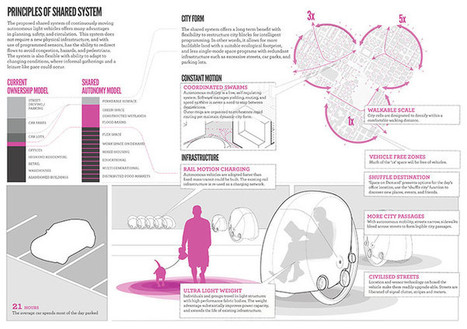
As self-driving cars move from fantasy to reality, what kind of effect will they have on cities? A research and urban prototyping project called Shuffle City investigates, and in the process, becomes a manifesto for a new kind of modern city--one that depends less on traditional public transportation like buses or light rail and more on creating a fleet of continuously moving automated vehicles to serve urban mobility needs. Shuffle City looks at the new possibilities that could arise from cities transitioning to cars without drivers. If cars were put into some constant flow as a public good, and if people didn’t all have their own vehicles, there would be no need for the concrete wastelands and lifeless towers that serve as a parking infrastructure in the urban landscapes of car-centric cities like Phoenix and Los Angeles (Under the current ownership model, the average car spends 21 hours per day parked.) The share of city space ruled by parking lots will shrink, making way for more green space, environmental buffers, workspace, housing, retail, and denser planning for more walkable cities... Via Lauren Moss

José Antônio Carlos - O Professor Pepe's curator insight,
August 7, 2013 8:41 AM
Um desenho da cidade de nossos sonhos. Carros sem motoristas, ruas sem espaço para estacionamento, e por aí vai. 
Kim Spence-Jones's curator insight,
August 8, 2013 2:53 AM
Interface between cars and homes is an interesting area of R&D. Everything from entertainment synchronising to battery management. 
miguel sa's curator insight,
September 4, 2013 4:17 PM
Jacque Fresco has been talking about this sort of thing for awhile now, looks like its coming closer to reality~
Scoop.it!
Judy Curtis / SIPR's insight:
The Internet of Things means "connecting the real world to the Internet," says David Gascon of Libelium. The areas of agriculture and farming give rise to new applications and use cases for sensors and data collection, to give efficiencies that weren't possible before.
Scoop.it!
1:1 Interview conducted by Atmel's Tom Vu with Rob van Kranenburg, IoT-A Stakeholder Coordinator, Founder of Council, and Adviser to Open Source Internet of Things, osiot.org. TV: Why IoT-A? There ...
Judy Curtis / SIPR's insight:
First of a three-part interview with Rob van Kranenburg, who shines some light on the definition, the importance, the pervasive **influence** of what may be called the Internet of Things (IoT) era.
Scoop.it!

A street shouldn't just be about transportation, but also about civic definition and social and commercial interaction.
Scoop.it!
La baisse des prix des détecteurs et des télécommunications permet d'améliorer les services en faisant remonter des informations...
Scoop.it!

BUENOS AIRES — Buenos Aires’ 100-kilometer network of bike paths was meant to decongest the city and improve its citizens’ health.
Judy Curtis / SIPR's insight:
In Buenos Aires, improving bike transit has helped businesses located near bike routes.
And, as cycling becomes "cool" again, new businesses catering to bicycle accessories, repairs and rentals are popping up all over town.
SmartPlanet references studies in Portland, Oregon that show the value of the bike-related businesses to the local economy.
It's a "smart city" move...
Scoop.it!

From
newsle
The web sharing economy is thriving in the heart of Paris due to the crowded streets, and perhaps something a little more intangible in the Parisian culture.
Judy Curtis / SIPR's insight:
It's a smart city that can offer and promote alternative transport solutions. We're longtime fans of Velib' for bicycles and now Autolib' for cars. And now like Zipcar in San Francisco, there is a service called Drivy, a Parisian car-sharing network that lets car owners rent out their own cars to local drivers.
Scoop.it!

Scientists have derived a series of mathematical formulas that describe how cities' properties vary in relation to their population size, and then posits a novel unified, quantitative framework for understanding how cities function and grow.
Judy Curtis / SIPR's insight:
New, fascinating research led by Luis Bettencourt and the Santa Fe Institute's Cities & Urbanization research team has bearing on the Smart Cities concept. In a paper published in the magazine Science (week of June 20, 2013) Bettencourt proposes a framework for understanding how cities function and grow.
His framework has practical implications for planners and policy makers, he says. The paper shows how obstacles to socialization, such as crime or segregation, and enablers that promote the ability of people to connect, such as transportation and electricity, all become part of the same equation.

luiy's curator insight,
June 24, 2013 3:02 PM
New research by Santa Fe Institute Professor Luis Bettencourt suggests a city is something new in nature -- a sort of social reactor that is part star and part network, he says.
"It's an entirely new kind of complex system that we humans have created," he says. "We have intuitively invented the best way to create vast social networks embedded in space and time, and keep them growing and evolving without having to stop. When that is possible, a social species can sustain ways of being incredibly inventive and productive."
In a paper published this week in Science, Bettencourt derives a series of mathematical formulas that describe how cities' properties vary in relation to their population size, and then posits a novel unified, quantitative framework for understanding how cities function and grow. His resulting theoretical framework predicts very closely dozens of statistical relationships observed in thousands of real cities around the world for which reliable data are available.
"As more people lead urban lives and the number and size of cities expand everywhere, understanding more quantitatively how cities function is increasingly important," Bettencourt says. "Only with a much better understanding of what cities are will we be able to seize the opportunities that cities create and try to avoid some of the immense problems they present. This framework is a step toward a better grasp of the functioning of cities everywhere."
Scoop.it!
Judy Curtis / SIPR's insight:
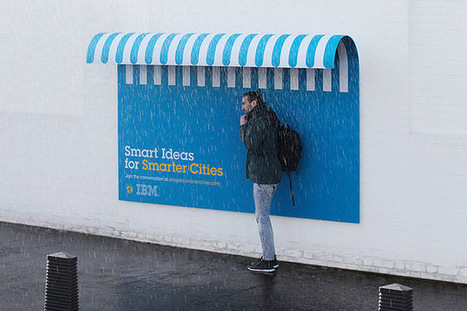
In London and Paris, People for Smart Cities billboards from IBM are part of a social media campaign -- with a practical twist...
Scoop.it!
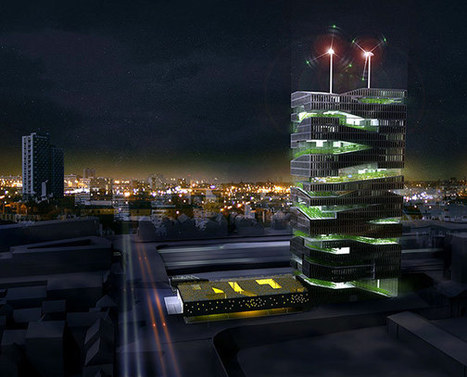
Forget flying cars and robots, the cities of the near future will be getting 'smart' using a combination of high- and low-tech solutions.
|
Scoop.it!
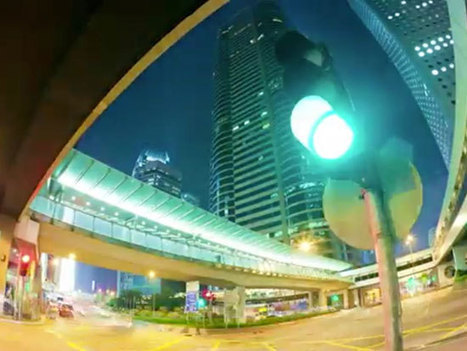
How many technologies does it take to change a city's light bulbs? One company is finding out.
Judy Curtis / SIPR's insight:
In the Two Steps Forward blog on GreenBiz.com Sterling Hughes explains to executive editor Joel Makower that smart lighting solutions pay for themselves quickly. With "smart lighting," the cost savings inherent to reduced energy consumption are easy to measure. But the societal benefit to "smart lighting" is just as real, even if it is more difficult to quantify them.
Hughes points out that in Europe, “Road classifications are based on their traffic — the number of cars per minute or per hour. Based upon that it’s either called a highway, a thoroughfare, or a pedestrian roadway. The way dimming schemes work is, essentially, if the highway at 2 a.m. has only the traffic of a pedestrian roadway, you can de-rate the road to a pedestrian roadway in terms of your lighting level, which means you can reduce the light level by 50 percent, and therefore save a bunch of energy in the middle of the night.”
Equivalent standards don’t yet exist in the United States.
And then there are the societal benefits of smarter, more energy-efficient city lighting. “The light from LEDs is massively better,” says Hughes. “I didn’t really think they were anything that special before I started looking at street lights, but the light from LEDs can actually demonstrably reduce crime. In Los Angeles, it’s reduced crime by 15 percent. In Chattanooga, certain public parks have gone from three or four gang incidents a week to none.”
Suffice to say, such societal benefits need to be part of the calculation for cities investing in smart lighting systems. We know how to put monetary values to social benefit, from reduced law enforcement needs to higher property values and resulting property tax revenues, not to mention resident safety and satisfaction. They are as important as the reduced energy and maintenance costs.
“Cities don’t quantify the societal benefit,” Hughes acknowledges. “That’s one of the things you learn right away. There’s always some societal benefit that never gets captured.”
Scoop.it!
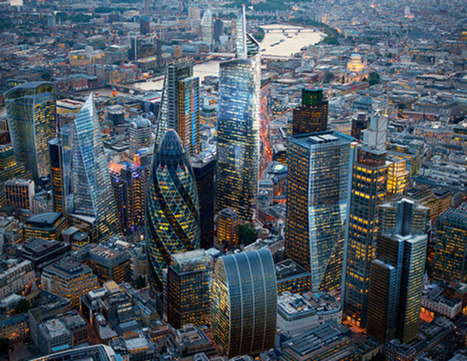
RE.WORK combines entrepreneurship, technology and science to solve some of the world's greatest challenges using emerging technology.
Scoop.it!

Located in the Aspern district in Vienna, the project will connect building systems with intelligent power grids and ICT technologies that interact. Via Rob Kitchin

Claudia Correia de Araujo's curator insight,
July 26, 2013 8:53 PM
Smart cities start with citizen engagement
Scoop.it!

In Santander, Spain, sensors and user apps combine for savings and citizen engagement.
Judy Curtis / SIPR's insight:
Citizen engagement in municipal services shows the potential of smart cities, as demonstrated in Smart Santander.
Scoop.it!
Judy Curtis / SIPR's insight:
Very interesting comparision map of our world's major cities, depicting census data, transport systems, urban footprint, new development and a host of other factors.
Scoop.it!
RE.WORK combines entrepreneurship, technology and science to solve some of the world's greatest challenges using emerging technology.
Judy Curtis / SIPR's insight:
A new Smart Cities conference with a highly interactive format is taking place in London this year, on December 13, 2013. Speakers from around the world include Alicia Asin from Libelum, Christine Outram from City Innovation Group, Carlo Ratti from MIT's Senseable City Lab, Neil Spiller, Dean of the School of Architecture, Design and Construction, University of Greenwich --with more to come.
Scoop.it!
Judy Curtis / SIPR's insight:
Bob Emmerson has written and published a 27-page, vendor-neutral paper, ‘The Wonderful World of M2M Communications’ comprising numerous short takes on machine-to-machine communications and applications, a development that is reshaping our lives and our society in numerous ways.
The report’s objective is to paint the big, multi-faceted picture in a way that is clear, concise and easy to understand.
Scoop.it!
Smartcity Málaga integrates a wide range of technologies into the city's electricity distribution network to analyze how the current energy model can evolve toward sustainability while enabling energy savings and reducing the environmental impact...
Scoop.it!

Valentin Heun's projects include a door lock, desk lamps, and a small radio that bring the benefits of computation to objects without sacrificing their intrinsic, tactile pleasures.
Judy Curtis / SIPR's insight:
I like the idea of not having to launch apps to replicate usability of objects we've been handling since time out of mind...
luiy's curator insight,
June 24, 2013 3:04 PM
Heun’s inspiration for Smarter Objects comes from unlikely sources — radios from the 1970s and Iron Man. He cites the curvy Panasonic R-72 and the rigid Sony TR-1825 as examples of designs that combine intuitive user interfaces with a distinct appearance. The Iron Man movies provide a glimpse of a near-future scenario where people can manipulate the physical world like wizards with a few simple gestures. While a mix of the common and fantastic, both examples are visually extravagant solutions that create strong emotional connections.
“Look around you — How many of the things you own foster memories?” asks Heun. “How many of those memories are important to your sense of self? And how fast can you access those memories by just touching and looking at these objects?” For many, the number will be high, but the question seems almost unnatural when talking about apps. Navigating a folder hierarchy can’t possibly match the thrill of physically turning an amp to 11.
While many of his colleagues are focused exclusively on the future, Heun constantly references our evolutionary past. Millions of years of biological development have given humans the ability to process information using all of our senses, but the last 30 years of technology advances have focused everything through our eyes and fingertips. “We use our eyes in combination with our hands to understand some object, but once we know how to operate it, our eyes are less involved.” says Heun. “Our hands and skin help us handle the information overload naturally occurring in the world.” Heun hopes that Smarter Objects will expand our ability to deal with an ever increasing amount of information without relying on apps or heads up displays.
Scoop.it!

From
web-tech
Lors du festival numérique, Futur en Seine, l’Inria a présenté ses recherches sur les « Smart Cities » au sein de l’Archipel des Projets. Via Cluster #IoT - CITC
Scoop.it!

From
gigaom
ARM’s future is tied to more devices with computing and connectivity trying to share data on a variety of networks. Call it the internet of things or just the obvious direction we’re heading as society.
Scoop.it!

What happens at this government sponsored experiment in Santander, a tiny village in Spain could impact the future trajectory of cities.
|