We are delighted to share that today the U.S. Department of Education announced the winner in the EdSim Challenge! The Challenge launched in November, calling upon the virtual reality, video game developer, and educational technology communities to submit concepts for immersive simulations that will prepare students for a globally competitive workforce and spur an ecosystem of virtual and augmented reality technology in education.
Five finalists were selected out of an impressive 249 submissions. Each finalist received $50,000 in cash as well as in-kind prizes from Oculus and Samsung, and refined their submissions during the Virtual Accelerator. Finalists presented playable prototypes to the judges at Demo Day at the end of the Virtual Accelerator.
The winner is:
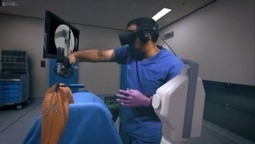
Osso VR: A hands-on surgical training platform that enables users to practice cutting-edge techniques through realistic, hands-on simulations, bridging the gap between career exploration and career preparation.
Osso VR: A hands-on surgical training platform that enables users to practice cutting-edge techniques through realistic, hands-on simulations, bridging the gap between career exploration and career preparation.
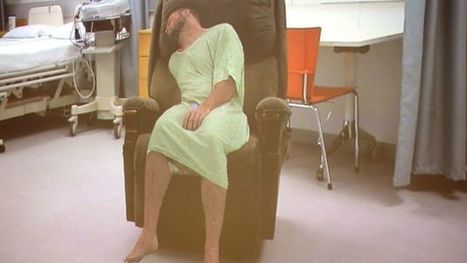
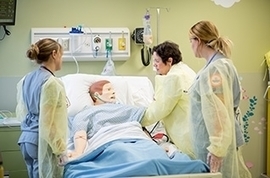
The Simulation Center at Texas Children's Hospital is a multidisciplinary, hospital-based center, providing hands-on pediatric and obstetric simulation training in a realistic environment to improve patient safety and patient care. The state-of-the-art, pediatric simulation facility offers a clinical setting where health care professionals can train through simulation, observation and debriefing for real-life pediatric and obstetric crises.
Simulation is a technique—not a technology—to replace or amplify real experiences with guided experiences that evoke or replicate substantial aspects of the real world in a fully interactive manner. The diverse applications of simulation in health care can be categorised by 11 dimensions: aims and purposes of the simulation activity; unit of participation; experience level of participants; health care domain; professional discipline of participants; type of knowledge, skill, attitudes, or behaviours addressed; the simulated patient’s age; technology applicable or required; site of simulation; extent of direct participation; and method of feedback used. Using simulation to improve safety will require full integration of its applications into the routine structures and practices of health care. The costs and benefits of simulation are difficult to determine, especially for the most challenging applications, where long term use may be required. Various driving forces and implementation mechanisms can be expected to propel simulation forward, including professional societies, liability insurers, health care payers, and ultimately the public. The future of simulation in health care depends on the commitment and ingenuity of the health care simulation community to see that improved patient safety using this tool becomes a reality.
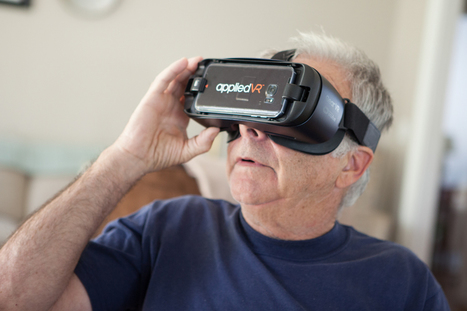
Not wanting to become dependent on opioids, the former science teacher turned to an unconventional alternative to manage his chronic pain: virtual reality.
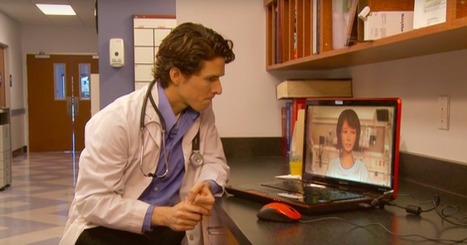
New virtual training facilities and courses aim to offer aspiring healthcare professionals more high-tech hands-on experience alongside traditional teaching techniques.
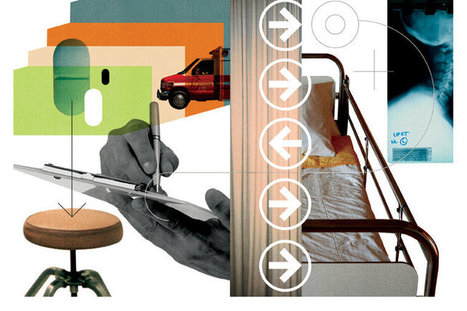
In recent years, a growing number of health care workers have been stepping up to create innovations by applying a human-centered approach to creating new products.
NEW! Learn and practice CPR by playing our latest Lifesaver scenario on the updated Lifesaver app or play in Virtual Reality with the new Lifesaver VR app.
The Anatomage Table (formerly known as the Virtual Dissection Table), developed by Anatomage in collaboration with Stanford University's Division of Clinical Anatomy, is a breakthrough in visualizing human anatomy.
A recent survey of thought leaders in the nursing field revealed that nursing education programs are accelerating adoption of virtual simulation and other cutting-edge technologies.
The use of virtual reality (VR) in medical education is revolutionizing the way future doctors are trained. Traditional medical training methods are being complemented with immersive VR simulations, offering numerous educational advantages. Research indicates that simulation-based training, including VR, enhances a medical student's knowledge, improves decision-making skills, fosters teamwork, and enhances psychomotor abilities. In a Forbes article, Dr. Robert Glatter, an emergency medicine physician, highlights how VR can expose medical students to realistic, high-pressure clinical scenarios, enabling them to develop rapid thinking and analysis skills necessary for managing critically ill patients
Surgeons say minor unintentional damage can happen during surgery, and much of that goes unreported. They say they would be prepared to use robotic tools if they could be shown to help.
To get content containing either thought or leadership enter:
To get content containing both thought and leadership enter:
To get content containing the expression thought leadership enter:
You can enter several keywords and you can refine them whenever you want. Our suggestion engine uses more signals but entering a few keywords here will rapidly give you great content to curate.


 Your new post is loading...