


A fungus engineered with the CRISPR–Cas9 technique can be cultivated and sold without further oversight.

 Your new post is loading...
 Scoop.it! A fungus engineered with the CRISPR–Cas9 technique can be cultivated and sold without further oversight. 
No comment yet.
Sign up to comment
Scoop.it!

Author Summary MicroProteins are short single-domain proteins that possess the ability to interfere with larger multi-domain proteins. These protein species can be identified in plants and animals where they evolved from large proteins by successive domain-loss. MicroProteins often act as decoys thus interaction with their targets results in reduced activity. Here we employed a bioinformatics approach and identified a number of microProteins encoded in the Arabidopsis genome. The detailed study of two uncharacterized microProteins, miP1a and miP1b, revealed that these proteins interact with their target protein CONSTANS and additionally engage in a larger protein complex involving the co-repressor protein TOPLESS. These findings imply that miP1a/b establish a flowering activity switch similar to AUX/IAA proteins in the auxin-signaling pathway. Via CHAHTANE Hicham
Scoop.it!
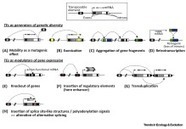
Adaptation to Global Change: A Transposable Element–Epigenetics Perspective
Scoop.it!
Synthetic biology and regulatory networks: where metabolic systems biology meets control engineering
Synthetic biology and regulatory networks: where metabolic systems biology meets control engineering https://t.co/ZjpeXetDK0 #feedly
Via Gerd Moe-Behrens
Scoop.it!
|

|
Scooped by
Loïc Lepiniec
March 11, 2016 2:58 AM
|
Scoop.it!

CURLY LEAF Regulates Gene Sets Coordinating Seed Size and Lipid Biosynthesis in Arabidopsis
|
|
Scooped by
Loïc Lepiniec
February 17, 2016 10:05 AM
|
Scoop.it!
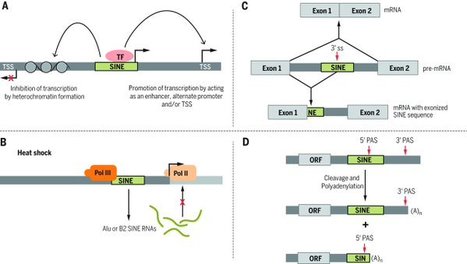
Science Vol 351, Issue 6274 12 February 2016 Transposable elements are parasitic DNAs that can duplicate themselves and jump around their host genomes. They can both disrupt gene function and drive genome evolution. Elbarbary et al. review the roles of two classes of transposable elements in gene regulation and disease: long interspersed elements (LINEs) and short interspersed elements (SINEs). Roughly a third of the human genome consists of LINEs and SINEs. They contribute to a broad range of important genome and gene regulatory features, while at the same time being responsible for number of human diseases.
|
|
Scooped by
Loïc Lepiniec
April 19, 2016 2:06 AM
|
Scoop.it!

Main conclusion
miR393 was found to control embryogenic transition in somatic cells in Arabidopsis via control of the TIR1 and AFB2 auxin receptors genes of the F-box family.
miR393 molecules are believed to regulate the expression of the auxin receptors of the TAAR clade. Considering the central role of auxin in the induction of somatic embryogenesis (SE) in plant explants cultured in vitro, the involvement of miR393 in the embryogenic transition of somatic cells has been hypothesised. To verify this assumption, the reporter, overexpressor and mutant lines in genes encoded MIR393 and TIR1/AFB proteins of the F-box family were analysed during SE in Arabidopsis. Expression profiling of MIR393a and MIR393b, mature miR393 and the target genes (TIR1, AFB1, AFB2, AFB3) were investigated in explants undergoing SE. In addition, the embryogenic potential of various genotypes with a modified activity of the MIR393 and TIR1/AFB targets was evaluated. The distinct increase in the accumulation of miR393 that was coupled with a notable down-regulation of TIR1 and AFB2 targets was observed at the early phase of SE induction. Relevant to this observation, the GUS/GFP monitored expression of MIR393, TIR1 and AFB2 transcripts was localised in explant tissue undergoing SE induction. The results suggest the miR393-mediated regulation of TIR1 and AFB2 during embryogenic transition induced in Arabidopsis and a modification of the explant sensitivity to auxin treatment is proposed as underlying this regulatory pathway.
|
|
Rescooped by
Loïc Lepiniec
from Laboratory of Plant Physiology, WUR
April 17, 2016 2:10 AM
|
Scoop.it!

|
|
Rescooped by
Loïc Lepiniec
from SynBioFromLeukipposInstitute
April 14, 2016 7:21 AM
|
Scoop.it!

The combination of synthetic and systems biology is a powerful framework to study fundamental questions in biology and produce chemicals of immediate practical application such as biofuels, polymers, or therapeutics. However, we cannot yet engineer biological systems as easily and precisely as we engineer physical systems. In this review, we describe the path from the choice of target molecule to scaling production up to commercial volumes. We present and explain some of the current challenges and gaps in our knowledge that must be overcome in order to bring our bioengineering capabilities to the level of other engineering disciplines. Challenges start at molecule selection, where a difficult balance between economic potential and biological feasibility must be struck. Pathway design and construction have recently been revolutionized by next-generation sequencing and exponentially improving DNA synthesis capabilities. Although pathway optimization can be significantly aided by enzyme expression characterization through proteomics, choosing optimal relative protein expression levels for maximum production is still the subject of heuristic, non-systematic approaches. Toxic metabolic intermediates and proteins can significantly affect production, and dynamic pathway regulation emerges as a powerful but yet immature tool to prevent it. Host engineering arises as a much needed complement to pathway engineering for high bioproduct yields; and systems biology approaches such as stoichiometric modeling or growth coupling strategies are required. A final, and often underestimated, challenge is the successful scale up of processes to commercial volumes. Sustained efforts in improving reproducibility and predictability are needed for further development of bioengineering.
|
|
Scooped by
Loïc Lepiniec
March 11, 2016 11:02 AM
|
Scoop.it!

The Plant Cell Reviews Small RNA and Chromatin Dynamics: From Small Genetic Circuits to Complex Genomes
|
|
Scooped by
Loïc Lepiniec
March 8, 2016 7:43 AM
|
Scoop.it!

Bin Han and colleagues present a genome-wide association analysis of grain size and shape in cultivated rice and identify a major locus for grain size encoding the transcription factor OsSPL13. They find that the large-grain allele in tropical japonica cultivars was introgressed from indica varieties during selection for improved grain yield.
|
|
Scooped by
Loïc Lepiniec
February 25, 2016 5:24 PM
|
Scoop.it!

SWI/SNF-type ATP-dependent chromatin remodeling complexes (CRCs) are evolutionarily conserved multiprotein machineries controlling DNA accessibility by regulating chromatin structure. We summarize here recent advances highlighting the role of SWI/SNF in the regulation of hormone signaling pathways and their crosstalk in Arabidopsis thaliana. We discuss the functional interdependences of SWI/SNF complexes and key elements regulating developmental and hormone signaling pathways by indicating intriguing similarities and differences in plants and humans, and summarize proposed mechanisms of SWI/SNF action on target loci. We postulate that, given their viability, several plant SWI/SNF mutants may serve as an attractive model for searching for conserved functions of SWI/SNF CRCs in hormone signaling, cell cycle control, and other regulatory pathways.
Trends
SWI/SNF CRCs control various stages of development. Loss of SWI/SNF subunits results in severe aberrations of organ differentiation, altered regulation of flowering, sterility, and embryo lethality.
SWI/SNF CRCs are involved in hormonal regulation through physical interaction with various components of hormone signaling pathways and transcriptional regulators of genes involved in hormone biosynthesis and hormone perception.
Hormone treatments partially compensate for some secondary growth defects that result from inhibition of hormone biosynthesis by inactivation of SWI/SNF CRCs.






