Your new post is loading...

|
Scooped by
Loïc Lepiniec
April 3, 2017 7:24 AM
|
Highlights
•
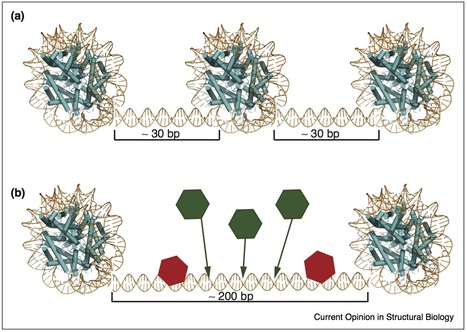
Transcription factors can cooperate with each other via multiple mechanisms that have different specificities and ranges.
•
Cooperativity can result from direct protein–protein contacts.
•
Structural and functional studies have revealed that DNA commonly facilitates TF–TF cooperativity DNA can also mediate cooperative effects in the absence of direct contact between the TF proteins.
•
Competition between TFs and nucleosomes for DNA binding leads to indirect and relatively non-specific cooperativity.
|
|
Rescooped by
Loïc Lepiniec
from Amazing Science
March 29, 2017 3:19 PM
|
Chromatin is reprogrammed after fertilization to produce a totipotent zygote with the potential to generate a new organism1. The maternal genome inherited from the oocyte and the paternal genome provided by sperm coexist as separate haploid nuclei in the zygote. How these two epigenetically distinct genomes are spatially organized is poorly understood. Existing chromosome conformation capture-based methods2, 3, 4, 5 are not applicable to oocytes and zygotes owing to a paucity of material. To study three-dimensional chromatin organization in rare cell types, a team of scientists developed a single-nucleus Hi-C (high-resolution chromosome conformation capture) protocol that provides greater than tenfold more contacts per cell than the previous method2. They were able to show that chromatin architecture is uniquely reorganized during the oocyte-to-zygote transition in mice and is distinct in paternal and maternal nuclei within single-cell zygotes. Features of genomic organization including compartments, topologically associating domains (TADs) and loops are present in individual oocytes when averaged over the genome, but the presence of each feature at a locus varies between cells. At the sub-megabase level, they observed stochastic clusters of contacts that can occur across TAD boundaries but average into TADs. Notably, they found that TADs and loops, but not compartments, are present in zygotic maternal chromatin, suggesting that these are generated by different mechanisms. Taken together, these results demonstrate that the global chromatin organization of zygote nuclei is fundamentally different from that of other interphase cells. An understanding of this zygotic chromatin ‘ground state’ could potentially provide insights into reprogramming cells to a state of totipotency.
Via Dr. Stefan Gruenwald
|
|
Scooped by
Loïc Lepiniec
March 28, 2017 6:26 AM
|
Angiosperm seed development is a paradigm of tissue cross-talking. Proper seed formation requires spatial and temporal coordination of the fertilization products, embryo and endosperm, and the surrounding seed coat maternal tissue. In early Arabidopsis seed development, all seed integuments were thought to respond homogenously to endosperm growth. Here, we show that the sub-epidermal integument cell layer has a unique developmental program. We characterized the cell patterning of the sub-epidermal integument cell layer, which initiates an extra cell layer previously uncharacterized, and identified TRANSPARENT TESTA 16 and SEEDSTICK MADS box transcription factors as master regulators of its polar development and cell architecture. Our data indicate that the differentiation of the sub-epidermal integument cell layer is insensitive to endosperm growth alone and to the repressive mechanism established by FERTILIZATION INDEPENDENT ENDOSPERM and MULTICOPY SUPPRESSOR OF IRA1 Polycomb group proteins. This work demonstrates the different response of epidermal and sub-epidermal integument cell layers to fertilization.
|
|
Scooped by
Loïc Lepiniec
March 19, 2017 2:22 PM
|
Abstract The color of food is often associated with the flavor, safety, and nutritional value of the product. Synthetic food colorants have been used because of their high stability and low cost. However, consumer perception and demand have driven the replacement of synthetic colorants with naturally derived alternatives. Natural pigment applications can be limited by lower stability, weaker tinctorial strength, interactions with food ingredients, and inability to match desired hues. Therefore, no single naturally derived colorant can serve as a universal alternative for a specified synthetic colorant in all applications. This review summarizes major environmental and biological sources for natural colorants as well as nature-identical counterparts. Chemical characteristics of prevalent pigments, including anthocyanins, carotenoids, betalains, and chlorophylls, are described. The possible applications and hues (warm, cool, and achromatic) of currently used natural pigments, such as anthocyanins as red and blue colorants, and possible future alternatives, such as purple violacein and red pyranoanthocyanins, are also discussed.
|
|
Scooped by
Loïc Lepiniec
March 19, 2017 2:16 PM
|
Lignin, one of the most abundant biopolymers on Earth, derives from the plant phenolic metabolism. It appeared upon terrestrialization and is thought critical for plant colonization of land. Early diverging land plants do not form lignin, but already have elements of its biosynthetic machinery. Here we delete in a moss the P450 oxygenase that defines the entry point in angiosperm lignin metabolism, and find that its pre-lignin pathway is essential for development. This pathway does not involve biochemical regulation via shikimate coupling, but instead is coupled with ascorbate catabolism, and controls the synthesis of the moss cuticle, which prevents desiccation and organ fusion. These cuticles share common features with lignin, cutin and suberin, and may represent the extant representative of a common ancestor. Our results demonstrate a critical role for the ancestral phenolic metabolism in moss erect growth and cuticle permeability, consistent with importance in plant adaptation to terrestrial conditions.
|
|
Scooped by
Loïc Lepiniec
March 19, 2017 4:43 AM
|
Many plants have undergone whole genome duplication (WGD). However, how regulatory networks underlying a particular trait are reshaped in polyploids has not been experimentally investigated. Here w
|
|
Scooped by
Loïc Lepiniec
March 19, 2017 4:16 AM
|
WRINKLED1 (WRI1), a member of the APETALA2 (AP2) class of transcription factors, positively regulates glycolysis and lipid biosynthesis in Arabidopsis thaliana. Here we identify mechanistic links between KIN10, the major SUCROSE NON-FERMENTATION-1 (SNF1)-RELATED KINASE 1 (SnRK1) involved in sugar/energy homeostasis and the posttranslational regulation of WRI1. Transient expression of WRI1 with OLEOSIN1 (OLE1) in Nicotiana benthamiana stimulates triacylglycerol (TAG) accumulation, but their coexpression with KIN10 abrogates this effect by inducing proteasomal degradation of WRI1. While WRI1 lacks canonical KIN10 target sequences, we demonstrated direct KIN10-dependent phosphorylation of WRI1 using purified E. coli-expressed components. The resulting phosphorylated WRI1 was more rapidly degraded than native WRI1 in cell-free degradation assays. WRI1 phosphorylation was localized to two variants of the canonical KIN10 recognition sequence, one in each of its two AP2 DNA-binding domains. Conversion of the phosphorylation sites at T70 and S166 to Ala resulted in a loss of KIN10-dependent phosphorylation, and when coexpressed with KIN10 the WRI1 double mutant accumulated to 2-3 fold higher levels than native WRI1. KIN10-dependent degradation of WRI1 provides a homeostatic mechanism that favors lipid biosynthesis when intracellular sugar levels are elevated and KIN10 is inhibited; conversely, glycolysis and lipid biosynthesis are curtailed as sugar levels decrease and KIN10 regains activity.
|
|
Scooped by
Loïc Lepiniec
March 19, 2017 3:53 AM
|
|
|
Scooped by
Loïc Lepiniec
March 19, 2017 3:45 AM
|
"Many eukaryotic cells can respond to transient environmental or developmental stimuli with heritable changes in gene expression that are associated with nucleosome modifications. However, it remains uncertain whether modified nucleosomes play a causal role in transmitting such epigenetic memories, as opposed to controlling or merely reflecting transcriptional states inherited by other means. Here, we provide in vivo evidence that H3K27 trimethylated nucleosomes, once established at a repressed Drosophila HOX gene, remain heritably associated with that gene and can carry the memory of the silenced state through multiple rounds of replication, even when the capacity to copy the H3K27me3 mark to newly incorporated nucleosomes is diminished or abolished. Hence, in this context, the inheritance of H3K27 trimethylation conveys epigenetic memory".
|
|
Scooped by
Loïc Lepiniec
March 14, 2017 4:06 AM
|
In this study, we investigate the metabolic engineering of anthocyanins in two dark tobacco crops (Narrow Leaf Madole and KY171) and evaluate the effects on physiological features of plan
|
|
Scooped by
Loïc Lepiniec
March 7, 2017 2:27 AM
|
A gene-centered approach based on the yeast one-hybrid assay revealed ∼1100 transcription
factor–DNA interactions associated with the regulation of maize phenolic compound
biosynthesis. Results were validated by a combination of chromatin immunoprecipitation
and transient regulation. Several transcription factors recognize the promoters of
10 or more genes, suggesting a role in coordinating phenolic metabolism.
|
|
Scooped by
Loïc Lepiniec
March 7, 2017 2:24 AM
|
Seed is a complex biological system composed of three genetically distinct compartments:
the embryo, the endosperm, and the maternal tissues. During early seed development,
important developmental processes take place within these compartments. This review
focuses on the signaling pathways and associated molecular players (hormones, sugars,
peptides, transcription factors) involved in early seed development in maize.
|
|
Scooped by
Loïc Lepiniec
March 4, 2017 3:12 AM
|
Anthocyanins, a kind of flavonoid, normally accumulate in the flowers and fruits and make them colorful. Anthocyanin accumulation is regulated via the different temporal and spatial expression of anthocyanin regulatory and biosynthetic genes. CBP60g, a calmodulin binding protein, has previously been shown to have a role in pathogen resistance, drought tolerance and ABA sensitivity. In this study, we found that CBP60g repressed anthocyanin accumulation induced by drought, sucrose and kinetin. The expression pattern of CBP60g was in accordance with the anthocyanin accumulation tissues. Real-time qPCR analysis revealed that the anthocyanin biosynthetic genes CHS, CHI and DFR, as well as two members of MBW complex, PAP1, a MYB transcription factor, and TT8, a bHLH transcription factor, were down regulated by CBP60g.
|
|
|
Scooped by
Loïc Lepiniec
April 3, 2017 7:23 AM
|
Transcription factors forming MYB-bHLH-WDR complexes are known to regulate the biosynthesis of specialized metabolites in angiosperms through an intricate network. These Specialized metabolites participate in a wide range of biological processes including plant growth, development, reproduction as well as in plant immunity. Studying the regulation of their biosynthesis is thus essential. While MYB transcription factors have been previously shown to control specialized metabolism in gymnosperms, the identity of their partners, in particular bHLH or WDR members, has not yet been revealed. To gain knowledge about MYB-bHLH-WDR transcription factor complexes in gymnosperms and their regulation of specialized metabolism, we identified two bHLH homologs of AtTT8, six homologs of the MYB transcription factor AtTT2 and one WDR ortholog of AtTTG1 in Norway spruce. We investigated the expression levels of these genes in diverse tissues and upon treatments with various stimuli including methyl-salicylate, methyl-jasmonate, wounding or fungal inoculation. In addition, we also identified protein-protein interactions among different homologs of MYB, bHLH and WDR. Finally, we generated transgenic spruce cell lines overexpressing four of the Norway spruce AtTT2 homologs and observed differential regulation of genes in the flavonoid pathway and flavonoid contents.
|
|
Scooped by
Loïc Lepiniec
March 29, 2017 3:16 PM
|
|
|
Scooped by
Loïc Lepiniec
March 28, 2017 2:06 AM
|
We propose a theoretical model in which trans-acting and chromatin-based gene regulation
are mechanistically integrated by the process of transcription. The model provides
insight into how chromatin can respond to conventional trans-factor-mediated transcriptional
regulation yet also underlie self-perpetuating cis epigenetic memory and suggests
a role for chromatin in filtering fluctuations of trans regulators.
|
|
Scooped by
Loïc Lepiniec
March 19, 2017 2:16 PM
|
In this study, we investigate the metabolic engineering of anthocyanins in two dark tobacco crops (Narrow Leaf Madole and KY171) and evaluate the effects on physiological features of plant photosynthesis. Arabidopsis PAP1 (production of anthocyanin pigment 1) gene (AtPAP1) encodes a R2R3-type MYB transcript factor that is a master component of regulatory complexes controlling anthocyanin biosynthesis. AtPAP1 was introduced to Narrow Leaf Madole and KY171 plants. Multiple transgenic plants developed red/purple pigmentation in different tissues. Quantitative real-time polymerase chain reaction (qRT-PCR) analysis showed that the expression levels of six pathway genes were increased two- to eight-fold in AtPAP1 transgenic plants compared with vector control plants. Dihydroflavonol reductase and anthocyanidin synthase genes that were not expressed in wild-type plants were activated. Spectrophotometric measurement showed that the amount of anthocyanins in AtPAP1 transgenic plants were 400–800 µg g−1 fresh weight (FW). High-performance liquid chromatography (HPLC) analysis showed that one main anthocyanin molecule accounted for approximately 98% of the total anthocyanins. Tandem MS/MS analysis using HPLC coupled to electrospray ionization and quadrupole time-of-flight mass spectrometry identified the main anthocyanin as cyanidin 3-O-rutinoside, an important medicinal anthocyanin. Analysis of photosynthesis rate, chlorophylls and carotenoids contents showed no differences between red/purple transgenic and control plants, indicating that this metabolic engineering did not alter photosynthetic physiological traits. This study shows that AtPAP1 is of significance for metabolic engineering of anthocyanins in crop plants for value-added traits.
|
|
Scooped by
Loïc Lepiniec
March 19, 2017 5:09 AM
|
dx.doi.org/10.1105/tpc.16.00719
|
|
Scooped by
Loïc Lepiniec
March 19, 2017 4:28 AM
|
Widespread Contamination of Arabidopsis Embryo and Endosperm Transcriptome Datasets,
|
|
Scooped by
Loïc Lepiniec
March 19, 2017 3:57 AM
|
Highlights
•
Anthocyaninic vacuolar inclusions (AVIs) are precipitates of acylated anthocyanins
•
AVIs are formed only by aromatically acylated anthocyanins
•
No other compounds are present in AVIs as shown by their reconstitution in vitro
•
Glycosylation of acylated anthocyanins reduces their propensity to form AVIs
|
|
Scooped by
Loïc Lepiniec
March 19, 2017 3:50 AM
|
|
|
Scooped by
Loïc Lepiniec
March 17, 2017 4:24 PM
|
Next "Plant Organ Growth Symposium" (POGS2019) will be in Bordeaux, thank you Nathalie
Next "Plant Organ Growth Symposium" (POGS2019) will be in Bordeaux, thank you Nathalie, @nathy_go_7
"Background and Aims
Recent parsimony-based reconstructions suggest that seeds of early angiosperms had ei- ther morphophysiological or physiological dormancy, with the former considered as more probable. The aim of this study was to determine the class of seed dormancy present in Amborella trichopoda , the sole living representative of the most basal angiosperm lineage Amborellales, with a view to resolving fully the class of dormancy present at the base of the angiosperm clade. �
Methods
Drupes of A. trichopoda without fleshy parts were germinated and dissected to observe their structure and embryo growth. Pre-treatments including acid scarification, gibberellin treatment and seed excision were tested to determine their influence on dormancy breakage and germination. Character-state mapping by maximum parsi- mony, incorporating data from the present work and published sources, was then used to determine the likely class of dormancy present in early angiosperms. �
Key Results
Germination in A. trichopoda requires a warm stratification period of at least approx. 90 d, which is followed by endosperm swelling, causing the water-permeable pericarp–mesocarp envelope to split open. The em- bryo then grows rapidly within the seed, to radicle emergence some 17 d later and cotyledon emergence after an ad- ditional 24 d. Gibberellin treatment, acid scarification and excision of seeds from the surrounding drupe tissues all promoted germination by shortening the initial phase of dormancy, prior to embryo growth. �
Conclusions
Seeds of A. trichopoda have non-deep simple morphophysiological dormancy, in which mechanical resis- tance of the pericarp–mesocarp envelope plays a key role in t he initial physiological pha se. Maximum parsimony analy- ses, including data obtained in the present work, indicate th at morphophysiological dormancy is likely to be a pleisiomor- phic trait in flowering plants. The signific ance of this conclusion for studies of ea rly angiosperm evolution is discussed."
Via CHAHTANE Hicham
|
|
Scooped by
Loïc Lepiniec
March 7, 2017 2:25 AM
|
Maize is not only the most widely grown agricultural crop but is also an excellent
model system for investigating and understanding reproduction in a grass species.
Here we summarize our current knowledge about the molecular players and mechanisms
involved in germline development, pollen germination, tube growth and guidance, and
fertilization.
|
|
Scooped by
Loïc Lepiniec
March 4, 2017 3:16 AM
|
Recently we elucidated that tobacco TTG2 cooperates with ARF8 to regulate the vegetative growth and seed production.Here we show that TTG2 and ARF8 control flower colorization by regulating th
|