Your new post is loading...

|
Scooped by
Loïc Lepiniec
November 1, 2017 3:28 AM
|
Polycomb Repressive Complexes 2 (PRC2) are multi-protein chromatin modifiers that are evolutionarily conserved among eukaryotes and play key roles in the regulation of gene expression, notably through the trimethylation of lysine 27 of histone H3 (H3K27me3). Although PRC2-mediated gene regulation has been studied in many organisms, few studies have explored in depth the evolutionary conservation of PRC2 targets. Here, we compare the H3K27me3 epigenomic profiles for the two closely related species Arabidopsis thaliana and Arabidopsis lyrata and the more distant species Arabis alpina, three Brassicaceae that diverged from each other within the past 24 million years. Using a robust set of gene orthologs present in the three species, we identify two classes of evolutionarily conserved PRC2 targets, which are characterized by either developmentally plastic or developmentally constrained H3K27me3 marking across species. Constrained H3K27me3 marking is associated with higher conservation of promoter sequence information content and higher nucleosome occupancy compared to plastic H3K27me3 marking. Moreover, gene orthologs with constrained H3K27me3 marking exhibit a higher degree of tissue specificity and tend to be involved in developmental functions, whereas gene orthologs with plastic H3K27me3 marking preferentially encode proteins associated with metabolism and stress responses. In addition, gene orthologs with constrained H3K27me3 marking are the predominant contributors to higher-order chromosome organization. Our findings indicate that developmentally plastic and constrained H3K27me3 marking define two evolutionarily conserved modes of PRC2-mediated gene regulation that are associated with distinct selective pressures operating at multiple scales, from DNA sequence to gene function and chromosome architecture.
|
|
Scooped by
Loïc Lepiniec
October 29, 2017 6:15 AM
|
Abstract. Flavonoids are secondary metabolites derived from the general phenylpropanoid pathway and are widespread throughout the plant kingdom. The functions
|
|
Rescooped by
Loïc Lepiniec
from Amazing Science
October 25, 2017 8:07 AM
|
As an ambitious project to map all the cells in the human body gets officially under way, Aviv Regev, Sarah Teichmann and colleagues outline some key challenges. Our knowledge of the cells that make up the human body, and how they vary from person to person, or throughout development and in health or disease, is still very limited. This week, a year after project planning began, more than 130 biologists, computational scientists, technologists and clinicians are reconvening in Rehovot, Israel, to kick the Human Cell Atlas initiative1 into full gear. This international collaboration between hundreds of scientists from dozens of universities and institutes — including the UK Wellcome Trust Sanger Institute, RIKEN in Japan, the Karolinska Institute in Stockholm and the Broad Institute of MIT and Harvard in Cambridge, Massachusetts — aims to create comprehensive reference maps of all human cells as a basis for research, diagnosis, monitoring and treatment.
Via Dr. Stefan Gruenwald
|
|
Rescooped by
Loïc Lepiniec
from Popular Science
October 22, 2017 2:17 PM
|
When the International Agency for Research on Cancer reviewed weedkiller glyphosate, significant changes happened between a draft report and the final version.
Via Neelima Sinha
|
|
Scooped by
Loïc Lepiniec
October 21, 2017 3:53 AM
|
In the seed industry, chlorophyll (Chl) fluorescence is often used as a major non‐invasive reporter of seed maturation and quality. Breakdown of Chl is a proactive process during the late stage o
|
|
Scooped by
Loïc Lepiniec
October 20, 2017 10:44 AM
|
Drought stress is a significant abiotic stress factor that affects wheat yield and quality. MicroRNA (miRNA) plays an important role in regulating caryopsis development in response to drought stress. However, little is known about the expression characteristics of miRNAs and how they regulate protein accumulation in wheat caryopsis under drought stress. To address this, two small RNA libraries of wheat caryopsis under control and drought stress conditions were constructed and sequenced. A total of 125 miRNAs were identified in the two samples, of which 110 were known and 15 were novel. A total of 1981 miRNA target genes were predicted and functional annotations were obtained from various databases for 1641 of them. Four miRNAs were identified as differentially expressed under drought stress, and the expression patterns of three of them were consistent with results obtained by reverse transcription polymerase chain reaction (RT-PCR) and reverse transcription quantitative polymerase chain reaction (RT-qPCR). Moreover, three miRNA-target pairs showed negative regulation tendency, as revealed by RT-qPCR. Functional enrichment and pathway analysis revealed that four pathways may be involved in storage protein biosynthesis. Furthermore, drought stress significantly increased the accumulation of protein bodies and protein content in wheat endosperm. In summary, our findings suggest that drought stress may enhance storage protein by regulating the expression of miRNAs and its target genes.
ABSTRACT: It is considered an inviolable principle that sexually reproducing organisms have no more than two parents and fertilization of an egg by multiple sperm (polyspermy) is lethal in many eukaryotes. In flowering plants polyspermy has remained a hypothetical concept, due to the lack of tools to unambiguously identify and trace this event. We established a high-throughput polyspermy detection assay, which uncovered that supernumerary sperm fusion does occur in planta and can generate viable polyploid offspring. Moreover, polyspermy can give rise to seedlings with one mother and two fathers, challenging the bi-organismal concept of parentage. The polyspermy derived triploids are taller and produce bigger organs than plants resulting from a regular monospermic fertilization. In addition, we demonstrate the hybridization potential of polyspermy by instantly combining three different Arabidopsis accessions in one zygote. Our results provide direct evidence for polyspermy as a route towards polyploidy, which is considered a major plant speciation mechanism.
Via fundoshi
|
|
Scooped by
Loïc Lepiniec
October 18, 2017 3:19 PM
|
|
|
Scooped by
Loïc Lepiniec
October 16, 2017 4:12 PM
|
Plants have developed multiple strategies to sense the external environment and to adapt growth accordingly. Delay of germination 1 ( DOG1 ) is a major quantitative trait locus (QTL) for seed dormancy strength in Arabidopsis thaliana that is reported to be expressed exclusively in seeds. DOG1 is extensively regulated, with an antisense transcript ( asDOG1 ) suppressing its expression in seeds. Here, we show that asDOG1 shows high levels in mature plants where it suppresses DOG1 expression under standard growth conditions. Suppression is released by shutting down antisense transcription, which is induced by the plant hormone abscisic acid (ABA) and drought. Loss of asDOG1 results in constitutive high‐level DOG1 expression, conferring increased drought tolerance, while inactivation of DOG1 causes enhanced drought sensitivity. The unexpected role of DOG1 in environmental adaptation of mature plants is separate from its function in seed dormancy regulation. The requirement of asDOG1 to respond to ABA and drought demonstrates that antisense transcription is important for sensing and responding to environmental changes in plants.
![][1]
Antisense transcription from the same locus is required for DOG1 silencing in mature Arabidopsis plants under non‐stress conditions. Drought and ABA signalling alleviate asDOG1 expression, promoting DOG1 sense transcription and drought tolerance.
[1]: /embed/graphic-1.gif
|
|
Scooped by
Loïc Lepiniec
October 14, 2017 4:55 AM
|
|
|
Scooped by
Loïc Lepiniec
October 6, 2017 3:18 AM
|
Transcriptomic Analysis of Seed Coats in Yellow-Seeded Brassica napus Reveals Novel Genes That Influence Proanthocyanidin Biosynthesis
|
|
Scooped by
Loïc Lepiniec
October 5, 2017 3:03 PM
|
|
|
|
Scooped by
Loïc Lepiniec
October 31, 2017 8:29 AM
|
Seed germination and postgerminative growth of Arabidopsis thaliana and various other plant species are arrested in response to unfavourable environmental conditions by signalling events involving the phytohormone abscisic acid (ABA). In this study, we showed that loss of the seed-specific WRKY DNA-BINDING PROTEIN 43 (WRKY43) conferred increased tolerance towards high salt, high osmolarity and low temperature during seed germination in Arabidopsis. The wrky43 loss of function lines displayed increased inhibition of seed germination in response to exogenous ABA; whereas lines overexpressing WRKY43 were more tolerant towards exogenous ABA. Biochemical analysis of fatty acid composition revealed that loss of WRKY43 increased polyunsaturated fatty acid content in seeds, particularly 18:2Δ9,12 and 18:3Δ9,12,15 in triacylglycerols and phospholipids, indicating an important physiological effect on fatty acid desaturation with ramifications for the tolerance of plants to cold and osmotic stress and possibly, for oilseed engineering. Molecular analyses showed that ABA-induced regulation of FUSCA3, ZAT10 and seed storage proteins were absent in the wrky43 mutant. In summary, WRKY43 encodes for a novel positive regulator of ABA-dependent gene regulation and as a potent modulator of fatty acid desaturation and seed filling, which results in increased tolerance to abiotic stress.
|
|
Scooped by
Loïc Lepiniec
October 29, 2017 11:58 AM
|
The spontaneous deamination of cytosine is a major source of C•G to T•A transitions, which account for half of known human pathogenic point mutations. The ability to efficiently convert target A•T base pairs to G•C could therefore advance the study and treatment of genetic diseases. While the deamination of adenine yields inosine, which is treated as guanine by polymerases, no enzymes are known to deaminate adenine in DNA. Here we report adenine base editors (ABEs) that mediate conversion of A•T to G•C in genomic DNA. We evolved a tRNA adenosine deaminase to operate on DNA when fused to a catalytically impaired CRISPR-Cas9. Extensive directed evolution and protein engineering resulted in seventh-generation ABEs (e.g., ABE7.10), that convert target A•T to G•C base pairs efficiently (~50% in human cells) with very high product purity (typically ≥ 99.9%) and very low rates of indels (typically ≤ 0.1%). ABEs introduce point mutations more efficiently and cleanly than a current Cas9 nuclease-based method, induce less off-target genome modification than Cas9, and can install disease-correcting or disease-suppressing mutations in human cells. Together with our previous base editors, ABEs advance genome editing by enabling the direct, programmable introduction of all four transition mutations without double-stranded DNA cleavage.
|
|
Rescooped by
Loïc Lepiniec
from Early Land Plants
October 25, 2017 8:16 AM
|
Terpenes constitute a large class of plant secondary metabolites. It was once presumed that these compounds are biosynthesized by typical plant terpene synthases in all land plants. This view has changed with the identification of a new group of terpene synthase genes called MTPSLs for microbial terpene synthase-like genes. MTPSLs are structurally and phylogenetically more related to bacterial and fungal terpene synthases than to typical plant terpene synthases. They are widely distributed in nonseed plants but absent in seed plants and green algae. Much of the terpene diversity in nonseed plants is presumed to be determined by MTPSLs. Phylogenetic analysis suggests that ancestral MTPSL genes were acquired by early land plants from bacteria and fungi through horizontal gene transfer.
Via Philip Carella
|
|
Rescooped by
Loïc Lepiniec
from Wageningen Seed Lab
October 25, 2017 7:33 AM
|
By Anderson Tadeu Silva, Wilco Ligterink and Henk Hilhorst
Via Wilco Ligterink
The abundance of high-quality genotype and phenotype data for the model organism Arabidopsis thaliana enables scientists to study the genetic architecture of many complex traits at an unprecedented level of detail using genome-wide association studies (GWAS). GWAS have been a great success in A. thaliana and many SNP-trait associations have been published. With the AraGWAS Catalog ( https://aragwas.1001genomes.org) we provide a publicly available, manually curated and standardized GWAS catalog for all publicly available phenotypes from the central A. thaliana phenotype repository, AraPheno. All GWAS have been recomputed on the latest imputed genotype release of the 1001 Genomes Consortium using a standardized GWAS pipeline to ensure comparability between results. The catalog includes currently 167 phenotypes and more than 222 000 SNP-trait associations with P < 10−4, of which 3887 are significantly associated using permutation-based thresholds. The AraGWAS Catalog can be accessed via a modern web-interface and provides various features to easily access, download and visualize the results and summary statistics across GWAS.
Via Nicolas Denancé
|
|
Scooped by
Loïc Lepiniec
October 21, 2017 2:47 AM
|
Anthocyanins are flavonoid compounds that protect plant tissues from many environmental stresses including high light irradiance, freezing temperatures, and pathogen infection. Regulation of anthocyanin biosynthesis is intimately associated with environmental changes to enhance plant survival under stressful environmental conditions. Various factors, such as UV, visible light, cold, osmotic stress, and pathogen infection, can induce anthocyanin biosynthesis. In contrast, high temperatures are known to reduce anthocyanin accumulation in many plant species, even drastically in the skin of fruits such as grape berries and apples. However, the mechanisms by which high temperatures regulate anthocyanin biosynthesis in Arabidopsis thaliana remain largely unknown. Here, we show that high ambient temperatures repress anthocyanin biosynthesis through the E3 ubiquitin ligase CONSTITUTIVE PHOTOMORPHOGENIC1 (COP1) and the positive regulator of anthocyanin biosynthesis ELONGATED HYPOCOTYL5 (HY5). We show that an increase in ambient temperature decreases expression of genes required in both the early and late steps of the anthocyanin biosynthesis pathway in Arabidopsis seedlings. As a result, seedlings grown at a high temperature (28°C) accumulate less anthocyanin pigment than those grown at a low temperature (17°C). We further show that high temperature induces the degradation of the HY5 protein in a COP1 activity-dependent manner. In agreement with this finding, anthocyanin biosynthesis and accumulation do not respond to ambient temperature changes in cop1 and hy5 mutant plants. The degradation of HY5 derepresses the expression of MYBL2, which partially mediates the high temperature repression of anthocyanin biosynthesis. Overall, our study demonstrates that high ambient temperatures repress anthocyanin biosynthesis through a COP1-HY5 signaling module.
|
|
Scooped by
Loïc Lepiniec
October 19, 2017 2:41 AM
|
|
|
Scooped by
Loïc Lepiniec
October 18, 2017 3:27 PM
|
|
|
Scooped by
Loïc Lepiniec
October 18, 2017 2:16 AM
|
Doris Wagner and colleagues define Polycomb response elements (PREs) that direct the placement of Polycomb repressive complex 2 (PRC2) at developmental genes in Arabidopsis. They identify transcription factor families that bind to PREs, physically interact with and recruit PRC2, and are required for gene silencing in vivo.
pLEC2 (Berger et al. 2011), as good positive control ;-)!
|
|
Scooped by
Loïc Lepiniec
October 16, 2017 2:10 AM
|
The target of rapamycin (TOR) kinase is a master regulator of cell growth throughout eukaryotes. In photosynthetic organisms, TOR integrates signals originating from nutritional, biotic and abiotic s…
|
|
Scooped by
Loïc Lepiniec
October 11, 2017 4:31 PM
|
Expand allCollapse all
Highlights
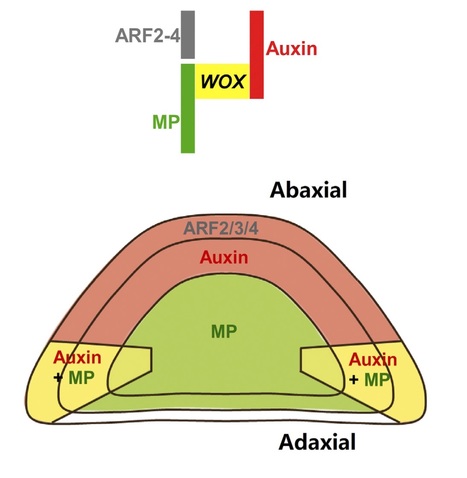
•Adaxial-expressed MP and abaxial-enriched auxin define middle domain WOX expression
•Redundant abaxial-enriched ARF repressors suppress WOX expression
•Spatial auxin signaling transforms adaxial-abaxial polarity into leaf flattening
|
|
Scooped by
Loïc Lepiniec
October 6, 2017 3:13 AM
|
Imagine being able to shrink down to a small enough size to peer into the human body at the single-cell level. Now take a deep breath and plunge into that cell to see all of the ongoing biological processes, including the full complement of molecules and their locations within the cell. This has
|