ICT Security-Sécurité PC et Internet
114.2K views | +0 today
ICT Security-Sécurité PC et Internet
ICT Security + Privacy + Piracy + Data Protection - Censorship - Des cours et infos gratuites sur la"Sécurité PC et Internet" pour usage non-commercial... (FR, EN+DE)...
Curated by Gust MEES
Your new post is loading...
Scooped by Gust MEES
December 8, 2014 11:24 AM
Scoop.it!

Schneier on Security: Corporate Abuse of Our Data | CyberSecurity

Schneier on Security: Corporate Abuse of Our Data | CyberSecurity | ICT Security-Sécurité PC et Internet | Scoop.it

That is not a good enough excuse, though. As nation-state malware becomes more common, we will often lack the whole story. And as long as countries are battling it out in cyberspace, some of us will be targets and the rest of us might be unlucky enough to be sitting in the blast radius. Military-grade malware will continue to be elusive.

Right now, antivirus companies are probably sitting on incomplete stories about a dozen more varieties of government-grade malware. But they shouldn't.


We want, and need, our antivirus companies to tell us everything they can about these threats as soon as they know them, and not wait until the release of a political story makes it impossible for them to remain silent.

Gust MEES's insight:

That is not a good enough excuse, though. As nation-state malware becomes more common, we will often lack the whole story. And as long as countries are battling it out in cyberspace, some of us will be targets and the rest of us might be unlucky enough to be sitting in the blast radius. Military-grade malware will continue to be elusive.

Right now, antivirus companies are probably sitting on incomplete stories about a dozen more varieties of government-grade malware. But they shouldn't.


We want, and need, our antivirus companies to tell us everything they can about these threats as soon as they know them, and not wait until the release of a political story makes it impossible for them to remain silent.

No comment yet.
Scooped by Gust MEES
December 8, 2014 10:27 AM
Scoop.it!

Mehrere Schwachstellen in Google App Engine entdeckt | CyberSecurity

Mehrere Schwachstellen in Google App Engine entdeckt | CyberSecurity | ICT Security-Sécurité PC et Internet | Scoop.it
Sie stecken in der Java-Umgebung der App Engine. Ein Hacker könnte Schadcode einschleusen und außerhalb der Sandbox ausführen.
Gust MEES's insight:

Sie stecken in der Java-Umgebung der App Engine. Ein Hacker könnte Schadcode einschleusen und außerhalb der Sandbox ausführen.


No comment yet.
Scooped by Gust MEES
December 3, 2014 7:28 AM
Scoop.it!

Malware Linux.BackDoor.Fgt.1 bereitet geschickt DDos-Angriffe vor | CyberSecurity

Malware Linux.BackDoor.Fgt.1 bereitet geschickt DDos-Angriffe vor | CyberSecurity | ICT Security-Sécurité PC et Internet | Scoop.it
Mitarbeiter des russischen Security-Software-Anbieters Doctor Web haben einen Linux-Trojaner entdeckt, der Denial-of-Service-Attacken in größerem Ausmaß starten kann. Den Schädling benannten sie mit Linux.BackDoor.Fgt.1.


Sobald er auf einem befallenen Gerät startet, prüft er erst einmal, ob es eine Internetverbindung gibt, indem er auf einen der Google-Server zugreift. Findet er keine, bleibt er ruhig, um nicht von verhaltensbasierenden Systemen erkannt zu werden. Ist die Verbindung erfolgreich, erfasst die Malware IP- und MAC-Adresse des infizierten Systems. Danach versucht sie, diese Informationen und Daten über die eigene Version an einen Steuer-Server zu senden.

Schließlich wartet Linux.BackDoor.Fgt.1 auf einen Datenblock, der einen auszuführenden Befehl enthält. Wenn vom Verwaltungsserver ein Ping-Befehl eintrifft, antwortet der Trojaner mit Pong und fährt mit seiner Mission fort. Beim Befehl DUP schließt er seine Arbeit ab.


Learn more:


- http://www.scoop.it/t/securite-pc-et-internet/?tag=Linux


Gust MEES's insight:
Mitarbeiter des russischen Security-Software-Anbieters Doctor Web haben einen Linux-Trojaner entdeckt, der Denial-of-Service-Attacken in größerem Ausmaß starten kann. Den Schädling benannten sie mit Linux.BackDoor.Fgt.1.


Sobald er auf einem befallenen Gerät startet, prüft er erst einmal, ob es eine Internetverbindung gibt, indem er auf einen der Google-Server zugreift. Findet er keine, bleibt er ruhig, um nicht von verhaltensbasierenden Systemen erkannt zu werden. Ist die Verbindung erfolgreich, erfasst die Malware IP- und MAC-Adresse des infizierten Systems. Danach versucht sie, diese Informationen und Daten über die eigene Version an einen Steuer-Server zu senden.

Schließlich wartet Linux.BackDoor.Fgt.1 auf einen Datenblock, der einen auszuführenden Befehl enthält. Wenn vom Verwaltungsserver ein Ping-Befehl eintrifft, antwortet der Trojaner mit Pong und fährt mit seiner Mission fort. Beim Befehl DUP schließt er seine Arbeit ab.


Learn more:


- http://www.scoop.it/t/securite-pc-et-internet/?tag=Linux


No comment yet.
Scooped by Gust MEES
December 2, 2014 11:32 AM
Scoop.it!

The 12 scams of Christmas | CyberSecurity | CyberCrime | eSkills | Awareness

The 12 scams of Christmas | CyberSecurity | CyberCrime | eSkills | Awareness | ICT Security-Sécurité PC et Internet | Scoop.it
This year, cybercrime has evolved to new and more sophisticated levels — far beyond the days of phishing emails by "lawyers" who need to transfer millions of dollars to your account on behalf of a long-lost African uncle. So, what do you need to keep an eye out for as Christmas approaches?
Gust MEES's insight:

This year, cybercrime has evolved to new and more sophisticated levels — far beyond the days of phishing emails by "lawyers" who need to transfer millions of dollars to your account on behalf of a long-lost African uncle. So, what do you need to keep an eye out for as Christmas approaches?


No comment yet.
Scooped by Gust MEES
December 1, 2014 9:36 AM
Scoop.it!

Ecigarette from China distributes malware to systems

Ecigarette from China distributes malware to systems | ICT Security-Sécurité PC et Internet | Scoop.it
An executives system was reportedly infected by malware after he charged an ecigarette purchased on eBay through his systems USB port.
Gust MEES's insight:

An executives system was reportedly infected by malware after he charged an ecigarette purchased on eBay through his systems USB port.


No comment yet.
Scooped by Gust MEES
November 27, 2014 3:34 PM
Scoop.it!

Gratis-Checktool für Regin: Analysewerkzeug identifiziert Super-Spyware

Gratis-Checktool für Regin: Analysewerkzeug identifiziert Super-Spyware | ICT Security-Sécurité PC et Internet | Scoop.it
Der von Symantec entdeckte Super-Trojaner Regin ist seit 2008 im Netz unterwegs und späht Regierungen, Internet-Anbieter und Unternehmen aus. Nun gibt es ein kostenloses Prüf-Tool.


Learn more:


- http://www.scoop.it/t/securite-pc-et-internet/?tag=REGIN


- http://www.scoop.it/t/securite-pc-et-internet/?tag=Warriorpride


- http://www.scoop.it/t/securite-pc-et-internet/?tag=Quantum


- http://www.scoop.it/t/securite-pc-et-internet/?tag=cyberwar


- http://www.scoop.it/t/securite-pc-et-internet/?tag=NSA


- http://www.scoop.it/t/securite-pc-et-internet/?tag=TAO


- https://gustmees.wordpress.com/2012/05/21/visual-it-securitypart2-your-computer-as-a-possible-cyber-weapon/


Gust MEES's insight:
Der von Symantec entdeckte Super-Trojaner Regin ist seit 2008 im Netz unterwegs und späht Regierungen, Internet-Anbieter und Unternehmen aus. Nun gibt es ein kostenloses Prüf-Tool.


Learn more:


- http://www.scoop.it/t/securite-pc-et-internet/?tag=REGIN


- http://www.scoop.it/t/securite-pc-et-internet/?tag=Warriorpride


- http://www.scoop.it/t/securite-pc-et-internet/?tag=Quantum


- http://www.scoop.it/t/securite-pc-et-internet/?tag=cyberwar


- http://www.scoop.it/t/securite-pc-et-internet/?tag=NSA


- http://www.scoop.it/t/securite-pc-et-internet/?tag=TAO


- https://gustmees.wordpress.com/2012/05/21/visual-it-securitypart2-your-computer-as-a-possible-cyber-weapon/


No comment yet.
Scooped by Gust MEES
November 25, 2014 8:53 AM
Scoop.it!

'Regin' : quel pays revendiquera la paternité du malware ?

'Regin' : quel pays revendiquera la paternité du malware ? | ICT Security-Sécurité PC et Internet | Scoop.it
Comme un air de famille
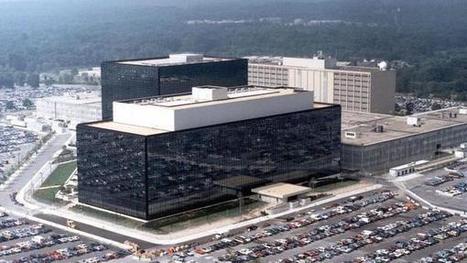
 Selon The Intercept, le site fondé par Glenn Greenwald, Regin pourrait avoir été utilisé par le GCHQ et par la NSA dans le cadre de l’attaque contre le réseau de l’opérateur Belgacom. Ce malware a également été identifié dans d’autres tentatives d’espionnages de la NSA sur différents systèmes de l’Union Européenne. Une information que Belgacom a refusé de commenter, se bornant à rappeler que le malware utilisé à leur encontre était « hautement sophistiqué » mais refusant d’en dire plus sur une possible utilisation de Regin.

Si la paternité du malware reste une énigme, les soupçons se tournent donc en premier lieu vers les USA et la Grande Bretagne. La similarité de Regin avec les architectures déjà observées lors de l’analyse de malware tels que Stuxnet ou Duqu ne plaident pas en la faveur de leur innocence.


Learn more:


- http://www.scoop.it/t/securite-pc-et-internet/?tag=REGIN


- http://www.scoop.it/t/securite-pc-et-internet/?tag=Warriorpride


- http://www.scoop.it/t/securite-pc-et-internet/?tag=Quantum


- http://www.scoop.it/t/securite-pc-et-internet/?tag=cyberwar


- http://www.scoop.it/t/securite-pc-et-internet/?tag=NSA


- http://www.scoop.it/t/securite-pc-et-internet/?tag=TAO


- https://gustmees.wordpress.com/2012/05/21/visual-it-securitypart2-your-computer-as-a-possible-cyber-weapon/


Gust MEES's insight:
Comme un air de famille
 Selon The Intercept, le site fondé par Glenn Greenwald, Regin pourrait avoir été utilisé par le GCHQ et par la NSA dans le cadre de l’attaque contre le réseau de l’opérateur Belgacom. Ce malware a également été identifié dans d’autres tentatives d’espionnages de la NSA sur différents systèmes de l’Union Européenne. Une information que Belgacom a refusé de commenter, se bornant à rappeler que le malware utilisé à leur encontre était « hautement sophistiqué » mais refusant d’en dire plus sur une possible utilisation de Regin.

Si la paternité du malware reste une énigme, les soupçons se tournent donc en premier lieu vers les USA et la Grande Bretagne. La similarité de Regin avec les architectures déjà observées lors de l’analyse de malware tels que Stuxnet ou Duqu ne plaident pas en la faveur de leur innocence.


Learn more:


- http://www.scoop.it/t/securite-pc-et-internet/?tag=REGIN


- http://www.scoop.it/t/securite-pc-et-internet/?tag=Warriorpride


- http://www.scoop.it/t/securite-pc-et-internet/?tag=Quantum


- http://www.scoop.it/t/securite-pc-et-internet/?tag=cyberwar


- http://www.scoop.it/t/securite-pc-et-internet/?tag=NSA


- http://www.scoop.it/t/securite-pc-et-internet/?tag=TAO


- https://gustmees.wordpress.com/2012/05/21/visual-it-securitypart2-your-computer-as-a-possible-cyber-weapon/


No comment yet.
Scooped by Gust MEES
November 24, 2014 3:20 PM
Scoop.it!

Sony Pictures hacked, entire computer system reportedly unusable | CyberSecurity

Sony Pictures hacked, entire computer system reportedly unusable | CyberSecurity | ICT Security-Sécurité PC et Internet | Scoop.it
Reports that Sony Pictures has been hacked have been trickling in this morning, after a thread appeared on Reddit claiming all computers at the company were offline due to a hack.…


Learn more:


- http://www.scoop.it/t/securite-pc-et-internet/?tag=SONY


Gust MEES's insight:
Reports that Sony Pictures has been hacked have been trickling in this morning, after a thread appeared on Reddit claiming all computers at the company were offline due to a hack.…


Learn more:


- http://www.scoop.it/t/securite-pc-et-internet/?tag=SONY


No comment yet.
Scooped by Gust MEES
November 24, 2014 2:30 PM
Scoop.it!

CrytoPHP Backdoored Thousands of Wordpress, Joomla and Drupal Websites

CrytoPHP Backdoored Thousands of Wordpress, Joomla and Drupal Websites | ICT Security-Sécurité PC et Internet | Scoop.it
Security researchers have released a report examining a social engineering operation designed to trick admins into installing backdoor malware called CrytoPHP by way of of tainted CMS plugins and themes for WordPress, Joomla and Drupal.

The attackers lure targets into publishing the pirated themes and plugins by providing them for free, offerings that usually incur a fee for use.

“After being installed on a webserver the backdoor has several options of being controlled which include command and control server communication, mail communication as well as manual control,” the researchers revealed.
Gust MEES's insight:

Security researchers have released a report examining a social engineering operation designed to trick admins into installing backdoor malware called CrytoPHP by way of of tainted CMS plugins and themes for WordPress, Joomla and Drupal.

The attackers lure targets into publishing the pirated themes and plugins by providing them for free, offerings that usually incur a fee for use.

“After being installed on a webserver the backdoor has several options of being controlled which include command and control server communication, mail communication as well as manual control,”the researchers revealed.


No comment yet.
Scooped by Gust MEES
November 24, 2014 9:41 AM
Scoop.it!

Researchers Uncover Government Spy Tool Used to Hack Telecoms and Belgian Cryptographer | REGIN

Researchers Uncover Government Spy Tool Used to Hack Telecoms and Belgian Cryptographer | REGIN | ICT Security-Sécurité PC et Internet | Scoop.it
It was the spring of 2011 when the European Commission discovered it had been hacked. The intrusion into the EU’s legislative body was sophisticated and widespread and used a zero-day exploit to get in. Once the attackers established a stronghold on the network, they were in for the long haul. They scouted the network architecture for additional victims and covered their tracks well. Eventually, they infected numerous systems belonging to the European Commission and the European Council before being discovered.

Two years later another big target was hacked. This time it was Belgacom, the partly state-owned Belgian telecom. In this case, too, the attack was sophisticated and complex. According to published news reports and documents leaked by Edward Snowden, the attackers targeted system administrators working for Belgacom and used their credentials to gain access to routers controlling the telecom’s cellular network. Belgacom publicly acknowledged the hack, but has never provided details about the breach.

Then five months after that announcement, news of another high-profile breach emerged—this one another sophisticated hack targeting prominent Belgian cryptographer Jean-Jacques Quisquater.


Learn more:


- http://www.scoop.it/t/securite-pc-et-internet/?tag=REGIN


- http://www.scoop.it/t/securite-pc-et-internet/?tag=Warriorpride


- http://www.scoop.it/t/securite-pc-et-internet/?tag=Quantum


- http://www.scoop.it/t/securite-pc-et-internet/?tag=cyberwar


- http://www.scoop.it/t/securite-pc-et-internet/?tag=NSA


- http://www.scoop.it/t/securite-pc-et-internet/?tag=TAO


- https://gustmees.wordpress.com/2012/05/21/visual-it-securitypart2-your-computer-as-a-possible-cyber-weapon/


Gust MEES's insight:

Learn more:


- http://www.scoop.it/t/securite-pc-et-internet/?tag=REGIN


- http://www.scoop.it/t/securite-pc-et-internet/?tag=Warriorpride


- http://www.scoop.it/t/securite-pc-et-internet/?tag=Quantum


- http://www.scoop.it/t/securite-pc-et-internet/?tag=cyberwar


- http://www.scoop.it/t/securite-pc-et-internet/?tag=NSA


- http://www.scoop.it/t/securite-pc-et-internet/?tag=TAO


- https://gustmees.wordpress.com/2012/05/21/visual-it-securitypart2-your-computer-as-a-possible-cyber-weapon/

No comment yet.
Scooped by Gust MEES
November 23, 2014 12:52 PM
Scoop.it!

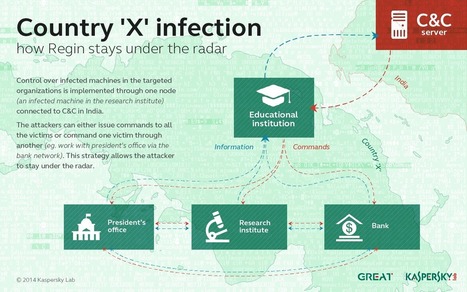
Regin: Top-tier espionage tool enables stealthy surveillance

Regin: Top-tier espionage tool enables stealthy surveillance | ICT Security-Sécurité PC et Internet | Scoop.it
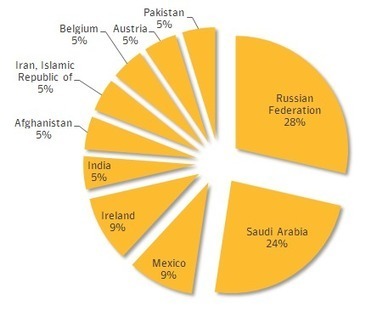
An advanced piece of malware, known as Regin, has been used in systematic spying campaigns against a range of international targets since at least 2008. A back door-type Trojan, Regin is a complex piece of malware whose structure displays a degree of technical competence rarely seen. Customizable with an extensive range of capabilities depending on the target, it provides its controllers with a powerful framework for mass surveillance and has been used in spying operations against government organizations, infrastructure operators, businesses, researchers, and private individuals.

It is likely that its development took months, if not years, to complete and its authors have gone to great lengths to cover its tracks. Its capabilities and the level of resources behind Regin indicate that it is one of the main cyberespionage tools used by a nation state.

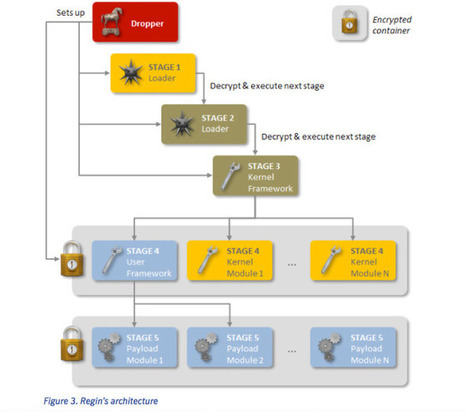
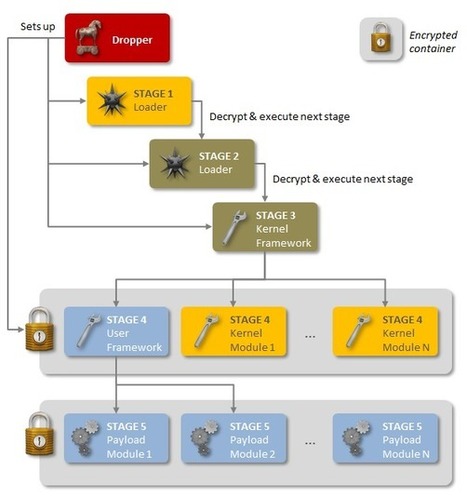
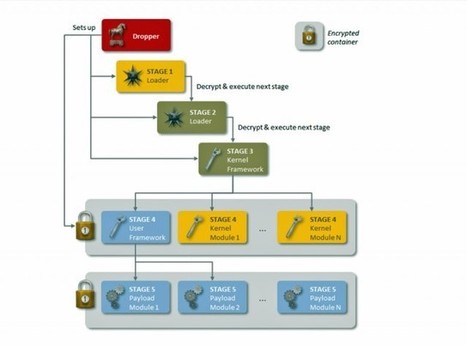
As outlined in a new technical whitepaper from Symantec, Backdoor.Regin is a multi-staged threat and each stage is hidden and encrypted, with the exception of the first stage.  Executing the first stage starts a domino chain of decryption and loading of each subsequent stage for a total of five stages.  Each individual stage provides little information on the complete package. Only by acquiring all five stages is it possible to analyze and understand the threat.


Learn more:


- http://www.scoop.it/t/securite-pc-et-internet/?tag=REGIN


- http://www.scoop.it/t/securite-pc-et-internet/?tag=Warriorpride


- http://www.scoop.it/t/securite-pc-et-internet/?tag=Quantum


- http://www.scoop.it/t/securite-pc-et-internet/?tag=cyberwar


- http://www.scoop.it/t/securite-pc-et-internet/?tag=NSA


- http://www.scoop.it/t/securite-pc-et-internet/?tag=TAO


- https://gustmees.wordpress.com/2012/05/21/visual-it-securitypart2-your-computer-as-a-possible-cyber-weapon/


Gust MEES's insight:

An advanced piece of malware, known as Regin, has been used in systematic spying campaigns against a range of international targets since at least 2008. A back door-type Trojan, Regin is a complex piece of malware whose structure displays a degree of technical competence rarely seen. Customizable with an extensive range of capabilities depending on the target, it provides its controllers with a powerful framework for mass surveillance and has been used in spying operations against government organizations, infrastructure operators, businesses, researchers, and private individuals.

It is likely that its development took months, if not years, to complete and its authors have gone to great lengths to cover its tracks. Its capabilities and the level of resources behind Regin indicate that it is one of the main cyberespionage tools used by a nation state.

As outlined in a new technical whitepaper from Symantec, Backdoor.Regin is a multi-staged threat and each stage is hidden and encrypted, with the exception of the first stage.  Executing the first stage starts a domino chain of decryption and loading of each subsequent stage for a total of five stages.  Each individual stage provides little information on the complete package. Only by acquiring all five stages is it possible to analyze and understand the threat.


Learn more:


- http://www.scoop.it/t/securite-pc-et-internet/?tag=REGIN


- http://www.scoop.it/t/securite-pc-et-internet/?tag=Warriorpride


- http://www.scoop.it/t/securite-pc-et-internet/?tag=Quantum


- http://www.scoop.it/t/securite-pc-et-internet/?tag=cyberwar


- http://www.scoop.it/t/securite-pc-et-internet/?tag=NSA


- http://www.scoop.it/t/securite-pc-et-internet/?tag=TAO


- https://gustmees.wordpress.com/2012/05/21/visual-it-securitypart2-your-computer-as-a-possible-cyber-weapon/


No comment yet.
Scooped by Gust MEES
November 22, 2014 8:38 AM
Scoop.it!

Gefahr durch Zombie-Trojaner: Citadel knackt Passwort Manager

Gefahr durch Zombie-Trojaner: Citadel knackt Passwort Manager | ICT Security-Sécurité PC et Internet | Scoop.it
Citadel-Trojaner: Ein Schläfer mit Keylogger
Sicherheitsforscher von IBM haben eine neue Version des Citadel-Trojaners ausfindig gemacht. Das neue Schadprogramm hat es offenbar besonders auf die beliebten Passwort-Manager KeyPass und Password Safe sowie das Finanztransaktionstool neXus Personal Security Client abgesehen.

Citadel wartet im Verborgenen darauf, dass Nutzer eines der Tools starten. Dann wird die Malware aktiv und startet einen Keylogger, der sämtliche Nutzereingaben abfängt. Auf diese Weise gelangt der Trojaner an das Master Passwort und erhält Zugriff auf alle in den Passwort Managern gespeicherten Daten und kann sie an den Kontroll-Server weiterleiten.

Im schlimmsten Falle werden so alle Passwörter eines Nutzers kompromittiert.
Gust MEES's insight:
Citadel-Trojaner: Ein Schläfer mit Keylogger


Sicherheitsforscher von IBM haben eine neue Version des Citadel-Trojaners ausfindig gemacht. Das neue Schadprogramm hat es offenbar besonders auf die beliebten Passwort-Manager KeyPass undPassword Safe sowie das Finanztransaktionstool neXus Personal Security Client abgesehen.

Citadel wartet im Verborgenen darauf, dass Nutzer eines der Tools starten. Dann wird die Malware aktiv und startet einen Keylogger, der sämtliche Nutzereingaben abfängt. Auf diese Weise gelangt der Trojaner an das Master Passwort und erhält Zugriff auf alle in den Passwort Managern gespeicherten Daten und kann sie an den Kontroll-Server weiterleiten.

Im schlimmsten Falle werden so alle Passwörter eines Nutzers kompromittiert.


No comment yet.
Scooped by Gust MEES
November 19, 2014 8:07 AM
Scoop.it!

Analysis casts doubt on FBI claims over Tor website seizures | Cybercrime

Analysis casts doubt on FBI claims over Tor website seizures | Cybercrime | ICT Security-Sécurité PC et Internet | Scoop.it

Just how many hidden Tor services seized by law enforcement were genuine websites, and how many were clones and copies?


Learn more:


- http://www.scoop.it/t/securite-pc-et-internet/?tag=TOR


Gust MEES's insight:

Just how many hidden Tor services seized by law enforcement were genuine websites, and how many were clones and copies?


Learn more:


- http://www.scoop.it/t/securite-pc-et-internet/?tag=TOR


No comment yet.
Scooped by Gust MEES
December 8, 2014 10:31 AM
Scoop.it!

Multiple vulnerabilities found in Google App Engine | CyberSecurity

Multiple vulnerabilities found in Google App Engine | CyberSecurity | ICT Security-Sécurité PC et Internet | Scoop.it
Researchers from Security Explorations report that they have found multiple serious vulnerabilities in the Java environment of the Google App Engine, part of the Google Cloud Platform.
Google App Engine is the company's PaaS (Platform as a Service) offering for running custom-built programs using a wide variety of popular languages and frameworks. Many of these are built on the Java environment.
Gust MEES's insight:

Researchers from Security Explorations report that they have found multiple serious vulnerabilities in the Java environment of the Google App Engine, part of the Google Cloud Platform.
Google App Engine is the company's PaaS (Platform as a Service) offering for running custom-built programs using a wide variety of popular languages and frameworks. Many of these are built on the Java environment.


No comment yet.
Scooped by Gust MEES
December 8, 2014 10:24 AM
Scoop.it!

Experten entdecken über 30 Sicherheitslücken in Google App Engine

Experten entdecken über 30 Sicherheitslücken in Google App Engine | ICT Security-Sécurité PC et Internet | Scoop.it
Sie wurden in der Java-Umgebung der App Engine gefunden. Über die Schwachstellen lässt sich Schadcode einschleusen, den Angreifer dann außerhalb der Sandbox ausführen könnten. Das Testkonto der zur Sicherheitsfirma Security Explorations gehörenden Entdecker der Sicherheitslücken hat Google deaktiviert.
Gust MEES's insight:

Sie wurden in der Java-Umgebung der App Engine gefunden. Über die Schwachstellen lässt sich Schadcode einschleusen, den Angreifer dann außerhalb der Sandbox ausführen könnten. Das Testkonto der zur Sicherheitsfirma Security Explorations gehörenden Entdecker der Sicherheitslücken hat Google deaktiviert.

No comment yet.
Scooped by Gust MEES
December 2, 2014 11:54 AM
Scoop.it!

Exclusive: FBI warns of 'destructive' malware in wake of Sony attack

Exclusive: FBI warns of 'destructive' malware in wake of Sony attack | ICT Security-Sécurité PC et Internet | Scoop.it
The movie, which is due to be released in the United States and Canada on Dec. 25, is a comedy about two journalists recruited by the CIA to assassinate North Korean leader Kim Jong Un.


The Pyongyang government denounced the film as "undisguised sponsoring of terrorism, as well as an ===> act of war" <=== in a letter to U.N. Secretary-General Ban Ki-moon in June.

The technical section of the FBI report said some of the software used by the hackers had been compiled in Korean, but it did not discuss any possible connection to North Korea.


Learn more:


- http://www.scoop.it/t/securite-pc-et-internet/?tag=SONY


Gust MEES's insight:
The movie, which is due to be released in the United States and Canada on Dec. 25, is a comedy about two journalists recruited by the CIA to assassinate North Korean leader Kim Jong Un.


The Pyongyang government denounced the film as "undisguised sponsoring of terrorism, as well as an ===> act of war" <=== in a letter to U.N. Secretary-General Ban Ki-moon in June.

The technical section of the FBI report said some of the software used by the hackers had been compiled in Korean, but it did not discuss any possible connection to North Korea.


Learn more:


- http://www.scoop.it/t/securite-pc-et-internet/?tag=SONY


No comment yet.
Scooped by Gust MEES
December 2, 2014 11:27 AM
Scoop.it!

FBI warns of 'destructive' malware following Sony hack | CyberSecurity | CyberCrime

FBI warns of 'destructive' malware following Sony hack | CyberSecurity | CyberCrime | ICT Security-Sécurité PC et Internet | Scoop.it
The US Federal Bureau of Investigation (FBI) has warned that hackers have used malware to launch destructive attacks against businesses in the United States, following a devastating attack on the networks of Sony Pictures Entertainment.

In a five-page confidential "flash" warning sent to businesses late on Monday and seen by Reuters, the FBI provided technical details about the malware, but did not mention the corporate victim by name. According to the advisory notice, the malware is particularly violent — over-writing data on hard drives to make them little more than bricks while also closing down networks at the same time.


Learn more:


- http://www.scoop.it/t/securite-pc-et-internet/?tag=SONY


Gust MEES's insight:

The US Federal Bureau of Investigation (FBI) has warned that hackers have used malware to launch destructive attacks against businesses in the United States, following a devastating attack on the networks of Sony Pictures Entertainment.

In a five-page confidential "flash" warning sent to businesses late on Monday and seen by Reuters, the FBI provided technical details about the malware, but did not mention the corporate victim by name. According to the advisory notice, the malware is particularly violent — over-writing data on hard drives to make them little more than bricks while also closing down networks at the same time.


Learn more:


- http://www.scoop.it/t/securite-pc-et-internet/?tag=SONY


No comment yet.
Scooped by Gust MEES
November 28, 2014 9:06 AM
Scoop.it!

Adobe publishes out-of-band Flash update - provides "booster dose" for October's patches | Update asap!!!

Adobe publishes out-of-band Flash update - provides "booster dose" for October's patches | Update asap!!! | ICT Security-Sécurité PC et Internet | Scoop.it
Adobe has published a Flash update, dubbed APSB14-26.

The new patch offers additional protection against a vulnerability that was originally addressed in October 2014.


==========> Update asap!!! <==========


Gust MEES's insight:

Update asap!!!

No comment yet.
Scooped by Gust MEES
November 27, 2014 9:25 AM
Scoop.it!

How Splitting a Computer Into Multiple Realities Can Protect You From Hackers | CyberSecurity

How Splitting a Computer Into Multiple Realities Can Protect You From Hackers | CyberSecurity | ICT Security-Sécurité PC et Internet | Scoop.it


Eight years ago, Polish hacker Joanna Rutkowska was experimenting with rootkits—tough-to-detect spyware that infects the deepest level of a computer’s operating system—when she came up with a devious notion: What if, instead of putting spyware inside a victim’s computer, you put the victim’s computer inside the spyware? At the time, a technology known…


So Rutkowska flipped the game, this time in favor of the defenders. Four years ago her Warsaw-based firm, Invisible Things Lab, started developing its own operating system known as Qubes. The free open source OS lets users set up a collection of virtual machines on their PC, with a simple central interface to manage each quarantined system. Careful users can keep their personal online activities isolated in one virtual machine, for instance, while they do their work in another, and their banking in a third. (Rutkowska typically runs about 15.) Open a malicious email attachment or click on an infected website and the malware can’t break out of that one contaminated container.


If it works as promised, even NSA-level exploits would be contained to a single compartment in Qubes’ architecture, one that could be evaporated and re-created at will. Recovering from even the nastiest hacker attack, in other words, could soon be as easy as waking from a bad dream.


Gust MEES's insight:

Eight years ago, Polish hacker Joanna Rutkowska was experimenting with rootkits—tough-to-detect spyware that infects the deepest level of a computer’s operating system—when she came up with a devious notion: What if, instead of putting spyware inside a victim’s computer, you put the victim’s computer inside the spyware? At the time, a technology known…


So Rutkowska flipped the game, this time in favor of the defenders. Four years ago her Warsaw-based firm, Invisible Things Lab, started developing its own operating system known as Qubes. The free open source OS lets users set up a collection of virtual machines on their PC, with a simple central interface to manage each quarantined system. Careful users can keep their personal online activities isolated in one virtual machine, for instance, while they do their work in another, and their banking in a third. (Rutkowska typically runs about 15.) Open a malicious email attachment or click on an infected website and the malware can’t break out of that one contaminated container.


If it works as promised, even NSA-level exploits would be contained to a single compartment in Qubes’ architecture, one that could be evaporated and re-created at will. Recovering from even the nastiest hacker attack, in other words, could soon be as easy as waking from a bad dream.


No comment yet.
Scooped by Gust MEES
November 25, 2014 8:33 AM
Scoop.it!

GCHQ und NSA stecken angeblich hinter ausgefeilter Spyware Regin

GCHQ und NSA stecken angeblich hinter ausgefeilter Spyware Regin | ICT Security-Sécurité PC et Internet | Scoop.it
Britische und US-amerikanische Geheimdienste sollen mit der Spionagesoftware Regin den massiven Cyberangriff auf Belgacom und EU-Behörden ausgeführt haben. Die Malware kann auch Mobilfunk-Stationen überwachen.

Die seit dem Wochenende öffentlich bekannte Cyberwaffe Regin ist unter anderem für die ausgefeilten Cyber-Attacke auf das belgische Telekommunikationsunternehmen Belgacom eingesetzt worden, die der Konzern im Juli vorigen Jahres entdeckte. Dies berichten die Blogger von "The Intercept", zu denen auch der NSA-Enthüllungsreporter Glenn Greenwald gehört. Sie berufen sich dabei auf IT-Sicherheitsexperten und eigene technische Analysen.


Learn more:


- http://www.scoop.it/t/securite-pc-et-internet/?tag=REGIN


- http://www.scoop.it/t/securite-pc-et-internet/?tag=Warriorpride


- http://www.scoop.it/t/securite-pc-et-internet/?tag=Quantum


- http://www.scoop.it/t/securite-pc-et-internet/?tag=cyberwar


- http://www.scoop.it/t/securite-pc-et-internet/?tag=NSA


- http://www.scoop.it/t/securite-pc-et-internet/?tag=TAO


- https://gustmees.wordpress.com/2012/05/21/visual-it-securitypart2-your-computer-as-a-possible-cyber-weapon/


Gust MEES's insight:
Britische und US-amerikanische Geheimdienste sollen mit der Spionagesoftware Regin den massiven Cyberangriff auf Belgacom und EU-Behörden ausgeführt haben. Die Malware kann auch Mobilfunk-Stationen überwachen.

Die seit dem Wochenende öffentlich bekannte Cyberwaffe Regin ist unter anderem für die ausgefeilten Cyber-Attacke auf das belgische Telekommunikationsunternehmen Belgacom eingesetzt worden, die der Konzern im Juli vorigen Jahres entdeckte. Dies berichten die Blogger von "The Intercept", zu denen auch der NSA-Enthüllungsreporter Glenn Greenwald gehört. Sie berufen sich dabei auf IT-Sicherheitsexperten und eigene technische Analysen.


Learn more:


- http://www.scoop.it/t/securite-pc-et-internet/?tag=REGIN


- http://www.scoop.it/t/securite-pc-et-internet/?tag=Warriorpride


- http://www.scoop.it/t/securite-pc-et-internet/?tag=Quantum


- http://www.scoop.it/t/securite-pc-et-internet/?tag=cyberwar


- http://www.scoop.it/t/securite-pc-et-internet/?tag=NSA


- http://www.scoop.it/t/securite-pc-et-internet/?tag=TAO


- https://gustmees.wordpress.com/2012/05/21/visual-it-securitypart2-your-computer-as-a-possible-cyber-weapon/


No comment yet.
Scooped by Gust MEES
November 24, 2014 2:39 PM
Scoop.it!

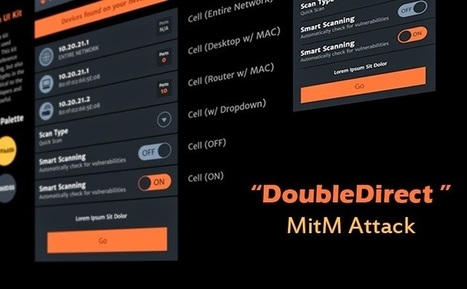
DoubleDirect MitM Attack Targets Android, iOS and OS X Users | CyberSecurity

DoubleDirect MitM Attack Targets Android, iOS and OS X Users | CyberSecurity | ICT Security-Sécurité PC et Internet | Scoop.it
Security researchers have discovered a new type of "Man-in-the-Middle" (MitM) attack in the wild targeting smartphone and tablets users on devices running either iOS or Android around the world.
The MitM attack, dubbed DoubleDirect, enables an attacker to redirect a victim’s traffic of major websites such as Google, Facebook and Twitter to a device controlled by the attacker. Once done, cyber crooks can steal victims’ valuable personal data, such as email IDs, login credentials and banking information as well as can deliver malware to the targeted mobile device.
San Francisco-based mobile security firm Zimperium detailed the threat in a Thursday blog post, revealing that the DoubleDirect technique is being used by attackers in the wild in attacks against the users of web giants including Google, Facebook, Hotmail, Live.com and Twitter, across 31 countries, including the U.S., the U.K. and Canada.
Gust MEES's insight:
Security researchers have discovered a new type of "Man-in-the-Middle" (MitM) attack in the wild targeting smartphone and tablets users on devices running either iOS or Android around the world.
The MitM attack, dubbed DoubleDirect, enables an attacker to redirect a victim’s traffic of major websites such as Google, Facebook and Twitter to a device controlled by the attacker. Once done, cyber crooks can steal victims’ valuable personal data, such as email IDs, login credentials and banking information as well as can deliver malware to the targeted mobile device.
San Francisco-based mobile security firm Zimperium detailed the threat in a Thursday blog post, revealing that the DoubleDirect technique is being used by attackers in the wild in attacks against the users of web giants including Google, Facebook, Hotmail, Live.com and Twitter, across 31 countries, including the U.S., the U.K. and Canada.
No comment yet.
Scooped by Gust MEES
November 24, 2014 2:20 PM
Scoop.it!

Latest Snowden leak shows UK, US behind Regin malware, attacked European Union | Cyberespionage

Latest Snowden leak shows UK, US behind Regin malware, attacked European Union | Cyberespionage | ICT Security-Sécurité PC et Internet | Scoop.it

Two governments working together are said to have developed the state-sponsored malware that attacked the European Union. Guess what? One of the makers was an EU country.


Learn more:


- http://www.scoop.it/t/securite-pc-et-internet/?tag=REGIN


- http://www.scoop.it/t/securite-pc-et-internet/?tag=Warriorpride


- http://www.scoop.it/t/securite-pc-et-internet/?tag=Quantum


- http://www.scoop.it/t/securite-pc-et-internet/?tag=cyberwar


- http://www.scoop.it/t/securite-pc-et-internet/?tag=NSA


- http://www.scoop.it/t/securite-pc-et-internet/?tag=TAO


- https://gustmees.wordpress.com/2012/05/21/visual-it-securitypart2-your-computer-as-a-possible-cyber-weapon/


Gust MEES's insight:

Two governments working together are said to have developed the state-sponsored malware that attacked the European Union. Guess what? One of the makers was an EU country.


Learn more:


- http://www.scoop.it/t/securite-pc-et-internet/?tag=REGIN


- http://www.scoop.it/t/securite-pc-et-internet/?tag=Warriorpride


- http://www.scoop.it/t/securite-pc-et-internet/?tag=Quantum


- http://www.scoop.it/t/securite-pc-et-internet/?tag=cyberwar


- http://www.scoop.it/t/securite-pc-et-internet/?tag=NSA


- http://www.scoop.it/t/securite-pc-et-internet/?tag=TAO


- https://gustmees.wordpress.com/2012/05/21/visual-it-securitypart2-your-computer-as-a-possible-cyber-weapon/


No comment yet.
Scooped by Gust MEES
November 24, 2014 9:28 AM
Scoop.it!

Regin: Nation-state ownage of GSM networks

Regin: Nation-state ownage of GSM networks | ICT Security-Sécurité PC et Internet | Scoop.it
A sophisticated group known as Regin has targeted high-profile entities around the world. Regin is one of the most sophisticated attack platforms we have ever analysed. The ability to penetrate and...


For more than a decade, a sophisticated group known as Regin has targeted high-profile entities around the world with an advanced malware platform. As far as we can tell, the operation is still active, although the malware may have been upgraded to more sophisticated versions. The most recent sample we've seen was from a 64-bit infection. This infection was still active in the spring of 2014.


The name Regin is apparently a reversed "In Reg", short for "In Registry", as the malware can store its modules in the registry. This name and detections first appeared in anti-malware products around March 2011.


From some points of view, the platform reminds us of another sophisticated malware: Turla. Some similarities include the use of virtual file systems and the deployment of communication drones to bridge networks together. Yet through their implementation, coding methods, plugins, hiding techniques and flexibility, Regin surpasses Turla as one of the most sophisticated attack platforms we have ever analysed.


Learn more:


- http://www.scoop.it/t/securite-pc-et-internet/?tag=REGIN


- http://www.scoop.it/t/securite-pc-et-internet/?tag=Warriorpride


- http://www.scoop.it/t/securite-pc-et-internet/?tag=Quantum


- http://www.scoop.it/t/securite-pc-et-internet/?tag=cyberwar


- http://www.scoop.it/t/securite-pc-et-internet/?tag=NSA


- http://www.scoop.it/t/securite-pc-et-internet/?tag=TAO


- https://gustmees.wordpress.com/2012/05/21/visual-it-securitypart2-your-computer-as-a-possible-cyber-weapon/


Gust MEES's insight:

Learn more:


- http://www.scoop.it/t/securite-pc-et-internet/?tag=REGIN


- http://www.scoop.it/t/securite-pc-et-internet/?tag=Warriorpride


- http://www.scoop.it/t/securite-pc-et-internet/?tag=Quantum


- http://www.scoop.it/t/securite-pc-et-internet/?tag=cyberwar


- http://www.scoop.it/t/securite-pc-et-internet/?tag=NSA


- http://www.scoop.it/t/securite-pc-et-internet/?tag=TAO


- https://gustmees.wordpress.com/2012/05/21/visual-it-securitypart2-your-computer-as-a-possible-cyber-weapon/

No comment yet.
Scooped by Gust MEES
November 23, 2014 12:49 PM
Scoop.it!

Highly advanced backdoor trojan cased high-profile targets for years

Highly advanced backdoor trojan cased high-profile targets for years | ICT Security-Sécurité PC et Internet | Scoop.it

Researchers have unearthed highly advanced malware they believe was developed by a wealthy nation-state to spy on a wide range of international targets in diverse industries, including hospitality, energy, airline, and research.

Backdoor Regin, as researchers at security firm Symantec are referring to the trojan, bears some resemblance to previously discovered state-sponsored malware, including the espionage trojans known as Flame and Duqu, as well as Stuxnet, the computer worm and trojan that was programmed to disrupt Iran's nuclear program. Regin likely required months or years to be completed and contains dozens of individual modules that allowed its operators to tailor the malware to individual targets.

To remain stealthy, the malware is organized into five stages, each of which is encrypted except for the first one. Executing the first stage triggers a domino chain in which the second stage is decrypted and executed, and that in turn decrypts the third stage, and so on. Analyzing and understanding the malware requires researchers to acquire all five stages. Regin contains dozens of payloads, including code for capturing screenshots, seizing control of an infected computer's mouse, stealing passwords, monitoring network traffic, and recovering deleted files. Other modules appear to be tailored to specific targets. One such payload included code for monitoring the traffic of a Microsoft IIS server. Another sniffed the traffic of mobile telephone base station controllers.


Learn more:


- http://www.scoop.it/t/securite-pc-et-internet/?tag=REGIN


- http://www.scoop.it/t/securite-pc-et-internet/?tag=Warriorpride


- http://www.scoop.it/t/securite-pc-et-internet/?tag=Quantum


- http://www.scoop.it/t/securite-pc-et-internet/?tag=cyberwar


- http://www.scoop.it/t/securite-pc-et-internet/?tag=NSA


- http://www.scoop.it/t/securite-pc-et-internet/?tag=TAO


- https://gustmees.wordpress.com/2012/05/21/visual-it-securitypart2-your-computer-as-a-possible-cyber-weapon/


Gust MEES's insight:

Researchers have unearthed highly advanced malware they believe was developed by a wealthy nation-state to spy on a wide range of international targets in diverse industries, including hospitality, energy, airline, and research.

Backdoor Regin, as researchers at security firm Symantec are referring to the trojan, bears some resemblance to previously discovered state-sponsored malware, including the espionage trojans known as Flame and Duqu, as well as Stuxnet, the computer worm and trojan that was programmed to disrupt Iran's nuclear program. Regin likely required months or years to be completed and contains dozens of individual modules that allowed its operators to tailor the malware to individual targets.

To remain stealthy, the malware is organized into five stages, each of which is encrypted except for the first one. Executing the first stage triggers a domino chain in which the second stage is decrypted and executed, and that in turn decrypts the third stage, and so on. Analyzing and understanding the malware requires researchers to acquire all five stages. Regin contains dozens of payloads, including code for capturing screenshots, seizing control of an infected computer's mouse, stealing passwords, monitoring network traffic, and recovering deleted files. Other modules appear to be tailored to specific targets. One such payload included code for monitoring the traffic of a Microsoft IIS server. Another sniffed the traffic of mobile telephone base station controllers.


Learn more:


- http://www.scoop.it/t/securite-pc-et-internet/?tag=REGIN


- http://www.scoop.it/t/securite-pc-et-internet/?tag=Warriorpride


- http://www.scoop.it/t/securite-pc-et-internet/?tag=Quantum


- http://www.scoop.it/t/securite-pc-et-internet/?tag=cyberwar


- http://www.scoop.it/t/securite-pc-et-internet/?tag=NSA


- http://www.scoop.it/t/securite-pc-et-internet/?tag=TAO


- https://gustmees.wordpress.com/2012/05/21/visual-it-securitypart2-your-computer-as-a-possible-cyber-weapon/


No comment yet.
Scooped by Gust MEES
November 19, 2014 10:52 AM
Scoop.it!

The Rise Of The Resilient Mobile Botnet | MobileSecurity | BYOD | CyberSecurity

The Rise Of The Resilient Mobile Botnet | MobileSecurity | BYOD | CyberSecurity | ICT Security-Sécurité PC et Internet | Scoop.it
New report on what researchers call one of the 'most sophisticated mobile botnets online' shows how profitable mobile malware has become.


Learn more:


- http://www.scoop.it/t/securite-pc-et-internet/?tag=Botnet


- http://www.scoop.it/t/securite-pc-et-internet/?tag=Mobile+Botnet


Gust MEES's insight:
New report on what researchers call one of the 'most sophisticated mobile botnets online' shows how profitable mobile malware has become.


Learn more:


- http://www.scoop.it/t/securite-pc-et-internet/?tag=Botnet


- http://www.scoop.it/t/securite-pc-et-internet/?tag=Mobile+Botnet


No comment yet.