ICT Security-Sécurité PC et Internet
114.2K views | +0 today
ICT Security-Sécurité PC et Internet
ICT Security + Privacy + Piracy + Data Protection - Censorship - Des cours et infos gratuites sur la"Sécurité PC et Internet" pour usage non-commercial... (FR, EN+DE)...
Curated by Gust MEES
Your new post is loading...
Scooped by Gust MEES
October 10, 2016 9:21 AM
Scoop.it!

Europe to Push New Security Rules Amid IoT Mess — Krebs on Security | #InternetOfThings #IoE #CyberSecurity

Europe to Push New Security Rules Amid IoT Mess — Krebs on Security | #InternetOfThings #IoE #CyberSecurity | ICT Security-Sécurité PC et Internet | Scoop.it
The European Commission is drafting new cybersecurity requirements to beef up security around so-called Internet of Things (IoT) devices such as Web-connected security cameras, routers and digital video recorders (DVRs). News of the expected proposal comes as security firms are warning that a great many IoT devices are equipped with little or no security protections.

According to a report at Euractive.com, the Commission is planning the new IoT rules as part of a new plan to overhaul the European Union’s telecommunications laws. “The Commission would encourage companies to come up with a labeling system for internet-connected devices that are approved and secure,” wrote Catherine Stupp. “The EU labelling system that rates appliances based on how much energy they consume could be a template for the cybersecurity ratings.”

In last week’s piece, “Who Makes the IoT Things Under Attack?,” I looked at which companies are responsible for IoT products being sought out by Mirai — malware that scans the Internet for devices running default usernames and passwords and then forces vulnerable devices to participate in extremely powerful attacks designed to knock Web sites offline.


Learn more / En savoir plus / Mehr erfahren:


http://www.scoop.it/t/securite-pc-et-internet/?tag=Smart+Home


https://globaleducationandsocialmedia.wordpress.com/2014/01/21/why-is-it-a-must-to-have-basics-knowledge-of-cyber-security-in-a-connected-technology-world/


http://www.scoop.it/t/securite-pc-et-internet/?tag=SHODAN+Search+Engine


http://www.scoop.it/t/21st-century-learning-and-teaching/?tag=Internet+of+Things


http://www.scoop.it/t/securite-pc-et-internet/?tag=smart-TV


http://www.scoop.it/t/securite-pc-et-internet/?tag=Internet+of+things


http://globaleducationandsocialmedia.wordpress.com/2014/01/21/why-is-it-a-must-to-have-basics-knowledge-of-cyber-security-in-a-connected-technology-world/


http://www.scoop.it/t/securite-pc-et-internet/?tag=Cars


Gust MEES's insight:
The European Commission is drafting new cybersecurity requirements to beef up security around so-called Internet of Things (IoT) devices such as Web-connected security cameras, routers and digital video recorders (DVRs). News of the expected proposal comes as security firms are warning that a great many IoT devices are equipped with little or no security protections.

According to a report at Euractive.com, the Commission is planning the new IoT rules as part of a new plan to overhaul the European Union’s telecommunications laws. “The Commission would encourage companies to come up with a labeling system for internet-connected devices that are approved and secure,” wrote Catherine Stupp. “The EU labelling system that rates appliances based on how much energy they consume could be a template for the cybersecurity ratings.”

In last week’s piece, “Who Makes the IoT Things Under Attack?,” I looked at which companies are responsible for IoT products being sought out by Mirai — malware that scans the Internet for devices running default usernames and passwords and then forces vulnerable devices to participate in extremely powerful attacks designed to knock Web sites offline.


Learn more / En savoir plus / Mehr erfahren:


http://www.scoop.it/t/securite-pc-et-internet/?tag=Smart+Home


https://globaleducationandsocialmedia.wordpress.com/2014/01/21/why-is-it-a-must-to-have-basics-knowledge-of-cyber-security-in-a-connected-technology-world/


http://www.scoop.it/t/securite-pc-et-internet/?tag=SHODAN+Search+Engine


http://www.scoop.it/t/21st-century-learning-and-teaching/?tag=Internet+of+Things


http://www.scoop.it/t/securite-pc-et-internet/?tag=smart-TV


http://www.scoop.it/t/securite-pc-et-internet/?tag=Internet+of+things


http://globaleducationandsocialmedia.wordpress.com/2014/01/21/why-is-it-a-must-to-have-basics-knowledge-of-cyber-security-in-a-connected-technology-world/


http://www.scoop.it/t/securite-pc-et-internet/?tag=Cars


No comment yet.
Rescooped by Gust MEES from 21st Century Learning and Teaching
October 9, 2016 1:24 PM
Scoop.it!

Mehr Sicherheit für das Internet der Dinge | #InternetOfThings #IoT #IoE #CyberSecurity 

Mehr Sicherheit für das Internet der Dinge | #InternetOfThings #IoT #IoE #CyberSecurity  | ICT Security-Sécurité PC et Internet | Scoop.it
Die vernetzten Geräte des Internet of Things (IoT) sammeln und verarbeiten immer mehr Daten, versagen jedoch häufig beim Schutz dieser Daten. Ein ausführlicher Leitfaden will bei der Entwicklung sicherer Geräte helfen.

Der Branchenverband Cloud Security Alliance (CSA) hat umfassende Richtlinien für die Entwicklung sicherer Geräte für das Internet der Dinge (IoT) veröffentlicht. Auf gut 75 Seiten nennt die Studie Future-proofing the Connected World: 13 Steps to Developing Secure IoT Products eine Reihe konkreter Maßnahmen, um die Sicherheit vernetzter Geräte zu verbessern.

Das tut auch dringend Not: Immer wieder fielen in letzter Zeit mit dem Internet verbundene Geräte durch gravierende Sicherheitslücken auf, beispielsweise die Smart-Home-Systemen von Loxone oder die vernetzten Alarmanlagen verschiedener Hersteller. Kürzlich dokumentierte das Global Privacy Network (GPEN) schwere Mängel in 314 vernetzten Geräten vom Fitness-Tracker über Blutzuckermessgeräte bis zu Smart-TVs.

Geräte wie IP-Kameras und mit dem Internet verbundene Festplatten-Receiver sind mittlerweile Teil riesiger Bot-Netze, mit denen massive Denial-of-Service-Attacken durchgeführt werden – erst vor Kurzem zwang ein solcher DDoS-Angriff auf den Security-Blogger Brian Krebs den Content-Delivery-Anbieter Akamai in die Knie.


Learn more / En savoir plus / Mehr erfahren:


http://www.scoop.it/t/securite-pc-et-internet/?tag=DDos


http://www.scoop.it/t/securite-pc-et-internet/?tag=Smart+Home


https://globaleducationandsocialmedia.wordpress.com/2014/01/21/why-is-it-a-must-to-have-basics-knowledge-of-cyber-security-in-a-connected-technology-world/


http://www.scoop.it/t/securite-pc-et-internet/?tag=SHODAN+Search+Engine


http://www.scoop.it/t/21st-century-learning-and-teaching/?tag=Internet+of+Things


http://www.scoop.it/t/securite-pc-et-internet/?tag=smart-TV


http://www.scoop.it/t/securite-pc-et-internet/?tag=Internet+of+things


http://globaleducationandsocialmedia.wordpress.com/2014/01/21/why-is-it-a-must-to-have-basics-knowledge-of-cyber-security-in-a-connected-technology-world/


http://www.scoop.it/t/securite-pc-et-internet/?tag=Cars


Gust MEES's insight:
Die vernetzten Geräte des Internet of Things (IoT) sammeln und verarbeiten immer mehr Daten, versagen jedoch häufig beim Schutz dieser Daten. Ein ausführlicher Leitfaden will bei der Entwicklung sicherer Geräte helfen.

Der Branchenverband Cloud Security Alliance (CSA) hat umfassende Richtlinien für die Entwicklung sicherer Geräte für das Internet der Dinge (IoT) veröffentlicht. Auf gut 75 Seiten nennt die Studie Future-proofing the Connected World: 13 Steps to Developing Secure IoT Products eine Reihe konkreter Maßnahmen, um die Sicherheit vernetzter Geräte zu verbessern.

Das tut auch dringend Not: Immer wieder fielen in letzter Zeit mit dem Internet verbundene Geräte durch gravierende Sicherheitslücken auf, beispielsweise die Smart-Home-Systemen von Loxone oder die vernetzten Alarmanlagen verschiedener Hersteller. Kürzlich dokumentierte das Global Privacy Network (GPEN) schwere Mängel in 314 vernetzten Geräten vom Fitness-Tracker über Blutzuckermessgeräte bis zu Smart-TVs.

Geräte wie IP-Kameras und mit dem Internet verbundene Festplatten-Receiver sind mittlerweile Teil riesiger Bot-Netze, mit denen massive Denial-of-Service-Attacken durchgeführt werden – erst vor Kurzem zwang ein solcher DDoS-Angriff auf den Security-Blogger Brian Krebs den Content-Delivery-Anbieter Akamai in die Knie.


Learn more / En savoir plus / Mehr erfahren:


http://www.scoop.it/t/securite-pc-et-internet/?tag=DDos


http://www.scoop.it/t/securite-pc-et-internet/?tag=Smart+Home


https://globaleducationandsocialmedia.wordpress.com/2014/01/21/why-is-it-a-must-to-have-basics-knowledge-of-cyber-security-in-a-connected-technology-world/


http://www.scoop.it/t/securite-pc-et-internet/?tag=SHODAN+Search+Engine


http://www.scoop.it/t/21st-century-learning-and-teaching/?tag=Internet+of+Things


http://www.scoop.it/t/securite-pc-et-internet/?tag=smart-TV


http://www.scoop.it/t/securite-pc-et-internet/?tag=Internet+of+things


http://globaleducationandsocialmedia.wordpress.com/2014/01/21/why-is-it-a-must-to-have-basics-knowledge-of-cyber-security-in-a-connected-technology-world/


http://www.scoop.it/t/securite-pc-et-internet/?tag=Cars


Gust MEES's curator insight, October 9, 2016 1:17 PM
Die vernetzten Geräte des Internet of Things (IoT) sammeln und verarbeiten immer mehr Daten, versagen jedoch häufig beim Schutz dieser Daten. Ein ausführlicher Leitfaden will bei der Entwicklung sicherer Geräte helfen.

Der Branchenverband Cloud Security Alliance (CSA) hat umfassende Richtlinien für die Entwicklung sicherer Geräte für das Internet der Dinge (IoT) veröffentlicht. Auf gut 75 Seiten nennt die Studie Future-proofing the Connected World: 13 Steps to Developing Secure IoT Products eine Reihe konkreter Maßnahmen, um die Sicherheit vernetzter Geräte zu verbessern.

Das tut auch dringend Not: Immer wieder fielen in letzter Zeit mit dem Internet verbundene Geräte durch gravierende Sicherheitslücken auf, beispielsweise die Smart-Home-Systemen von Loxone oder die vernetzten Alarmanlagen verschiedener Hersteller. Kürzlich dokumentierte das Global Privacy Network (GPEN) schwere Mängel in 314 vernetzten Geräten vom Fitness-Tracker über Blutzuckermessgeräte bis zu Smart-TVs.

Geräte wie IP-Kameras und mit dem Internet verbundene Festplatten-Receiver sind mittlerweile Teil riesiger Bot-Netze, mit denen massive Denial-of-Service-Attacken durchgeführt werden – erst vor Kurzem zwang ein solcher DDoS-Angriff auf den Security-Blogger Brian Krebs den Content-Delivery-Anbieter Akamai in die Knie.


Learn more / En savoir plus / Mehr erfahren:


http://www.scoop.it/t/securite-pc-et-internet/?tag=DDos


http://www.scoop.it/t/securite-pc-et-internet/?tag=Smart+Home


https://globaleducationandsocialmedia.wordpress.com/2014/01/21/why-is-it-a-must-to-have-basics-knowledge-of-cyber-security-in-a-connected-technology-world/


http://www.scoop.it/t/securite-pc-et-internet/?tag=SHODAN+Search+Engine


http://www.scoop.it/t/21st-century-learning-and-teaching/?tag=Internet+of+Things


http://www.scoop.it/t/securite-pc-et-internet/?tag=smart-TV


http://www.scoop.it/t/securite-pc-et-internet/?tag=Internet+of+things


http://globaleducationandsocialmedia.wordpress.com/2014/01/21/why-is-it-a-must-to-have-basics-knowledge-of-cyber-security-in-a-connected-technology-world/


http://www.scoop.it/t/securite-pc-et-internet/?tag=Cars


Scooped by Gust MEES
October 6, 2016 11:51 AM
Scoop.it!

Vorsicht! Auf diese Links sollten Sie nie klicken | #CyberSecurity #CyberCrime #Apps #Facebook 

Vorsicht! Auf diese Links sollten Sie nie klicken | #CyberSecurity #CyberCrime #Apps #Facebook  | ICT Security-Sécurité PC et Internet | Scoop.it
Vorsicht! Auf diese Links sollten Sie nie klicken
Cyberkriminelle versuchen es leider immer wieder, Schadsoftware zu verbreiten. Dieses Mal haben sie es auf die User der Facebook-Messenger-App abgesehen. Deswegen: Klicken Sie nie auf Links denen Sie nicht hundertprozentig vertrauen können. Weitere Infos und Tipps zu der Masche bekommen Sie im Video.


Sie haben sich bereits einen Virus eingefangen? Wir zeigen Ihnen hier was Sie tun können, wenn Sie einen Virus auf Ihrem Android-Gerät haben. 


Gust MEES's insight:
Vorsicht! Auf diese Links sollten Sie nie klicken
Cyberkriminelle versuchen es leider immer wieder, Schadsoftware zu verbreiten. Dieses Mal haben sie es auf die User der Facebook-Messenger-App abgesehen. Deswegen: Klicken Sie nie auf Links denen Sie nicht hundertprozentig vertrauen können. Weitere Infos und Tipps zu der Masche bekommen Sie im Video.


Sie haben sich bereits einen Virus eingefangen? Wir zeigen Ihnen hier was Sie tun können, wenn Sie einen Virus auf Ihrem Android-Gerät haben. 


No comment yet.
Scooped by Gust MEES
October 5, 2016 3:18 PM
Scoop.it!

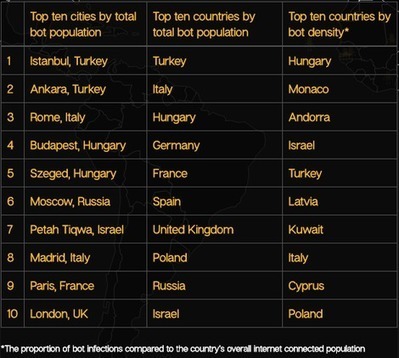
These ten cities are home to the biggest botnets | #CyberSecurity

These ten cities are home to the biggest botnets | #CyberSecurity | ICT Security-Sécurité PC et Internet | Scoop.it
A lack of security in certain countries is providing cybercriminals with the opportunity to recruit devices into botnets and launch attacks anywhere in the world.


Learn more / En savoir plus / Mehr erfahren:


http://www.scoop.it/t/securite-pc-et-internet/?tag=Botnet


https://gustmees.wordpress.com/2013/05/13/visual-cyber-security-see-attacks-on-real-time/


Gust MEES's insight:
A lack of security in certain countries is providing cybercriminals with the opportunity to recruit devices into botnets and launch attacks anywhere in the world.


Learn more / En savoir plus / Mehr erfahren:


http://www.scoop.it/t/securite-pc-et-internet/?tag=Botnet


https://gustmees.wordpress.com/2013/05/13/visual-cyber-security-see-attacks-on-real-time/


No comment yet.
Scooped by Gust MEES
October 5, 2016 11:36 AM
Scoop.it!

We’d be wise to keep our elections disconnected from the Internet

We’d be wise to keep our elections disconnected from the Internet | ICT Security-Sécurité PC et Internet | Scoop.it
Despite what your local election officials may tell you, you can’t trust the Internet with your vote.

This election year we’ve seen foreign hackers infiltrate the Democratic National Committee’s e-mail system as well as voter databases in Arizona and Illinois. These attacks have reinforced what political scientists and technical experts alike have been saying for more than a decade: public elections should stay offline. It’s not yet feasible to build a secure and truly democratic Internet-connected voting system.


Gust MEES's insight:
Despite what your local election officials may tell you, you can’t trust the Internet with your vote.

This election year we’ve seen foreign hackers infiltrate the Democratic National Committee’s e-mail system as well as voter databases in Arizona and Illinois. These attacks have reinforced what political scientists and technical experts alike have been saying for more than a decade: public elections should stay offline. It’s not yet feasible to build a secure and truly democratic Internet-connected voting system.


No comment yet.
Scooped by Gust MEES
October 5, 2016 10:11 AM
Scoop.it!

Has Yahoo been reading your emails and what should you do about it? | #Privacy

Has Yahoo been reading your emails and what should you do about it? | #Privacy | ICT Security-Sécurité PC et Internet | Scoop.it

Less than a fortnight after it announced that it had lost 500 million customers' details in a historic hack, Yahoo is back in the spotlight.


Learn more / En savoir plus / Mehr erfahren:


http://www.scoop.it/t/securite-pc-et-internet/?tag=Yahoo...


Gust MEES's insight:

Less than a fortnight after it announced that it had lost 500 million customers' details in a historic hack, Yahoo is back in the spotlight.


Learn more / En savoir plus / Mehr erfahren:


http://www.scoop.it/t/securite-pc-et-internet/?tag=Yahoo...


No comment yet.
Scooped by Gust MEES
October 5, 2016 9:36 AM
Scoop.it!

Yahoo kooperierte mit NSA unter Druck | #Privacy #Datenschutz

Yahoo kooperierte mit NSA unter Druck | #Privacy #Datenschutz | ICT Security-Sécurité PC et Internet | Scoop.it
Millionen von Nutzer-E-Mails wurden von Yahoo im Auftrag der US-amerikanischen Sicherheitsbehörde NSA gescannt, sowie Nutzerdaten übergeben. Dem Internetunternehmen drohten bei Kooperationsverweigerung massive Geldstrafen.


Learn more / En savoir plus / Mehr erfahren:


http://www.scoop.it/t/securite-pc-et-internet/?tag=Yahoo...


Gust MEES's insight:
Millionen von Nutzer-E-Mails wurden von Yahoo im Auftrag der US-amerikanischen Sicherheitsbehörde NSA gescannt, sowie Nutzerdaten übergeben. Dem Internetunternehmen drohten bei Kooperationsverweigerung massive Geldstrafen.


Learn more / En savoir plus / Mehr erfahren:


http://www.scoop.it/t/securite-pc-et-internet/?tag=Yahoo...


No comment yet.
Scooped by Gust MEES
October 2, 2016 11:56 AM
Scoop.it!

Firefox blocks websites with vulnerable encryption keys | #Browser #CyberSecurity #Privacy

Firefox blocks websites with vulnerable encryption keys | #Browser #CyberSecurity #Privacy | ICT Security-Sécurité PC et Internet | Scoop.it
To protect users from cryptographic attacks that can compromise secure web connections, the popular Firefox browser will block access to HTTPS servers that use weak Diffie-Hellman keys.

Diffie-Hellman is a key exchange protocol that is slowly replacing the widely used RSA key agreement for the TLS  (Transport Layer Security) protocol. Unlike RSA, Diffie-Hellman can be used with TLS's ephemeral modes, which provide forward secrecy -- a property that prevents the decryption of previously captured traffic if the key is cracked at a later time.


Learn more / En savoir plus / Mehr erfahren:


http://www.scoop.it/t/securite-pc-et-internet


Gust MEES's insight:
To protect users from cryptographic attacks that can compromise secure web connections, the popular Firefox browser will block access to HTTPS servers that use weak Diffie-Hellman keys.

Diffie-Hellman is a key exchange protocol that is slowly replacing the widely used RSA key agreement for the TLS  (Transport Layer Security) protocol. Unlike RSA, Diffie-Hellman can be used with TLS's ephemeral modes, which provide forward secrecy -- a property that prevents the decryption of previously captured traffic if the key is cracked at a later time.


Learn more / En savoir plus / Mehr erfahren:


http://www.scoop.it/t/securite-pc-et-internet


No comment yet.
Scooped by Gust MEES
October 1, 2016 6:26 PM
Scoop.it!

More than 400 malicious apps infiltrate Google Play | #Privacy #CyberSecurity #EdTech

More than 400 malicious apps infiltrate Google Play | #Privacy #CyberSecurity #EdTech | ICT Security-Sécurité PC et Internet | Scoop.it
“DressCode” apps turned phones into listening posts that could bypass firewalls.


Learn more / En savoir plus / Mehr erfahren:


https://gustmees.wordpress.com/2014/03/05/often-asked-questions-are-there-cyber-security-dangers-with-apps-and-whats-about-privacy/


https://gustmees.wordpress.com/2013/12/21/privacy-in-the-digital-world-shouldnt-we-talk-about-it/


Gust MEES's insight:
DressCode” apps turned phones into listening posts that could bypass firewalls.


Learn more / En savoir plus / Mehr erfahren:


https://gustmees.wordpress.com/2014/03/05/often-asked-questions-are-there-cyber-security-dangers-with-apps-and-whats-about-privacy/


https://gustmees.wordpress.com/2013/12/21/privacy-in-the-digital-world-shouldnt-we-talk-about-it/


No comment yet.
Scooped by Gust MEES
September 29, 2016 11:32 AM
Scoop.it!

Bislang größte DDoS-Attacke in der Geschichte des Internets | #CyberSecurity #Cyberattacks #ICT 

Bislang größte DDoS-Attacke in der Geschichte des Internets | #CyberSecurity #Cyberattacks #ICT  | ICT Security-Sécurité PC et Internet | Scoop.it
Eine neue DDoS-Attacke schlägt den Rekord, den der Angriff auf Krebs on Security erst vor wenigen Tagen aufgestellt hatte.


Noch vor wenigen Tagen galt der Angriffauf den Sicherheitsblog Krebs on Security als bislang größte DDoS-Attacke. Mit 620 Gigabit pro Sekunde starteten Router, Sicherheitskamera und Geräte aus dem Internet der Dinge Anfragen an den Sicherheitsblog. Google rettete die Seite schließlich mit Project Shield.

Heute wird eine weitere Attacke bekannt, die das Ausmaß des Krebs-on-Security-Angriffs übertrumpft. Das Opfer ist der französische Hoster OVH. Bemerkt wurden die ersten beiden Angriffe mit 1,1 Terabit pro Sekunde und 901 Gigabit pro Sekunde erstmals am 19. September von OVH-Gründer Octave Klaba. Nach einigen Tagen Pause begannen die Angriffe am vergangenen Freitag schließlich erneut in ähnlichem Ausmaß. Laut Klaba habe das ausführende Botnet eine Kapazität von 1,5 Terabit pro Sekunde – Tendenz steigend.


Learn more / En savoir plus / Mehr erfahren:


http://www.scoop.it/t/securite-pc-et-internet/?tag=DDos


http://www.scoop.it/t/securite-pc-et-internet/?tag=Smart+Home


https://globaleducationandsocialmedia.wordpress.com/2014/01/21/why-is-it-a-must-to-have-basics-knowledge-of-cyber-security-in-a-connected-technology-world/


http://www.scoop.it/t/securite-pc-et-internet/?tag=SHODAN+Search+Engine


http://www.scoop.it/t/21st-century-learning-and-teaching/?tag=Internet+of+Things


http://www.scoop.it/t/securite-pc-et-internet/?tag=smart-TV


http://www.scoop.it/t/securite-pc-et-internet/?tag=Internet+of+things


http://globaleducationandsocialmedia.wordpress.com/2014/01/21/why-is-it-a-must-to-have-basics-knowledge-of-cyber-security-in-a-connected-technology-world/


http://www.scoop.it/t/securite-pc-et-internet/?tag=Cars


Gust MEES's insight:
Eine neue DDoS-Attacke schlägt den Rekord, den der Angriff auf Krebs on Security erst vor wenigen Tagen aufgestellt hatte.


Noch vor wenigen Tagen galt der Angriffauf den Sicherheitsblog Krebs on Security als bislang größte DDoS-Attacke. Mit 620 Gigabit pro Sekunde starteten Router, Sicherheitskamera und Geräte aus dem Internet der Dinge Anfragen an den Sicherheitsblog. Google rettete die Seite schließlich mit Project Shield.

Heute wird eine weitere Attacke bekannt, die das Ausmaß des Krebs-on-Security-Angriffs übertrumpft. Das Opfer ist der französische Hoster OVH. Bemerkt wurden die ersten beiden Angriffe mit 1,1 Terabit pro Sekunde und 901 Gigabit pro Sekunde erstmals am 19. September von OVH-Gründer Octave Klaba. Nach einigen Tagen Pause begannen die Angriffe am vergangenen Freitag schließlich erneut in ähnlichem Ausmaß. Laut Klaba habe das ausführende Botnet eine Kapazität von 1,5 Terabit pro Sekunde – Tendenz steigend.


Learn more / En savoir plus / Mehr erfahren:


http://www.scoop.it/t/securite-pc-et-internet/?tag=DDos


http://www.scoop.it/t/securite-pc-et-internet/?tag=Smart+Home


https://globaleducationandsocialmedia.wordpress.com/2014/01/21/why-is-it-a-must-to-have-basics-knowledge-of-cyber-security-in-a-connected-technology-world/


http://www.scoop.it/t/securite-pc-et-internet/?tag=SHODAN+Search+Engine


http://www.scoop.it/t/21st-century-learning-and-teaching/?tag=Internet+of+Things


http://www.scoop.it/t/securite-pc-et-internet/?tag=smart-TV


http://www.scoop.it/t/securite-pc-et-internet/?tag=Internet+of+things


http://globaleducationandsocialmedia.wordpress.com/2014/01/21/why-is-it-a-must-to-have-basics-knowledge-of-cyber-security-in-a-connected-technology-world/


http://www.scoop.it/t/securite-pc-et-internet/?tag=Cars


No comment yet.
Scooped by Gust MEES
September 27, 2016 4:46 AM
Scoop.it!

Wie US-Unternehmen unter Hackerangriffen leiden | #CyberSecurity #Cyberattacks 

Wie US-Unternehmen unter Hackerangriffen leiden | #CyberSecurity #Cyberattacks  | ICT Security-Sécurité PC et Internet | Scoop.it
Yahoo, Staples und Target, JPMorgan Chase oder T-Mobile: Die Liste der Unternehmen, die in den vergangenen zwei Jahren zum Opfer von Online-Attacken wurden, ist lang. Und: Die Hacker machen auch vor Behörden und Institutionen nicht Halt.
Ob große Einzelhändler wie Staples und Target, Finanzriesen wie JPMorgan Chase, Mobilfunker wie T-Mobile oder nun der Internet-Dino Yahoo: Cyber-Attacken machen immer mehr Unternehmen zu schaffen und gehören in den USA inzwischen fast schon zum Alltag. Die üblichen Verdächtigen sind dabei meist Hacker im Auftrag anderer Staaten, häufig werden Russland und China als Übeltäter genannt. Trotz der zunehmenden Bedrohung sind viele Firmen immer noch nicht ausreichend gegen Angriffe aus dem Internet gerüstet.


Learn more / En savoir plus / Mehr erfahren:


http://www.scoop.it/t/securite-pc-et-internet/?tag=Cyber-Attacks


https://gustmees.wordpress.com/2013/05/13/visual-cyber-security-see-attacks-on-real-time/


Gust MEES's insight:
Yahoo, Staples und Target, JPMorgan Chase oder T-Mobile: Die Liste der Unternehmen, die in den vergangenen zwei Jahren zum Opfer von Online-Attacken wurden, ist lang. Und: Die Hacker machen auch vor Behörden und Institutionen nicht Halt.
Ob große Einzelhändler wie Staples und Target, Finanzriesen wie JPMorgan Chase, Mobilfunker wie T-Mobile oder nun der Internet-Dino Yahoo: Cyber-Attacken machen immer mehr Unternehmen zu schaffen und gehören in den USA inzwischen fast schon zum Alltag. Die üblichen Verdächtigen sind dabei meist Hacker im Auftrag anderer Staaten, häufig werden Russland und China als Übeltäter genannt. Trotz der zunehmenden Bedrohung sind viele Firmen immer noch nicht ausreichend gegen Angriffe aus dem Internet gerüstet.


Learn more / En savoir plus / Mehr erfahren:


http://www.scoop.it/t/securite-pc-et-internet/?tag=Cyber-Attacks


https://gustmees.wordpress.com/2013/05/13/visual-cyber-security-see-attacks-on-real-time/


No comment yet.
Scooped by Gust MEES
September 26, 2016 12:47 PM
Scoop.it!

Hilfe von Google: Brian Krebs' Blog ist nach DDoS-Angriff wieder erreichbar | #CyberSecurity #CyberAttacks #IoT

Hilfe von Google: Brian Krebs' Blog ist nach DDoS-Angriff wieder erreichbar | #CyberSecurity #CyberAttacks #IoT | ICT Security-Sécurité PC et Internet | Scoop.it
Brian Krebs' Blog ist nach DDoS-Angriff wieder erreichbar
Der größte bislang bekannte DDoS-Angriff hat Brian Krebs nur kurzzeitig offline genommen. Das Blog des Sicherheitsforschers wird künftig von Googles Project Shield geschützt.


Das Blog des Sicherheitsforschers Brian Krebs ist nach einem enormen DDoS-Angriff wieder online. Damit das auch so bleibt, wird Krebs künftig von Googles Project Shield geschützt. Krebs hatte in der Vergangenheit regelmäßig über DDoS-Angriffe berichtet und zuletzt den in Israel beheimateten DDoS-Booter Vdos geoutet.


Learn more / En savoir plus / Mehr erfahren:


http://www.scoop.it/t/securite-pc-et-internet/?tag=Smart+Home


https://globaleducationandsocialmedia.wordpress.com/2014/01/21/why-is-it-a-must-to-have-basics-knowledge-of-cyber-security-in-a-connected-technology-world/


http://www.scoop.it/t/securite-pc-et-internet/?tag=SHODAN+Search+Engine


http://www.scoop.it/t/21st-century-learning-and-teaching/?tag=Internet+of+Things


http://www.scoop.it/t/securite-pc-et-internet/?tag=smart-TV


http://www.scoop.it/t/securite-pc-et-internet/?tag=Internet+of+things


http://globaleducationandsocialmedia.wordpress.com/2014/01/21/why-is-it-a-must-to-have-basics-knowledge-of-cyber-security-in-a-connected-technology-world/


http://www.scoop.it/t/securite-pc-et-internet/?tag=Cars


Gust MEES's insight:
Brian Krebs' Blog ist nach DDoS-Angriff wieder erreichbar
Der größte bislang bekannte DDoS-Angriff hat Brian Krebs nur kurzzeitig offline genommen. Das Blog des Sicherheitsforschers wird künftig von Googles Project Shield geschützt.


Das Blog des Sicherheitsforschers Brian Krebs ist nach einem enormen DDoS-Angriff wieder online. Damit das auch so bleibt, wird Krebs künftig von Googles Project Shield geschützt. Krebs hatte in der Vergangenheit regelmäßig über DDoS-Angriffe berichtet und zuletzt den in Israel beheimateten DDoS-Booter Vdos geoutet.


Learn more / En savoir plus / Mehr erfahren:


http://www.scoop.it/t/securite-pc-et-internet/?tag=Smart+Home


https://globaleducationandsocialmedia.wordpress.com/2014/01/21/why-is-it-a-must-to-have-basics-knowledge-of-cyber-security-in-a-connected-technology-world/


http://www.scoop.it/t/securite-pc-et-internet/?tag=SHODAN+Search+Engine


http://www.scoop.it/t/21st-century-learning-and-teaching/?tag=Internet+of+Things


http://www.scoop.it/t/securite-pc-et-internet/?tag=smart-TV


http://www.scoop.it/t/securite-pc-et-internet/?tag=Internet+of+things


http://globaleducationandsocialmedia.wordpress.com/2014/01/21/why-is-it-a-must-to-have-basics-knowledge-of-cyber-security-in-a-connected-technology-world/


http://www.scoop.it/t/securite-pc-et-internet/?tag=Cars


No comment yet.
Scooped by Gust MEES
September 24, 2016 4:42 PM
Scoop.it!

Hacker-Angriff auf das Internet an sich: Probt ein Staat den Cyberkrieg? | #CyberSecurity #CyberWar 

Hacker-Angriff auf das Internet an sich: Probt ein Staat den Cyberkrieg? | #CyberSecurity #CyberWar  | ICT Security-Sécurité PC et Internet | Scoop.it
Ohne das Internet geht heute fast nichts mehr, nahezu alles hängt irgendwie am Netz. Private, geschäftliche und auch staatliche Kommunikation ist ohne das World Wide Web beinahe undenkbar geworden. Aber auch Straßenverkehr, Handel und Infrastruktur sind ohne das Internet völlig lahmgelegt. Das Internet ist für das Funktionieren eines Landes genauso essenziell wichtig wie das Strom- oder Straßennetz. Und damit ist es ein taktisches Ziel in potenziellen Kriegen. Genau darauf scheint sich ein unbekannter Staat nun intensiv vorzubereiten.


Davor warnt der renommierte Sicherheitsforscher Bruce Schneier. In einem Eintrag des Sicherheitsblogs "Lawfare Blog" berichtet der vom "Economist" schon als "Sicherheits-Guru" gerühmte Schneier über mysteriöse Angriffe auf die Grundpfeiler des Internets an sich. Eine ganze Reihe von sicherheitsrelevanten Firmen und Webseiten sei in den letzten beiden Jahren Opfer gezielter Attacken geworden, erklärt Schneier. Als hätte jemand vor, die Infrastruktur des Internets lahmzulegen.


Learn more / En savoir plus / Mehr erfahren:


http://www.scoop.it/t/securite-pc-et-internet/?tag=Research


https://gustmees.wordpress.com/2012/05/21/visual-it-securitypart2-your-computer-as-a-possible-cyber-weapon/


http://www.scoop.it/t/securite-pc-et-internet/?tag=cyberwarfare


http://www.scoop.it/t/securite-pc-et-internet/?tag=Cyberwar...


Gust MEES's insight:
Ohne das Internet geht heute fast nichts mehr, nahezu alles hängt irgendwie am Netz. Private, geschäftliche und auch staatliche Kommunikation ist ohne das World Wide Web beinahe undenkbar geworden. Aber auch Straßenverkehr, Handel und Infrastruktur sind ohne das Internet völlig lahmgelegt. Das Internet ist für das Funktionieren eines Landes genauso essenziell wichtig wie das Strom- oder Straßennetz. Und damit ist es ein taktisches Ziel in potenziellen Kriegen. Genau darauf scheint sich ein unbekannter Staat nun intensiv vorzubereiten.


Davor warnt der renommierte Sicherheitsforscher Bruce Schneier. In einem Eintrag des Sicherheitsblogs "Lawfare Blog" berichtet der vom "Economist" schon als "Sicherheits-Guru" gerühmte Schneier über mysteriöse Angriffe auf die Grundpfeiler des Internets an sich. Eine ganze Reihe von sicherheitsrelevanten Firmen und Webseiten sei in den letzten beiden Jahren Opfer gezielter Attacken geworden, erklärt Schneier. Als hätte jemand vor, die Infrastruktur des Internets lahmzulegen.


Learn more / En savoir plus / Mehr erfahren:


http://www.scoop.it/t/securite-pc-et-internet/?tag=Research


https://gustmees.wordpress.com/2012/05/21/visual-it-securitypart2-your-computer-as-a-possible-cyber-weapon/


http://www.scoop.it/t/securite-pc-et-internet/?tag=cyberwarfare


http://www.scoop.it/t/securite-pc-et-internet/?tag=Cyberwar...


No comment yet.
Scooped by Gust MEES
October 9, 2016 3:04 PM
Scoop.it!

Artificial intelligence-powered malware is coming, and it's going to be terrifying | #AI #CyberSecurity 

Artificial intelligence-powered malware is coming, and it's going to be terrifying | #AI #CyberSecurity  | ICT Security-Sécurité PC et Internet | Scoop.it
As artificial intelligence becomes more and more sophisticated, Palmer told Business Insider in an interview at the FT Cybersecurity Summit in London in September, it will inevitably find its way into malware — with potentially disastrous results for the businesses and individuals that hackers target.

It's important to remember that Palmer is in the security business: It's his job to hype up the threats out there (present and future), and convince customers that Darktrace is the only one that can save them. It's a $500 million (£401 million) British firm, with an AI-driven approach to defend networks. It creates an "immune system" for customers that learns how businesses operate then monitors for potential irregularities.


Malware will learn to mimic people you know


Google has taught neural network AI to play Go — but the tech could also be used for far more nefarious ends. Mustafa Suleyman/Twitter

Using recurring neural networks, it's already possible to teach AI software to mimic writing styles — whether that's clickbait viral news articles or editorial columns from The Guardian. Palmer suggests that in the future, malware will be able to look through your correspondence, learn how you communicate, and then mimic you in order to infect other targets.


Learn more / En savoir plus / Mehr erfahren:


http://www.scoop.it/t/securite-pc-et-internet/?tag=AI


Gust MEES's insight:
As artificial intelligence becomes more and more sophisticated, Palmer told Business Insider in an interview at the FT Cybersecurity Summit in London in September, it will inevitably find its way into malware — with potentially disastrous results for the businesses and individuals that hackers target.

It's important to remember that Palmer is in the security business: It's his job to hype up the threats out there (present and future), and convince customers that Darktrace is the only one that can save them. It's a $500 million (£401 million) British firm, with an AI-driven approach to defend networks. It creates an "immune system" for customers that learns how businesses operate then monitors for potential irregularities.


Malware will learn to mimic people you know


Google has taught neural network AI to play Go — but the tech could also be used for far more nefarious ends. Mustafa Suleyman/Twitter

Using recurring neural networks, it's already possible to teach AI software to mimic writing styles — whether that's clickbait viral news articles or editorial columns from The Guardian. Palmer suggests that in the future, malware will be able to look through your correspondence, learn how you communicate, and then mimic you in order to infect other targets.


Learn more / En savoir plus / Mehr erfahren:


http://www.scoop.it/t/securite-pc-et-internet/?tag=AI


No comment yet.
Scooped by Gust MEES
October 7, 2016 10:49 AM
Scoop.it!

Yahoo's spying billboard: It would ID you, watch and listen to your reactions to ads | #Privacy #Datenschutz

Yahoo's spying billboard: It would ID you, watch and listen to your reactions to ads | #Privacy #Datenschutz | ICT Security-Sécurité PC et Internet | Scoop.it

Image credit ===>  http://tomfishburne.com/2014/01/internet-of-things.html <===


Yahoo is exploring a smart billboard that would use microphones, cameras and other sensors to bring targeted advertising to outdoor displays.


Learn more / En savoir plus / Mehr erfahren:


https://gustmees.wordpress.com/2013/12/21/privacy-in-the-digital-world-shouldnt-we-talk-about-it/


http://www.scoop.it/t/securite-pc-et-internet/?tag=Spying+Billboards


No comment yet.
Scooped by Gust MEES
October 6, 2016 10:50 AM
Scoop.it!

Cybersecurity is just too much trouble for the general public, claims study

Cybersecurity is just too much trouble for the general public, claims study | ICT Security-Sécurité PC et Internet | Scoop.it
Oh dear. It may very well be National Cybersecurity Awareness Month, but a new study suggests that many of the general public have thrown in the towel and given up.

The detailed study, from the National Institute of Standards and Technology (NIST), suggests that the public is suffering from “security fatigue” and a feeling of helplessness when it comes to their online security:

“Participants expressed a sense of resignation, loss of control, fatalism, risk minimization, and decision avoidance, all characteristics of security fatigue. The authors found that the security fatigue users experience contributes to their cost-benefit analyses in how to incorporate security practices and reinforces their ideas of lack of benefit for following security advice.”
Resignation, fatigue, dread, decision avoidance… these aren’t good things. If users feel out-of-depth when it comes to securing themselves online they are either going to avoid making decisions or fall back on bad habits.

Some of the statements given by the study’s participants paint a concerning picture:

“Security seems to be a bit cumbersome, just something else to have and keep up with.”

“I think I am desensitized to it… People get weary of being bombarded by watch out for this, watch out for that.”

“…first it gives me a login, then it gives me a site key I have to recognize, then it gives me a passsword. So that is enough, don’t ask me anything else.”

“I get tired of remembering my username and passwords.”

“I never remember the PIN numbers, there are too many things for me to remember. It is frustrating to have to remember this useless information.”

“It also bothers me when I have to go through more additional security measures to access my things, or get locked out of my own account because I forgot as I accidentally typed in my password incorrectly.”
When you read comments like that, it’s understandable that some people are exhibiting signs of “security fatigue”.


Gust MEES's insight:
Oh dear. It may very well be National Cybersecurity Awareness Month, but a new study suggests that many of the general public have thrown in the towel and given up.

The detailed study, from the National Institute of Standards and Technology (NIST), suggests that the public is suffering from “security fatigue” and a feeling of helplessness when it comes to their online security:

“Participants expressed a sense of resignation, loss of control, fatalism, risk minimization, and decision avoidance, all characteristics of security fatigue. The authors found that the security fatigue users experience contributes to their cost-benefit analyses in how to incorporate security practices and reinforces their ideas of lack of benefit for following security advice.”
Resignation, fatigue, dread, decision avoidance… these aren’t good things. If users feel out-of-depth when it comes to securing themselves online they are either going to avoid making decisions or fall back on bad habits.

Some of the statements given by the study’s participants paint a concerning picture:

“Security seems to be a bit cumbersome, just something else to have and keep up with.”

“I think I am desensitized to it… People get weary of being bombarded by watch out for this, watch out for that.”

“…first it gives me a login, then it gives me a site key I have to recognize, then it gives me a passsword. So that is enough, don’t ask me anything else.”

“I get tired of remembering my username and passwords.”

“I never remember the PIN numbers, there are too many things for me to remember. It is frustrating to have to remember this useless information.”

“It also bothers me when I have to go through more additional security measures to access my things, or get locked out of my own account because I forgot as I accidentally typed in my password incorrectly.”
When you read comments like that, it’s understandable that some people are exhibiting signs of “security fatigue”.


No comment yet.
Scooped by Gust MEES
October 5, 2016 12:47 PM
Scoop.it!

Privacy and Data Protection by Design — ENISA | #EU #Europe

Privacy and Data Protection by Design — ENISA | #EU #Europe | ICT Security-Sécurité PC et Internet | Scoop.it
This report contributes to bridging the gap between the legal framework and the available technolog-ical implementation measures by providing an inventory of existing approaches, privacy design strat-egies, and technical building blocks of various degrees of maturity from research and development. Starting from the privacy principles of the legislation, important elements are presented as a first step towards a design process for privacy-friendly systems and services.


Learn more / En savoir plus / Mer erfahren:


http://www.scoop.it/t/securite-pc-et-internet/?tag=ENISA


Gust MEES's insight:
This report contributes to bridging the gap between the legal framework and the available technolog-ical implementation measures by providing an inventory of existing approaches, privacy design strat-egies, and technical building blocks of various degrees of maturity from research and development. Starting from the privacy principles of the legislation, important elements are presented as a first step towards a design process for privacy-friendly systems and services.


Learn more / En savoir plus / Mer erfahren:


http://www.scoop.it/t/securite-pc-et-internet/?tag=ENISA


No comment yet.
Scooped by Gust MEES
October 5, 2016 10:59 AM
Scoop.it!

68 Millionen verschlüsselte Passwörter aus Dropbox-Hack veröffentlicht | #CyberSecurity #Passwords 

68 Millionen verschlüsselte Passwörter aus Dropbox-Hack veröffentlicht | #CyberSecurity #Passwords  | ICT Security-Sécurité PC et Internet | Scoop.it
Die im Jahr 2012 von Hackern kopierte Dropbox-Datenbank ist online aufgetaucht. Die darin enthaltenen Passwörter sind zwar geschützt, etwa die Hälfte jedoch nur mit dem als nicht mehr sicher geltenden SHA1-Verfahren.

Der Sicherheitsforscher Thomas White hat 68 Millionen Passwort-Hashes von Dropbox-Nutzern veröffentlicht und stellt die Daten zum Download zur Verfügung. Unbekannte Angreifer haben die Passwörter Mitte 2012 abgezogen. Es ist davon auszugehen, dass die Daten echt sind.

E-Mail-Adresse plus Passwort-Hash
Alle Passwörter sind verschlüsselt. Rund bei der Hälfte greift das als sicher geltende Hash-Verfahren bcrypt. Beim Rest kommt ein einfacher SHA1-Hash mit Salt zum Einsatz. Diese Hashes lassen sich vergleichsweise schnell berechnen und Cracker könnten selbst gute Passwörter in überschaubarer Zeit knacken (siehe dazu Die Passwortknacker; Ein Blick hinter die Kulissen der Cracker).


Learn more / En savoir plus / Mehr erfahren:


http://www.scoop.it/t/securite-pc-et-internet/?tag=Dropbox


Gust MEES's insight:
Die im Jahr 2012 von Hackern kopierte Dropbox-Datenbank ist online aufgetaucht. Die darin enthaltenen Passwörter sind zwar geschützt, etwa die Hälfte jedoch nur mit dem als nicht mehr sicher geltenden SHA1-Verfahren.

Der Sicherheitsforscher Thomas White hat 68 Millionen Passwort-Hashes von Dropbox-Nutzern veröffentlicht und stellt die Daten zum Download zur Verfügung. Unbekannte Angreifer haben die Passwörter Mitte 2012 abgezogen. Es ist davon auszugehen, dass die Daten echt sind.

E-Mail-Adresse plus Passwort-Hash
Alle Passwörter sind verschlüsselt. Rund bei der Hälfte greift das als sicher geltende Hash-Verfahren bcrypt. Beim Rest kommt ein einfacher SHA1-Hash mit Salt zum Einsatz. Diese Hashes lassen sich vergleichsweise schnell berechnen und Cracker könnten selbst gute Passwörter in überschaubarer Zeit knacken (siehe dazu Die Passwortknacker; Ein Blick hinter die Kulissen der Cracker).


Learn more / En savoir plus / Mehr erfahren:


http://www.scoop.it/t/securite-pc-et-internet/?tag=Dropbox


No comment yet.
Scooped by Gust MEES
October 5, 2016 10:01 AM
Scoop.it!

Unmasking Tor users with DNS

Unmasking Tor users with DNS | ICT Security-Sécurité PC et Internet | Scoop.it

Researchers at the KTH Royal Institute of Technology, Stockholm, and Princeton University in the USA have unveiled a new way to attack Tor and deanonymise its users.

The attack, dubbed DefecTor by the researchers’ in their recently published paper The Effect of DNS on Tor’s Anonymity, uses the DNS lookups that accompany our browsing, emailing and chatting to create a new spin on Tor’s most well established weakness; correlation attacks.

Tor works by routing users’ traffic through ‘circuits’ of computers to obscure where the traffic originates. The first computer in a circuit is drawn from a pool of about 2,500 ‘entry guards’ and the last from a smaller pool of about 1,000 ‘exit nodes’.

Correlation attacks observe the traffic entering and leaving Tor, and then attempt to pair up incoming and outgoing streams.

Because the traffic that passes from the client, through the circuit and all the way to the exit node is encrypted, attackers can’t just read it. Instead they have to use low level details like packet lengths and directions to look for known patterns that reveal what sites a user is visiting – a technique called fingerprinting.


Learn more / En savoir plus / Mehr erfahren:


http://www.scoop.it/t/securite-pc-et-internet/?tag=TOR


Gust MEES's insight:

Researchers at the KTH Royal Institute of Technology, Stockholm, and Princeton University in the USA have unveiled a new way to attack Tor and deanonymise its users.

The attack, dubbed DefecTor by the researchers’ in their recently published paper The Effect of DNS on Tor’s Anonymity, uses the DNS lookups that accompany our browsing, emailing and chatting to create a new spin on Tor’s most well established weakness; correlation attacks.

Tor works by routing users’ traffic through ‘circuits’ of computers to obscure where the traffic originates. The first computer in a circuit is drawn from a pool of about 2,500 ‘entry guards’ and the last from a smaller pool of about 1,000 ‘exit nodes’.

Correlation attacks observe the traffic entering and leaving Tor, and then attempt to pair up incoming and outgoing streams.

Because the traffic that passes from the client, through the circuit and all the way to the exit node is encrypted, attackers can’t just read it. Instead they have to use low level details like packet lengths and directions to look for known patterns that reveal what sites a user is visiting – a technique called fingerprinting.


Learn more / En savoir plus / Mehr erfahren:


http://www.scoop.it/t/securite-pc-et-internet/?tag=TOR


No comment yet.
Scooped by Gust MEES
October 3, 2016 1:53 PM
Scoop.it!

Why a Hacker Dumped Code Behind Colossal Website-Trampling Botnet | #CyberSecurity #InternetOfThings #IoT 

Why a Hacker Dumped Code Behind Colossal Website-Trampling Botnet | #CyberSecurity #InternetOfThings #IoT  | ICT Security-Sécurité PC et Internet | Scoop.it

Now anyone can try to duplicate the attack.


Learn more / En savoir plus / Mehr erfahren:


http://www.scoop.it/t/securite-pc-et-internet/?tag=DDos


http://www.scoop.it/t/securite-pc-et-internet/?tag=Smart+Home


https://globaleducationandsocialmedia.wordpress.com/2014/01/21/why-is-it-a-must-to-have-basics-knowledge-of-cyber-security-in-a-connected-technology-world/


http://www.scoop.it/t/securite-pc-et-internet/?tag=SHODAN+Search+Engine


http://www.scoop.it/t/21st-century-learning-and-teaching/?tag=Internet+of+Things


http://www.scoop.it/t/securite-pc-et-internet/?tag=smart-TV


http://www.scoop.it/t/securite-pc-et-internet/?tag=Internet+of+things


http://globaleducationandsocialmedia.wordpress.com/2014/01/21/why-is-it-a-must-to-have-basics-knowledge-of-cyber-security-in-a-connected-technology-world/


http://www.scoop.it/t/securite-pc-et-internet/?tag=Cars


Gust MEES's insight:

Now anyone can try to duplicate the attack.


Learn more / En savoir plus / Mehr erfahren:


http://www.scoop.it/t/securite-pc-et-internet/?tag=DDos


http://www.scoop.it/t/securite-pc-et-internet/?tag=Smart+Home


https://globaleducationandsocialmedia.wordpress.com/2014/01/21/why-is-it-a-must-to-have-basics-knowledge-of-cyber-security-in-a-connected-technology-world/


http://www.scoop.it/t/securite-pc-et-internet/?tag=SHODAN+Search+Engine


http://www.scoop.it/t/21st-century-learning-and-teaching/?tag=Internet+of+Things


http://www.scoop.it/t/securite-pc-et-internet/?tag=smart-TV


http://www.scoop.it/t/securite-pc-et-internet/?tag=Internet+of+things


http://globaleducationandsocialmedia.wordpress.com/2014/01/21/why-is-it-a-must-to-have-basics-knowledge-of-cyber-security-in-a-connected-technology-world/


http://www.scoop.it/t/securite-pc-et-internet/?tag=Cars


No comment yet.
Scooped by Gust MEES
October 2, 2016 11:24 AM
Scoop.it!

You might be surprised to learn who’s collecting your data | #Privacy #BigData #ICT 

You might be surprised to learn who’s collecting your data | #Privacy #BigData #ICT  | ICT Security-Sécurité PC et Internet | Scoop.it

What’s at stake for companies?

There aren’t many laws in place governing which data can be collected or sold by companies or how long data can be retained. The regulations that do exist vary by state and aren’t very rigorous. However, it’s not wise for companies to rely on data collection as a form of revenue. The market is already showing signs of self-correcting as the popularity of online ad blockers grows. Additionally, the FCC might not stop at ISPs in its efforts to regulate data collection.


While some third-parties are content with hiding behind the data permissions a customer-facing service has with its customers, others aren’t — and rightly so. This permission by opacity may be the status quo now, but it won’t be for long. It’s time to demand that all third-parties hold themselves to a higher standard and disclose what they do with consumers’ data. Companies that resist the urge to collect, share and sell data that isn’t vital to their service will ultimately be better off.


Learn more / En savoir plus / Mehr erfahren:


https://gustmees.wordpress.com/2014/11/25/digital-citizenship-social-media-and-privacy/


https://gustmees.wordpress.com/2014/03/05/often-asked-questions-are-there-cyber-security-dangers-with-apps-and-whats-about-privacy/


https://gustmees.wordpress.com/2013/12/21/privacy-in-the-digital-world-shouldnt-we-talk-about-it/


Gust MEES's insight:

What’s at stake for companies?

There aren’t many laws in place governing which data can be collected or sold by companies or how long data can be retained. The regulations that do exist vary by state and aren’t very rigorous. However, it’s not wise for companies to rely on data collection as a form of revenue. The market is already showing signs of self-correcting as the popularity of online ad blockers grows. Additionally, the FCC might not stop at ISPs in its efforts to regulate data collection.


While some third-parties are content with hiding behind the data permissions a customer-facing service has with its customers, others aren’t — and rightly so. This permission by opacity may be the status quo now, but it won’t be for long. It’s time to demand that all third-parties hold themselves to a higher standard and disclose what they do with consumers’ data. Companies that resist the urge to collect, share and sell data that isn’t vital to their service will ultimately be better off.


Learn more / En savoir plus / Mehr erfahren:


https://gustmees.wordpress.com/2014/11/25/digital-citizenship-social-media-and-privacy/


https://gustmees.wordpress.com/2014/03/05/often-asked-questions-are-there-cyber-security-dangers-with-apps-and-whats-about-privacy/


https://gustmees.wordpress.com/2013/12/21/privacy-in-the-digital-world-shouldnt-we-talk-about-it/


No comment yet.
Scooped by Gust MEES
October 1, 2016 4:28 AM
Scoop.it!

Yahoo insider believes the hackers could really have stolen over 1 billion accounts. #DataBreaches #CyberSecurity

Yahoo insider believes the hackers could really have stolen over 1 billion accounts. #DataBreaches #CyberSecurity | ICT Security-Sécurité PC et Internet | Scoop.it
A former Yahoo executive familiar with the company's security believes the hack involves many more than 500 million accounts, as Yahoo claims.


Learn more / En savoir plus / Mehr erfahren:


http://www.scoop.it/t/securite-pc-et-internet/?tag=DATA-BREACHES


Gust MEES's insight:
A former Yahoo executive familiar with the company's security believes the hack involves many more than 500 million accounts, as Yahoo claims.


Learn more / En savoir plus / Mehr erfahren:


http://www.scoop.it/t/securite-pc-et-internet/?tag=DATA-BREACHES


No comment yet.
Scooped by Gust MEES
September 29, 2016 7:03 AM
Scoop.it!

DDoS threat increases as hackers exploit IoT vulnerabilities | #CyberSecurity #InternetOfThings #Awareness

DDoS threat increases as hackers exploit IoT vulnerabilities | #CyberSecurity #InternetOfThings #Awareness | ICT Security-Sécurité PC et Internet | Scoop.it
The threat of distributed denial-of-service (DDoS) attacks has increased as hackers exploit new technologies including the Internet of Things (IoT).

"We experience the worst case scenario every year," said Dale Drew, chief security officer at tier-one network provider Level 3 Communications.

"Attack traffic becomes more sophisticated and brings to bear more bandwidth consumption than we have ever seen in years past. As such, we know the threats will only grow and morph."

Indeed new records are now being set on an almost daily basis. Level 3 stopped a 400Gbps attack last year, while just last week an attack on the security blog KrebsOnSecurity peaked at 620Gbps.

Proprietor Brian Krebs believes that the attack, which took down his website before being stopped using Google's Project Shield, may have been the result of his exposure of two Israelis who ran a business that sold subscriptions to a DDoS attack platform for $20 to $200 per month.


Learn more / En savoir plus / Mehr erfahren:


http://www.scoop.it/t/securite-pc-et-internet/?tag=Smart+Home


https://globaleducationandsocialmedia.wordpress.com/2014/01/21/why-is-it-a-must-to-have-basics-knowledge-of-cyber-security-in-a-connected-technology-world/


http://www.scoop.it/t/securite-pc-et-internet/?tag=SHODAN+Search+Engine


http://www.scoop.it/t/21st-century-learning-and-teaching/?tag=Internet+of+Things


http://www.scoop.it/t/securite-pc-et-internet/?tag=smart-TV


http://www.scoop.it/t/securite-pc-et-internet/?tag=Internet+of+things


http://globaleducationandsocialmedia.wordpress.com/2014/01/21/why-is-it-a-must-to-have-basics-knowledge-of-cyber-security-in-a-connected-technology-world/


http://www.scoop.it/t/securite-pc-et-internet/?tag=Cars


Gust MEES's insight:

The threat of distributed denial-of-service (DDoS) attacks has increased as hackers exploit new technologies including the Internet of Things (IoT).

"We experience the worst case scenario every year," said Dale Drew, chief security officer at tier-one network provider Level 3 Communications.

"Attack traffic becomes more sophisticated and brings to bear more bandwidth consumption than we have ever seen in years past. As such, we know the threats will only grow and morph."

Indeed new records are now being set on an almost daily basis. Level 3 stopped a 400Gbps attack last year, while just last week an attack on the security blog KrebsOnSecurity peaked at 620Gbps.

Proprietor Brian Krebs believes that the attack, which took down his website before being stopped using Google's Project Shield, may have been the result of his exposure of two Israelis who ran a business that sold subscriptions to a DDoS attack platform for $20 to $200 per month.


Learn more / En savoir plus / Mehr erfahren:


http://www.scoop.it/t/securite-pc-et-internet/?tag=Smart+Home


https://globaleducationandsocialmedia.wordpress.com/2014/01/21/why-is-it-a-must-to-have-basics-knowledge-of-cyber-security-in-a-connected-technology-world/


http://www.scoop.it/t/securite-pc-et-internet/?tag=SHODAN+Search+Engine


http://www.scoop.it/t/21st-century-learning-and-teaching/?tag=Internet+of+Things


http://www.scoop.it/t/securite-pc-et-internet/?tag=smart-TV


http://www.scoop.it/t/securite-pc-et-internet/?tag=Internet+of+things


http://globaleducationandsocialmedia.wordpress.com/2014/01/21/why-is-it-a-must-to-have-basics-knowledge-of-cyber-security-in-a-connected-technology-world/


http://www.scoop.it/t/securite-pc-et-internet/?tag=Cars


No comment yet.
Scooped by Gust MEES
September 27, 2016 3:22 AM
Scoop.it!

Armies of hacked smart devices launch unprecedented DDoS attacks | #InternetOfThings #IoT #IoE #CyberSecurity

Armies of hacked smart devices launch unprecedented DDoS attacks | #InternetOfThings #IoT #IoE #CyberSecurity | ICT Security-Sécurité PC et Internet | Scoop.it
Security researchers have been warning for years that poor security for internet of things devices could have serious consequences. We’re now seeing those warnings come true, with botnets made up of compromised IoT devices capable of launching distributed denial-of-service attacks of unprecedented scale.

Octave Klaba, the founder and CTO of French hosting firm OVH, sounded the alarm on Twitter last week when his company was hit with two concurrent DDoS attacks whose combined bandwidth reached almost 1 terabit per second. One of the two attacks peaked at 799Gbps alone, making it the largest ever reported.

According to Klaba, the attack targeted Minecraft servers hosted on OVH’s network, and the source of the junk traffic was a botnet made up of 145,607 hacked digital video recorders and IP cameras.

With the ability to generate traffic of 1Mbps to 30Mbps from every single Internet Protocol (IP) address, this botnet is able to launch DDoS attacks that exceed 1.5Tbps, Klaba warned.


Learn more / En savoir plus / Mehr erfahren:


http://www.scoop.it/t/securite-pc-et-internet/?tag=Smart+Home


https://globaleducationandsocialmedia.wordpress.com/2014/01/21/why-is-it-a-must-to-have-basics-knowledge-of-cyber-security-in-a-connected-technology-world/


http://www.scoop.it/t/securite-pc-et-internet/?tag=SHODAN+Search+Engine


http://www.scoop.it/t/21st-century-learning-and-teaching/?tag=Internet+of+Things


http://www.scoop.it/t/securite-pc-et-internet/?tag=smart-TV


http://www.scoop.it/t/securite-pc-et-internet/?tag=Internet+of+things


http://globaleducationandsocialmedia.wordpress.com/2014/01/21/why-is-it-a-must-to-have-basics-knowledge-of-cyber-security-in-a-connected-technology-world/


http://www.scoop.it/t/securite-pc-et-internet/?tag=Cars


Gust MEES's insight:
Security researchers have been warning for years that poor security for internet of things devices could have serious consequences. We’re now seeing those warnings come true, with botnets made up of compromised IoT devices capable of launching distributed denial-of-service attacks of unprecedented scale.

Octave Klaba, the founder and CTO of French hosting firm OVH, sounded the alarm on Twitter last week when his company was hit with two concurrent DDoS attacks whose combined bandwidth reached almost 1 terabit per second. One of the two attacks peaked at 799Gbps alone, making it the largest ever reported.

According to Klaba, the attack targeted Minecraft servers hosted on OVH’s network, and the source of the junk traffic was a botnet made up of 145,607 hacked digital video recorders and IP cameras.

With the ability to generate traffic of 1Mbps to 30Mbps from every single Internet Protocol (IP) address, this botnet is able to launch DDoS attacks that exceed 1.5Tbps, Klaba warned.


Learn more / En savoir plus / Mehr erfahren:


http://www.scoop.it/t/securite-pc-et-internet/?tag=Smart+Home


https://globaleducationandsocialmedia.wordpress.com/2014/01/21/why-is-it-a-must-to-have-basics-knowledge-of-cyber-security-in-a-connected-technology-world/


http://www.scoop.it/t/securite-pc-et-internet/?tag=SHODAN+Search+Engine


http://www.scoop.it/t/21st-century-learning-and-teaching/?tag=Internet+of+Things


http://www.scoop.it/t/securite-pc-et-internet/?tag=smart-TV


http://www.scoop.it/t/securite-pc-et-internet/?tag=Internet+of+things


http://globaleducationandsocialmedia.wordpress.com/2014/01/21/why-is-it-a-must-to-have-basics-knowledge-of-cyber-security-in-a-connected-technology-world/


http://www.scoop.it/t/securite-pc-et-internet/?tag=Cars


No comment yet.
Scooped by Gust MEES
September 26, 2016 12:15 PM
Scoop.it!

OVH suffers 1.1Tbps DDoS attack | #CyberSecurity #CyberAttacks

OVH suffers 1.1Tbps DDoS attack | #CyberSecurity #CyberAttacks | ICT Security-Sécurité PC et Internet | Scoop.it

An internet hosting company has been the subject of a distributed denial of service attacks the likes of which the world has never seen.


The hosting company found that hacked CCTV cameras to blame for historic attack (Nasanbuyn via wikimedia commons)
Hosting company OVH has been subject to the biggest attack DDoS known to date, with peaks of over 1 Tbps of traffic.

Over the past week, the company has been subjected to an attack greater than the one suffered by Krebs on Security.

The attack led to company founder and CTO Octave Klaba tweeting, “last days, we got lot of huge DDoS. Here, the list of ‘bigger that 100Gbps' only. You can see the simultaneous DDoS are close to 1Tbps!”

Klaba also shared a screenshot of the multiple attacks on its infrastructure that when added together produced the 1Tbps directed at the company. The biggest single attack was documented at 799Gbps.


Learn more / En savoir plus / Mehr erfahren:


https://gustmees.wordpress.com/2013/05/13/visual-cyber-security-see-attacks-on-real-time/


Gust MEES's insight:

An internet hosting company has been the subject of a distributed denial of service attacks the likes of which the world has never seen.


The hosting company found that hacked CCTV cameras to blame for historic attack (Nasanbuyn via wikimedia commons)
Hosting company OVH has been subject to the biggest attack DDoS known to date, with peaks of over 1 Tbps of traffic.

Over the past week, the company has been subjected to an attack greater than the one suffered by Krebs on Security.

The attack led to company founder and CTO Octave Klaba tweeting, “last days, we got lot of huge DDoS. Here, the list of ‘bigger that 100Gbps' only. You can see the simultaneous DDoS are close to 1Tbps!”

Klaba also shared a screenshot of the multiple attacks on its infrastructure that when added together produced the 1Tbps directed at the company. The biggest single attack was documented at 799Gbps.


Learn more / En savoir plus / Mehr erfahren:


https://gustmees.wordpress.com/2013/05/13/visual-cyber-security-see-attacks-on-real-time/


No comment yet.