 Your new post is loading...

|
Scooped by
Gust MEES
October 21, 2016 3:21 PM
|
No sooner had we written about long-lived Linux kernel bugs...and along comes an 11-year-old vulnerability that's easy to exploit. What to do? This bug doesn’t provide a way for an outsider to break into your system in the first place, so it’s not what we call a remote code execution (RCE) hole. DirtyCOW is an EoP vulnerability, short for elevation of privilege. Nevertheless, as we explained above, attackers who are already inside your network are likely to find this a handy way of extending their reach. A patch is already available. If you are an intrepid Linux user you can apply the patch yourself and rebuild your kernel. If not, watch out for the next kernel update from your distro producer and apply it as soon as you can.
|
|
Scooped by
Gust MEES
October 21, 2016 10:31 AM
|
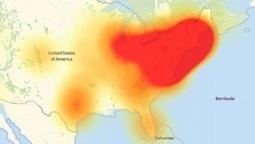
Criminals this morning massively attacked Dyn, a company that provides core Internet services for Twitter, SoundCloud, Spotify, Reddit and a host of other sites, causing outages and slowness for many of Dyn’s customers. Twitter is experiencing problems, as seen through the social media platform Hootsuite. In a statement, Dyn said that this morning, October 21, Dyn received a global distributed denial of service (DDoS) attack on its DNS infrastructure on the east coast starting at around 7:10 a.m. ET (11:10 UTC). “DNS traffic resolved from east coast name server locations are experiencing a service interruption during this time. Updates will be posted as information becomes available,” the company wrote. DYN encouraged customers with concerns to check the company’s status page for updates and to reach out to its technical support team. Learn more / En savoir plus / Mehr erfahren: http://www.scoop.it/t/securite-pc-et-internet/?tag=DDos...
|
|
Scooped by
Gust MEES
October 21, 2016 10:20 AM
|
|
|
Scooped by
Gust MEES
October 21, 2016 8:55 AM
|
A distributed denial of service (DDoS) attack against DynDNS is causing havoc online, with many major websites reportedly unavailable. According to Dyn DNS, the attack started at 11:10 UTC, and it targeted its managed DNS service. The Domain Name System (DNS) is a tool used to resolve human-readable web addresses (like “thenextweb.com”) against IP addresses. A new era … Learn more: http://www.scoop.it/t/securite-pc-et-internet/?tag=DDos...
|
|
Scooped by
Gust MEES
October 19, 2016 4:47 PM
|
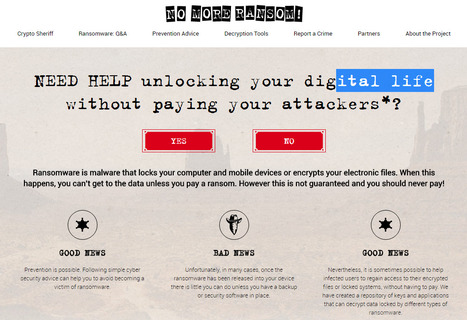
Ransomware is malware that locks your computer and mobile devices or encrypts your electronic files. When this happens, you can’t get to the data unless you pay a ransom. However this is not guaranteed and you should never pay! Learn more / En savoir plus / Mehr erfahren:
|
|
Scooped by
Gust MEES
October 19, 2016 10:21 AM
|
|
|
Scooped by
Gust MEES
October 17, 2016 10:42 AM
|
At least 58 million people have had their personal information published on the internet – including their names, dates of birth, email and postal addresses, job titles, phone numbers, vehicle data, and IP addresses – after a hacker stole a massive unsecured database.
And, if you think that sounds bad, there may be yet more hacked data still to be exposed.
The sensitive information appears to have been exfiltrated from Modern Business Systems (MBS), a company that provides businesses with online data storage and database hosting solutions, by a hacker calling themselves 0x2Taylor on Twitter. Learn more / En savoir plus / Mehr erfahren: http://www.scoop.it/t/securite-pc-et-internet/?tag=DATA-BREACHES
|
|
Scooped by
Gust MEES
October 14, 2016 10:59 AM
|
|
|
Scooped by
Gust MEES
October 11, 2016 8:16 PM
|
Adobe and Microsoft today each issued updates to fix critical security flaws in their products. Adobe’s got fixes for Acrobat and Flash Player ready. Microsoft’s patch bundle for October includes fixes for at least five separate “zero-day” vulnerabilities — dangerous flaws that attackers were already exploiting prior to today’s patch release. Also notable this month is that Microsoft is changing how it deploys security updates, removing the ability for Windows users to pick and choose which individual patches to install.
Zero-day vulnerabilities describe flaws that even the makers of the targeted software don’t know about before they start seeing the flaws exploited in the wild, meaning the vendor has “zero days” to fix the bugs. Learn more / En savoir plus / Mehr erfahren: http://www.scoop.it/t/securite-pc-et-internet
|
|
Scooped by
Gust MEES
October 10, 2016 7:49 PM
|
|
|
Scooped by
Gust MEES
October 10, 2016 5:43 PM
|
|
|
Scooped by
Gust MEES
October 10, 2016 9:54 AM
|
|
|
Scooped by
Gust MEES
October 10, 2016 9:31 AM
|
|
|
|
Scooped by
Gust MEES
October 21, 2016 2:36 PM
|
|
|
Scooped by
Gust MEES
October 21, 2016 10:26 AM
|
|
|
Scooped by
Gust MEES
October 21, 2016 9:27 AM
|
The web design platform Weebly was hacked in February, according to the data breach notification site LeakedSource. Usernames and passwords for more than 43 million accounts were taken in the breach, although the passwords are secured with the strong hashing algorithm bcrypt.
Weebly said in an email to customers that user IP addresses were also taken in the breach.
“We do not believe that any customer website has been improperly accessed,” Weebly said in the notice to users.” The company also said that it does not store credit card information, making fraudulent charges unlikely.
LeakedSource said it received the Weebly database from an anonymous source and notified Weebly of the breach. In addition to the customer notification emails, LeakedSource claims that password resets are being issued — but, if you’re a Weebly user and you don’t receive a password reset, you probably want to change your password anyway. Learn more / En savoir plus / Mehr erfahren: http://www.scoop.it/t/securite-pc-et-internet/?tag=DATA-BREACHES
|
|
Scooped by
Gust MEES
October 20, 2016 11:22 AM
|
Sicherheitsforscher warnen vor einer neuen Ransomware, die erstmals auch .exe-Dateien verschlüsselt und so Anwendungen unbrauchbar macht. Aktuell soll sich der Schädling noch in Entwicklung befinden.
Der Verschlüsselungs-Trojaner für Windows Exotic hat es offensichtlich auf noch mehr Datei-Typen als bisher von dieser Schädlings-Gattung gewohnt abgesehen. Sicherheitsforscher vom MalwareHunterTeam haben herausgefunden, dass Exotic auch vor ausführbaren Dateien nicht haltmacht, berichtet Bleepingcomputer.com. In der Vergangenheit haben sich Erpressungs-Trojaner damit begnügt, Daten in Form von etwa JPG- und Word-Dateien in Beschlag zu nehmen.
Persönliche Daten sind natürlich ein effektiveres Druckmittel um Lösegeld zu erpressen, als .exe-Dateien. Dennoch ist es ärgerlich, wenn Anwendungen nach einer Infektion mit Exotic nicht mehr funktionieren. Learn more / En savoir plus / Mehr erfahren:
|
|
Scooped by
Gust MEES
October 19, 2016 11:48 AM
|
|
|
Scooped by
Gust MEES
October 17, 2016 11:33 AM
|
|
|
Scooped by
Gust MEES
October 17, 2016 10:28 AM
|
|
|
Scooped by
Gust MEES
October 12, 2016 11:17 AM
|
Über das Unternehmen Geofeedia konnten US-Behörden Standortdaten von Facebook- und Twitter-Nutzern sammeln.
Facebook, Instagram und Twitter kennen viele Details ihrer Nutzer. Dies hat offenbar auch die US-Regierung erkannt und die Datenströme der Dienste über die Analytics-Plattform Geofeedia angezapft . Laut der Bürgerrechtsorganisation American Civil Liberties Union (ACLU) nutzte unter anderem die Polizei diese Informationen, um die Rassenproteste in Oakland und Baltimore zu überwachen.
Die Sammlung der Daten wurde von dem in Chicago ansässigen Unternehmen Geofeedia übernommen, das die Informationen dann an rund 500 Strafverfolgungs- und Sicherheitsbehörden weitergereicht haben soll. Neben persönlichen Informationen wurden auch Standortdaten von Nutzern gesammelt.
Facebook und Twitter beteuern, dass es sich bei dem abgegriffenen Daten um öffentlich zugängliche Informationen handeln würde. Als Reaktion auf die Vorwürfe schränkten beide Unternehmen den Zugriff von Geofeedia auf die Datenströme der sozialen Netzwerke ein oder sperrten den Anbieter sogar. Learn more / En savoir plus / Mehr erfahren: https://gustmees.wordpress.com/2013/12/21/privacy-in-the-digital-world-shouldnt-we-talk-about-it/ http://www.scoop.it/t/securite-pc-et-internet/?tag=Privacy
|
|
Scooped by
Gust MEES
October 11, 2016 12:09 PM
|
According to the head of the United Nations nuclear watchdog, the International Atomic Energy Agency (IAEA) Director Yukiya Amano, a nuclear power plant in Germany was hit by a “disruptive” cyber attack two to three years ago.
“This issue of cyber attacks on nuclear-related facilities or activities should be taken very seriously. We never know if we know everything or if it’s the tip of the iceberg.” Amano told Reuters Agency.
“This is not an imaginary risk,” added Amano who also participated in a meeting with Foreign Minister Frank-Walter Steinmeier.
Amano confirmed that cyber attacks on nuclear plants are a serious threat, he did not provide further details of either incident.
Fortunately, the damages caused by the cyber attack on the German nuclear plant did not force the operators to shut down its processes but urged the adoption of additional precautionary measures.
“This actually happened and it caused some problems,” he said. “[the Germant plant] needed to take some precautionary measures.” Learn more / En savoir plus / Mehr erfahren: http://www.scoop.it/t/securite-pc-et-internet
|
|
Scooped by
Gust MEES
October 10, 2016 7:26 PM
|
There have been hacking attempts on election systems in more than 20 states — far more than had been previously acknowledged — a senior Department of Homeland Security official told NBC News on Thursday.
The "attempted intrusions" targeted online systems like registration databases, and not the actual voting or tabulation machines that will be used on Election Day and are not tied to the Internet.
The DHS official described much of the activity as "people poking at the systems to see if they are vulnerable."
"We are absolutely concerned," the DHS official said. "The concern is the ability to cause confusion and chaos."
Only two successful breaches have been disclosed, both of online voter registration databases, in Illinois and Arizona over the summer. Learn more / En savoir plus / Mehr erfahren: http://www.scoop.it/t/securite-pc-et-internet/?tag=Elections
|
|
Scooped by
Gust MEES
October 10, 2016 10:30 AM
|
It's all gone. All the passwords, all the user names, all the credit card numbers, the selfies, the fingerprints, the emails.
The state of tech security is currently so dire that it feels like anything you have ever stored on a computer, or a company or government has ever stored about you, has already been hacked into by somebody.
It's become so bad that it's already generated a mirthless cliché -- that there are only two types of companies: the ones that have been hacked and the ones that don't yet know they've been hacked. So what can we do? I'd suggest three decent starting points. First, as consumers we need to stop shrugging and accepting data leaks as business as usual. Security should influence our buying decisions: the organisations we deal with won't take security seriously unless customers and the public do, too. Our behaviour should signal to companies that good security can be a competitive differentiator. At the moment our apathy too often lets them off the hook. We as consumers need to understand the value of our data and then hold those that store it to account. Second, companies should design security as a fundamental part of the services we use, not a nice-to-have addition. Few hackers will give a new service time to implement security before attacking it, yet too many innovations (the IoT, I'm looking at you) seem to think security is a secondary consideration until they make it big. Until that changes, security will always be an afterthought. Third, the use of strong encryption should be the standard, not the exception. The digital services we use are now too intimate, too important, to be left unencrypted. The revelations of the last few years have shown us that no stream of data on the internet will go untapped by crooks or government. Learn more / En savoir plus / Mehr erfahren: http://www.scoop.it/t/21st-century-learning-and-teaching?tag=Proactive+Thinking
|
|
Scooped by
Gust MEES
October 10, 2016 9:40 AM
|
|

























No sooner had we written about long-lived Linux kernel bugs...and along comes an 11-year-old vulnerability that's easy to exploit.
What to do?This bug doesn’t provide a way for an outsider to break into your system in the first place, so it’s not what we call a remote code execution (RCE) hole.
DirtyCOW is an EoP vulnerability, short for elevation of privilege.
Nevertheless, as we explained above, attackers who are already inside your network are likely to find this a handy way of extending their reach.
A patch is already available.
If you are an intrepid Linux user you can apply the patch yourself and rebuild your kernel.
If not, watch out for the next kernel update from your distro producer and apply it as soon as you can.
Learn more / En savoir plus / Mehr erfahren:
http://www.scoop.it/t/securite-pc-et-internet/?tag=Linux
http://www.scoop.it/t/securite-pc-et-internet/?tag=DDos...
http://www.scoop.it/t/securite-pc-et-internet/?tag=Botnet