 Your new post is loading...

|
Scooped by
Gust MEES
October 24, 2017 9:43 AM
|
|
|
Scooped by
Gust MEES
October 23, 2017 1:26 PM
|
|
|
Scooped by
Gust MEES
October 23, 2017 12:22 PM
|
|
|
Scooped by
Gust MEES
October 18, 2017 3:07 PM
|
BRUSSELS (Reuters) - Some smartwatches for children sold in Europe pose security risks, including potentially allowing hackers to take control of and track a watch, the EU’s main consumer lobby said on Wednesday, following a new report by one of its members.
The affected smartwatches, which use the Global Position System (GPS) to allow parents to track their child’s location and communicate with them through their mobile phones, do not have sufficient protection, or firewalls, to stop computer hackers, the Norwegian Consumer Council said.
The council also accused some manufacturers of violating EU data protection laws by not stating clearly the risks in their terms and conditions.
“These watches should not find their way into our shops,” Monique Goyens, the director general of the European Consumer Organisation BEUC - of which the Norwegian council is a member - said in a statement. Learn more / En savoir plus / Mehr erfahren: http://www.scoop.it/t/securite-pc-et-internet/?&tag=wearables
|
|
Scooped by
Gust MEES
October 18, 2017 8:27 AM
|
The Wild Neutron hacking group gained access to an internal database Microsoft uses to track software vulnerabilities.
David Bisson reports. On 17 October 2017, five former employees revealed that at the time of the breach Microsoft raised a number of internal alarms signaling that hackers had compromised the database it uses to track patches. The attack has been blamed on Wild Neutron, a sophisticating hacking group which has targeted Apple, Facebook, and a number of other multi-billion dollar companies. Even so, the former Microsoft workers said the database was poorly protected by just a single password. Concerned that the hacking group had stolen details on some of its open vulnerabilities for Windows and other software, Microsoft decided to look at other industry breaches and investigate the timing of those event with respect to when the flaws entered its database. Learn more / En savoir plus / Mehr erfahren: http://www.scoop.it/t/securite-pc-et-internet/?&tag=DATA-BREACHES
|
|
Scooped by
Gust MEES
October 17, 2017 9:14 AM
|
The company last week quietly patched vulnerabilities in the WPA2 protocol used to secure wireless networks, but did not reveal the fix until today. Microsoft today revealed that it quietly patched Windows last week against vulnerabilities in the Wi-Fi Protected Access II (WPA2) protocol used to secure wireless networks. Details of the security update were only published Monday to Microsoft's Security Update Guide, the catalog-like portal that earlier this year replaced the decades-old practice of delivering explanatory bulletins. Learn more / En savoir plus / Mehr erfahren: http://www.scoop.it/t/securite-pc-et-internet/?&tag=WPA2 http://www.scoop.it/t/21st-century-learning-and-teaching/?&tag=VPN
|
|
Scooped by
Gust MEES
October 17, 2017 6:25 AM
|
(Reuters) - Microsoft Corp’s secret internal database for tracking bugs in its own software was broken into by a highly sophisticated hacking group more than four years ago, according to five former employees, in only the second known breach of such a corporate database.
The company did not disclose the extent of the attack to the public or its customers after its discovery in 2013, but the five former employees described it to Reuters in separate interviews. Microsoft declined to discuss the incident.
The database contained descriptions of critical and unfixed vulnerabilities in some of the most widely used software in the world, including the Windows operating system. Spies for governments around the globe and other hackers covet such information because it shows them how to create tools for electronic break-ins.
The Microsoft flaws were fixed likely within months of the hack, according to the former employees. Yet speaking out for the first time, these former employees as well as U.S. officials informed of the breach by Reuters said it alarmed them because the hackers could have used the data at the time to mount attacks elsewhere, spreading their reach into government and corporate networks. Learn more / En savoir plus / Mehr erfahren: http://www.scoop.it/t/securite-pc-et-internet/?&tag=DATA-BREACHES
|
|
Scooped by
Gust MEES
October 16, 2017 12:11 PM
|
Here's what you need to know about KrackAttacks, and what you can do to protect yourself. And there’s the silver lining. We’ve actually been living with the risks created by insecure Wi-Fi connections for many years, and users can protect themselves by taking some basic security precautions. Here’s the best ways to stay safe from KrackAttacks and other threats targeting people through their Wi-Fi connections: Use a VPN A VPN (virtual private network), such as F-Secure Freedome encrypts your data while it’s in transit. This is a great way to secure your information when using Wi-Fi, and should be considered essential when using a publicly accessible Wi-Fi network. Update your devices Attacking routers is a means to an end for attackers. What they’re really after are your devices. They want to steal your credit card info, passwords, and other data. And that’s what the KrackAttacks are actually doing. Updating your devices’ software and operating systems is sound security advice, so use this as a reminder to make sure your desktops, laptops, phone, and tablets are all updated. Update your routers Routers have a long history of security problems. They’re often poorly supported by device vendors (and in some cases not at all). You should check your router’s settings to see if there’s a firmware update available, or possibly the website of your router’s manufacturer or vendor. If you’re not getting security updates for your router, consider getting one built to be secure. Learn more / En savoir plus / Mehr erfahren: http://www.scoop.it/t/21st-century-learning-and-teaching/?&tag=VPN
|
|
Scooped by
Gust MEES
October 16, 2017 8:51 AM
|
Le WPA2 est un protocole de sécurité très utilisé pour le Wi-Fi et, mauvaise nouvelle, il est vulnérable. En effet, des experts en sécurité informatique ont mis à jour plusieurs failles permettant d'écouter, d'intercepter et d'agir sur les appareils connectés. Des chercheurs en informatique viennent de révéler l'existence d'un nouvel "exploit" baptisé KRACK (pour Key Reinstallation Attacks), mettant directement en cause la sécurité des réseaux Wi-Fi. En effet, il permet a priori de tirer parti des vulnérabilités du Wi-Fi pour autoriser des hackers à opérer une surveillance sur les données transitant entre un point d'accès sans fil et les ordinateurs qui y sont connectés.
Comme le relèvent nos confrères d'Ars Technica, les experts en sécurité à l'origine de cette découverte ont exploité plusieurs failles se situant au niveau de la gestion des clés du protocole de sécurité WPA2 pour valider l'existence de cette brèche et en apporter la preuve. Précisons qu'en 13 ans d'existence, c'est la première fois que la sécurité du protocole WPA2 est mise à mal.
Learn more / En savoir plus / Mehr erfahren: http://www.scoop.it/t/21st-century-learning-and-teaching/?&tag=VPN
|
|
Scooped by
Gust MEES
October 16, 2017 8:04 AM
|
|
|
Scooped by
Gust MEES
October 11, 2017 1:30 PM
|
|
|
Scooped by
Gust MEES
October 5, 2017 11:50 AM
|
Das Risiko von Cyber-Angriffen auf wichtige Infrastruktur-Einrichtungen wird nach Ansicht von Vertretern sowohl aus Politik als auch aus der Wirtschaft immer realistischer. Insgesamt drei Viertel der Befragten einer Trendstudie sehen eine große Gefahr durch Angriffe etwa auf das Stromnetz oder auf Krankenhäuser. Das ergab eine Untersuchung, die das Beratungshaus Deloitte am Donnerstag gemeinsam mit dem Allensbach-Institut in Berlin vorstellte.
Im vergangenen Jahr stuften demnach nur 27 Prozent der Entscheider einen Zusammenbruch des Stromnetzes als großes Risiko für die Menschen ein. "Die Digitalisierung bringt unzählige und unschätzbare Vorteile, aber sie macht auch verwundbar", sagte Peter Wirnsperger, Partner von Deloitte. Die Akteure schätzten die Situation jedoch überwiegend realistisch ein. "Die Digitalisierung steht bei unseren CEOs ganz oben auf der Agenda." Viele hätten große Erwartungen an die Politik, doch eine Seite allein könne "diesem Sturm nicht widerstehen". Ziel sei es, mit dem aktuellen Report die Diskussion zu befeuern.
Große Gefahr durch den Diebstahl privater Daten
Ebenfalls als großes Risiko wird der Missbrauch persönlicher Daten gewertet. Demnach gaben jeweils zwei Drittel der Befragten an, eine große Gefahr durch Diebstahl privater Daten, Datenbetrug im Internet oder missbräuchliche Nutzung eigener Daten in sozialen Netzwerken zu sehen. Bemerkenswerterweise habe eine hohe Risiko-Einschätzung jedoch keine Auswirkungen auf das eigene konkrete Verhalten, sagte Renate Köcher vom Allensbach Institut.
Nur eine kleine Minderheit der Entscheider aus Politik und Wirtschaft sei überzeugt, dass Deutschland so gut wie möglich auf Cyber-Angriffe vorbereitet sei, sagte Köcher. Demnach glauben fast zwei Drittel der Politiker und knapp drei Viertel der Führungskräfte nicht, dass der aktuelle Status Quo ausreiche.
Learn more / En savoir plus / Mehr erfahren: http://www.scoop.it/t/securite-pc-et-internet
|
|
Scooped by
Gust MEES
October 3, 2017 5:29 PM
|
The largest hack in history just got three times worse for Yahoo. "Following an investigation with the assistance of outside forensic experts, [we believe] that all Yahoo user accounts were affected by the August 2013 theft," Suzanne Philion, an Oath spokeswoman, said in a statement Tuesday. Learn more / En savoir plus / Mehr erfahren: http://www.scoop.it/t/securite-pc-et-internet/?&tag=DATA-BREACHES
|
|
|
Scooped by
Gust MEES
October 23, 2017 4:14 PM
|
Facebook-Nutzer, aufgepasst! Aktuell verbreitet sich ein schadhafter Link über den Facebook Messenger. Das Problem: Er kommt von den eigenen Freunden. Selbst die Polizei hat eine entsprechende Warnung herausgegeben. Die Details!
Schlechte Nachrichten für Facebook-Fans: Das soziale Netzwerk ist aktuell von einer Betrugsmasche betroffen, die sich über den Facebook Messenger ausbreitet und Nutzern jede Menge Ärger beschert. Das Fiese an der Sache ist vor allem, dass der Link dazu direkt von Ihren Freunden kommt – zusammen mit einem zwinkernden Smiley und dem Text „Du video? (Link) Kevin”. Wegen verstärkter Anfragen zum Thema hat auch die Polizei Niedersachsen eine Warnung vor dem Facebook-Betrug herausgegeben.
Facebook Messenger: Finger weg von dubiosen Links!
Wenn Sie den Link öffnen, landen Sie auf einer Seite, die genau wie die Log-in-Page von Facebook aussieht. Tatsächlich läuft die jedoch unter einer völlig anderen Adresse. Geben Sie dort Ihre Daten ein, landen Sie direkt bei den Betrügern. Die haben von diesem Zeitpunkt an vollen Zugriff auf Ihr Facebook-Konto und können allerlei Schabernack damit treiben. Dazu gehört auch das Weiterversenden der schadhaften Nachricht. Auch die neue Seite „Sicherheitszentrum” versucht es mit diesem Link. Die Page soll den Anschein erwecken von Facebook zu stammen und droht mit der Löschung von zuvor markierten Profilen. Learn more / En savoir plus / Mehr erfahren: http://www.scoop.it/t/securite-pc-et-internet/?&tag=Facebook
|
|
Scooped by
Gust MEES
October 23, 2017 12:37 PM
|
Profitant de la numérisation grandissante des services de paiement, le «dark web» s’est largement structuré ces dernières années, attiré par des gains de plus en plus importants. Entreprises et régulateurs doivent rester vigilants pour ne pas se laisser distancer.
C’est un marché comme un autre, avec ses clients, ses intermédiaires et ses bonnes affaires. Facile d’accès, il offre la possibilité de gagner beaucoup d’argent en très peu de temps. Pourtant, il est illégal puisqu’il s’agit du «dark» web, ce côté obscur d’internet. Learn more / En savoir plus / Mehr erfahren: http://www.scoop.it/t/securite-pc-et-internet/?&tag=darknet
|
|
Scooped by
Gust MEES
October 19, 2017 3:46 AM
|
In a blog post on Wednesday, Symantec security researchers wrote they had discovered at least eight Google Play Store apps that functioned as fronts for a “new and highly prevalent type of Android malware” called Android.Sockbot. The apps in question presented themselves as skins for player characters in popular app Minecraft: Pocket Edition and boasted “an install base ranging from 600,000 to 2.6 million devices.” Learn more / En savoir plus / Mehr erfahren: http://www.scoop.it/t/securite-pc-et-internet/?&tag=Apps
|
|
Scooped by
Gust MEES
October 18, 2017 8:39 AM
|
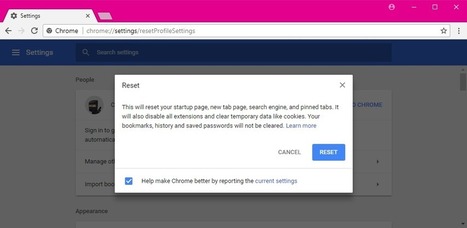
Google announced yesterday three new security features for Chrome that will help the company's browser detect and fight intrusive extensions and invasive software.
The features are part of a long-standing effort that also includes tools like the company's SafeBrowsing API.
Simpler warnings when extensions hijack settings
The first is Chrome's new ability to detect whenever an extension makes changes to the user's default settings. These include settings for the user's search engine, homepage, or proxy settings. Learn more / En savoir plus / Mehr erfahren: https://gustmees.wordpress.com/2012/05/02/get-smart-with-5-minutes-tutorialsit-securitypart-1-browsers/
|
|
Scooped by
Gust MEES
October 17, 2017 2:02 PM
|
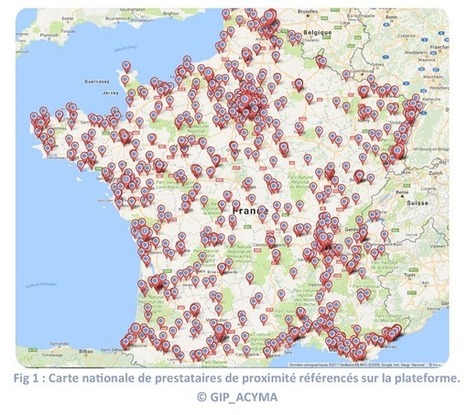
Le dispositif cybermalveillance, incubé par l’Anssi, vient de voir le jour au plan national. Cette structure d’aide aux particuliers et PME victimes d’attaques informatiques a été expérimentée précédemment sur la région des Hauts-de-France. En début d'année, le FIC avait été l’occasion d’une première présentation de ce qui s’appelait encore le dispositif Acyma. L’acronyme, pour Dispositif d’Assistance aux victimes d’acte de cybermalveillance, s’éclipse aujourd’hui au profit du nom de la plateforme Cybermalveillance.gouv.fr et se lance enfin sur l’ensemble du territoire national. Le dispositif Cybermalveillance est issu d’une réflexion menée autour de la stratégie nationale pour la sécurité du numérique, un document conçu et publié en 2015 par l’Anssi. Parmi ses conclusions, l’agence de la sécurité des systèmes d’informations évoquait la création d’un guichet d’assistance aux victimes d’attaques informatiques ou de virus. L’objectif était de combler un manque évident : si l’Anssi est capable d’intervenir et de superviser la sécurité des grands comptes et organisations essentielles du gouvernement, elle n’est néanmoins pas en mesure de s’adresser aux milliers de petites PME et aux particuliers qui souffrent pourtant tout autant face aux épidémies de ransomware. Comme le résumait Mounir Mahjoubi, secrétaire d’État chargé du numérique « Aujourd’hui nous souhaitons mettre en avant une réponse graduée face à des attaques informatiques complexes. L’Anssi se charge de répondre face aux menaces pesant sur l’état et les OIV, et les dispositifs tels que Cybermalveillance viendront proposer un interlocuteur aux PME et aux particuliers touchés. » Learn more / En savoir plus / Mehr erfahren: http://www.scoop.it/t/securite-pc-et-internet
|
|
Scooped by
Gust MEES
October 17, 2017 9:06 AM
|
Faille Wi-Fi : Microsoft a déjà patché Windows 10, 8.1 et 7 Les systèmes Windows ont déjà été modifiés par son éditeur lors de la précédente vague de mise à jour mensuelle distribuée en début de mois pour corriger la faille WPA2. Plus tôt cette semaine les utilisateurs de réseaux Wi-Fi ont été alerté d'un problème dans la sécurisation de la plupart des appareils. Microsoft avait déjà anticipé le problème et a diffusé des correctifs il y a quelques jours. La faille KRACK Attack concerne le protocole de sécurisation WPA2 largement utilisé pour connecter les appareils aux routeurs et points d'accès Wi-Fi. Tous les appareils capables de se connecter à un réseau sans fil sont donc potentiellement concernés : smartphones, tablettes, TV, objets connectés et bien entendu les ordinateurs qu'ils soient de bureau ou portables. Learn more / En savoir plus / Mehr erfahren: http://www.scoop.it/t/securite-pc-et-internet/?&tag=WPA2 http://www.scoop.it/t/21st-century-learning-and-teaching/?&tag=VPN
|
|
Scooped by
Gust MEES
October 16, 2017 12:40 PM
|
Der Sicherheitsstandard WPA2, der insbesondere zur Verschlüsselung von WLAN-Netzwerken empfohlen wird, ist über kritische Schwachstellen verwundbar. Betroffen sind demnach alle derzeit aktiven WLAN-fähigen Endgeräte in unterschiedlichen Ausprägungen. Das Bundesamt für Sicherheit in der Informationstechnik (BSI) rät dazu, WLAN-Netzwerke bis zur Verfügbarkeit von Sicherheits-Updates nicht für Online-Transaktionen wie Online Banking und Online Shopping oder zur Übertragung anderer sensitiver Daten zu nutzen.
"Nutzen Sie Ihr WLAN-Netzwerk so, als würden Sie sich in ein öffentliches WLAN-Netz einwählen, etwa in Ihrem Lieblings-Café oder am Bahnhof. Verzichten Sie auf das Versenden sensibler Daten oder nutzen Sie dazu einen VPN-Tunnel. Auch das kabelgebundene Surfen ist weiterhin sicher. Unternehmen sollten ihre Mitarbeiter sensibilisieren und geeignete Maßnahmen zur Absicherung ihrer Firmennetzwerke ergreifen. Sicherheitsupdates wurden bereits von verschiedenen Herstellern angekündigt und sollten umgehend durch den Nutzer eingespielt werden, sobald sie zur Verfügung stehen," erklärt Arne Schönbohm, Präsident des BSI. Learn more / En savoir plus / Mehr erfahren: http://www.scoop.it/t/21st-century-learning-and-teaching/?&tag=VPN
|
|
Scooped by
Gust MEES
October 16, 2017 11:51 AM
|
Le Wi-Fi n'a pas été conçu pour résister aux défis du XXIe siècle en matière de cyber sécurité. De nombreux experts recommandent donc la prudence lors de son utilisation. Une bonne nouvelle, toutefois. En réalité, les internautes ont déjà, depuis de nombreuses années, affaire aux dangers des connexions Wi-Fi non-sécurisées… Mais ils peuvent sécuriser leur réseau en prenant quelques précautions de base. Voici les meilleures façons de se protéger de KrackAttacks ou d’autres menaces ciblant les internautes via leurs connexions Wi-Fi : - Utilisez un VPN
Un VPN (réseau privé virtuel), tel que FREEDOME de F-Secure, chiffre vos données en transit. Il s’agit d’une excellente façon de sécuriser vos informations lorsque vous utilisez le Wi-Fi. Cet outil est même indispensable à votre sécurité lorsque vous utilisez un réseau Wi-Fi public. - Mettez vos appareils à jour
Learn more / En savoir plus / Mehr erfahren: http://www.scoop.it/t/21st-century-learning-and-teaching/?&tag=VPN
|
|
Scooped by
Gust MEES
October 16, 2017 8:13 AM
|
|
|
Scooped by
Gust MEES
October 15, 2017 11:54 AM
|
For IT: Ensure software is patched, data is encrypted and your environment is up-to-date with the latest protection. Major global cyberattacks like WannaCry and NotPetya underscore the need to keep systems updated and patched. This one step can help prevent the next attack and your organization’s reputation. It might also be time to evaluate your threat detection and response capabilities. Does your team have the skills needed and the right technology in place to ensure smaller security incidents don’t erupt into debilitating disasters?
For employees: When you’re on the front line, you’re the most likely target in a phishing scheme. That makes it critical to ask your organization’s CISO or CIO about available training and what steps to take if you do find yourself a victim.
As a rule of thumb: Beware of what you click! If it’s from a user you don’t know, or if the sender’s email is not one you’re familiar with, take caution and don’t open any links or attachments until you’ve consulted the IT team.
For management: Change happens at the top. Talk openly about the risks facing your business and what employees might face day-to-day. Inserting cybersecurity into the workplace lexicon makes staff more aware of the threats they may encounter.
Education and training programs are no longer just nice to have—they’re critical! Unfortunately, only 53% of organizations have programs in place to educate employees about security threats. However, the ROI on these types of program is remarkable—more than 50% of InfoSec professionals say they can quantify the reduction in phishing susceptibility among users. Learn more / En savoir plus / Mehr erfahren: https://gustmees.wordpress.com/?s=get+smart http://www.scoop.it/t/securite-pc-et-internet
|
|
Scooped by
Gust MEES
October 11, 2017 12:04 PM
|
|
|
Scooped by
Gust MEES
October 5, 2017 8:53 AM
|
Eine Schule im Brandenburger Land, The Pirate Bay und etliche Webseiten aus der Alexa-Top-1-Million-Liste schürfen ungefragt Kryptowährungen auf den Rechnern der Nutzer. Der Anbieter Coinhive will das Verfahren künftig anpassen, damit es weniger Ärger gibt.
Immer mehr Webseiten schürfen ungefragt und ohne Kennzeichnung auf Kosten der Nutzer Kryptowährungen wie Monero. Nach einem Testlauf bei der Torrent-Seite The Pirate Bay verschwand der entsprechende Code des Anbieters Coinhive kurzzeitig wieder aus dem Quelltext der Seite, ist aber mittlerweile wieder integriert. Außerdem gibt es zahlreiche Nachahmer. Richtig lohnen dürfte sich das allerdings nur für die wenigsten Seitenbetreiber - den Verlust an Reputation bei den Besuchern dürfte es kaum wiedergutmachen, wenn diese davon Kenntnis erlangen. Learn more / En savoir plus / Mehr erfahren: http://www.scoop.it/t/securite-pc-et-internet/?&tag=crypto-currency http://www.scoop.it/t/securite-pc-et-internet/?&tag=cryptocurrency+mining
|
















Learn more / En savoir plus / Mehr erfahren:
http://www.scoop.it/t/securite-pc-et-internet/?tag=wearables
https://globaleducationandsocialmedia.wordpress.com/2014/01/21/why-is-it-a-must-to-have-basics-knowledge-of-cyber-security-in-a-connected-technology-world/
http://www.scoop.it/t/securite-pc-et-internet/?tag=SHODAN+Search+Engine
http://www.scoop.it/t/21st-century-learning-and-teaching/?tag=Internet+of+Things
http://www.scoop.it/t/securite-pc-et-internet/?tag=smart-TV
http://www.scoop.it/t/securite-pc-et-internet/?tag=Internet+of+things
http://globaleducationandsocialmedia.wordpress.com/2014/01/21/why-is-it-a-must-to-have-basics-knowledge-of-cyber-security-in-a-connected-technology-world/
http://www.scoop.it/t/securite-pc-et-internet/?tag=Cars
http://www.scoop.it/t/securite-pc-et-internet/?&tag=Botnet